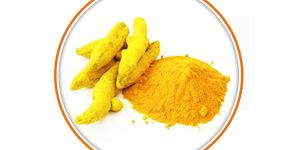
Curcumin is the principle pigment of turmeric, a spice that is obtained from the rhizomes of Curcuma longa. Obtained by extraction from the plant to produce an oleoresin which is then purified, cur cumin provides a bright, strong yellow shade.It is an oil soluble pigment that is available in convenient water dispersible forms that are used in a wide range of foodsCurcumin is extremely heat stable and may generally be used in products throughout the acid pH range. Curcumin gives out a very intense colour with bright yellow appetence even at low doses.Product Forms Available –
Water Soluble Liquid and Powder – 5% to 10%
Oil Soluble Liquid and Powder – 5% to 10%Recommended Dosage Level. Between 0.01% to 0.1% depending on the required colour shade.
Common Applications
Cereals
Ice cream
Icing
Salad dressing
Chewing gum
Baked goods
Yoghurt
Dairy products
Fruit preps
Dry soup premix
Confectionery
Seasonings
Pickels
Mustard
Margarine
Jam
Curcumin is the principle pigment of turmeric, a spice that is obtained from the rhizomes of Curcuma longa. Obtained by extraction from the plant to produce an oleoresin which is then purified, cur cumin provides a bright, strong yellow shade.It is an oil soluble pigment that is available in convenient water dispersible forms that are used in a wide range of foodsCurcumin is extremely heat stable and may generally be used in products throughout the acid pH range. Curcumin gives out a very intense colour with bright yellow appetence even at low doses.Product Forms Available –
Water Soluble Liquid and Powder – 5% to 10%
Oil Soluble Liquid and Powder – 5% to 10%Recommended Dosage Level. Between 0.01% to 0.1% depending on the required colour shade.
Common Applications
Cereals
Ice cream
Icing
Salad dressing
Chewing gum
Baked goods
Yoghurt
Dairy products
Fruit preps
Dry soup premix
Confectionery
Seasonings
Pickels
Mustard
Margarine
Jam
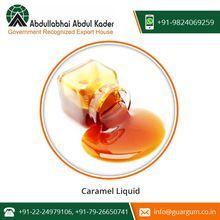
Caramel Colour is prepared by heating food grade carbohydrates under controlled environment. Using different types of food grade acids, alkalis or salts, different classes and types of Caramel Colour can be made. All these different types of Caramel Colour are identified in suffix E 150 a,b,c and d.
Product Forms Available –
El50a Plain Caramel Colour (Class I)
E150b Caustic Sulphite Process Caramel Colour (Classll)
El50c Ammonia Process Caramel Colour (Class III)
E150d Ammonia Sulphite Process Caramel Colour (Class IV)
Caramel Colour has an excellent stability in heat light & pH. Recommended Dosage Level.
Between 0.01% to 0.1% depending on the required colour shade.
Caramel Colour is prepared by heating food grade carbohydrates under controlled environment. Using different types of food grade acids, alkalis or salts, different classes and types of Caramel Colour can be made. All these different types of Caramel Colour are identified in suffix E 150 a,b,c and d.
Product Forms Available –
El50a Plain Caramel Colour (Class I)
E150b Caustic Sulphite Process Caramel Colour (Classll)
El50c Ammonia Process Caramel Colour (Class III)
E150d Ammonia Sulphite Process Caramel Colour (Class IV)
Caramel Colour has an excellent stability in heat light & pH. Recommended Dosage Level.
Between 0.01% to 0.1% depending on the required colour shade.
Caramel Colour is prepared by heating food grade carbohydrates under controlled environment. Using different types of food grade acids, alkalis or salts, different classes and types of Caramel Colour can be made. All these different types of Caramel Colour are identified in suffix E 150 a,b,c and d.
Product Forms Available –
El50a Plain Caramel Colour (Class I)
E150b Caustic Sulphite Process Caramel Colour (Classll)
El50c Ammonia Process Caramel Colour (Class III)
E150d Ammonia Sulphite Process Caramel Colour (Class IV)
Caramel Colour has an excellent stability in heat light & pH. Recommended Dosage Level.
Between 0.01% to 0.1% depending on the required colour shade.
Caramel Colour is prepared by heating food grade carbohydrates under controlled environment. Using different types of food grade acids, alkalis or salts, different classes and types of Caramel Colour can be made. All these different types of Caramel Colour are identified in suffix E 150 a,b,c and d.
Product Forms Available –
El50a Plain Caramel Colour (Class I)
E150b Caustic Sulphite Process Caramel Colour (Classll)
El50c Ammonia Process Caramel Colour (Class III)
E150d Ammonia Sulphite Process Caramel Colour (Class IV)
Caramel Colour has an excellent stability in heat light & pH. Recommended Dosage Level.
Between 0.01% to 0.1% depending on the required colour shade.
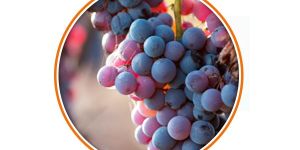
Anthocyanins are water-soluble compounds responsible for red to blue colour of a wide range of fruits and vegetables. They can be sourced from a wide variety of fruits, and vegetables. However largely Grapes, Berries and Black Carrots are used to derive the colour.Anthocyanin colour is considered to be very versatile and easy to use. It is largely used in Soft Drinks, Jams and Jellies, Sugar Confectioneries and Frozen Products.Product Forms Available –Water Soluble Powder 2%Recommended Dosage Level.Between 0.01% to 0.1% depending on Product Strength.
Common ApplicationsSoft drinksJams and JelliesSugar confectioneriesFrozen ProductsWine
Anthocyanins are water-soluble compounds responsible for red to blue colour of a wide range of fruits and vegetables. They can be sourced from a wide variety of fruits, and vegetables. However largely Grapes, Berries and Black Carrots are used to derive the colour.Anthocyanin colour is considered to be very versatile and easy to use. It is largely used in Soft Drinks, Jams and Jellies, Sugar Confectioneries and Frozen Products.Product Forms Available –Water Soluble Powder 2%Recommended Dosage Level.Between 0.01% to 0.1% depending on Product Strength.
Common ApplicationsSoft drinksJams and JelliesSugar confectioneriesFrozen ProductsWine











 Reviews & Ratings
 Write a Review


 Post Free Ad