Aspal Engineering Private Limited Ahmedabad, Gujarat

GST Number : 24ABACA4824G1Z2
Contact Supplier Request A Quote
  • Stainless Steel Swing Type Check Valve

    Stainless Steel Swing Type Check Valve

    Get Latest Price

    • MOQ100 Piece
    • ApplicationPrevents Backflow In Pipelines
    • ColorSilver
    • MaterialStainless Steel
    • Country of OriginIndia
    • Temperature Rating-40°F - 400°F
    • Automatic GradeAutomatic
    • Number Of Way2way
    • TypeSwing Type Check Valve
    • Industrial Valves Industrial valves are mechanical devices used to control the flow and pressure of liquids, gases, and slurries within a system. These valves are essential components in various industries, including oil and gas, chemical processing, water treatment, power generation, and manufacturing. The selection of the appropriate valve type is critical for ensuring efficient and safe operation of industrial processes.   Types of Industrial Valves 1. Gate Valves: Used to start or stop the flow of fluid. Operate by lifting a gate out of the path of the fluid. Suitable for applications requiring full flow or no flow and minimal pressure drop when fully open. 2. Globe Valves: Used for regulating flow in a pipeline. Feature a movable disk-type element and a stationary ring seat in a generally spherical body. Provide good throttling capabilities and are commonly used in applications where flow control is required. 3. Ball Valves: Use a spherical ball with a hole through the center to control the flow. Offer quick shutoff and are ideal for applications requiring tight sealing and minimal leakage. Suitable for on/off control without pressure drop. 4. Butterfly Valves: Feature a rotating disk that opens and closes to control flow. Provide a compact design and are suitable for applications requiring quick operation and minimal space. Commonly used in water supply, wastewater treatment, and HVAC systems. 5. Check Valves: Allow fluid to flow in one direction only, preventing backflow. Operate automatically without any external control. Used in applications where backflow prevention is critical, such as pumps and compressors. 6. Diaphragm Valves: Use a flexible diaphragm that moves up and down to control flow. Provide excellent shutoff and are suitable for handling corrosive fluids, slurries, and applications requiring sanitary conditions. Common in pharmaceutical, food and beverage, and chemical processing industries. 7. Needle Valves: Feature a small port and a threaded, needle-shaped plunger for precise flow control. Suitable for applications requiring fine adjustments of flow rates, such as in instrumentation and sampling systems. 8. Pressure Relief Valves: Designed to release pressure automatically when it exceeds a predetermined limit. Ensure safety by preventing overpressure conditions. Widely used in boilers, pressure vessels, and piping systems. 9. Solenoid Valves: Electrically operated valves that use a solenoid to control the opening and closing of the valve. Offer quick and precise control and are commonly used in automation systems and control processes. 10. Plug Valves: Use a tapered or cylindrical plug to regulate flow. Provide a simple design with quick operation and tight sealing capabilities. Suitable for handling liquids with suspended solids.   Applications of Industrial Valves Oil and Gas Industry: Control the flow of crude oil, natural gas, and refined products in pipelines, refineries, and offshore platforms. Chemical Processing: Manage the flow of corrosive and hazardous chemicals in reactors, separators, and storage tanks. Water Treatment: Control water flow in treatment plants, distribution systems, and wastewater facilities. Power Generation: Regulate steam, water, and fuel flow in power plants, including nuclear, fossil fuel, and renewable energy plants. Manufacturing: Control the flow of various fluids in production processes, machinery, and equipment.   Selection Criteria for Industrial Valves 1. Type of Fluid:  Consider the properties of the fluid, including corrosiveness, viscosity, temperature, and pressure.   2. Flow Requirements:  Determine whether the application requires on/off control, throttling, or backflow prevention.   3. Pressure and Temperature Ratings:  Ensure the valve can withstand the operating pressure and temperature conditions of the system.   4. Material Compatibility:  Select valve materials that are compatible with the fluid and the operating environment to prevent corrosion and degradation.   5. Size and Configuration:  Choose the appropriate valve size and connection type (flanged, threaded, welded) for the system.   6. Maintenance and Accessibility:  Consider the ease of maintenance and accessibility for inspection and repair.   7. Automation and Control:  Determine if the valve requires manual operation or if it should be integrated into an automated control system.   Maintenance and Safety Practices Regular Inspections: Conduct routine inspections to check for leaks, wear, and proper operation. Lubrication: Ensure moving parts are properly lubricated to reduce friction and wear. Pressure Testing: Perform pressure tests to verify the integrity and performance of valves. Calibration: Calibrate control and relief valves regularly to ensure accurate operation. Training: Train personnel on proper valve operation, maintenance procedures, and safety protocols. Industrial valves are vital components in controlling the flow of fluids within various industrial systems. By selecting the right valve type and maintaining them properly, industries can ensure efficient, safe, and reliable operation of their processes.
    ...more
  • Stainless Steel Swing Type Check Valve

    Stainless Steel Swing Type Check Valve

    Request for Price

    100 Piece (MOQ)

    Industrial Valves Industrial valves are mechanical devices used to control the flow and pressure of liquids, gases, and slurries within a system. These valves are essential components in various industries, including oil and gas, chemical processing, water treatment, power generation, and manufacturing. The selection of the appropriate valve type is critical for ensuring efficient and safe operation of industrial processes.   Types of Industrial Valves 1. Gate Valves: Used to start or stop the flow of fluid. Operate by lifting a gate out of the path of the fluid. Suitable for applications requiring full flow or no flow and minimal pressure drop when fully open. 2. Globe Valves: Used for regulating flow in a pipeline. Feature a movable disk-type element and a stationary ring seat in a generally spherical body. Provide good throttling capabilities and are commonly used in applications where flow control is required. 3. Ball Valves: Use a spherical ball with a hole through the center to control the flow. Offer quick shutoff and are ideal for applications requiring tight sealing and minimal leakage. Suitable for on/off control without pressure drop. 4. Butterfly Valves: Feature a rotating disk that opens and closes to control flow. Provide a compact design and are suitable for applications requiring quick operation and minimal space. Commonly used in water supply, wastewater treatment, and HVAC systems. 5. Check Valves: Allow fluid to flow in one direction only, preventing backflow. Operate automatically without any external control. Used in applications where backflow prevention is critical, such as pumps and compressors. 6. Diaphragm Valves: Use a flexible diaphragm that moves up and down to control flow. Provide excellent shutoff and are suitable for handling corrosive fluids, slurries, and applications requiring sanitary conditions. Common in pharmaceutical, food and beverage, and chemical processing industries. 7. Needle Valves: Feature a small port and a threaded, needle-shaped plunger for precise flow control. Suitable for applications requiring fine adjustments of flow rates, such as in instrumentation and sampling systems. 8. Pressure Relief Valves: Designed to release pressure automatically when it exceeds a predetermined limit. Ensure safety by preventing overpressure conditions. Widely used in boilers, pressure vessels, and piping systems. 9. Solenoid Valves: Electrically operated valves that use a solenoid to control the opening and closing of the valve. Offer quick and precise control and are commonly used in automation systems and control processes. 10. Plug Valves: Use a tapered or cylindrical plug to regulate flow. Provide a simple design with quick operation and tight sealing capabilities. Suitable for handling liquids with suspended solids.   Applications of Industrial Valves Oil and Gas Industry: Control the flow of crude oil, natural gas, and refined products in pipelines, refineries, and offshore platforms. Chemical Processing: Manage the flow of corrosive and hazardous chemicals in reactors, separators, and storage tanks. Water Treatment: Control water flow in treatment plants, distribution systems, and wastewater facilities. Power Generation: Regulate steam, water, and fuel flow in power plants, including nuclear, fossil fuel, and renewable energy plants. Manufacturing: Control the flow of various fluids in production processes, machinery, and equipment.   Selection Criteria for Industrial Valves 1. Type of Fluid:  Consider the properties of the fluid, including corrosiveness, viscosity, temperature, and pressure.   2. Flow Requirements:  Determine whether the application requires on/off control, throttling, or backflow prevention.   3. Pressure and Temperature Ratings:  Ensure the valve can withstand the operating pressure and temperature conditions of the system.   4. Material Compatibility:  Select valve materials that are compatible with the fluid and the operating environment to prevent corrosion and degradation.   5. Size and Configuration:  Choose the appropriate valve size and connection type (flanged, threaded, welded) for the system.   6. Maintenance and Accessibility:  Consider the ease of maintenance and accessibility for inspection and repair.   7. Automation and Control:  Determine if the valve requires manual operation or if it should be integrated into an automated control system.   Maintenance and Safety Practices Regular Inspections: Conduct routine inspections to check for leaks, wear, and proper operation. Lubrication: Ensure moving parts are properly lubricated to reduce friction and wear. Pressure Testing: Perform pressure tests to verify the integrity and performance of valves. Calibration: Calibrate control and relief valves regularly to ensure accurate operation. Training: Train personnel on proper valve operation, maintenance procedures, and safety protocols. Industrial valves are vital components in controlling the flow of fluids within various industrial systems. By selecting the right valve type and maintaining them properly, industries can ensure efficient, safe, and reliable operation of their processes.

    Application : Prevents Backflow In Pipelines

    Color : Silver

    Material : Stainless Steel

    Country of Origin : India

    Temperature Rating : -40°F - 400°F

    Automatic Grade : Automatic

    Number Of Way : 2way

    Type : Swing Type Check Valve

    ...more
    Get Best Price
  • Stainless Steel Storage Pressure Vessel

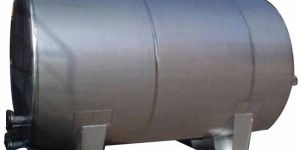
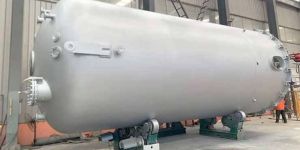
    Stainless Steel Storage Pressure Vessel

    Get Latest Price

    • Storage Capacity200 To 5000 L
    • Material GradeSS304
    • Automation GradeAutomatic
    • FinishingPolished
    • TypeStorage Pressure Vessel
    • MaterialStainless Steel
    • ColorSilver
    • Usage/ApplicationStorage Of Liquids Or Gases
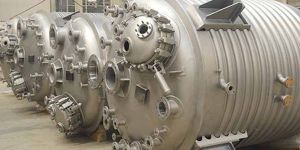
    • Pressure Vessel Manufacturer in India – IS & ASME Certified Aspal Engineering is a leading Pressure Vessel Manufacturer in India, offering customized and certified vessels designed to store gases and liquids under high pressure. With a strong focus on safety, durability, and international standards, we serve industries such as oil & gas, petrochemical, power plants, pharmaceuticals, and chemical processing.   Types of Pressure Vessels 1. Storage Vessels:  Used to store gases or liquids under pressure.  Common in industries like oil and gas, where they store natural gas, propane, and other hydrocarbons.   2. Heat Exchangers:  Transfer heat between two or more fluids at different temperatures.  Commonly used in power plants, chemical processing, and refrigeration.   3. Process Vessels:  Used in various chemical processes, including reactors, distillation columns, and separators.  Designed to withstand the conditions of specific chemical reactions or separations.   4. Boilers:  Produce steam by heating water under pressure.  Widely used in power generation, heating systems, and industrial processes.   5. Autoclaves:  High-pressure vessels used for sterilizing equipment and materials or for chemical reactions requiring high pressures and temperatures.  Common in medical and industrial applications.   Why Choose Aspal Engineering for Pressure Vessels? IS & ASME Certified: Designed and fabricated as per IS, ASME Section VIII, and international safety standards. Custom Fabrication: Pressure vessels manufactured as per client requirements – size, capacity, and material. Durable Construction: Built with high-grade stainless steel, carbon steel, and alloy materials. Safety Tested: Every vessel undergoes hydro-testing, radiography, and non-destructive testing (NDT). Wide Industry Applications: Trusted by oil & gas, chemical, pharmaceutical, and power sectors across India. Materials Used in Pressure Vessels 1. Carbon Steel:  Commonly used due to its strength and cost-effectiveness.  Suitable for a wide range of temperatures and pressures but requires protection against corrosion.   2. Stainless Steel:  Provides excellent corrosion resistance and is used in applications involving aggressive chemicals or high temperatures.  More expensive than carbon steel.   3. Alloy Steels:  Contain additional alloying elements to improve properties like strength, toughness, and resistance to high temperatures and corrosion.  Used in demanding applications, such as high-pressure steam systems.   4. Composite Materials:  Combine different materials to achieve a balance of strength, weight, and corrosion resistance.  Used in specialized applications, such as aerospace and underwater environments.   Design and Construction Considerations 1. Pressure Rating:  Determined by the maximum pressure the vessel is designed to withstand.  Must consider both internal and external pressures.   2. Temperature:  The design must account for the maximum and minimum operating temperatures.  Material selection and thickness depend on temperature conditions to prevent failure due to thermal stresses.   3. Corrosion Allowance:  Extra material thickness is added to account for potential corrosion over the vessel's lifespan.   4. Safety Factors:  Design incorporates safety margins to ensure reliability under unexpected conditions or during prolonged use.   5. Seam and Weld Quality:  High-quality welding and seam construction are crucial to prevent leaks and ensure structural integrity.  Welding must comply with standards and undergo rigorous inspection.   Codes and Standards 1. ASME Boiler and Pressure Vessel Code (BPVC):  A widely used standard in the United States and internationally.  Covers the design, construction, and inspection of pressure vessels.   2. European Pressure Equipment Directive (PED):  Regulates the design, manufacture, and conformity assessment of pressure equipment in the European Union.   3. API Standards (American Petroleum Institute):  Provides guidelines for pressure vessels used in the oil and gas industry.   4. ISO Standards (International Organization for Standardization):  Offers international standards for pressure vessel design and construction.   Inspection and Maintenance 1. Regular Inspections:  Mandatory to detect signs of wear, corrosion, or damage.  Non-destructive testing (NDT) methods like ultrasonic testing, radiography, and magnetic particle inspection are commonly used.   2. Pressure Testing:  Hydrostatic or pneumatic tests are performed to verify the vessel's integrity under pressure.   3. Safety Valves and Relief Devices:  Critical for preventing overpressure conditions.  Must be regularly tested and maintained to ensure proper operation.   4. Corrosion Protection:  Methods such as coatings, cathodic protection, and material selection are employed to minimize corrosion.   Applications of Pressure Vessels Oil and Gas Industry: Storage of natural gas and crude oil, refining processes, and offshore drilling operations. Chemical Processing: Reactors, distillation columns, and storage of hazardous chemicals. Power Generation: Boilers, steam drums, and heat exchangers in power plants. Pharmaceutical Industry: Sterilization autoclaves, reactors for drug synthesis, and storage of medical gases. Food and Beverage Industry: Sterilization, fermentation, and storage of carbonated beverages. Why We Are a Trusted Pressure Vessel Supplier in India We combine advanced fabrication technology, experienced engineering teams, and strict quality checks to deliver world-class pressure vessels. From heat exchangers to storage tanks, we are recognized as a reliable partner for industrial equipment.   Pressure vessels are vital components in many industrial processes, and their safe design, construction, and maintenance are essential to prevent catastrophic failures and ensure efficient operation. By adhering to established codes and standards and employing robust inspection and maintenance practices, industries can effectively manage the risks associated with pressure vessels.
    ...more
  • Stainless Steel Storage Pressure Vessel

    Stainless Steel Storage Pressure Vessel

    Request for Price

    1 Piece (MOQ)

    Pressure Vessel Manufacturer in India – IS & ASME Certified Aspal Engineering is a leading Pressure Vessel Manufacturer in India, offering customized and certified vessels designed to store gases and liquids under high pressure. With a strong focus on safety, durability, and international standards, we serve industries such as oil & gas, petrochemical, power plants, pharmaceuticals, and chemical processing.   Types of Pressure Vessels 1. Storage Vessels:  Used to store gases or liquids under pressure.  Common in industries like oil and gas, where they store natural gas, propane, and other hydrocarbons.   2. Heat Exchangers:  Transfer heat between two or more fluids at different temperatures.  Commonly used in power plants, chemical processing, and refrigeration.   3. Process Vessels:  Used in various chemical processes, including reactors, distillation columns, and separators.  Designed to withstand the conditions of specific chemical reactions or separations.   4. Boilers:  Produce steam by heating water under pressure.  Widely used in power generation, heating systems, and industrial processes.   5. Autoclaves:  High-pressure vessels used for sterilizing equipment and materials or for chemical reactions requiring high pressures and temperatures.  Common in medical and industrial applications.   Why Choose Aspal Engineering for Pressure Vessels? IS & ASME Certified: Designed and fabricated as per IS, ASME Section VIII, and international safety standards. Custom Fabrication: Pressure vessels manufactured as per client requirements – size, capacity, and material. Durable Construction: Built with high-grade stainless steel, carbon steel, and alloy materials. Safety Tested: Every vessel undergoes hydro-testing, radiography, and non-destructive testing (NDT). Wide Industry Applications: Trusted by oil & gas, chemical, pharmaceutical, and power sectors across India. Materials Used in Pressure Vessels 1. Carbon Steel:  Commonly used due to its strength and cost-effectiveness.  Suitable for a wide range of temperatures and pressures but requires protection against corrosion.   2. Stainless Steel:  Provides excellent corrosion resistance and is used in applications involving aggressive chemicals or high temperatures.  More expensive than carbon steel.   3. Alloy Steels:  Contain additional alloying elements to improve properties like strength, toughness, and resistance to high temperatures and corrosion.  Used in demanding applications, such as high-pressure steam systems.   4. Composite Materials:  Combine different materials to achieve a balance of strength, weight, and corrosion resistance.  Used in specialized applications, such as aerospace and underwater environments.   Design and Construction Considerations 1. Pressure Rating:  Determined by the maximum pressure the vessel is designed to withstand.  Must consider both internal and external pressures.   2. Temperature:  The design must account for the maximum and minimum operating temperatures.  Material selection and thickness depend on temperature conditions to prevent failure due to thermal stresses.   3. Corrosion Allowance:  Extra material thickness is added to account for potential corrosion over the vessel's lifespan.   4. Safety Factors:  Design incorporates safety margins to ensure reliability under unexpected conditions or during prolonged use.   5. Seam and Weld Quality:  High-quality welding and seam construction are crucial to prevent leaks and ensure structural integrity.  Welding must comply with standards and undergo rigorous inspection.   Codes and Standards 1. ASME Boiler and Pressure Vessel Code (BPVC):  A widely used standard in the United States and internationally.  Covers the design, construction, and inspection of pressure vessels.   2. European Pressure Equipment Directive (PED):  Regulates the design, manufacture, and conformity assessment of pressure equipment in the European Union.   3. API Standards (American Petroleum Institute):  Provides guidelines for pressure vessels used in the oil and gas industry.   4. ISO Standards (International Organization for Standardization):  Offers international standards for pressure vessel design and construction.   Inspection and Maintenance 1. Regular Inspections:  Mandatory to detect signs of wear, corrosion, or damage.  Non-destructive testing (NDT) methods like ultrasonic testing, radiography, and magnetic particle inspection are commonly used.   2. Pressure Testing:  Hydrostatic or pneumatic tests are performed to verify the vessel's integrity under pressure.   3. Safety Valves and Relief Devices:  Critical for preventing overpressure conditions.  Must be regularly tested and maintained to ensure proper operation.   4. Corrosion Protection:  Methods such as coatings, cathodic protection, and material selection are employed to minimize corrosion.   Applications of Pressure Vessels Oil and Gas Industry: Storage of natural gas and crude oil, refining processes, and offshore drilling operations. Chemical Processing: Reactors, distillation columns, and storage of hazardous chemicals. Power Generation: Boilers, steam drums, and heat exchangers in power plants. Pharmaceutical Industry: Sterilization autoclaves, reactors for drug synthesis, and storage of medical gases. Food and Beverage Industry: Sterilization, fermentation, and storage of carbonated beverages. Why We Are a Trusted Pressure Vessel Supplier in India We combine advanced fabrication technology, experienced engineering teams, and strict quality checks to deliver world-class pressure vessels. From heat exchangers to storage tanks, we are recognized as a reliable partner for industrial equipment.   Pressure vessels are vital components in many industrial processes, and their safe design, construction, and maintenance are essential to prevent catastrophic failures and ensure efficient operation. By adhering to established codes and standards and employing robust inspection and maintenance practices, industries can effectively manage the risks associated with pressure vessels.

    Storage Capacity : 200 To 5000 L

    Material Grade : SS304

    Automation Grade : Automatic

    Finishing : Polished

    Type : Storage Pressure Vessel

    Material : Stainless Steel

    Color : Silver

    Usage/Application : Storage Of Liquids Or Gases

    ...more
    Get Best Price
  • Stainless Steel Steam Ball Valve

    Stainless Steel Steam Ball Valve

    Get Latest Price

    • MOQ100 Piece
    • UsageControl Steam Flow In Industrial Applications
    • TypeSteam Ball Valve
    • PressureUp to 100 PSI
    • Power SourceElectric
    • Automation GradeSemi Automatic
    • OriginIndia
    • ColorSilver
    • MaterialStainless Steel
    • Industrial Valves Industrial valves are mechanical devices used to control the flow and pressure of liquids, gases, and slurries within a system. These valves are essential components in various industries, including oil and gas, chemical processing, water treatment, power generation, and manufacturing. The selection of the appropriate valve type is critical for ensuring efficient and safe operation of industrial processes.   Types of Industrial Valves 1. Gate Valves: Used to start or stop the flow of fluid. Operate by lifting a gate out of the path of the fluid. Suitable for applications requiring full flow or no flow and minimal pressure drop when fully open. 2. Globe Valves: Used for regulating flow in a pipeline. Feature a movable disk-type element and a stationary ring seat in a generally spherical body. Provide good throttling capabilities and are commonly used in applications where flow control is required. 3. Ball Valves: Use a spherical ball with a hole through the center to control the flow. Offer quick shutoff and are ideal for applications requiring tight sealing and minimal leakage. Suitable for on/off control without pressure drop. 4. Butterfly Valves: Feature a rotating disk that opens and closes to control flow. Provide a compact design and are suitable for applications requiring quick operation and minimal space. Commonly used in water supply, wastewater treatment, and HVAC systems. 5. Check Valves: Allow fluid to flow in one direction only, preventing backflow. Operate automatically without any external control. Used in applications where backflow prevention is critical, such as pumps and compressors. 6. Diaphragm Valves: Use a flexible diaphragm that moves up and down to control flow. Provide excellent shutoff and are suitable for handling corrosive fluids, slurries, and applications requiring sanitary conditions. Common in pharmaceutical, food and beverage, and chemical processing industries. 7. Needle Valves: Feature a small port and a threaded, needle-shaped plunger for precise flow control. Suitable for applications requiring fine adjustments of flow rates, such as in instrumentation and sampling systems. 8. Pressure Relief Valves: Designed to release pressure automatically when it exceeds a predetermined limit. Ensure safety by preventing overpressure conditions. Widely used in boilers, pressure vessels, and piping systems. 9. Solenoid Valves: Electrically operated valves that use a solenoid to control the opening and closing of the valve. Offer quick and precise control and are commonly used in automation systems and control processes. 10. Plug Valves: Use a tapered or cylindrical plug to regulate flow. Provide a simple design with quick operation and tight sealing capabilities. Suitable for handling liquids with suspended solids.   Applications of Industrial Valves Oil and Gas Industry: Control the flow of crude oil, natural gas, and refined products in pipelines, refineries, and offshore platforms. Chemical Processing: Manage the flow of corrosive and hazardous chemicals in reactors, separators, and storage tanks. Water Treatment: Control water flow in treatment plants, distribution systems, and wastewater facilities. Power Generation: Regulate steam, water, and fuel flow in power plants, including nuclear, fossil fuel, and renewable energy plants. Manufacturing: Control the flow of various fluids in production processes, machinery, and equipment.   Selection Criteria for Industrial Valves 1. Type of Fluid:  Consider the properties of the fluid, including corrosiveness, viscosity, temperature, and pressure.   2. Flow Requirements:  Determine whether the application requires on/off control, throttling, or backflow prevention.   3. Pressure and Temperature Ratings:  Ensure the valve can withstand the operating pressure and temperature conditions of the system.   4. Material Compatibility:  Select valve materials that are compatible with the fluid and the operating environment to prevent corrosion and degradation.   5. Size and Configuration:  Choose the appropriate valve size and connection type (flanged, threaded, welded) for the system.   6. Maintenance and Accessibility:  Consider the ease of maintenance and accessibility for inspection and repair.   7. Automation and Control:  Determine if the valve requires manual operation or if it should be integrated into an automated control system.   Maintenance and Safety Practices Regular Inspections: Conduct routine inspections to check for leaks, wear, and proper operation. Lubrication: Ensure moving parts are properly lubricated to reduce friction and wear. Pressure Testing: Perform pressure tests to verify the integrity and performance of valves. Calibration: Calibrate control and relief valves regularly to ensure accurate operation. Training: Train personnel on proper valve operation, maintenance procedures, and safety protocols. Industrial valves are vital components in controlling the flow of fluids within various industrial systems. By selecting the right valve type and maintaining them properly, industries can ensure efficient, safe, and reliable operation of their processes.
    ...more
  • Stainless Steel Steam Ball Valve

    Stainless Steel Steam Ball Valve

    Request for Price

    100 Piece (MOQ)

    Industrial Valves Industrial valves are mechanical devices used to control the flow and pressure of liquids, gases, and slurries within a system. These valves are essential components in various industries, including oil and gas, chemical processing, water treatment, power generation, and manufacturing. The selection of the appropriate valve type is critical for ensuring efficient and safe operation of industrial processes.   Types of Industrial Valves 1. Gate Valves: Used to start or stop the flow of fluid. Operate by lifting a gate out of the path of the fluid. Suitable for applications requiring full flow or no flow and minimal pressure drop when fully open. 2. Globe Valves: Used for regulating flow in a pipeline. Feature a movable disk-type element and a stationary ring seat in a generally spherical body. Provide good throttling capabilities and are commonly used in applications where flow control is required. 3. Ball Valves: Use a spherical ball with a hole through the center to control the flow. Offer quick shutoff and are ideal for applications requiring tight sealing and minimal leakage. Suitable for on/off control without pressure drop. 4. Butterfly Valves: Feature a rotating disk that opens and closes to control flow. Provide a compact design and are suitable for applications requiring quick operation and minimal space. Commonly used in water supply, wastewater treatment, and HVAC systems. 5. Check Valves: Allow fluid to flow in one direction only, preventing backflow. Operate automatically without any external control. Used in applications where backflow prevention is critical, such as pumps and compressors. 6. Diaphragm Valves: Use a flexible diaphragm that moves up and down to control flow. Provide excellent shutoff and are suitable for handling corrosive fluids, slurries, and applications requiring sanitary conditions. Common in pharmaceutical, food and beverage, and chemical processing industries. 7. Needle Valves: Feature a small port and a threaded, needle-shaped plunger for precise flow control. Suitable for applications requiring fine adjustments of flow rates, such as in instrumentation and sampling systems. 8. Pressure Relief Valves: Designed to release pressure automatically when it exceeds a predetermined limit. Ensure safety by preventing overpressure conditions. Widely used in boilers, pressure vessels, and piping systems. 9. Solenoid Valves: Electrically operated valves that use a solenoid to control the opening and closing of the valve. Offer quick and precise control and are commonly used in automation systems and control processes. 10. Plug Valves: Use a tapered or cylindrical plug to regulate flow. Provide a simple design with quick operation and tight sealing capabilities. Suitable for handling liquids with suspended solids.   Applications of Industrial Valves Oil and Gas Industry: Control the flow of crude oil, natural gas, and refined products in pipelines, refineries, and offshore platforms. Chemical Processing: Manage the flow of corrosive and hazardous chemicals in reactors, separators, and storage tanks. Water Treatment: Control water flow in treatment plants, distribution systems, and wastewater facilities. Power Generation: Regulate steam, water, and fuel flow in power plants, including nuclear, fossil fuel, and renewable energy plants. Manufacturing: Control the flow of various fluids in production processes, machinery, and equipment.   Selection Criteria for Industrial Valves 1. Type of Fluid:  Consider the properties of the fluid, including corrosiveness, viscosity, temperature, and pressure.   2. Flow Requirements:  Determine whether the application requires on/off control, throttling, or backflow prevention.   3. Pressure and Temperature Ratings:  Ensure the valve can withstand the operating pressure and temperature conditions of the system.   4. Material Compatibility:  Select valve materials that are compatible with the fluid and the operating environment to prevent corrosion and degradation.   5. Size and Configuration:  Choose the appropriate valve size and connection type (flanged, threaded, welded) for the system.   6. Maintenance and Accessibility:  Consider the ease of maintenance and accessibility for inspection and repair.   7. Automation and Control:  Determine if the valve requires manual operation or if it should be integrated into an automated control system.   Maintenance and Safety Practices Regular Inspections: Conduct routine inspections to check for leaks, wear, and proper operation. Lubrication: Ensure moving parts are properly lubricated to reduce friction and wear. Pressure Testing: Perform pressure tests to verify the integrity and performance of valves. Calibration: Calibrate control and relief valves regularly to ensure accurate operation. Training: Train personnel on proper valve operation, maintenance procedures, and safety protocols. Industrial valves are vital components in controlling the flow of fluids within various industrial systems. By selecting the right valve type and maintaining them properly, industries can ensure efficient, safe, and reliable operation of their processes.

    Usage : Control Steam Flow In Industrial Applications

    Type : Steam Ball Valve

    Pressure : Up to 100 PSI

    Power Source : Electric

    Automation Grade : Semi Automatic

    Origin : India

    Color : Silver

    Material : Stainless Steel

    ...more
    Get Best Price
  • Stainless Steel Pressure Relief Valve

    Stainless Steel Pressure Relief Valve

    Get Latest Price

    • MOQ100 Piece
    • ApplicationPressure Relief In Industrial Applications
    • MaterialStainless Steel
    • Country of OriginIndia
    • FeatureCorrosion Proof
    • Weight5-10kg
    • Temperature Rating (°F)200
    • Pressure Setting Range (psig)50-100
    • Connection TypeFlanged
    • TypePressure Relief Valve
    • Industrial Valves Industrial valves are mechanical devices used to control the flow and pressure of liquids, gases, and slurries within a system. These valves are essential components in various industries, including oil and gas, chemical processing, water treatment, power generation, and manufacturing. The selection of the appropriate valve type is critical for ensuring efficient and safe operation of industrial processes.   Types of Industrial Valves 1. Gate Valves: Used to start or stop the flow of fluid. Operate by lifting a gate out of the path of the fluid. Suitable for applications requiring full flow or no flow and minimal pressure drop when fully open. 2. Globe Valves: Used for regulating flow in a pipeline. Feature a movable disk-type element and a stationary ring seat in a generally spherical body. Provide good throttling capabilities and are commonly used in applications where flow control is required. 3. Ball Valves: Use a spherical ball with a hole through the center to control the flow. Offer quick shutoff and are ideal for applications requiring tight sealing and minimal leakage. Suitable for on/off control without pressure drop. 4. Butterfly Valves: Feature a rotating disk that opens and closes to control flow. Provide a compact design and are suitable for applications requiring quick operation and minimal space. Commonly used in water supply, wastewater treatment, and HVAC systems. 5. Check Valves: Allow fluid to flow in one direction only, preventing backflow. Operate automatically without any external control. Used in applications where backflow prevention is critical, such as pumps and compressors. 6. Diaphragm Valves: Use a flexible diaphragm that moves up and down to control flow. Provide excellent shutoff and are suitable for handling corrosive fluids, slurries, and applications requiring sanitary conditions. Common in pharmaceutical, food and beverage, and chemical processing industries. 7. Needle Valves: Feature a small port and a threaded, needle-shaped plunger for precise flow control. Suitable for applications requiring fine adjustments of flow rates, such as in instrumentation and sampling systems. 8. Pressure Relief Valves: Designed to release pressure automatically when it exceeds a predetermined limit. Ensure safety by preventing overpressure conditions. Widely used in boilers, pressure vessels, and piping systems. 9. Solenoid Valves: Electrically operated valves that use a solenoid to control the opening and closing of the valve. Offer quick and precise control and are commonly used in automation systems and control processes. 10. Plug Valves: Use a tapered or cylindrical plug to regulate flow. Provide a simple design with quick operation and tight sealing capabilities. Suitable for handling liquids with suspended solids.   Applications of Industrial Valves Oil and Gas Industry: Control the flow of crude oil, natural gas, and refined products in pipelines, refineries, and offshore platforms. Chemical Processing: Manage the flow of corrosive and hazardous chemicals in reactors, separators, and storage tanks. Water Treatment: Control water flow in treatment plants, distribution systems, and wastewater facilities. Power Generation: Regulate steam, water, and fuel flow in power plants, including nuclear, fossil fuel, and renewable energy plants. Manufacturing: Control the flow of various fluids in production processes, machinery, and equipment.   Selection Criteria for Industrial Valves 1. Type of Fluid:  Consider the properties of the fluid, including corrosiveness, viscosity, temperature, and pressure.   2. Flow Requirements:  Determine whether the application requires on/off control, throttling, or backflow prevention.   3. Pressure and Temperature Ratings:  Ensure the valve can withstand the operating pressure and temperature conditions of the system.   4. Material Compatibility:  Select valve materials that are compatible with the fluid and the operating environment to prevent corrosion and degradation.   5. Size and Configuration:  Choose the appropriate valve size and connection type (flanged, threaded, welded) for the system.   6. Maintenance and Accessibility:  Consider the ease of maintenance and accessibility for inspection and repair.   7. Automation and Control:  Determine if the valve requires manual operation or if it should be integrated into an automated control system.   Maintenance and Safety Practices Regular Inspections: Conduct routine inspections to check for leaks, wear, and proper operation. Lubrication: Ensure moving parts are properly lubricated to reduce friction and wear. Pressure Testing: Perform pressure tests to verify the integrity and performance of valves. Calibration: Calibrate control and relief valves regularly to ensure accurate operation. Training: Train personnel on proper valve operation, maintenance procedures, and safety protocols. Industrial valves are vital components in controlling the flow of fluids within various industrial systems. By selecting the right valve type and maintaining them properly, industries can ensure efficient, safe, and reliable operation of their processes.
    ...more
  • Stainless Steel Pressure Relief Valve

    Stainless Steel Pressure Relief Valve

    Request for Price

    100 Piece (MOQ)

    Industrial Valves Industrial valves are mechanical devices used to control the flow and pressure of liquids, gases, and slurries within a system. These valves are essential components in various industries, including oil and gas, chemical processing, water treatment, power generation, and manufacturing. The selection of the appropriate valve type is critical for ensuring efficient and safe operation of industrial processes.   Types of Industrial Valves 1. Gate Valves: Used to start or stop the flow of fluid. Operate by lifting a gate out of the path of the fluid. Suitable for applications requiring full flow or no flow and minimal pressure drop when fully open. 2. Globe Valves: Used for regulating flow in a pipeline. Feature a movable disk-type element and a stationary ring seat in a generally spherical body. Provide good throttling capabilities and are commonly used in applications where flow control is required. 3. Ball Valves: Use a spherical ball with a hole through the center to control the flow. Offer quick shutoff and are ideal for applications requiring tight sealing and minimal leakage. Suitable for on/off control without pressure drop. 4. Butterfly Valves: Feature a rotating disk that opens and closes to control flow. Provide a compact design and are suitable for applications requiring quick operation and minimal space. Commonly used in water supply, wastewater treatment, and HVAC systems. 5. Check Valves: Allow fluid to flow in one direction only, preventing backflow. Operate automatically without any external control. Used in applications where backflow prevention is critical, such as pumps and compressors. 6. Diaphragm Valves: Use a flexible diaphragm that moves up and down to control flow. Provide excellent shutoff and are suitable for handling corrosive fluids, slurries, and applications requiring sanitary conditions. Common in pharmaceutical, food and beverage, and chemical processing industries. 7. Needle Valves: Feature a small port and a threaded, needle-shaped plunger for precise flow control. Suitable for applications requiring fine adjustments of flow rates, such as in instrumentation and sampling systems. 8. Pressure Relief Valves: Designed to release pressure automatically when it exceeds a predetermined limit. Ensure safety by preventing overpressure conditions. Widely used in boilers, pressure vessels, and piping systems. 9. Solenoid Valves: Electrically operated valves that use a solenoid to control the opening and closing of the valve. Offer quick and precise control and are commonly used in automation systems and control processes. 10. Plug Valves: Use a tapered or cylindrical plug to regulate flow. Provide a simple design with quick operation and tight sealing capabilities. Suitable for handling liquids with suspended solids.   Applications of Industrial Valves Oil and Gas Industry: Control the flow of crude oil, natural gas, and refined products in pipelines, refineries, and offshore platforms. Chemical Processing: Manage the flow of corrosive and hazardous chemicals in reactors, separators, and storage tanks. Water Treatment: Control water flow in treatment plants, distribution systems, and wastewater facilities. Power Generation: Regulate steam, water, and fuel flow in power plants, including nuclear, fossil fuel, and renewable energy plants. Manufacturing: Control the flow of various fluids in production processes, machinery, and equipment.   Selection Criteria for Industrial Valves 1. Type of Fluid:  Consider the properties of the fluid, including corrosiveness, viscosity, temperature, and pressure.   2. Flow Requirements:  Determine whether the application requires on/off control, throttling, or backflow prevention.   3. Pressure and Temperature Ratings:  Ensure the valve can withstand the operating pressure and temperature conditions of the system.   4. Material Compatibility:  Select valve materials that are compatible with the fluid and the operating environment to prevent corrosion and degradation.   5. Size and Configuration:  Choose the appropriate valve size and connection type (flanged, threaded, welded) for the system.   6. Maintenance and Accessibility:  Consider the ease of maintenance and accessibility for inspection and repair.   7. Automation and Control:  Determine if the valve requires manual operation or if it should be integrated into an automated control system.   Maintenance and Safety Practices Regular Inspections: Conduct routine inspections to check for leaks, wear, and proper operation. Lubrication: Ensure moving parts are properly lubricated to reduce friction and wear. Pressure Testing: Perform pressure tests to verify the integrity and performance of valves. Calibration: Calibrate control and relief valves regularly to ensure accurate operation. Training: Train personnel on proper valve operation, maintenance procedures, and safety protocols. Industrial valves are vital components in controlling the flow of fluids within various industrial systems. By selecting the right valve type and maintaining them properly, industries can ensure efficient, safe, and reliable operation of their processes.

    Application : Pressure Relief In Industrial Applications

    Material : Stainless Steel

    Country of Origin : India

    Feature : Corrosion Proof

    Weight : 5-10kg

    Temperature Rating (°F) : 200

    Pressure Setting Range (psig) : 50-100

    Connection Type : Flanged

    ...more
    Get Best Price
  • Stainless Steel Needle Valve

    Stainless Steel Needle Valve

    Get Latest Price

    • MOQ100 Piece
    • ColorSilver
    • MaterialStainless Steel
    • TypeNeedle Valve
    • Packaging TypeBox
    • Pressure RatingUp To 6000 Psi
    • Temperature RatingSuitable For High Temperatures
    • ApplicationControl Flow In Pipelines
    • Connection TypeThreaded Or Flanged
    • Industrial Valves Industrial valves are mechanical devices used to control the flow and pressure of liquids, gases, and slurries within a system. These valves are essential components in various industries, including oil and gas, chemical processing, water treatment, power generation, and manufacturing. The selection of the appropriate valve type is critical for ensuring efficient and safe operation of industrial processes.   Types of Industrial Valves 1. Gate Valves: Used to start or stop the flow of fluid. Operate by lifting a gate out of the path of the fluid. Suitable for applications requiring full flow or no flow and minimal pressure drop when fully open. 2. Globe Valves: Used for regulating flow in a pipeline. Feature a movable disk-type element and a stationary ring seat in a generally spherical body. Provide good throttling capabilities and are commonly used in applications where flow control is required. 3. Ball Valves: Use a spherical ball with a hole through the center to control the flow. Offer quick shutoff and are ideal for applications requiring tight sealing and minimal leakage. Suitable for on/off control without pressure drop. 4. Butterfly Valves: Feature a rotating disk that opens and closes to control flow. Provide a compact design and are suitable for applications requiring quick operation and minimal space. Commonly used in water supply, wastewater treatment, and HVAC systems. 5. Check Valves: Allow fluid to flow in one direction only, preventing backflow. Operate automatically without any external control. Used in applications where backflow prevention is critical, such as pumps and compressors. 6. Diaphragm Valves: Use a flexible diaphragm that moves up and down to control flow. Provide excellent shutoff and are suitable for handling corrosive fluids, slurries, and applications requiring sanitary conditions. Common in pharmaceutical, food and beverage, and chemical processing industries. 7. Needle Valves: Feature a small port and a threaded, needle-shaped plunger for precise flow control. Suitable for applications requiring fine adjustments of flow rates, such as in instrumentation and sampling systems. 8. Pressure Relief Valves: Designed to release pressure automatically when it exceeds a predetermined limit. Ensure safety by preventing overpressure conditions. Widely used in boilers, pressure vessels, and piping systems. 9. Solenoid Valves: Electrically operated valves that use a solenoid to control the opening and closing of the valve. Offer quick and precise control and are commonly used in automation systems and control processes. 10. Plug Valves: Use a tapered or cylindrical plug to regulate flow. Provide a simple design with quick operation and tight sealing capabilities. Suitable for handling liquids with suspended solids.   Applications of Industrial Valves Oil and Gas Industry: Control the flow of crude oil, natural gas, and refined products in pipelines, refineries, and offshore platforms. Chemical Processing: Manage the flow of corrosive and hazardous chemicals in reactors, separators, and storage tanks. Water Treatment: Control water flow in treatment plants, distribution systems, and wastewater facilities. Power Generation: Regulate steam, water, and fuel flow in power plants, including nuclear, fossil fuel, and renewable energy plants. Manufacturing: Control the flow of various fluids in production processes, machinery, and equipment.   Selection Criteria for Industrial Valves 1. Type of Fluid:  Consider the properties of the fluid, including corrosiveness, viscosity, temperature, and pressure.   2. Flow Requirements:  Determine whether the application requires on/off control, throttling, or backflow prevention.   3. Pressure and Temperature Ratings:  Ensure the valve can withstand the operating pressure and temperature conditions of the system.   4. Material Compatibility:  Select valve materials that are compatible with the fluid and the operating environment to prevent corrosion and degradation.   5. Size and Configuration:  Choose the appropriate valve size and connection type (flanged, threaded, welded) for the system.   6. Maintenance and Accessibility:  Consider the ease of maintenance and accessibility for inspection and repair.   7. Automation and Control:  Determine if the valve requires manual operation or if it should be integrated into an automated control system.   Maintenance and Safety Practices Regular Inspections: Conduct routine inspections to check for leaks, wear, and proper operation. Lubrication: Ensure moving parts are properly lubricated to reduce friction and wear. Pressure Testing: Perform pressure tests to verify the integrity and performance of valves. Calibration: Calibrate control and relief valves regularly to ensure accurate operation. Training: Train personnel on proper valve operation, maintenance procedures, and safety protocols. Industrial valves are vital components in controlling the flow of fluids within various industrial systems. By selecting the right valve type and maintaining them properly, industries can ensure efficient, safe, and reliable operation of their processes.
    ...more
  • Stainless Steel Needle Valve

    Stainless Steel Needle Valve

    Request for Price

    100 Piece (MOQ)

    Industrial Valves Industrial valves are mechanical devices used to control the flow and pressure of liquids, gases, and slurries within a system. These valves are essential components in various industries, including oil and gas, chemical processing, water treatment, power generation, and manufacturing. The selection of the appropriate valve type is critical for ensuring efficient and safe operation of industrial processes.   Types of Industrial Valves 1. Gate Valves: Used to start or stop the flow of fluid. Operate by lifting a gate out of the path of the fluid. Suitable for applications requiring full flow or no flow and minimal pressure drop when fully open. 2. Globe Valves: Used for regulating flow in a pipeline. Feature a movable disk-type element and a stationary ring seat in a generally spherical body. Provide good throttling capabilities and are commonly used in applications where flow control is required. 3. Ball Valves: Use a spherical ball with a hole through the center to control the flow. Offer quick shutoff and are ideal for applications requiring tight sealing and minimal leakage. Suitable for on/off control without pressure drop. 4. Butterfly Valves: Feature a rotating disk that opens and closes to control flow. Provide a compact design and are suitable for applications requiring quick operation and minimal space. Commonly used in water supply, wastewater treatment, and HVAC systems. 5. Check Valves: Allow fluid to flow in one direction only, preventing backflow. Operate automatically without any external control. Used in applications where backflow prevention is critical, such as pumps and compressors. 6. Diaphragm Valves: Use a flexible diaphragm that moves up and down to control flow. Provide excellent shutoff and are suitable for handling corrosive fluids, slurries, and applications requiring sanitary conditions. Common in pharmaceutical, food and beverage, and chemical processing industries. 7. Needle Valves: Feature a small port and a threaded, needle-shaped plunger for precise flow control. Suitable for applications requiring fine adjustments of flow rates, such as in instrumentation and sampling systems. 8. Pressure Relief Valves: Designed to release pressure automatically when it exceeds a predetermined limit. Ensure safety by preventing overpressure conditions. Widely used in boilers, pressure vessels, and piping systems. 9. Solenoid Valves: Electrically operated valves that use a solenoid to control the opening and closing of the valve. Offer quick and precise control and are commonly used in automation systems and control processes. 10. Plug Valves: Use a tapered or cylindrical plug to regulate flow. Provide a simple design with quick operation and tight sealing capabilities. Suitable for handling liquids with suspended solids.   Applications of Industrial Valves Oil and Gas Industry: Control the flow of crude oil, natural gas, and refined products in pipelines, refineries, and offshore platforms. Chemical Processing: Manage the flow of corrosive and hazardous chemicals in reactors, separators, and storage tanks. Water Treatment: Control water flow in treatment plants, distribution systems, and wastewater facilities. Power Generation: Regulate steam, water, and fuel flow in power plants, including nuclear, fossil fuel, and renewable energy plants. Manufacturing: Control the flow of various fluids in production processes, machinery, and equipment.   Selection Criteria for Industrial Valves 1. Type of Fluid:  Consider the properties of the fluid, including corrosiveness, viscosity, temperature, and pressure.   2. Flow Requirements:  Determine whether the application requires on/off control, throttling, or backflow prevention.   3. Pressure and Temperature Ratings:  Ensure the valve can withstand the operating pressure and temperature conditions of the system.   4. Material Compatibility:  Select valve materials that are compatible with the fluid and the operating environment to prevent corrosion and degradation.   5. Size and Configuration:  Choose the appropriate valve size and connection type (flanged, threaded, welded) for the system.   6. Maintenance and Accessibility:  Consider the ease of maintenance and accessibility for inspection and repair.   7. Automation and Control:  Determine if the valve requires manual operation or if it should be integrated into an automated control system.   Maintenance and Safety Practices Regular Inspections: Conduct routine inspections to check for leaks, wear, and proper operation. Lubrication: Ensure moving parts are properly lubricated to reduce friction and wear. Pressure Testing: Perform pressure tests to verify the integrity and performance of valves. Calibration: Calibrate control and relief valves regularly to ensure accurate operation. Training: Train personnel on proper valve operation, maintenance procedures, and safety protocols. Industrial valves are vital components in controlling the flow of fluids within various industrial systems. By selecting the right valve type and maintaining them properly, industries can ensure efficient, safe, and reliable operation of their processes.

    Color : Silver

    Material : Stainless Steel

    Type : Needle Valve

    Packaging Type : Box

    Pressure Rating : Up To 6000 Psi

    Temperature Rating : Suitable For High Temperatures

    ...more
    Get Best Price
  • Stainless Steel Globe Valves

    Stainless Steel Globe Valves

    Get Latest Price

    • MOQ100 Piece
    • Packaging TypeBox
    • MaterialStainless Steel
    • ColorSilver
    • TypeGlobe Valves
    • UsageControl Flow In Pipelines
    • Pressure RatingUp To 6000 Psi
    • Temperature RatingSuitable For High Temperatures
    • Connection TypeThreaded Or Flanged
    • Design StandardANSI Or API Standards
    • Industrial Valves Industrial valves are mechanical devices used to control the flow and pressure of liquids, gases, and slurries within a system. These valves are essential components in various industries, including oil and gas, chemical processing, water treatment, power generation, and manufacturing. The selection of the appropriate valve type is critical for ensuring efficient and safe operation of industrial processes.   Types of Industrial Valves 1. Gate Valves: Used to start or stop the flow of fluid. Operate by lifting a gate out of the path of the fluid. Suitable for applications requiring full flow or no flow and minimal pressure drop when fully open. 2. Globe Valves: Used for regulating flow in a pipeline. Feature a movable disk-type element and a stationary ring seat in a generally spherical body. Provide good throttling capabilities and are commonly used in applications where flow control is required. 3. Ball Valves: Use a spherical ball with a hole through the center to control the flow. Offer quick shutoff and are ideal for applications requiring tight sealing and minimal leakage. Suitable for on/off control without pressure drop. 4. Butterfly Valves: Feature a rotating disk that opens and closes to control flow. Provide a compact design and are suitable for applications requiring quick operation and minimal space. Commonly used in water supply, wastewater treatment, and HVAC systems. 5. Check Valves: Allow fluid to flow in one direction only, preventing backflow. Operate automatically without any external control. Used in applications where backflow prevention is critical, such as pumps and compressors. 6. Diaphragm Valves: Use a flexible diaphragm that moves up and down to control flow. Provide excellent shutoff and are suitable for handling corrosive fluids, slurries, and applications requiring sanitary conditions. Common in pharmaceutical, food and beverage, and chemical processing industries. 7. Needle Valves: Feature a small port and a threaded, needle-shaped plunger for precise flow control. Suitable for applications requiring fine adjustments of flow rates, such as in instrumentation and sampling systems. 8. Pressure Relief Valves: Designed to release pressure automatically when it exceeds a predetermined limit. Ensure safety by preventing overpressure conditions. Widely used in boilers, pressure vessels, and piping systems. 9. Solenoid Valves: Electrically operated valves that use a solenoid to control the opening and closing of the valve. Offer quick and precise control and are commonly used in automation systems and control processes. 10. Plug Valves: Use a tapered or cylindrical plug to regulate flow. Provide a simple design with quick operation and tight sealing capabilities. Suitable for handling liquids with suspended solids.   Applications of Industrial Valves Oil and Gas Industry: Control the flow of crude oil, natural gas, and refined products in pipelines, refineries, and offshore platforms. Chemical Processing: Manage the flow of corrosive and hazardous chemicals in reactors, separators, and storage tanks. Water Treatment: Control water flow in treatment plants, distribution systems, and wastewater facilities. Power Generation: Regulate steam, water, and fuel flow in power plants, including nuclear, fossil fuel, and renewable energy plants. Manufacturing: Control the flow of various fluids in production processes, machinery, and equipment.   Selection Criteria for Industrial Valves 1. Type of Fluid:  Consider the properties of the fluid, including corrosiveness, viscosity, temperature, and pressure.   2. Flow Requirements:  Determine whether the application requires on/off control, throttling, or backflow prevention.   3. Pressure and Temperature Ratings:  Ensure the valve can withstand the operating pressure and temperature conditions of the system.   4. Material Compatibility:  Select valve materials that are compatible with the fluid and the operating environment to prevent corrosion and degradation.   5. Size and Configuration:  Choose the appropriate valve size and connection type (flanged, threaded, welded) for the system.   6. Maintenance and Accessibility:  Consider the ease of maintenance and accessibility for inspection and repair.   7. Automation and Control:  Determine if the valve requires manual operation or if it should be integrated into an automated control system.   Maintenance and Safety Practices Regular Inspections: Conduct routine inspections to check for leaks, wear, and proper operation. Lubrication: Ensure moving parts are properly lubricated to reduce friction and wear. Pressure Testing: Perform pressure tests to verify the integrity and performance of valves. Calibration: Calibrate control and relief valves regularly to ensure accurate operation. Training: Train personnel on proper valve operation, maintenance procedures, and safety protocols. Industrial valves are vital components in controlling the flow of fluids within various industrial systems. By selecting the right valve type and maintaining them properly, industries can ensure efficient, safe, and reliable operation of their processes.
    ...more
  • Stainless Steel Globe Valves

    Stainless Steel Globe Valves

    Request for Price

    100 Piece (MOQ)

    Industrial Valves Industrial valves are mechanical devices used to control the flow and pressure of liquids, gases, and slurries within a system. These valves are essential components in various industries, including oil and gas, chemical processing, water treatment, power generation, and manufacturing. The selection of the appropriate valve type is critical for ensuring efficient and safe operation of industrial processes.   Types of Industrial Valves 1. Gate Valves: Used to start or stop the flow of fluid. Operate by lifting a gate out of the path of the fluid. Suitable for applications requiring full flow or no flow and minimal pressure drop when fully open. 2. Globe Valves: Used for regulating flow in a pipeline. Feature a movable disk-type element and a stationary ring seat in a generally spherical body. Provide good throttling capabilities and are commonly used in applications where flow control is required. 3. Ball Valves: Use a spherical ball with a hole through the center to control the flow. Offer quick shutoff and are ideal for applications requiring tight sealing and minimal leakage. Suitable for on/off control without pressure drop. 4. Butterfly Valves: Feature a rotating disk that opens and closes to control flow. Provide a compact design and are suitable for applications requiring quick operation and minimal space. Commonly used in water supply, wastewater treatment, and HVAC systems. 5. Check Valves: Allow fluid to flow in one direction only, preventing backflow. Operate automatically without any external control. Used in applications where backflow prevention is critical, such as pumps and compressors. 6. Diaphragm Valves: Use a flexible diaphragm that moves up and down to control flow. Provide excellent shutoff and are suitable for handling corrosive fluids, slurries, and applications requiring sanitary conditions. Common in pharmaceutical, food and beverage, and chemical processing industries. 7. Needle Valves: Feature a small port and a threaded, needle-shaped plunger for precise flow control. Suitable for applications requiring fine adjustments of flow rates, such as in instrumentation and sampling systems. 8. Pressure Relief Valves: Designed to release pressure automatically when it exceeds a predetermined limit. Ensure safety by preventing overpressure conditions. Widely used in boilers, pressure vessels, and piping systems. 9. Solenoid Valves: Electrically operated valves that use a solenoid to control the opening and closing of the valve. Offer quick and precise control and are commonly used in automation systems and control processes. 10. Plug Valves: Use a tapered or cylindrical plug to regulate flow. Provide a simple design with quick operation and tight sealing capabilities. Suitable for handling liquids with suspended solids.   Applications of Industrial Valves Oil and Gas Industry: Control the flow of crude oil, natural gas, and refined products in pipelines, refineries, and offshore platforms. Chemical Processing: Manage the flow of corrosive and hazardous chemicals in reactors, separators, and storage tanks. Water Treatment: Control water flow in treatment plants, distribution systems, and wastewater facilities. Power Generation: Regulate steam, water, and fuel flow in power plants, including nuclear, fossil fuel, and renewable energy plants. Manufacturing: Control the flow of various fluids in production processes, machinery, and equipment.   Selection Criteria for Industrial Valves 1. Type of Fluid:  Consider the properties of the fluid, including corrosiveness, viscosity, temperature, and pressure.   2. Flow Requirements:  Determine whether the application requires on/off control, throttling, or backflow prevention.   3. Pressure and Temperature Ratings:  Ensure the valve can withstand the operating pressure and temperature conditions of the system.   4. Material Compatibility:  Select valve materials that are compatible with the fluid and the operating environment to prevent corrosion and degradation.   5. Size and Configuration:  Choose the appropriate valve size and connection type (flanged, threaded, welded) for the system.   6. Maintenance and Accessibility:  Consider the ease of maintenance and accessibility for inspection and repair.   7. Automation and Control:  Determine if the valve requires manual operation or if it should be integrated into an automated control system.   Maintenance and Safety Practices Regular Inspections: Conduct routine inspections to check for leaks, wear, and proper operation. Lubrication: Ensure moving parts are properly lubricated to reduce friction and wear. Pressure Testing: Perform pressure tests to verify the integrity and performance of valves. Calibration: Calibrate control and relief valves regularly to ensure accurate operation. Training: Train personnel on proper valve operation, maintenance procedures, and safety protocols. Industrial valves are vital components in controlling the flow of fluids within various industrial systems. By selecting the right valve type and maintaining them properly, industries can ensure efficient, safe, and reliable operation of their processes.

    Packaging Type : Box

    Material : Stainless Steel

    Color : Silver

    Type : Globe Valves

    Usage : Control Flow In Pipelines

    Pressure Rating : Up To 6000 Psi

    Temperature Rating : Suitable For High Temperatures

    Connection Type : Threaded Or Flanged

    Design Standard : ANSI Or API Standards

    ...more
    Get Best Price
  • Stainless Steel Gate Valves

    Stainless Steel Gate Valves

    Get Latest Price

    • MOQ100 Piece
    • ApplicationControl Flow In Pipelines
    • ColorSilver
    • MaterialStainless Steel
    • TypeGate Valves
    • PackagingBox
    • Pressure RatingUp To 6000 Psi
    • Temperature RatingSuitable For High Temperatures
    • ConnectionThreaded Or Flanged
    • OperationManual Or Actuated
    • Industrial Valves Industrial valves are mechanical devices used to control the flow and pressure of liquids, gases, and slurries within a system. These valves are essential components in various industries, including oil and gas, chemical processing, water treatment, power generation, and manufacturing. The selection of the appropriate valve type is critical for ensuring efficient and safe operation of industrial processes.   Types of Industrial Valves 1. Gate Valves: Used to start or stop the flow of fluid. Operate by lifting a gate out of the path of the fluid. Suitable for applications requiring full flow or no flow and minimal pressure drop when fully open. 2. Globe Valves: Used for regulating flow in a pipeline. Feature a movable disk-type element and a stationary ring seat in a generally spherical body. Provide good throttling capabilities and are commonly used in applications where flow control is required. 3. Ball Valves: Use a spherical ball with a hole through the center to control the flow. Offer quick shutoff and are ideal for applications requiring tight sealing and minimal leakage. Suitable for on/off control without pressure drop. 4. Butterfly Valves: Feature a rotating disk that opens and closes to control flow. Provide a compact design and are suitable for applications requiring quick operation and minimal space. Commonly used in water supply, wastewater treatment, and HVAC systems. 5. Check Valves: Allow fluid to flow in one direction only, preventing backflow. Operate automatically without any external control. Used in applications where backflow prevention is critical, such as pumps and compressors. 6. Diaphragm Valves: Use a flexible diaphragm that moves up and down to control flow. Provide excellent shutoff and are suitable for handling corrosive fluids, slurries, and applications requiring sanitary conditions. Common in pharmaceutical, food and beverage, and chemical processing industries. 7. Needle Valves: Feature a small port and a threaded, needle-shaped plunger for precise flow control. Suitable for applications requiring fine adjustments of flow rates, such as in instrumentation and sampling systems. 8. Pressure Relief Valves: Designed to release pressure automatically when it exceeds a predetermined limit. Ensure safety by preventing overpressure conditions. Widely used in boilers, pressure vessels, and piping systems. 9. Solenoid Valves: Electrically operated valves that use a solenoid to control the opening and closing of the valve. Offer quick and precise control and are commonly used in automation systems and control processes. 10. Plug Valves: Use a tapered or cylindrical plug to regulate flow. Provide a simple design with quick operation and tight sealing capabilities. Suitable for handling liquids with suspended solids.   Applications of Industrial Valves Oil and Gas Industry: Control the flow of crude oil, natural gas, and refined products in pipelines, refineries, and offshore platforms. Chemical Processing: Manage the flow of corrosive and hazardous chemicals in reactors, separators, and storage tanks. Water Treatment: Control water flow in treatment plants, distribution systems, and wastewater facilities. Power Generation: Regulate steam, water, and fuel flow in power plants, including nuclear, fossil fuel, and renewable energy plants. Manufacturing: Control the flow of various fluids in production processes, machinery, and equipment.   Selection Criteria for Industrial Valves 1. Type of Fluid:  Consider the properties of the fluid, including corrosiveness, viscosity, temperature, and pressure.   2. Flow Requirements:  Determine whether the application requires on/off control, throttling, or backflow prevention.   3. Pressure and Temperature Ratings:  Ensure the valve can withstand the operating pressure and temperature conditions of the system.   4. Material Compatibility:  Select valve materials that are compatible with the fluid and the operating environment to prevent corrosion and degradation.   5. Size and Configuration:  Choose the appropriate valve size and connection type (flanged, threaded, welded) for the system.   6. Maintenance and Accessibility:  Consider the ease of maintenance and accessibility for inspection and repair.   7. Automation and Control:  Determine if the valve requires manual operation or if it should be integrated into an automated control system.   Maintenance and Safety Practices Regular Inspections: Conduct routine inspections to check for leaks, wear, and proper operation. Lubrication: Ensure moving parts are properly lubricated to reduce friction and wear. Pressure Testing: Perform pressure tests to verify the integrity and performance of valves. Calibration: Calibrate control and relief valves regularly to ensure accurate operation. Training: Train personnel on proper valve operation, maintenance procedures, and safety protocols. Industrial valves are vital components in controlling the flow of fluids within various industrial systems. By selecting the right valve type and maintaining them properly, industries can ensure efficient, safe, and reliable operation of their processes.
    ...more
  • Stainless Steel Gate Valves

    Stainless Steel Gate Valves

    Request for Price

    100 Piece (MOQ)

    Industrial Valves Industrial valves are mechanical devices used to control the flow and pressure of liquids, gases, and slurries within a system. These valves are essential components in various industries, including oil and gas, chemical processing, water treatment, power generation, and manufacturing. The selection of the appropriate valve type is critical for ensuring efficient and safe operation of industrial processes.   Types of Industrial Valves 1. Gate Valves: Used to start or stop the flow of fluid. Operate by lifting a gate out of the path of the fluid. Suitable for applications requiring full flow or no flow and minimal pressure drop when fully open. 2. Globe Valves: Used for regulating flow in a pipeline. Feature a movable disk-type element and a stationary ring seat in a generally spherical body. Provide good throttling capabilities and are commonly used in applications where flow control is required. 3. Ball Valves: Use a spherical ball with a hole through the center to control the flow. Offer quick shutoff and are ideal for applications requiring tight sealing and minimal leakage. Suitable for on/off control without pressure drop. 4. Butterfly Valves: Feature a rotating disk that opens and closes to control flow. Provide a compact design and are suitable for applications requiring quick operation and minimal space. Commonly used in water supply, wastewater treatment, and HVAC systems. 5. Check Valves: Allow fluid to flow in one direction only, preventing backflow. Operate automatically without any external control. Used in applications where backflow prevention is critical, such as pumps and compressors. 6. Diaphragm Valves: Use a flexible diaphragm that moves up and down to control flow. Provide excellent shutoff and are suitable for handling corrosive fluids, slurries, and applications requiring sanitary conditions. Common in pharmaceutical, food and beverage, and chemical processing industries. 7. Needle Valves: Feature a small port and a threaded, needle-shaped plunger for precise flow control. Suitable for applications requiring fine adjustments of flow rates, such as in instrumentation and sampling systems. 8. Pressure Relief Valves: Designed to release pressure automatically when it exceeds a predetermined limit. Ensure safety by preventing overpressure conditions. Widely used in boilers, pressure vessels, and piping systems. 9. Solenoid Valves: Electrically operated valves that use a solenoid to control the opening and closing of the valve. Offer quick and precise control and are commonly used in automation systems and control processes. 10. Plug Valves: Use a tapered or cylindrical plug to regulate flow. Provide a simple design with quick operation and tight sealing capabilities. Suitable for handling liquids with suspended solids.   Applications of Industrial Valves Oil and Gas Industry: Control the flow of crude oil, natural gas, and refined products in pipelines, refineries, and offshore platforms. Chemical Processing: Manage the flow of corrosive and hazardous chemicals in reactors, separators, and storage tanks. Water Treatment: Control water flow in treatment plants, distribution systems, and wastewater facilities. Power Generation: Regulate steam, water, and fuel flow in power plants, including nuclear, fossil fuel, and renewable energy plants. Manufacturing: Control the flow of various fluids in production processes, machinery, and equipment.   Selection Criteria for Industrial Valves 1. Type of Fluid:  Consider the properties of the fluid, including corrosiveness, viscosity, temperature, and pressure.   2. Flow Requirements:  Determine whether the application requires on/off control, throttling, or backflow prevention.   3. Pressure and Temperature Ratings:  Ensure the valve can withstand the operating pressure and temperature conditions of the system.   4. Material Compatibility:  Select valve materials that are compatible with the fluid and the operating environment to prevent corrosion and degradation.   5. Size and Configuration:  Choose the appropriate valve size and connection type (flanged, threaded, welded) for the system.   6. Maintenance and Accessibility:  Consider the ease of maintenance and accessibility for inspection and repair.   7. Automation and Control:  Determine if the valve requires manual operation or if it should be integrated into an automated control system.   Maintenance and Safety Practices Regular Inspections: Conduct routine inspections to check for leaks, wear, and proper operation. Lubrication: Ensure moving parts are properly lubricated to reduce friction and wear. Pressure Testing: Perform pressure tests to verify the integrity and performance of valves. Calibration: Calibrate control and relief valves regularly to ensure accurate operation. Training: Train personnel on proper valve operation, maintenance procedures, and safety protocols. Industrial valves are vital components in controlling the flow of fluids within various industrial systems. By selecting the right valve type and maintaining them properly, industries can ensure efficient, safe, and reliable operation of their processes.

    Application : Control Flow In Pipelines

    Color : Silver

    Material : Stainless Steel

    Type : Gate Valves

    ...more
    Get Best Price
  • Stainless Steel Fluidized Bed Chemical Reactor

    Stainless Steel Fluidized Bed Chemical Reactor

    Get Latest Price

    • Automation GradeSemi-Automatic
    • FinishingPolished
    • Driven TypeElectric
    • TypeChemical Reactor
    • MaterialStainless Steel
    • ColorSilver
    • Usage/ApplicationFluidized Bed
    • Temperature RangeHigh Temperature Resistance
    • Pressure RangeSuitable For High-pressure Applications
    • Reactors Reactors are critical components in chemical engineering and various industries, designed to facilitate controlled chemical reactions. These reactors come in different types and configurations, each suited for specific reaction conditions and requirements. They play a vital role in the production of chemicals, pharmaceuticals, polymers, and many other products.   Types of Chemical Reactors 1. Batch Reactors:    Operate with all reactants loaded into the reactor at the start, and products are removed after the reaction is complete.    Suitable for small-scale production and processes that require precise control over reaction time and conditions.    Commonly used in pharmaceuticals, fine chemicals, and specialty chemicals.   2. Continuous Flow Reactors:    Reactants are continuously fed into the reactor, and products are continuously removed.    Suitable for large-scale production and processes that benefit from steady-state conditions.    Types include:    Plug Flow Reactors (PFR): Also known as tubular reactors, these have a continuous flow of reactants through a cylindrical pipe. Ideal for reactions with a consistent reaction rate along the length of the reactor.  Continuous Stirred-Tank Reactors (CSTR): Also known as mixed flow reactors, these have a constant flow of reactants and products with continuous mixing. Suitable for reactions that need uniform composition throughout the reactor.   3. Semi-Batch Reactors:    A combination of batch and continuous operations, where one or more reactants are added continuously or in stages, while the product is removed batch-wise.    Used for reactions that require gradual addition of a reactant to control reaction rate and heat generation.   4. Packed Bed Reactors:    Consist of a packed bed of catalyst particles, through which the reactants flow.    Commonly used in catalytic processes where the reaction occurs on the surface of solid catalysts.    Widely used in petrochemical, pharmaceutical, and environmental applications.   5. Fluidized Bed Reactors:    Solid catalyst particles are suspended in an upward flow of gas or liquid, creating a fluid-like state.    Provides excellent heat and mass transfer, suitable for reactions requiring uniform temperature and catalyst distribution.    Used in processes like catalytic cracking in the petroleum industry.   6. Membrane Reactors:    Combine reaction and separation in a single unit by using a membrane to selectively separate products or reactants.    Enhance reaction efficiency and selectivity, often used in hydrogen production and purification processes.   7. Photo Reactors:    Utilize light (usually UV or visible light) to initiate and drive chemical reactions.    Used in processes like photopolymerization, photocatalysis, and synthesis of fine chemicals.   8. Microreactors:    Miniaturized reactors with small channels or chambers, allowing precise control over reaction conditions.    Suitable for fast, exothermic reactions and research and development of new processes.   Applications of Chemical Reactors   Chemical Manufacturing: Production of bulk chemicals, intermediates, and specialty chemicals.   Pharmaceutical Industry: Synthesis of active pharmaceutical ingredients (APIs) and drug formulations.   Petrochemical Industry: Refining of crude oil, production of fuels, and petrochemical intermediates.   Polymer Production: Manufacture of plastics, resins, and synthetic fibers.   Environmental Applications: Treatment of wastewater, air pollution control, and catalytic converters.   Design and Operational Considerations   1. Reaction Kinetics:    Understanding the rate of reaction and how it changes with concentration and temperature is crucial for reactor design.   2. Heat and Mass Transfer:    Efficient transfer of heat and mass within the reactor is essential to maintain optimal reaction conditions and avoid hotspots or concentration gradients.   3. Material Selection:    The choice of materials for reactor construction must be compatible with the reactants, products, and operating conditions to ensure durability and safety.   4. Safety and Control:    Reactors must be equipped with appropriate safety measures, including pressure relief systems, temperature and pressure sensors, and emergency shutdown systems.   5. Scalability:    The reactor design should consider scalability from laboratory to pilot plant to full-scale production.   6. Cost Efficiency:    Optimizing reactor design and operation to minimize costs while maximizing yield and productivity is essential for commercial viability.   Advancements in Reactor Technology Catalyst Development: Enhancing catalyst performance to improve reaction rates and selectivity. Process Intensification: Designing more compact and efficient reactors to increase throughput and reduce energy consumption. Automation and Control: Implementing advanced control systems for real-time monitoring and optimization of reactor operations. Sustainable Processes: Developing reactors that use renewable energy sources, reduce waste, and minimize environmental impact.   Chemical reactors are the heart of industrial chemical processes, and their design and operation are critical to the efficiency, safety, and economic viability of chemical production. Understanding the different types of reactors and their specific applications helps in selecting the right reactor for a given process, ensuring optimal performance and sustainability.
    ...more
  • Stainless Steel Fluidized Bed Chemical Reactor

    Stainless Steel Fluidized Bed Chemical Reactor

    Request for Price

    1 Piece (MOQ)

    Reactors Reactors are critical components in chemical engineering and various industries, designed to facilitate controlled chemical reactions. These reactors come in different types and configurations, each suited for specific reaction conditions and requirements. They play a vital role in the production of chemicals, pharmaceuticals, polymers, and many other products.   Types of Chemical Reactors 1. Batch Reactors:    Operate with all reactants loaded into the reactor at the start, and products are removed after the reaction is complete.    Suitable for small-scale production and processes that require precise control over reaction time and conditions.    Commonly used in pharmaceuticals, fine chemicals, and specialty chemicals.   2. Continuous Flow Reactors:    Reactants are continuously fed into the reactor, and products are continuously removed.    Suitable for large-scale production and processes that benefit from steady-state conditions.    Types include:    Plug Flow Reactors (PFR): Also known as tubular reactors, these have a continuous flow of reactants through a cylindrical pipe. Ideal for reactions with a consistent reaction rate along the length of the reactor.  Continuous Stirred-Tank Reactors (CSTR): Also known as mixed flow reactors, these have a constant flow of reactants and products with continuous mixing. Suitable for reactions that need uniform composition throughout the reactor.   3. Semi-Batch Reactors:    A combination of batch and continuous operations, where one or more reactants are added continuously or in stages, while the product is removed batch-wise.    Used for reactions that require gradual addition of a reactant to control reaction rate and heat generation.   4. Packed Bed Reactors:    Consist of a packed bed of catalyst particles, through which the reactants flow.    Commonly used in catalytic processes where the reaction occurs on the surface of solid catalysts.    Widely used in petrochemical, pharmaceutical, and environmental applications.   5. Fluidized Bed Reactors:    Solid catalyst particles are suspended in an upward flow of gas or liquid, creating a fluid-like state.    Provides excellent heat and mass transfer, suitable for reactions requiring uniform temperature and catalyst distribution.    Used in processes like catalytic cracking in the petroleum industry.   6. Membrane Reactors:    Combine reaction and separation in a single unit by using a membrane to selectively separate products or reactants.    Enhance reaction efficiency and selectivity, often used in hydrogen production and purification processes.   7. Photo Reactors:    Utilize light (usually UV or visible light) to initiate and drive chemical reactions.    Used in processes like photopolymerization, photocatalysis, and synthesis of fine chemicals.   8. Microreactors:    Miniaturized reactors with small channels or chambers, allowing precise control over reaction conditions.    Suitable for fast, exothermic reactions and research and development of new processes.   Applications of Chemical Reactors   Chemical Manufacturing: Production of bulk chemicals, intermediates, and specialty chemicals.   Pharmaceutical Industry: Synthesis of active pharmaceutical ingredients (APIs) and drug formulations.   Petrochemical Industry: Refining of crude oil, production of fuels, and petrochemical intermediates.   Polymer Production: Manufacture of plastics, resins, and synthetic fibers.   Environmental Applications: Treatment of wastewater, air pollution control, and catalytic converters.   Design and Operational Considerations   1. Reaction Kinetics:    Understanding the rate of reaction and how it changes with concentration and temperature is crucial for reactor design.   2. Heat and Mass Transfer:    Efficient transfer of heat and mass within the reactor is essential to maintain optimal reaction conditions and avoid hotspots or concentration gradients.   3. Material Selection:    The choice of materials for reactor construction must be compatible with the reactants, products, and operating conditions to ensure durability and safety.   4. Safety and Control:    Reactors must be equipped with appropriate safety measures, including pressure relief systems, temperature and pressure sensors, and emergency shutdown systems.   5. Scalability:    The reactor design should consider scalability from laboratory to pilot plant to full-scale production.   6. Cost Efficiency:    Optimizing reactor design and operation to minimize costs while maximizing yield and productivity is essential for commercial viability.   Advancements in Reactor Technology Catalyst Development: Enhancing catalyst performance to improve reaction rates and selectivity. Process Intensification: Designing more compact and efficient reactors to increase throughput and reduce energy consumption. Automation and Control: Implementing advanced control systems for real-time monitoring and optimization of reactor operations. Sustainable Processes: Developing reactors that use renewable energy sources, reduce waste, and minimize environmental impact.   Chemical reactors are the heart of industrial chemical processes, and their design and operation are critical to the efficiency, safety, and economic viability of chemical production. Understanding the different types of reactors and their specific applications helps in selecting the right reactor for a given process, ensuring optimal performance and sustainability.

    Automation Grade : Semi-Automatic

    Finishing : Polished

    Driven Type : Electric

    Type : Chemical Reactor

    Material : Stainless Steel

    Color : Silver

    Usage/Application : Fluidized Bed

    ...more
    Get Best Price
  • Stainless Steel Continuous Flow Reactor

    Stainless Steel Continuous Flow Reactor

    Get Latest Price

    • Material GradeSS304
    • Automation GradeAutomatic
    • FinishingPolished
    • Warranty1year
    • Country of OriginIndia
    • TypeContinuous Flow Reactor
    • MaterialStainless Steel
    • ColorSilver
    • Usage/ApplicationChemical Reactions
    • Suitable ForLarge-scale Production
    • ApplicationsChemical Manufacturing, Pharmaceutical Industry, Petrochemical Industry, Polymer Production, Environmental Applications
    • Reactors Reactors are critical components in chemical engineering and various industries, designed to facilitate controlled chemical reactions. These reactors come in different types and configurations, each suited for specific reaction conditions and requirements. They play a vital role in the production of chemicals, pharmaceuticals, polymers, and many other products.   Types of Chemical Reactors   1. Batch Reactors:    Operate with all reactants loaded into the reactor at the start, and products are removed after the reaction is complete.    Suitable for small-scale production and processes that require precise control over reaction time and conditions.    Commonly used in pharmaceuticals, fine chemicals, and specialty chemicals.   2. Continuous Flow Reactors:    Reactants are continuously fed into the reactor, and products are continuously removed.    Suitable for large-scale production and processes that benefit from steady-state conditions.    Types include:    Plug Flow Reactors (PFR): Also known as tubular reactors, these have a continuous flow of reactants through a cylindrical pipe. Ideal for reactions with a consistent reaction rate along the length of the reactor.  Continuous Stirred-Tank Reactors (CSTR): Also known as mixed flow reactors, these have a constant flow of reactants and products with continuous mixing. Suitable for reactions that need uniform composition throughout the reactor.   3. Semi-Batch Reactors:    A combination of batch and continuous operations, where one or more reactants are added continuously or in stages, while the product is removed batch-wise.    Used for reactions that require gradual addition of a reactant to control reaction rate and heat generation.   4. Packed Bed Reactors:    Consist of a packed bed of catalyst particles, through which the reactants flow.    Commonly used in catalytic processes where the reaction occurs on the surface of solid catalysts.    Widely used in petrochemical, pharmaceutical, and environmental applications.   5. Fluidized Bed Reactors:    Solid catalyst particles are suspended in an upward flow of gas or liquid, creating a fluid-like state.    Provides excellent heat and mass transfer, suitable for reactions requiring uniform temperature and catalyst distribution.    Used in processes like catalytic cracking in the petroleum industry.   6. Membrane Reactors:    Combine reaction and separation in a single unit by using a membrane to selectively separate products or reactants.    Enhance reaction efficiency and selectivity, often used in hydrogen production and purification processes.   7. Photo Reactors:    Utilize light (usually UV or visible light) to initiate and drive chemical reactions.    Used in processes like photopolymerization, photocatalysis, and synthesis of fine chemicals.   8. Microreactors:    Miniaturized reactors with small channels or chambers, allowing precise control over reaction conditions.    Suitable for fast, exothermic reactions and research and development of new processes.   Applications of Chemical Reactors   Chemical Manufacturing: Production of bulk chemicals, intermediates, and specialty chemicals.   Pharmaceutical Industry: Synthesis of active pharmaceutical ingredients (APIs) and drug formulations.   Petrochemical Industry: Refining of crude oil, production of fuels, and petrochemical intermediates.   Polymer Production: Manufacture of plastics, resins, and synthetic fibers.   Environmental Applications: Treatment of wastewater, air pollution control, and catalytic converters.   Design and Operational Considerations   1. Reaction Kinetics:    Understanding the rate of reaction and how it changes with concentration and temperature is crucial for reactor design.   2. Heat and Mass Transfer:    Efficient transfer of heat and mass within the reactor is essential to maintain optimal reaction conditions and avoid hotspots or concentration gradients.   3. Material Selection:    The choice of materials for reactor construction must be compatible with the reactants, products, and operating conditions to ensure durability and safety.   4. Safety and Control:    Reactors must be equipped with appropriate safety measures, including pressure relief systems, temperature and pressure sensors, and emergency shutdown systems.   5. Scalability:    The reactor design should consider scalability from laboratory to pilot plant to full-scale production.   6. Cost Efficiency:    Optimizing reactor design and operation to minimize costs while maximizing yield and productivity is essential for commercial viability.   Advancements in Reactor Technology Catalyst Development: Enhancing catalyst performance to improve reaction rates and selectivity. Process Intensification: Designing more compact and efficient reactors to increase throughput and reduce energy consumption. Automation and Control: Implementing advanced control systems for real-time monitoring and optimization of reactor operations. Sustainable Processes: Developing reactors that use renewable energy sources, reduce waste, and minimize environmental impact.   Chemical reactors are the heart of industrial chemical processes, and their design and operation are critical to the efficiency, safety, and economic viability of chemical production. Understanding the different types of reactors and their specific applications helps in selecting the right reactor for a given process, ensuring optimal performance and sustainability.
    ...more
  • Stainless Steel Continuous Flow Reactor

    Stainless Steel Continuous Flow Reactor

    Request for Price

    1 Piece (MOQ)

    Reactors Reactors are critical components in chemical engineering and various industries, designed to facilitate controlled chemical reactions. These reactors come in different types and configurations, each suited for specific reaction conditions and requirements. They play a vital role in the production of chemicals, pharmaceuticals, polymers, and many other products.   Types of Chemical Reactors   1. Batch Reactors:    Operate with all reactants loaded into the reactor at the start, and products are removed after the reaction is complete.    Suitable for small-scale production and processes that require precise control over reaction time and conditions.    Commonly used in pharmaceuticals, fine chemicals, and specialty chemicals.   2. Continuous Flow Reactors:    Reactants are continuously fed into the reactor, and products are continuously removed.    Suitable for large-scale production and processes that benefit from steady-state conditions.    Types include:    Plug Flow Reactors (PFR): Also known as tubular reactors, these have a continuous flow of reactants through a cylindrical pipe. Ideal for reactions with a consistent reaction rate along the length of the reactor.  Continuous Stirred-Tank Reactors (CSTR): Also known as mixed flow reactors, these have a constant flow of reactants and products with continuous mixing. Suitable for reactions that need uniform composition throughout the reactor.   3. Semi-Batch Reactors:    A combination of batch and continuous operations, where one or more reactants are added continuously or in stages, while the product is removed batch-wise.    Used for reactions that require gradual addition of a reactant to control reaction rate and heat generation.   4. Packed Bed Reactors:    Consist of a packed bed of catalyst particles, through which the reactants flow.    Commonly used in catalytic processes where the reaction occurs on the surface of solid catalysts.    Widely used in petrochemical, pharmaceutical, and environmental applications.   5. Fluidized Bed Reactors:    Solid catalyst particles are suspended in an upward flow of gas or liquid, creating a fluid-like state.    Provides excellent heat and mass transfer, suitable for reactions requiring uniform temperature and catalyst distribution.    Used in processes like catalytic cracking in the petroleum industry.   6. Membrane Reactors:    Combine reaction and separation in a single unit by using a membrane to selectively separate products or reactants.    Enhance reaction efficiency and selectivity, often used in hydrogen production and purification processes.   7. Photo Reactors:    Utilize light (usually UV or visible light) to initiate and drive chemical reactions.    Used in processes like photopolymerization, photocatalysis, and synthesis of fine chemicals.   8. Microreactors:    Miniaturized reactors with small channels or chambers, allowing precise control over reaction conditions.    Suitable for fast, exothermic reactions and research and development of new processes.   Applications of Chemical Reactors   Chemical Manufacturing: Production of bulk chemicals, intermediates, and specialty chemicals.   Pharmaceutical Industry: Synthesis of active pharmaceutical ingredients (APIs) and drug formulations.   Petrochemical Industry: Refining of crude oil, production of fuels, and petrochemical intermediates.   Polymer Production: Manufacture of plastics, resins, and synthetic fibers.   Environmental Applications: Treatment of wastewater, air pollution control, and catalytic converters.   Design and Operational Considerations   1. Reaction Kinetics:    Understanding the rate of reaction and how it changes with concentration and temperature is crucial for reactor design.   2. Heat and Mass Transfer:    Efficient transfer of heat and mass within the reactor is essential to maintain optimal reaction conditions and avoid hotspots or concentration gradients.   3. Material Selection:    The choice of materials for reactor construction must be compatible with the reactants, products, and operating conditions to ensure durability and safety.   4. Safety and Control:    Reactors must be equipped with appropriate safety measures, including pressure relief systems, temperature and pressure sensors, and emergency shutdown systems.   5. Scalability:    The reactor design should consider scalability from laboratory to pilot plant to full-scale production.   6. Cost Efficiency:    Optimizing reactor design and operation to minimize costs while maximizing yield and productivity is essential for commercial viability.   Advancements in Reactor Technology Catalyst Development: Enhancing catalyst performance to improve reaction rates and selectivity. Process Intensification: Designing more compact and efficient reactors to increase throughput and reduce energy consumption. Automation and Control: Implementing advanced control systems for real-time monitoring and optimization of reactor operations. Sustainable Processes: Developing reactors that use renewable energy sources, reduce waste, and minimize environmental impact.   Chemical reactors are the heart of industrial chemical processes, and their design and operation are critical to the efficiency, safety, and economic viability of chemical production. Understanding the different types of reactors and their specific applications helps in selecting the right reactor for a given process, ensuring optimal performance and sustainability.

    Material Grade : SS304

    Automation Grade : Automatic

    Finishing : Polished

    Warranty : 1year

    Country of Origin : India

    Type : Continuous Flow Reactor

    Material : Stainless Steel

    Color : Silver

    Usage/Application : Chemical Reactions

    ...more
    Get Best Price
  • Stainless Steel Chemical Storage Tank

    Stainless Steel Chemical Storage Tank

    Get Latest Price

    • Capacity1000-2000ltr
    • Warranty1 Year
    • Country of OriginIndia
    • TypeStorage Tank
    • MaterialStainless Steel
    • ColorBlack
    • ApplicationChemical Storage
    • Automatic GradeFully Automatic
    • Power0-5Kw
    • Power SourceElectric
    • Types of Chemical Storage Tanks   1. Polyethylene Tanks: Made from high-density polyethylene (HDPE) or cross-linked polyethylene (XLPE). Resistant to a wide range of chemicals, including acids and bases. Often used for storing corrosive chemicals. 2. Stainless Steel Tanks: Constructed from various grades of stainless steel, offering excellent durability and corrosion resistance. Suitable for storing highly corrosive chemicals and food-grade materials. Often used in the food and beverage industry, pharmaceuticals, and water treatment. 3. Fiberglass-Reinforced Plastic (FRP) Tanks: Made from a combination of fiberglass and resin, providing high strength and corrosion resistance. Suitable for storing a variety of chemicals, including strong acids and caustics. Common in the chemical processing and wastewater treatment industries. 4. Carbon Steel Tanks: Made from carbon steel, often with a protective lining or coating to resist corrosion. Suitable for storing flammable liquids and other less corrosive chemicals. Used in oil and gas, and fuel storage applications. 5. Composite Tanks: Combine different materials, such as a polyethylene inner layer with a fiberglass outer layer, to enhance chemical resistance and structural integrity. Used for specific applications where both corrosion resistance and strength are required. Why Choose Aspal Engineering for Storage Tanks? Certified Quality: All tanks are manufactured as per IS standards, ensuring strength and reliability. Material Options: Carbon steel, stainless steel, and custom alloys based on storage requirements. Corrosion Resistant: Designed for long life in harsh chemical and industrial environments. Custom Fabrication: Tailor-made tanks based on client specifications and industry needs. On-time Delivery: Efficient production and installation support across India. Design and Construction Considerations 1. Material Compatibility:  The tank material must be compatible with the chemicals being stored to prevent reactions that could compromise the tank's integrity.   2. Capacity and Size:  Tanks are available in various sizes, from small portable containers to large stationary tanks, depending on storage requirements.   3. Shape and Configuration:  Tanks can be cylindrical, rectangular, or custom-shaped.  Vertical tanks are common for space-saving, while horizontal tanks are used where height restrictions apply.   4. Safety Features:  Include venting systems, pressure relief valves, and secondary containment systems to prevent leaks and spills.  Double-walled tanks provide an additional layer of protection against leaks.   5. Temperature Control:  Some chemicals require temperature regulation to maintain stability, necessitating insulated or heated tanks.   6. Regulatory Compliance:  Tanks must meet industry standards and regulations, such as those set by the Environmental Protection Agency (EPA), Occupational Safety and Health Administration (OSHA), and other local authorities.   Applications of Chemical Storage Tanks Chemical Manufacturing: Storing raw materials, intermediates, and finished products. Agriculture: Holding fertilizers, pesticides, and other agricultural chemicals. Pharmaceuticals: Storing active ingredients, solvents, and other chemicals used in drug production. Water Treatment: Containing chemicals like chlorine, alum, and acids used in water purification processes. Food Processing: Storing ingredients, additives, and cleaning agents.   Maintenance and Safety Practices 1. Regular Inspections:  Conduct routine inspections to detect any signs of wear, corrosion, or damage.   2. Proper Labeling:  Clearly label tanks with the contents and associated hazards to ensure safe handling.   3. Spill Response Plan:  Have an emergency response plan in place to deal with spills or leaks promptly and effectively.   4. Training:  Train personnel on proper handling, storage, and emergency procedures related to the chemicals and storage tanks.   5. Ventilation and Monitoring:  Ensure proper ventilation and monitoring systems are in place to detect and manage any leaks or emissions.   Why We Stand Out as a Storage Tank Supplier in India Aspal Engineering combines cutting-edge fabrication techniques with strict quality control. From reactors to custom fabrication works, we have earned a reputation for reliability and performance in the industrial sector.
    ...more
  • Stainless Steel Chemical Storage Tank

    Stainless Steel Chemical Storage Tank

    Request for Price

    1 Piece (MOQ)

    Types of Chemical Storage Tanks   1. Polyethylene Tanks: Made from high-density polyethylene (HDPE) or cross-linked polyethylene (XLPE). Resistant to a wide range of chemicals, including acids and bases. Often used for storing corrosive chemicals. 2. Stainless Steel Tanks: Constructed from various grades of stainless steel, offering excellent durability and corrosion resistance. Suitable for storing highly corrosive chemicals and food-grade materials. Often used in the food and beverage industry, pharmaceuticals, and water treatment. 3. Fiberglass-Reinforced Plastic (FRP) Tanks: Made from a combination of fiberglass and resin, providing high strength and corrosion resistance. Suitable for storing a variety of chemicals, including strong acids and caustics. Common in the chemical processing and wastewater treatment industries. 4. Carbon Steel Tanks: Made from carbon steel, often with a protective lining or coating to resist corrosion. Suitable for storing flammable liquids and other less corrosive chemicals. Used in oil and gas, and fuel storage applications. 5. Composite Tanks: Combine different materials, such as a polyethylene inner layer with a fiberglass outer layer, to enhance chemical resistance and structural integrity. Used for specific applications where both corrosion resistance and strength are required. Why Choose Aspal Engineering for Storage Tanks? Certified Quality: All tanks are manufactured as per IS standards, ensuring strength and reliability. Material Options: Carbon steel, stainless steel, and custom alloys based on storage requirements. Corrosion Resistant: Designed for long life in harsh chemical and industrial environments. Custom Fabrication: Tailor-made tanks based on client specifications and industry needs. On-time Delivery: Efficient production and installation support across India. Design and Construction Considerations 1. Material Compatibility:  The tank material must be compatible with the chemicals being stored to prevent reactions that could compromise the tank's integrity.   2. Capacity and Size:  Tanks are available in various sizes, from small portable containers to large stationary tanks, depending on storage requirements.   3. Shape and Configuration:  Tanks can be cylindrical, rectangular, or custom-shaped.  Vertical tanks are common for space-saving, while horizontal tanks are used where height restrictions apply.   4. Safety Features:  Include venting systems, pressure relief valves, and secondary containment systems to prevent leaks and spills.  Double-walled tanks provide an additional layer of protection against leaks.   5. Temperature Control:  Some chemicals require temperature regulation to maintain stability, necessitating insulated or heated tanks.   6. Regulatory Compliance:  Tanks must meet industry standards and regulations, such as those set by the Environmental Protection Agency (EPA), Occupational Safety and Health Administration (OSHA), and other local authorities.   Applications of Chemical Storage Tanks Chemical Manufacturing: Storing raw materials, intermediates, and finished products. Agriculture: Holding fertilizers, pesticides, and other agricultural chemicals. Pharmaceuticals: Storing active ingredients, solvents, and other chemicals used in drug production. Water Treatment: Containing chemicals like chlorine, alum, and acids used in water purification processes. Food Processing: Storing ingredients, additives, and cleaning agents.   Maintenance and Safety Practices 1. Regular Inspections:  Conduct routine inspections to detect any signs of wear, corrosion, or damage.   2. Proper Labeling:  Clearly label tanks with the contents and associated hazards to ensure safe handling.   3. Spill Response Plan:  Have an emergency response plan in place to deal with spills or leaks promptly and effectively.   4. Training:  Train personnel on proper handling, storage, and emergency procedures related to the chemicals and storage tanks.   5. Ventilation and Monitoring:  Ensure proper ventilation and monitoring systems are in place to detect and manage any leaks or emissions.   Why We Stand Out as a Storage Tank Supplier in India Aspal Engineering combines cutting-edge fabrication techniques with strict quality control. From reactors to custom fabrication works, we have earned a reputation for reliability and performance in the industrial sector.

    Capacity : 1000-2000ltr

    Warranty : 1 Year

    Country of Origin : India

    Type : Storage Tank

    Material : Stainless Steel

    Color : Black

    Application : Chemical Storage

    ...more
    Get Best Price
  • Stainless Steel Chemical Reactors

    Stainless Steel Chemical Reactors

    Get Latest Price

    • Storage Capacity200L To 5000 L
    • TypeChemical Reactors
    • MaterialStainless Steel
    • ColorSilver
    • Usage/ApplicationFacilitate Controlled Chemical Reactions
    • SuitableForChemical Engineering And Various Industries
    • ApplicationsChemical Manufacturing, Pharmaceutical Industry, Petrochemical Industry
    • Design ConsiderationsReaction Kinetics, Heat And Mass Transfer, Material Selection
    • Reactors Reactors are critical components in chemical engineering and various industries, designed to facilitate controlled chemical reactions. These reactors come in different types and configurations, each suited for specific reaction conditions and requirements. They play a vital role in the production of chemicals, pharmaceuticals, polymers, and many other products.   Types of Chemical Reactors 1. Batch Reactors:  Operate with all reactants loaded into the reactor at the start, and products are removed after the reaction is complete.  Suitable for small-scale production and processes that require precise control over reaction time and conditions.  Commonly used in pharmaceuticals, fine chemicals, and specialty chemicals.   2. Continuous Flow Reactors:  Reactants are continuously fed into the reactor, and products are continuously removed.  Suitable for large-scale production and processes that benefit from steady-state conditions.    Types include:  Plug Flow Reactors (PFR): Also known as tubular reactors, these have a continuous flow of reactants through a cylindrical pipe. Ideal for reactions with a consistent reaction rate along the length of the reactor.  Continuous Stirred-Tank Reactors (CSTR): Also known as mixed flow reactors, these have a constant flow of reactants and products with continuous mixing. Suitable for reactions that need uniform composition throughout the reactor.     3. Semi-Batch Reactors:  A combination of batch and continuous operations, where one or more reactants are added continuously or in stages, while the product is removed batch-wise.  Used for reactions that require gradual addition of a reactant to control reaction rate and heat generation. 4. Packed Bed Reactors:  Consist of a packed bed of catalyst particles, through which the reactants flow.  Commonly used in catalytic processes where the reaction occurs on the surface of solid catalysts.  Widely used in petrochemical, pharmaceutical, and environmental applications. 5. Fluidized Bed Reactors:  Solid catalyst particles are suspended in an upward flow of gas or liquid, creating a fluid-like state.  Provides excellent heat and mass transfer, suitable for reactions requiring uniform temperature and catalyst distribution.  Used in processes like catalytic cracking in the petroleum industry. 6. Membrane Reactors:  Combine reaction and separation in a single unit by using a membrane to selectively separate products or reactants.  Enhance reaction efficiency and selectivity, often used in hydrogen production and purification processes. 7. Photo Reactors:  Utilize light (usually UV or visible light) to initiate and drive chemical reactions.  Used in processes like photopolymerization, photocatalysis, and synthesis of fine chemicals. 8. Microreactors:  Miniaturized reactors with small channels or chambers, allowing precise control over reaction conditions.  Suitable for fast, exothermic reactions and research and development of new processes. Applications of Chemical Reactors Chemical Manufacturing: Production of bulk chemicals, intermediates, and specialty chemicals. Pharmaceutical Industry: Synthesis of active pharmaceutical ingredients (APIs) and drug formulations. Petrochemical Industry: Refining of crude oil, production of fuels, and petrochemical intermediates. Polymer Production: Manufacture of plastics, resins, and synthetic fibers. Environmental Applications: Treatment of wastewater, air pollution control, and catalytic converters. Design and Operational Considerations 1. Reaction Kinetics:  Understanding the rate of reaction and how it changes with concentration and temperature is crucial for reactor design.   2. Heat and Mass Transfer:  Efficient transfer of heat and mass within the reactor is essential to maintain optimal reaction conditions and avoid hotspots or concentration gradients.   3. Material Selection:  The choice of materials for reactor construction must be compatible with the reactants, products, and operating conditions to ensure durability and safety.   4. Safety and Control:  Reactors must be equipped with appropriate safety measures, including pressure relief systems, temperature and pressure sensors, and emergency shutdown systems.   5. Scalability:  The reactor design should consider scalability from laboratory to pilot plant to full-scale production.   6. Cost Efficiency:  Optimizing reactor design and operation to minimize costs while maximizing yield and productivity is essential for commercial viability.   Advancements in Reactor Technology Catalyst Development: Enhancing catalyst performance to improve reaction rates and selectivity. Process Intensification: Designing more compact and efficient reactors to increase throughput and reduce energy consumption. Automation and Control: Implementing advanced control systems for real-time monitoring and optimization of reactor operations. Sustainable Processes: Developing reactors that use renewable energy sources, reduce waste, and minimize environmental impact.   Chemical reactors are the heart of industrial chemical processes, and their design and operation are critical to the efficiency, safety, and economic viability of chemical production. Understanding the different types of reactors and their specific applications helps in selecting the right reactor for a given process, ensuring optimal performance and sustainability.
    ...more
  • Stainless Steel Chemical Reactors

    Stainless Steel Chemical Reactors

    Request for Price

    1 Piece (MOQ)

    Reactors Reactors are critical components in chemical engineering and various industries, designed to facilitate controlled chemical reactions. These reactors come in different types and configurations, each suited for specific reaction conditions and requirements. They play a vital role in the production of chemicals, pharmaceuticals, polymers, and many other products.   Types of Chemical Reactors 1. Batch Reactors:  Operate with all reactants loaded into the reactor at the start, and products are removed after the reaction is complete.  Suitable for small-scale production and processes that require precise control over reaction time and conditions.  Commonly used in pharmaceuticals, fine chemicals, and specialty chemicals.   2. Continuous Flow Reactors:  Reactants are continuously fed into the reactor, and products are continuously removed.  Suitable for large-scale production and processes that benefit from steady-state conditions.    Types include:  Plug Flow Reactors (PFR): Also known as tubular reactors, these have a continuous flow of reactants through a cylindrical pipe. Ideal for reactions with a consistent reaction rate along the length of the reactor.  Continuous Stirred-Tank Reactors (CSTR): Also known as mixed flow reactors, these have a constant flow of reactants and products with continuous mixing. Suitable for reactions that need uniform composition throughout the reactor.     3. Semi-Batch Reactors:  A combination of batch and continuous operations, where one or more reactants are added continuously or in stages, while the product is removed batch-wise.  Used for reactions that require gradual addition of a reactant to control reaction rate and heat generation. 4. Packed Bed Reactors:  Consist of a packed bed of catalyst particles, through which the reactants flow.  Commonly used in catalytic processes where the reaction occurs on the surface of solid catalysts.  Widely used in petrochemical, pharmaceutical, and environmental applications. 5. Fluidized Bed Reactors:  Solid catalyst particles are suspended in an upward flow of gas or liquid, creating a fluid-like state.  Provides excellent heat and mass transfer, suitable for reactions requiring uniform temperature and catalyst distribution.  Used in processes like catalytic cracking in the petroleum industry. 6. Membrane Reactors:  Combine reaction and separation in a single unit by using a membrane to selectively separate products or reactants.  Enhance reaction efficiency and selectivity, often used in hydrogen production and purification processes. 7. Photo Reactors:  Utilize light (usually UV or visible light) to initiate and drive chemical reactions.  Used in processes like photopolymerization, photocatalysis, and synthesis of fine chemicals. 8. Microreactors:  Miniaturized reactors with small channels or chambers, allowing precise control over reaction conditions.  Suitable for fast, exothermic reactions and research and development of new processes. Applications of Chemical Reactors Chemical Manufacturing: Production of bulk chemicals, intermediates, and specialty chemicals. Pharmaceutical Industry: Synthesis of active pharmaceutical ingredients (APIs) and drug formulations. Petrochemical Industry: Refining of crude oil, production of fuels, and petrochemical intermediates. Polymer Production: Manufacture of plastics, resins, and synthetic fibers. Environmental Applications: Treatment of wastewater, air pollution control, and catalytic converters. Design and Operational Considerations 1. Reaction Kinetics:  Understanding the rate of reaction and how it changes with concentration and temperature is crucial for reactor design.   2. Heat and Mass Transfer:  Efficient transfer of heat and mass within the reactor is essential to maintain optimal reaction conditions and avoid hotspots or concentration gradients.   3. Material Selection:  The choice of materials for reactor construction must be compatible with the reactants, products, and operating conditions to ensure durability and safety.   4. Safety and Control:  Reactors must be equipped with appropriate safety measures, including pressure relief systems, temperature and pressure sensors, and emergency shutdown systems.   5. Scalability:  The reactor design should consider scalability from laboratory to pilot plant to full-scale production.   6. Cost Efficiency:  Optimizing reactor design and operation to minimize costs while maximizing yield and productivity is essential for commercial viability.   Advancements in Reactor Technology Catalyst Development: Enhancing catalyst performance to improve reaction rates and selectivity. Process Intensification: Designing more compact and efficient reactors to increase throughput and reduce energy consumption. Automation and Control: Implementing advanced control systems for real-time monitoring and optimization of reactor operations. Sustainable Processes: Developing reactors that use renewable energy sources, reduce waste, and minimize environmental impact.   Chemical reactors are the heart of industrial chemical processes, and their design and operation are critical to the efficiency, safety, and economic viability of chemical production. Understanding the different types of reactors and their specific applications helps in selecting the right reactor for a given process, ensuring optimal performance and sustainability.

    Storage Capacity : 200L To 5000 L

    Type : Chemical Reactors

    Material : Stainless Steel

    Color : Silver

    Usage/Application : Facilitate Controlled Chemical Reactions

    ...more
    Get Best Price
  • Stainless Steel Butterfly Valve

    Stainless Steel Butterfly Valve

    Get Latest Price

    • MOQ100 Piece
    • UsageFlow Control In Pipelines
    • ColorBlue
    • MaterialStainless Steel
    • TypeButterfly Valve
    • Country of OriginIndia
    • Warranty1 Year
    • Actuation TypeSingle Acting
    • Automatic GradeAutomatic
    • ConditionNew
    • FinishingPolished
    • Industrial Valves Industrial valves are mechanical devices used to control the flow and pressure of liquids, gases, and slurries within a system. These valves are essential components in various industries, including oil and gas, chemical processing, water treatment, power generation, and manufacturing. The selection of the appropriate valve type is critical for ensuring efficient and safe operation of industrial processes.   Types of Industrial Valves 1. Gate Valves: Used to start or stop the flow of fluid. Operate by lifting a gate out of the path of the fluid. Suitable for applications requiring full flow or no flow and minimal pressure drop when fully open. 2. Globe Valves: Used for regulating flow in a pipeline. Feature a movable disk-type element and a stationary ring seat in a generally spherical body. Provide good throttling capabilities and are commonly used in applications where flow control is required. 3. Ball Valves: Use a spherical ball with a hole through the center to control the flow. Offer quick shutoff and are ideal for applications requiring tight sealing and minimal leakage. Suitable for on/off control without pressure drop. 4. Butterfly Valves: Feature a rotating disk that opens and closes to control flow. Provide a compact design and are suitable for applications requiring quick operation and minimal space. Commonly used in water supply, wastewater treatment, and HVAC systems. 5. Check Valves: Allow fluid to flow in one direction only, preventing backflow. Operate automatically without any external control. Used in applications where backflow prevention is critical, such as pumps and compressors. 6. Diaphragm Valves: Use a flexible diaphragm that moves up and down to control flow. Provide excellent shutoff and are suitable for handling corrosive fluids, slurries, and applications requiring sanitary conditions. Common in pharmaceutical, food and beverage, and chemical processing industries. 7. Needle Valves: Feature a small port and a threaded, needle-shaped plunger for precise flow control. Suitable for applications requiring fine adjustments of flow rates, such as in instrumentation and sampling systems. 8. Pressure Relief Valves: Designed to release pressure automatically when it exceeds a predetermined limit. Ensure safety by preventing overpressure conditions. Widely used in boilers, pressure vessels, and piping systems. 9. Solenoid Valves: Electrically operated valves that use a solenoid to control the opening and closing of the valve. Offer quick and precise control and are commonly used in automation systems and control processes. 10. Plug Valves: Use a tapered or cylindrical plug to regulate flow. Provide a simple design with quick operation and tight sealing capabilities. Suitable for handling liquids with suspended solids.   Applications of Industrial Valves Oil and Gas Industry: Control the flow of crude oil, natural gas, and refined products in pipelines, refineries, and offshore platforms. Chemical Processing: Manage the flow of corrosive and hazardous chemicals in reactors, separators, and storage tanks. Water Treatment: Control water flow in treatment plants, distribution systems, and wastewater facilities. Power Generation: Regulate steam, water, and fuel flow in power plants, including nuclear, fossil fuel, and renewable energy plants. Manufacturing: Control the flow of various fluids in production processes, machinery, and equipment.   Selection Criteria for Industrial Valves 1. Type of Fluid:  Consider the properties of the fluid, including corrosiveness, viscosity, temperature, and pressure.   2. Flow Requirements:  Determine whether the application requires on/off control, throttling, or backflow prevention.   3. Pressure and Temperature Ratings:  Ensure the valve can withstand the operating pressure and temperature conditions of the system.   4. Material Compatibility:  Select valve materials that are compatible with the fluid and the operating environment to prevent corrosion and degradation.   5. Size and Configuration:  Choose the appropriate valve size and connection type (flanged, threaded, welded) for the system.   6. Maintenance and Accessibility:  Consider the ease of maintenance and accessibility for inspection and repair.   7. Automation and Control:  Determine if the valve requires manual operation or if it should be integrated into an automated control system.   Maintenance and Safety Practices Regular Inspections: Conduct routine inspections to check for leaks, wear, and proper operation. Lubrication: Ensure moving parts are properly lubricated to reduce friction and wear. Pressure Testing: Perform pressure tests to verify the integrity and performance of valves. Calibration: Calibrate control and relief valves regularly to ensure accurate operation. Training: Train personnel on proper valve operation, maintenance procedures, and safety protocols. Industrial valves are vital components in controlling the flow of fluids within various industrial systems. By selecting the right valve type and maintaining them properly, industries can ensure efficient, safe, and reliable operation of their processes.
    ...more
  • Stainless Steel Butterfly Valve

    Stainless Steel Butterfly Valve

    Request for Price

    100 Piece (MOQ)

    Industrial Valves Industrial valves are mechanical devices used to control the flow and pressure of liquids, gases, and slurries within a system. These valves are essential components in various industries, including oil and gas, chemical processing, water treatment, power generation, and manufacturing. The selection of the appropriate valve type is critical for ensuring efficient and safe operation of industrial processes.   Types of Industrial Valves 1. Gate Valves: Used to start or stop the flow of fluid. Operate by lifting a gate out of the path of the fluid. Suitable for applications requiring full flow or no flow and minimal pressure drop when fully open. 2. Globe Valves: Used for regulating flow in a pipeline. Feature a movable disk-type element and a stationary ring seat in a generally spherical body. Provide good throttling capabilities and are commonly used in applications where flow control is required. 3. Ball Valves: Use a spherical ball with a hole through the center to control the flow. Offer quick shutoff and are ideal for applications requiring tight sealing and minimal leakage. Suitable for on/off control without pressure drop. 4. Butterfly Valves: Feature a rotating disk that opens and closes to control flow. Provide a compact design and are suitable for applications requiring quick operation and minimal space. Commonly used in water supply, wastewater treatment, and HVAC systems. 5. Check Valves: Allow fluid to flow in one direction only, preventing backflow. Operate automatically without any external control. Used in applications where backflow prevention is critical, such as pumps and compressors. 6. Diaphragm Valves: Use a flexible diaphragm that moves up and down to control flow. Provide excellent shutoff and are suitable for handling corrosive fluids, slurries, and applications requiring sanitary conditions. Common in pharmaceutical, food and beverage, and chemical processing industries. 7. Needle Valves: Feature a small port and a threaded, needle-shaped plunger for precise flow control. Suitable for applications requiring fine adjustments of flow rates, such as in instrumentation and sampling systems. 8. Pressure Relief Valves: Designed to release pressure automatically when it exceeds a predetermined limit. Ensure safety by preventing overpressure conditions. Widely used in boilers, pressure vessels, and piping systems. 9. Solenoid Valves: Electrically operated valves that use a solenoid to control the opening and closing of the valve. Offer quick and precise control and are commonly used in automation systems and control processes. 10. Plug Valves: Use a tapered or cylindrical plug to regulate flow. Provide a simple design with quick operation and tight sealing capabilities. Suitable for handling liquids with suspended solids.   Applications of Industrial Valves Oil and Gas Industry: Control the flow of crude oil, natural gas, and refined products in pipelines, refineries, and offshore platforms. Chemical Processing: Manage the flow of corrosive and hazardous chemicals in reactors, separators, and storage tanks. Water Treatment: Control water flow in treatment plants, distribution systems, and wastewater facilities. Power Generation: Regulate steam, water, and fuel flow in power plants, including nuclear, fossil fuel, and renewable energy plants. Manufacturing: Control the flow of various fluids in production processes, machinery, and equipment.   Selection Criteria for Industrial Valves 1. Type of Fluid:  Consider the properties of the fluid, including corrosiveness, viscosity, temperature, and pressure.   2. Flow Requirements:  Determine whether the application requires on/off control, throttling, or backflow prevention.   3. Pressure and Temperature Ratings:  Ensure the valve can withstand the operating pressure and temperature conditions of the system.   4. Material Compatibility:  Select valve materials that are compatible with the fluid and the operating environment to prevent corrosion and degradation.   5. Size and Configuration:  Choose the appropriate valve size and connection type (flanged, threaded, welded) for the system.   6. Maintenance and Accessibility:  Consider the ease of maintenance and accessibility for inspection and repair.   7. Automation and Control:  Determine if the valve requires manual operation or if it should be integrated into an automated control system.   Maintenance and Safety Practices Regular Inspections: Conduct routine inspections to check for leaks, wear, and proper operation. Lubrication: Ensure moving parts are properly lubricated to reduce friction and wear. Pressure Testing: Perform pressure tests to verify the integrity and performance of valves. Calibration: Calibrate control and relief valves regularly to ensure accurate operation. Training: Train personnel on proper valve operation, maintenance procedures, and safety protocols. Industrial valves are vital components in controlling the flow of fluids within various industrial systems. By selecting the right valve type and maintaining them properly, industries can ensure efficient, safe, and reliable operation of their processes.

    Usage : Flow Control In Pipelines

    Color : Blue

    Material : Stainless Steel

    Type : Butterfly Valve

    Country of Origin : India

    Warranty : 1 Year

    Actuation Type : Single Acting

    Automatic Grade : Automatic

    Condition : New

    Finishing : Polished

    ...more
    Get Best Price
  • Sluice Gate Valve

    Sluice Gate Valve

    Get Latest Price

    • MOQ100 Piece
    • TypeGate Valve
    • MaterialCast Iron
    • ColorSilver
    • ApplicationControl Water Flow In Canals,Rivers,And Wastewater Treatment Plants
    • End ConnectionFlanged Or Threaded
    • Packaging TypeBox
    • Pressure RatingUp To 150 Psi
    • Temperature RatingUp To 120°F
    • OperationManual Or Actuated
    • Industrial Valves Industrial valves are mechanical devices used to control the flow and pressure of liquids, gases, and slurries within a system. These valves are essential components in various industries, including oil and gas, chemical processing, water treatment, power generation, and manufacturing. The selection of the appropriate valve type is critical for ensuring efficient and safe operation of industrial processes.   Types of Industrial Valves 1. Gate Valves: Used to start or stop the flow of fluid. Operate by lifting a gate out of the path of the fluid. Suitable for applications requiring full flow or no flow and minimal pressure drop when fully open. 2. Globe Valves: Used for regulating flow in a pipeline. Feature a movable disk-type element and a stationary ring seat in a generally spherical body. Provide good throttling capabilities and are commonly used in applications where flow control is required. 3. Ball Valves: Use a spherical ball with a hole through the center to control the flow. Offer quick shutoff and are ideal for applications requiring tight sealing and minimal leakage. Suitable for on/off control without pressure drop. 4. Butterfly Valves: Feature a rotating disk that opens and closes to control flow. Provide a compact design and are suitable for applications requiring quick operation and minimal space. Commonly used in water supply, wastewater treatment, and HVAC systems. 5. Check Valves: Allow fluid to flow in one direction only, preventing backflow. Operate automatically without any external control. Used in applications where backflow prevention is critical, such as pumps and compressors. 6. Diaphragm Valves: Use a flexible diaphragm that moves up and down to control flow. Provide excellent shutoff and are suitable for handling corrosive fluids, slurries, and applications requiring sanitary conditions. Common in pharmaceutical, food and beverage, and chemical processing industries. 7. Needle Valves: Feature a small port and a threaded, needle-shaped plunger for precise flow control. Suitable for applications requiring fine adjustments of flow rates, such as in instrumentation and sampling systems. 8. Pressure Relief Valves: Designed to release pressure automatically when it exceeds a predetermined limit. Ensure safety by preventing overpressure conditions. Widely used in boilers, pressure vessels, and piping systems. 9. Solenoid Valves: Electrically operated valves that use a solenoid to control the opening and closing of the valve. Offer quick and precise control and are commonly used in automation systems and control processes. 10. Plug Valves: Use a tapered or cylindrical plug to regulate flow. Provide a simple design with quick operation and tight sealing capabilities. Suitable for handling liquids with suspended solids.   Applications of Industrial Valves Oil and Gas Industry: Control the flow of crude oil, natural gas, and refined products in pipelines, refineries, and offshore platforms. Chemical Processing: Manage the flow of corrosive and hazardous chemicals in reactors, separators, and storage tanks. Water Treatment: Control water flow in treatment plants, distribution systems, and wastewater facilities. Power Generation: Regulate steam, water, and fuel flow in power plants, including nuclear, fossil fuel, and renewable energy plants. Manufacturing: Control the flow of various fluids in production processes, machinery, and equipment.   Selection Criteria for Industrial Valves 1. Type of Fluid:  Consider the properties of the fluid, including corrosiveness, viscosity, temperature, and pressure.   2. Flow Requirements:  Determine whether the application requires on/off control, throttling, or backflow prevention.   3. Pressure and Temperature Ratings:  Ensure the valve can withstand the operating pressure and temperature conditions of the system.   4. Material Compatibility:  Select valve materials that are compatible with the fluid and the operating environment to prevent corrosion and degradation.   5. Size and Configuration:  Choose the appropriate valve size and connection type (flanged, threaded, welded) for the system.   6. Maintenance and Accessibility:  Consider the ease of maintenance and accessibility for inspection and repair.   7. Automation and Control:  Determine if the valve requires manual operation or if it should be integrated into an automated control system.   Maintenance and Safety Practices Regular Inspections: Conduct routine inspections to check for leaks, wear, and proper operation. Lubrication: Ensure moving parts are properly lubricated to reduce friction and wear. Pressure Testing: Perform pressure tests to verify the integrity and performance of valves. Calibration: Calibrate control and relief valves regularly to ensure accurate operation. Training: Train personnel on proper valve operation, maintenance procedures, and safety protocols. Industrial valves are vital components in controlling the flow of fluids within various industrial systems. By selecting the right valve type and maintaining them properly, industries can ensure efficient, safe, and reliable operation of their processes.
    ...more
  • Sluice Gate Valve

    Sluice Gate Valve

    Request for Price

    100 Piece (MOQ)

    Industrial Valves Industrial valves are mechanical devices used to control the flow and pressure of liquids, gases, and slurries within a system. These valves are essential components in various industries, including oil and gas, chemical processing, water treatment, power generation, and manufacturing. The selection of the appropriate valve type is critical for ensuring efficient and safe operation of industrial processes.   Types of Industrial Valves 1. Gate Valves: Used to start or stop the flow of fluid. Operate by lifting a gate out of the path of the fluid. Suitable for applications requiring full flow or no flow and minimal pressure drop when fully open. 2. Globe Valves: Used for regulating flow in a pipeline. Feature a movable disk-type element and a stationary ring seat in a generally spherical body. Provide good throttling capabilities and are commonly used in applications where flow control is required. 3. Ball Valves: Use a spherical ball with a hole through the center to control the flow. Offer quick shutoff and are ideal for applications requiring tight sealing and minimal leakage. Suitable for on/off control without pressure drop. 4. Butterfly Valves: Feature a rotating disk that opens and closes to control flow. Provide a compact design and are suitable for applications requiring quick operation and minimal space. Commonly used in water supply, wastewater treatment, and HVAC systems. 5. Check Valves: Allow fluid to flow in one direction only, preventing backflow. Operate automatically without any external control. Used in applications where backflow prevention is critical, such as pumps and compressors. 6. Diaphragm Valves: Use a flexible diaphragm that moves up and down to control flow. Provide excellent shutoff and are suitable for handling corrosive fluids, slurries, and applications requiring sanitary conditions. Common in pharmaceutical, food and beverage, and chemical processing industries. 7. Needle Valves: Feature a small port and a threaded, needle-shaped plunger for precise flow control. Suitable for applications requiring fine adjustments of flow rates, such as in instrumentation and sampling systems. 8. Pressure Relief Valves: Designed to release pressure automatically when it exceeds a predetermined limit. Ensure safety by preventing overpressure conditions. Widely used in boilers, pressure vessels, and piping systems. 9. Solenoid Valves: Electrically operated valves that use a solenoid to control the opening and closing of the valve. Offer quick and precise control and are commonly used in automation systems and control processes. 10. Plug Valves: Use a tapered or cylindrical plug to regulate flow. Provide a simple design with quick operation and tight sealing capabilities. Suitable for handling liquids with suspended solids.   Applications of Industrial Valves Oil and Gas Industry: Control the flow of crude oil, natural gas, and refined products in pipelines, refineries, and offshore platforms. Chemical Processing: Manage the flow of corrosive and hazardous chemicals in reactors, separators, and storage tanks. Water Treatment: Control water flow in treatment plants, distribution systems, and wastewater facilities. Power Generation: Regulate steam, water, and fuel flow in power plants, including nuclear, fossil fuel, and renewable energy plants. Manufacturing: Control the flow of various fluids in production processes, machinery, and equipment.   Selection Criteria for Industrial Valves 1. Type of Fluid:  Consider the properties of the fluid, including corrosiveness, viscosity, temperature, and pressure.   2. Flow Requirements:  Determine whether the application requires on/off control, throttling, or backflow prevention.   3. Pressure and Temperature Ratings:  Ensure the valve can withstand the operating pressure and temperature conditions of the system.   4. Material Compatibility:  Select valve materials that are compatible with the fluid and the operating environment to prevent corrosion and degradation.   5. Size and Configuration:  Choose the appropriate valve size and connection type (flanged, threaded, welded) for the system.   6. Maintenance and Accessibility:  Consider the ease of maintenance and accessibility for inspection and repair.   7. Automation and Control:  Determine if the valve requires manual operation or if it should be integrated into an automated control system.   Maintenance and Safety Practices Regular Inspections: Conduct routine inspections to check for leaks, wear, and proper operation. Lubrication: Ensure moving parts are properly lubricated to reduce friction and wear. Pressure Testing: Perform pressure tests to verify the integrity and performance of valves. Calibration: Calibrate control and relief valves regularly to ensure accurate operation. Training: Train personnel on proper valve operation, maintenance procedures, and safety protocols. Industrial valves are vital components in controlling the flow of fluids within various industrial systems. By selecting the right valve type and maintaining them properly, industries can ensure efficient, safe, and reliable operation of their processes.

    Type : Gate Valve

    Material : Cast Iron

    Color : Silver

    Application : Control Water Flow In Canals,Rivers,And Wastewater Treatment Plants

    End Connection : Flanged Or Threaded

    Packaging Type : Box

    Pressure Rating : Up To 150 Psi

    Temperature Rating : Up To 120°F

    Operation : Manual Or Actuated

    ...more
    Get Best Price
  • Steel Tube Heat Exchanger

    Steel Tube Heat Exchanger

    Get Latest Price

    • TypeShell And Tube Heat Exchanger
    • MaterialStainless Steel
    • ColorSilver
    • ApplicationHeat Transfer Between Two Fluids
    • EfficiencyHigh Efficiency Design
    • MaintenanceRegular Maintenance Required
    • DurabilityLong-lasting And Durable
    • InstallationProfessional Installation Recommended
    • Shell and Tube Heat Exchanger Manufacturer in India Aspal Engineering is a leading Shell and Tube Heat Exchanger Manufacturer in India, delivering world-class heat transfer solutions for diverse industrial sectors. Our exchangers are designed to meet IS standards, ensuring efficiency, reliability, and long-lasting performance.   Applications of Heat Exchangers Power Plants: Used in boilers, condensers, and cooling towers to transfer heat from the combustion process to water or steam. Chemical Industry: Essential in processes like distillation, evaporation, and condensation. HVAC Systems: Used in heating and cooling buildings. Automotive: Car radiators and oil coolers are heat exchangers that manage engine temperatures. Refrigeration: Transfer heat from the refrigerated space to the outside environment. Why Choose Aspal Engineering for Heat Exchangers? We combine advanced technology with robust materials to manufacture shell and tube heat exchangers suitable for high-pressure and high-temperature applications. Whether you are in oil & gas, chemical, power generation, or food processing, our solutions are tailored to your needs.   Applications of Heat Exchangers Power Plants: Used in boilers, condensers, and cooling towers to transfer heat from the combustion process to water or steam. Chemical Industry: Essential in processes like distillation, evaporation, and condensation. HVAC Systems: Used in heating and cooling buildings. Automotive: Car radiators and oil coolers are heat exchangers that manage engine temperatures. Refrigeration: Transfer heat from the refrigerated space to the outside environment. Features of Our Heat Exchangers IS-certified quality standards High durability and corrosion resistance Customizable sizes and specifications Efficient heat transfer design Low maintenance and long service life Get Your Customized Heat Exchanger Today Looking for a reliable shell and tube heat exchanger manufacturer in India? Aspal Engineering ensures precision-engineered solutions that improve energy efficiency and performance in your operations. Contact us today to discuss your project requirements.   Working Principles The working principle of a heat exchanger depends on the specific type, but the general concept involves the transfer of heat from the hot fluid to the cold fluid, driven by the temperature difference between them. The heat transfer can occur through conduction (solid walls) and convection (fluid flow).
    ...more
  • Steel Tube Heat Exchanger

    Steel Tube Heat Exchanger

    Request for Price

    1 Piece (MOQ)

    Shell and Tube Heat Exchanger Manufacturer in India Aspal Engineering is a leading Shell and Tube Heat Exchanger Manufacturer in India, delivering world-class heat transfer solutions for diverse industrial sectors. Our exchangers are designed to meet IS standards, ensuring efficiency, reliability, and long-lasting performance.   Applications of Heat Exchangers Power Plants: Used in boilers, condensers, and cooling towers to transfer heat from the combustion process to water or steam. Chemical Industry: Essential in processes like distillation, evaporation, and condensation. HVAC Systems: Used in heating and cooling buildings. Automotive: Car radiators and oil coolers are heat exchangers that manage engine temperatures. Refrigeration: Transfer heat from the refrigerated space to the outside environment. Why Choose Aspal Engineering for Heat Exchangers? We combine advanced technology with robust materials to manufacture shell and tube heat exchangers suitable for high-pressure and high-temperature applications. Whether you are in oil & gas, chemical, power generation, or food processing, our solutions are tailored to your needs.   Applications of Heat Exchangers Power Plants: Used in boilers, condensers, and cooling towers to transfer heat from the combustion process to water or steam. Chemical Industry: Essential in processes like distillation, evaporation, and condensation. HVAC Systems: Used in heating and cooling buildings. Automotive: Car radiators and oil coolers are heat exchangers that manage engine temperatures. Refrigeration: Transfer heat from the refrigerated space to the outside environment. Features of Our Heat Exchangers IS-certified quality standards High durability and corrosion resistance Customizable sizes and specifications Efficient heat transfer design Low maintenance and long service life Get Your Customized Heat Exchanger Today Looking for a reliable shell and tube heat exchanger manufacturer in India? Aspal Engineering ensures precision-engineered solutions that improve energy efficiency and performance in your operations. Contact us today to discuss your project requirements.   Working Principles The working principle of a heat exchanger depends on the specific type, but the general concept involves the transfer of heat from the hot fluid to the cold fluid, driven by the temperature difference between them. The heat transfer can occur through conduction (solid walls) and convection (fluid flow).

    Type : Shell And Tube Heat Exchanger

    Material : Stainless Steel

    Color : Silver

    ...more
    Get Best Price
  • Rebar Coupler For Construction

    Rebar Coupler For Construction

    Get Latest Price

    • TypeMechanical
    • MaterialSteel
    • ColorSilver
    • PackagingBox
    • ApplicationConnecting Reinforcing Bars In Construction
    • Service ModeOffline
    • Payment ModeOnline & offline
    • Leading Rebar Coupler Manufacturer in India Aspal Engineering is a premier Rebar Coupler Manufacturer in India, specializing in high-strength mechanical splicing systems that replace traditional lap splicing. Our couplers deliver unmatched tensile capacity, ensure safer construction, and save valuable time on-site. From high-rise towers to metro projects and infrastructure development, our products are trusted nationwide for reliability, strength, and compliance with global standards.   Couplers for Construction 1. Rebar Couplers:  Used to connect reinforcing bars in concrete structures.  Provide a mechanical connection that transfers load between rebar segments.  Types include:  Parallel Threaded Couplers: Have matching threads on the ends of the rebar and the coupler, providing a strong and precise connection.  Tapered Threaded Couplers: Feature tapered threads that enhance the grip as the coupler is tightened.   Applications of Couplers in Construction Reinforced Concrete Structures: Rebar couplers are used in columns, beams, slabs, and walls to ensure continuous reinforcement and load transfer. Scaffolding Systems: Scaffolding couplers provide stability and flexibility in temporary support structures for workers and materials. Precast Concrete Assembly: Mechanical splices and couplers join precast elements on-site, facilitating quick and efficient construction. Steel Frame Construction: Beam and column couplers connect structural steel components, ensuring stability and strength in high-rise buildings and industrial structures. Selection Criteria for Couplers 1. Material Compatibility:  Ensure the coupler material is compatible with the connected elements to prevent corrosion and degradation.  Common materials include steel, stainless steel, and specialized alloys.   2. Load Requirements:  Choose right size of couplers that can handle the specific load and stress conditions of the application.  Consider factors such as tensile strength, shear strength, and fatigue resistance.   3. Ease of Installation:  Select couplers that are easy to install, especially in tight or difficult-to-access locations.  Some couplers require specialized tools or equipment for installation.   4. Regulatory Compliance:  Ensure the couplers meet relevant construction codes and standards, such as ASTM, ACI, and ISO standards.  Compliance with regulations ensures safety and reliability.   5. Environmental Conditions:  Consider the environmental conditions the couplers will be exposed to, such as temperature, humidity, and chemical exposure.  Choose couplers with appropriate coatings or materials to withstand these conditions.   Maintenance and Inspection Regular Inspections: Conduct routine inspections to check for signs of wear, corrosion, or damage. Lubrication: For threaded couplers, ensure threads are properly lubricated to facilitate tightening and prevent seizing. Replacement: Replace any damaged or worn couplers promptly to maintain structural integrity and safety. Documentation: Keep detailed records of coupler installations, inspections, and maintenance activities for accountability and traceability. Why Choose Aspal Engineering? IS 16172 Certified Quality – Manufactured to Indian & international standards. High Strength & Durability – Equal or higher load capacity than parent rebar. Fast Installation – Saves time and labor costs. Corrosion Resistance – Built for harsh construction environments. Custom Sizes Available – From 12mm to 40mm diameters. Pan-India Supply & Global Exports – Reliable delivery and technical support. Types of Rebar Couplers We Manufacture Parallel Threaded Rebar Couplers – Standard splicing with consistent performance. Taper Threaded Rebar Couplers – Extra pull-out resistance for critical structures. Reducer Couplers – Seamlessly connect rebars of different diameters. Weldable Couplers – Ideal for customized welding solutions onsite. Applications of Our Rebar Couplers in India Metro & flyover projects Commercial & residential high-rise buildings Dams, bridges & highways Industrial foundations & power plants Water infrastructure & urban development Advantages Over Traditional Lap Splicing Reduces bar congestion in reinforced concrete Saves steel, space, and overall project cost Provides full structural continuity Faster & safer installation on site Environmentally friendly with less wastage About Aspal Engineering At Aspal Engineering, we combine advanced technology with strict quality control to deliver the most reliable mechanical couplers. Recognized as one of the top Rebar Coupler Manufacturers in India, we supply products to leading construction firms, government infrastructure projects, and private developers. Our mission is to enhance safety, efficiency, and sustainability in construction through innovative rebar splicing solutions.   Frequently Asked Questions (FAQ) Q1: What makes Aspal Engineering a leading Rebar Coupler Manufacturer in India? We are IS 16172 certified, provide a wide range of coupler types, and ensure quality through rigorous testing and international standards compliance.   Q2: Why should I use rebar couplers instead of lap splicing? Rebar couplers reduce congestion, save steel, and provide stronger, more reliable splicing compared to traditional lap joints.   Q3: What sizes of rebar couplers are available? We manufacture couplers ranging from 12mm to 40mm, including customized options.   Q4: Are your rebar couplers suitable for large infrastructure projects? Yes, our couplers are widely used in metros, bridges, dams, power plants, and high-rise construction across India.   Q5: Do you provide delivery outside India? Yes, Aspal Engineering not only supplies across India but also exports globally with reliable shipping and technical support.
    ...more
  • Rebar Coupler For Construction

    Rebar Coupler For Construction

    Request for Price

    Leading Rebar Coupler Manufacturer in India Aspal Engineering is a premier Rebar Coupler Manufacturer in India, specializing in high-strength mechanical splicing systems that replace traditional lap splicing. Our couplers deliver unmatched tensile capacity, ensure safer construction, and save valuable time on-site. From high-rise towers to metro projects and infrastructure development, our products are trusted nationwide for reliability, strength, and compliance with global standards.   Couplers for Construction 1. Rebar Couplers:  Used to connect reinforcing bars in concrete structures.  Provide a mechanical connection that transfers load between rebar segments.  Types include:  Parallel Threaded Couplers: Have matching threads on the ends of the rebar and the coupler, providing a strong and precise connection.  Tapered Threaded Couplers: Feature tapered threads that enhance the grip as the coupler is tightened.   Applications of Couplers in Construction Reinforced Concrete Structures: Rebar couplers are used in columns, beams, slabs, and walls to ensure continuous reinforcement and load transfer. Scaffolding Systems: Scaffolding couplers provide stability and flexibility in temporary support structures for workers and materials. Precast Concrete Assembly: Mechanical splices and couplers join precast elements on-site, facilitating quick and efficient construction. Steel Frame Construction: Beam and column couplers connect structural steel components, ensuring stability and strength in high-rise buildings and industrial structures. Selection Criteria for Couplers 1. Material Compatibility:  Ensure the coupler material is compatible with the connected elements to prevent corrosion and degradation.  Common materials include steel, stainless steel, and specialized alloys.   2. Load Requirements:  Choose right size of couplers that can handle the specific load and stress conditions of the application.  Consider factors such as tensile strength, shear strength, and fatigue resistance.   3. Ease of Installation:  Select couplers that are easy to install, especially in tight or difficult-to-access locations.  Some couplers require specialized tools or equipment for installation.   4. Regulatory Compliance:  Ensure the couplers meet relevant construction codes and standards, such as ASTM, ACI, and ISO standards.  Compliance with regulations ensures safety and reliability.   5. Environmental Conditions:  Consider the environmental conditions the couplers will be exposed to, such as temperature, humidity, and chemical exposure.  Choose couplers with appropriate coatings or materials to withstand these conditions.   Maintenance and Inspection Regular Inspections: Conduct routine inspections to check for signs of wear, corrosion, or damage. Lubrication: For threaded couplers, ensure threads are properly lubricated to facilitate tightening and prevent seizing. Replacement: Replace any damaged or worn couplers promptly to maintain structural integrity and safety. Documentation: Keep detailed records of coupler installations, inspections, and maintenance activities for accountability and traceability. Why Choose Aspal Engineering? IS 16172 Certified Quality – Manufactured to Indian & international standards. High Strength & Durability – Equal or higher load capacity than parent rebar. Fast Installation – Saves time and labor costs. Corrosion Resistance – Built for harsh construction environments. Custom Sizes Available – From 12mm to 40mm diameters. Pan-India Supply & Global Exports – Reliable delivery and technical support. Types of Rebar Couplers We Manufacture Parallel Threaded Rebar Couplers – Standard splicing with consistent performance. Taper Threaded Rebar Couplers – Extra pull-out resistance for critical structures. Reducer Couplers – Seamlessly connect rebars of different diameters. Weldable Couplers – Ideal for customized welding solutions onsite. Applications of Our Rebar Couplers in India Metro & flyover projects Commercial & residential high-rise buildings Dams, bridges & highways Industrial foundations & power plants Water infrastructure & urban development Advantages Over Traditional Lap Splicing Reduces bar congestion in reinforced concrete Saves steel, space, and overall project cost Provides full structural continuity Faster & safer installation on site Environmentally friendly with less wastage About Aspal Engineering At Aspal Engineering, we combine advanced technology with strict quality control to deliver the most reliable mechanical couplers. Recognized as one of the top Rebar Coupler Manufacturers in India, we supply products to leading construction firms, government infrastructure projects, and private developers. Our mission is to enhance safety, efficiency, and sustainability in construction through innovative rebar splicing solutions.   Frequently Asked Questions (FAQ) Q1: What makes Aspal Engineering a leading Rebar Coupler Manufacturer in India? We are IS 16172 certified, provide a wide range of coupler types, and ensure quality through rigorous testing and international standards compliance.   Q2: Why should I use rebar couplers instead of lap splicing? Rebar couplers reduce congestion, save steel, and provide stronger, more reliable splicing compared to traditional lap joints.   Q3: What sizes of rebar couplers are available? We manufacture couplers ranging from 12mm to 40mm, including customized options.   Q4: Are your rebar couplers suitable for large infrastructure projects? Yes, our couplers are widely used in metros, bridges, dams, power plants, and high-rise construction across India.   Q5: Do you provide delivery outside India? Yes, Aspal Engineering not only supplies across India but also exports globally with reliable shipping and technical support.

    Type : Mechanical

    Material : Steel

    Color : Silver

    Packaging : Box

    Application : Connecting Reinforcing Bars In Construction

    ...more
    Get Best Price
  • Rebar Coupler

    Rebar Coupler

    23 / Piece

    • MOQ200 Piece
    • PackagingBox
    • Size12MM 16MM 20MM 25MM 32MM 40MM
    • TypeRebar Coupler
    • MaterialSteel EN8D
    • ApplicationConnecting Two Rebars Together Securely
    • ColorMetallic
    • CompatibilityCompatible With Standard Rebar Sizes
    • InstallationEasy To Install With Proper Tools
    • Strong Connections, Stronger Structures.  Reliable Rebar Couplers for Every Project.  Connecting Steel, Building Trust. Leading Manufacturer of EN8D Rebar Couplers (16mm – 40mm)We are a trusted manufacturer and supplier of EN8D grade Rebar Couplers, designed for high-strength, reliable reinforcement bar splicing. Our products are widely used in metros, bridges, high-rise buildings, airports, and infrastructure projects across India and overseas.Product Range:  Parallel Threaded Rebar Couplers  Reducer Couplers (20/16 mm, 32/25 mm, etc.) Cold-Forged Mechanical Splicing Couplers Weldable & Customized Couplers Specifications:  Material: EN8D Steel  Sizes: 16mm, 20mm, 25mm, 32mm, 40mm Why Choose Us? In-house threading & QC testing  Bulk production capacity (1,00,000 pcs/month)  Competitive prices for domestic & export markets  On-time delivery across India, Middle East, Africa & South America  Contact us today for bulk enquiries & dealership opportunities. EN8D Rebar Coupler 16-40mm – Manufacturer & Exporter
    ...more
  • Rebar Coupler

    Rebar Coupler

    23 / Piece

    200 Piece (MOQ)

    Strong Connections, Stronger Structures.  Reliable Rebar Couplers for Every Project.  Connecting Steel, Building Trust. Leading Manufacturer of EN8D Rebar Couplers (16mm – 40mm)We are a trusted manufacturer and supplier of EN8D grade Rebar Couplers, designed for high-strength, reliable reinforcement bar splicing. Our products are widely used in metros, bridges, high-rise buildings, airports, and infrastructure projects across India and overseas.Product Range:  Parallel Threaded Rebar Couplers  Reducer Couplers (20/16 mm, 32/25 mm, etc.) Cold-Forged Mechanical Splicing Couplers Weldable & Customized Couplers Specifications:  Material: EN8D Steel  Sizes: 16mm, 20mm, 25mm, 32mm, 40mm Why Choose Us? In-house threading & QC testing  Bulk production capacity (1,00,000 pcs/month)  Competitive prices for domestic & export markets  On-time delivery across India, Middle East, Africa & South America  Contact us today for bulk enquiries & dealership opportunities. EN8D Rebar Coupler 16-40mm – Manufacturer & Exporter

    Packaging : Box

    Size : 12MM 16MM 20MM 25MM 32MM 40MM

    Type : Rebar Coupler

    Material : Steel EN8D

    Application : Connecting Two Rebars Together Securely

    Color : Metallic

    ...more
    Get Best Price
  • Polyethylene Chemical Storage Tank

    Polyethylene Chemical Storage Tank

    Get Latest Price

    • ConditionNew
    • CertificationISI Certified
    • Capacity5000-10000L
    • Country of OriginIndia
    • TypeChemical Storage Tank
    • MaterialPolyethylene
    • ColorBlack
    • ShapeRound
    • ApplicationChemical Storage
    • FeaturesCorrosion-resistant, UV-resistant
    • MaintenanceRegular Cleaning Recommended
    ...more
  • Polyethylene Chemical Storage Tank

    Polyethylene Chemical Storage Tank

    Request for Price

    1 Piece (MOQ)

    Condition : New

    Certification : ISI Certified

    Capacity : 5000-10000L

    Country of Origin : India

    Type : Chemical Storage Tank

    Material : Polyethylene

    Color : Black

    Shape : Round

    Application : Chemical Storage

    Features : Corrosion-resistant, UV-resistant

    ...more
    Get Best Price
  • Packed Bed Reactor

    Packed Bed Reactor

    Get Latest Price

    • Automatic GradeAutomatic
    • Voltage220V
    • Warranty1 Year
    • Country of OriginIndia
    • TypeChemical Reactor
    • MaterialStainless Steel
    • ApplicationChemical Processing
    • ShapeCylindrical
    • Temperature RangeHigh Temperature Range
    • We are a leading Manufacturer, Exporter, and Supplier of high-quality Packed Bed Reactor from India. Our Automatic Grade - Automatic reactor operates at 220V voltage with a 1-year warranty. Made of durable Stainless Steel, this Chemical Reactor is ideal for Chemical Processing applications. Its cylindrical shape and high-temperature range make it versatile for various industrial processes. Trust in our reliable product for efficient and precise chemical reactions in your operations.
    ...more
  • Packed Bed Reactor

    Packed Bed Reactor

    Request for Price

    1 Piece (MOQ)

    We are a leading Manufacturer, Exporter, and Supplier of high-quality Packed Bed Reactor from India. Our Automatic Grade - Automatic reactor operates at 220V voltage with a 1-year warranty. Made of durable Stainless Steel, this Chemical Reactor is ideal for Chemical Processing applications. Its cylindrical shape and high-temperature range make it versatile for various industrial processes. Trust in our reliable product for efficient and precise chemical reactions in your operations.

    Automatic Grade : Automatic

    Voltage : 220V

    Warranty : 1 Year

    Country of Origin : India

    Type : Chemical Reactor

    Material : Stainless Steel

    Application : Chemical Processing

    ...more
    Get Best Price
  • Mild Steel Semi Batch Chemical Reactor

    Mild Steel Semi Batch Chemical Reactor

    Get Latest Price

    • Automation GradeAutomatic
    • FinishingPolished
    • TypeChemical Reactor
    • MaterialMild Steel
    • ColorWhite, Blue
    • Usage/ApplicationChemical Processing
    • FeatureSemi-batch Operation
    • ShapeCylindrical
    • Temperature RangeRoom Temperature To High
    • Pressure RangeLow To High Pressure
    • Reactors Reactors are critical components in chemical engineering and various industries, designed to facilitate controlled chemical reactions. These reactors come in different types and configurations, each suited for specific reaction conditions and requirements. They play a vital role in the production of chemicals, pharmaceuticals, polymers, and many other products.   Types of Chemical Reactors 1. Batch Reactors:    Operate with all reactants loaded into the reactor at the start, and products are removed after the reaction is complete.    Suitable for small-scale production and processes that require precise control over reaction time and conditions.    Commonly used in pharmaceuticals, fine chemicals, and specialty chemicals.   2. Continuous Flow Reactors:    Reactants are continuously fed into the reactor, and products are continuously removed.    Suitable for large-scale production and processes that benefit from steady-state conditions.    Types include:    Plug Flow Reactors (PFR): Also known as tubular reactors, these have a continuous flow of reactants through a cylindrical pipe. Ideal for reactions with a consistent reaction rate along the length of the reactor.  Continuous Stirred-Tank Reactors (CSTR): Also known as mixed flow reactors, these have a constant flow of reactants and products with continuous mixing. Suitable for reactions that need uniform composition throughout the reactor.   3. Semi-Batch Reactors:    A combination of batch and continuous operations, where one or more reactants are added continuously or in stages, while the product is removed batch-wise.    Used for reactions that require gradual addition of a reactant to control reaction rate and heat generation.   4. Packed Bed Reactors:    Consist of a packed bed of catalyst particles, through which the reactants flow.    Commonly used in catalytic processes where the reaction occurs on the surface of solid catalysts.    Widely used in petrochemical, pharmaceutical, and environmental applications.   5. Fluidized Bed Reactors:    Solid catalyst particles are suspended in an upward flow of gas or liquid, creating a fluid-like state.    Provides excellent heat and mass transfer, suitable for reactions requiring uniform temperature and catalyst distribution.    Used in processes like catalytic cracking in the petroleum industry.   6. Membrane Reactors:    Combine reaction and separation in a single unit by using a membrane to selectively separate products or reactants.    Enhance reaction efficiency and selectivity, often used in hydrogen production and purification processes.   7. Photo Reactors:    Utilize light (usually UV or visible light) to initiate and drive chemical reactions.    Used in processes like photopolymerization, photocatalysis, and synthesis of fine chemicals.   8. Microreactors:    Miniaturized reactors with small channels or chambers, allowing precise control over reaction conditions.    Suitable for fast, exothermic reactions and research and development of new processes.   Applications of Chemical Reactors   Chemical Manufacturing: Production of bulk chemicals, intermediates, and specialty chemicals.   Pharmaceutical Industry: Synthesis of active pharmaceutical ingredients (APIs) and drug formulations.   Petrochemical Industry: Refining of crude oil, production of fuels, and petrochemical intermediates.   Polymer Production: Manufacture of plastics, resins, and synthetic fibers.   Environmental Applications: Treatment of wastewater, air pollution control, and catalytic converters.   Design and Operational Considerations   1. Reaction Kinetics:    Understanding the rate of reaction and how it changes with concentration and temperature is crucial for reactor design.   2. Heat and Mass Transfer:    Efficient transfer of heat and mass within the reactor is essential to maintain optimal reaction conditions and avoid hotspots or concentration gradients.   3. Material Selection:    The choice of materials for reactor construction must be compatible with the reactants, products, and operating conditions to ensure durability and safety.   4. Safety and Control:    Reactors must be equipped with appropriate safety measures, including pressure relief systems, temperature and pressure sensors, and emergency shutdown systems.   5. Scalability:    The reactor design should consider scalability from laboratory to pilot plant to full-scale production.   6. Cost Efficiency:    Optimizing reactor design and operation to minimize costs while maximizing yield and productivity is essential for commercial viability.   Advancements in Reactor Technology Catalyst Development: Enhancing catalyst performance to improve reaction rates and selectivity. Process Intensification: Designing more compact and efficient reactors to increase throughput and reduce energy consumption. Automation and Control: Implementing advanced control systems for real-time monitoring and optimization of reactor operations. Sustainable Processes: Developing reactors that use renewable energy sources, reduce waste, and minimize environmental impact.   Chemical reactors are the heart of industrial chemical processes, and their design and operation are critical to the efficiency, safety, and economic viability of chemical production. Understanding the different types of reactors and their specific applications helps in selecting the right reactor for a given process, ensuring optimal performance and sustainability.
    ...more
  • Mild Steel Semi Batch Chemical Reactor

    Mild Steel Semi Batch Chemical Reactor

    Request for Price

    1 Piece (MOQ)

    Reactors Reactors are critical components in chemical engineering and various industries, designed to facilitate controlled chemical reactions. These reactors come in different types and configurations, each suited for specific reaction conditions and requirements. They play a vital role in the production of chemicals, pharmaceuticals, polymers, and many other products.   Types of Chemical Reactors 1. Batch Reactors:    Operate with all reactants loaded into the reactor at the start, and products are removed after the reaction is complete.    Suitable for small-scale production and processes that require precise control over reaction time and conditions.    Commonly used in pharmaceuticals, fine chemicals, and specialty chemicals.   2. Continuous Flow Reactors:    Reactants are continuously fed into the reactor, and products are continuously removed.    Suitable for large-scale production and processes that benefit from steady-state conditions.    Types include:    Plug Flow Reactors (PFR): Also known as tubular reactors, these have a continuous flow of reactants through a cylindrical pipe. Ideal for reactions with a consistent reaction rate along the length of the reactor.  Continuous Stirred-Tank Reactors (CSTR): Also known as mixed flow reactors, these have a constant flow of reactants and products with continuous mixing. Suitable for reactions that need uniform composition throughout the reactor.   3. Semi-Batch Reactors:    A combination of batch and continuous operations, where one or more reactants are added continuously or in stages, while the product is removed batch-wise.    Used for reactions that require gradual addition of a reactant to control reaction rate and heat generation.   4. Packed Bed Reactors:    Consist of a packed bed of catalyst particles, through which the reactants flow.    Commonly used in catalytic processes where the reaction occurs on the surface of solid catalysts.    Widely used in petrochemical, pharmaceutical, and environmental applications.   5. Fluidized Bed Reactors:    Solid catalyst particles are suspended in an upward flow of gas or liquid, creating a fluid-like state.    Provides excellent heat and mass transfer, suitable for reactions requiring uniform temperature and catalyst distribution.    Used in processes like catalytic cracking in the petroleum industry.   6. Membrane Reactors:    Combine reaction and separation in a single unit by using a membrane to selectively separate products or reactants.    Enhance reaction efficiency and selectivity, often used in hydrogen production and purification processes.   7. Photo Reactors:    Utilize light (usually UV or visible light) to initiate and drive chemical reactions.    Used in processes like photopolymerization, photocatalysis, and synthesis of fine chemicals.   8. Microreactors:    Miniaturized reactors with small channels or chambers, allowing precise control over reaction conditions.    Suitable for fast, exothermic reactions and research and development of new processes.   Applications of Chemical Reactors   Chemical Manufacturing: Production of bulk chemicals, intermediates, and specialty chemicals.   Pharmaceutical Industry: Synthesis of active pharmaceutical ingredients (APIs) and drug formulations.   Petrochemical Industry: Refining of crude oil, production of fuels, and petrochemical intermediates.   Polymer Production: Manufacture of plastics, resins, and synthetic fibers.   Environmental Applications: Treatment of wastewater, air pollution control, and catalytic converters.   Design and Operational Considerations   1. Reaction Kinetics:    Understanding the rate of reaction and how it changes with concentration and temperature is crucial for reactor design.   2. Heat and Mass Transfer:    Efficient transfer of heat and mass within the reactor is essential to maintain optimal reaction conditions and avoid hotspots or concentration gradients.   3. Material Selection:    The choice of materials for reactor construction must be compatible with the reactants, products, and operating conditions to ensure durability and safety.   4. Safety and Control:    Reactors must be equipped with appropriate safety measures, including pressure relief systems, temperature and pressure sensors, and emergency shutdown systems.   5. Scalability:    The reactor design should consider scalability from laboratory to pilot plant to full-scale production.   6. Cost Efficiency:    Optimizing reactor design and operation to minimize costs while maximizing yield and productivity is essential for commercial viability.   Advancements in Reactor Technology Catalyst Development: Enhancing catalyst performance to improve reaction rates and selectivity. Process Intensification: Designing more compact and efficient reactors to increase throughput and reduce energy consumption. Automation and Control: Implementing advanced control systems for real-time monitoring and optimization of reactor operations. Sustainable Processes: Developing reactors that use renewable energy sources, reduce waste, and minimize environmental impact.   Chemical reactors are the heart of industrial chemical processes, and their design and operation are critical to the efficiency, safety, and economic viability of chemical production. Understanding the different types of reactors and their specific applications helps in selecting the right reactor for a given process, ensuring optimal performance and sustainability.

    Automation Grade : Automatic

    Finishing : Polished

    Type : Chemical Reactor

    Material : Mild Steel

    Color : White, Blue

    Usage/Application : Chemical Processing

    Feature : Semi-batch Operation

    ...more
    Get Best Price
  • Mild Steel Metal Seated Gate Valve

    Mild Steel Metal Seated Gate Valve

    Get Latest Price

    • MOQ100 Piece
    • ConditionNew
    • TypeGate Valve
    • MaterialMild Steel
    • ColorBlue
    • ApplicationIndustrial Applications
    • End ConnectionFlanged Or Threaded
    • Packaging TypeBox
    • Pressure RatingUp To 150 Psi
    • OperationManual Operation
    • Industrial Valves Industrial valves are mechanical devices used to control the flow and pressure of liquids, gases, and slurries within a system. These valves are essential components in various industries, including oil and gas, chemical processing, water treatment, power generation, and manufacturing. The selection of the appropriate valve type is critical for ensuring efficient and safe operation of industrial processes.   Types of Industrial Valves 1. Gate Valves: Used to start or stop the flow of fluid. Operate by lifting a gate out of the path of the fluid. Suitable for applications requiring full flow or no flow and minimal pressure drop when fully open. 2. Globe Valves: Used for regulating flow in a pipeline. Feature a movable disk-type element and a stationary ring seat in a generally spherical body. Provide good throttling capabilities and are commonly used in applications where flow control is required. 3. Ball Valves: Use a spherical ball with a hole through the center to control the flow. Offer quick shutoff and are ideal for applications requiring tight sealing and minimal leakage. Suitable for on/off control without pressure drop. 4. Butterfly Valves: Feature a rotating disk that opens and closes to control flow. Provide a compact design and are suitable for applications requiring quick operation and minimal space. Commonly used in water supply, wastewater treatment, and HVAC systems. 5. Check Valves: Allow fluid to flow in one direction only, preventing backflow. Operate automatically without any external control. Used in applications where backflow prevention is critical, such as pumps and compressors. 6. Diaphragm Valves: Use a flexible diaphragm that moves up and down to control flow. Provide excellent shutoff and are suitable for handling corrosive fluids, slurries, and applications requiring sanitary conditions. Common in pharmaceutical, food and beverage, and chemical processing industries. 7. Needle Valves: Feature a small port and a threaded, needle-shaped plunger for precise flow control. Suitable for applications requiring fine adjustments of flow rates, such as in instrumentation and sampling systems. 8. Pressure Relief Valves: Designed to release pressure automatically when it exceeds a predetermined limit. Ensure safety by preventing overpressure conditions. Widely used in boilers, pressure vessels, and piping systems. 9. Solenoid Valves: Electrically operated valves that use a solenoid to control the opening and closing of the valve. Offer quick and precise control and are commonly used in automation systems and control processes. 10. Plug Valves: Use a tapered or cylindrical plug to regulate flow. Provide a simple design with quick operation and tight sealing capabilities. Suitable for handling liquids with suspended solids.   Applications of Industrial Valves Oil and Gas Industry: Control the flow of crude oil, natural gas, and refined products in pipelines, refineries, and offshore platforms. Chemical Processing: Manage the flow of corrosive and hazardous chemicals in reactors, separators, and storage tanks. Water Treatment: Control water flow in treatment plants, distribution systems, and wastewater facilities. Power Generation: Regulate steam, water, and fuel flow in power plants, including nuclear, fossil fuel, and renewable energy plants. Manufacturing: Control the flow of various fluids in production processes, machinery, and equipment.   Selection Criteria for Industrial Valves 1. Type of Fluid:  Consider the properties of the fluid, including corrosiveness, viscosity, temperature, and pressure.   2. Flow Requirements:  Determine whether the application requires on/off control, throttling, or backflow prevention.   3. Pressure and Temperature Ratings:  Ensure the valve can withstand the operating pressure and temperature conditions of the system.   4. Material Compatibility:  Select valve materials that are compatible with the fluid and the operating environment to prevent corrosion and degradation.   5. Size and Configuration:  Choose the appropriate valve size and connection type (flanged, threaded, welded) for the system.   6. Maintenance and Accessibility:  Consider the ease of maintenance and accessibility for inspection and repair.   7. Automation and Control:  Determine if the valve requires manual operation or if it should be integrated into an automated control system.   Maintenance and Safety Practices Regular Inspections: Conduct routine inspections to check for leaks, wear, and proper operation. Lubrication: Ensure moving parts are properly lubricated to reduce friction and wear. Pressure Testing: Perform pressure tests to verify the integrity and performance of valves. Calibration: Calibrate control and relief valves regularly to ensure accurate operation. Training: Train personnel on proper valve operation, maintenance procedures, and safety protocols. Industrial valves are vital components in controlling the flow of fluids within various industrial systems. By selecting the right valve type and maintaining them properly, industries can ensure efficient, safe, and reliable operation of their processes.
    ...more
  • Mild Steel Metal Seated Gate Valve

    Mild Steel Metal Seated Gate Valve

    Request for Price

    100 Piece (MOQ)

    Industrial Valves Industrial valves are mechanical devices used to control the flow and pressure of liquids, gases, and slurries within a system. These valves are essential components in various industries, including oil and gas, chemical processing, water treatment, power generation, and manufacturing. The selection of the appropriate valve type is critical for ensuring efficient and safe operation of industrial processes.   Types of Industrial Valves 1. Gate Valves: Used to start or stop the flow of fluid. Operate by lifting a gate out of the path of the fluid. Suitable for applications requiring full flow or no flow and minimal pressure drop when fully open. 2. Globe Valves: Used for regulating flow in a pipeline. Feature a movable disk-type element and a stationary ring seat in a generally spherical body. Provide good throttling capabilities and are commonly used in applications where flow control is required. 3. Ball Valves: Use a spherical ball with a hole through the center to control the flow. Offer quick shutoff and are ideal for applications requiring tight sealing and minimal leakage. Suitable for on/off control without pressure drop. 4. Butterfly Valves: Feature a rotating disk that opens and closes to control flow. Provide a compact design and are suitable for applications requiring quick operation and minimal space. Commonly used in water supply, wastewater treatment, and HVAC systems. 5. Check Valves: Allow fluid to flow in one direction only, preventing backflow. Operate automatically without any external control. Used in applications where backflow prevention is critical, such as pumps and compressors. 6. Diaphragm Valves: Use a flexible diaphragm that moves up and down to control flow. Provide excellent shutoff and are suitable for handling corrosive fluids, slurries, and applications requiring sanitary conditions. Common in pharmaceutical, food and beverage, and chemical processing industries. 7. Needle Valves: Feature a small port and a threaded, needle-shaped plunger for precise flow control. Suitable for applications requiring fine adjustments of flow rates, such as in instrumentation and sampling systems. 8. Pressure Relief Valves: Designed to release pressure automatically when it exceeds a predetermined limit. Ensure safety by preventing overpressure conditions. Widely used in boilers, pressure vessels, and piping systems. 9. Solenoid Valves: Electrically operated valves that use a solenoid to control the opening and closing of the valve. Offer quick and precise control and are commonly used in automation systems and control processes. 10. Plug Valves: Use a tapered or cylindrical plug to regulate flow. Provide a simple design with quick operation and tight sealing capabilities. Suitable for handling liquids with suspended solids.   Applications of Industrial Valves Oil and Gas Industry: Control the flow of crude oil, natural gas, and refined products in pipelines, refineries, and offshore platforms. Chemical Processing: Manage the flow of corrosive and hazardous chemicals in reactors, separators, and storage tanks. Water Treatment: Control water flow in treatment plants, distribution systems, and wastewater facilities. Power Generation: Regulate steam, water, and fuel flow in power plants, including nuclear, fossil fuel, and renewable energy plants. Manufacturing: Control the flow of various fluids in production processes, machinery, and equipment.   Selection Criteria for Industrial Valves 1. Type of Fluid:  Consider the properties of the fluid, including corrosiveness, viscosity, temperature, and pressure.   2. Flow Requirements:  Determine whether the application requires on/off control, throttling, or backflow prevention.   3. Pressure and Temperature Ratings:  Ensure the valve can withstand the operating pressure and temperature conditions of the system.   4. Material Compatibility:  Select valve materials that are compatible with the fluid and the operating environment to prevent corrosion and degradation.   5. Size and Configuration:  Choose the appropriate valve size and connection type (flanged, threaded, welded) for the system.   6. Maintenance and Accessibility:  Consider the ease of maintenance and accessibility for inspection and repair.   7. Automation and Control:  Determine if the valve requires manual operation or if it should be integrated into an automated control system.   Maintenance and Safety Practices Regular Inspections: Conduct routine inspections to check for leaks, wear, and proper operation. Lubrication: Ensure moving parts are properly lubricated to reduce friction and wear. Pressure Testing: Perform pressure tests to verify the integrity and performance of valves. Calibration: Calibrate control and relief valves regularly to ensure accurate operation. Training: Train personnel on proper valve operation, maintenance procedures, and safety protocols. Industrial valves are vital components in controlling the flow of fluids within various industrial systems. By selecting the right valve type and maintaining them properly, industries can ensure efficient, safe, and reliable operation of their processes.

    Condition : New

    Type : Gate Valve

    Material : Mild Steel

    Color : Blue

    Application : Industrial Applications

    End Connection : Flanged Or Threaded

    Packaging Type : Box

    Pressure Rating : Up To 150 Psi

    Operation : Manual Operation

    ...more
    Get Best Price
  • Membrane Bio Chemical Reactor

    Membrane Bio Chemical Reactor

    Get Latest Price

    • Automatic GradeSemi-Automatic
    • Country of OriginIndia
    • TypeWater Treatment Equipment
    • MaterialStainless Steel
    • ColorSilver
    • UsageWastewater Treatment
    • Power SourceElectricity
    • Reactors   Reactors are critical components in chemical engineering and various industries, designed to facilitate controlled chemical reactions. These reactors come in different types and configurations, each suited for specific reaction conditions and requirements. They play a vital role in the production of chemicals, pharmaceuticals, polymers, and many other products.   Types of Chemical Reactors   1. Batch Reactors:    Operate with all reactants loaded into the reactor at the start, and products are removed after the reaction is complete.    Suitable for small-scale production and processes that require precise control over reaction time and conditions.    Commonly used in pharmaceuticals, fine chemicals, and specialty chemicals.   2. Continuous Flow Reactors:    Reactants are continuously fed into the reactor, and products are continuously removed.    Suitable for large-scale production and processes that benefit from steady-state conditions.    Types include:    Plug Flow Reactors (PFR): Also known as tubular reactors, these have a continuous flow of reactants through a cylindrical pipe. Ideal for reactions with a consistent reaction rate along the length of the reactor.  Continuous Stirred-Tank Reactors (CSTR): Also known as mixed flow reactors, these have a constant flow of reactants and products with continuous mixing. Suitable for reactions that need uniform composition throughout the reactor.   3. Semi-Batch Reactors:    A combination of batch and continuous operations, where one or more reactants are added continuously or in stages, while the product is removed batch-wise.    Used for reactions that require gradual addition of a reactant to control reaction rate and heat generation.   4. Packed Bed Reactors:    Consist of a packed bed of catalyst particles, through which the reactants flow.    Commonly used in catalytic processes where the reaction occurs on the surface of solid catalysts.    Widely used in petrochemical, pharmaceutical, and environmental applications.   5. Fluidized Bed Reactors:    Solid catalyst particles are suspended in an upward flow of gas or liquid, creating a fluid-like state.    Provides excellent heat and mass transfer, suitable for reactions requiring uniform temperature and catalyst distribution.    Used in processes like catalytic cracking in the petroleum industry.   6. Membrane Reactors:    Combine reaction and separation in a single unit by using a membrane to selectively separate products or reactants.    Enhance reaction efficiency and selectivity, often used in hydrogen production and purification processes.   7. Photo Reactors:    Utilize light (usually UV or visible light) to initiate and drive chemical reactions.    Used in processes like photopolymerization, photocatalysis, and synthesis of fine chemicals.   8. Microreactors:    Miniaturized reactors with small channels or chambers, allowing precise control over reaction conditions.    Suitable for fast, exothermic reactions and research and development of new processes.   Applications of Chemical Reactors   Chemical Manufacturing: Production of bulk chemicals, intermediates, and specialty chemicals.   Pharmaceutical Industry: Synthesis of active pharmaceutical ingredients (APIs) and drug formulations.   Petrochemical Industry: Refining of crude oil, production of fuels, and petrochemical intermediates.   Polymer Production: Manufacture of plastics, resins, and synthetic fibers.   Environmental Applications: Treatment of wastewater, air pollution control, and catalytic converters.   Design and Operational Considerations   1. Reaction Kinetics:    Understanding the rate of reaction and how it changes with concentration and temperature is crucial for reactor design.   2. Heat and Mass Transfer:    Efficient transfer of heat and mass within the reactor is essential to maintain optimal reaction conditions and avoid hotspots or concentration gradients.   3. Material Selection:    The choice of materials for reactor construction must be compatible with the reactants, products, and operating conditions to ensure durability and safety.   4. Safety and Control:    Reactors must be equipped with appropriate safety measures, including pressure relief systems, temperature and pressure sensors, and emergency shutdown systems.   5. Scalability:    The reactor design should consider scalability from laboratory to pilot plant to full-scale production.   6. Cost Efficiency:    Optimizing reactor design and operation to minimize costs while maximizing yield and productivity is essential for commercial viability.   Advancements in Reactor Technology Catalyst Development: Enhancing catalyst performance to improve reaction rates and selectivity. Process Intensification: Designing more compact and efficient reactors to increase throughput and reduce energy consumption. Automation and Control: Implementing advanced control systems for real-time monitoring and optimization of reactor operations. Sustainable Processes: Developing reactors that use renewable energy sources, reduce waste, and minimize environmental impact.   Chemical reactors are the heart of industrial chemical processes, and their design and operation are critical to the efficiency, safety, and economic viability of chemical production. Understanding the different types of reactors and their specific applications helps in selecting the right reactor for a given process, ensuring optimal performance and sustainability.
    ...more
  • Membrane Bio Chemical Reactor

    Membrane Bio Chemical Reactor

    Request for Price

    1 Piece (MOQ)

    Reactors   Reactors are critical components in chemical engineering and various industries, designed to facilitate controlled chemical reactions. These reactors come in different types and configurations, each suited for specific reaction conditions and requirements. They play a vital role in the production of chemicals, pharmaceuticals, polymers, and many other products.   Types of Chemical Reactors   1. Batch Reactors:    Operate with all reactants loaded into the reactor at the start, and products are removed after the reaction is complete.    Suitable for small-scale production and processes that require precise control over reaction time and conditions.    Commonly used in pharmaceuticals, fine chemicals, and specialty chemicals.   2. Continuous Flow Reactors:    Reactants are continuously fed into the reactor, and products are continuously removed.    Suitable for large-scale production and processes that benefit from steady-state conditions.    Types include:    Plug Flow Reactors (PFR): Also known as tubular reactors, these have a continuous flow of reactants through a cylindrical pipe. Ideal for reactions with a consistent reaction rate along the length of the reactor.  Continuous Stirred-Tank Reactors (CSTR): Also known as mixed flow reactors, these have a constant flow of reactants and products with continuous mixing. Suitable for reactions that need uniform composition throughout the reactor.   3. Semi-Batch Reactors:    A combination of batch and continuous operations, where one or more reactants are added continuously or in stages, while the product is removed batch-wise.    Used for reactions that require gradual addition of a reactant to control reaction rate and heat generation.   4. Packed Bed Reactors:    Consist of a packed bed of catalyst particles, through which the reactants flow.    Commonly used in catalytic processes where the reaction occurs on the surface of solid catalysts.    Widely used in petrochemical, pharmaceutical, and environmental applications.   5. Fluidized Bed Reactors:    Solid catalyst particles are suspended in an upward flow of gas or liquid, creating a fluid-like state.    Provides excellent heat and mass transfer, suitable for reactions requiring uniform temperature and catalyst distribution.    Used in processes like catalytic cracking in the petroleum industry.   6. Membrane Reactors:    Combine reaction and separation in a single unit by using a membrane to selectively separate products or reactants.    Enhance reaction efficiency and selectivity, often used in hydrogen production and purification processes.   7. Photo Reactors:    Utilize light (usually UV or visible light) to initiate and drive chemical reactions.    Used in processes like photopolymerization, photocatalysis, and synthesis of fine chemicals.   8. Microreactors:    Miniaturized reactors with small channels or chambers, allowing precise control over reaction conditions.    Suitable for fast, exothermic reactions and research and development of new processes.   Applications of Chemical Reactors   Chemical Manufacturing: Production of bulk chemicals, intermediates, and specialty chemicals.   Pharmaceutical Industry: Synthesis of active pharmaceutical ingredients (APIs) and drug formulations.   Petrochemical Industry: Refining of crude oil, production of fuels, and petrochemical intermediates.   Polymer Production: Manufacture of plastics, resins, and synthetic fibers.   Environmental Applications: Treatment of wastewater, air pollution control, and catalytic converters.   Design and Operational Considerations   1. Reaction Kinetics:    Understanding the rate of reaction and how it changes with concentration and temperature is crucial for reactor design.   2. Heat and Mass Transfer:    Efficient transfer of heat and mass within the reactor is essential to maintain optimal reaction conditions and avoid hotspots or concentration gradients.   3. Material Selection:    The choice of materials for reactor construction must be compatible with the reactants, products, and operating conditions to ensure durability and safety.   4. Safety and Control:    Reactors must be equipped with appropriate safety measures, including pressure relief systems, temperature and pressure sensors, and emergency shutdown systems.   5. Scalability:    The reactor design should consider scalability from laboratory to pilot plant to full-scale production.   6. Cost Efficiency:    Optimizing reactor design and operation to minimize costs while maximizing yield and productivity is essential for commercial viability.   Advancements in Reactor Technology Catalyst Development: Enhancing catalyst performance to improve reaction rates and selectivity. Process Intensification: Designing more compact and efficient reactors to increase throughput and reduce energy consumption. Automation and Control: Implementing advanced control systems for real-time monitoring and optimization of reactor operations. Sustainable Processes: Developing reactors that use renewable energy sources, reduce waste, and minimize environmental impact.   Chemical reactors are the heart of industrial chemical processes, and their design and operation are critical to the efficiency, safety, and economic viability of chemical production. Understanding the different types of reactors and their specific applications helps in selecting the right reactor for a given process, ensuring optimal performance and sustainability.

    Automatic Grade : Semi-Automatic

    Country of Origin : India

    Type : Water Treatment Equipment

    Material : Stainless Steel

    Color : Silver

    ...more
    Get Best Price
  • Mechanical Industrial Valve

    Mechanical Industrial Valve

    Get Latest Price

    • MOQ100 Piece
    • Actuation TypeElectric
    • TypeMechanical Industrial Valve
    • MaterialStainless Steel
    • Packaging TypeCardboard Box
    • UsageControl Flow Of Liquids Or Gases
    • Pressure RatingStandard Industrial Pressure Ratings
    • Temperature RatingSuitable For High-temperature Applications
    • CertificationsComplies With Industry Standards
    • Industrial Valves Industrial valves are mechanical devices used to control the flow and pressure of liquids, gases, and slurries within a system. These valves are essential components in various industries, including oil and gas, chemical processing, water treatment, power generation, and manufacturing. The selection of the appropriate valve type is critical for ensuring efficient and safe operation of industrial processes.   Types of Industrial Valves 1. Gate Valves: Used to start or stop the flow of fluid. Operate by lifting a gate out of the path of the fluid. Suitable for applications requiring full flow or no flow and minimal pressure drop when fully open. 2. Globe Valves: Used for regulating flow in a pipeline. Feature a movable disk-type element and a stationary ring seat in a generally spherical body. Provide good throttling capabilities and are commonly used in applications where flow control is required. 3. Ball Valves: Use a spherical ball with a hole through the center to control the flow. Offer quick shutoff and are ideal for applications requiring tight sealing and minimal leakage. Suitable for on/off control without pressure drop. 4. Butterfly Valves: Feature a rotating disk that opens and closes to control flow. Provide a compact design and are suitable for applications requiring quick operation and minimal space. Commonly used in water supply, wastewater treatment, and HVAC systems. 5. Check Valves: Allow fluid to flow in one direction only, preventing backflow. Operate automatically without any external control. Used in applications where backflow prevention is critical, such as pumps and compressors. 6. Diaphragm Valves: Use a flexible diaphragm that moves up and down to control flow. Provide excellent shutoff and are suitable for handling corrosive fluids, slurries, and applications requiring sanitary conditions. Common in pharmaceutical, food and beverage, and chemical processing industries. 7. Needle Valves: Feature a small port and a threaded, needle-shaped plunger for precise flow control. Suitable for applications requiring fine adjustments of flow rates, such as in instrumentation and sampling systems. 8. Pressure Relief Valves: Designed to release pressure automatically when it exceeds a predetermined limit. Ensure safety by preventing overpressure conditions. Widely used in boilers, pressure vessels, and piping systems. 9. Solenoid Valves: Electrically operated valves that use a solenoid to control the opening and closing of the valve. Offer quick and precise control and are commonly used in automation systems and control processes. 10. Plug Valves: Use a tapered or cylindrical plug to regulate flow. Provide a simple design with quick operation and tight sealing capabilities. Suitable for handling liquids with suspended solids.   Applications of Industrial Valves Oil and Gas Industry: Control the flow of crude oil, natural gas, and refined products in pipelines, refineries, and offshore platforms. Chemical Processing: Manage the flow of corrosive and hazardous chemicals in reactors, separators, and storage tanks. Water Treatment: Control water flow in treatment plants, distribution systems, and wastewater facilities. Power Generation: Regulate steam, water, and fuel flow in power plants, including nuclear, fossil fuel, and renewable energy plants. Manufacturing: Control the flow of various fluids in production processes, machinery, and equipment.   Selection Criteria for Industrial Valves 1. Type of Fluid:  Consider the properties of the fluid, including corrosiveness, viscosity, temperature, and pressure.   2. Flow Requirements:  Determine whether the application requires on/off control, throttling, or backflow prevention.   3. Pressure and Temperature Ratings:  Ensure the valve can withstand the operating pressure and temperature conditions of the system.   4. Material Compatibility:  Select valve materials that are compatible with the fluid and the operating environment to prevent corrosion and degradation.   5. Size and Configuration:  Choose the appropriate valve size and connection type (flanged, threaded, welded) for the system.   6. Maintenance and Accessibility:  Consider the ease of maintenance and accessibility for inspection and repair.   7. Automation and Control:  Determine if the valve requires manual operation or if it should be integrated into an automated control system.   Maintenance and Safety Practices Regular Inspections: Conduct routine inspections to check for leaks, wear, and proper operation. Lubrication: Ensure moving parts are properly lubricated to reduce friction and wear. Pressure Testing: Perform pressure tests to verify the integrity and performance of valves. Calibration: Calibrate control and relief valves regularly to ensure accurate operation. Training: Train personnel on proper valve operation, maintenance procedures, and safety protocols. Industrial valves are vital components in controlling the flow of fluids within various industrial systems. By selecting the right valve type and maintaining them properly, industries can ensure efficient, safe, and reliable operation of their processes.
    ...more
  • Mechanical Industrial Valve

    Mechanical Industrial Valve

    Request for Price

    100 Piece (MOQ)

    Industrial Valves Industrial valves are mechanical devices used to control the flow and pressure of liquids, gases, and slurries within a system. These valves are essential components in various industries, including oil and gas, chemical processing, water treatment, power generation, and manufacturing. The selection of the appropriate valve type is critical for ensuring efficient and safe operation of industrial processes.   Types of Industrial Valves 1. Gate Valves: Used to start or stop the flow of fluid. Operate by lifting a gate out of the path of the fluid. Suitable for applications requiring full flow or no flow and minimal pressure drop when fully open. 2. Globe Valves: Used for regulating flow in a pipeline. Feature a movable disk-type element and a stationary ring seat in a generally spherical body. Provide good throttling capabilities and are commonly used in applications where flow control is required. 3. Ball Valves: Use a spherical ball with a hole through the center to control the flow. Offer quick shutoff and are ideal for applications requiring tight sealing and minimal leakage. Suitable for on/off control without pressure drop. 4. Butterfly Valves: Feature a rotating disk that opens and closes to control flow. Provide a compact design and are suitable for applications requiring quick operation and minimal space. Commonly used in water supply, wastewater treatment, and HVAC systems. 5. Check Valves: Allow fluid to flow in one direction only, preventing backflow. Operate automatically without any external control. Used in applications where backflow prevention is critical, such as pumps and compressors. 6. Diaphragm Valves: Use a flexible diaphragm that moves up and down to control flow. Provide excellent shutoff and are suitable for handling corrosive fluids, slurries, and applications requiring sanitary conditions. Common in pharmaceutical, food and beverage, and chemical processing industries. 7. Needle Valves: Feature a small port and a threaded, needle-shaped plunger for precise flow control. Suitable for applications requiring fine adjustments of flow rates, such as in instrumentation and sampling systems. 8. Pressure Relief Valves: Designed to release pressure automatically when it exceeds a predetermined limit. Ensure safety by preventing overpressure conditions. Widely used in boilers, pressure vessels, and piping systems. 9. Solenoid Valves: Electrically operated valves that use a solenoid to control the opening and closing of the valve. Offer quick and precise control and are commonly used in automation systems and control processes. 10. Plug Valves: Use a tapered or cylindrical plug to regulate flow. Provide a simple design with quick operation and tight sealing capabilities. Suitable for handling liquids with suspended solids.   Applications of Industrial Valves Oil and Gas Industry: Control the flow of crude oil, natural gas, and refined products in pipelines, refineries, and offshore platforms. Chemical Processing: Manage the flow of corrosive and hazardous chemicals in reactors, separators, and storage tanks. Water Treatment: Control water flow in treatment plants, distribution systems, and wastewater facilities. Power Generation: Regulate steam, water, and fuel flow in power plants, including nuclear, fossil fuel, and renewable energy plants. Manufacturing: Control the flow of various fluids in production processes, machinery, and equipment.   Selection Criteria for Industrial Valves 1. Type of Fluid:  Consider the properties of the fluid, including corrosiveness, viscosity, temperature, and pressure.   2. Flow Requirements:  Determine whether the application requires on/off control, throttling, or backflow prevention.   3. Pressure and Temperature Ratings:  Ensure the valve can withstand the operating pressure and temperature conditions of the system.   4. Material Compatibility:  Select valve materials that are compatible with the fluid and the operating environment to prevent corrosion and degradation.   5. Size and Configuration:  Choose the appropriate valve size and connection type (flanged, threaded, welded) for the system.   6. Maintenance and Accessibility:  Consider the ease of maintenance and accessibility for inspection and repair.   7. Automation and Control:  Determine if the valve requires manual operation or if it should be integrated into an automated control system.   Maintenance and Safety Practices Regular Inspections: Conduct routine inspections to check for leaks, wear, and proper operation. Lubrication: Ensure moving parts are properly lubricated to reduce friction and wear. Pressure Testing: Perform pressure tests to verify the integrity and performance of valves. Calibration: Calibrate control and relief valves regularly to ensure accurate operation. Training: Train personnel on proper valve operation, maintenance procedures, and safety protocols. Industrial valves are vital components in controlling the flow of fluids within various industrial systems. By selecting the right valve type and maintaining them properly, industries can ensure efficient, safe, and reliable operation of their processes.

    Actuation Type : Electric

    Type : Mechanical Industrial Valve

    Material : Stainless Steel

    Packaging Type : Cardboard Box

    Usage : Control Flow Of Liquids Or Gases

    Pressure Rating : Standard Industrial Pressure Ratings

    Temperature Rating : Suitable For High-temperature Applications

    ...more
    Get Best Price
  • Low Pressure Diaphragm Valve

    Low Pressure Diaphragm Valve

    Get Latest Price

    • MOQ100 Piece
    • ColorBlue, Black
    • MaterialStainless Steel
    • TypeDiaphragm Valve
    • Usage/ApplicationControl Flow In Low-pressure Systems
    • Pressure RatingLow Pressure
    • Packaging TypeBox
    • Temperature RangeUp To 100°C
    • Pressure RangeUp To 50 Psi
    • EndsScrewed Or Welded
    • Industrial Valves Industrial valves are mechanical devices used to control the flow and pressure of liquids, gases, and slurries within a system. These valves are essential components in various industries, including oil and gas, chemical processing, water treatment, power generation, and manufacturing. The selection of the appropriate valve type is critical for ensuring efficient and safe operation of industrial processes.   Types of Industrial Valves 1. Gate Valves: Used to start or stop the flow of fluid. Operate by lifting a gate out of the path of the fluid. Suitable for applications requiring full flow or no flow and minimal pressure drop when fully open. 2. Globe Valves: Used for regulating flow in a pipeline. Feature a movable disk-type element and a stationary ring seat in a generally spherical body. Provide good throttling capabilities and are commonly used in applications where flow control is required. 3. Ball Valves: Use a spherical ball with a hole through the center to control the flow. Offer quick shutoff and are ideal for applications requiring tight sealing and minimal leakage. Suitable for on/off control without pressure drop. 4. Butterfly Valves: Feature a rotating disk that opens and closes to control flow. Provide a compact design and are suitable for applications requiring quick operation and minimal space. Commonly used in water supply, wastewater treatment, and HVAC systems. 5. Check Valves: Allow fluid to flow in one direction only, preventing backflow. Operate automatically without any external control. Used in applications where backflow prevention is critical, such as pumps and compressors. 6. Diaphragm Valves: Use a flexible diaphragm that moves up and down to control flow. Provide excellent shutoff and are suitable for handling corrosive fluids, slurries, and applications requiring sanitary conditions. Common in pharmaceutical, food and beverage, and chemical processing industries. 7. Needle Valves: Feature a small port and a threaded, needle-shaped plunger for precise flow control. Suitable for applications requiring fine adjustments of flow rates, such as in instrumentation and sampling systems. 8. Pressure Relief Valves: Designed to release pressure automatically when it exceeds a predetermined limit. Ensure safety by preventing overpressure conditions. Widely used in boilers, pressure vessels, and piping systems. 9. Solenoid Valves: Electrically operated valves that use a solenoid to control the opening and closing of the valve. Offer quick and precise control and are commonly used in automation systems and control processes. 10. Plug Valves: Use a tapered or cylindrical plug to regulate flow. Provide a simple design with quick operation and tight sealing capabilities. Suitable for handling liquids with suspended solids.   Applications of Industrial Valves Oil and Gas Industry: Control the flow of crude oil, natural gas, and refined products in pipelines, refineries, and offshore platforms. Chemical Processing: Manage the flow of corrosive and hazardous chemicals in reactors, separators, and storage tanks. Water Treatment: Control water flow in treatment plants, distribution systems, and wastewater facilities. Power Generation: Regulate steam, water, and fuel flow in power plants, including nuclear, fossil fuel, and renewable energy plants. Manufacturing: Control the flow of various fluids in production processes, machinery, and equipment.   Selection Criteria for Industrial Valves 1. Type of Fluid:  Consider the properties of the fluid, including corrosiveness, viscosity, temperature, and pressure.   2. Flow Requirements:  Determine whether the application requires on/off control, throttling, or backflow prevention.   3. Pressure and Temperature Ratings:  Ensure the valve can withstand the operating pressure and temperature conditions of the system.   4. Material Compatibility:  Select valve materials that are compatible with the fluid and the operating environment to prevent corrosion and degradation.   5. Size and Configuration:  Choose the appropriate valve size and connection type (flanged, threaded, welded) for the system.   6. Maintenance and Accessibility:  Consider the ease of maintenance and accessibility for inspection and repair.   7. Automation and Control:  Determine if the valve requires manual operation or if it should be integrated into an automated control system.   Maintenance and Safety Practices Regular Inspections: Conduct routine inspections to check for leaks, wear, and proper operation. Lubrication: Ensure moving parts are properly lubricated to reduce friction and wear. Pressure Testing: Perform pressure tests to verify the integrity and performance of valves. Calibration: Calibrate control and relief valves regularly to ensure accurate operation. Training: Train personnel on proper valve operation, maintenance procedures, and safety protocols. Industrial valves are vital components in controlling the flow of fluids within various industrial systems. By selecting the right valve type and maintaining them properly, industries can ensure efficient, safe, and reliable operation of their processes.
    ...more
  • Low Pressure Diaphragm Valve

    Low Pressure Diaphragm Valve

    Request for Price

    100 Piece (MOQ)

    Industrial Valves Industrial valves are mechanical devices used to control the flow and pressure of liquids, gases, and slurries within a system. These valves are essential components in various industries, including oil and gas, chemical processing, water treatment, power generation, and manufacturing. The selection of the appropriate valve type is critical for ensuring efficient and safe operation of industrial processes.   Types of Industrial Valves 1. Gate Valves: Used to start or stop the flow of fluid. Operate by lifting a gate out of the path of the fluid. Suitable for applications requiring full flow or no flow and minimal pressure drop when fully open. 2. Globe Valves: Used for regulating flow in a pipeline. Feature a movable disk-type element and a stationary ring seat in a generally spherical body. Provide good throttling capabilities and are commonly used in applications where flow control is required. 3. Ball Valves: Use a spherical ball with a hole through the center to control the flow. Offer quick shutoff and are ideal for applications requiring tight sealing and minimal leakage. Suitable for on/off control without pressure drop. 4. Butterfly Valves: Feature a rotating disk that opens and closes to control flow. Provide a compact design and are suitable for applications requiring quick operation and minimal space. Commonly used in water supply, wastewater treatment, and HVAC systems. 5. Check Valves: Allow fluid to flow in one direction only, preventing backflow. Operate automatically without any external control. Used in applications where backflow prevention is critical, such as pumps and compressors. 6. Diaphragm Valves: Use a flexible diaphragm that moves up and down to control flow. Provide excellent shutoff and are suitable for handling corrosive fluids, slurries, and applications requiring sanitary conditions. Common in pharmaceutical, food and beverage, and chemical processing industries. 7. Needle Valves: Feature a small port and a threaded, needle-shaped plunger for precise flow control. Suitable for applications requiring fine adjustments of flow rates, such as in instrumentation and sampling systems. 8. Pressure Relief Valves: Designed to release pressure automatically when it exceeds a predetermined limit. Ensure safety by preventing overpressure conditions. Widely used in boilers, pressure vessels, and piping systems. 9. Solenoid Valves: Electrically operated valves that use a solenoid to control the opening and closing of the valve. Offer quick and precise control and are commonly used in automation systems and control processes. 10. Plug Valves: Use a tapered or cylindrical plug to regulate flow. Provide a simple design with quick operation and tight sealing capabilities. Suitable for handling liquids with suspended solids.   Applications of Industrial Valves Oil and Gas Industry: Control the flow of crude oil, natural gas, and refined products in pipelines, refineries, and offshore platforms. Chemical Processing: Manage the flow of corrosive and hazardous chemicals in reactors, separators, and storage tanks. Water Treatment: Control water flow in treatment plants, distribution systems, and wastewater facilities. Power Generation: Regulate steam, water, and fuel flow in power plants, including nuclear, fossil fuel, and renewable energy plants. Manufacturing: Control the flow of various fluids in production processes, machinery, and equipment.   Selection Criteria for Industrial Valves 1. Type of Fluid:  Consider the properties of the fluid, including corrosiveness, viscosity, temperature, and pressure.   2. Flow Requirements:  Determine whether the application requires on/off control, throttling, or backflow prevention.   3. Pressure and Temperature Ratings:  Ensure the valve can withstand the operating pressure and temperature conditions of the system.   4. Material Compatibility:  Select valve materials that are compatible with the fluid and the operating environment to prevent corrosion and degradation.   5. Size and Configuration:  Choose the appropriate valve size and connection type (flanged, threaded, welded) for the system.   6. Maintenance and Accessibility:  Consider the ease of maintenance and accessibility for inspection and repair.   7. Automation and Control:  Determine if the valve requires manual operation or if it should be integrated into an automated control system.   Maintenance and Safety Practices Regular Inspections: Conduct routine inspections to check for leaks, wear, and proper operation. Lubrication: Ensure moving parts are properly lubricated to reduce friction and wear. Pressure Testing: Perform pressure tests to verify the integrity and performance of valves. Calibration: Calibrate control and relief valves regularly to ensure accurate operation. Training: Train personnel on proper valve operation, maintenance procedures, and safety protocols. Industrial valves are vital components in controlling the flow of fluids within various industrial systems. By selecting the right valve type and maintaining them properly, industries can ensure efficient, safe, and reliable operation of their processes.

    Color : Blue, Black

    Material : Stainless Steel

    Type : Diaphragm Valve

    ...more
    Get Best Price
  • Industrial Chemical Storage Tank

    Industrial Chemical Storage Tank

    Get Latest Price

    • Surface FinishingCoated
    • TypeStorage Tank
    • MaterialSteel
    • Capacity500 L TO 20000 L,Varies Based On Requirement
    • ApplicationChemical Storage In Industrial Settings
    • ShapeCylindrical Or Rectangular
    • FeaturesChemical-resistant, Durable Construction
    • Storage Tank Manufacturer in India – Chemical & Industrial Tanks Aspal Engineering is a trusted Storage Tank Manufacturer in India, specializing in the design, fabrication, and supply of high-quality storage tanks for diverse industries. With years of expertise, advanced technology, and IS-certified standards, we deliver durable and cost-effective solutions for safe storage of chemicals, water, oils, gases, and other industrial fluids.   Types of Chemical Storage Tanks 1. Polyethylene Tanks: Made from high-density polyethylene (HDPE) or cross-linked polyethylene (XLPE). Resistant to a wide range of chemicals, including acids and bases. Often used for storing corrosive chemicals. 2. Stainless Steel Tanks: Constructed from various grades of stainless steel, offering excellent durability and corrosion resistance. Suitable for storing highly corrosive chemicals and food-grade materials. Often used in the food and beverage industry, pharmaceuticals, and water treatment. 3. Fiberglass-Reinforced Plastic (FRP) Tanks: Made from a combination of fiberglass and resin, providing high strength and corrosion resistance. Suitable for storing a variety of chemicals, including strong acids and caustics. Common in the chemical processing and wastewater treatment industries. 4. Carbon Steel Tanks: Made from carbon steel, often with a protective lining or coating to resist corrosion. Suitable for storing flammable liquids and other less corrosive chemicals. Used in oil and gas, and fuel storage applications. 5. Composite Tanks: Combine different materials, such as a polyethylene inner layer with a fiberglass outer layer, to enhance chemical resistance and structural integrity. Used for specific applications where both corrosion resistance and strength are required. Why Choose Aspal Engineering for Storage Tanks? Certified Quality: All tanks are manufactured as per IS standards, ensuring strength and reliability. Material Options: Carbon steel, stainless steel, and custom alloys based on storage requirements. Corrosion Resistant: Designed for long life in harsh chemical and industrial environments. Custom Fabrication: Tailor-made tanks based on client specifications and industry needs. On-time Delivery: Efficient production and installation support across India. Design and Construction Considerations 1. Material Compatibility:  The tank material must be compatible with the chemicals being stored to prevent reactions that could compromise the tank's integrity.   2. Capacity and Size:  Tanks are available in various sizes, from small portable containers to large stationary tanks, depending on storage requirements.   3. Shape and Configuration:  Tanks can be cylindrical, rectangular, or custom-shaped.  Vertical tanks are common for space-saving, while horizontal tanks are used where height restrictions apply.   4. Safety Features:  Include venting systems, pressure relief valves, and secondary containment systems to prevent leaks and spills.  Double-walled tanks provide an additional layer of protection against leaks.   5. Temperature Control:  Some chemicals require temperature regulation to maintain stability, necessitating insulated or heated tanks.   6. Regulatory Compliance:  Tanks must meet industry standards and regulations, such as those set by the Environmental Protection Agency (EPA), Occupational Safety and Health Administration (OSHA), and other local authorities.   Applications of Chemical Storage Tanks Chemical Manufacturing: Storing raw materials, intermediates, and finished products. Agriculture: Holding fertilizers, pesticides, and other agricultural chemicals. Pharmaceuticals: Storing active ingredients, solvents, and other chemicals used in drug production. Water Treatment: Containing chemicals like chlorine, alum, and acids used in water purification processes. Food Processing: Storing ingredients, additives, and cleaning agents.   Maintenance and Safety Practices 1. Regular Inspections:  Conduct routine inspections to detect any signs of wear, corrosion, or damage.   2. Proper Labeling:  Clearly label tanks with the contents and associated hazards to ensure safe handling.   3. Spill Response Plan:  Have an emergency response plan in place to deal with spills or leaks promptly and effectively.   4. Training:  Train personnel on proper handling, storage, and emergency procedures related to the chemicals and storage tanks.   5. Ventilation and Monitoring:  Ensure proper ventilation and monitoring systems are in place to detect and manage any leaks or emissions.   Why We Stand Out as a Storage Tank Supplier in India Aspal Engineering combines cutting-edge fabrication techniques with strict quality control. From reactors to custom fabrication works, we have earned a reputation for reliability and performance in the industrial sector.
    ...more
  • Industrial Chemical Storage Tank

    Industrial Chemical Storage Tank

    Request for Price

    1 Piece (MOQ)

    Storage Tank Manufacturer in India – Chemical & Industrial Tanks Aspal Engineering is a trusted Storage Tank Manufacturer in India, specializing in the design, fabrication, and supply of high-quality storage tanks for diverse industries. With years of expertise, advanced technology, and IS-certified standards, we deliver durable and cost-effective solutions for safe storage of chemicals, water, oils, gases, and other industrial fluids.   Types of Chemical Storage Tanks 1. Polyethylene Tanks: Made from high-density polyethylene (HDPE) or cross-linked polyethylene (XLPE). Resistant to a wide range of chemicals, including acids and bases. Often used for storing corrosive chemicals. 2. Stainless Steel Tanks: Constructed from various grades of stainless steel, offering excellent durability and corrosion resistance. Suitable for storing highly corrosive chemicals and food-grade materials. Often used in the food and beverage industry, pharmaceuticals, and water treatment. 3. Fiberglass-Reinforced Plastic (FRP) Tanks: Made from a combination of fiberglass and resin, providing high strength and corrosion resistance. Suitable for storing a variety of chemicals, including strong acids and caustics. Common in the chemical processing and wastewater treatment industries. 4. Carbon Steel Tanks: Made from carbon steel, often with a protective lining or coating to resist corrosion. Suitable for storing flammable liquids and other less corrosive chemicals. Used in oil and gas, and fuel storage applications. 5. Composite Tanks: Combine different materials, such as a polyethylene inner layer with a fiberglass outer layer, to enhance chemical resistance and structural integrity. Used for specific applications where both corrosion resistance and strength are required. Why Choose Aspal Engineering for Storage Tanks? Certified Quality: All tanks are manufactured as per IS standards, ensuring strength and reliability. Material Options: Carbon steel, stainless steel, and custom alloys based on storage requirements. Corrosion Resistant: Designed for long life in harsh chemical and industrial environments. Custom Fabrication: Tailor-made tanks based on client specifications and industry needs. On-time Delivery: Efficient production and installation support across India. Design and Construction Considerations 1. Material Compatibility:  The tank material must be compatible with the chemicals being stored to prevent reactions that could compromise the tank's integrity.   2. Capacity and Size:  Tanks are available in various sizes, from small portable containers to large stationary tanks, depending on storage requirements.   3. Shape and Configuration:  Tanks can be cylindrical, rectangular, or custom-shaped.  Vertical tanks are common for space-saving, while horizontal tanks are used where height restrictions apply.   4. Safety Features:  Include venting systems, pressure relief valves, and secondary containment systems to prevent leaks and spills.  Double-walled tanks provide an additional layer of protection against leaks.   5. Temperature Control:  Some chemicals require temperature regulation to maintain stability, necessitating insulated or heated tanks.   6. Regulatory Compliance:  Tanks must meet industry standards and regulations, such as those set by the Environmental Protection Agency (EPA), Occupational Safety and Health Administration (OSHA), and other local authorities.   Applications of Chemical Storage Tanks Chemical Manufacturing: Storing raw materials, intermediates, and finished products. Agriculture: Holding fertilizers, pesticides, and other agricultural chemicals. Pharmaceuticals: Storing active ingredients, solvents, and other chemicals used in drug production. Water Treatment: Containing chemicals like chlorine, alum, and acids used in water purification processes. Food Processing: Storing ingredients, additives, and cleaning agents.   Maintenance and Safety Practices 1. Regular Inspections:  Conduct routine inspections to detect any signs of wear, corrosion, or damage.   2. Proper Labeling:  Clearly label tanks with the contents and associated hazards to ensure safe handling.   3. Spill Response Plan:  Have an emergency response plan in place to deal with spills or leaks promptly and effectively.   4. Training:  Train personnel on proper handling, storage, and emergency procedures related to the chemicals and storage tanks.   5. Ventilation and Monitoring:  Ensure proper ventilation and monitoring systems are in place to detect and manage any leaks or emissions.   Why We Stand Out as a Storage Tank Supplier in India Aspal Engineering combines cutting-edge fabrication techniques with strict quality control. From reactors to custom fabrication works, we have earned a reputation for reliability and performance in the industrial sector.

    Surface Finishing : Coated

    Type : Storage Tank

    Material : Steel

    Capacity : 500 L TO 20000 L,Varies Based On Requirement

    Application : Chemical Storage In Industrial Settings

    Shape : Cylindrical Or Rectangular

    Features : Chemical-resistant, Durable Construction

    ...more
    Get Best Price
Services
  • Tube Sheet Drilling Services

    Tube Sheet Drilling Services

    Get Latest Price

    • ApplicationManufacturing,Industrial Applications
    • MaterialCarbide,Steel
    • TypeDrilling Services
    • Payment ModeOnline & Offline
    • Service ModeOffline
    • EquipmentDrill Rigs, Drill Bits, Drill Rods And Pipes, Hammers And Percussive Tools, Mud Pumps And Fluids, Control And Monitoring Systems
    • Industry StandardsEfficient And Precise Results, Safety And Environmental Standards Maintained
    • Applications of Drilling Works 1. Manufacturing and Industrial Applications: Heat exchanger’s tube sheets drilling Different size of Tapping job Assembly blocks or channel drilling Precision drilling and tapping for machinery and equipment components. Creating holes for fasteners and assembly.   Equipment and Tools for Drilling Works 1. Drill Rigs:  Mobile and stationary rigs for various drilling applications.  Include truck-mounted, skid-mounted, and portable rigs.   2. Drill Bits:  Different types for various materials, including carbide and steel bits.   3. Drill Rods and Pipes:  Connect the drill bit to the drilling rig.  Provide the necessary length and strength for deep drilling.   4. Hammers and Percussive Tools:  Used in percussion and DTH drilling.  Provide the impact force to break up material.   5. Mud Pumps and Fluids:  Used in rotary drilling to lubricate the bit and remove cuttings.  Essential for maintaining borehole stability.   6. Control and Monitoring Systems: Ensure precision and safety during drilling operations. Include systems for monitoring pressure, torque, and depth.   Drilling works encompass a wide range of techniques and applications, each suited to specific materials and purposes. By selecting the appropriate drilling method and equipment, industries can achieve efficient and precise results, ensuring the success of their projects while maintaining safety and environmental standards.
    ...more
  • Tube Sheet Drilling Services

    Tube Sheet Drilling Services

    Request for Price

    Applications of Drilling Works 1. Manufacturing and Industrial Applications: Heat exchanger’s tube sheets drilling Different size of Tapping job Assembly blocks or channel drilling Precision drilling and tapping for machinery and equipment components. Creating holes for fasteners and assembly.   Equipment and Tools for Drilling Works 1. Drill Rigs:  Mobile and stationary rigs for various drilling applications.  Include truck-mounted, skid-mounted, and portable rigs.   2. Drill Bits:  Different types for various materials, including carbide and steel bits.   3. Drill Rods and Pipes:  Connect the drill bit to the drilling rig.  Provide the necessary length and strength for deep drilling.   4. Hammers and Percussive Tools:  Used in percussion and DTH drilling.  Provide the impact force to break up material.   5. Mud Pumps and Fluids:  Used in rotary drilling to lubricate the bit and remove cuttings.  Essential for maintaining borehole stability.   6. Control and Monitoring Systems: Ensure precision and safety during drilling operations. Include systems for monitoring pressure, torque, and depth.   Drilling works encompass a wide range of techniques and applications, each suited to specific materials and purposes. By selecting the appropriate drilling method and equipment, industries can achieve efficient and precise results, ensuring the success of their projects while maintaining safety and environmental standards.

    Application : Manufacturing,Industrial Applications

    Material : Carbide,Steel

    Type : Drilling Services

    ...more
    Get Best Price
  • Structural Steel Fabrication Service

    Structural Steel Fabrication Service

    Get Latest Price

    • Service ModeOffline
    • Payment ModeOnline & Offline
    • DurationBased On Projects
    • Material CapabilitySteel
    • Industries ServedPharmaceuticals, Chemicals, Petrochemicals, Oil, Water Treatment & Effluent Plants
    • MaintenanceRegular Maintenance Required
    • Fabrication ProcessesCutting (Plasma, Laser, Gas)
    • Quality & StandardASME / IS Standards
    • All Type of Fabrication Work as per Client Drawing and Requirement Fabrication work refers to the process of creating metal structures or components through cutting, bending, welding, and assembling processes. These services are often tailored to meet specific client requirements and are crucial across various industries, including construction, manufacturing, aerospace, automotive, and more. Here's an overview of different types of fabrication work typically offered based on client drawings and specifications:   Types of Fabrication Work 1. Sheet Metal Fabrication  Involves cutting, bending, and assembling sheet metal to create various components.  Commonly used in manufacturing enclosures, panels, brackets, and machine components.  Processes include laser cutting, plasma cutting, bending, punching, and welding.   2. Structural Steel Fabrication  Fabrication of structural steel components for buildings, bridges, and industrial structures.  Includes beams, columns, trusses, and frameworks.  Techniques include cutting, drilling, welding, and bolting.   3. Pipe Fabrication  Fabrication of piping systems for industrial applications, including oil and gas, chemical processing, and water treatment.  Involves cutting, threading, bending, and welding pipes to create complex pipe networks and assemblies.   4. Welding Services  Various welding techniques are used to join metal components together securely.  Types of welding include MIG (Metal Inert Gas), TIG (Tungsten Inert Gas), arc welding, argon welding and spot welding.  Used in fabrication for structural integrity and durability.   5. Custom Metal Fabrication  Tailored fabrication services to meet specific client designs and requirements.  Includes custom parts, prototypes, and one-off projects.  Involves collaboration with clients to interpret drawings and specifications.   6. Aluminum Fabrication  Fabrication of components using aluminum alloys.  Lightweight and corrosion-resistant, suitable for aerospace, automotive, and marine applications.  Processes include cutting, machining, forming, and welding.   7. Stainless Steel Fabrication  Fabrication of components using stainless steel alloys.  Known for its strength, corrosion resistance, and aesthetic appeal.  Used in food processing, pharmaceuticals, architectural elements, and industrial equipment.   8. Prototype Fabrication  Rapid fabrication of prototypes to test and validate designs.  Helps in refining designs before full-scale production.  Utilizes rapid prototyping technologies and skilled craftsmanship.   9. Machine Shop Services  Precision machining of metal components using CNC machines.  Includes milling, turning, drilling, grinding, and EDM (Electrical Discharge Machining).  Provides high accuracy and repeatability for critical components.   10. Assembly and Integration  Assembly of fabricated components into finished products or sub-assemblies.  Integration of mechanical, electrical, and electronic components.  Ensures functionality and compliance with client specifications.   11. Finishing and Coating  Surface treatment to enhance aesthetics and performance.  Includes painting, powder coating, anodizing, plating, and polishing.  Provides corrosion resistance, durability, and decorative finishes.   12. Quality Assurance and Inspection  Rigorous quality control processes to ensure adherence to specifications.  Inspection of dimensions, tolerances, and material properties.  Certifications and documentation as per industry standards.   Industries Served Construction: Structural steel fabrication for buildings, bridges, and infrastructure projects. Manufacturing: Custom metal fabrication for machinery, equipment, and industrial components. Aerospace: Precision machining and fabrication of aircraft components. Automotive: Fabrication of chassis, frames, and specialty parts. Energy: Pipe fabrication for oil and gas pipelines, power generation, and renewable energy projects. Marine: Aluminum fabrication for boats, ships, and marine structures. Defense: Fabrication of military vehicles, equipment, and defense systems. Medical: Fabrication of components for medical devices and equipment. Key Considerations for Fabrication Work Client Requirements: Understanding and interpreting client drawings, specifications, and project goals. Material Selection: Choosing appropriate materials based on strength, durability, corrosion resistance, and cost-effectiveness. Fabrication Techniques: Utilizing cutting-edge equipment and skilled craftsmanship for precise fabrication. Project Management: Coordination of scheduling, logistics, and resources to meet project timelines. Safety and Compliance: Adhering to safety regulations and industry standards throughout the fabrication process. Quality Control: Implementing quality assurance processes to ensure high-quality products and customer satisfaction. Environmental Impact: Minimizing environmental impact through sustainable practices and waste management. Fabrication work plays a vital role in manufacturing and construction industries, providing customized solutions to meet diverse client needs. By leveraging advanced technologies, skilled workforce, and adherence to quality standards, fabrication companies deliver efficient and reliable products that drive innovation and progress in various sectors.
    ...more
  • Structural Steel Fabrication Service

    Structural Steel Fabrication Service

    Request for Price

    All Type of Fabrication Work as per Client Drawing and Requirement Fabrication work refers to the process of creating metal structures or components through cutting, bending, welding, and assembling processes. These services are often tailored to meet specific client requirements and are crucial across various industries, including construction, manufacturing, aerospace, automotive, and more. Here's an overview of different types of fabrication work typically offered based on client drawings and specifications:   Types of Fabrication Work 1. Sheet Metal Fabrication  Involves cutting, bending, and assembling sheet metal to create various components.  Commonly used in manufacturing enclosures, panels, brackets, and machine components.  Processes include laser cutting, plasma cutting, bending, punching, and welding.   2. Structural Steel Fabrication  Fabrication of structural steel components for buildings, bridges, and industrial structures.  Includes beams, columns, trusses, and frameworks.  Techniques include cutting, drilling, welding, and bolting.   3. Pipe Fabrication  Fabrication of piping systems for industrial applications, including oil and gas, chemical processing, and water treatment.  Involves cutting, threading, bending, and welding pipes to create complex pipe networks and assemblies.   4. Welding Services  Various welding techniques are used to join metal components together securely.  Types of welding include MIG (Metal Inert Gas), TIG (Tungsten Inert Gas), arc welding, argon welding and spot welding.  Used in fabrication for structural integrity and durability.   5. Custom Metal Fabrication  Tailored fabrication services to meet specific client designs and requirements.  Includes custom parts, prototypes, and one-off projects.  Involves collaboration with clients to interpret drawings and specifications.   6. Aluminum Fabrication  Fabrication of components using aluminum alloys.  Lightweight and corrosion-resistant, suitable for aerospace, automotive, and marine applications.  Processes include cutting, machining, forming, and welding.   7. Stainless Steel Fabrication  Fabrication of components using stainless steel alloys.  Known for its strength, corrosion resistance, and aesthetic appeal.  Used in food processing, pharmaceuticals, architectural elements, and industrial equipment.   8. Prototype Fabrication  Rapid fabrication of prototypes to test and validate designs.  Helps in refining designs before full-scale production.  Utilizes rapid prototyping technologies and skilled craftsmanship.   9. Machine Shop Services  Precision machining of metal components using CNC machines.  Includes milling, turning, drilling, grinding, and EDM (Electrical Discharge Machining).  Provides high accuracy and repeatability for critical components.   10. Assembly and Integration  Assembly of fabricated components into finished products or sub-assemblies.  Integration of mechanical, electrical, and electronic components.  Ensures functionality and compliance with client specifications.   11. Finishing and Coating  Surface treatment to enhance aesthetics and performance.  Includes painting, powder coating, anodizing, plating, and polishing.  Provides corrosion resistance, durability, and decorative finishes.   12. Quality Assurance and Inspection  Rigorous quality control processes to ensure adherence to specifications.  Inspection of dimensions, tolerances, and material properties.  Certifications and documentation as per industry standards.   Industries Served Construction: Structural steel fabrication for buildings, bridges, and infrastructure projects. Manufacturing: Custom metal fabrication for machinery, equipment, and industrial components. Aerospace: Precision machining and fabrication of aircraft components. Automotive: Fabrication of chassis, frames, and specialty parts. Energy: Pipe fabrication for oil and gas pipelines, power generation, and renewable energy projects. Marine: Aluminum fabrication for boats, ships, and marine structures. Defense: Fabrication of military vehicles, equipment, and defense systems. Medical: Fabrication of components for medical devices and equipment. Key Considerations for Fabrication Work Client Requirements: Understanding and interpreting client drawings, specifications, and project goals. Material Selection: Choosing appropriate materials based on strength, durability, corrosion resistance, and cost-effectiveness. Fabrication Techniques: Utilizing cutting-edge equipment and skilled craftsmanship for precise fabrication. Project Management: Coordination of scheduling, logistics, and resources to meet project timelines. Safety and Compliance: Adhering to safety regulations and industry standards throughout the fabrication process. Quality Control: Implementing quality assurance processes to ensure high-quality products and customer satisfaction. Environmental Impact: Minimizing environmental impact through sustainable practices and waste management. Fabrication work plays a vital role in manufacturing and construction industries, providing customized solutions to meet diverse client needs. By leveraging advanced technologies, skilled workforce, and adherence to quality standards, fabrication companies deliver efficient and reliable products that drive innovation and progress in various sectors.

    ...more
    Get Best Price
  • Stainless Steel Structure Fabrication Service

    Stainless Steel Structure Fabrication Service

    Get Latest Price

    • Service TypeStructure Fabrication
    • Service ModeOffline
    • Payment ModeOnline & Offline
    • DurationBased On Projects
    • Material CapabilitySteel
    • Industries ServedPharmaceuticals, Chemicals, Petrochemicals, Water Treatment
    • Fabrication ProcessesCutting (Plasma, Laser, Gas)
    • Quality & StandardASME / IS Standards
    • All Type of Fabrication Work as per Client Drawing and Requirement Fabrication work refers to the process of creating metal structures or components through cutting, bending, welding, and assembling processes. These services are often tailored to meet specific client requirements and are crucial across various industries, including construction, manufacturing, aerospace, automotive, and more. Here's an overview of different types of fabrication work typically offered based on client drawings and specifications:   Types of Fabrication Work 1. Sheet Metal Fabrication  Involves cutting, bending, and assembling sheet metal to create various components.  Commonly used in manufacturing enclosures, panels, brackets, and machine components.  Processes include laser cutting, plasma cutting, bending, punching, and welding.   2. Structural Steel Fabrication  Fabrication of structural steel components for buildings, bridges, and industrial structures.  Includes beams, columns, trusses, and frameworks.  Techniques include cutting, drilling, welding, and bolting.   3. Pipe Fabrication  Fabrication of piping systems for industrial applications, including oil and gas, chemical processing, and water treatment.  Involves cutting, threading, bending, and welding pipes to create complex pipe networks and assemblies.   4. Welding Services  Various welding techniques are used to join metal components together securely.  Types of welding include MIG (Metal Inert Gas), TIG (Tungsten Inert Gas), arc welding, argon welding and spot welding.  Used in fabrication for structural integrity and durability.   5. Custom Metal Fabrication  Tailored fabrication services to meet specific client designs and requirements.  Includes custom parts, prototypes, and one-off projects.  Involves collaboration with clients to interpret drawings and specifications.   6. Aluminum Fabrication  Fabrication of components using aluminum alloys.  Lightweight and corrosion-resistant, suitable for aerospace, automotive, and marine applications.  Processes include cutting, machining, forming, and welding.   7. Stainless Steel Fabrication  Fabrication of components using stainless steel alloys.  Known for its strength, corrosion resistance, and aesthetic appeal.  Used in food processing, pharmaceuticals, architectural elements, and industrial equipment.   8. Prototype Fabrication  Rapid fabrication of prototypes to test and validate designs.  Helps in refining designs before full-scale production.  Utilizes rapid prototyping technologies and skilled craftsmanship.   9. Machine Shop Services  Precision machining of metal components using CNC machines.  Includes milling, turning, drilling, grinding, and EDM (Electrical Discharge Machining).  Provides high accuracy and repeatability for critical components.   10. Assembly and Integration  Assembly of fabricated components into finished products or sub-assemblies.  Integration of mechanical, electrical, and electronic components.  Ensures functionality and compliance with client specifications.   11. Finishing and Coating  Surface treatment to enhance aesthetics and performance.  Includes painting, powder coating, anodizing, plating, and polishing.  Provides corrosion resistance, durability, and decorative finishes.   12. Quality Assurance and Inspection  Rigorous quality control processes to ensure adherence to specifications.  Inspection of dimensions, tolerances, and material properties.  Certifications and documentation as per industry standards.   Industries Served Construction: Structural steel fabrication for buildings, bridges, and infrastructure projects. Manufacturing: Custom metal fabrication for machinery, equipment, and industrial components. Aerospace: Precision machining and fabrication of aircraft components. Automotive: Fabrication of chassis, frames, and specialty parts. Energy: Pipe fabrication for oil and gas pipelines, power generation, and renewable energy projects. Marine: Aluminum fabrication for boats, ships, and marine structures. Defense: Fabrication of military vehicles, equipment, and defense systems. Medical: Fabrication of components for medical devices and equipment. Key Considerations for Fabrication Work Client Requirements: Understanding and interpreting client drawings, specifications, and project goals. Material Selection: Choosing appropriate materials based on strength, durability, corrosion resistance, and cost-effectiveness. Fabrication Techniques: Utilizing cutting-edge equipment and skilled craftsmanship for precise fabrication. Project Management: Coordination of scheduling, logistics, and resources to meet project timelines. Safety and Compliance: Adhering to safety regulations and industry standards throughout the fabrication process. Quality Control: Implementing quality assurance processes to ensure high-quality products and customer satisfaction. Environmental Impact: Minimizing environmental impact through sustainable practices and waste management. Fabrication work plays a vital role in manufacturing and construction industries, providing customized solutions to meet diverse client needs. By leveraging advanced technologies, skilled workforce, and adherence to quality standards, fabrication companies deliver efficient and reliable products that drive innovation and progress in various sectors.
    ...more
  • Stainless Steel Structure Fabrication Service

    Stainless Steel Structure Fabrication Service

    Request for Price

    All Type of Fabrication Work as per Client Drawing and Requirement Fabrication work refers to the process of creating metal structures or components through cutting, bending, welding, and assembling processes. These services are often tailored to meet specific client requirements and are crucial across various industries, including construction, manufacturing, aerospace, automotive, and more. Here's an overview of different types of fabrication work typically offered based on client drawings and specifications:   Types of Fabrication Work 1. Sheet Metal Fabrication  Involves cutting, bending, and assembling sheet metal to create various components.  Commonly used in manufacturing enclosures, panels, brackets, and machine components.  Processes include laser cutting, plasma cutting, bending, punching, and welding.   2. Structural Steel Fabrication  Fabrication of structural steel components for buildings, bridges, and industrial structures.  Includes beams, columns, trusses, and frameworks.  Techniques include cutting, drilling, welding, and bolting.   3. Pipe Fabrication  Fabrication of piping systems for industrial applications, including oil and gas, chemical processing, and water treatment.  Involves cutting, threading, bending, and welding pipes to create complex pipe networks and assemblies.   4. Welding Services  Various welding techniques are used to join metal components together securely.  Types of welding include MIG (Metal Inert Gas), TIG (Tungsten Inert Gas), arc welding, argon welding and spot welding.  Used in fabrication for structural integrity and durability.   5. Custom Metal Fabrication  Tailored fabrication services to meet specific client designs and requirements.  Includes custom parts, prototypes, and one-off projects.  Involves collaboration with clients to interpret drawings and specifications.   6. Aluminum Fabrication  Fabrication of components using aluminum alloys.  Lightweight and corrosion-resistant, suitable for aerospace, automotive, and marine applications.  Processes include cutting, machining, forming, and welding.   7. Stainless Steel Fabrication  Fabrication of components using stainless steel alloys.  Known for its strength, corrosion resistance, and aesthetic appeal.  Used in food processing, pharmaceuticals, architectural elements, and industrial equipment.   8. Prototype Fabrication  Rapid fabrication of prototypes to test and validate designs.  Helps in refining designs before full-scale production.  Utilizes rapid prototyping technologies and skilled craftsmanship.   9. Machine Shop Services  Precision machining of metal components using CNC machines.  Includes milling, turning, drilling, grinding, and EDM (Electrical Discharge Machining).  Provides high accuracy and repeatability for critical components.   10. Assembly and Integration  Assembly of fabricated components into finished products or sub-assemblies.  Integration of mechanical, electrical, and electronic components.  Ensures functionality and compliance with client specifications.   11. Finishing and Coating  Surface treatment to enhance aesthetics and performance.  Includes painting, powder coating, anodizing, plating, and polishing.  Provides corrosion resistance, durability, and decorative finishes.   12. Quality Assurance and Inspection  Rigorous quality control processes to ensure adherence to specifications.  Inspection of dimensions, tolerances, and material properties.  Certifications and documentation as per industry standards.   Industries Served Construction: Structural steel fabrication for buildings, bridges, and infrastructure projects. Manufacturing: Custom metal fabrication for machinery, equipment, and industrial components. Aerospace: Precision machining and fabrication of aircraft components. Automotive: Fabrication of chassis, frames, and specialty parts. Energy: Pipe fabrication for oil and gas pipelines, power generation, and renewable energy projects. Marine: Aluminum fabrication for boats, ships, and marine structures. Defense: Fabrication of military vehicles, equipment, and defense systems. Medical: Fabrication of components for medical devices and equipment. Key Considerations for Fabrication Work Client Requirements: Understanding and interpreting client drawings, specifications, and project goals. Material Selection: Choosing appropriate materials based on strength, durability, corrosion resistance, and cost-effectiveness. Fabrication Techniques: Utilizing cutting-edge equipment and skilled craftsmanship for precise fabrication. Project Management: Coordination of scheduling, logistics, and resources to meet project timelines. Safety and Compliance: Adhering to safety regulations and industry standards throughout the fabrication process. Quality Control: Implementing quality assurance processes to ensure high-quality products and customer satisfaction. Environmental Impact: Minimizing environmental impact through sustainable practices and waste management. Fabrication work plays a vital role in manufacturing and construction industries, providing customized solutions to meet diverse client needs. By leveraging advanced technologies, skilled workforce, and adherence to quality standards, fabrication companies deliver efficient and reliable products that drive innovation and progress in various sectors.

    ...more
    Get Best Price
  • Stainless Steel Fabrication Service

    Stainless Steel Fabrication Service

    Get Latest Price

    • Service ModeOffline
    • Payment ModeOnline & Offline
    • DurationBased On Projects
    • Material CapabilitySteel
    • Industries ServedPharmaceuticals, Chemicals, Petrochemicals, Water Treatment
    • Fabrication ProcessesCutting (Plasma, Laser, Gas)
    • Quality & StandardASME / IS Standards
    • All Type of Fabrication Work as per Client Drawing and Requirement Fabrication work refers to the process of creating metal structures or components through cutting, bending, welding, and assembling processes. These services are often tailored to meet specific client requirements and are crucial across various industries, including construction, manufacturing, aerospace, automotive, and more. Here's an overview of different types of fabrication work typically offered based on client drawings and specifications:   Types of Fabrication Work 1. Sheet Metal Fabrication  Involves cutting, bending, and assembling sheet metal to create various components.  Commonly used in manufacturing enclosures, panels, brackets, and machine components.  Processes include laser cutting, plasma cutting, bending, punching, and welding.   2. Structural Steel Fabrication  Fabrication of structural steel components for buildings, bridges, and industrial structures.  Includes beams, columns, trusses, and frameworks.  Techniques include cutting, drilling, welding, and bolting.   3. Pipe Fabrication  Fabrication of piping systems for industrial applications, including oil and gas, chemical processing, and water treatment.  Involves cutting, threading, bending, and welding pipes to create complex pipe networks and assemblies.   4. Welding Services  Various welding techniques are used to join metal components together securely.  Types of welding include MIG (Metal Inert Gas), TIG (Tungsten Inert Gas), arc welding, argon welding and spot welding.  Used in fabrication for structural integrity and durability.   5. Custom Metal Fabrication  Tailored fabrication services to meet specific client designs and requirements.  Includes custom parts, prototypes, and one-off projects.  Involves collaboration with clients to interpret drawings and specifications.   6. Aluminum Fabrication  Fabrication of components using aluminum alloys.  Lightweight and corrosion-resistant, suitable for aerospace, automotive, and marine applications.  Processes include cutting, machining, forming, and welding.   7. Stainless Steel Fabrication  Fabrication of components using stainless steel alloys.  Known for its strength, corrosion resistance, and aesthetic appeal.  Used in food processing, pharmaceuticals, architectural elements, and industrial equipment.   8. Prototype Fabrication  Rapid fabrication of prototypes to test and validate designs.  Helps in refining designs before full-scale production.  Utilizes rapid prototyping technologies and skilled craftsmanship.   9. Machine Shop Services  Precision machining of metal components using CNC machines.  Includes milling, turning, drilling, grinding, and EDM (Electrical Discharge Machining).  Provides high accuracy and repeatability for critical components.   10. Assembly and Integration  Assembly of fabricated components into finished products or sub-assemblies.  Integration of mechanical, electrical, and electronic components.  Ensures functionality and compliance with client specifications.   11. Finishing and Coating  Surface treatment to enhance aesthetics and performance.  Includes painting, powder coating, anodizing, plating, and polishing.  Provides corrosion resistance, durability, and decorative finishes.   12. Quality Assurance and Inspection  Rigorous quality control processes to ensure adherence to specifications.  Inspection of dimensions, tolerances, and material properties.  Certifications and documentation as per industry standards.   Industries Served Construction: Structural steel fabrication for buildings, bridges, and infrastructure projects. Manufacturing: Custom metal fabrication for machinery, equipment, and industrial components. Aerospace: Precision machining and fabrication of aircraft components. Automotive: Fabrication of chassis, frames, and specialty parts. Energy: Pipe fabrication for oil and gas pipelines, power generation, and renewable energy projects. Marine: Aluminum fabrication for boats, ships, and marine structures. Defense: Fabrication of military vehicles, equipment, and defense systems. Medical: Fabrication of components for medical devices and equipment. Key Considerations for Fabrication Work Client Requirements: Understanding and interpreting client drawings, specifications, and project goals. Material Selection: Choosing appropriate materials based on strength, durability, corrosion resistance, and cost-effectiveness. Fabrication Techniques: Utilizing cutting-edge equipment and skilled craftsmanship for precise fabrication. Project Management: Coordination of scheduling, logistics, and resources to meet project timelines. Safety and Compliance: Adhering to safety regulations and industry standards throughout the fabrication process. Quality Control: Implementing quality assurance processes to ensure high-quality products and customer satisfaction. Environmental Impact: Minimizing environmental impact through sustainable practices and waste management. Fabrication work plays a vital role in manufacturing and construction industries, providing customized solutions to meet diverse client needs. By leveraging advanced technologies, skilled workforce, and adherence to quality standards, fabrication companies deliver efficient and reliable products that drive innovation and progress in various sectors.
    ...more
  • Stainless Steel Fabrication Service

    Stainless Steel Fabrication Service

    Request for Price

    All Type of Fabrication Work as per Client Drawing and Requirement Fabrication work refers to the process of creating metal structures or components through cutting, bending, welding, and assembling processes. These services are often tailored to meet specific client requirements and are crucial across various industries, including construction, manufacturing, aerospace, automotive, and more. Here's an overview of different types of fabrication work typically offered based on client drawings and specifications:   Types of Fabrication Work 1. Sheet Metal Fabrication  Involves cutting, bending, and assembling sheet metal to create various components.  Commonly used in manufacturing enclosures, panels, brackets, and machine components.  Processes include laser cutting, plasma cutting, bending, punching, and welding.   2. Structural Steel Fabrication  Fabrication of structural steel components for buildings, bridges, and industrial structures.  Includes beams, columns, trusses, and frameworks.  Techniques include cutting, drilling, welding, and bolting.   3. Pipe Fabrication  Fabrication of piping systems for industrial applications, including oil and gas, chemical processing, and water treatment.  Involves cutting, threading, bending, and welding pipes to create complex pipe networks and assemblies.   4. Welding Services  Various welding techniques are used to join metal components together securely.  Types of welding include MIG (Metal Inert Gas), TIG (Tungsten Inert Gas), arc welding, argon welding and spot welding.  Used in fabrication for structural integrity and durability.   5. Custom Metal Fabrication  Tailored fabrication services to meet specific client designs and requirements.  Includes custom parts, prototypes, and one-off projects.  Involves collaboration with clients to interpret drawings and specifications.   6. Aluminum Fabrication  Fabrication of components using aluminum alloys.  Lightweight and corrosion-resistant, suitable for aerospace, automotive, and marine applications.  Processes include cutting, machining, forming, and welding.   7. Stainless Steel Fabrication  Fabrication of components using stainless steel alloys.  Known for its strength, corrosion resistance, and aesthetic appeal.  Used in food processing, pharmaceuticals, architectural elements, and industrial equipment.   8. Prototype Fabrication  Rapid fabrication of prototypes to test and validate designs.  Helps in refining designs before full-scale production.  Utilizes rapid prototyping technologies and skilled craftsmanship.   9. Machine Shop Services  Precision machining of metal components using CNC machines.  Includes milling, turning, drilling, grinding, and EDM (Electrical Discharge Machining).  Provides high accuracy and repeatability for critical components.   10. Assembly and Integration  Assembly of fabricated components into finished products or sub-assemblies.  Integration of mechanical, electrical, and electronic components.  Ensures functionality and compliance with client specifications.   11. Finishing and Coating  Surface treatment to enhance aesthetics and performance.  Includes painting, powder coating, anodizing, plating, and polishing.  Provides corrosion resistance, durability, and decorative finishes.   12. Quality Assurance and Inspection  Rigorous quality control processes to ensure adherence to specifications.  Inspection of dimensions, tolerances, and material properties.  Certifications and documentation as per industry standards.   Industries Served Construction: Structural steel fabrication for buildings, bridges, and infrastructure projects. Manufacturing: Custom metal fabrication for machinery, equipment, and industrial components. Aerospace: Precision machining and fabrication of aircraft components. Automotive: Fabrication of chassis, frames, and specialty parts. Energy: Pipe fabrication for oil and gas pipelines, power generation, and renewable energy projects. Marine: Aluminum fabrication for boats, ships, and marine structures. Defense: Fabrication of military vehicles, equipment, and defense systems. Medical: Fabrication of components for medical devices and equipment. Key Considerations for Fabrication Work Client Requirements: Understanding and interpreting client drawings, specifications, and project goals. Material Selection: Choosing appropriate materials based on strength, durability, corrosion resistance, and cost-effectiveness. Fabrication Techniques: Utilizing cutting-edge equipment and skilled craftsmanship for precise fabrication. Project Management: Coordination of scheduling, logistics, and resources to meet project timelines. Safety and Compliance: Adhering to safety regulations and industry standards throughout the fabrication process. Quality Control: Implementing quality assurance processes to ensure high-quality products and customer satisfaction. Environmental Impact: Minimizing environmental impact through sustainable practices and waste management. Fabrication work plays a vital role in manufacturing and construction industries, providing customized solutions to meet diverse client needs. By leveraging advanced technologies, skilled workforce, and adherence to quality standards, fabrication companies deliver efficient and reliable products that drive innovation and progress in various sectors.

    ...more
    Get Best Price
  • Sheet Metal Fabrication Service

    Sheet Metal Fabrication Service

    Get Latest Price

    • Service ModeOffline
    • Payment ModeOnline & Offline
    • DurationBased On Projects
    • Material CapabilitySteel
    • Industries ServedPharmaceuticals, Chemicals, Petrochemicals, Water Treatment
    • Fabrication ProcessesCutting (Plasma, Laser, Gas)
    • Quality & StandardASME / IS Standards
    • All Type of Fabrication Work as per Client Drawing and Requirement Fabrication work refers to the process of creating metal structures or components through cutting, bending, welding, and assembling processes. These services are often tailored to meet specific client requirements and are crucial across various industries, including construction, manufacturing, aerospace, automotive, and more. Here's an overview of different types of fabrication work typically offered based on client drawings and specifications:   Types of Fabrication Work 1. Sheet Metal Fabrication  Involves cutting, bending, and assembling sheet metal to create various components.  Commonly used in manufacturing enclosures, panels, brackets, and machine components.  Processes include laser cutting, plasma cutting, bending, punching, and welding.   2. Structural Steel Fabrication  Fabrication of structural steel components for buildings, bridges, and industrial structures.  Includes beams, columns, trusses, and frameworks.  Techniques include cutting, drilling, welding, and bolting.   3. Pipe Fabrication  Fabrication of piping systems for industrial applications, including oil and gas, chemical processing, and water treatment.  Involves cutting, threading, bending, and welding pipes to create complex pipe networks and assemblies.   4. Welding Services  Various welding techniques are used to join metal components together securely.  Types of welding include MIG (Metal Inert Gas), TIG (Tungsten Inert Gas), arc welding, argon welding and spot welding.  Used in fabrication for structural integrity and durability.   5. Custom Metal Fabrication  Tailored fabrication services to meet specific client designs and requirements.  Includes custom parts, prototypes, and one-off projects.  Involves collaboration with clients to interpret drawings and specifications.   6. Aluminum Fabrication  Fabrication of components using aluminum alloys.  Lightweight and corrosion-resistant, suitable for aerospace, automotive, and marine applications.  Processes include cutting, machining, forming, and welding.   7. Stainless Steel Fabrication  Fabrication of components using stainless steel alloys.  Known for its strength, corrosion resistance, and aesthetic appeal.  Used in food processing, pharmaceuticals, architectural elements, and industrial equipment.   8. Prototype Fabrication  Rapid fabrication of prototypes to test and validate designs.  Helps in refining designs before full-scale production.  Utilizes rapid prototyping technologies and skilled craftsmanship.   9. Machine Shop Services  Precision machining of metal components using CNC machines.  Includes milling, turning, drilling, grinding, and EDM (Electrical Discharge Machining).  Provides high accuracy and repeatability for critical components.   10. Assembly and Integration  Assembly of fabricated components into finished products or sub-assemblies.  Integration of mechanical, electrical, and electronic components.  Ensures functionality and compliance with client specifications.   11. Finishing and Coating  Surface treatment to enhance aesthetics and performance.  Includes painting, powder coating, anodizing, plating, and polishing.  Provides corrosion resistance, durability, and decorative finishes.   12. Quality Assurance and Inspection  Rigorous quality control processes to ensure adherence to specifications.  Inspection of dimensions, tolerances, and material properties.  Certifications and documentation as per industry standards.   Industries Served Construction: Structural steel fabrication for buildings, bridges, and infrastructure projects. Manufacturing: Custom metal fabrication for machinery, equipment, and industrial components. Aerospace: Precision machining and fabrication of aircraft components. Automotive: Fabrication of chassis, frames, and specialty parts. Energy: Pipe fabrication for oil and gas pipelines, power generation, and renewable energy projects. Marine: Aluminum fabrication for boats, ships, and marine structures. Defense: Fabrication of military vehicles, equipment, and defense systems. Medical: Fabrication of components for medical devices and equipment. Key Considerations for Fabrication Work Client Requirements: Understanding and interpreting client drawings, specifications, and project goals. Material Selection: Choosing appropriate materials based on strength, durability, corrosion resistance, and cost-effectiveness. Fabrication Techniques: Utilizing cutting-edge equipment and skilled craftsmanship for precise fabrication. Project Management: Coordination of scheduling, logistics, and resources to meet project timelines. Safety and Compliance: Adhering to safety regulations and industry standards throughout the fabrication process. Quality Control: Implementing quality assurance processes to ensure high-quality products and customer satisfaction. Environmental Impact: Minimizing environmental impact through sustainable practices and waste management. Fabrication work plays a vital role in manufacturing and construction industries, providing customized solutions to meet diverse client needs. By leveraging advanced technologies, skilled workforce, and adherence to quality standards, fabrication companies deliver efficient and reliable products that drive innovation and progress in various sectors.
    ...more
  • Sheet Metal Fabrication Service

    Sheet Metal Fabrication Service

    Request for Price

    All Type of Fabrication Work as per Client Drawing and Requirement Fabrication work refers to the process of creating metal structures or components through cutting, bending, welding, and assembling processes. These services are often tailored to meet specific client requirements and are crucial across various industries, including construction, manufacturing, aerospace, automotive, and more. Here's an overview of different types of fabrication work typically offered based on client drawings and specifications:   Types of Fabrication Work 1. Sheet Metal Fabrication  Involves cutting, bending, and assembling sheet metal to create various components.  Commonly used in manufacturing enclosures, panels, brackets, and machine components.  Processes include laser cutting, plasma cutting, bending, punching, and welding.   2. Structural Steel Fabrication  Fabrication of structural steel components for buildings, bridges, and industrial structures.  Includes beams, columns, trusses, and frameworks.  Techniques include cutting, drilling, welding, and bolting.   3. Pipe Fabrication  Fabrication of piping systems for industrial applications, including oil and gas, chemical processing, and water treatment.  Involves cutting, threading, bending, and welding pipes to create complex pipe networks and assemblies.   4. Welding Services  Various welding techniques are used to join metal components together securely.  Types of welding include MIG (Metal Inert Gas), TIG (Tungsten Inert Gas), arc welding, argon welding and spot welding.  Used in fabrication for structural integrity and durability.   5. Custom Metal Fabrication  Tailored fabrication services to meet specific client designs and requirements.  Includes custom parts, prototypes, and one-off projects.  Involves collaboration with clients to interpret drawings and specifications.   6. Aluminum Fabrication  Fabrication of components using aluminum alloys.  Lightweight and corrosion-resistant, suitable for aerospace, automotive, and marine applications.  Processes include cutting, machining, forming, and welding.   7. Stainless Steel Fabrication  Fabrication of components using stainless steel alloys.  Known for its strength, corrosion resistance, and aesthetic appeal.  Used in food processing, pharmaceuticals, architectural elements, and industrial equipment.   8. Prototype Fabrication  Rapid fabrication of prototypes to test and validate designs.  Helps in refining designs before full-scale production.  Utilizes rapid prototyping technologies and skilled craftsmanship.   9. Machine Shop Services  Precision machining of metal components using CNC machines.  Includes milling, turning, drilling, grinding, and EDM (Electrical Discharge Machining).  Provides high accuracy and repeatability for critical components.   10. Assembly and Integration  Assembly of fabricated components into finished products or sub-assemblies.  Integration of mechanical, electrical, and electronic components.  Ensures functionality and compliance with client specifications.   11. Finishing and Coating  Surface treatment to enhance aesthetics and performance.  Includes painting, powder coating, anodizing, plating, and polishing.  Provides corrosion resistance, durability, and decorative finishes.   12. Quality Assurance and Inspection  Rigorous quality control processes to ensure adherence to specifications.  Inspection of dimensions, tolerances, and material properties.  Certifications and documentation as per industry standards.   Industries Served Construction: Structural steel fabrication for buildings, bridges, and infrastructure projects. Manufacturing: Custom metal fabrication for machinery, equipment, and industrial components. Aerospace: Precision machining and fabrication of aircraft components. Automotive: Fabrication of chassis, frames, and specialty parts. Energy: Pipe fabrication for oil and gas pipelines, power generation, and renewable energy projects. Marine: Aluminum fabrication for boats, ships, and marine structures. Defense: Fabrication of military vehicles, equipment, and defense systems. Medical: Fabrication of components for medical devices and equipment. Key Considerations for Fabrication Work Client Requirements: Understanding and interpreting client drawings, specifications, and project goals. Material Selection: Choosing appropriate materials based on strength, durability, corrosion resistance, and cost-effectiveness. Fabrication Techniques: Utilizing cutting-edge equipment and skilled craftsmanship for precise fabrication. Project Management: Coordination of scheduling, logistics, and resources to meet project timelines. Safety and Compliance: Adhering to safety regulations and industry standards throughout the fabrication process. Quality Control: Implementing quality assurance processes to ensure high-quality products and customer satisfaction. Environmental Impact: Minimizing environmental impact through sustainable practices and waste management. Fabrication work plays a vital role in manufacturing and construction industries, providing customized solutions to meet diverse client needs. By leveraging advanced technologies, skilled workforce, and adherence to quality standards, fabrication companies deliver efficient and reliable products that drive innovation and progress in various sectors.

    Service Mode : Offline

    ...more
    Get Best Price
  • Quality Assurance Inspection Service

    Quality Assurance Inspection Service

    Get Latest Price

    • Service ModeOffline
    • Payment ModeOnline & Offline
    • DurationBased On Projects
    • Industries ServedPharmaceuticals, Chemicals & Pesticides, Petrochemicals & Oil, Water Treatment & Effluent Plants
    • Quality & StandardAs Per ASME / IS standards
    • TypeService
    • UsageQuality Assurance Inspection Service For Ensuring Product Quality And Compliance.
    • All Type of Fabrication Work as per Client Drawing and Requirement Fabrication work refers to the process of creating metal structures or components through cutting, bending, welding, and assembling processes. These services are often tailored to meet specific client requirements and are crucial across various industries, including construction, manufacturing, aerospace, automotive, and more. Here's an overview of different types of fabrication work typically offered based on client drawings and specifications:   Types of Fabrication Work 1. Sheet Metal Fabrication  Involves cutting, bending, and assembling sheet metal to create various components.  Commonly used in manufacturing enclosures, panels, brackets, and machine components.  Processes include laser cutting, plasma cutting, bending, punching, and welding.   2. Structural Steel Fabrication  Fabrication of structural steel components for buildings, bridges, and industrial structures.  Includes beams, columns, trusses, and frameworks.  Techniques include cutting, drilling, welding, and bolting.   3. Pipe Fabrication  Fabrication of piping systems for industrial applications, including oil and gas, chemical processing, and water treatment.  Involves cutting, threading, bending, and welding pipes to create complex pipe networks and assemblies.   4. Welding Services  Various welding techniques are used to join metal components together securely.  Types of welding include MIG (Metal Inert Gas), TIG (Tungsten Inert Gas), arc welding, argon welding and spot welding.  Used in fabrication for structural integrity and durability.   5. Custom Metal Fabrication  Tailored fabrication services to meet specific client designs and requirements.  Includes custom parts, prototypes, and one-off projects.  Involves collaboration with clients to interpret drawings and specifications.   6. Aluminum Fabrication  Fabrication of components using aluminum alloys.  Lightweight and corrosion-resistant, suitable for aerospace, automotive, and marine applications.  Processes include cutting, machining, forming, and welding.   7. Stainless Steel Fabrication  Fabrication of components using stainless steel alloys.  Known for its strength, corrosion resistance, and aesthetic appeal.  Used in food processing, pharmaceuticals, architectural elements, and industrial equipment.   8. Prototype Fabrication  Rapid fabrication of prototypes to test and validate designs.  Helps in refining designs before full-scale production.  Utilizes rapid prototyping technologies and skilled craftsmanship.   9. Machine Shop Services  Precision machining of metal components using CNC machines.  Includes milling, turning, drilling, grinding, and EDM (Electrical Discharge Machining).  Provides high accuracy and repeatability for critical components.   10. Assembly and Integration  Assembly of fabricated components into finished products or sub-assemblies.  Integration of mechanical, electrical, and electronic components.  Ensures functionality and compliance with client specifications.   11. Finishing and Coating  Surface treatment to enhance aesthetics and performance.  Includes painting, powder coating, anodizing, plating, and polishing.  Provides corrosion resistance, durability, and decorative finishes.   12. Quality Assurance and Inspection  Rigorous quality control processes to ensure adherence to specifications.  Inspection of dimensions, tolerances, and material properties.  Certifications and documentation as per industry standards.   Industries Served Construction: Structural steel fabrication for buildings, bridges, and infrastructure projects. Manufacturing: Custom metal fabrication for machinery, equipment, and industrial components. Aerospace: Precision machining and fabrication of aircraft components. Automotive: Fabrication of chassis, frames, and specialty parts. Energy: Pipe fabrication for oil and gas pipelines, power generation, and renewable energy projects. Marine: Aluminum fabrication for boats, ships, and marine structures. Defense: Fabrication of military vehicles, equipment, and defense systems. Medical: Fabrication of components for medical devices and equipment. Key Considerations for Fabrication Work Client Requirements: Understanding and interpreting client drawings, specifications, and project goals. Material Selection: Choosing appropriate materials based on strength, durability, corrosion resistance, and cost-effectiveness. Fabrication Techniques: Utilizing cutting-edge equipment and skilled craftsmanship for precise fabrication. Project Management: Coordination of scheduling, logistics, and resources to meet project timelines. Safety and Compliance: Adhering to safety regulations and industry standards throughout the fabrication process. Quality Control: Implementing quality assurance processes to ensure high-quality products and customer satisfaction. Environmental Impact: Minimizing environmental impact through sustainable practices and waste management. Fabrication work plays a vital role in manufacturing and construction industries, providing customized solutions to meet diverse client needs. By leveraging advanced technologies, skilled workforce, and adherence to quality standards, fabrication companies deliver efficient and reliable products that drive innovation and progress in various sectors.
    ...more
  • Quality Assurance Inspection Service

    Quality Assurance Inspection Service

    Request for Price

    All Type of Fabrication Work as per Client Drawing and Requirement Fabrication work refers to the process of creating metal structures or components through cutting, bending, welding, and assembling processes. These services are often tailored to meet specific client requirements and are crucial across various industries, including construction, manufacturing, aerospace, automotive, and more. Here's an overview of different types of fabrication work typically offered based on client drawings and specifications:   Types of Fabrication Work 1. Sheet Metal Fabrication  Involves cutting, bending, and assembling sheet metal to create various components.  Commonly used in manufacturing enclosures, panels, brackets, and machine components.  Processes include laser cutting, plasma cutting, bending, punching, and welding.   2. Structural Steel Fabrication  Fabrication of structural steel components for buildings, bridges, and industrial structures.  Includes beams, columns, trusses, and frameworks.  Techniques include cutting, drilling, welding, and bolting.   3. Pipe Fabrication  Fabrication of piping systems for industrial applications, including oil and gas, chemical processing, and water treatment.  Involves cutting, threading, bending, and welding pipes to create complex pipe networks and assemblies.   4. Welding Services  Various welding techniques are used to join metal components together securely.  Types of welding include MIG (Metal Inert Gas), TIG (Tungsten Inert Gas), arc welding, argon welding and spot welding.  Used in fabrication for structural integrity and durability.   5. Custom Metal Fabrication  Tailored fabrication services to meet specific client designs and requirements.  Includes custom parts, prototypes, and one-off projects.  Involves collaboration with clients to interpret drawings and specifications.   6. Aluminum Fabrication  Fabrication of components using aluminum alloys.  Lightweight and corrosion-resistant, suitable for aerospace, automotive, and marine applications.  Processes include cutting, machining, forming, and welding.   7. Stainless Steel Fabrication  Fabrication of components using stainless steel alloys.  Known for its strength, corrosion resistance, and aesthetic appeal.  Used in food processing, pharmaceuticals, architectural elements, and industrial equipment.   8. Prototype Fabrication  Rapid fabrication of prototypes to test and validate designs.  Helps in refining designs before full-scale production.  Utilizes rapid prototyping technologies and skilled craftsmanship.   9. Machine Shop Services  Precision machining of metal components using CNC machines.  Includes milling, turning, drilling, grinding, and EDM (Electrical Discharge Machining).  Provides high accuracy and repeatability for critical components.   10. Assembly and Integration  Assembly of fabricated components into finished products or sub-assemblies.  Integration of mechanical, electrical, and electronic components.  Ensures functionality and compliance with client specifications.   11. Finishing and Coating  Surface treatment to enhance aesthetics and performance.  Includes painting, powder coating, anodizing, plating, and polishing.  Provides corrosion resistance, durability, and decorative finishes.   12. Quality Assurance and Inspection  Rigorous quality control processes to ensure adherence to specifications.  Inspection of dimensions, tolerances, and material properties.  Certifications and documentation as per industry standards.   Industries Served Construction: Structural steel fabrication for buildings, bridges, and infrastructure projects. Manufacturing: Custom metal fabrication for machinery, equipment, and industrial components. Aerospace: Precision machining and fabrication of aircraft components. Automotive: Fabrication of chassis, frames, and specialty parts. Energy: Pipe fabrication for oil and gas pipelines, power generation, and renewable energy projects. Marine: Aluminum fabrication for boats, ships, and marine structures. Defense: Fabrication of military vehicles, equipment, and defense systems. Medical: Fabrication of components for medical devices and equipment. Key Considerations for Fabrication Work Client Requirements: Understanding and interpreting client drawings, specifications, and project goals. Material Selection: Choosing appropriate materials based on strength, durability, corrosion resistance, and cost-effectiveness. Fabrication Techniques: Utilizing cutting-edge equipment and skilled craftsmanship for precise fabrication. Project Management: Coordination of scheduling, logistics, and resources to meet project timelines. Safety and Compliance: Adhering to safety regulations and industry standards throughout the fabrication process. Quality Control: Implementing quality assurance processes to ensure high-quality products and customer satisfaction. Environmental Impact: Minimizing environmental impact through sustainable practices and waste management. Fabrication work plays a vital role in manufacturing and construction industries, providing customized solutions to meet diverse client needs. By leveraging advanced technologies, skilled workforce, and adherence to quality standards, fabrication companies deliver efficient and reliable products that drive innovation and progress in various sectors.

    ...more
    Get Best Price
  • Prototype Fabrication Service

    Prototype Fabrication Service

    Get Latest Price

    • Service ModeOffline
    • Payment ModeOnline & Offline
    • DurationBased On Projects
    • Customer SupportOnline Provided
    • Industries ServedPharmaceuticals, Chemicals, Petrochemicals, Oil, Water Treatment
    • Quality & StandardASME / IS Standards
    • All Type of Fabrication Work as per Client Drawing and Requirement Fabrication work refers to the process of creating metal structures or components through cutting, bending, welding, and assembling processes. These services are often tailored to meet specific client requirements and are crucial across various industries, including construction, manufacturing, aerospace, automotive, and more. Here's an overview of different types of fabrication work typically offered based on client drawings and specifications:   Types of Fabrication Work 1. Sheet Metal Fabrication  Involves cutting, bending, and assembling sheet metal to create various components.  Commonly used in manufacturing enclosures, panels, brackets, and machine components.  Processes include laser cutting, plasma cutting, bending, punching, and welding.   2. Structural Steel Fabrication  Fabrication of structural steel components for buildings, bridges, and industrial structures.  Includes beams, columns, trusses, and frameworks.  Techniques include cutting, drilling, welding, and bolting.   3. Pipe Fabrication  Fabrication of piping systems for industrial applications, including oil and gas, chemical processing, and water treatment.  Involves cutting, threading, bending, and welding pipes to create complex pipe networks and assemblies.   4. Welding Services  Various welding techniques are used to join metal components together securely.  Types of welding include MIG (Metal Inert Gas), TIG (Tungsten Inert Gas), arc welding, argon welding and spot welding.  Used in fabrication for structural integrity and durability.   5. Custom Metal Fabrication  Tailored fabrication services to meet specific client designs and requirements.  Includes custom parts, prototypes, and one-off projects.  Involves collaboration with clients to interpret drawings and specifications.   6. Aluminum Fabrication  Fabrication of components using aluminum alloys.  Lightweight and corrosion-resistant, suitable for aerospace, automotive, and marine applications.  Processes include cutting, machining, forming, and welding.   7. Stainless Steel Fabrication  Fabrication of components using stainless steel alloys.  Known for its strength, corrosion resistance, and aesthetic appeal.  Used in food processing, pharmaceuticals, architectural elements, and industrial equipment.   8. Prototype Fabrication  Rapid fabrication of prototypes to test and validate designs.  Helps in refining designs before full-scale production.  Utilizes rapid prototyping technologies and skilled craftsmanship.   9. Machine Shop Services  Precision machining of metal components using CNC machines.  Includes milling, turning, drilling, grinding, and EDM (Electrical Discharge Machining).  Provides high accuracy and repeatability for critical components.   10. Assembly and Integration  Assembly of fabricated components into finished products or sub-assemblies.  Integration of mechanical, electrical, and electronic components.  Ensures functionality and compliance with client specifications.   11. Finishing and Coating  Surface treatment to enhance aesthetics and performance.  Includes painting, powder coating, anodizing, plating, and polishing.  Provides corrosion resistance, durability, and decorative finishes.   12. Quality Assurance and Inspection  Rigorous quality control processes to ensure adherence to specifications.  Inspection of dimensions, tolerances, and material properties.  Certifications and documentation as per industry standards.   Industries Served Construction: Structural steel fabrication for buildings, bridges, and infrastructure projects. Manufacturing: Custom metal fabrication for machinery, equipment, and industrial components. Aerospace: Precision machining and fabrication of aircraft components. Automotive: Fabrication of chassis, frames, and specialty parts. Energy: Pipe fabrication for oil and gas pipelines, power generation, and renewable energy projects. Marine: Aluminum fabrication for boats, ships, and marine structures. Defense: Fabrication of military vehicles, equipment, and defense systems. Medical: Fabrication of components for medical devices and equipment. Key Considerations for Fabrication Work Client Requirements: Understanding and interpreting client drawings, specifications, and project goals. Material Selection: Choosing appropriate materials based on strength, durability, corrosion resistance, and cost-effectiveness. Fabrication Techniques: Utilizing cutting-edge equipment and skilled craftsmanship for precise fabrication. Project Management: Coordination of scheduling, logistics, and resources to meet project timelines. Safety and Compliance: Adhering to safety regulations and industry standards throughout the fabrication process. Quality Control: Implementing quality assurance processes to ensure high-quality products and customer satisfaction. Environmental Impact: Minimizing environmental impact through sustainable practices and waste management. Fabrication work plays a vital role in manufacturing and construction industries, providing customized solutions to meet diverse client needs. By leveraging advanced technologies, skilled workforce, and adherence to quality standards, fabrication companies deliver efficient and reliable products that drive innovation and progress in various sectors.
    ...more
  • Prototype Fabrication Service

    Prototype Fabrication Service

    Request for Price

    All Type of Fabrication Work as per Client Drawing and Requirement Fabrication work refers to the process of creating metal structures or components through cutting, bending, welding, and assembling processes. These services are often tailored to meet specific client requirements and are crucial across various industries, including construction, manufacturing, aerospace, automotive, and more. Here's an overview of different types of fabrication work typically offered based on client drawings and specifications:   Types of Fabrication Work 1. Sheet Metal Fabrication  Involves cutting, bending, and assembling sheet metal to create various components.  Commonly used in manufacturing enclosures, panels, brackets, and machine components.  Processes include laser cutting, plasma cutting, bending, punching, and welding.   2. Structural Steel Fabrication  Fabrication of structural steel components for buildings, bridges, and industrial structures.  Includes beams, columns, trusses, and frameworks.  Techniques include cutting, drilling, welding, and bolting.   3. Pipe Fabrication  Fabrication of piping systems for industrial applications, including oil and gas, chemical processing, and water treatment.  Involves cutting, threading, bending, and welding pipes to create complex pipe networks and assemblies.   4. Welding Services  Various welding techniques are used to join metal components together securely.  Types of welding include MIG (Metal Inert Gas), TIG (Tungsten Inert Gas), arc welding, argon welding and spot welding.  Used in fabrication for structural integrity and durability.   5. Custom Metal Fabrication  Tailored fabrication services to meet specific client designs and requirements.  Includes custom parts, prototypes, and one-off projects.  Involves collaboration with clients to interpret drawings and specifications.   6. Aluminum Fabrication  Fabrication of components using aluminum alloys.  Lightweight and corrosion-resistant, suitable for aerospace, automotive, and marine applications.  Processes include cutting, machining, forming, and welding.   7. Stainless Steel Fabrication  Fabrication of components using stainless steel alloys.  Known for its strength, corrosion resistance, and aesthetic appeal.  Used in food processing, pharmaceuticals, architectural elements, and industrial equipment.   8. Prototype Fabrication  Rapid fabrication of prototypes to test and validate designs.  Helps in refining designs before full-scale production.  Utilizes rapid prototyping technologies and skilled craftsmanship.   9. Machine Shop Services  Precision machining of metal components using CNC machines.  Includes milling, turning, drilling, grinding, and EDM (Electrical Discharge Machining).  Provides high accuracy and repeatability for critical components.   10. Assembly and Integration  Assembly of fabricated components into finished products or sub-assemblies.  Integration of mechanical, electrical, and electronic components.  Ensures functionality and compliance with client specifications.   11. Finishing and Coating  Surface treatment to enhance aesthetics and performance.  Includes painting, powder coating, anodizing, plating, and polishing.  Provides corrosion resistance, durability, and decorative finishes.   12. Quality Assurance and Inspection  Rigorous quality control processes to ensure adherence to specifications.  Inspection of dimensions, tolerances, and material properties.  Certifications and documentation as per industry standards.   Industries Served Construction: Structural steel fabrication for buildings, bridges, and infrastructure projects. Manufacturing: Custom metal fabrication for machinery, equipment, and industrial components. Aerospace: Precision machining and fabrication of aircraft components. Automotive: Fabrication of chassis, frames, and specialty parts. Energy: Pipe fabrication for oil and gas pipelines, power generation, and renewable energy projects. Marine: Aluminum fabrication for boats, ships, and marine structures. Defense: Fabrication of military vehicles, equipment, and defense systems. Medical: Fabrication of components for medical devices and equipment. Key Considerations for Fabrication Work Client Requirements: Understanding and interpreting client drawings, specifications, and project goals. Material Selection: Choosing appropriate materials based on strength, durability, corrosion resistance, and cost-effectiveness. Fabrication Techniques: Utilizing cutting-edge equipment and skilled craftsmanship for precise fabrication. Project Management: Coordination of scheduling, logistics, and resources to meet project timelines. Safety and Compliance: Adhering to safety regulations and industry standards throughout the fabrication process. Quality Control: Implementing quality assurance processes to ensure high-quality products and customer satisfaction. Environmental Impact: Minimizing environmental impact through sustainable practices and waste management. Fabrication work plays a vital role in manufacturing and construction industries, providing customized solutions to meet diverse client needs. By leveraging advanced technologies, skilled workforce, and adherence to quality standards, fabrication companies deliver efficient and reliable products that drive innovation and progress in various sectors.

    Service Mode : Offline

    Payment Mode : Online & Offline

    Duration : Based On Projects

    ...more
    Get Best Price
  • Precision Drilling Service

    Precision Drilling Service

    Get Latest Price

    • FeaturesEquipment And Tools For Drilling Works
    • Service ModeOffline
    • Payment ModeOnline & Offline
    • Service DurationBased On Project
    • TypeService
    • UsageDrilling Services For Various Industries With High Precision And Accuracy.
    • Applications of Drilling Works 1. Manufacturing and Industrial Applications: Heat exchanger’s tube sheets drilling Different size of Tapping job Assembly blocks or channel drilling Precision drilling and tapping for machinery and equipment components. Creating holes for fasteners and assembly.   Equipment and Tools for Drilling Works 1. Drill Rigs:  Mobile and stationary rigs for various drilling applications.  Include truck-mounted, skid-mounted, and portable rigs.   2. Drill Bits:  Different types for various materials, including carbide and steel bits.   3. Drill Rods and Pipes:  Connect the drill bit to the drilling rig.  Provide the necessary length and strength for deep drilling.   4. Hammers and Percussive Tools:  Used in percussion and DTH drilling.  Provide the impact force to break up material.   5. Mud Pumps and Fluids:  Used in rotary drilling to lubricate the bit and remove cuttings.  Essential for maintaining borehole stability.   6. Control and Monitoring Systems: Ensure precision and safety during drilling operations. Include systems for monitoring pressure, torque, and depth.   Drilling works encompass a wide range of techniques and applications, each suited to specific materials and purposes. By selecting the appropriate drilling method and equipment, industries can achieve efficient and precise results, ensuring the success of their projects while maintaining safety and environmental standards.
    ...more
  • Precision Drilling Service

    Precision Drilling Service

    Request for Price

    Applications of Drilling Works 1. Manufacturing and Industrial Applications: Heat exchanger’s tube sheets drilling Different size of Tapping job Assembly blocks or channel drilling Precision drilling and tapping for machinery and equipment components. Creating holes for fasteners and assembly.   Equipment and Tools for Drilling Works 1. Drill Rigs:  Mobile and stationary rigs for various drilling applications.  Include truck-mounted, skid-mounted, and portable rigs.   2. Drill Bits:  Different types for various materials, including carbide and steel bits.   3. Drill Rods and Pipes:  Connect the drill bit to the drilling rig.  Provide the necessary length and strength for deep drilling.   4. Hammers and Percussive Tools:  Used in percussion and DTH drilling.  Provide the impact force to break up material.   5. Mud Pumps and Fluids:  Used in rotary drilling to lubricate the bit and remove cuttings.  Essential for maintaining borehole stability.   6. Control and Monitoring Systems: Ensure precision and safety during drilling operations. Include systems for monitoring pressure, torque, and depth.   Drilling works encompass a wide range of techniques and applications, each suited to specific materials and purposes. By selecting the appropriate drilling method and equipment, industries can achieve efficient and precise results, ensuring the success of their projects while maintaining safety and environmental standards.

    ...more
    Get Best Price
  • Pipe Fabrication Service

    Pipe Fabrication Service

    Get Latest Price

    • Service ModeOffline
    • Payment ModeOnline & Offline
    • DurationBased On Projects
    • Material CapabilitySteel
    • Industries ServedPharmaceuticals, Chemicals, Petrochemicals, Oil, Water Treatment
    • Fabrication ProcessesCutting (Plasma, Laser, Gas)
    • Quality & StandardASME / IS Standards
    • All Type of Fabrication Work as per Client Drawing and Requirement Fabrication work refers to the process of creating metal structures or components through cutting, bending, welding, and assembling processes. These services are often tailored to meet specific client requirements and are crucial across various industries, including construction, manufacturing, aerospace, automotive, and more. Here's an overview of different types of fabrication work typically offered based on client drawings and specifications:   Types of Fabrication Work 1. Sheet Metal Fabrication  Involves cutting, bending, and assembling sheet metal to create various components.  Commonly used in manufacturing enclosures, panels, brackets, and machine components.  Processes include laser cutting, plasma cutting, bending, punching, and welding.   2. Structural Steel Fabrication  Fabrication of structural steel components for buildings, bridges, and industrial structures.  Includes beams, columns, trusses, and frameworks.  Techniques include cutting, drilling, welding, and bolting.   3. Pipe Fabrication  Fabrication of piping systems for industrial applications, including oil and gas, chemical processing, and water treatment.  Involves cutting, threading, bending, and welding pipes to create complex pipe networks and assemblies.   4. Welding Services  Various welding techniques are used to join metal components together securely.  Types of welding include MIG (Metal Inert Gas), TIG (Tungsten Inert Gas), arc welding, argon welding and spot welding.  Used in fabrication for structural integrity and durability.   5. Custom Metal Fabrication  Tailored fabrication services to meet specific client designs and requirements.  Includes custom parts, prototypes, and one-off projects.  Involves collaboration with clients to interpret drawings and specifications.   6. Aluminum Fabrication  Fabrication of components using aluminum alloys.  Lightweight and corrosion-resistant, suitable for aerospace, automotive, and marine applications.  Processes include cutting, machining, forming, and welding.   7. Stainless Steel Fabrication  Fabrication of components using stainless steel alloys.  Known for its strength, corrosion resistance, and aesthetic appeal.  Used in food processing, pharmaceuticals, architectural elements, and industrial equipment.   8. Prototype Fabrication  Rapid fabrication of prototypes to test and validate designs.  Helps in refining designs before full-scale production.  Utilizes rapid prototyping technologies and skilled craftsmanship.   9. Machine Shop Services  Precision machining of metal components using CNC machines.  Includes milling, turning, drilling, grinding, and EDM (Electrical Discharge Machining).  Provides high accuracy and repeatability for critical components.   10. Assembly and Integration  Assembly of fabricated components into finished products or sub-assemblies.  Integration of mechanical, electrical, and electronic components.  Ensures functionality and compliance with client specifications.   11. Finishing and Coating  Surface treatment to enhance aesthetics and performance.  Includes painting, powder coating, anodizing, plating, and polishing.  Provides corrosion resistance, durability, and decorative finishes.   12. Quality Assurance and Inspection  Rigorous quality control processes to ensure adherence to specifications.  Inspection of dimensions, tolerances, and material properties.  Certifications and documentation as per industry standards.   Industries Served Construction: Structural steel fabrication for buildings, bridges, and infrastructure projects. Manufacturing: Custom metal fabrication for machinery, equipment, and industrial components. Aerospace: Precision machining and fabrication of aircraft components. Automotive: Fabrication of chassis, frames, and specialty parts. Energy: Pipe fabrication for oil and gas pipelines, power generation, and renewable energy projects. Marine: Aluminum fabrication for boats, ships, and marine structures. Defense: Fabrication of military vehicles, equipment, and defense systems. Medical: Fabrication of components for medical devices and equipment. Key Considerations for Fabrication Work Client Requirements: Understanding and interpreting client drawings, specifications, and project goals. Material Selection: Choosing appropriate materials based on strength, durability, corrosion resistance, and cost-effectiveness. Fabrication Techniques: Utilizing cutting-edge equipment and skilled craftsmanship for precise fabrication. Project Management: Coordination of scheduling, logistics, and resources to meet project timelines. Safety and Compliance: Adhering to safety regulations and industry standards throughout the fabrication process. Quality Control: Implementing quality assurance processes to ensure high-quality products and customer satisfaction. Environmental Impact: Minimizing environmental impact through sustainable practices and waste management. Fabrication work plays a vital role in manufacturing and construction industries, providing customized solutions to meet diverse client needs. By leveraging advanced technologies, skilled workforce, and adherence to quality standards, fabrication companies deliver efficient and reliable products that drive innovation and progress in various sectors.
    ...more
  • Pipe Fabrication Service

    Pipe Fabrication Service

    Request for Price

    All Type of Fabrication Work as per Client Drawing and Requirement Fabrication work refers to the process of creating metal structures or components through cutting, bending, welding, and assembling processes. These services are often tailored to meet specific client requirements and are crucial across various industries, including construction, manufacturing, aerospace, automotive, and more. Here's an overview of different types of fabrication work typically offered based on client drawings and specifications:   Types of Fabrication Work 1. Sheet Metal Fabrication  Involves cutting, bending, and assembling sheet metal to create various components.  Commonly used in manufacturing enclosures, panels, brackets, and machine components.  Processes include laser cutting, plasma cutting, bending, punching, and welding.   2. Structural Steel Fabrication  Fabrication of structural steel components for buildings, bridges, and industrial structures.  Includes beams, columns, trusses, and frameworks.  Techniques include cutting, drilling, welding, and bolting.   3. Pipe Fabrication  Fabrication of piping systems for industrial applications, including oil and gas, chemical processing, and water treatment.  Involves cutting, threading, bending, and welding pipes to create complex pipe networks and assemblies.   4. Welding Services  Various welding techniques are used to join metal components together securely.  Types of welding include MIG (Metal Inert Gas), TIG (Tungsten Inert Gas), arc welding, argon welding and spot welding.  Used in fabrication for structural integrity and durability.   5. Custom Metal Fabrication  Tailored fabrication services to meet specific client designs and requirements.  Includes custom parts, prototypes, and one-off projects.  Involves collaboration with clients to interpret drawings and specifications.   6. Aluminum Fabrication  Fabrication of components using aluminum alloys.  Lightweight and corrosion-resistant, suitable for aerospace, automotive, and marine applications.  Processes include cutting, machining, forming, and welding.   7. Stainless Steel Fabrication  Fabrication of components using stainless steel alloys.  Known for its strength, corrosion resistance, and aesthetic appeal.  Used in food processing, pharmaceuticals, architectural elements, and industrial equipment.   8. Prototype Fabrication  Rapid fabrication of prototypes to test and validate designs.  Helps in refining designs before full-scale production.  Utilizes rapid prototyping technologies and skilled craftsmanship.   9. Machine Shop Services  Precision machining of metal components using CNC machines.  Includes milling, turning, drilling, grinding, and EDM (Electrical Discharge Machining).  Provides high accuracy and repeatability for critical components.   10. Assembly and Integration  Assembly of fabricated components into finished products or sub-assemblies.  Integration of mechanical, electrical, and electronic components.  Ensures functionality and compliance with client specifications.   11. Finishing and Coating  Surface treatment to enhance aesthetics and performance.  Includes painting, powder coating, anodizing, plating, and polishing.  Provides corrosion resistance, durability, and decorative finishes.   12. Quality Assurance and Inspection  Rigorous quality control processes to ensure adherence to specifications.  Inspection of dimensions, tolerances, and material properties.  Certifications and documentation as per industry standards.   Industries Served Construction: Structural steel fabrication for buildings, bridges, and infrastructure projects. Manufacturing: Custom metal fabrication for machinery, equipment, and industrial components. Aerospace: Precision machining and fabrication of aircraft components. Automotive: Fabrication of chassis, frames, and specialty parts. Energy: Pipe fabrication for oil and gas pipelines, power generation, and renewable energy projects. Marine: Aluminum fabrication for boats, ships, and marine structures. Defense: Fabrication of military vehicles, equipment, and defense systems. Medical: Fabrication of components for medical devices and equipment. Key Considerations for Fabrication Work Client Requirements: Understanding and interpreting client drawings, specifications, and project goals. Material Selection: Choosing appropriate materials based on strength, durability, corrosion resistance, and cost-effectiveness. Fabrication Techniques: Utilizing cutting-edge equipment and skilled craftsmanship for precise fabrication. Project Management: Coordination of scheduling, logistics, and resources to meet project timelines. Safety and Compliance: Adhering to safety regulations and industry standards throughout the fabrication process. Quality Control: Implementing quality assurance processes to ensure high-quality products and customer satisfaction. Environmental Impact: Minimizing environmental impact through sustainable practices and waste management. Fabrication work plays a vital role in manufacturing and construction industries, providing customized solutions to meet diverse client needs. By leveraging advanced technologies, skilled workforce, and adherence to quality standards, fabrication companies deliver efficient and reliable products that drive innovation and progress in various sectors.

    ...more
    Get Best Price
  • MIG Welding Services

    MIG Welding Services

    Get Latest Price

    • Service ModeOffline
    • Payment ModeOnline & Offline
    • DurationBased On Projects
    • Material CapabilitySteel
    • Industries ServedPharmaceuticals, Chemicals, Petrochemicals, Water Treatment
    • Fabrication ProcessesCutting (Plasma, Laser, Gas)
    • Quality & StandardASME / IS Standards
    • All Type of Fabrication Work as per Client Drawing and Requirement Fabrication work refers to the process of creating metal structures or components through cutting, bending, welding, and assembling processes. These services are often tailored to meet specific client requirements and are crucial across various industries, including construction, manufacturing, aerospace, automotive, and more. Here's an overview of different types of fabrication work typically offered based on client drawings and specifications:   Types of Fabrication Work 1. Sheet Metal Fabrication  Involves cutting, bending, and assembling sheet metal to create various components.  Commonly used in manufacturing enclosures, panels, brackets, and machine components.  Processes include laser cutting, plasma cutting, bending, punching, and welding.   2. Structural Steel Fabrication  Fabrication of structural steel components for buildings, bridges, and industrial structures.  Includes beams, columns, trusses, and frameworks.  Techniques include cutting, drilling, welding, and bolting.   3. Pipe Fabrication  Fabrication of piping systems for industrial applications, including oil and gas, chemical processing, and water treatment.  Involves cutting, threading, bending, and welding pipes to create complex pipe networks and assemblies.   4. Welding Services  Various welding techniques are used to join metal components together securely.  Types of welding include MIG (Metal Inert Gas), TIG (Tungsten Inert Gas), arc welding, argon welding and spot welding.  Used in fabrication for structural integrity and durability.   5. Custom Metal Fabrication  Tailored fabrication services to meet specific client designs and requirements.  Includes custom parts, prototypes, and one-off projects.  Involves collaboration with clients to interpret drawings and specifications.   6. Aluminum Fabrication  Fabrication of components using aluminum alloys.  Lightweight and corrosion-resistant, suitable for aerospace, automotive, and marine applications.  Processes include cutting, machining, forming, and welding.   7. Stainless Steel Fabrication  Fabrication of components using stainless steel alloys.  Known for its strength, corrosion resistance, and aesthetic appeal.  Used in food processing, pharmaceuticals, architectural elements, and industrial equipment.   8. Prototype Fabrication  Rapid fabrication of prototypes to test and validate designs.  Helps in refining designs before full-scale production.  Utilizes rapid prototyping technologies and skilled craftsmanship.   9. Machine Shop Services  Precision machining of metal components using CNC machines.  Includes milling, turning, drilling, grinding, and EDM (Electrical Discharge Machining).  Provides high accuracy and repeatability for critical components.   10. Assembly and Integration  Assembly of fabricated components into finished products or sub-assemblies.  Integration of mechanical, electrical, and electronic components.  Ensures functionality and compliance with client specifications.   11. Finishing and Coating  Surface treatment to enhance aesthetics and performance.  Includes painting, powder coating, anodizing, plating, and polishing.  Provides corrosion resistance, durability, and decorative finishes.   12. Quality Assurance and Inspection  Rigorous quality control processes to ensure adherence to specifications.  Inspection of dimensions, tolerances, and material properties.  Certifications and documentation as per industry standards.   Industries Served Construction: Structural steel fabrication for buildings, bridges, and infrastructure projects. Manufacturing: Custom metal fabrication for machinery, equipment, and industrial components. Aerospace: Precision machining and fabrication of aircraft components. Automotive: Fabrication of chassis, frames, and specialty parts. Energy: Pipe fabrication for oil and gas pipelines, power generation, and renewable energy projects. Marine: Aluminum fabrication for boats, ships, and marine structures. Defense: Fabrication of military vehicles, equipment, and defense systems. Medical: Fabrication of components for medical devices and equipment. Key Considerations for Fabrication Work Client Requirements: Understanding and interpreting client drawings, specifications, and project goals. Material Selection: Choosing appropriate materials based on strength, durability, corrosion resistance, and cost-effectiveness. Fabrication Techniques: Utilizing cutting-edge equipment and skilled craftsmanship for precise fabrication. Project Management: Coordination of scheduling, logistics, and resources to meet project timelines. Safety and Compliance: Adhering to safety regulations and industry standards throughout the fabrication process. Quality Control: Implementing quality assurance processes to ensure high-quality products and customer satisfaction. Environmental Impact: Minimizing environmental impact through sustainable practices and waste management. Fabrication work plays a vital role in manufacturing and construction industries, providing customized solutions to meet diverse client needs. By leveraging advanced technologies, skilled workforce, and adherence to quality standards, fabrication companies deliver efficient and reliable products that drive innovation and progress in various sectors.
    ...more
  • MIG Welding Services

    MIG Welding Services

    Request for Price

    All Type of Fabrication Work as per Client Drawing and Requirement Fabrication work refers to the process of creating metal structures or components through cutting, bending, welding, and assembling processes. These services are often tailored to meet specific client requirements and are crucial across various industries, including construction, manufacturing, aerospace, automotive, and more. Here's an overview of different types of fabrication work typically offered based on client drawings and specifications:   Types of Fabrication Work 1. Sheet Metal Fabrication  Involves cutting, bending, and assembling sheet metal to create various components.  Commonly used in manufacturing enclosures, panels, brackets, and machine components.  Processes include laser cutting, plasma cutting, bending, punching, and welding.   2. Structural Steel Fabrication  Fabrication of structural steel components for buildings, bridges, and industrial structures.  Includes beams, columns, trusses, and frameworks.  Techniques include cutting, drilling, welding, and bolting.   3. Pipe Fabrication  Fabrication of piping systems for industrial applications, including oil and gas, chemical processing, and water treatment.  Involves cutting, threading, bending, and welding pipes to create complex pipe networks and assemblies.   4. Welding Services  Various welding techniques are used to join metal components together securely.  Types of welding include MIG (Metal Inert Gas), TIG (Tungsten Inert Gas), arc welding, argon welding and spot welding.  Used in fabrication for structural integrity and durability.   5. Custom Metal Fabrication  Tailored fabrication services to meet specific client designs and requirements.  Includes custom parts, prototypes, and one-off projects.  Involves collaboration with clients to interpret drawings and specifications.   6. Aluminum Fabrication  Fabrication of components using aluminum alloys.  Lightweight and corrosion-resistant, suitable for aerospace, automotive, and marine applications.  Processes include cutting, machining, forming, and welding.   7. Stainless Steel Fabrication  Fabrication of components using stainless steel alloys.  Known for its strength, corrosion resistance, and aesthetic appeal.  Used in food processing, pharmaceuticals, architectural elements, and industrial equipment.   8. Prototype Fabrication  Rapid fabrication of prototypes to test and validate designs.  Helps in refining designs before full-scale production.  Utilizes rapid prototyping technologies and skilled craftsmanship.   9. Machine Shop Services  Precision machining of metal components using CNC machines.  Includes milling, turning, drilling, grinding, and EDM (Electrical Discharge Machining).  Provides high accuracy and repeatability for critical components.   10. Assembly and Integration  Assembly of fabricated components into finished products or sub-assemblies.  Integration of mechanical, electrical, and electronic components.  Ensures functionality and compliance with client specifications.   11. Finishing and Coating  Surface treatment to enhance aesthetics and performance.  Includes painting, powder coating, anodizing, plating, and polishing.  Provides corrosion resistance, durability, and decorative finishes.   12. Quality Assurance and Inspection  Rigorous quality control processes to ensure adherence to specifications.  Inspection of dimensions, tolerances, and material properties.  Certifications and documentation as per industry standards.   Industries Served Construction: Structural steel fabrication for buildings, bridges, and infrastructure projects. Manufacturing: Custom metal fabrication for machinery, equipment, and industrial components. Aerospace: Precision machining and fabrication of aircraft components. Automotive: Fabrication of chassis, frames, and specialty parts. Energy: Pipe fabrication for oil and gas pipelines, power generation, and renewable energy projects. Marine: Aluminum fabrication for boats, ships, and marine structures. Defense: Fabrication of military vehicles, equipment, and defense systems. Medical: Fabrication of components for medical devices and equipment. Key Considerations for Fabrication Work Client Requirements: Understanding and interpreting client drawings, specifications, and project goals. Material Selection: Choosing appropriate materials based on strength, durability, corrosion resistance, and cost-effectiveness. Fabrication Techniques: Utilizing cutting-edge equipment and skilled craftsmanship for precise fabrication. Project Management: Coordination of scheduling, logistics, and resources to meet project timelines. Safety and Compliance: Adhering to safety regulations and industry standards throughout the fabrication process. Quality Control: Implementing quality assurance processes to ensure high-quality products and customer satisfaction. Environmental Impact: Minimizing environmental impact through sustainable practices and waste management. Fabrication work plays a vital role in manufacturing and construction industries, providing customized solutions to meet diverse client needs. By leveraging advanced technologies, skilled workforce, and adherence to quality standards, fabrication companies deliver efficient and reliable products that drive innovation and progress in various sectors.

    ...more
    Get Best Price
  • Machine Shop Fabrication Services

    Machine Shop Fabrication Services

    Get Latest Price

    • Service ModeOffline
    • Payment ModeOnline & Offline
    • DurationBased On Projects
    • Material CapabilitySteel
    • Industries ServedPharmaceuticals, Chemicals, Petrochemicals, Water Treatment
    • Fabrication ProcessesCutting (Plasma, Laser, Gas)
    • Quality & StandardASME / IS Standards
    • All Type of Fabrication Work as per Client Drawing and Requirement Fabrication work refers to the process of creating metal structures or components through cutting, bending, welding, and assembling processes. These services are often tailored to meet specific client requirements and are crucial across various industries, including construction, manufacturing, aerospace, automotive, and more. Here's an overview of different types of fabrication work typically offered based on client drawings and specifications:   Types of Fabrication Work 1. Sheet Metal Fabrication  Involves cutting, bending, and assembling sheet metal to create various components.  Commonly used in manufacturing enclosures, panels, brackets, and machine components.  Processes include laser cutting, plasma cutting, bending, punching, and welding.   2. Structural Steel Fabrication  Fabrication of structural steel components for buildings, bridges, and industrial structures.  Includes beams, columns, trusses, and frameworks.  Techniques include cutting, drilling, welding, and bolting.   3. Pipe Fabrication  Fabrication of piping systems for industrial applications, including oil and gas, chemical processing, and water treatment.  Involves cutting, threading, bending, and welding pipes to create complex pipe networks and assemblies.   4. Welding Services  Various welding techniques are used to join metal components together securely.  Types of welding include MIG (Metal Inert Gas), TIG (Tungsten Inert Gas), arc welding, argon welding and spot welding.  Used in fabrication for structural integrity and durability.   5. Custom Metal Fabrication  Tailored fabrication services to meet specific client designs and requirements.  Includes custom parts, prototypes, and one-off projects.  Involves collaboration with clients to interpret drawings and specifications.   6. Aluminum Fabrication  Fabrication of components using aluminum alloys.  Lightweight and corrosion-resistant, suitable for aerospace, automotive, and marine applications.  Processes include cutting, machining, forming, and welding.   7. Stainless Steel Fabrication  Fabrication of components using stainless steel alloys.  Known for its strength, corrosion resistance, and aesthetic appeal.  Used in food processing, pharmaceuticals, architectural elements, and industrial equipment.   8. Prototype Fabrication  Rapid fabrication of prototypes to test and validate designs.  Helps in refining designs before full-scale production.  Utilizes rapid prototyping technologies and skilled craftsmanship.   9. Machine Shop Services  Precision machining of metal components using CNC machines.  Includes milling, turning, drilling, grinding, and EDM (Electrical Discharge Machining).  Provides high accuracy and repeatability for critical components.   10. Assembly and Integration  Assembly of fabricated components into finished products or sub-assemblies.  Integration of mechanical, electrical, and electronic components.  Ensures functionality and compliance with client specifications.   11. Finishing and Coating  Surface treatment to enhance aesthetics and performance.  Includes painting, powder coating, anodizing, plating, and polishing.  Provides corrosion resistance, durability, and decorative finishes.   12. Quality Assurance and Inspection  Rigorous quality control processes to ensure adherence to specifications.  Inspection of dimensions, tolerances, and material properties.  Certifications and documentation as per industry standards.   Industries Served Construction: Structural steel fabrication for buildings, bridges, and infrastructure projects. Manufacturing: Custom metal fabrication for machinery, equipment, and industrial components. Aerospace: Precision machining and fabrication of aircraft components. Automotive: Fabrication of chassis, frames, and specialty parts. Energy: Pipe fabrication for oil and gas pipelines, power generation, and renewable energy projects. Marine: Aluminum fabrication for boats, ships, and marine structures. Defense: Fabrication of military vehicles, equipment, and defense systems. Medical: Fabrication of components for medical devices and equipment. Key Considerations for Fabrication Work Client Requirements: Understanding and interpreting client drawings, specifications, and project goals. Material Selection: Choosing appropriate materials based on strength, durability, corrosion resistance, and cost-effectiveness. Fabrication Techniques: Utilizing cutting-edge equipment and skilled craftsmanship for precise fabrication. Project Management: Coordination of scheduling, logistics, and resources to meet project timelines. Safety and Compliance: Adhering to safety regulations and industry standards throughout the fabrication process. Quality Control: Implementing quality assurance processes to ensure high-quality products and customer satisfaction. Environmental Impact: Minimizing environmental impact through sustainable practices and waste management. Fabrication work plays a vital role in manufacturing and construction industries, providing customized solutions to meet diverse client needs. By leveraging advanced technologies, skilled workforce, and adherence to quality standards, fabrication companies deliver efficient and reliable products that drive innovation and progress in various sectors.
    ...more
  • Machine Shop Fabrication Services

    Machine Shop Fabrication Services

    Request for Price

    All Type of Fabrication Work as per Client Drawing and Requirement Fabrication work refers to the process of creating metal structures or components through cutting, bending, welding, and assembling processes. These services are often tailored to meet specific client requirements and are crucial across various industries, including construction, manufacturing, aerospace, automotive, and more. Here's an overview of different types of fabrication work typically offered based on client drawings and specifications:   Types of Fabrication Work 1. Sheet Metal Fabrication  Involves cutting, bending, and assembling sheet metal to create various components.  Commonly used in manufacturing enclosures, panels, brackets, and machine components.  Processes include laser cutting, plasma cutting, bending, punching, and welding.   2. Structural Steel Fabrication  Fabrication of structural steel components for buildings, bridges, and industrial structures.  Includes beams, columns, trusses, and frameworks.  Techniques include cutting, drilling, welding, and bolting.   3. Pipe Fabrication  Fabrication of piping systems for industrial applications, including oil and gas, chemical processing, and water treatment.  Involves cutting, threading, bending, and welding pipes to create complex pipe networks and assemblies.   4. Welding Services  Various welding techniques are used to join metal components together securely.  Types of welding include MIG (Metal Inert Gas), TIG (Tungsten Inert Gas), arc welding, argon welding and spot welding.  Used in fabrication for structural integrity and durability.   5. Custom Metal Fabrication  Tailored fabrication services to meet specific client designs and requirements.  Includes custom parts, prototypes, and one-off projects.  Involves collaboration with clients to interpret drawings and specifications.   6. Aluminum Fabrication  Fabrication of components using aluminum alloys.  Lightweight and corrosion-resistant, suitable for aerospace, automotive, and marine applications.  Processes include cutting, machining, forming, and welding.   7. Stainless Steel Fabrication  Fabrication of components using stainless steel alloys.  Known for its strength, corrosion resistance, and aesthetic appeal.  Used in food processing, pharmaceuticals, architectural elements, and industrial equipment.   8. Prototype Fabrication  Rapid fabrication of prototypes to test and validate designs.  Helps in refining designs before full-scale production.  Utilizes rapid prototyping technologies and skilled craftsmanship.   9. Machine Shop Services  Precision machining of metal components using CNC machines.  Includes milling, turning, drilling, grinding, and EDM (Electrical Discharge Machining).  Provides high accuracy and repeatability for critical components.   10. Assembly and Integration  Assembly of fabricated components into finished products or sub-assemblies.  Integration of mechanical, electrical, and electronic components.  Ensures functionality and compliance with client specifications.   11. Finishing and Coating  Surface treatment to enhance aesthetics and performance.  Includes painting, powder coating, anodizing, plating, and polishing.  Provides corrosion resistance, durability, and decorative finishes.   12. Quality Assurance and Inspection  Rigorous quality control processes to ensure adherence to specifications.  Inspection of dimensions, tolerances, and material properties.  Certifications and documentation as per industry standards.   Industries Served Construction: Structural steel fabrication for buildings, bridges, and infrastructure projects. Manufacturing: Custom metal fabrication for machinery, equipment, and industrial components. Aerospace: Precision machining and fabrication of aircraft components. Automotive: Fabrication of chassis, frames, and specialty parts. Energy: Pipe fabrication for oil and gas pipelines, power generation, and renewable energy projects. Marine: Aluminum fabrication for boats, ships, and marine structures. Defense: Fabrication of military vehicles, equipment, and defense systems. Medical: Fabrication of components for medical devices and equipment. Key Considerations for Fabrication Work Client Requirements: Understanding and interpreting client drawings, specifications, and project goals. Material Selection: Choosing appropriate materials based on strength, durability, corrosion resistance, and cost-effectiveness. Fabrication Techniques: Utilizing cutting-edge equipment and skilled craftsmanship for precise fabrication. Project Management: Coordination of scheduling, logistics, and resources to meet project timelines. Safety and Compliance: Adhering to safety regulations and industry standards throughout the fabrication process. Quality Control: Implementing quality assurance processes to ensure high-quality products and customer satisfaction. Environmental Impact: Minimizing environmental impact through sustainable practices and waste management. Fabrication work plays a vital role in manufacturing and construction industries, providing customized solutions to meet diverse client needs. By leveraging advanced technologies, skilled workforce, and adherence to quality standards, fabrication companies deliver efficient and reliable products that drive innovation and progress in various sectors.

    ...more
    Get Best Price
  • Finishing Fabrication Services

    Finishing Fabrication Services

    Get Latest Price

    • Service ModeOffline
    • Payment ModeOnline & Offline
    • DurationBased On Projects
    • Material CapabilitySpary Machine
    • Industries ServedPharmaceuticals, Chemicals, Petrochemicals, Oil, Water Treatment
    • Quality & StandardASME / IS Standards
    • All Type of Fabrication Work as per Client Drawing and Requirement Fabrication work refers to the process of creating metal structures or components through cutting, bending, welding, and assembling processes. These services are often tailored to meet specific client requirements and are crucial across various industries, including construction, manufacturing, aerospace, automotive, and more. Here's an overview of different types of fabrication work typically offered based on client drawings and specifications:   Types of Fabrication Work 1. Sheet Metal Fabrication  Involves cutting, bending, and assembling sheet metal to create various components.  Commonly used in manufacturing enclosures, panels, brackets, and machine components.  Processes include laser cutting, plasma cutting, bending, punching, and welding.   2. Structural Steel Fabrication  Fabrication of structural steel components for buildings, bridges, and industrial structures.  Includes beams, columns, trusses, and frameworks.  Techniques include cutting, drilling, welding, and bolting.   3. Pipe Fabrication  Fabrication of piping systems for industrial applications, including oil and gas, chemical processing, and water treatment.  Involves cutting, threading, bending, and welding pipes to create complex pipe networks and assemblies.   4. Welding Services  Various welding techniques are used to join metal components together securely.  Types of welding include MIG (Metal Inert Gas), TIG (Tungsten Inert Gas), arc welding, argon welding and spot welding.  Used in fabrication for structural integrity and durability.   5. Custom Metal Fabrication  Tailored fabrication services to meet specific client designs and requirements.  Includes custom parts, prototypes, and one-off projects.  Involves collaboration with clients to interpret drawings and specifications.   6. Aluminum Fabrication  Fabrication of components using aluminum alloys.  Lightweight and corrosion-resistant, suitable for aerospace, automotive, and marine applications.  Processes include cutting, machining, forming, and welding.   7. Stainless Steel Fabrication  Fabrication of components using stainless steel alloys.  Known for its strength, corrosion resistance, and aesthetic appeal.  Used in food processing, pharmaceuticals, architectural elements, and industrial equipment.   8. Prototype Fabrication  Rapid fabrication of prototypes to test and validate designs.  Helps in refining designs before full-scale production.  Utilizes rapid prototyping technologies and skilled craftsmanship.   9. Machine Shop Services  Precision machining of metal components using CNC machines.  Includes milling, turning, drilling, grinding, and EDM (Electrical Discharge Machining).  Provides high accuracy and repeatability for critical components.   10. Assembly and Integration  Assembly of fabricated components into finished products or sub-assemblies.  Integration of mechanical, electrical, and electronic components.  Ensures functionality and compliance with client specifications.   11. Finishing and Coating  Surface treatment to enhance aesthetics and performance.  Includes painting, powder coating, anodizing, plating, and polishing.  Provides corrosion resistance, durability, and decorative finishes.   12. Quality Assurance and Inspection  Rigorous quality control processes to ensure adherence to specifications.  Inspection of dimensions, tolerances, and material properties.  Certifications and documentation as per industry standards.   Industries Served Construction: Structural steel fabrication for buildings, bridges, and infrastructure projects. Manufacturing: Custom metal fabrication for machinery, equipment, and industrial components. Aerospace: Precision machining and fabrication of aircraft components. Automotive: Fabrication of chassis, frames, and specialty parts. Energy: Pipe fabrication for oil and gas pipelines, power generation, and renewable energy projects. Marine: Aluminum fabrication for boats, ships, and marine structures. Defense: Fabrication of military vehicles, equipment, and defense systems. Medical: Fabrication of components for medical devices and equipment. Key Considerations for Fabrication Work Client Requirements: Understanding and interpreting client drawings, specifications, and project goals. Material Selection: Choosing appropriate materials based on strength, durability, corrosion resistance, and cost-effectiveness. Fabrication Techniques: Utilizing cutting-edge equipment and skilled craftsmanship for precise fabrication. Project Management: Coordination of scheduling, logistics, and resources to meet project timelines. Safety and Compliance: Adhering to safety regulations and industry standards throughout the fabrication process. Quality Control: Implementing quality assurance processes to ensure high-quality products and customer satisfaction. Environmental Impact: Minimizing environmental impact through sustainable practices and waste management. Fabrication work plays a vital role in manufacturing and construction industries, providing customized solutions to meet diverse client needs. By leveraging advanced technologies, skilled workforce, and adherence to quality standards, fabrication companies deliver efficient and reliable products that drive innovation and progress in various sectors.
    ...more
  • Finishing Fabrication Services

    Finishing Fabrication Services

    Request for Price

    All Type of Fabrication Work as per Client Drawing and Requirement Fabrication work refers to the process of creating metal structures or components through cutting, bending, welding, and assembling processes. These services are often tailored to meet specific client requirements and are crucial across various industries, including construction, manufacturing, aerospace, automotive, and more. Here's an overview of different types of fabrication work typically offered based on client drawings and specifications:   Types of Fabrication Work 1. Sheet Metal Fabrication  Involves cutting, bending, and assembling sheet metal to create various components.  Commonly used in manufacturing enclosures, panels, brackets, and machine components.  Processes include laser cutting, plasma cutting, bending, punching, and welding.   2. Structural Steel Fabrication  Fabrication of structural steel components for buildings, bridges, and industrial structures.  Includes beams, columns, trusses, and frameworks.  Techniques include cutting, drilling, welding, and bolting.   3. Pipe Fabrication  Fabrication of piping systems for industrial applications, including oil and gas, chemical processing, and water treatment.  Involves cutting, threading, bending, and welding pipes to create complex pipe networks and assemblies.   4. Welding Services  Various welding techniques are used to join metal components together securely.  Types of welding include MIG (Metal Inert Gas), TIG (Tungsten Inert Gas), arc welding, argon welding and spot welding.  Used in fabrication for structural integrity and durability.   5. Custom Metal Fabrication  Tailored fabrication services to meet specific client designs and requirements.  Includes custom parts, prototypes, and one-off projects.  Involves collaboration with clients to interpret drawings and specifications.   6. Aluminum Fabrication  Fabrication of components using aluminum alloys.  Lightweight and corrosion-resistant, suitable for aerospace, automotive, and marine applications.  Processes include cutting, machining, forming, and welding.   7. Stainless Steel Fabrication  Fabrication of components using stainless steel alloys.  Known for its strength, corrosion resistance, and aesthetic appeal.  Used in food processing, pharmaceuticals, architectural elements, and industrial equipment.   8. Prototype Fabrication  Rapid fabrication of prototypes to test and validate designs.  Helps in refining designs before full-scale production.  Utilizes rapid prototyping technologies and skilled craftsmanship.   9. Machine Shop Services  Precision machining of metal components using CNC machines.  Includes milling, turning, drilling, grinding, and EDM (Electrical Discharge Machining).  Provides high accuracy and repeatability for critical components.   10. Assembly and Integration  Assembly of fabricated components into finished products or sub-assemblies.  Integration of mechanical, electrical, and electronic components.  Ensures functionality and compliance with client specifications.   11. Finishing and Coating  Surface treatment to enhance aesthetics and performance.  Includes painting, powder coating, anodizing, plating, and polishing.  Provides corrosion resistance, durability, and decorative finishes.   12. Quality Assurance and Inspection  Rigorous quality control processes to ensure adherence to specifications.  Inspection of dimensions, tolerances, and material properties.  Certifications and documentation as per industry standards.   Industries Served Construction: Structural steel fabrication for buildings, bridges, and infrastructure projects. Manufacturing: Custom metal fabrication for machinery, equipment, and industrial components. Aerospace: Precision machining and fabrication of aircraft components. Automotive: Fabrication of chassis, frames, and specialty parts. Energy: Pipe fabrication for oil and gas pipelines, power generation, and renewable energy projects. Marine: Aluminum fabrication for boats, ships, and marine structures. Defense: Fabrication of military vehicles, equipment, and defense systems. Medical: Fabrication of components for medical devices and equipment. Key Considerations for Fabrication Work Client Requirements: Understanding and interpreting client drawings, specifications, and project goals. Material Selection: Choosing appropriate materials based on strength, durability, corrosion resistance, and cost-effectiveness. Fabrication Techniques: Utilizing cutting-edge equipment and skilled craftsmanship for precise fabrication. Project Management: Coordination of scheduling, logistics, and resources to meet project timelines. Safety and Compliance: Adhering to safety regulations and industry standards throughout the fabrication process. Quality Control: Implementing quality assurance processes to ensure high-quality products and customer satisfaction. Environmental Impact: Minimizing environmental impact through sustainable practices and waste management. Fabrication work plays a vital role in manufacturing and construction industries, providing customized solutions to meet diverse client needs. By leveraging advanced technologies, skilled workforce, and adherence to quality standards, fabrication companies deliver efficient and reliable products that drive innovation and progress in various sectors.

    Service Mode : Offline

    Payment Mode : Online & Offline

    Duration : Based On Projects

    ...more
    Get Best Price
  • Deep Hole Drilling Service

    Deep Hole Drilling Service

    Get Latest Price

    • TypeDrilling Service
    • MaterialMetal
    • UsageCreating Deep Holes In Metal Workpieces.
    • Service ProviderProfessional Drilling Service Company.
    • Equipment UsedSpecialized Deep Hole Drilling Machines.
    • Lead TimeVaries Based On Project Complexity.
    • CostDepends On The Depth And Diameter Of Holes.
    • Service ModeOffline
    • Payment ModeOnline & Offline
    • Applications of Drilling Works 1. Manufacturing and Industrial Applications: Heat exchanger’s tube sheets drilling Different size of Tapping job Assembly blocks or channel drilling Precision drilling and tapping for machinery and equipment components. Creating holes for fasteners and assembly.   Equipment and Tools for Drilling Works 1. Drill Rigs:  Mobile and stationary rigs for various drilling applications.  Include truck-mounted, skid-mounted, and portable rigs.   2. Drill Bits:  Different types for various materials, including carbide and steel bits.   3. Drill Rods and Pipes:  Connect the drill bit to the drilling rig.  Provide the necessary length and strength for deep drilling.   4. Hammers and Percussive Tools:  Used in percussion and DTH drilling.  Provide the impact force to break up material.   5. Mud Pumps and Fluids:  Used in rotary drilling to lubricate the bit and remove cuttings.  Essential for maintaining borehole stability.   6. Control and Monitoring Systems: Ensure precision and safety during drilling operations. Include systems for monitoring pressure, torque, and depth.   Drilling works encompass a wide range of techniques and applications, each suited to specific materials and purposes. By selecting the appropriate drilling method and equipment, industries can achieve efficient and precise results, ensuring the success of their projects while maintaining safety and environmental standards.
    ...more
  • Deep Hole Drilling Service

    Deep Hole Drilling Service

    Request for Price

    Applications of Drilling Works 1. Manufacturing and Industrial Applications: Heat exchanger’s tube sheets drilling Different size of Tapping job Assembly blocks or channel drilling Precision drilling and tapping for machinery and equipment components. Creating holes for fasteners and assembly.   Equipment and Tools for Drilling Works 1. Drill Rigs:  Mobile and stationary rigs for various drilling applications.  Include truck-mounted, skid-mounted, and portable rigs.   2. Drill Bits:  Different types for various materials, including carbide and steel bits.   3. Drill Rods and Pipes:  Connect the drill bit to the drilling rig.  Provide the necessary length and strength for deep drilling.   4. Hammers and Percussive Tools:  Used in percussion and DTH drilling.  Provide the impact force to break up material.   5. Mud Pumps and Fluids:  Used in rotary drilling to lubricate the bit and remove cuttings.  Essential for maintaining borehole stability.   6. Control and Monitoring Systems: Ensure precision and safety during drilling operations. Include systems for monitoring pressure, torque, and depth.   Drilling works encompass a wide range of techniques and applications, each suited to specific materials and purposes. By selecting the appropriate drilling method and equipment, industries can achieve efficient and precise results, ensuring the success of their projects while maintaining safety and environmental standards.

    ...more
    Get Best Price
  • Custom Metal Fabrication Service

    Custom Metal Fabrication Service

    Get Latest Price

    • Service ModeOffline
    • Payment ModeOnline & Offline
    • DurationBased On Projects
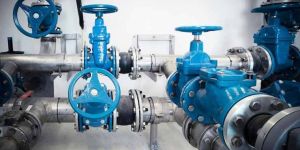
    • Material CapabilitySteel
    • Industries ServedPharmaceuticals, Chemicals, Petrochemicals, Water Treatment
    • Fabrication ProcessesCutting (Plasma, Laser, Gas)
    • Quality & StandardASME / IS Standards
    • All Type of Fabrication Work as per Client Drawing and Requirement Fabrication work refers to the process of creating metal structures or components through cutting, bending, welding, and assembling processes. These services are often tailored to meet specific client requirements and are crucial across various industries, including construction, manufacturing, aerospace, automotive, and more. Here's an overview of different types of fabrication work typically offered based on client drawings and specifications:   Types of Fabrication Work 1. Sheet Metal Fabrication  Involves cutting, bending, and assembling sheet metal to create various components.  Commonly used in manufacturing enclosures, panels, brackets, and machine components.  Processes include laser cutting, plasma cutting, bending, punching, and welding.   2. Structural Steel Fabrication  Fabrication of structural steel components for buildings, bridges, and industrial structures.  Includes beams, columns, trusses, and frameworks.  Techniques include cutting, drilling, welding, and bolting.   3. Pipe Fabrication  Fabrication of piping systems for industrial applications, including oil and gas, chemical processing, and water treatment.  Involves cutting, threading, bending, and welding pipes to create complex pipe networks and assemblies.   4. Welding Services  Various welding techniques are used to join metal components together securely.  Types of welding include MIG (Metal Inert Gas), TIG (Tungsten Inert Gas), arc welding, argon welding and spot welding.  Used in fabrication for structural integrity and durability.   5. Custom Metal Fabrication  Tailored fabrication services to meet specific client designs and requirements.  Includes custom parts, prototypes, and one-off projects.  Involves collaboration with clients to interpret drawings and specifications.   6. Aluminum Fabrication  Fabrication of components using aluminum alloys.  Lightweight and corrosion-resistant, suitable for aerospace, automotive, and marine applications.  Processes include cutting, machining, forming, and welding.   7. Stainless Steel Fabrication  Fabrication of components using stainless steel alloys.  Known for its strength, corrosion resistance, and aesthetic appeal.  Used in food processing, pharmaceuticals, architectural elements, and industrial equipment.   8. Prototype Fabrication  Rapid fabrication of prototypes to test and validate designs.  Helps in refining designs before full-scale production.  Utilizes rapid prototyping technologies and skilled craftsmanship.   9. Machine Shop Services  Precision machining of metal components using CNC machines.  Includes milling, turning, drilling, grinding, and EDM (Electrical Discharge Machining).  Provides high accuracy and repeatability for critical components.   10. Assembly and Integration  Assembly of fabricated components into finished products or sub-assemblies.  Integration of mechanical, electrical, and electronic components.  Ensures functionality and compliance with client specifications.   11. Finishing and Coating  Surface treatment to enhance aesthetics and performance.  Includes painting, powder coating, anodizing, plating, and polishing.  Provides corrosion resistance, durability, and decorative finishes.   12. Quality Assurance and Inspection  Rigorous quality control processes to ensure adherence to specifications.  Inspection of dimensions, tolerances, and material properties.  Certifications and documentation as per industry standards.   Industries Served Construction: Structural steel fabrication for buildings, bridges, and infrastructure projects. Manufacturing: Custom metal fabrication for machinery, equipment, and industrial components. Aerospace: Precision machining and fabrication of aircraft components. Automotive: Fabrication of chassis, frames, and specialty parts. Energy: Pipe fabrication for oil and gas pipelines, power generation, and renewable energy projects. Marine: Aluminum fabrication for boats, ships, and marine structures. Defense: Fabrication of military vehicles, equipment, and defense systems. Medical: Fabrication of components for medical devices and equipment. Key Considerations for Fabrication Work Client Requirements: Understanding and interpreting client drawings, specifications, and project goals. Material Selection: Choosing appropriate materials based on strength, durability, corrosion resistance, and cost-effectiveness. Fabrication Techniques: Utilizing cutting-edge equipment and skilled craftsmanship for precise fabrication. Project Management: Coordination of scheduling, logistics, and resources to meet project timelines. Safety and Compliance: Adhering to safety regulations and industry standards throughout the fabrication process. Quality Control: Implementing quality assurance processes to ensure high-quality products and customer satisfaction. Environmental Impact: Minimizing environmental impact through sustainable practices and waste management. Fabrication work plays a vital role in manufacturing and construction industries, providing customized solutions to meet diverse client needs. By leveraging advanced technologies, skilled workforce, and adherence to quality standards, fabrication companies deliver efficient and reliable products that drive innovation and progress in various sectors.
    ...more
  • Custom Metal Fabrication Service

    Custom Metal Fabrication Service

    Request for Price

    All Type of Fabrication Work as per Client Drawing and Requirement Fabrication work refers to the process of creating metal structures or components through cutting, bending, welding, and assembling processes. These services are often tailored to meet specific client requirements and are crucial across various industries, including construction, manufacturing, aerospace, automotive, and more. Here's an overview of different types of fabrication work typically offered based on client drawings and specifications:   Types of Fabrication Work 1. Sheet Metal Fabrication  Involves cutting, bending, and assembling sheet metal to create various components.  Commonly used in manufacturing enclosures, panels, brackets, and machine components.  Processes include laser cutting, plasma cutting, bending, punching, and welding.   2. Structural Steel Fabrication  Fabrication of structural steel components for buildings, bridges, and industrial structures.  Includes beams, columns, trusses, and frameworks.  Techniques include cutting, drilling, welding, and bolting.   3. Pipe Fabrication  Fabrication of piping systems for industrial applications, including oil and gas, chemical processing, and water treatment.  Involves cutting, threading, bending, and welding pipes to create complex pipe networks and assemblies.   4. Welding Services  Various welding techniques are used to join metal components together securely.  Types of welding include MIG (Metal Inert Gas), TIG (Tungsten Inert Gas), arc welding, argon welding and spot welding.  Used in fabrication for structural integrity and durability.   5. Custom Metal Fabrication  Tailored fabrication services to meet specific client designs and requirements.  Includes custom parts, prototypes, and one-off projects.  Involves collaboration with clients to interpret drawings and specifications.   6. Aluminum Fabrication  Fabrication of components using aluminum alloys.  Lightweight and corrosion-resistant, suitable for aerospace, automotive, and marine applications.  Processes include cutting, machining, forming, and welding.   7. Stainless Steel Fabrication  Fabrication of components using stainless steel alloys.  Known for its strength, corrosion resistance, and aesthetic appeal.  Used in food processing, pharmaceuticals, architectural elements, and industrial equipment.   8. Prototype Fabrication  Rapid fabrication of prototypes to test and validate designs.  Helps in refining designs before full-scale production.  Utilizes rapid prototyping technologies and skilled craftsmanship.   9. Machine Shop Services  Precision machining of metal components using CNC machines.  Includes milling, turning, drilling, grinding, and EDM (Electrical Discharge Machining).  Provides high accuracy and repeatability for critical components.   10. Assembly and Integration  Assembly of fabricated components into finished products or sub-assemblies.  Integration of mechanical, electrical, and electronic components.  Ensures functionality and compliance with client specifications.   11. Finishing and Coating  Surface treatment to enhance aesthetics and performance.  Includes painting, powder coating, anodizing, plating, and polishing.  Provides corrosion resistance, durability, and decorative finishes.   12. Quality Assurance and Inspection  Rigorous quality control processes to ensure adherence to specifications.  Inspection of dimensions, tolerances, and material properties.  Certifications and documentation as per industry standards.   Industries Served Construction: Structural steel fabrication for buildings, bridges, and infrastructure projects. Manufacturing: Custom metal fabrication for machinery, equipment, and industrial components. Aerospace: Precision machining and fabrication of aircraft components. Automotive: Fabrication of chassis, frames, and specialty parts. Energy: Pipe fabrication for oil and gas pipelines, power generation, and renewable energy projects. Marine: Aluminum fabrication for boats, ships, and marine structures. Defense: Fabrication of military vehicles, equipment, and defense systems. Medical: Fabrication of components for medical devices and equipment. Key Considerations for Fabrication Work Client Requirements: Understanding and interpreting client drawings, specifications, and project goals. Material Selection: Choosing appropriate materials based on strength, durability, corrosion resistance, and cost-effectiveness. Fabrication Techniques: Utilizing cutting-edge equipment and skilled craftsmanship for precise fabrication. Project Management: Coordination of scheduling, logistics, and resources to meet project timelines. Safety and Compliance: Adhering to safety regulations and industry standards throughout the fabrication process. Quality Control: Implementing quality assurance processes to ensure high-quality products and customer satisfaction. Environmental Impact: Minimizing environmental impact through sustainable practices and waste management. Fabrication work plays a vital role in manufacturing and construction industries, providing customized solutions to meet diverse client needs. By leveraging advanced technologies, skilled workforce, and adherence to quality standards, fabrication companies deliver efficient and reliable products that drive innovation and progress in various sectors.

    ...more
    Get Best Price
  • Custom CNC Machining Service

    Custom CNC Machining Service

    Get Latest Price

    • TypeCustom CNC Machining Service
    • Service ModeOffline
    • Payment ModeOnline & Offline
    • DurationBased On Various Projects
    • AdvantagesPrecision And Accuracy
    • SafetyFollow Proper Safety Guidelines
    • MaintenanceRegular Maintenance Required
    • Advantages of CNC Machining Precision and Accuracy: CNC machines can achieve extremely tight tolerances, ensuring high precision in parts. Consistency and Repeatability: Once programmed, CNC machines can produce identical parts consistently without variation. Efficiency and Productivity: CNC machines operate continuously with minimal supervision, leading to high production rates. Versatility: Capable of handling a wide range of materials and complex geometries. Reduced Human Error: Automation reduces the risk of human error and increases overall product quality. Flexibility in Design: Easy to make changes to designs and implement them quickly through CNC programming.   Safety and Maintenance Safety Protocols: 1.Follow proper safety guidelines, including the use of personal protective equipment (PPE). 2.Ensure safe operation of CNC machines and handling of cutting tools.   Regular Maintenance : 1. Perform routine maintenance to keep CNC machines in optimal condition. 2. Includes lubrication, cleaning, calibration, and inspection of components.   Training and Skill Development: 1. Provide training for operators on CNC machine operation, programming, and safety. 2. Encourage continuous learning to keep up with advancements in CNC technology. CNC machining is a versatile and essential process in modern manufacturing, enabling the production of high-precision and complex parts across various industries. By leveraging the capabilities of CNC machines and adhering to best practices, manufacturers can achieve superior quality, efficiency, and innovation in their production processes.
    ...more
  • Custom CNC Machining Service

    Custom CNC Machining Service

    Request for Price

    Advantages of CNC Machining Precision and Accuracy: CNC machines can achieve extremely tight tolerances, ensuring high precision in parts. Consistency and Repeatability: Once programmed, CNC machines can produce identical parts consistently without variation. Efficiency and Productivity: CNC machines operate continuously with minimal supervision, leading to high production rates. Versatility: Capable of handling a wide range of materials and complex geometries. Reduced Human Error: Automation reduces the risk of human error and increases overall product quality. Flexibility in Design: Easy to make changes to designs and implement them quickly through CNC programming.   Safety and Maintenance Safety Protocols: 1.Follow proper safety guidelines, including the use of personal protective equipment (PPE). 2.Ensure safe operation of CNC machines and handling of cutting tools.   Regular Maintenance : 1. Perform routine maintenance to keep CNC machines in optimal condition. 2. Includes lubrication, cleaning, calibration, and inspection of components.   Training and Skill Development: 1. Provide training for operators on CNC machine operation, programming, and safety. 2. Encourage continuous learning to keep up with advancements in CNC technology. CNC machining is a versatile and essential process in modern manufacturing, enabling the production of high-precision and complex parts across various industries. By leveraging the capabilities of CNC machines and adhering to best practices, manufacturers can achieve superior quality, efficiency, and innovation in their production processes.

    ...more
    Get Best Price
  • Coating Fabrication Services

    Coating Fabrication Services

    Get Latest Price

    • Service ModeOffline
    • Payment ModeOnline & Offline
    • DurationBased On Projects
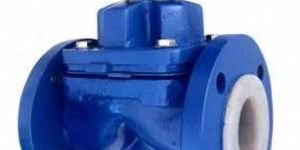
    • Industries ServedPharmaceuticals, Chemicals, Petrochemicals, Oil, Water Treatment
    • ProcessesSpray Machine
    • Quality & StandardASME / IS Standards
    • All Type of Fabrication Work as per Client Drawing and Requirement Fabrication work refers to the process of creating metal structures or components through cutting, bending, welding, and assembling processes. These services are often tailored to meet specific client requirements and are crucial across various industries, including construction, manufacturing, aerospace, automotive, and more. Here's an overview of different types of fabrication work typically offered based on client drawings and specifications:   Types of Fabrication Work 1. Sheet Metal Fabrication  Involves cutting, bending, and assembling sheet metal to create various components.  Commonly used in manufacturing enclosures, panels, brackets, and machine components.  Processes include laser cutting, plasma cutting, bending, punching, and welding.   2. Structural Steel Fabrication  Fabrication of structural steel components for buildings, bridges, and industrial structures.  Includes beams, columns, trusses, and frameworks.  Techniques include cutting, drilling, welding, and bolting.   3. Pipe Fabrication  Fabrication of piping systems for industrial applications, including oil and gas, chemical processing, and water treatment.  Involves cutting, threading, bending, and welding pipes to create complex pipe networks and assemblies.   4. Welding Services  Various welding techniques are used to join metal components together securely.  Types of welding include MIG (Metal Inert Gas), TIG (Tungsten Inert Gas), arc welding, argon welding and spot welding.  Used in fabrication for structural integrity and durability.   5. Custom Metal Fabrication  Tailored fabrication services to meet specific client designs and requirements.  Includes custom parts, prototypes, and one-off projects.  Involves collaboration with clients to interpret drawings and specifications.   6. Aluminum Fabrication  Fabrication of components using aluminum alloys.  Lightweight and corrosion-resistant, suitable for aerospace, automotive, and marine applications.  Processes include cutting, machining, forming, and welding.   7. Stainless Steel Fabrication  Fabrication of components using stainless steel alloys.  Known for its strength, corrosion resistance, and aesthetic appeal.  Used in food processing, pharmaceuticals, architectural elements, and industrial equipment.   8. Prototype Fabrication  Rapid fabrication of prototypes to test and validate designs.  Helps in refining designs before full-scale production.  Utilizes rapid prototyping technologies and skilled craftsmanship.   9. Machine Shop Services  Precision machining of metal components using CNC machines.  Includes milling, turning, drilling, grinding, and EDM (Electrical Discharge Machining).  Provides high accuracy and repeatability for critical components.   10. Assembly and Integration  Assembly of fabricated components into finished products or sub-assemblies.  Integration of mechanical, electrical, and electronic components.  Ensures functionality and compliance with client specifications.   11. Finishing and Coating  Surface treatment to enhance aesthetics and performance.  Includes painting, powder coating, anodizing, plating, and polishing.  Provides corrosion resistance, durability, and decorative finishes.   12. Quality Assurance and Inspection  Rigorous quality control processes to ensure adherence to specifications.  Inspection of dimensions, tolerances, and material properties.  Certifications and documentation as per industry standards.   Industries Served Construction: Structural steel fabrication for buildings, bridges, and infrastructure projects. Manufacturing: Custom metal fabrication for machinery, equipment, and industrial components. Aerospace: Precision machining and fabrication of aircraft components. Automotive: Fabrication of chassis, frames, and specialty parts. Energy: Pipe fabrication for oil and gas pipelines, power generation, and renewable energy projects. Marine: Aluminum fabrication for boats, ships, and marine structures. Defense: Fabrication of military vehicles, equipment, and defense systems. Medical: Fabrication of components for medical devices and equipment. Key Considerations for Fabrication Work Client Requirements: Understanding and interpreting client drawings, specifications, and project goals. Material Selection: Choosing appropriate materials based on strength, durability, corrosion resistance, and cost-effectiveness. Fabrication Techniques: Utilizing cutting-edge equipment and skilled craftsmanship for precise fabrication. Project Management: Coordination of scheduling, logistics, and resources to meet project timelines. Safety and Compliance: Adhering to safety regulations and industry standards throughout the fabrication process. Quality Control: Implementing quality assurance processes to ensure high-quality products and customer satisfaction. Environmental Impact: Minimizing environmental impact through sustainable practices and waste management. Fabrication work plays a vital role in manufacturing and construction industries, providing customized solutions to meet diverse client needs. By leveraging advanced technologies, skilled workforce, and adherence to quality standards, fabrication companies deliver efficient and reliable products that drive innovation and progress in various sectors.
    ...more
  • Coating Fabrication Services

    Coating Fabrication Services

    Request for Price

    All Type of Fabrication Work as per Client Drawing and Requirement Fabrication work refers to the process of creating metal structures or components through cutting, bending, welding, and assembling processes. These services are often tailored to meet specific client requirements and are crucial across various industries, including construction, manufacturing, aerospace, automotive, and more. Here's an overview of different types of fabrication work typically offered based on client drawings and specifications:   Types of Fabrication Work 1. Sheet Metal Fabrication  Involves cutting, bending, and assembling sheet metal to create various components.  Commonly used in manufacturing enclosures, panels, brackets, and machine components.  Processes include laser cutting, plasma cutting, bending, punching, and welding.   2. Structural Steel Fabrication  Fabrication of structural steel components for buildings, bridges, and industrial structures.  Includes beams, columns, trusses, and frameworks.  Techniques include cutting, drilling, welding, and bolting.   3. Pipe Fabrication  Fabrication of piping systems for industrial applications, including oil and gas, chemical processing, and water treatment.  Involves cutting, threading, bending, and welding pipes to create complex pipe networks and assemblies.   4. Welding Services  Various welding techniques are used to join metal components together securely.  Types of welding include MIG (Metal Inert Gas), TIG (Tungsten Inert Gas), arc welding, argon welding and spot welding.  Used in fabrication for structural integrity and durability.   5. Custom Metal Fabrication  Tailored fabrication services to meet specific client designs and requirements.  Includes custom parts, prototypes, and one-off projects.  Involves collaboration with clients to interpret drawings and specifications.   6. Aluminum Fabrication  Fabrication of components using aluminum alloys.  Lightweight and corrosion-resistant, suitable for aerospace, automotive, and marine applications.  Processes include cutting, machining, forming, and welding.   7. Stainless Steel Fabrication  Fabrication of components using stainless steel alloys.  Known for its strength, corrosion resistance, and aesthetic appeal.  Used in food processing, pharmaceuticals, architectural elements, and industrial equipment.   8. Prototype Fabrication  Rapid fabrication of prototypes to test and validate designs.  Helps in refining designs before full-scale production.  Utilizes rapid prototyping technologies and skilled craftsmanship.   9. Machine Shop Services  Precision machining of metal components using CNC machines.  Includes milling, turning, drilling, grinding, and EDM (Electrical Discharge Machining).  Provides high accuracy and repeatability for critical components.   10. Assembly and Integration  Assembly of fabricated components into finished products or sub-assemblies.  Integration of mechanical, electrical, and electronic components.  Ensures functionality and compliance with client specifications.   11. Finishing and Coating  Surface treatment to enhance aesthetics and performance.  Includes painting, powder coating, anodizing, plating, and polishing.  Provides corrosion resistance, durability, and decorative finishes.   12. Quality Assurance and Inspection  Rigorous quality control processes to ensure adherence to specifications.  Inspection of dimensions, tolerances, and material properties.  Certifications and documentation as per industry standards.   Industries Served Construction: Structural steel fabrication for buildings, bridges, and infrastructure projects. Manufacturing: Custom metal fabrication for machinery, equipment, and industrial components. Aerospace: Precision machining and fabrication of aircraft components. Automotive: Fabrication of chassis, frames, and specialty parts. Energy: Pipe fabrication for oil and gas pipelines, power generation, and renewable energy projects. Marine: Aluminum fabrication for boats, ships, and marine structures. Defense: Fabrication of military vehicles, equipment, and defense systems. Medical: Fabrication of components for medical devices and equipment. Key Considerations for Fabrication Work Client Requirements: Understanding and interpreting client drawings, specifications, and project goals. Material Selection: Choosing appropriate materials based on strength, durability, corrosion resistance, and cost-effectiveness. Fabrication Techniques: Utilizing cutting-edge equipment and skilled craftsmanship for precise fabrication. Project Management: Coordination of scheduling, logistics, and resources to meet project timelines. Safety and Compliance: Adhering to safety regulations and industry standards throughout the fabrication process. Quality Control: Implementing quality assurance processes to ensure high-quality products and customer satisfaction. Environmental Impact: Minimizing environmental impact through sustainable practices and waste management. Fabrication work plays a vital role in manufacturing and construction industries, providing customized solutions to meet diverse client needs. By leveraging advanced technologies, skilled workforce, and adherence to quality standards, fabrication companies deliver efficient and reliable products that drive innovation and progress in various sectors.

    ...more
    Get Best Price
  • CNC Turning Services

    CNC Turning Services

    Get Latest Price

    • TypeCNC Turning Services
    • Service ModeOffline
    • Payment ModeOnline & Offline
    • DurationBased On Various Projects
    • AdvantagesPrecision And Accuracy
    • SafetyFollow Proper Safety Guidelines, Including The Use Of Personal Protective Equipment (PPE)
    • MaintenanceRegular Maintenance Required
    • Advantages of CNC Machining Precision and Accuracy: CNC machines can achieve extremely tight tolerances, ensuring high precision in parts. Consistency and Repeatability: Once programmed, CNC machines can produce identical parts consistently without variation. Efficiency and Productivity: CNC machines operate continuously with minimal supervision, leading to high production rates. Versatility: Capable of handling a wide range of materials and complex geometries. Reduced Human Error: Automation reduces the risk of human error and increases overall product quality. Flexibility in Design: Easy to make changes to designs and implement them quickly through CNC programming.   Safety and Maintenance Safety Protocols: 1.Follow proper safety guidelines, including the use of personal protective equipment (PPE). 2.Ensure safe operation of CNC machines and handling of cutting tools.   Regular Maintenance : 1. Perform routine maintenance to keep CNC machines in optimal condition. 2. Includes lubrication, cleaning, calibration, and inspection of components.   Training and Skill Development: 1. Provide training for operators on CNC machine operation, programming, and safety. 2. Encourage continuous learning to keep up with advancements in CNC technology. CNC machining is a versatile and essential process in modern manufacturing, enabling the production of high-precision and complex parts across various industries. By leveraging the capabilities of CNC machines and adhering to best practices, manufacturers can achieve superior quality, efficiency, and innovation in their production processes.
    ...more
  • CNC Turning Services

    CNC Turning Services

    Request for Price

    Advantages of CNC Machining Precision and Accuracy: CNC machines can achieve extremely tight tolerances, ensuring high precision in parts. Consistency and Repeatability: Once programmed, CNC machines can produce identical parts consistently without variation. Efficiency and Productivity: CNC machines operate continuously with minimal supervision, leading to high production rates. Versatility: Capable of handling a wide range of materials and complex geometries. Reduced Human Error: Automation reduces the risk of human error and increases overall product quality. Flexibility in Design: Easy to make changes to designs and implement them quickly through CNC programming.   Safety and Maintenance Safety Protocols: 1.Follow proper safety guidelines, including the use of personal protective equipment (PPE). 2.Ensure safe operation of CNC machines and handling of cutting tools.   Regular Maintenance : 1. Perform routine maintenance to keep CNC machines in optimal condition. 2. Includes lubrication, cleaning, calibration, and inspection of components.   Training and Skill Development: 1. Provide training for operators on CNC machine operation, programming, and safety. 2. Encourage continuous learning to keep up with advancements in CNC technology. CNC machining is a versatile and essential process in modern manufacturing, enabling the production of high-precision and complex parts across various industries. By leveraging the capabilities of CNC machines and adhering to best practices, manufacturers can achieve superior quality, efficiency, and innovation in their production processes.

    ...more
    Get Best Price
  • cnc surface finishing service

    cnc surface finishing service

    Get Latest Price

    • Service ModeOffline
    • Payment ModeOnline & Offline
    • DurationBased On Various Projects
    • AdvantagesPrecision And Accuracy
    • SafetyFollow Proper Safety Guidelines, Including The Use Of Personal Protective Equipment (PPE)
    • MaintenanceRegular Maintenance Required
    • Advantages of CNC Machining Precision and Accuracy: CNC machines can achieve extremely tight tolerances, ensuring high precision in parts. Consistency and Repeatability: Once programmed, CNC machines can produce identical parts consistently without variation. Efficiency and Productivity: CNC machines operate continuously with minimal supervision, leading to high production rates. Versatility: Capable of handling a wide range of materials and complex geometries. Reduced Human Error: Automation reduces the risk of human error and increases overall product quality. Flexibility in Design: Easy to make changes to designs and implement them quickly through CNC programming.   Safety and Maintenance Safety Protocols: 1.Follow proper safety guidelines, including the use of personal protective equipment (PPE). 2.Ensure safe operation of CNC machines and handling of cutting tools.   Regular Maintenance : 1. Perform routine maintenance to keep CNC machines in optimal condition. 2. Includes lubrication, cleaning, calibration, and inspection of components.   Training and Skill Development: 1. Provide training for operators on CNC machine operation, programming, and safety. 2. Encourage continuous learning to keep up with advancements in CNC technology. CNC machining is a versatile and essential process in modern manufacturing, enabling the production of high-precision and complex parts across various industries. By leveraging the capabilities of CNC machines and adhering to best practices, manufacturers can achieve superior quality, efficiency, and innovation in their production processes.
    ...more
  • cnc surface finishing service

    cnc surface finishing service

    Request for Price

    Advantages of CNC Machining Precision and Accuracy: CNC machines can achieve extremely tight tolerances, ensuring high precision in parts. Consistency and Repeatability: Once programmed, CNC machines can produce identical parts consistently without variation. Efficiency and Productivity: CNC machines operate continuously with minimal supervision, leading to high production rates. Versatility: Capable of handling a wide range of materials and complex geometries. Reduced Human Error: Automation reduces the risk of human error and increases overall product quality. Flexibility in Design: Easy to make changes to designs and implement them quickly through CNC programming.   Safety and Maintenance Safety Protocols: 1.Follow proper safety guidelines, including the use of personal protective equipment (PPE). 2.Ensure safe operation of CNC machines and handling of cutting tools.   Regular Maintenance : 1. Perform routine maintenance to keep CNC machines in optimal condition. 2. Includes lubrication, cleaning, calibration, and inspection of components.   Training and Skill Development: 1. Provide training for operators on CNC machine operation, programming, and safety. 2. Encourage continuous learning to keep up with advancements in CNC technology. CNC machining is a versatile and essential process in modern manufacturing, enabling the production of high-precision and complex parts across various industries. By leveraging the capabilities of CNC machines and adhering to best practices, manufacturers can achieve superior quality, efficiency, and innovation in their production processes.

    ...more
    Get Best Price
  • CNC Prototyping Service

    CNC Prototyping Service

    Get Latest Price

    • TypeCNC Prototyping Service
    • Service ModeOffline
    • Payment ModeOnline & Offline
    • DurationBased On Various Projects
    • AdvantagesPrecision And Accuracy
    • SafetyFollow Proper Safety Guidelines
    • MaintenanceRegular Maintenance Required
    • Advantages of CNC Machining Precision and Accuracy: CNC machines can achieve extremely tight tolerances, ensuring high precision in parts. Consistency and Repeatability: Once programmed, CNC machines can produce identical parts consistently without variation. Efficiency and Productivity: CNC machines operate continuously with minimal supervision, leading to high production rates. Versatility: Capable of handling a wide range of materials and complex geometries. Reduced Human Error: Automation reduces the risk of human error and increases overall product quality. Flexibility in Design: Easy to make changes to designs and implement them quickly through CNC programming.   Safety and Maintenance Safety Protocols: 1.Follow proper safety guidelines, including the use of personal protective equipment (PPE). 2.Ensure safe operation of CNC machines and handling of cutting tools.   Regular Maintenance : 1. Perform routine maintenance to keep CNC machines in optimal condition. 2. Includes lubrication, cleaning, calibration, and inspection of components.   Training and Skill Development: 1. Provide training for operators on CNC machine operation, programming, and safety. 2. Encourage continuous learning to keep up with advancements in CNC technology. CNC machining is a versatile and essential process in modern manufacturing, enabling the production of high-precision and complex parts across various industries. By leveraging the capabilities of CNC machines and adhering to best practices, manufacturers can achieve superior quality, efficiency, and innovation in their production processes.
    ...more
  • CNC Prototyping Service

    CNC Prototyping Service

    Request for Price

    Advantages of CNC Machining Precision and Accuracy: CNC machines can achieve extremely tight tolerances, ensuring high precision in parts. Consistency and Repeatability: Once programmed, CNC machines can produce identical parts consistently without variation. Efficiency and Productivity: CNC machines operate continuously with minimal supervision, leading to high production rates. Versatility: Capable of handling a wide range of materials and complex geometries. Reduced Human Error: Automation reduces the risk of human error and increases overall product quality. Flexibility in Design: Easy to make changes to designs and implement them quickly through CNC programming.   Safety and Maintenance Safety Protocols: 1.Follow proper safety guidelines, including the use of personal protective equipment (PPE). 2.Ensure safe operation of CNC machines and handling of cutting tools.   Regular Maintenance : 1. Perform routine maintenance to keep CNC machines in optimal condition. 2. Includes lubrication, cleaning, calibration, and inspection of components.   Training and Skill Development: 1. Provide training for operators on CNC machine operation, programming, and safety. 2. Encourage continuous learning to keep up with advancements in CNC technology. CNC machining is a versatile and essential process in modern manufacturing, enabling the production of high-precision and complex parts across various industries. By leveraging the capabilities of CNC machines and adhering to best practices, manufacturers can achieve superior quality, efficiency, and innovation in their production processes.

    ...more
    Get Best Price
  • CNC Milling Services

    CNC Milling Services

    Get Latest Price

    • TypeCNC Milling Service
    • Service ModeOffline
    • Payment ModeOnline & Offline
    • DurationBased On Various Projects
    • AdvantagesPrecision And Accuracy
    • SafetyFollow Proper Safety Guidelines
    • MaintenanceRegular Maintenance Required
    • Advantages of CNC Machining Precision and Accuracy: CNC machines can achieve extremely tight tolerances, ensuring high precision in parts. Consistency and Repeatability: Once programmed, CNC machines can produce identical parts consistently without variation. Efficiency and Productivity: CNC machines operate continuously with minimal supervision, leading to high production rates. Versatility: Capable of handling a wide range of materials and complex geometries. Reduced Human Error: Automation reduces the risk of human error and increases overall product quality. Flexibility in Design: Easy to make changes to designs and implement them quickly through CNC programming.   Safety and Maintenance Safety Protocols: 1.Follow proper safety guidelines, including the use of personal protective equipment (PPE). 2.Ensure safe operation of CNC machines and handling of cutting tools.   Regular Maintenance : 1. Perform routine maintenance to keep CNC machines in optimal condition. 2. Includes lubrication, cleaning, calibration, and inspection of components.   Training and Skill Development: 1. Provide training for operators on CNC machine operation, programming, and safety. 2. Encourage continuous learning to keep up with advancements in CNC technology. CNC machining is a versatile and essential process in modern manufacturing, enabling the production of high-precision and complex parts across various industries. By leveraging the capabilities of CNC machines and adhering to best practices, manufacturers can achieve superior quality, efficiency, and innovation in their production processes.
    ...more
  • CNC Milling Services

    CNC Milling Services

    Request for Price

    Advantages of CNC Machining Precision and Accuracy: CNC machines can achieve extremely tight tolerances, ensuring high precision in parts. Consistency and Repeatability: Once programmed, CNC machines can produce identical parts consistently without variation. Efficiency and Productivity: CNC machines operate continuously with minimal supervision, leading to high production rates. Versatility: Capable of handling a wide range of materials and complex geometries. Reduced Human Error: Automation reduces the risk of human error and increases overall product quality. Flexibility in Design: Easy to make changes to designs and implement them quickly through CNC programming.   Safety and Maintenance Safety Protocols: 1.Follow proper safety guidelines, including the use of personal protective equipment (PPE). 2.Ensure safe operation of CNC machines and handling of cutting tools.   Regular Maintenance : 1. Perform routine maintenance to keep CNC machines in optimal condition. 2. Includes lubrication, cleaning, calibration, and inspection of components.   Training and Skill Development: 1. Provide training for operators on CNC machine operation, programming, and safety. 2. Encourage continuous learning to keep up with advancements in CNC technology. CNC machining is a versatile and essential process in modern manufacturing, enabling the production of high-precision and complex parts across various industries. By leveraging the capabilities of CNC machines and adhering to best practices, manufacturers can achieve superior quality, efficiency, and innovation in their production processes.

    ...more
    Get Best Price
  • CNC Drilling Tapping Service

    CNC Drilling Tapping Service

    Get Latest Price

    • Service ModeOffline
    • Payment ModeOnline & Offline
    • DurationBased On Various Projects
    • AdvantagesPrecision And Accuracy
    • SafetyFollow Proper Safety Guidelines, Including The Use Of Personal Protective Equipment (PPE)
    • MaintenanceRegular Maintenance Required
    • Advantages of CNC Machining Precision and Accuracy: CNC machines can achieve extremely tight tolerances, ensuring high precision in parts. Consistency and Repeatability: Once programmed, CNC machines can produce identical parts consistently without variation. Efficiency and Productivity: CNC machines operate continuously with minimal supervision, leading to high production rates. Versatility: Capable of handling a wide range of materials and complex geometries. Reduced Human Error: Automation reduces the risk of human error and increases overall product quality. Flexibility in Design: Easy to make changes to designs and implement them quickly through CNC programming.   Safety and Maintenance Safety Protocols: 1.Follow proper safety guidelines, including the use of personal protective equipment (PPE). 2.Ensure safe operation of CNC machines and handling of cutting tools.   Regular Maintenance : 1. Perform routine maintenance to keep CNC machines in optimal condition. 2. Includes lubrication, cleaning, calibration, and inspection of components.   Training and Skill Development: 1. Provide training for operators on CNC machine operation, programming, and safety. 2. Encourage continuous learning to keep up with advancements in CNC technology. CNC machining is a versatile and essential process in modern manufacturing, enabling the production of high-precision and complex parts across various industries. By leveraging the capabilities of CNC machines and adhering to best practices, manufacturers can achieve superior quality, efficiency, and innovation in their production processes.
    ...more
  • CNC Drilling Tapping Service

    CNC Drilling Tapping Service

    Request for Price

    Advantages of CNC Machining Precision and Accuracy: CNC machines can achieve extremely tight tolerances, ensuring high precision in parts. Consistency and Repeatability: Once programmed, CNC machines can produce identical parts consistently without variation. Efficiency and Productivity: CNC machines operate continuously with minimal supervision, leading to high production rates. Versatility: Capable of handling a wide range of materials and complex geometries. Reduced Human Error: Automation reduces the risk of human error and increases overall product quality. Flexibility in Design: Easy to make changes to designs and implement them quickly through CNC programming.   Safety and Maintenance Safety Protocols: 1.Follow proper safety guidelines, including the use of personal protective equipment (PPE). 2.Ensure safe operation of CNC machines and handling of cutting tools.   Regular Maintenance : 1. Perform routine maintenance to keep CNC machines in optimal condition. 2. Includes lubrication, cleaning, calibration, and inspection of components.   Training and Skill Development: 1. Provide training for operators on CNC machine operation, programming, and safety. 2. Encourage continuous learning to keep up with advancements in CNC technology. CNC machining is a versatile and essential process in modern manufacturing, enabling the production of high-precision and complex parts across various industries. By leveraging the capabilities of CNC machines and adhering to best practices, manufacturers can achieve superior quality, efficiency, and innovation in their production processes.

    ...more
    Get Best Price
  • CNC Boring Services

    CNC Boring Services

    Get Latest Price

    • TypeService
    • Service ModeOffline
    • Payment ModeOnline & Offline
    • DurationBased On Various Projects
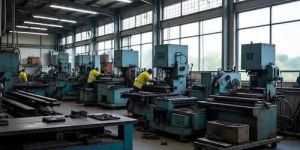
    • AdvantagesPrecision And Accuracy
    • SafetyFollow Proper Safety Guidelines
    • MaintenanceRegular Maintenance Required
    • Advantages of CNC Machining Precision and Accuracy: CNC machines can achieve extremely tight tolerances, ensuring high precision in parts. Consistency and Repeatability: Once programmed, CNC machines can produce identical parts consistently without variation. Efficiency and Productivity: CNC machines operate continuously with minimal supervision, leading to high production rates. Versatility: Capable of handling a wide range of materials and complex geometries. Reduced Human Error: Automation reduces the risk of human error and increases overall product quality. Flexibility in Design: Easy to make changes to designs and implement them quickly through CNC programming.   Safety and Maintenance Safety Protocols: 1.Follow proper safety guidelines, including the use of personal protective equipment (PPE). 2.Ensure safe operation of CNC machines and handling of cutting tools.   Regular Maintenance : 1. Perform routine maintenance to keep CNC machines in optimal condition. 2. Includes lubrication, cleaning, calibration, and inspection of components.   Training and Skill Development: 1. Provide training for operators on CNC machine operation, programming, and safety. 2. Encourage continuous learning to keep up with advancements in CNC technology. CNC machining is a versatile and essential process in modern manufacturing, enabling the production of high-precision and complex parts across various industries. By leveraging the capabilities of CNC machines and adhering to best practices, manufacturers can achieve superior quality, efficiency, and innovation in their production processes.
    ...more
  • CNC Boring Services

    CNC Boring Services

    Request for Price

    Advantages of CNC Machining Precision and Accuracy: CNC machines can achieve extremely tight tolerances, ensuring high precision in parts. Consistency and Repeatability: Once programmed, CNC machines can produce identical parts consistently without variation. Efficiency and Productivity: CNC machines operate continuously with minimal supervision, leading to high production rates. Versatility: Capable of handling a wide range of materials and complex geometries. Reduced Human Error: Automation reduces the risk of human error and increases overall product quality. Flexibility in Design: Easy to make changes to designs and implement them quickly through CNC programming.   Safety and Maintenance Safety Protocols: 1.Follow proper safety guidelines, including the use of personal protective equipment (PPE). 2.Ensure safe operation of CNC machines and handling of cutting tools.   Regular Maintenance : 1. Perform routine maintenance to keep CNC machines in optimal condition. 2. Includes lubrication, cleaning, calibration, and inspection of components.   Training and Skill Development: 1. Provide training for operators on CNC machine operation, programming, and safety. 2. Encourage continuous learning to keep up with advancements in CNC technology. CNC machining is a versatile and essential process in modern manufacturing, enabling the production of high-precision and complex parts across various industries. By leveraging the capabilities of CNC machines and adhering to best practices, manufacturers can achieve superior quality, efficiency, and innovation in their production processes.

    ...more
    Get Best Price
  • Channel Borewell Drilling Services

    Channel Borewell Drilling Services

    Get Latest Price

    • TypeDrilling Service
    • Service ModeOffline
    • Payment ModeOnline & offline
    • DurationBased On Project
    • UsageBorewell Drilling Services For Residential, Commercial, And Industrial Purposes.
    • Service IncludedLabour
    • Applications of Drilling Works 1. Manufacturing and Industrial Applications: Heat exchanger’s tube sheets drilling Different size of Tapping job Assembly blocks or channel drilling Precision drilling and tapping for machinery and equipment components. Creating holes for fasteners and assembly.   Equipment and Tools for Drilling Works 1. Drill Rigs:  Mobile and stationary rigs for various drilling applications.  Include truck-mounted, skid-mounted, and portable rigs.   2. Drill Bits:  Different types for various materials, including carbide and steel bits.   3. Drill Rods and Pipes:  Connect the drill bit to the drilling rig.  Provide the necessary length and strength for deep drilling.   4. Hammers and Percussive Tools:  Used in percussion and DTH drilling.  Provide the impact force to break up material.   5. Mud Pumps and Fluids:  Used in rotary drilling to lubricate the bit and remove cuttings.  Essential for maintaining borehole stability.   6. Control and Monitoring Systems: Ensure precision and safety during drilling operations. Include systems for monitoring pressure, torque, and depth.   Drilling works encompass a wide range of techniques and applications, each suited to specific materials and purposes. By selecting the appropriate drilling method and equipment, industries can achieve efficient and precise results, ensuring the success of their projects while maintaining safety and environmental standards.
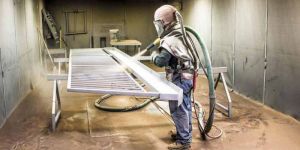
    ...more
  • Channel Borewell Drilling Services

    Channel Borewell Drilling Services

    Request for Price

    Applications of Drilling Works 1. Manufacturing and Industrial Applications: Heat exchanger’s tube sheets drilling Different size of Tapping job Assembly blocks or channel drilling Precision drilling and tapping for machinery and equipment components. Creating holes for fasteners and assembly.   Equipment and Tools for Drilling Works 1. Drill Rigs:  Mobile and stationary rigs for various drilling applications.  Include truck-mounted, skid-mounted, and portable rigs.   2. Drill Bits:  Different types for various materials, including carbide and steel bits.   3. Drill Rods and Pipes:  Connect the drill bit to the drilling rig.  Provide the necessary length and strength for deep drilling.   4. Hammers and Percussive Tools:  Used in percussion and DTH drilling.  Provide the impact force to break up material.   5. Mud Pumps and Fluids:  Used in rotary drilling to lubricate the bit and remove cuttings.  Essential for maintaining borehole stability.   6. Control and Monitoring Systems: Ensure precision and safety during drilling operations. Include systems for monitoring pressure, torque, and depth.   Drilling works encompass a wide range of techniques and applications, each suited to specific materials and purposes. By selecting the appropriate drilling method and equipment, industries can achieve efficient and precise results, ensuring the success of their projects while maintaining safety and environmental standards.
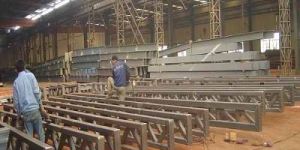
    ...more
    Get Best Price
  • Batch Production Service

    Batch Production Service

    Get Latest Price

    • TypeService
    • Service ModeOffline
    • Payment ModeOnline & Offline
    • DurationBased On Various Projects
    • AdvantagesPrecision And Accuracy
    • SafetyFollow Proper Safety Guidelines
    • MaintenanceRegular Maintenance Required
    • Advantages of CNC Machining Precision and Accuracy: CNC machines can achieve extremely tight tolerances, ensuring high precision in parts. Consistency and Repeatability: Once programmed, CNC machines can produce identical parts consistently without variation. Efficiency and Productivity: CNC machines operate continuously with minimal supervision, leading to high production rates. Versatility: Capable of handling a wide range of materials and complex geometries. Reduced Human Error: Automation reduces the risk of human error and increases overall product quality. Flexibility in Design: Easy to make changes to designs and implement them quickly through CNC programming.   Safety and Maintenance Safety Protocols: 1.Follow proper safety guidelines, including the use of personal protective equipment (PPE). 2.Ensure safe operation of CNC machines and handling of cutting tools.   Regular Maintenance : 1. Perform routine maintenance to keep CNC machines in optimal condition. 2. Includes lubrication, cleaning, calibration, and inspection of components.   Training and Skill Development: 1. Provide training for operators on CNC machine operation, programming, and safety. 2. Encourage continuous learning to keep up with advancements in CNC technology. CNC machining is a versatile and essential process in modern manufacturing, enabling the production of high-precision and complex parts across various industries. By leveraging the capabilities of CNC machines and adhering to best practices, manufacturers can achieve superior quality, efficiency, and innovation in their production processes.
    ...more
  • Batch Production Service

    Batch Production Service

    Request for Price

    Advantages of CNC Machining Precision and Accuracy: CNC machines can achieve extremely tight tolerances, ensuring high precision in parts. Consistency and Repeatability: Once programmed, CNC machines can produce identical parts consistently without variation. Efficiency and Productivity: CNC machines operate continuously with minimal supervision, leading to high production rates. Versatility: Capable of handling a wide range of materials and complex geometries. Reduced Human Error: Automation reduces the risk of human error and increases overall product quality. Flexibility in Design: Easy to make changes to designs and implement them quickly through CNC programming.   Safety and Maintenance Safety Protocols: 1.Follow proper safety guidelines, including the use of personal protective equipment (PPE). 2.Ensure safe operation of CNC machines and handling of cutting tools.   Regular Maintenance : 1. Perform routine maintenance to keep CNC machines in optimal condition. 2. Includes lubrication, cleaning, calibration, and inspection of components.   Training and Skill Development: 1. Provide training for operators on CNC machine operation, programming, and safety. 2. Encourage continuous learning to keep up with advancements in CNC technology. CNC machining is a versatile and essential process in modern manufacturing, enabling the production of high-precision and complex parts across various industries. By leveraging the capabilities of CNC machines and adhering to best practices, manufacturers can achieve superior quality, efficiency, and innovation in their production processes.

    ...more
    Get Best Price

Be first to Rate

Rate This

Choose the service or product you're reviewing for this business

How would you rate the business?

What did you like and dislike?

  • Response
  • Delivery
  • Quality

Tell us about your experience?

About the Company

  • Primary Business Manufacturers
  • Secondary Business Type Exporters / Service Providers / Wholesale Suppliers
  • Year of Establishment 2024
  • No. of Employees 6 - 20
  • Annual Turnover Below Rs. 0.5 Crore Approx.
  • Ownership Type Others
  • GSTIN Number 24ABACA4824G1Z2

Opening Hours

  • SUN : Closed
  • MON : 9:30 AM - 6:30 PM
  • TUE : 9:30 AM - 6:30 PM
  • WED : 9:30 AM - 6:30 PM
  • THU : 9:30 AM - 6:30 PM
  • FRI : 9:30 AM - 6:30 PM
  • SAT : 9:30 AM - 6:30 PM
we are deals in Ndustrial Valves
Read More »

Contact Information

Aspal Engineering Private Limited

Find Popular Stainless Steel Fabricators Service Providers in Ahmedabad

top