

Bakeable All-Metal Leak Valves
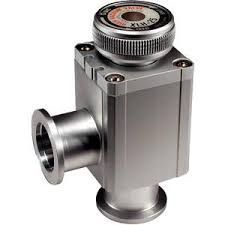
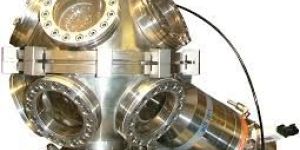
Bakeable Leak Valves are used to control the flow of gas into a vacuum system from an external source. Both “Hard on Hard” and “Hard on Soft” metal sealing technologies are available. Both manual and reactive stepper motor controlled valve options are available for up-stream pressure control.
Bakeable All-Metal Leak Valves
Bakeable Leak Valves are used to control the flow of gas into a vacuum system from an external source. Both “Hard on Hard” and “Hard on Soft” metal sealing technologies are available. Both manual and reactive stepper motor controlled valve options are available for up-stream pressure control.
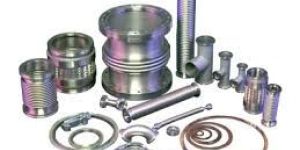
Vacuum components must live up to high standards. All Vacuum vacuum components meet the high quality standards that are placed on vacuum components. The vacuum components are helium leak-tested and show leakage rates better than 10-10 Pa. m3s for ISO-KF, ISO-KISO-F flanges and 10-11 Pa.
It removes the source of contamination. For example, heating metals to high temperature causes rapid oxidation in regular ovens which is undesirable. It reduces the heat loss which is caused by convection In chemical process industries like food, pharmaceutical, agricultural, textile, paper & pulp etc. drying is an essential unit operation to remove the moisture from various substances to get a solid finished product .Vacuum drying is generally used for the drying of those substances which are hygroscopic and heat .
A special form of the Pirani gauge is the pulsed Pirani vacuum gauge where the filament is not operated at a constant temperature, but is cyclically heated up to a certain temperature threshold by an increasing voltage ramp. ... The required heat-up time is used as a measure of pressure
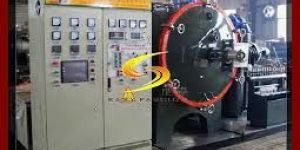
.Vacuum furnace. ... Maximum furnace temperatures and vacuum levels depend on melting points and vapor pressures of heated materials. Vacuum furnaces are used to carry out processes such as annealing, brazing, sintering and heat treatment with high consistency and low contamination.
Our batch mixing plant gives a complete solution of charging, mixing and discharge of powder,granules, etc in a lesser time for the applications of food, animal feed, chemicals and refractories and building material,etc.
We are the manufacturers of toshniwal forberg mixer which gives homogenity of powder in less than 3 minutes max. We offer our mixers in mild steel, stainless steel constructions.
The price of teh batch mixing plant differs according to the moc and application aspect, please refer brochure
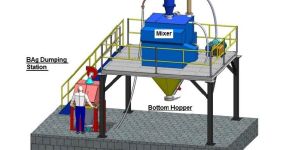
the batch mixing plant consists of: bag dumping station, vacuum conveying system, paddle mixer - single or double shaft, bottom collection hopper with valve and packing - manual or automatic , supporting structures,etc
fully automated or semi automatic or individual items can be customised as per the design required from the customer.
Our batch mixing plant gives a complete solution of charging, mixing and discharge of powder,granules, etc in a lesser time for the applications of food, animal feed, chemicals and refractories and building material,etc.
We are the manufacturers of toshniwal forberg mixer which gives homogenity of powder in less than 3 minutes max. We offer our mixers in mild steel, stainless steel constructions.
The price of teh batch mixing plant differs according to the moc and application aspect, please refer brochure
the batch mixing plant consists of: bag dumping station, vacuum conveying system, paddle mixer - single or double shaft, bottom collection hopper with valve and packing - manual or automatic , supporting structures,etc
fully automated or semi automatic or individual items can be customised as per the design required from the customer.
Vacuum components must live up to high standards.Vacuum vacuum components meet the high quality standards that are placed on vacuum components. The vacuum components are helium leak-tested and show leakage rates better than 10-10 Pa. m3s for ISO-KF, ISO-KISO-F flanges and 10-11 Pa.
Reasons to Braze under Vacuum
The following reasons support the use of brazing under vacuum:
Calibrated use of alloy with magnesium (4045, 4044, 4104, 4004) to prevent excessive Mg sublimation in the vacuum chamber
High final vacuum due to high capacity pumping systems (cryogenic pump + diffusion pumps), which produce a low oxygen atmosphere
Rapid transition of the load temperature during the heating phase from 520 °C (starting temperature for Mg sublimation) to 605610 °C thanks to high power furnaces, a feature that prevents an oxidized layer (Al2O3) from reforming on the surface of the piece newly reduced to Al
Suitable fixing systems of the individual heat exchanger prevent the piece from collapsing or deforming
Uniform load temperature (± 3 °C at 605 °C) is achieved through accurate control of the output power and by distributing the heating zones
Cleanliness of the components
No emission of contaminated substances into the atmosphere
Controlled cooling of the walls and other elements of the furnace with heated water (80 °C) to prevent atmospheric water vapor from condensing during loading and unloading process
Reasons to Braze under Vacuum
The following reasons support the use of brazing under vacuum:
Calibrated use of alloy with magnesium (4045, 4044, 4104, 4004) to prevent excessive Mg sublimation in the vacuum chamber
High final vacuum due to high capacity pumping systems (cryogenic pump + diffusion pumps), which produce a low oxygen atmosphere
Rapid transition of the load temperature during the heating phase from 520 °C (starting temperature for Mg sublimation) to 605610 °C thanks to high power furnaces, a feature that prevents an oxidized layer (Al2O3) from reforming on the surface of the piece newly reduced to Al
Suitable fixing systems of the individual heat exchanger prevent the piece from collapsing or deforming
Uniform load temperature (± 3 °C at 605 °C) is achieved through accurate control of the output power and by distributing the heating zones
Cleanliness of the components
No emission of contaminated substances into the atmosphere
Controlled cooling of the walls and other elements of the furnace with heated water (80 °C) to prevent atmospheric water vapor from condensing during loading and unloading process
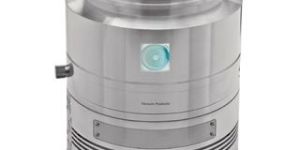
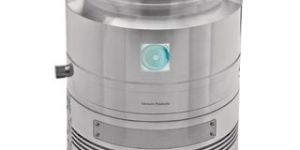
Turbomolecular pump is a type of vacuum pump, superficially similar to a turbopump, used to obtain and maintain high vacuum. These pumps work on the principle that gas molecules can be given momentum in a desired direction by repeated collision with a moving solid surface.
Salient features
all components easily accessible.
Compact construction
simple operation
allows direct connection of vacuum chamber
pumping speed ranging from 120 lps to 3000 lps
ultimate (unbaffled) vacuum better than 10-6 m bar (with lnt)
d.p., baffles, valves, collar & plumbing are s.s. Construction optional
standard vacuum pumping systems consists of rotary vacuum pump, diffusion pumps and other hardware like valves, baffles, collar, gauge and plumbing lines etc., fully integrated and wired. Special vacuum pumping systems are offered with rotary pumps, root pumps & diffusion pumps or combination as per customer requirements.
Salient features
all components easily accessible.
Compact construction
simple operation
allows direct connection of vacuum chamber
pumping speed ranging from 120 lps to 3000 lps
ultimate (unbaffled) vacuum better than 10-6 m bar (with lnt)
d.p., baffles, valves, collar & plumbing are s.s. Construction optional
standard vacuum pumping systems consists of rotary vacuum pump, diffusion pumps and other hardware like valves, baffles, collar, gauge and plumbing lines etc., fully integrated and wired. Special vacuum pumping systems are offered with rotary pumps, root pumps & diffusion pumps or combination as per customer requirements.
Product Description:
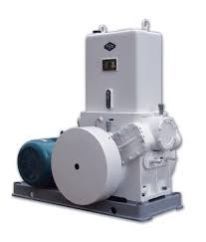
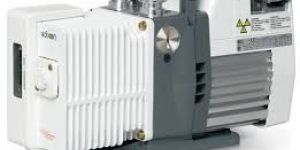
Being a customer oriented firm, we are engaged in offering a wide range of Vacuum Piston Pumps. These pumps are manufactured using optimum grade raw material and sophisticated technology in synchronization with international standards.
Features:
Sturdiness
High strength
Accurate dimensions
Industry approved design
Corrosion resistance
High durability
Product Description:
Being a customer oriented firm, we are engaged in offering a wide range of Vacuum Piston Pumps. These pumps are manufactured using optimum grade raw material and sophisticated technology in synchronization with international standards.
Features:
Sturdiness
High strength
Accurate dimensions
Industry approved design
Corrosion resistance
High durability
Hi tech vacuum extended care solution helps guarantee the long-term performance of your vacuum products. Protect your investment and guarantee a predictable cost of ownership after the warranty expires with this expert service. Including preferred maintenance response, unlimited on-site repair visits and access to high quality telephone support, the extended care program ensures that all areas of your operation are covered.
A booster pump is a machine which will increase the pressure of a fluid. . A gas booster is similar to a gas compressor, but generally a simpler mechanism which often has only a single stage of compression, and is used to increase pressure of a gas already above ambient pressure.
The performance of all vacuum systems is governed by the fundamental relationship Q=SP (gas load in torr literssec. = pumping speed in literssec. x pressure in torr).1 It is obvious, when we look at the equation, that the pressure will be lower if either pumping speed is increased or the gas load is decreased. The pumping speed of a pump can be easily checked in the manufacturer’s specifications and the effective pumping speed at the chamber can be calculated fairly easily. The total gas load, though, is a little more elusive. This is due to the fact that each chamber design or process will have its own specific gas loads that will combine to make up the total that the pump is required to deal with.
Although it’s important to assess and control these gas loads in the design phase, it’s also important to know and understand them in an already existing and working system. In an overall sense, gas loads can be divided according to their sources as either volume gas or wall gas.
Volume gas is the easiest to understand and deal with. This is nothing more than the amount of gas trapped within the chamber volume at the onset of the pumpdown process. Volume calculations are easy to do in either the design phase or on an existing system. The importance of the system’s volume applies only to the roughing segment of the pumpdown process. The manufacturers of roughing pumps usually provide a simple means of calculating pumpdown performance based on volume and pumping speed. This makes it a fairly simple matter to design in the right sized roughing pump and roughing line to achieve the expected or specified pumpdown performance. Once the pumpdown proceeds past roughly 1 torr, though, the volume begins to slowly lose importance. By the time the total pressure falls to 1 millitorr or so, the gas in the original volume is almost gone. In the low10-4 torr range, volume gas no longer plays a part in the to
The performance of all vacuum systems is governed by the fundamental relationship Q=SP (gas load in torr literssec. = pumping speed in literssec. x pressure in torr).1 It is obvious, when we look at the equation, that the pressure will be lower if either pumping speed is increased or the gas load is decreased. The pumping speed of a pump can be easily checked in the manufacturer’s specifications and the effective pumping speed at the chamber can be calculated fairly easily. The total gas load, though, is a little more elusive. This is due to the fact that each chamber design or process will have its own specific gas loads that will combine to make up the total that the pump is required to deal with.
Although it’s important to assess and control these gas loads in the design phase, it’s also important to know and understand them in an already existing and working system. In an overall sense, gas loads can be divided according to their sources as either volume gas or wall gas.
Volume gas is the easiest to understand and deal with. This is nothing more than the amount of gas trapped within the chamber volume at the onset of the pumpdown process. Volume calculations are easy to do in either the design phase or on an existing system. The importance of the system’s volume applies only to the roughing segment of the pumpdown process. The manufacturers of roughing pumps usually provide a simple means of calculating pumpdown performance based on volume and pumping speed. This makes it a fairly simple matter to design in the right sized roughing pump and roughing line to achieve the expected or specified pumpdown performance. Once the pumpdown proceeds past roughly 1 torr, though, the volume begins to slowly lose importance. By the time the total pressure falls to 1 millitorr or so, the gas in the original volume is almost gone. In the low10-4 torr range, volume gas no longer plays a part in the to
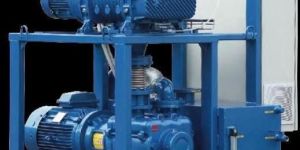
Hi tech vacuum engineering ranges of high vacuum pumping systems have been used in both laboratory and industrial applications. These systems are are suitable for the most of the vacuum applications as per the customer specifications.
The standard vacuum pumping systems consists of rotary vacuum pump, diffusion pumps and other hardware like valves, baffles, collar, gauge and plumbing lines etc., fully integrated and wired. Special vacuum pumping systems are offered with rotary pumps, root pumps & diffusion pumps or combination as per customer requirements.
The vacuum pumping systems, are trolley mounted for easy movement, are capable of achieving an ultimate vacuum of10-6 m.bar. Liquid nitrogen trap (optional) is to minimize the back-streaming of oil vapors, and ensures clean and better ultimate vacuum of 10-6 m.bar range. The vacuum pumping systems are fitted with pirani gauge to measure the roughing and backing vacuum & penning gauge for measuring the high vacuum.
Hi tech vacuum engineering ranges of high vacuum pumping systems have been used in both laboratory and industrial applications. These systems are are suitable for the most of the vacuum applications as per the customer specifications.
The standard vacuum pumping systems consists of rotary vacuum pump, diffusion pumps and other hardware like valves, baffles, collar, gauge and plumbing lines etc., fully integrated and wired. Special vacuum pumping systems are offered with rotary pumps, root pumps & diffusion pumps or combination as per customer requirements.
The vacuum pumping systems, are trolley mounted for easy movement, are capable of achieving an ultimate vacuum of10-6 m.bar. Liquid nitrogen trap (optional) is to minimize the back-streaming of oil vapors, and ensures clean and better ultimate vacuum of 10-6 m.bar range. The vacuum pumping systems are fitted with pirani gauge to measure the roughing and backing vacuum & penning gauge for measuring the high vacuum.
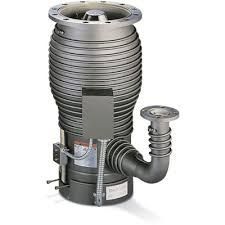
Hi tech diffusion pump
Diffusion pumps use a high speed jet of vapor to direct gas molecules in the pump throat down into the bottom of the pump and out the exhaust.
Hi tech diffusion pump
Diffusion pumps use a high speed jet of vapor to direct gas molecules in the pump throat down into the bottom of the pump and out the exhaust.
A Cryocooler is a standalone cooler, usually of table-top size. It is used to cool some particular application to cryogenic temperatures. A recent review is given by Radebaugh. The present article deals with various types of cryocoolers and is partly based on -------