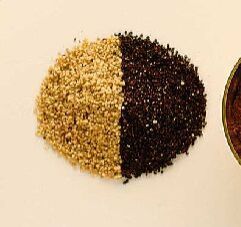
White poppy seeds are often referred to as 'Indian', 'Middle Eastern' or 'Asian' since they are featured in these cuisines.
Papaver somniferum is also the poppy, native to the Middle East and now grown in China, Indo-China, India and Afghanistan. An inert variety grows wild and is also cultivated in Europe and North America.
White poppy seeds are often referred to as 'Indian', 'Middle Eastern' or 'Asian' since they are featured in these cuisines.
Papaver somniferum is also the poppy, native to the Middle East and now grown in China, Indo-China, India and Afghanistan. An inert variety grows wild and is also cultivated in Europe and North America.
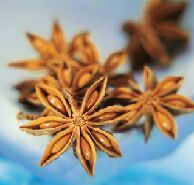
We are offering star anise.
Star anise is the unusual fruit of a small oriental tree. It is, as the name suggests, star shaped, radiating between five and ten pointed boat-shaped sections, about eight on average. These
hard sections are seed pods. Tough skinned and rust coloured, they measure up to 3cm long. The fruit is picked before it can ripen, and dried. The stars are available whole, or ground to a red-brown powder.
We are offering star anise.
Star anise is the unusual fruit of a small oriental tree. It is, as the name suggests, star shaped, radiating between five and ten pointed boat-shaped sections, about eight on average. These
hard sections are seed pods. Tough skinned and rust coloured, they measure up to 3cm long. The fruit is picked before it can ripen, and dried. The stars are available whole, or ground to a red-brown powder.
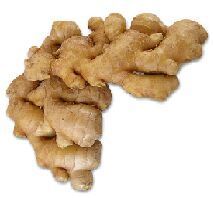
The rhizome of an asiatic plant, 'zingiber officinale', ginger derives its name form the sanskrit word srngavera - meaning, 'horn-shaped'. Known and used since ancient times in india and china, this tuber with many knobby protuberances called 'fingers' and a piquantly delicious taste is today found in many kitchens all over the world. Acknowledged as a digestive aid and a mild stimulant, ginger is reputed to have powerful aphrodisiacal properties as well. At present, ginger is cultivated in practically all the tropical countries of the world. In india, the finest quality ginger is grown primarily in mananthawadi and sulthan bathery ranges in kerala and also in assam and arunachal pradesh and karnataka.
The rhizome of an asiatic plant, 'zingiber officinale', ginger derives its name form the sanskrit word srngavera - meaning, 'horn-shaped'. Known and used since ancient times in india and china, this tuber with many knobby protuberances called 'fingers' and a piquantly delicious taste is today found in many kitchens all over the world. Acknowledged as a digestive aid and a mild stimulant, ginger is reputed to have powerful aphrodisiacal properties as well. At present, ginger is cultivated in practically all the tropical countries of the world. In india, the finest quality ginger is grown primarily in mananthawadi and sulthan bathery ranges in kerala and also in assam and arunachal pradesh and karnataka.
We are offering garcinia.
The garcinia cambogia (kokum) is native to the western coastal regions of southern india and is rarely seen beyond this area. Even in india it is used only in the regional cuisines of gujarat maharashrta and several southern states where large glasses of kokum sherbet are downed during parched summer months. In this region the sweltering heat demands refrigerant (cooling) ingredients in food and drink. Kokum is well known to counteract the heat.
We are offering garcinia.
The garcinia cambogia (kokum) is native to the western coastal regions of southern india and is rarely seen beyond this area. Even in india it is used only in the regional cuisines of gujarat maharashrta and several southern states where large glasses of kokum sherbet are downed during parched summer months. In this region the sweltering heat demands refrigerant (cooling) ingredients in food and drink. Kokum is well known to counteract the heat.
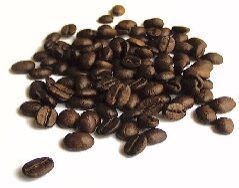
We are offering coffee bean.
Coffee bean is the seed of the coffee plant (the pit inside the red or purple fruit). The fruits, coffee cherries or coffee berries, most commonly contain two stones with their flat sides together. Coffee beans consist mostly of endosperm that contains 0.8 - 2.5 % caffeine, which is one of the main reasons the plants are cultivated. As coffee is one of the world's most widely consumed beverages, coffee beans are a major cash crop, and an important export product for some countries.
We are offering coffee bean.
Coffee bean is the seed of the coffee plant (the pit inside the red or purple fruit). The fruits, coffee cherries or coffee berries, most commonly contain two stones with their flat sides together. Coffee beans consist mostly of endosperm that contains 0.8 - 2.5 % caffeine, which is one of the main reasons the plants are cultivated. As coffee is one of the world's most widely consumed beverages, coffee beans are a major cash crop, and an important export product for some countries.
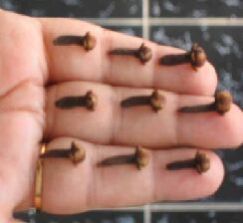
He name clove is derived from the french word 'clou' meaning nail, which is the shape that the bud and stem resemble. Cloves are the dried flower buds of a tropical evergreen tree belonging to the 'myrtaceae' family. Today, in madagascar, brazil and vietnam, it is primarily grown as a cash crop. Cloves have a natural antiseptic effect and are used widely in medicines and as a prominent ingredient in indian and asian cooking.
Clove- on of the 'big four' - clove is one of what the spice world calls 'big four' along with cinnamon, nutmeg and pepper - and shares with them the adventurous history that revolves around all the spices from the orient. Clove is an essential ingredient in world cuisine and of course, an interesting part of indonesian 'kretek' cigarettes, which gives off a distinctive aroma and flavour when smoked.
He name clove is derived from the french word 'clou' meaning nail, which is the shape that the bud and stem resemble. Cloves are the dried flower buds of a tropical evergreen tree belonging to the 'myrtaceae' family. Today, in madagascar, brazil and vietnam, it is primarily grown as a cash crop. Cloves have a natural antiseptic effect and are used widely in medicines and as a prominent ingredient in indian and asian cooking.
Clove- on of the 'big four' - clove is one of what the spice world calls 'big four' along with cinnamon, nutmeg and pepper - and shares with them the adventurous history that revolves around all the spices from the orient. Clove is an essential ingredient in world cuisine and of course, an interesting part of indonesian 'kretek' cigarettes, which gives off a distinctive aroma and flavour when smoked.
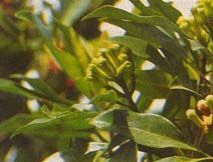
We are offering clove leaf.
The word ‘clove’ is from the latin word for ‘nail’ – clavus. The clove is native to the north moluccas, the spice islands of indonesia. It is cultivated in brazil, the west indies, mauritius, madagascar, india, sri lanka, zanzibar and pemba.
Cloves are the immature unopened flower buds of a tropical tree. When fresh, they are pink, dried, they turn to a rust-brown colour. Measuring 12-16 mm (12”-58”) long, they resemble small nails, with a tapered stem. The large end of the clove is the four-pointed flower bud.
We are offering clove leaf.
The word ‘clove’ is from the latin word for ‘nail’ – clavus. The clove is native to the north moluccas, the spice islands of indonesia. It is cultivated in brazil, the west indies, mauritius, madagascar, india, sri lanka, zanzibar and pemba.
Cloves are the immature unopened flower buds of a tropical tree. When fresh, they are pink, dried, they turn to a rust-brown colour. Measuring 12-16 mm (12”-58”) long, they resemble small nails, with a tapered stem. The large end of the clove is the four-pointed flower bud.
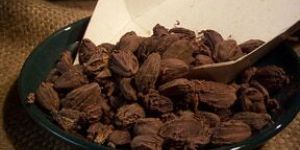
Black cardamom (also known as brown cardamom), like cardamom, is a plant in the family zingiberaceae. Its pods are used as a spice, in a manner similar to the green indian cardamom pods, but it has a drastically different flavor so it can not be substituted in the same recipes unless a different flavor is acceptable. Unlike green cardamom, this spice is rarely used in sweet dishes. Its strong smoky flavor and aroma are derived from the traditional drying procedure, which involves drying over open flames.[1] black cardamom is often erroneously described as an inferior substitute to green cardamom by those who are unfamiliar with the spice.
Black cardamom (also known as brown cardamom), like cardamom, is a plant in the family zingiberaceae. Its pods are used as a spice, in a manner similar to the green indian cardamom pods, but it has a drastically different flavor so it can not be substituted in the same recipes unless a different flavor is acceptable. Unlike green cardamom, this spice is rarely used in sweet dishes. Its strong smoky flavor and aroma are derived from the traditional drying procedure, which involves drying over open flames.[1] black cardamom is often erroneously described as an inferior substitute to green cardamom by those who are unfamiliar with the spice.
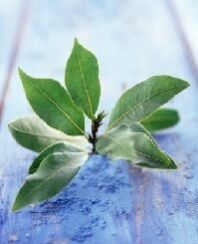
The bay leaf is oval, pointed and smooth, 2.5 - 8 cm (1 to 3 in) long. When fresh, the leaves are shiny and dark green on top with lighter undersides. When dried the bay leaf is a matte olive green.
Bay is a tree of the sun under the celestial sign of leo and has been cultivated from ancient times; its leaves constituted the wreaths of laurel that crowned emperors, heroes and victorious athletes in ancient greece and rome. Bay leaves (laurus nobilis from the lauraceae family) come from the bay laurel tree, native to the mediterranean. Whole leaves are used to season meats, stews, soups and sauces, and are typically removed before serving. Bay leaves are also a component of bouquet garni.
The bay leaf is oval, pointed and smooth, 2.5 - 8 cm (1 to 3 in) long. When fresh, the leaves are shiny and dark green on top with lighter undersides. When dried the bay leaf is a matte olive green.
Bay is a tree of the sun under the celestial sign of leo and has been cultivated from ancient times; its leaves constituted the wreaths of laurel that crowned emperors, heroes and victorious athletes in ancient greece and rome. Bay leaves (laurus nobilis from the lauraceae family) come from the bay laurel tree, native to the mediterranean. Whole leaves are used to season meats, stews, soups and sauces, and are typically removed before serving. Bay leaves are also a component of bouquet garni.
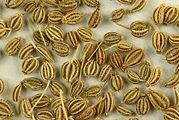
Ajwain is an uncommon spice except in certain areas of Asia. It is the small seed-like fruit of the Bishop's plant, egg-shaped and grayish in colour. Ajwain is often confused with lovage seed; even some dictionaries mistakenly state that ajwain comes from the lovage plant. Ajwain is also called 'owa' in Marathi, 'vaamu' in Telugu and "omam" in Tamil.
Ajwain is an uncommon spice except in certain areas of Asia. It is the small seed-like fruit of the Bishop's plant, egg-shaped and grayish in colour. Ajwain is often confused with lovage seed; even some dictionaries mistakenly state that ajwain comes from the lovage plant. Ajwain is also called 'owa' in Marathi, 'vaamu' in Telugu and "omam" in Tamil.
The rhombic yellow to amber colored fenugreek seed, commonly called maithray, is frequently used in the preparation of pickles, curry powders, and pastes, and is often encountered in the cuisine of the indian subcontinent. The young leaves and sprouts of fenugreek are eaten as greens, and the fresh or dried leaves are used to flavor other dishes. The dried leaves (called kasturi methi) have a bitter taste and a strong characteristic smell.
The rhombic yellow to amber colored fenugreek seed, commonly called maithray, is frequently used in the preparation of pickles, curry powders, and pastes, and is often encountered in the cuisine of the indian subcontinent. The young leaves and sprouts of fenugreek are eaten as greens, and the fresh or dried leaves are used to flavor other dishes. The dried leaves (called kasturi methi) have a bitter taste and a strong characteristic smell.
Secondary Business TypeManufacturer / Wholesale Suppliers
Year of Establishment1980
No. of Employees21 - 50
Annual TurnoverRs. 25 to 50 Crore Approx.
Opening Hours
SUN : Closed
MON : 9:30 AM - 6:30 PM
TUE : 9:30 AM - 6:30 PM
WED : 9:30 AM - 6:30 PM
THU : 9:30 AM - 6:30 PM
FRI : 9:30 AM - 6:30 PM
SAT : 9:30 AM - 6:30 PM
Established in year 1980, Jain Enterprises is Exporters of Agro Products, Ajwain, Almonds, Anise, Black Pepper, Cardamom, Cashew Nuts, Cinnamon, Cloves, Coffee from Bangalore, Karnataka.


 Reviews & Ratings
 Write a Review


 Post Free Ad