China Clay Dealers in Madhapar, Bhuj

(52 products available)
  • Premium
    Levigated China Clay +2

    Levigated China Clay

    2,100 - 14,000 / Tons

    • MOQ25 Ton
    • MaterialWashed China Clay
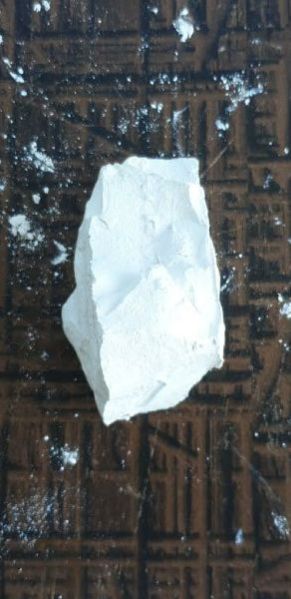
    • FormLumps, Noodles
    • ApplicationCeramic,Tiles,Glaze
    • FeatureEffective, Purity, Safe To Use
    • Packaging TypePlastic Bags
    • Packaging Size50kg, Jumbo Bags
    • Number Of FlowerLevigated China Clay
    • Country of OriginIndia
    • Whiteness50-99%
    • Application : Sanitary ware body and glaze Ceramic engope, glaze compounds and frits Vitrified tiles like double charge top and bottom, gvt compound etc. Wall and floor tiles use as engope and glaze As a refractory raw material, bricks and castables Insulate lt & ht Bone china, crockery and porcelain Tableware and stoneware.  
    ...more
    www
  • China Clay +3

    China Clay

    Get Price Quote

    • Whiteness50-99%
    • Al2O3 Content (%)0.34%
    • Dimension325mesh
    • Packaging Size50Kg Bag
    • SiO2 Content (%)50% MAX.
    • MgO Content (%)0.5 MAX.
    • K2O Content (%)1.64%
    • Min. Order QuantityAs per client requirement
    • We can be contacted for purchasing premium China Clay as per the requirement. Based in Bhuj, Gujarat, we are a known Manufacturer and Supplier of China Clay. This soft, earthy, white colour mineral is extensively used as filler in many industries such as paint, rubber, ceramic, paper etc. We make available China Clay in different grades and packaging options to suit diverse requirements.
    ...more
  • China Clay

    China Clay

    4,500 / Ton

    • MOQ5000 Ton
    • Whiteness90-92
    • we have very good quality Indian origin china clay our products have 90 to 92% whiteness quality with 93% L value. We are manufacturing of different grade china clay like Paper grade, paint grade and rubble grade.
    ...more
  • China Clay

    China Clay

    Get Price Quote

    • MaterialClay
    • Packaging TypeGranular Form, Powder Form, Lump Form
    • ApplicationCeramic Glazing, Paint Extenders
    • QualityHigh
    • We are considered to be one of the most professional manufacturers, exporters and suppliers of China Clay. Formulated under the supervision of skilled professionals, these are tested on industrial norms and standards. In order to accomplish the varied requirements of our patrons, these are offered in different forms such as granular form, powder form and lump form. China Clay is used for making ceramic glazing or the paint extenders. We offer high quality and pure clay at very economical prices.
    ...more
  • Pure China Clay

    Pure China Clay

    Get Price Quote

    • MOQ300 Metric Ton
    • Number Of FlowerLUMPS
    • ApplicationCERAMIC BODY AND PAINT
    • Whiteness90%
    • We have strong tie-ups with the leading e-commerce merchants who provide us a secure payment gateway that helps us in avoiding physical movement of money. In order to deliver a flawless lot of products, we keep it in safe and secure place. We have developed all the in-house storage unit wherein we keep it to prevent from damaging factors.
    ...more
  • China Clay

    China Clay

    Get Price Quote

    We are offering china clay. China clay is also called “kaolin”, it is one of the essential raw material for ceramic industries, plastic industry, paint industry, paper industry, cosmetics products. Grade: [1] raw china clay, [2] levigated china clay, [3] china clay powser kaolin.
    ...more
  • China Clay

    China Clay

    Get Price Quote

    we are engaged in manufacturing, supplying and importing and exporting Kaolin Clay. The product we are offering is widely used for various applications in industries like paper industry, rubber industry, ceramic industry, paint industry and plastic industry. Offered clay is processed according to the guidelines of the industry by using latest machines and optimum quality ingredients.
    ...more
  • Premium
    China Clay White A+ Grade

    China Clay White A+ Grade

    5,100 - 5,800 / Metric Ton

    • MOQ30 Ton
    • Number Of FlowerChina Clay Lumps
    • MaterialChina Clay, Clay
    • Storage ConditionDried
    • ApplicationDetergents
    • FeatureEffective, Safe To Use
    • FormLumps
    • Packaging Type50kg Bag Or Jumbo Bag
    • Whiteness90+
    • Packaging Size50kg, Jumbo Bag
    • Country of OriginIndia
    • SiO255.250
    • Al2O337.202
    • Fe2o30.331
    • TiO21.114
    • MgO0.116
    • CaO0.137
    • Na2O0.034
    • K2O0.066
    • L.O.I as per ED-XRF13.431
    • Brightness81±1
    • Whitness90±1
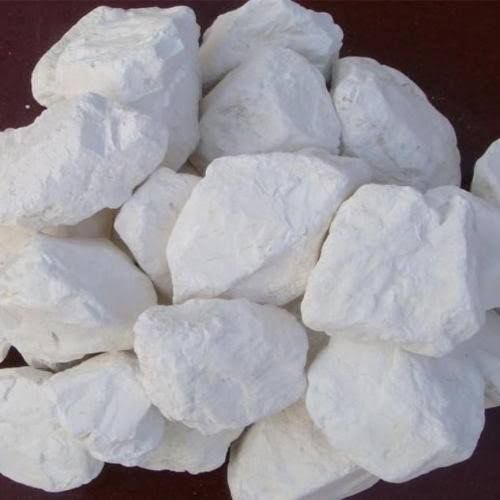
    • Our experts are engaged in manufacturing, exporting and supplying of Levigated China Clay Lump (Uma White A+). These are utilized in the production of many items which are used by us in our day life. Clients can avail from us the Lavigated Lumps at rock bottom prices and in tamper proof packing. Hardness : Soft Color : Pure White Applications : Cream Glaze, Vitrified Body, Refractory Grade, Paint, Plastic, Paper etc. With our state of art manufacturing unit we are capable of providing customized processed China clay to customers specification in quality and delivery schedules they want. Related Keywords: China Clay Manufacturer, china clay manufacturers in india, china clay manufacturers in gujarat, china clay suppliers, china clay suppliers in india, china clay suppliers in gujarat, china clay ceramic grade, china clay powder, china clay seller, china clay mines in kutch, china clay lumps, china clay price per ton in india, Kaolin Clay Manufacturer, Kaolin Clay manufacturers in india, Kaolin Clay manufacturers in gujarat, Kaolin Clay suppliers, Kaolin Clay suppliers in india, Kaolin Clay suppliers in gujarat, Kaolin Clay ceramic grade, Kaolin Clay powder, Kaolin Clay seller, Kaolin Clay mines in kutch, Kaolin Clay lumps, Kaolin Clay price per ton in india
    ...more
    www
  • China Clay

    China Clay

    Get Price Quote

    We are offering china clay, paper, ceramic industries and other 400 industries.
  • Levigated China Clay

    Levigated China Clay

    Get Price Quote

    china clay is a natural mineral found in partly decompose-sled granite, an igneous feldsparic rock. Chemically, kaolin is a hydrated aluminum silicate containing Al2O3.2SiO2.2H2O. Kaolin was first discovered in the mountainous province of Kiangsi, China in A.D. 500. The word “kaolin” derives from the Chinese character ‘kao lin’ which means high ridge. It was first used by the Chinese to make high quality porcelain.
    ...more
  • China Clay

    China Clay

    Get Price Quote

    Our company is in the business of processing bentonite and chinaclay kaolin. Based in bhuj of kutch district, gujarat state of india located on west coast, proximity to kandla & mundra port. We process for different application based on the requirement of end user & as per the specification provided by customers, we process for application such as, raw kaolin - white cement & ceramics chinaclay - ceramics, pesticides, paper, paint, rubber, vitrified tiles, detergent, cosmetic & others. material is being tested at our established principal lab at various stages right from incoming to process & till dispatched. To ensure product meets & surpass all quality parameters has complete infrastructure & competent to customized the grade. As a company, we offer products that are of the highest standard at at extremely competitive rates.
    ...more
  • China Clay

    China Clay

    Get Price Quote

    We are accredited for providing faultless array of products. This has become possible owing to the efforts of our quality auditors who strictly check the inputs before procurement. We have a team of quality examiners who strictly check the product quality so as to attain maximum client satisfaction.
    ...more
  • Spray Dried China Clay

    Spray Dried China Clay

    Get Price Quote

    Spray dried China Clay is also used in Paper Coating, Paint and Electro Ceramic Industries and in Mechanical Rubber Goods.Spray Dried China clay is in from of beads and free flowing and easy to handle & transport. The product is easily dispersible in water system. The milling will be required for solvent based products. It has bulk density and lower dusting. Our products give high gloss and opacity when it is used as extender in paints. The product is most preferable for coatings in paper. Applications : Used in Paper Coating, Paint and Electro Ceramic Industries.
    ...more
  • China Clay +5

    China Clay

    1,600 - 1,800 / Metric Ton

    • MOQ1 Metric Ton
    • Brand NameCHINA CLAY
    • MaterialChina Clay
    • FormPowder
    • ApplicationWhite Cement,Refractory Bricks And In Port,It Acts As Fog Removing Agent,Dust Collecting Agent On
    • Packaging TypePlastic Bags
    • Packaging Size50kg, 25kg
    • Country of OriginIndia
    • Place of OriginINDIA
    • China Clay also known as Kaolin or Hydrated Aluminum Silicate with a melting point of 740-1785°C and its density is 2.65 g/cm3. China Clay with a chemical formula Al2O3, is a soft and earthy mineral. It appears to be Yellowish or Grayish or White colored powder which is odorless. It is available in abundant amount on the earth’s crust. China Clay is a part of Kaolinite group of Clays, which are found in the rocks those are rich in Kaolinite mineral and so China Clay is just a Hydrated Aluminum Silicate derived from the mineral Kaolinite. Kaolin is generally insoluble in water or has low solubility, therefore develops earthly odor if hydrated. With a low cation exchange and shrink swell capacity it is used in both of its form which are lumps and powder. China Clay finds its application in Ceramic and Sanitary Ware Industry, Paper and Textile Industry, Paint and Rubber Industry and even in Production of Crockery. It is also used in Refractory Production, and even act as Filler in Cement and Wood Primer, Texture Paint, Spray Plaster and Many more. China Clay even has the capability to accelerate blood clotting. Jyoti Chemical offered China Clay is produced with ultra-modern technology with fine particle size, Pure White or Off-White in color and therefore it gets its commercial value. In all aspects we look after the physical characteristics of China Clay from its brightness, to glossiness and viscosity. Jyoti Chemical provided China Clay is strictly as per your requirement and specification with customized packing options.
    ...more
  • China Clay

    China Clay

    Get Price Quote

    We offer optimum quality China Clay which is manufactured under the supervision of experts. China Clay has a number of industrial applications including sanitary ware, table ware and vitrified grades body. We offer China Clay in a wide range of colors. Further we are counted amongst leading Suppliers of high quality China Clay. Highlights Has a number of industrial applicationsAvailable in multiple colorsManufactured by advanced techniquesCustomized packing available
    ...more
  • China Clay

    China Clay

    Get Price Quote

    • Whiteness78% to 95%
    • Sio245% to 48%
    • Al2o333% to 39%
    • Fe2o3Below 1.5%
    • Tio2Below 0.5%
    • CaoBelow 1%
    • MgoBelow 0.5%
    • LOI12% to 14%
    • Acid Insoluble97.5%
    • PH8.1
    • B.D.0.5 gm/cc
    • Oil absorption39.5 ml/100gm
    • SRP Minerals China Clay is a Hydrated Aluminum Silicate Widely used in polymer applications, which contributes to the improvement in chemical resistance, electrical properties and reduction in water absorption. It lowers the crack tendency in the finished products, improves shock resistance and surface quality. Micro China Clay is widely used in paints manufacturing and in oil bound distemper manufacturing. Best quality china clay is available in kachchh and some Parts of north Gujarat. The specification of our china clay is as under:- Ceramics (excluding refractories), bone china; hard porcelain (including tiles, tableware, sanitary and electrical porcelain); fine earthenware; earthenware (lower grade); earthenware (sanitary); porous wall tiles; electrical porcelain (England); semi-vitreous china (American); semi-vitreous porcelain (American); hotel china (American); household china (American); belleek (American); glazes (mill additions and frit additions); porcelain enamels; radiants. Rubber Paint and distemper Leather Cosmetics, insecticides, dusting and medicinal Textiles Linoleum White cement Ultramarine Plastics Miscellaneous, soap; cleaners; inks; fuses; pencils; grinding wheels; welding rods; boiler coverings; asbestos; dyes; accumulator cases; lubricants (extrusion). Paper, Kaolin performs two quite separate functions in papermaking. As a filler or loading, it is incorporated within the body of the paper, both reducing its overall cost and improving its printing properties. It is also a coating pigment, enhancing the surface properties of the paper, such as brightness, smoothness and gloss, thus allowing the accurate reproduction of colour printing. One of the purest of the clays, composed chiefly of the mineral kaolinite usually formed when granite is changed by hydrothermal metamorphism. Usage of the terms china clay and kaolin is not well defined; sometimes they are used synonymously for a group of similar clays, and sometimes kaolin refers to those obtained in the United States and china clay to those that are imported. Some authorities term as china clays the more plastic of the kaolins. China clays have long been used in the ceramic industry, especially in fine porcelains, because they can be easily molded, have a fine texture, and are white when fired. France's clays are made into the famous Sèvres (see A. Brongniart ) and Limoges potteries. These clays are also used as a filler in making paper. In the United States, deposits are found primarily in Georgia, North Carolina, and Pennsylvania; china clay is also mined in England (Cornwall) and France. The formation of granite At one time, most of what is now the British Isles was covered by sea, upon the bed of which vast deposits of mud and silt collected. In time, the accumulated weight of the sediments caused them to become compressed and hardened, converting them from loose sediments into highly cleavable forms of rock - the slates and shales which still abound on the costs of Cornwall and Devon to this day. At the time when the sediments were being laid down, great landmasses were drifting towards each other on a collision course. The pressures generated by this movement caused the seabed to fracture and fold. The folding process was accompanied by intense subterranean activity, the masses of molten rock forced their way upwards. When the rock cooled, it became granite, a rock made of a mixture of quartz, feldspar and mica. The formation of the granite took place between 290 and 270 million years ago and today it forms the rocky backbone of the south-west of England, being exposed in the Scilly Isles, Lands End, Carnmenelis, Hensbarrow near St Austell, Bodmin Moor and Dartmoor. The formation of china clay Granite is one of the commonest igneous rocks, but varies considerably in its composition from place to place. While the quartz is never anything but quartz, the feldspar can be a silicate of alumina with potash, soda or lime and the mica the potash-rich muscovite or the iron-rich biotite. In some parts of the South West, the feldspar in the granite is higher in its soda content than its potash content and these places are where china clay is found today. It came into being through a complex sequence of events. While the molten rock was still cooling, it was attacked successively by steam, boron, fluorine and tin vapour, these acting on the alkali content of the feldspar and converting it into china clay. The South Western granite has been converted into china clay only in those areas where the feldspar contained the necessary high soda content. Though no china clay is to be found in the Scilly Isles, it occurs in some places in the Lands End peninsula, at Tregonning Hill, near Helston, at Carnmenellis, on the St Austell moors around Hensbarrow Beacon, on Bodmin Moor and on parts of Dartmoor. The greatest amount of china clay is found on the St Austell moors.The china clay deposits are roughly funnel-shaped, with the widest part uppermost, and the base of these funnels can be as much as 300 metres deep. In certain locations, the deposits occur in clusters, and here one finds the largest of the china clay workings, including Blackpool, Goonbarrow, Littlejohns and Melbur in the St Austell area, Stannon on Bodmin Moor and Lee Moor on Dartmoor. Some of the deposits cover many hectares at the surface, while the deepest of the clay pits currently being worked is some 130 metres deep. To work any pit beyond this depth would mean that the pit would have to be enlarged laterally, as well as in depth. China clay occurs in the deposits in the form of china clay rock, a mixture of up to 15 per cent china clay and up to 10 per cent mica, and the remainder being quartz. The clay itself varies considerably from pit to pit. In some deposits, such as those at Blackpool, Littlejohns and Goonbarrow, the clay is ideally suited for the filling and coating of paper, while in other deposits, such as Treviscoe and Wheal Remfry, the clay is best suited for the making of ceramics. The china clay deposits of Cornwall and Devon are known as primary deposits, because the clay is found at the site where it was formed. Deposits of primary clay are found in Czechoslovakia, France, Germany, Spain, parts of the USA and in the USSR, but in all these the feldspars in the granite have been broken down by weathering, and the deposits of clay are strictly limited to the depth to which the weathering has penetrated: because of this, the clay reserves are much smaller than in Cornwall and Devon. In Czechoslovakia in particular, where the china clay industry has been in existence for some two centuries, many of the largest deposits have become completely worked out and only the discovery of fresh deposits has enabled the Czech clay industry to continue. In some countries, including Greece, Hungary, Iceland, Italy, Mexico and Turkey, there are somewhat different deposits of clay, which are also primary in nature. Here, however, the rocks that have undergone alteration were of volcanic origin, and the alternative media have been sulphurous steam and fluids. Consequently, the clay in these deposits contains minerals, which make it unacceptable for use in either paper or ceramics. Some china clay deposits are found a long way from the site of their formation, having been formed originally by weathering, and then having been washed away and transported by rivers to the places where they have eventually become deposited. These deposits are known as secondary deposits, and the largest of these in the world are found in the USA, in Georgia, South Carolina and Alabama. The clay occurs in beds up to 20 metres thick and is suitable for use after processing in paper, but not in ceramics, because of its high titanium content. Imerys is a major producer of china clay in Georgia. Development of the China Clay Industry The early history of the industry is, as would be expected, very much concerned with the discovery and production of china clays for use in ceramics. The story, though, starts thousands of years ago and thousands of miles away. China, the pure white porcelain used by the Chinese, was discovered many thousands of years ago and has always been a much-prized material. Despite many attempts to find sources elsewhere, it remained elusive until a few deposits were found in some parts of Europe and in America early in the eighteenth century. The search to find deposits in England was increased. When china clay, or kaolin, was discovered in England, it was realised that it was of a much finer quality than found elsewhere in Europe. A Quaker apothecary-cum-potter, William Cookworthy made the discovery in Cornwall in 1746. He experimented with various samples and in 1768 he took out a patent to use the material, soon producing items at his Plymouth Porcelain Factory. Until that time English pottery had consisted of coarse earthenware and stoneware ceramics and had suffered considerable competition from elsewhere. As more potteries made use of porcelain, so the demand grew and by the early nineteenth century the kaolin industry had become highly successful, with many of the Potters owning rights to mine the material for themselves. In addition, by the middle of the nineteenth century, china clay was increasingly being used as a raw material by the developing paper industry. Early in the twentieth century, the industry was made up of some seventy or so individual producers, each competing on price with little regard for marketing or standards. There was almost no capital investment or product development and over-production was great, wages were low and working conditions were poor. Despite this, by 1910, production was approaching a million tons a year and paper had completely overtaken ceramics as the prime user of china clay. Over 75% of output was exported, with North America and Europe being major markets. The china clay industry in Cornwall and Devon held a virtual monopoly on the supply of that mineral to the world market. Just after the First World War, the three leading producers joined forces - forming English China Clays Limited in 1919, placing almost 50% of the industry's capacity under one banner. China Clay Production China clay mining is a complicated process which can be split into three distinct sections - opencast mining, refining and drying Known as pit operations, this process firstly requires the removal of ground overlying the clay. This is known as overburden, which can vary in depth between one and fifteen metres. Once the clay is exposed, the method of mining is best described as a hydraulic mining process. This means, quite simply, that a jet of water under enormous pressure is fired at the pit face from a water cannon known in the industry as a monitor. This liberates from the quarry face the china clay, together with sand and mica. The material runs in slurry form to the lowest part of the pit, known as the sink, where it is lifted by centrifugal pumps to mechanical sand classifiers, where the more coarse sand elements are removed. The sand is disposed of on belt conveyors, which deposit it on low profile tips that can then be landscaped and seeded with grass. Having removed the coarsest of the sand, the clay suspension is then transported by underground pipeline to the second process: refining. Refining Refining consists of a series of mineral processing techniques - predominantly sedimentation - designed to remove the smaller sized waste particles, mainly minerals such as very fine quartz, mica and feldspar, leaving only the required china clay behind. Value can also be added to the clay at this stage by a variety of processes designed to engineer size and shape of the product, together with the use of a chemical bleaching process that improves its whiteness Having refined the clay, it is moved on to the final process: drying. Drying Drying consists of firstly converting the liquid clay into a solid material by a process known as filtration. The products of filtration normally have a moisture content of about 25%. Passing the clay through a thermal drier further reduces this moisture content. The driers are fired by natural gas and see a product emerging at around 10% moisture. The product is normally sold in pelletised form - particle size ranges from 6-12mm. Despite its extensive china clay deposits in Cornwall and Devon, Imerys continually researches new methods of extending the life of its reserves. For example, new refining techniques have been developed to obtain more china clay per matrix and sophisticated technical innovations provide the ability to adjust particle size. Consequently, the company is confident that its reserves are sufficient to last for many generations. China Clay Industry Statistics Clay bearing ground in mid-Cornwall covers approximately 25 square miles. Nine tonnes of waste rock and debris are produced for every one tonne of china clay. Imerys operates 17 pits in the UK. 14 of these are situated in Cornwall; 12 concentrated in the St Austell area. The three pits outside of Cornwall are situated on the south-western side of Dartmoor, an area known as Lee Moor. As well as Imerys, there are two independent producers: Goonvean in Cornwall and Watts Blake Bearne in Devon. Goonvean operates five pits and WBB two pits. 87% of the china clay produced in Cornwall is exported and some 60 grades are produced. The major markets are Western Europe, with the Nordic countries being the most important. Clay for export is normally despatched through the local port of Par, taking 30% of output, and the deep-water port of Fowey, taking 70%. Clay into the UK market is distributed equally between road and rail. Imerys employs over 2,500 people directly involved in the mining and distribution of china clay to the ports. The value to the local economy is immense, with over £120 million going directly into the Cornish economy. About half this figure is paid in wages, with the remainder being used to buy goods and services. Uses of China Clay Earliest uses List of uses in "The Hensbarrow Granite District", the first detailed account of the china clay industry, written by the distinguished Cornish geologist J. F. Collins, F.G.S. in 1878: The first use to which china clay was applied in the West of England was, as already stated, the manufacture of porcelain and this is still popularly believed to be its sole use. This is, however, by no means the case, probably not more than one-third of the clay now being produced being so used. Large quantities are used for "bleaching", i.e filling for the spaces between the threads of calicoes and other cotton goods and also as a material for giving weight to cotton yarn; and still larger quantities are used by papermakers to give "body" to their papers, especially to printing papers. The manufacture of alum, sulphate of alumina and ultramarine uses up large quantities annually, besides which small quantities are used by manufacturing and colour makers, photographers and others. It has also been used, not avowedly however, as a "body" in the composition of some artificial manures, the utilisation of sewage and even in the adulteration of flour. Should the present low prices be maintained its use will no doubt be still more largely extended in directions as yet unsuspected. Early 20th Century J. Allen Howe's "Handbook of kaolin, china clay and china stone" was published in 1914 and listed the following uses: China clay in ceramic manufacture, porcelain; bone china; earthenware; white tile body; graniteware; white stoneware; glazes. Paper manufacturing (note: some 60% of output was being used by the paper industry by the early 20th Century) Miscellaneous, paint; plaster; alum; ultramarine; whitewash; drugs; soap and face powder; wine clarification; polishing powders; lead pencils. Mid 20th century List of uses published in the "Technical Salesman's Handbook" issued by E.C.L.P. & Co. Ltd in 1954: Paper and board, coating clays; fillers; brush coating clays; machine coating clays. Ceramics (excluding refractories), bone china; hard porcelain (including tiles, tableware, sanitary and electrical porcelain); fine earthenware; earthenware (lower grade); earthenware (sanitary); porous wall tiles; electrical porcelain (England); semi-vitreous china (American); semi-vitreous porcelain (American); hotel china (American); household china (American); belleek (American); glazes (mill additions and frit additions); porcelain enamels; radiants. Rubber Paint and distemper Leather Cosmetics, insecticides, dusting and medicinal Textiles Linoleum White cement Ultramarine Plastics Miscellaneous, soap; cleaners; inks; fuses; pencils; grinding wheels; welding rods; boiler coverings; asbestos; dyes; accumulator cases; lubricants (extrusion). Today Paper, Kaolin performs two quite separate functions in papermaking. As a filler or loading, it is incorporated within the body of the paper, both reducing its overall cost and improving its printing properties. It is also a coating pigment, enhancing the surface properties of the paper, such as brightness, smoothness and gloss, thus allowing the accurate reproduction of colour printing. Type of paper Board Printing and writing paper Newsprint Typical kaolin content (%) up to 10 up to 30 up to 8 Ceramics, Kaolin was originally used in the manufacture of whiteware ceramics. The amount of kaolin used for this purpose is now greatly exceeded by that used in the paper industry. The ceramic and refractories industries remain a major market, accounting for nearly one million tonnes of kaolin in Western Europe. The major markets for English kaolins in the whiteware ceramic industry are tableware, vitreous-china sanitaryware, wall tiles (in the UK), electrical porcelain and glazes. In addition, kaolin and calcined clay are used for refractory applications. Paint applications: Water based decorative paints: gloss; semi-gloss and silk; exterior matt - smooth and textured; interior matt; primers. Solvent based decorative paints: gloss; semi-gloss and eggshell; matt; undercoats; primers. Protective and OEM coatings: metal primers; furniture lacquers; domestic appliance finishes; electrophoresis coatings; coil coatings; traffic markings; printing inks. Rubber applications: Kaolin is incorporated into both natural and synthetic rubber compounds and is the rubber industry's most widely used non-black filler with reinforcing properties: Cable insulations: cable sheath; hose; extrusions; belting; footware; pharmaceutical; seals; general mouldings; plant lining; domestic mouldings; latex; tyres/inner tubes. Plastics applications: Kaolin has many uses as a filler in plastics: Speciality films: PE master batch; PE cables; PE film; pPVC cables; pPVC extrusions; pPVC plastisols; PP mouldings; polyamide mouldings; PBT/PET mouldings; unsaturated polyester; urea formaldehyde; phenol formaldehyde. Metakaolin for the building and construction industry. A high quality pozzolanic material which is blended with Portland cement in order to improve the durability of concrete and mortars. White cement: In the production of white cement, iron is a deleterious component which can be avoided by using kaolin, an alumino silicate with a very low iron content. Glass fibre: The preferred raw material for introducing alumina to glass compositions for glass fibre manufacture is kaolin. Agricultural industries: The caking or setting of granular fertilisers (prills), is a serious problem since the caked mass must be broken down into its individual particles before it can once again become a free-flowing product. Kaolin, some of which is amine-coated, acts a non-stick coating to the fertiliser prill. As colour is of no significance, cheaper grades can be used. Other industries: Pharmaceutical applications; quality leather; textiles; inks, dyes, adhesives, crayons and pencils; toothpastes and cosmetic applications; chemicals industry. Into the future Some of the uses listed below are already commonplace while others are innovative and in the development stage. Plastic film, Video and audio tapes, where clays are used as anti-blocking agents. Laundry products, Washing powders and detergents. Decorative concrete, Mortars and renders. Mark-resistant polypropylene for automotive use Thermoset mouldings for baths, shower trays, etc. Lightweight concrete Water treatment systems Biotechnology, Ability of lightweight high-strength 
    ...more
  • China Clay

    China Clay

    Get Price Quote

    • MaterialChina Clay
    • ApplicationGift Items, Industrial
    • FormLumps
    • FeatureSafe To Use
    • kaolin or china clay, is nearly white in color.  it is distinguished from other industrial clays based on its fine grained plate like particle size, plasticity and pure coloring.  its ability to disperse in water make it an ideal pigment.   the primary constituent in kaolin is the mineral kaolinite, a hydrous aluminum silicate formed by the decomposition of minerals such as feldspar. Chemical formula of kaolin is h2al2si2ok8-h2o.   the white color of the mineral can either be naturally occurring, or can result after processing by removing clay particles from silica & other compounds by sedimentation process. Kaolin deposit consists of various types of raw kaolin having yield content from 8 to 30% of clay particles rest being silica sand. The small particle size of the clay contributes to its white color by scattering light.   although kaolin is found throughout the world, deposits with suitable whiteness, plasticity, viscosity and other favorable characteristics are rare. Ironically, the one of the best deposits are located in ind
    ...more
  • China Clay

    China Clay

    Get Price Quote

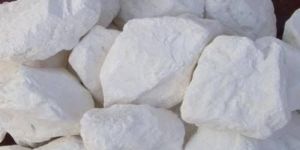
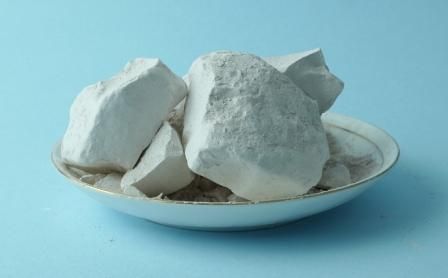
    We are offering white china clay. Well reckoned as one of the preeminent pure china clay (white clay) manufacturers from india. Our white china clay is in high demand due to its high authenticity and long lasting life. We are exporting china clay and washing plant of raw materials & we have our own mines. We are maintaining our quality to compete with other companies in the international market. We are committed towards delivering high quality products to all our clients; thereby we have adopted a rigorous quality policy in our manufacturing unit. We ascertain high quality in our products with the assistance of our experts in the quality department. They endeavor to check each stage of production so that our product quality matches the international standard of quality. Our china clay lumps encompasses of brilliant quality and excellent performance. Translucent quality, greater strength and bright white appearance are the unique features of our china clay lumps. Our china clay is accessible at the least market prices. features: hardness: soft colour: white, creamish white afterfired colour: super white foam: lumps application: vitrified tile,glaze tile,sanitarywares, ceramicd insulators, crockery wares.
    ...more
  • China Clay

    China Clay

    Get Price Quote

    • MOQ500 Kilogram
    • Packaging TypePacked in PP bags
    • Optical propertiesBiaxial (–)
    • FormulaAl2Si2O5(OH)4
    • China Clay is also called Kaoline. We are considered to be one of the most professional manufacturers, Manufacturer and Exporter of Kaolin Clay. Formulated under the supervision of skilled professionals, these are tested on industrial norms and standards. In order to accomplish the varied requirements of our patrons, these are offered in different forms such as granular form, powder form and lump form.Applications Paint Indsutry Ceramic Indsutry. Vitrified Tiles, Glaze Tile Paper Indsutry. Cosmectics Indsutry. Rubber Indsutry. Plastic Indsutry. And More...
    ...more
  • Kaolin China Clay

    Kaolin China Clay

    4,500 / Ton

    Raw china clay (mining ) sr. No. parameter result % 1 sio2 70 ± 2 2 al2o3 20 ± 2 3 fe2o3 0.55 ± 0.05 4 cao
  • China Clay

    China Clay

    Get Price Quote

    China Clay, Wood, Car Guard Services, Corporate Training Service
  • Kaolin China Clay

    Kaolin China Clay

    Get Price Quote

    Kaolin China Clay, Silica Sand, Kaolin Clay Powder, Silica San
  • China Clay

    China Clay

    Get Price Quote

    China Clay, China Clay, Bentonite Powde
  • China Clay

    China Clay

    Get Price Quote

    China Clay, Bauxite, Lignite Powder, Marine Gypsum, Pig Iron, Quartzit
  • China Clay

    China Clay

    Get Price Quote

    China Clay, Kaolin Clay Lumps, Levigated China Cla
  • Ceramic Grade China Clay

    Ceramic Grade China Clay

    Get Price Quote

    We supply ceramic grade china clay lumps at a very competitive rates.
  • Crude China Clay

    Crude China Clay

    Get Price Quote

    Crude China Clay, Levigated China Clay, Crude Ball Cla
  • China Clay

    China Clay

    Get Price Quote

    China clay is an important raw material of ceramic industry. In consists of partly crystalline and partly amorphous mineral of Kaolin group. So it can also be called as Kaolinite. Kaolinite is derived from Kaolin which is a corruption of the Chinese Kaolin meaning high ridge. In shat china clay is the deposits of Kaolin produced by hydrothermal decomposition or weathering of feldspar. It is relatively a pure clay consisting of predominantly the mineral, Kaolinite
    ...more
  • Kaolin China Clay

    Kaolin China Clay

    Get Price Quote

    Kaolin China Clay, Silica Sand, China Clay Lumps, China Cla
  • China Clay

    China Clay

    Get Price Quote

    China Clay, Industrial Salts, White Kaolin Cla
Filter by Locality
top