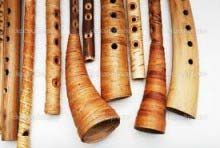
We are offering woodwind instruments (also called woodwinds) are a family of musical instruments within the more general category of wind instruments. There are two main types of woodwind instruments: flutes and reed instruments (otherwise called reed pipes). What differentiates these instruments from other wind instruments is the way in which they produce their sound
We are offering woodwind instruments (also called woodwinds) are a family of musical instruments within the more general category of wind instruments. There are two main types of woodwind instruments: flutes and reed instruments (otherwise called reed pipes). What differentiates these instruments from other wind instruments is the way in which they produce their sound
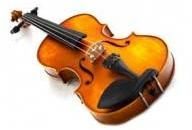
We are offering violin.
The violin, also known as a fiddle, is a string instrument, usually with four strings tuned in perfect fifths. It is the smallest, highest-pitched member of the violin family of string instruments, which also includes the viola, the cello and the contrabass. Someone who plays the violin is called a violinist or a fiddler. The violinist produces sound by drawing a bow across one or more strings (which may be stopped by the fingers of the other hand to produce a full range of pitches), by pluckin.
We are offering violin.
The violin, also known as a fiddle, is a string instrument, usually with four strings tuned in perfect fifths. It is the smallest, highest-pitched member of the violin family of string instruments, which also includes the viola, the cello and the contrabass. Someone who plays the violin is called a violinist or a fiddler. The violinist produces sound by drawing a bow across one or more strings (which may be stopped by the fingers of the other hand to produce a full range of pitches), by pluckin.
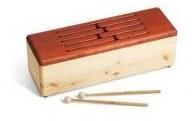
We are offering tongue drum.
A tongue drum is made from an empty (often 20 lb) propane tank. The tank is flipped over, the base cutknocked off; and seven to ten tongues are cut radially into the bottom of the tank, forming the top of the instrument. The tongues can be tuned by the player by varying the length of the cuts. The steel tongue drum is often tuned to pentatonic scales but can be tuned to the diatonic scale, the chromatic scale, or any set of notes the maker chooses.
We are offering tongue drum.
A tongue drum is made from an empty (often 20 lb) propane tank. The tank is flipped over, the base cutknocked off; and seven to ten tongues are cut radially into the bottom of the tank, forming the top of the instrument. The tongues can be tuned by the player by varying the length of the cuts. The steel tongue drum is often tuned to pentatonic scales but can be tuned to the diatonic scale, the chromatic scale, or any set of notes the maker chooses.
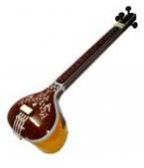
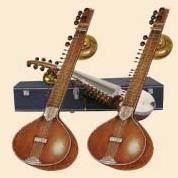
We are offering tanpura.
The tambura, tanpura, tamburi is a long-necked plucked lute (a stringed instrument) found in different forms in indian music culture. Hindustani musicians speak of 'tanpura' whereas carnatic musicians say 'tambura'; 'tamburi' is a smaller instrument used for accompanying instrumental soloists. For practical use, all these types are called 'tanpura' in the text.;
We are offering tanpura.
The tambura, tanpura, tamburi is a long-necked plucked lute (a stringed instrument) found in different forms in indian music culture. Hindustani musicians speak of 'tanpura' whereas carnatic musicians say 'tambura'; 'tamburi' is a smaller instrument used for accompanying instrumental soloists. For practical use, all these types are called 'tanpura' in the text.;
We are offering string instruments are musical instruments that produce sound from vibrating strings. In most strings instruments, the vibrations are transmitted to the body of the instrument, which also vibrate, along the air inside it. In the hornbostel-sachs scheme of musical instrument classification, used in organology, they are called chordophones. Some common instruments in the string family are violin, guitar, sitar, electric bass, viola, cello, harp, double bass, rabab, banjo, mandolin, ukulele, and bouzouki.;
We are offering string instruments are musical instruments that produce sound from vibrating strings. In most strings instruments, the vibrations are transmitted to the body of the instrument, which also vibrate, along the air inside it. In the hornbostel-sachs scheme of musical instrument classification, used in organology, they are called chordophones. Some common instruments in the string family are violin, guitar, sitar, electric bass, viola, cello, harp, double bass, rabab, banjo, mandolin, ukulele, and bouzouki.;
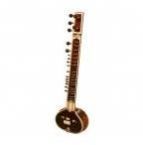
We are offering sitar.
The sitar english pronunciation: sɪtɑr is a plucked stringed instrument used mainly in hindustani music and indian classical music. The instrument descended from long-necked lutes taken to pakistan from central asia and is also believed to be influenced by the veena. The sitar flourished in the 16th and 17th centuries and arrived at its present form in the 18th century mughal period.
We are offering sitar.
The sitar english pronunciation: sɪtɑr is a plucked stringed instrument used mainly in hindustani music and indian classical music. The instrument descended from long-necked lutes taken to pakistan from central asia and is also believed to be influenced by the veena. The sitar flourished in the 16th and 17th centuries and arrived at its present form in the 18th century mughal period.
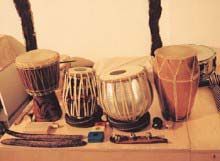
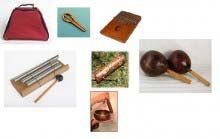
We are offering percussion musical instruments.
Tubular bells (also known as chimes) are musical instruments in the percussion family. Each bell is a metal tube, 30–38 mm (1¼–1½ inches) in diameter, tuned by altering its length. Its standard range is from c4-f5, though many professional instruments reach g5 (see photo). Tubular bells are often replaced by studio chimes, which are a smaller and usually less expensive instrument. Studio chimes are similar in appearance to tubular bells, but each bell has a smaller diameter than the corresponding bell on tubular bells. Chimestubular bells tubular bells are sometimes struck on the top edge of the tube with a rawhide- or plastic-headed hammer. Often, a sustain pedal will be attached to allow extended ringing of the bells. They can also be bowed at the bottom of the tube to produce a very loud, very high-pitched overtone
We are offering percussion musical instruments.
Tubular bells (also known as chimes) are musical instruments in the percussion family. Each bell is a metal tube, 30–38 mm (1¼–1½ inches) in diameter, tuned by altering its length. Its standard range is from c4-f5, though many professional instruments reach g5 (see photo). Tubular bells are often replaced by studio chimes, which are a smaller and usually less expensive instrument. Studio chimes are similar in appearance to tubular bells, but each bell has a smaller diameter than the corresponding bell on tubular bells. Chimestubular bells tubular bells are sometimes struck on the top edge of the tube with a rawhide- or plastic-headed hammer. Often, a sustain pedal will be attached to allow extended ringing of the bells. They can also be bowed at the bottom of the tube to produce a very loud, very high-pitched overtone
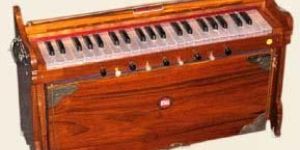
We are offering harmonium.
Travel harmonium four reed ,42 keys harmonium is a type of musical instruments that produces its sounds using free metal reeds .wind is generated with a foot-operated vacuum bellows.he finer instruments have a un.
We are offering harmonium.
Travel harmonium four reed ,42 keys harmonium is a type of musical instruments that produces its sounds using free metal reeds .wind is generated with a foot-operated vacuum bellows.he finer instruments have a un.
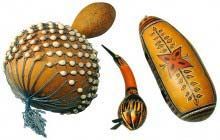
We are offering gourd musical instruments.
Gourd african thumb piano kalimba mbira marimbula sansa negro piano beautiful wooden african thumb piano each note of a kalimba, mbira, etc. Is a separate idiophone, and in orchestral terms, the instrument as .
We are offering gourd musical instruments.
Gourd african thumb piano kalimba mbira marimbula sansa negro piano beautiful wooden african thumb piano each note of a kalimba, mbira, etc. Is a separate idiophone, and in orchestral terms, the instrument as .
Secondary Business TypeManufacturer / Exporters / Wholesale Suppliers
Year of Establishment1985
No. of Employees21 - 50
Annual TurnoverBelow Rs. 0.5 Crore Approx.
Opening Hours
SUN : Closed
MON : 9:30 AM - 6:30 PM
TUE : 9:30 AM - 6:30 PM
WED : 9:30 AM - 6:30 PM
THU : 9:30 AM - 6:30 PM
FRI : 9:30 AM - 6:30 PM
SAT : 9:30 AM - 6:30 PM
Tiplop Works Established in 1985 is Retailer of Badminton Gut Strings, cattles intestines, musical gut strings, Natural Gut Strings, racket gut strings, Squash Gut Strings, tennis gut strings, violin gut strings, percussion musical instruments, Wood Wind in Bulandshahr, Uttar Pradesh.




 Reviews & Ratings
 Write a Review


 Post Free Ad