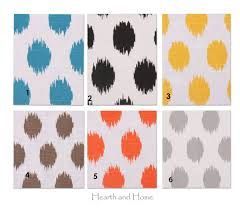
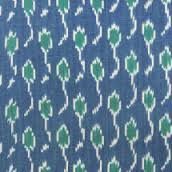
Ikat created by dyeing the warp are simpler to make than either weft ikat or double ikat. First the material, be it cotton, silk, l or other, is tied into bundles. The bundles may be covered with wax (as per batik, where however the resist is applied to whole cloth, not to separate threads), wrapped tightly with thread or some other dye-resistant material- to prevent unwanted dye permeation. The resist dye procedure is repeated depending on the colorations desired of the warp bundle. Multiple colorations is common requiring multiple tying and retying. The newly dyed and thoroughly washed bundles are tied as the warped (longitudinal strings) onto the loom. The patterns are usually decided by the weaver as the warp threads are tied. Warp threads are adjusted for the desired alignment for precise motifs.
Garments, Made-up, Stole, Furnishing, , Curtain, Bag, , Cushion Cover, Rug, Bath Mat, Floor Mat, Bed Sheet and Cap, etc.
100% Cotton all types, 100% Silk, Jacquard, Linen, Cotton, Rayon Linen, Cotton Yarn Dyed Cotton Thick and Thin, Cotton Silk, etc. All variety of Indian Fabric
...more
IKAT Home Furnishing
150 / 1000 Meter
500 Meter (MOQ)
Garments, Made-up, Stole, Furnishing, , Curtain, Bag, , Cushion Cover, Rug, Bath Mat, Floor Mat, Bed Sheet and Cap, etc.
100% Cotton all types, 100% Silk, Jacquard, Linen, Cotton, Rayon Linen, Cotton Yarn Dyed Cotton Thick and Thin, Cotton Silk, etc. All variety of Indian Fabric
Secondary Business TypeExporters / Wholesale Suppliers
Year of Establishment1973
No. of Employees6 - 20
Annual TurnoverBelow Rs. 0.5 Crore Approx.
Opening Hours
SUN : Closed
MON : 9:30 AM - 6:30 PM
TUE : 9:30 AM - 6:30 PM
WED : 9:30 AM - 6:30 PM
THU : 9:30 AM - 6:30 PM
FRI : 9:30 AM - 6:30 PM
SAT : 9:30 AM - 6:30 PM
Maneesha Handlooms from Hyderabad, Telangana Established in 1973 is Manufacturers of Bed Sheets, Cotton Rugs, Cotton Bedspread, Ikkat Rugs, Ikat Fabric, Handloom Fabrics, Ikat Fabric, IKAT Home Furnishing.