Kalamkari is an ancient style of block-printing and hand painting with a tamarind pen on Chennuru silk using natural sources (red from the madder root, yellow from the pomegranate and the black colour from the myrobalam fruit) and vegetable dyes. Mordants like alum are used for Dyeing to bind the dye to the fibres of fabric.
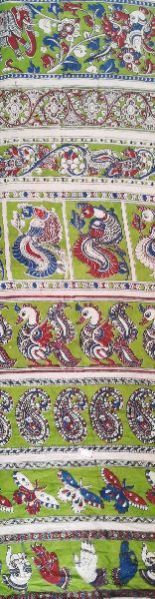
Originating from a small town of Machilipatnam, Andhra Pradesh, The classical trained artisans draw beautiful motif, floral, cultural and traditional forms in their depictions. The entire epics are depicted via many stories and the vertical panels along the length of the fabric. The whole process takes one month and involves eighteen stages. The name Kalamkari itself justifies the beauty of its art. Kalamkari is derived from a Persian word where ‘kalam‘ means pen and ‘kari‘ refers to skilled art.
Characteristic imperfections and colours may fade or bleed since kalamkari is the traditional handmade process.
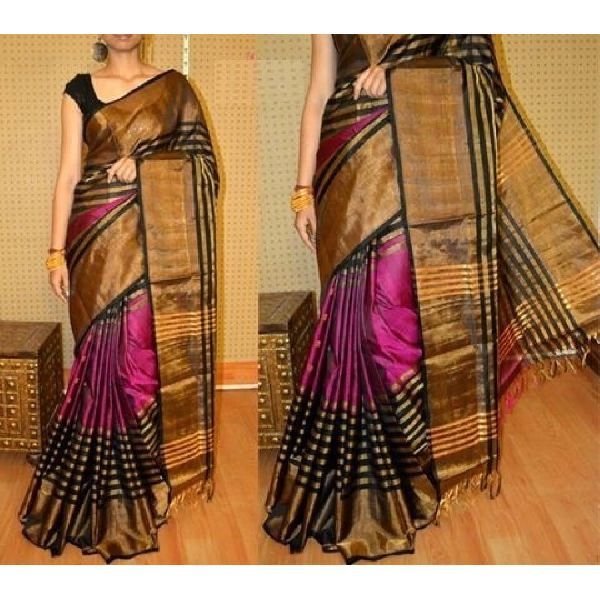
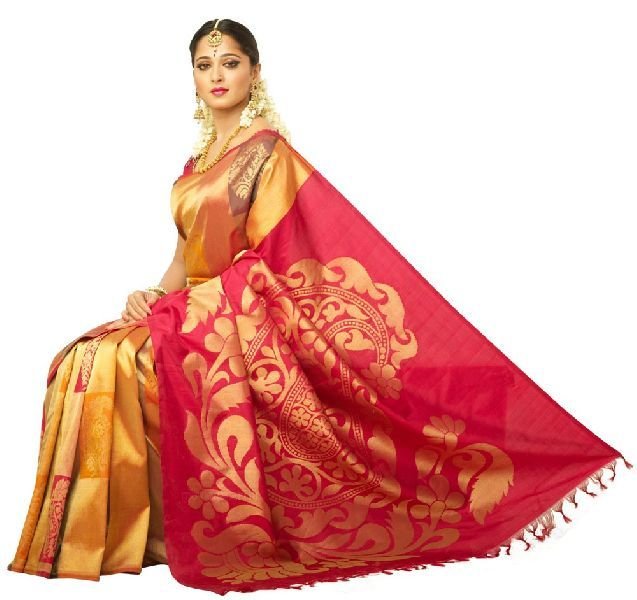
Kalamkari saree specifications as follows:
Saree Length: 5.5 Meter
Blouse Piece: 0.8 Meter
Kalamkari is an ancient style of block-printing and hand painting with a tamarind pen on Chennuru silk using natural sources (red from the madder root, yellow from the pomegranate and the black colour from the myrobalam fruit) and vegetable dyes. Mordants like alum are used for Dyeing to bind the dye to the fibres of fabric.
Originating from a small town of Machilipatnam, Andhra Pradesh, The classical trained artisans draw beautiful motif, floral, cultural and traditional forms in their depictions. The entire epics are depicted via many stories and the vertical panels along the length of the fabric. The whole process takes one month and involves eighteen stages. The name Kalamkari itself justifies the beauty of its art. Kalamkari is derived from a Persian word where ‘kalam‘ means pen and ‘kari‘ refers to skilled art.
Characteristic imperfections and colours may fade or bleed since kalamkari is the traditional handmade process.
Kalamkari saree specifications as follows:
Saree Length: 5.5 Meter
Blouse Piece: 0.8 Meter
Kalamkari is an ancient style of block-printing and hand painting with a tamarind pen on chennuru silk fabric using natural sources (red from the madder root, yellow from the pomegranate and the black colour from the myrobalam fruit) and vegetable dyes. Mordants like alum are used for dyeing to bind the dye to the fibres of fabric.
The name Kalamkari itself justifies the beauty of its art. Kalamkari is derived from a Persian word where ‘kalam‘ means pen and ‘kari‘ refers to skilled art. The classical trained artisans draw beautiful motif, floral, cultural and traditional forms in their depictions. The entire epics are depicted via many stories and the vertical panels along the length of the fabric. The whole process takes one month and involves eighteen stages.
Kalamkari art preffered for any dress and furnishing. The beauty of kalamkari is impeccable when compared to other modern fabric arts. Characteristic imperfections and colours may fade or bleed since kalamkari is the traditional handmade process.
Kalamkari Fabric can use as:-
Blouses: 1 MTR
Blouse, long sleeves: 1.5 MTR
Tunics, Tops and Kurtis: 2.5 MTR
Palazzos and Pants: 3 to 3.5 MTR
Skirt: 4 MTR
Anarkali Kurti: 3.5 MTR
Dress, short sleeves with straight skirt: 4.5 MTR
Dress, long sleeves with straight skirt: 5 MTR
Kalamkari is an ancient style of block-printing and hand painting with a tamarind pen on chennuru silk fabric using natural sources (red from the madder root, yellow from the pomegranate and the black colour from the myrobalam fruit) and vegetable dyes. Mordants like alum are used for dyeing to bind the dye to the fibres of fabric.
The name Kalamkari itself justifies the beauty of its art. Kalamkari is derived from a Persian word where ‘kalam‘ means pen and ‘kari‘ refers to skilled art. The classical trained artisans draw beautiful motif, floral, cultural and traditional forms in their depictions. The entire epics are depicted via many stories and the vertical panels along the length of the fabric. The whole process takes one month and involves eighteen stages.
Kalamkari art preffered for any dress and furnishing. The beauty of kalamkari is impeccable when compared to other modern fabric arts. Characteristic imperfections and colours may fade or bleed since kalamkari is the traditional handmade process.
Kalamkari Fabric can use as:-
Blouses: 1 MTR
Blouse, long sleeves: 1.5 MTR
Tunics, Tops and Kurtis: 2.5 MTR
Palazzos and Pants: 3 to 3.5 MTR
Skirt: 4 MTR
Anarkali Kurti: 3.5 MTR
Dress, short sleeves with straight skirt: 4.5 MTR
Dress, long sleeves with straight skirt: 5 MTR
Kalamkari is an ancient style of block-printing and hand painting with a tamarind pen on Chennuru silk fabric using natural sources (red from the madder root, yellow from the pomegranate and the black colour from the myrobalam fruit) and vegetable dyes. Mordants like alum are used for Dyeing to bind the dye to the fibres of fabric.
Originating from a small town of Machilipatnam, Andhra Pradesh, The classical trained artisans draw beautiful motif, floral, cultural and traditional forms in their depictions. The entire epics are depicted via many stories and the vertical panels along the length of the fabric. The whole process takes one month and involves eighteen stages. The name Kalamkari itself justifies the beauty of its art. Kalamkari is derived from a Persian word where ‘kalam‘ means pen and ‘kari‘ refers to skilled art.
Silk Kalamkari dress material preferred for Kurties, Anarkali Suits, Churidar Suits and Lehenga Choli. The beauty of kalamkari is impeccable when compared to other modern fabric arts. Characteristic imperfections and colours may fade or bleed since kalamkari is the traditional handmade process.
Silk Kalamkari dress material specifications as follows:
Top L/W : 2.5 mts / 1.2 mts
Bottom L/W : 2 mts / 1.2 mts
Dupatta L/W : 2.25 mts / 0.9 mts
Kalamkari is an ancient style of block-printing and hand painting with a tamarind pen on Chennuru silk fabric using natural sources (red from the madder root, yellow from the pomegranate and the black colour from the myrobalam fruit) and vegetable dyes. Mordants like alum are used for Dyeing to bind the dye to the fibres of fabric.
Originating from a small town of Machilipatnam, Andhra Pradesh, The classical trained artisans draw beautiful motif, floral, cultural and traditional forms in their depictions. The entire epics are depicted via many stories and the vertical panels along the length of the fabric. The whole process takes one month and involves eighteen stages. The name Kalamkari itself justifies the beauty of its art. Kalamkari is derived from a Persian word where ‘kalam‘ means pen and ‘kari‘ refers to skilled art.
Silk Kalamkari dress material preferred for Kurties, Anarkali Suits, Churidar Suits and Lehenga Choli. The beauty of kalamkari is impeccable when compared to other modern fabric arts. Characteristic imperfections and colours may fade or bleed since kalamkari is the traditional handmade process.
Silk Kalamkari dress material specifications as follows:
Top L/W : 2.5 mts / 1.2 mts
Bottom L/W : 2 mts / 1.2 mts
Dupatta L/W : 2.25 mts / 0.9 mts
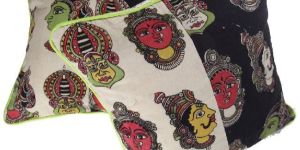
Kalamkari pillow covers add colour and vibrance to your bedroom, living room with these beautiful cover,This will add a striking appeal and warmth to your surroundings. Kalamkari is an ancient style of block-printing and hand painting with a tamarind pen on cotton and silk fabric using natural sources (red from the madder root, yellow from the pomegranate and the black colour from the myrobalam fruit) and vegetable dyes. Mordants like alum are used for Dyeing to bind the dye to the fibres of fabric.
Originating from a small town of Machilipatnam, Andhra Pradesh, The classical trained artisans draw beautiful floral,motifs and traditional forms in their depictions. The whole process takes one month and involves eighteen stages. The name Kalamkari itself justifies the beauty of its art. Kalamkari is derived from a Persian word where ‘kalam‘ means pen and ‘kari‘ refers to skilled art.
Kalamkari art preferred for pillow covers. Our experienced and highly skilled cloth maker design and develop the Kalmakari pillow covers using our georgous and beutiful kalamkari fabric. Our quality control team closely inspect stitching and tested for the basic comfortability. The beauty of kalamkari is impeccable when compared to other modern fabric arts.
Kalamkari pillow covers add colour and vibrance to your bedroom, living room with these beautiful cover,This will add a striking appeal and warmth to your surroundings. Kalamkari is an ancient style of block-printing and hand painting with a tamarind pen on cotton and silk fabric using natural sources (red from the madder root, yellow from the pomegranate and the black colour from the myrobalam fruit) and vegetable dyes. Mordants like alum are used for Dyeing to bind the dye to the fibres of fabric.
Originating from a small town of Machilipatnam, Andhra Pradesh, The classical trained artisans draw beautiful floral,motifs and traditional forms in their depictions. The whole process takes one month and involves eighteen stages. The name Kalamkari itself justifies the beauty of its art. Kalamkari is derived from a Persian word where ‘kalam‘ means pen and ‘kari‘ refers to skilled art.
Kalamkari art preferred for pillow covers. Our experienced and highly skilled cloth maker design and develop the Kalmakari pillow covers using our georgous and beutiful kalamkari fabric. Our quality control team closely inspect stitching and tested for the basic comfortability. The beauty of kalamkari is impeccable when compared to other modern fabric arts.
Kalamkari is an ancient style of block-printing and hand painting with a tamarind pen on fabrics using natural sources (red from the madder root, yellow from the pomegranate and the black colour from the myrobalam fruit) and vegetable dyes. Mordants like alum are used for Dyeing to bind the dye to the fibres of fabric.
Originating from a small town of Machilipatnam, Andhra Pradesh, The classical trained artisans draw beautiful motif, floral, cultural and traditional forms in their depictions. The entire epics are depicted via many stories and the vertical panels along the length of the fabric. The whole process takes one month and involves eighteen stages. The name Kalamkari itself justifies the beauty of its art. Kalamkari is derived from a Persian word where ‘kalam‘ means pen and ‘kari‘ refers to skilled art.
Kalamkari art preferred for Patches. The beauty of kalamkari is impeccable when compared to other modern fabric arts.
Kalamkari is an ancient style of block-printing and hand painting with a tamarind pen on fabrics using natural sources (red from the madder root, yellow from the pomegranate and the black colour from the myrobalam fruit) and vegetable dyes. Mordants like alum are used for Dyeing to bind the dye to the fibres of fabric.
Originating from a small town of Machilipatnam, Andhra Pradesh, The classical trained artisans draw beautiful motif, floral, cultural and traditional forms in their depictions. The entire epics are depicted via many stories and the vertical panels along the length of the fabric. The whole process takes one month and involves eighteen stages. The name Kalamkari itself justifies the beauty of its art. Kalamkari is derived from a Persian word where ‘kalam‘ means pen and ‘kari‘ refers to skilled art.
Kalamkari art preferred for Patches. The beauty of kalamkari is impeccable when compared to other modern fabric arts.
Kalamkari is an ancient style of block-printing and hand painting with a tamarind pen on fine cotton fabric using natural sources (red from the madder root, yellow from the pomegranate and the black colour from the myrobalam fruit) and vegetable dyes. Mordants like alum are used for Dyeing to bind the dye to the fibres of fabric.
Originating from a small town of Machilipatnam, Andhra Pradesh, The classical trained artisans draw beautiful motif, floral, cultural and traditional forms in their depictions. The entire epics are depicted via many stories and the vertical panels along the length of the fabric. The whole process takes one month and involves eighteen stages. The name Kalamkari itself justifies the beauty of its art. Kalamkari is derived from a Persian word where ‘kalam‘ means pen and ‘kari‘ refers to skilled art. The beauty of kalamkari is impeccable when compared to other modern fabric arts. Characteristic imperfections and colours may fade or bleed since kalamkari is the traditional handmade process.
Our experienced and highly skilled designers design and develop the Kalmakari night gowns using our georgous and beutiful kalamkari fabric. Our quality control team closely inspect stitching and tested for the basic comfortability to the skin and durability after subsequent wash. This Kalamkari night gown best suited for all seasons.
Kalamkari is an ancient style of block-printing and hand painting with a tamarind pen on fine cotton fabric using natural sources (red from the madder root, yellow from the pomegranate and the black colour from the myrobalam fruit) and vegetable dyes. Mordants like alum are used for Dyeing to bind the dye to the fibres of fabric.
Originating from a small town of Machilipatnam, Andhra Pradesh, The classical trained artisans draw beautiful motif, floral, cultural and traditional forms in their depictions. The entire epics are depicted via many stories and the vertical panels along the length of the fabric. The whole process takes one month and involves eighteen stages. The name Kalamkari itself justifies the beauty of its art. Kalamkari is derived from a Persian word where ‘kalam‘ means pen and ‘kari‘ refers to skilled art. The beauty of kalamkari is impeccable when compared to other modern fabric arts. Characteristic imperfections and colours may fade or bleed since kalamkari is the traditional handmade process.
Our experienced and highly skilled designers design and develop the Kalmakari night gowns using our georgous and beutiful kalamkari fabric. Our quality control team closely inspect stitching and tested for the basic comfortability to the skin and durability after subsequent wash. This Kalamkari night gown best suited for all seasons.
Kalamkari is an ancient style of block-printing and hand painting with a tamarind pen on fabrics using natural sources (red from the madder root, yellow from the pomegranate and the black colour from the myrobalam fruit) and vegetable dyes. Mordants like alum are used for Dyeing to bind the dye to the fibres of fabric.
Originating from a small town of Machilipatnam, Andhra Pradesh, The classical trained artisans draw beautiful motif, floral, cultural and traditional forms in their depictions. The entire epics are depicted via many stories and the vertical panels along the length of the fabric. The whole process takes one month and involves eighteen stages. The name Kalamkari itself justifies the beauty of its art. Kalamkari is derived from a Persian word where ‘kalam‘ means pen and ‘kari‘ refers to skilled art. The beauty of kalamkari is impeccable when compared to other modern fabric arts. Characteristic imperfections and colours may fade or bleed since kalamkari is the traditional handmade process.
Kalamkari art preffered for Lehenga Choli. Our experienced and highly skilled fashion designers design and develop the Kalmakari Lehenga Choli using our georgous and beutiful kalamkari fabric. Our quality control team closely inspect stitching and test for the basic comfortability to the skin and durability after subsequent wash. We provide a training and fashion styling exposure program to create an inexhaustible creative diction. This Kalamkari Lehenga Choli is best suited for casual and party wear.
Kalamkari is an ancient style of block-printing and hand painting with a tamarind pen on fabrics using natural sources (red from the madder root, yellow from the pomegranate and the black colour from the myrobalam fruit) and vegetable dyes. Mordants like alum are used for Dyeing to bind the dye to the fibres of fabric.
Originating from a small town of Machilipatnam, Andhra Pradesh, The classical trained artisans draw beautiful motif, floral, cultural and traditional forms in their depictions. The entire epics are depicted via many stories and the vertical panels along the length of the fabric. The whole process takes one month and involves eighteen stages. The name Kalamkari itself justifies the beauty of its art. Kalamkari is derived from a Persian word where ‘kalam‘ means pen and ‘kari‘ refers to skilled art. The beauty of kalamkari is impeccable when compared to other modern fabric arts. Characteristic imperfections and colours may fade or bleed since kalamkari is the traditional handmade process.
Kalamkari art preffered for Lehenga Choli. Our experienced and highly skilled fashion designers design and develop the Kalmakari Lehenga Choli using our georgous and beutiful kalamkari fabric. Our quality control team closely inspect stitching and test for the basic comfortability to the skin and durability after subsequent wash. We provide a training and fashion styling exposure program to create an inexhaustible creative diction. This Kalamkari Lehenga Choli is best suited for casual and party wear.
Kalamkari is an ancient style of block-printing and hand painting with a tamarind pen on fine cotton and silk fabric using natural sources (red from the madder root, yellow from the pomegranate and the black colour from the myrobalam fruit) and vegetable dyes. Mordants like alum are used for Dyeing to bind the dye to the fibres of fabric.
Originating from a small town of Machilipatnam, Andhra Pradesh, The classical trained artisans draw beautiful motif, floral, cultural and traditional forms in their depictions. The entire epics are depicted via many stories and the vertical panels along the length of the fabric. The whole process takes one month and involves eighteen stages. The name Kalamkari itself justifies the beauty of its art. Kalamkari is derived from a Persian word where ‘kalam‘ means pen and ‘kari‘ refers to skilled art. The beauty of kalamkari is impeccable when compared to other modern fabric arts. Characteristic imperfections and colours may fade or bleed since kalamkari is the traditional handmade process.
Kalamkari art preffered for Kurtis. Our experienced and highly skilled fashion designers design and develop the Kalmakari Kurti using our georgous and beutiful kalamkari fabric. Our quality control team closely inspect stitching and tested for the basic comfortability to the skin and durability after subsequent wash. We provide a training and fashion styling exposure program to create an inexhaustible creative diction. This Kalamkari kurti is best suited for casual and party wear.
Kalamkari is an ancient style of block-printing and hand painting with a tamarind pen on fine cotton and silk fabric using natural sources (red from the madder root, yellow from the pomegranate and the black colour from the myrobalam fruit) and vegetable dyes. Mordants like alum are used for Dyeing to bind the dye to the fibres of fabric.
Originating from a small town of Machilipatnam, Andhra Pradesh, The classical trained artisans draw beautiful motif, floral, cultural and traditional forms in their depictions. The entire epics are depicted via many stories and the vertical panels along the length of the fabric. The whole process takes one month and involves eighteen stages. The name Kalamkari itself justifies the beauty of its art. Kalamkari is derived from a Persian word where ‘kalam‘ means pen and ‘kari‘ refers to skilled art. The beauty of kalamkari is impeccable when compared to other modern fabric arts. Characteristic imperfections and colours may fade or bleed since kalamkari is the traditional handmade process.
Kalamkari art preffered for Kurtis. Our experienced and highly skilled fashion designers design and develop the Kalmakari Kurti using our georgous and beutiful kalamkari fabric. Our quality control team closely inspect stitching and tested for the basic comfortability to the skin and durability after subsequent wash. We provide a training and fashion styling exposure program to create an inexhaustible creative diction. This Kalamkari kurti is best suited for casual and party wear.
Kalamkari is an ancient style of block-printing and hand painting with a tamarind pen on fabrics using natural sources (red from the madder root, yellow from the pomegranate and the black colour from the myrobalam fruit) and vegetable dyes. Mordants like alum are used for Dyeing to bind the dye to the fibres of fabric.
Originating from a small town of Machilipatnam, Andhra Pradesh, The classical trained artisans draw beautiful motif, floral, cultural and traditional forms in their depictions. The entire epics are depicted via many stories and the vertical panels along the length of the fabric. The whole process takes one month and involves eighteen stages. The name Kalamkari itself justifies the beauty of its art. Kalamkari is derived from a Persian word where ‘kalam‘ means pen and ‘kari‘ refers to skilled art.
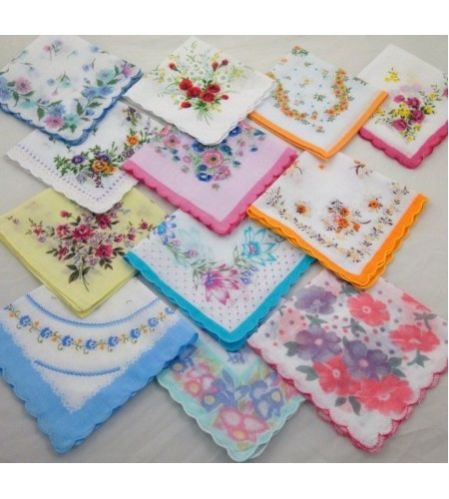
Kalamkari art preferred for Hand kerchiefs. Kalamkari handkerchief is intended for personal hygiene purposes such as wiping one's hands or face, or blowing one's nose. A handkerchief is also sometimes used as a purely decorative accessory in a suit pocket. The beauty of kalamkari is impeccable when compared to other modern fabric arts.
Kalamkari is an ancient style of block-printing and hand painting with a tamarind pen on fabrics using natural sources (red from the madder root, yellow from the pomegranate and the black colour from the myrobalam fruit) and vegetable dyes. Mordants like alum are used for Dyeing to bind the dye to the fibres of fabric.
Originating from a small town of Machilipatnam, Andhra Pradesh, The classical trained artisans draw beautiful motif, floral, cultural and traditional forms in their depictions. The entire epics are depicted via many stories and the vertical panels along the length of the fabric. The whole process takes one month and involves eighteen stages. The name Kalamkari itself justifies the beauty of its art. Kalamkari is derived from a Persian word where ‘kalam‘ means pen and ‘kari‘ refers to skilled art.
Kalamkari art preferred for Hand kerchiefs. Kalamkari handkerchief is intended for personal hygiene purposes such as wiping one's hands or face, or blowing one's nose. A handkerchief is also sometimes used as a purely decorative accessory in a suit pocket. The beauty of kalamkari is impeccable when compared to other modern fabric arts.
Kalamkari is an ancient style of block-printing and hand painting with a tamarind pen on fabrics using natural sources (red from the madder root, yellow from the pomegranate and the black colour from the myrobalam fruit) and vegetable dyes. Mordants like alum are used for Dyeing to bind the dye to the fibres of fabric.
Originating from a small town of Machilipatnam, Andhra Pradesh, The classical trained artisans draw beautiful motif, floral, cultural and traditional forms in their depictions. The entire epics are depicted via many stories and the vertical panels along the length of the fabric. The whole process takes one month and involves eighteen stages. The name Kalamkari itself justifies the beauty of its art. Kalamkari is derived from a Persian word where ‘kalam‘ means pen and ‘kari‘ refers to skilled art. The beauty of kalamkari is impeccable when compared to other modern fabric arts.
Kalamkari art preferred for Hand bags. Our experienced and highly skilled fashion designers design and develop the Kalmakari Hand bags using our georgous and beutiful kalamkari fabric. Our quality control team closely inspect stitching and tested for the basic comfortability. Kalamkari Hand bags Comfortable to carry all essentials for work or any place
Kalamkari is an ancient style of block-printing and hand painting with a tamarind pen on fabrics using natural sources (red from the madder root, yellow from the pomegranate and the black colour from the myrobalam fruit) and vegetable dyes. Mordants like alum are used for Dyeing to bind the dye to the fibres of fabric.
Originating from a small town of Machilipatnam, Andhra Pradesh, The classical trained artisans draw beautiful motif, floral, cultural and traditional forms in their depictions. The entire epics are depicted via many stories and the vertical panels along the length of the fabric. The whole process takes one month and involves eighteen stages. The name Kalamkari itself justifies the beauty of its art. Kalamkari is derived from a Persian word where ‘kalam‘ means pen and ‘kari‘ refers to skilled art. The beauty of kalamkari is impeccable when compared to other modern fabric arts.
Kalamkari art preferred for Hand bags. Our experienced and highly skilled fashion designers design and develop the Kalmakari Hand bags using our georgous and beutiful kalamkari fabric. Our quality control team closely inspect stitching and tested for the basic comfortability. Kalamkari Hand bags Comfortable to carry all essentials for work or any place
Kalamkari is an ancient style of block-printing and hand painting with a tamarind pen on cotton and silk fabric using natural sources (red from the madder root, yellow from the pomegranate and the black colour from the myrobalam fruit) and vegetable dyes. Mordants like alum are used for Dyeing to bind the dye to the fibres of fabric.
Originating from a small town of Machilipatnam, Andhra Pradesh, The classical trained artisans draw beautiful floral,motifs and traditional forms in their depictions. The whole process takes one month and involves eighteen stages. The name Kalamkari itself justifies the beauty of its art. Kalamkari is derived from a Persian word where ‘kalam‘ means pen and ‘kari‘ refers to skilled art.
Kalamkari art preferred for door curtains. The beauty of kalamkari is impeccable when compared to other modern fabric arts.
Kalamkari is an ancient style of block-printing and hand painting with a tamarind pen on cotton and silk fabric using natural sources (red from the madder root, yellow from the pomegranate and the black colour from the myrobalam fruit) and vegetable dyes. Mordants like alum are used for Dyeing to bind the dye to the fibres of fabric.
Originating from a small town of Machilipatnam, Andhra Pradesh, The classical trained artisans draw beautiful floral,motifs and traditional forms in their depictions. The whole process takes one month and involves eighteen stages. The name Kalamkari itself justifies the beauty of its art. Kalamkari is derived from a Persian word where ‘kalam‘ means pen and ‘kari‘ refers to skilled art.
Kalamkari art preferred for door curtains. The beauty of kalamkari is impeccable when compared to other modern fabric arts.
Kalamkari is an ancient style of block-printing and hand painting with a tamarind pen on cotton and silk fabric using natural sources (red from the madder root, yellow from the pomegranate and the black colour from the myrobalam fruit) and vegetable dyes. Mordants like alum are used for Dyeing to bind the dye to the fibres of fabric.
Originating from a small town of Machilipatnam, Andhra Pradesh, The classical trained artisans draw beautiful floral,motifs and traditional forms in their depictions. The whole process takes one month and involves eighteen stages. The name Kalamkari itself justifies the beauty of its art. Kalamkari is derived from a Persian word where ‘kalam‘ means pen and ‘kari‘ refers to skilled art.
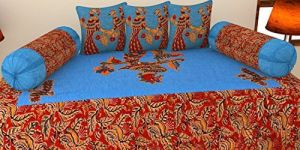
Kalamkari art preferred for diwan sets. The beauty of kalamkari is impeccable when compared to other modern fabric arts.
Kalamkari is an ancient style of block-printing and hand painting with a tamarind pen on cotton and silk fabric using natural sources (red from the madder root, yellow from the pomegranate and the black colour from the myrobalam fruit) and vegetable dyes. Mordants like alum are used for Dyeing to bind the dye to the fibres of fabric.
Originating from a small town of Machilipatnam, Andhra Pradesh, The classical trained artisans draw beautiful floral,motifs and traditional forms in their depictions. The whole process takes one month and involves eighteen stages. The name Kalamkari itself justifies the beauty of its art. Kalamkari is derived from a Persian word where ‘kalam‘ means pen and ‘kari‘ refers to skilled art.
Kalamkari art preferred for diwan sets. The beauty of kalamkari is impeccable when compared to other modern fabric arts.
Kalamkari is an ancient style of block-printing and hand painting with a tamarind pen on cotton fabric using natural sources (red from the madder root, yellow from the pomegranate and the black colour from the myrobalam fruit) and vegetable dyes. Mordants like alum are used for Dyeing to bind the dye to the fibres of fabric.
Originating from a small town of Machilipatnam, Andhra Pradesh, The classical trained artisans draw beautiful motif, floral, cultural and traditional forms in their depictions. The entire epics are depicted via many stories and the vertical panels along the length of the fabric. The whole process takes one month and involves eighteen stages. The name Kalamkari itself justifies the beauty of its art. Kalamkari is derived from a Persian word where ‘kalam‘ means pen and ‘kari‘ refers to skilled art.
Characteristic imperfections and colours may fade or bleed since kalamkari is the traditional handmade process
Kalamkari saree specifications as follows:
Saree Length: 5.5 Meter
Blouse Piece: 0.8 Meter
Kalamkari is an ancient style of block-printing and hand painting with a tamarind pen on cotton fabric using natural sources (red from the madder root, yellow from the pomegranate and the black colour from the myrobalam fruit) and vegetable dyes. Mordants like alum are used for Dyeing to bind the dye to the fibres of fabric.
Originating from a small town of Machilipatnam, Andhra Pradesh, The classical trained artisans draw beautiful motif, floral, cultural and traditional forms in their depictions. The entire epics are depicted via many stories and the vertical panels along the length of the fabric. The whole process takes one month and involves eighteen stages. The name Kalamkari itself justifies the beauty of its art. Kalamkari is derived from a Persian word where ‘kalam‘ means pen and ‘kari‘ refers to skilled art.
Characteristic imperfections and colours may fade or bleed since kalamkari is the traditional handmade process
Kalamkari saree specifications as follows:
Saree Length: 5.5 Meter
Blouse Piece: 0.8 Meter
Kalamkari is an ancient style of block-printing and hand painting with a tamarind pen on cotton fabric using natural sources (red from the madder root, yellow from the pomegranate and the black colour from the myrobalam fruit) and vegetable dyes. Mordants like alum are used for dyeing to bind the dye to the fibres of fabric.
The name Kalamkari itself justifies the beauty of its art. Kalamkari is derived from a Persian word where ‘kalam‘ means pen and ‘kari‘ refers to skilled art. The classical trained artisans draw beautiful motif, floral, cultural and traditional forms in their depictions. The entire epics are depicted via many stories and the vertical panels along the length of the fabric. The whole process takes one month and involves eighteen stages.
Kalamkari art preffered for any dress and furnishing. The beauty of kalamkari is impeccable when compared to other modern fabric arts. Characteristic imperfections and colours may fade or bleed since kalamkari is the traditional handmade process.
Kalamkari Fabric can use as:-
Blouses: 1 MTR
Blouse, long sleeves: 1.5 MTR
Tunics, Tops and Kurtis: 2.5 MTR
Palazzos and Pants: 3 to 3.5 MTR
Skirt: 4 MTR
Anarkali Kurti: 3.5 MTR
Dress, short sleeves with straight skirt: 4.5 MTR
Dress, long sleeves with straight skirt: 5 MTR
Kalamkari is an ancient style of block-printing and hand painting with a tamarind pen on cotton fabric using natural sources (red from the madder root, yellow from the pomegranate and the black colour from the myrobalam fruit) and vegetable dyes. Mordants like alum are used for dyeing to bind the dye to the fibres of fabric.
The name Kalamkari itself justifies the beauty of its art. Kalamkari is derived from a Persian word where ‘kalam‘ means pen and ‘kari‘ refers to skilled art. The classical trained artisans draw beautiful motif, floral, cultural and traditional forms in their depictions. The entire epics are depicted via many stories and the vertical panels along the length of the fabric. The whole process takes one month and involves eighteen stages.
Kalamkari art preffered for any dress and furnishing. The beauty of kalamkari is impeccable when compared to other modern fabric arts. Characteristic imperfections and colours may fade or bleed since kalamkari is the traditional handmade process.
Kalamkari Fabric can use as:-
Blouses: 1 MTR
Blouse, long sleeves: 1.5 MTR
Tunics, Tops and Kurtis: 2.5 MTR
Palazzos and Pants: 3 to 3.5 MTR
Skirt: 4 MTR
Anarkali Kurti: 3.5 MTR
Dress, short sleeves with straight skirt: 4.5 MTR
Dress, long sleeves with straight skirt: 5 MTR
Kalamkari is an ancient style of block-printing and hand painting with a tamarind pen on Cotton fabric using natural sources (red from the madder root, yellow from the pomegranate and the black colour from the myrobalam fruit) and vegetable dyes. Mordants like alum are used for Dyeing to bind the dye to the fibres of fabric.
Originating from a small town of Machilipatnam, Andhra Pradesh, The classical trained artisans draw beautiful motif, floral, cultural and traditional forms in their depictions. The entire epics are depicted via many stories and the vertical panels along the length of the fabric. The whole process takes one month and involves eighteen stages. The name Kalamkari itself justifies the beauty of its art. Kalamkari is derived from a Persian word where ‘kalam‘ means pen and ‘kari‘ refers to skilled art.
Cotton Kalamkari dress material preferred for Kurties, Anarkali Suits, Churidar Suits and Lehenga Choli. The beauty of kalamkari is impeccable when compared to other modern fabric arts. Characteristic imperfections and colours may fade or bleed since kalamkari is the traditional handmade process.
Cotton Kalamkari dress material specifications as follows:
Top L/W : 2.5 mts / 1.2 mts
Bottom L/W : 2 mts / 1.2 mts
Dupatta L/W : 2.25 mts / 0.9 mts
Kalamkari is an ancient style of block-printing and hand painting with a tamarind pen on Cotton fabric using natural sources (red from the madder root, yellow from the pomegranate and the black colour from the myrobalam fruit) and vegetable dyes. Mordants like alum are used for Dyeing to bind the dye to the fibres of fabric.
Originating from a small town of Machilipatnam, Andhra Pradesh, The classical trained artisans draw beautiful motif, floral, cultural and traditional forms in their depictions. The entire epics are depicted via many stories and the vertical panels along the length of the fabric. The whole process takes one month and involves eighteen stages. The name Kalamkari itself justifies the beauty of its art. Kalamkari is derived from a Persian word where ‘kalam‘ means pen and ‘kari‘ refers to skilled art.
Cotton Kalamkari dress material preferred for Kurties, Anarkali Suits, Churidar Suits and Lehenga Choli. The beauty of kalamkari is impeccable when compared to other modern fabric arts. Characteristic imperfections and colours may fade or bleed since kalamkari is the traditional handmade process.
Cotton Kalamkari dress material specifications as follows:
Top L/W : 2.5 mts / 1.2 mts
Bottom L/W : 2 mts / 1.2 mts
Dupatta L/W : 2.25 mts / 0.9 mts
Kalamkari is an ancient style of block-printing and hand painting with a tamarind pen on fabrics using natural sources (red from the madder root, yellow from the pomegranate and the black colour from the myrobalam fruit) and vegetable dyes. Mordants like alum are used for Dyeing to bind the dye to the fibres of fabric.
Originating from a small town of Machilipatnam, Andhra Pradesh, The classical trained artisans draw beautiful motif, floral, cultural and traditional forms in their depictions. The entire epics are depicted via many stories and the vertical panels along the length of the fabric. The whole process takes one month and involves eighteen stages. The name Kalamkari itself justifies the beauty of its art. Kalamkari is derived from a Persian word where ‘kalam‘ means pen and ‘kari‘ refers to skilled art. The beauty of kalamkari is impeccable when compared to other modern fabric arts. Characteristic imperfections and colours may fade or bleed since kalamkari is the traditional handmade process.
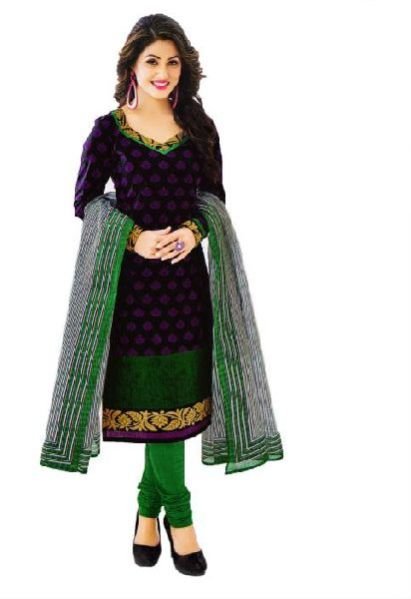
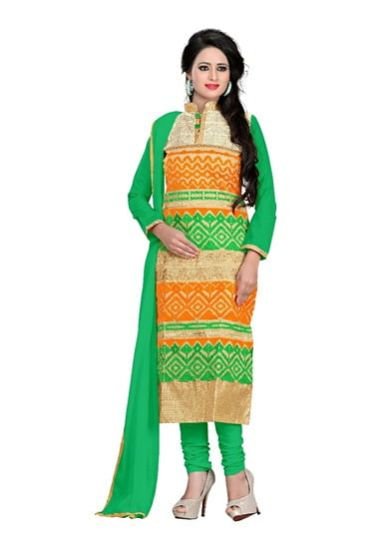
Kalamkari art preffered for Churidhar suits. Our experienced and highly skilled fashion designers design and develop the Kalmakari churidar Suits using our georgous and beutiful kalamkari fabric. Our quality control team closely inspect stitching and test for the basic comfortability to the skin and durability after subsequent wash. We provide a training and fashion styling exposure program to create an inexhaustible creative diction. This Chudridhar Suit is best suited for casual and party wear.
Kalamkari is an ancient style of block-printing and hand painting with a tamarind pen on fabrics using natural sources (red from the madder root, yellow from the pomegranate and the black colour from the myrobalam fruit) and vegetable dyes. Mordants like alum are used for Dyeing to bind the dye to the fibres of fabric.
Originating from a small town of Machilipatnam, Andhra Pradesh, The classical trained artisans draw beautiful motif, floral, cultural and traditional forms in their depictions. The entire epics are depicted via many stories and the vertical panels along the length of the fabric. The whole process takes one month and involves eighteen stages. The name Kalamkari itself justifies the beauty of its art. Kalamkari is derived from a Persian word where ‘kalam‘ means pen and ‘kari‘ refers to skilled art. The beauty of kalamkari is impeccable when compared to other modern fabric arts. Characteristic imperfections and colours may fade or bleed since kalamkari is the traditional handmade process.
Kalamkari art preffered for Churidhar suits. Our experienced and highly skilled fashion designers design and develop the Kalmakari churidar Suits using our georgous and beutiful kalamkari fabric. Our quality control team closely inspect stitching and test for the basic comfortability to the skin and durability after subsequent wash. We provide a training and fashion styling exposure program to create an inexhaustible creative diction. This Chudridhar Suit is best suited for casual and party wear.
Kalamkari is an ancient style of block-printing and hand painting with a tamarind pen on Chanderi silk fabric using natural sources (red from the madder root, yellow from the pomegranate and the black colour from the myrobalam fruit) and vegetable dyes. Mordants like alum are used for Dyeing to bind the dye to the fibres of fabric.
Originating from a small town of Machilipatnam, Andhra Pradesh, The classical trained artisans draw beautiful motif, floral, cultural and traditional forms in their depictions. The entire epics are depicted via many stories and the vertical panels along the length of the fabric. The whole process takes one month and involves eighteen stages. The name Kalamkari itself justifies the beauty of its art. Kalamkari is derived from a Persian word where ‘kalam‘ means pen and ‘kari‘ refers to skilled art.
Characteristic imperfections and colours may fade or bleed since kalamkari is the traditional handmade process.
Kalamkari saree specifications as follows:
Saree Length: 5.5 Meter
Blouse Piece: 0.8 Meter
Kalamkari is an ancient style of block-printing and hand painting with a tamarind pen on Chanderi silk fabric using natural sources (red from the madder root, yellow from the pomegranate and the black colour from the myrobalam fruit) and vegetable dyes. Mordants like alum are used for Dyeing to bind the dye to the fibres of fabric.
Originating from a small town of Machilipatnam, Andhra Pradesh, The classical trained artisans draw beautiful motif, floral, cultural and traditional forms in their depictions. The entire epics are depicted via many stories and the vertical panels along the length of the fabric. The whole process takes one month and involves eighteen stages. The name Kalamkari itself justifies the beauty of its art. Kalamkari is derived from a Persian word where ‘kalam‘ means pen and ‘kari‘ refers to skilled art.
Characteristic imperfections and colours may fade or bleed since kalamkari is the traditional handmade process.
Kalamkari saree specifications as follows:
Saree Length: 5.5 Meter
Blouse Piece: 0.8 Meter
Kalamkari is an ancient style of block-printing and hand painting with a tamarind pen on chanderi silk fabric using natural sources (red from the madder root, yellow from the pomegranate and the black colour from the myrobalam fruit) and vegetable dyes. Mordants like alum are used for dyeing to bind the dye to the fibres of fabric.
The name Kalamkari itself justifies the beauty of its art. Kalamkari is derived from a Persian word where ‘kalam‘ means pen and ‘kari‘ refers to skilled art. The classical trained artisans draw beautiful motif, floral, cultural and traditional forms in their depictions. The entire epics are depicted via many stories and the vertical panels along the length of the fabric. The whole process takes one month and involves eighteen stages.
Kalamkari art preffered for any dress and furnishing. The beauty of kalamkari is impeccable when compared to other modern fabric arts. Characteristic imperfections and colours may fade or bleed since kalamkari is the traditional handmade process.
Kalamkari Chanderi Silk Fabric can use as:-
Blouses: 1 MTR
Blouse, long sleeves: 1.5 MTR
Tunics, Tops and Kurtis: 2.5 MTR
Palazzos and Pants: 3 to 3.5 MTR
Skirt: 4 MTR
Anarkali Kurti: 3.5 MTR
Dress, short sleeves with straight skirt: 4.5 MTR
Dress, long sleeves with straight skirt: 5 MTR
Kalamkari is an ancient style of block-printing and hand painting with a tamarind pen on chanderi silk fabric using natural sources (red from the madder root, yellow from the pomegranate and the black colour from the myrobalam fruit) and vegetable dyes. Mordants like alum are used for dyeing to bind the dye to the fibres of fabric.
The name Kalamkari itself justifies the beauty of its art. Kalamkari is derived from a Persian word where ‘kalam‘ means pen and ‘kari‘ refers to skilled art. The classical trained artisans draw beautiful motif, floral, cultural and traditional forms in their depictions. The entire epics are depicted via many stories and the vertical panels along the length of the fabric. The whole process takes one month and involves eighteen stages.
Kalamkari art preffered for any dress and furnishing. The beauty of kalamkari is impeccable when compared to other modern fabric arts. Characteristic imperfections and colours may fade or bleed since kalamkari is the traditional handmade process.
Kalamkari Chanderi Silk Fabric can use as:-
Blouses: 1 MTR
Blouse, long sleeves: 1.5 MTR
Tunics, Tops and Kurtis: 2.5 MTR
Palazzos and Pants: 3 to 3.5 MTR
Skirt: 4 MTR
Anarkali Kurti: 3.5 MTR
Dress, short sleeves with straight skirt: 4.5 MTR
Dress, long sleeves with straight skirt: 5 MTR
Kalamkari is an ancient style of block-printing and hand painting with a tamarind pen on chanderi silk fabric using natural sources (red from the madder root, yellow from the pomegranate and the black colour from the myrobalam fruit) and vegetable dyes. Mordants like alum are used for Dyeing to bind the dye to the fibres of fabric.
Originating from a small town of Machilipatnam, Andhra Pradesh, The classical trained artisans draw beautiful motif, floral, cultural and traditional forms in their depictions. The entire epics are depicted via many stories and the vertical panels along the length of the fabric. The whole process takes one month and involves eighteen stages. The name Kalamkari itself justifies the beauty of its art. Kalamkari is derived from a Persian word where ‘kalam‘ means pen and ‘kari‘ refers to skilled art.
Chanderi Silk Kalamkari dress material preferred for Kurties, Anarkali Suits, Churidar Suits and Lehenga Choli. The beauty of kalamkari is impeccable when compared to other modern fabric arts. Characteristic imperfections and colours may fade or bleed since kalamkari is the traditional handmade process.
Chanderi Silk Kalamkari dress material specifications as follows:
Top L/W : 2.5 mts / 1.2 mts
Bottom L/W : 2 mts / 1.2 mts
Dupatta L/W : 2.25 mts / 0.9 mts
Kalamkari is an ancient style of block-printing and hand painting with a tamarind pen on chanderi silk fabric using natural sources (red from the madder root, yellow from the pomegranate and the black colour from the myrobalam fruit) and vegetable dyes. Mordants like alum are used for Dyeing to bind the dye to the fibres of fabric.
Originating from a small town of Machilipatnam, Andhra Pradesh, The classical trained artisans draw beautiful motif, floral, cultural and traditional forms in their depictions. The entire epics are depicted via many stories and the vertical panels along the length of the fabric. The whole process takes one month and involves eighteen stages. The name Kalamkari itself justifies the beauty of its art. Kalamkari is derived from a Persian word where ‘kalam‘ means pen and ‘kari‘ refers to skilled art.
Chanderi Silk Kalamkari dress material preferred for Kurties, Anarkali Suits, Churidar Suits and Lehenga Choli. The beauty of kalamkari is impeccable when compared to other modern fabric arts. Characteristic imperfections and colours may fade or bleed since kalamkari is the traditional handmade process.
Chanderi Silk Kalamkari dress material specifications as follows:
Top L/W : 2.5 mts / 1.2 mts
Bottom L/W : 2 mts / 1.2 mts
Dupatta L/W : 2.25 mts / 0.9 mts
Kalamkari is an ancient style of block-printing and hand painting with a tamarind pen on cotton and silk fabric using natural sources (red from the madder root, yellow from the pomegranate and the black colour from the myrobalam fruit) and vegetable dyes. Mordants like alum are used for Dyeing to bind the dye to the fibres of fabric.
Originating from a small town of Machilipatnam, Andhra Pradesh, The classical trained artisans draw beautiful floral,motifs and traditional forms in their depictions. The whole process takes one month and involves eighteen stages. The name Kalamkari itself justifies the beauty of its art. Kalamkari is derived from a Persian word where ‘kalam‘ means pen and ‘kari‘ refers to skilled art.
Kalamkari art preferred for bed sheets. The beauty of kalamkari is impeccable when compared to other modern fabric arts.
Kalamkari is an ancient style of block-printing and hand painting with a tamarind pen on cotton and silk fabric using natural sources (red from the madder root, yellow from the pomegranate and the black colour from the myrobalam fruit) and vegetable dyes. Mordants like alum are used for Dyeing to bind the dye to the fibres of fabric.
Originating from a small town of Machilipatnam, Andhra Pradesh, The classical trained artisans draw beautiful floral,motifs and traditional forms in their depictions. The whole process takes one month and involves eighteen stages. The name Kalamkari itself justifies the beauty of its art. Kalamkari is derived from a Persian word where ‘kalam‘ means pen and ‘kari‘ refers to skilled art.
Kalamkari art preferred for bed sheets. The beauty of kalamkari is impeccable when compared to other modern fabric arts.
Kalamkari is an ancient style of block-printing and hand painting with a tamarind pen on fabrics using natural sources (red from the madder root, yellow from the pomegranate and the black colour from the myrobalam fruit) and vegetable dyes. Mordants like alum are used for Dyeing to bind the dye to the fibres of fabric.
Originating from a small town of Machilipatnam, Andhra Pradesh, The classical trained artisans draw beautiful motif, floral, cultural and traditional forms in their depictions. The entire epics are depicted via many stories and the vertical panels along the length of the fabric. The whole process takes one month and involves eighteen stages. The name Kalamkari itself justifies the beauty of its art. Kalamkari is derived from a Persian word where ‘kalam‘ means pen and ‘kari‘ refers to skilled art. The beauty of kalamkari is impeccable when compared to other modern fabric arts. Characteristic imperfections and colours may fade or bleed since kalamkari is the traditional handmade process.
Kalamkari art preffered for Anarkali Suits. Our experienced and highly skilled fashion designers design and develop the Kalmakari Anarkali Suits using our georgous and beutiful kalamkari fabric. Our quality control team closely inspect stitching and tested for the basic comfortability to the skin and durability after subsequent wash. We provide a training and fashion styling exposure program to create an inexhaustible creative diction. This Kalamkari Anarkali is best suited for casual and party wear.
Kalamkari is an ancient style of block-printing and hand painting with a tamarind pen on fabrics using natural sources (red from the madder root, yellow from the pomegranate and the black colour from the myrobalam fruit) and vegetable dyes. Mordants like alum are used for Dyeing to bind the dye to the fibres of fabric.
Originating from a small town of Machilipatnam, Andhra Pradesh, The classical trained artisans draw beautiful motif, floral, cultural and traditional forms in their depictions. The entire epics are depicted via many stories and the vertical panels along the length of the fabric. The whole process takes one month and involves eighteen stages. The name Kalamkari itself justifies the beauty of its art. Kalamkari is derived from a Persian word where ‘kalam‘ means pen and ‘kari‘ refers to skilled art. The beauty of kalamkari is impeccable when compared to other modern fabric arts. Characteristic imperfections and colours may fade or bleed since kalamkari is the traditional handmade process.
Kalamkari art preffered for Anarkali Suits. Our experienced and highly skilled fashion designers design and develop the Kalmakari Anarkali Suits using our georgous and beutiful kalamkari fabric. Our quality control team closely inspect stitching and tested for the basic comfortability to the skin and durability after subsequent wash. We provide a training and fashion styling exposure program to create an inexhaustible creative diction. This Kalamkari Anarkali is best suited for casual and party wear.
Secondary Business TypeManufacturer / Exporters / Wholesale Suppliers
Year of Establishment2013
No. of Employees21 - 50
Annual TurnoverBelow Rs. 0.5 Crore Approx.
Ownership TypeIndividual (Sole proprietorship)
GSTIN Number36AQRPB5991N1Z0
Opening Hours
SUN : Closed
MON : 9:30 AM - 6:30 PM
TUE : 9:30 AM - 6:30 PM
WED : 9:30 AM - 6:30 PM
THU : 9:30 AM - 6:30 PM
FRI : 9:30 AM - 6:30 PM
SAT : 9:30 AM - 6:30 PM
Sree Anjani Kalamkari Designs is recognized as the prominent Manufacturer, Exporter and Supplier of the aesthetic and gorgeous kalamkari collections. We deals Kalamkari Fabric, Kalamkari Sarees, Kalamkari Blouse Pieces, Kalamkari Garments, Kalamkari Dress Material, Kalamkari Home Furnishings and Kalamkari Accessories. Kalamkari is an ancient style of hand painting as well as block printing made on cotton and silk fabric by using natural colours and dyes. The natural colours and dyes are extracted from natural sources(Algerian, Alum, Catechu, Myrobalan and Pomegranate) without using chemicals and artificial Colours. Andhra Pradesh is the main hub of kalamkari printing in the country. In Andhra Pradesh, Machilipatnam village is recognised as one of major centre for Kalamkari painting and located on the south – east coast of India, 200 miles east of Hyderabad. Our skilled and entail artisans paint on fabric using natural colours( extracted from natural resources like Algerian, Alum, Catechu, Myrobalan and Pomegranate) with Hand curved wooden blocks which have very detailed and elaborate designs carved on them. The fastness of the colours is ensured by bleaching, washing and drying. Modrants like alum are used to fix the colours onto the cloth. Wax is hand painted on to the fabric with a kalam or pen act as a resist agent when a combination of colours is used to elaborate different parts of the design, after that the wax is removed by boiling process and the other colours are longlast. Our experienced and highly skilled fashion designers design and develop the Kalmakari women garments using our georgous and beutiful kalamkari fabric. Our quality control team closely inspect stitching and tested for the basic comfortability to the skin and durability after subsequent wash. We provide a training and fashion styling exposure program to create an inexhaustible creative diction.













 Reviews & Ratings
 Write a Review


 Post Free Ad