Anuj Trade Links Navlakha, Indore, Madhya Pradesh

  • White Sesame Seeds

    White Sesame Seeds

    Get Latest Price

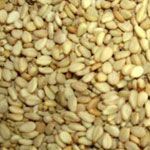
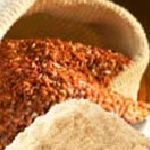
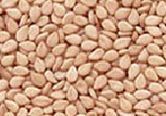
    White Sesame Seeds from Gujarat state is widely preferred due to its uniform colour and bold size. Different grades available are :Features Sesame seed is seed of sesamum indicum pedaliaceae family. Seeds origin from top quality soil. It is carefully cleaned before it is sold. It is extensively used for the application in bakery products such as bread, bread sticks, cookies, candies, pasta, vegetables and curry dishes. The taste of roasted sesame seeds has wide applications in food industries including chocolate and ice cream and halva. Sesame oil is widely used prominently in Asian countries for various applications As it is cholesterol free so being used in health food industries.
    ...more
  • White Sesame Seeds

    White Sesame Seeds

    Request for Price

    White Sesame Seeds from Gujarat state is widely preferred due to its uniform colour and bold size. Different grades available are :Features Sesame seed is seed of sesamum indicum pedaliaceae family. Seeds origin from top quality soil. It is carefully cleaned before it is sold. It is extensively used for the application in bakery products such as bread, bread sticks, cookies, candies, pasta, vegetables and curry dishes. The taste of roasted sesame seeds has wide applications in food industries including chocolate and ice cream and halva. Sesame oil is widely used prominently in Asian countries for various applications As it is cholesterol free so being used in health food industries.

    ...more
    Get Best Price
  • Textured Protien Soyabean Chunks

    Textured Protien Soyabean Chunks

    Get Latest Price

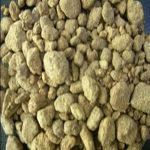
    Soya nuggets/soya chunks/textured Soya Protein is commonly referred to as vegetarian meat. It is prepared from defatted (DOC) Soya flour by the process of extrusion cooking. During the process, the protein in the flour undergoes structural changes and forms a fiber like network. When soaked in water, the textured nuggets absorb the water and develop meat like and chewy characteristics (hence the reference to "vegetarian meat"). They are a rich source of protein. Among the vegetable proteins they contribute a maximum level of 50% protein. As they are free from cholesterol they are also commonly used as meat substitutes. It can be used in meat food such as pork luncheon meat, banger, sausage etc, help to improve the taste, well water -retain, convince, in proving the product's organization; it can be used in quick-freeze food, such as mincemeat, dumpling, steamed stuffed bun etc, help to improve product nutritional structure, water-binding and absorbing fat, with low fat and high protein, fortifying products nourishing ingredient; it also can use in Margie food such as healthy food. 
    ...more
  • Textured Protien Soyabean Chunks

    Textured Protien Soyabean Chunks

    Request for Price

    Soya nuggets/soya chunks/textured Soya Protein is commonly referred to as vegetarian meat. It is prepared from defatted (DOC) Soya flour by the process of extrusion cooking. During the process, the protein in the flour undergoes structural changes and forms a fiber like network. When soaked in water, the textured nuggets absorb the water and develop meat like and chewy characteristics (hence the reference to "vegetarian meat"). They are a rich source of protein. Among the vegetable proteins they contribute a maximum level of 50% protein. As they are free from cholesterol they are also commonly used as meat substitutes. It can be used in meat food such as pork luncheon meat, banger, sausage etc, help to improve the taste, well water -retain, convince, in proving the product's organization; it can be used in quick-freeze food, such as mincemeat, dumpling, steamed stuffed bun etc, help to improve product nutritional structure, water-binding and absorbing fat, with low fat and high protein, fortifying products nourishing ingredient; it also can use in Margie food such as healthy food. 

    ...more
    Get Best Price
  • Sunflower Seed Meal

    Sunflower Seed Meal

    Get Latest Price

    Sunflower seed is one of the most important oilseed grown in the world. EU-27, Russia, Ukraine, Argentina & India are the major producers of sunflower seeds. Ukraine's sunflower production for year 2009 was estimated at 6.5 million tonnes whereas for Russia it was 6.4 million tonnes and for Argentina it was estimated at 2.3 mmt.. EU-27 sunflower seed production was 7.1 million tonnes in 2008-09 whereas Indian 2006-07 production was around 1.6 million tons. Sunflower seed contributes more than 20% of EU-27 oilseeds production and is the biggest oilseed crop after rapeseed.
    ...more
  • Sunflower Seed Meal

    Sunflower Seed Meal

    Request for Price

    Sunflower seed is one of the most important oilseed grown in the world. EU-27, Russia, Ukraine, Argentina & India are the major producers of sunflower seeds. Ukraine's sunflower production for year 2009 was estimated at 6.5 million tonnes whereas for Russia it was 6.4 million tonnes and for Argentina it was estimated at 2.3 mmt.. EU-27 sunflower seed production was 7.1 million tonnes in 2008-09 whereas Indian 2006-07 production was around 1.6 million tons. Sunflower seed contributes more than 20% of EU-27 oilseeds production and is the biggest oilseed crop after rapeseed.

    ...more
    Get Best Price
  • Sunflower Seed

    Sunflower Seed

    Get Latest Price

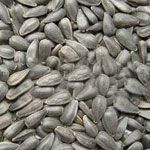
    Sunflower seed is one of the most important oilseed grown in the world. EU-27, Russia, Ukraine, Argentina & India are the major producers of sunflower seeds. Ukraine's sunflower production for year 2009 was estimated at 6.5 million tonnes whereas for Russia it was 6.4 million tonnes and for Argentina it was estimated at 2.3 mmt.. EU-27 sunflower seed production was 7.1 million tonnes in 2008-09 whereas Indian 2006-07 production was around 1.6 million tons. Sunflower seed contributes more than 20% of EU-27 oilseeds production and is the biggest oilseed crop after rapeseed. Central & Southern Buenos Aires, Chaco, Santiago del Estero, northern Santa Fe and La Pampa are the sunflower seed growing areas in Argentina. In India, it is mainly grown in Western and Southern part of the country where it is harvested from Feb onwards. Sunflower seed production has registered a quantum growth in India with Sunflower Oil gaining popularity as a cooking medium in recent years. The oil content in Indian Sunflower seed ranges between 38 and 44% whereas protein content is 18-25%. The seeds contain hull with a high fibre and wax content and low protein content, which are considered as big obstacles for obtaining a better yield of oil and a high quality protein meal. In order to overcome these constraints the seeds are dehulled. So in recent years, exporters have invested in developing technology for Hulling of Sunflower Seeds.
    ...more
  • Sunflower Seed

    Sunflower Seed

    Request for Price

    Sunflower seed is one of the most important oilseed grown in the world. EU-27, Russia, Ukraine, Argentina & India are the major producers of sunflower seeds. Ukraine's sunflower production for year 2009 was estimated at 6.5 million tonnes whereas for Russia it was 6.4 million tonnes and for Argentina it was estimated at 2.3 mmt.. EU-27 sunflower seed production was 7.1 million tonnes in 2008-09 whereas Indian 2006-07 production was around 1.6 million tons. Sunflower seed contributes more than 20% of EU-27 oilseeds production and is the biggest oilseed crop after rapeseed. Central & Southern Buenos Aires, Chaco, Santiago del Estero, northern Santa Fe and La Pampa are the sunflower seed growing areas in Argentina. In India, it is mainly grown in Western and Southern part of the country where it is harvested from Feb onwards. Sunflower seed production has registered a quantum growth in India with Sunflower Oil gaining popularity as a cooking medium in recent years. The oil content in Indian Sunflower seed ranges between 38 and 44% whereas protein content is 18-25%. The seeds contain hull with a high fibre and wax content and low protein content, which are considered as big obstacles for obtaining a better yield of oil and a high quality protein meal. In order to overcome these constraints the seeds are dehulled. So in recent years, exporters have invested in developing technology for Hulling of Sunflower Seeds.

    ...more
    Get Best Price
  • Sunflower Meal

    Sunflower Meal

    Get Latest Price

    Sunflower meal is obtained by crushing its seeds for oil and oilcake which is further sent for extraction to obtain remaining oil and its meal. Sunflower seed is popular as bird seeds. But with the growth in consumption of sunflower oil, it is mainly crushed for obtaining edible oil so the production of meal too is good enough to create local and some international demand. Sunflower meal is widely used as protein material for animal feed. Meal contains about 30% crude protein with 30% fibre. It is superior to most vegetable proteins in digestibility. Sunflower seed extractions are widely used as protein material for animal feed. Indian sunflower seed extractions contain about 30% crude protein with 30% fibre. Although sunflower protein is low in lysine, methionime & cystine levels are favourable to meet poultry feed requirements. It is superior to most vegetable proteins in digestibility. Recent development of various enzyme preparations, which can act upon fibre in sunflower meal, making it more digestible, can result in an economical substitute for various protein sources. Thus it can be used at higher levels in the poultry feed. SUNFLOWER MEAL PROTEIN 28% MIN. MOISTURE 10% MAX. FIBER 30% MAX. S & S 2.5% MAX. Sunflower Seed, Meal & Oil World Market The estimated sunflower seed export for 2009-10 from Argentina was 55000 tonnes while for sunflower meal it stood at 600000 tons and for sunflower oil at 800000 tons. There is export tax of 32% on export of seed from Argentina while it is 30% for sunflower oil and meal. Russian exports for 2009-10 for sunflower meal is estimated at 900000 tons while for oil it is 600000 tons and for seed 50000 tons. Kazakhstan is the major buyer for Russian sunflower seeds while Italy, Turkey, Spain, Latvia, Cyprus, Egypt and Morocco are major importers of its meal. Turkey, Kazakhstan, Egypt & India are the major buyers of sunflower oil of Russia. The export duty on sunflowerseeds is 20 percent of customs value, but not less than 30 Euros per metric ton while export meal & oil is duty free. Sunflower seed exports of Ukraine are estimated at 400,000 tons in the 2009/2010 while oil export is estimated at 2.1 million tons and meal export at 1.75 million tonnes. India, Turkey, Egypt, United Kingdom, Netherlands, France, Algeria, Iran, Spain & Italy are major importers of Ukraine's sunflower oil. For sunflower seed, EU countries (France, Spain, Netherlands, Poland, Italy, Germany), Pakistan, Turkey & Georgia are the major destination. Ukrainian sunflower meal is mainly exported to Poland, Belarus, Latvia, Israel, Turkey, Morocco, France, Lithuania, Italy and United Kingdom. Export duty for sunflower seed have decreased to 12% as of January 1, 2010 and in next two years it shall get reduced to 10%. Major destinaions for Indian sunflower seeds are Pakistan, U.K, China, Netherlands, Philippines & Poland. The export of Indian Sunflower meal is very limited as compared soybean meal and rapeseed meal with Thailand being the major buyer. India imports sunflower oil mainly from Ukraine, Russia and Argentina. Indian import for 2009-10 is estimated at 600000 tons.
    ...more
  • Sunflower Meal

    Sunflower Meal

    Request for Price

    Sunflower meal is obtained by crushing its seeds for oil and oilcake which is further sent for extraction to obtain remaining oil and its meal. Sunflower seed is popular as bird seeds. But with the growth in consumption of sunflower oil, it is mainly crushed for obtaining edible oil so the production of meal too is good enough to create local and some international demand. Sunflower meal is widely used as protein material for animal feed. Meal contains about 30% crude protein with 30% fibre. It is superior to most vegetable proteins in digestibility. Sunflower seed extractions are widely used as protein material for animal feed. Indian sunflower seed extractions contain about 30% crude protein with 30% fibre. Although sunflower protein is low in lysine, methionime & cystine levels are favourable to meet poultry feed requirements. It is superior to most vegetable proteins in digestibility. Recent development of various enzyme preparations, which can act upon fibre in sunflower meal, making it more digestible, can result in an economical substitute for various protein sources. Thus it can be used at higher levels in the poultry feed. SUNFLOWER MEAL PROTEIN 28% MIN. MOISTURE 10% MAX. FIBER 30% MAX. S & S 2.5% MAX. Sunflower Seed, Meal & Oil World Market The estimated sunflower seed export for 2009-10 from Argentina was 55000 tonnes while for sunflower meal it stood at 600000 tons and for sunflower oil at 800000 tons. There is export tax of 32% on export of seed from Argentina while it is 30% for sunflower oil and meal. Russian exports for 2009-10 for sunflower meal is estimated at 900000 tons while for oil it is 600000 tons and for seed 50000 tons. Kazakhstan is the major buyer for Russian sunflower seeds while Italy, Turkey, Spain, Latvia, Cyprus, Egypt and Morocco are major importers of its meal. Turkey, Kazakhstan, Egypt & India are the major buyers of sunflower oil of Russia. The export duty on sunflowerseeds is 20 percent of customs value, but not less than 30 Euros per metric ton while export meal & oil is duty free. Sunflower seed exports of Ukraine are estimated at 400,000 tons in the 2009/2010 while oil export is estimated at 2.1 million tons and meal export at 1.75 million tonnes. India, Turkey, Egypt, United Kingdom, Netherlands, France, Algeria, Iran, Spain & Italy are major importers of Ukraine's sunflower oil. For sunflower seed, EU countries (France, Spain, Netherlands, Poland, Italy, Germany), Pakistan, Turkey & Georgia are the major destination. Ukrainian sunflower meal is mainly exported to Poland, Belarus, Latvia, Israel, Turkey, Morocco, France, Lithuania, Italy and United Kingdom. Export duty for sunflower seed have decreased to 12% as of January 1, 2010 and in next two years it shall get reduced to 10%. Major destinaions for Indian sunflower seeds are Pakistan, U.K, China, Netherlands, Philippines & Poland. The export of Indian Sunflower meal is very limited as compared soybean meal and rapeseed meal with Thailand being the major buyer. India imports sunflower oil mainly from Ukraine, Russia and Argentina. Indian import for 2009-10 is estimated at 600000 tons.

    ...more
    Get Best Price
  • Sunflower Doc

    Sunflower Doc

    Get Latest Price

    The estimated sunflower seed export for 2009-10 from Argentina was 55000 tonnes while for sunflower meal it stood at 600000 tons and for sunflower oil at 800000 tons. There is export tax of 32% on export of seed from Argentina while it is 30% for sunflower oil and meal. Russian exports for 2009-10 for sunflower meal is estimated at 900000 tons while for oil it is 600000 tons and for seed 50000 tons. Kazakhstan is the major buyer for Russian sunflower seeds while Italy, Turkey, Spain, Latvia, Cyprus, Egypt and Morocco are major importers of its meal. Turkey, Kazakhstan, Egypt & India are the major buyers of sunflower oil of Russia. The export duty on sunflowerseeds is 20 percent of customs value, but not less than 30 Euros per metric ton while export meal & oil is duty free.
    ...more
  • Sunflower Doc

    Sunflower Doc

    Request for Price

    The estimated sunflower seed export for 2009-10 from Argentina was 55000 tonnes while for sunflower meal it stood at 600000 tons and for sunflower oil at 800000 tons. There is export tax of 32% on export of seed from Argentina while it is 30% for sunflower oil and meal. Russian exports for 2009-10 for sunflower meal is estimated at 900000 tons while for oil it is 600000 tons and for seed 50000 tons. Kazakhstan is the major buyer for Russian sunflower seeds while Italy, Turkey, Spain, Latvia, Cyprus, Egypt and Morocco are major importers of its meal. Turkey, Kazakhstan, Egypt & India are the major buyers of sunflower oil of Russia. The export duty on sunflowerseeds is 20 percent of customs value, but not less than 30 Euros per metric ton while export meal & oil is duty free.

    ...more
    Get Best Price
  • Soybean Seed (NON GMO)

    Soybean Seed (NON GMO)

    Get Latest Price

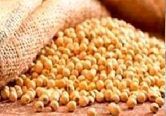
    We have gained expertise to offer our clients a superior quality range of Soyabean Seed. The soyabean seeds we offer are rich in protein and are regularly consumed as a cereal in variety Indian and abroad kitchens as well as used for oil extraction and livestock (Poultry, Cattle, Aqua) feed usage. All our soyabean seeds are widely demanded by the clients due to their rich taste and and high nutritional value. Moreover, we are capable of providing these soyabean seeds to the clients in bulk amount in accordance their needs. The central region of India produce 70% of total India yield of Soybean. Being present in Indore - hub of soyabean in INDIA, it makes us possible to get you best quality product. The current growing requirement of Soya Oil, Soya bean meal, Soya bean by produces (i.e. Nuggets, Flacks, Tocopherol, Easter) enthusiast us to more research to get best quality seeds from local farmer and provide best quality seed to domestic markets. Our HD-2189 is very popular in market. Botanical Name: Glycine Max Packaging: 50 KG PP Bags Often referred to as the miracle crop, the soybean is the world’s leading provider of protein and oil.Soybeans are the most economically important bean in the world. Soybeans occur in various sizes, and in several hull or seed coat colors, including black, brown, blue, yellow, and mottled. The hull of the mature bean is hard, water resistant, and protects the cotyledon and hypocotyl (or "germ") from damage. The United States is the world leader in soybean production; growing about 2 billion bushels annually - more than 50 percent of the world crop. Other major soybean-producing nations are Brazil, Argentina and China. In India in year 2009-10 crop cross 94.3 lac tons, and increases every year. The primary use of whole soybeans and protein from soybean meal is to provide a low-cost, high protein feed ingredient for fish, poultry, swine, cattle, and other animals. The oil and protein content together account for about 60% of dry soybeans by weight; protein at 40% and oil at 20%. The remainder consists of 35% carbohydrate and about 5% ash. Soybean cultivars comprise approximately 8% seed coat or hull, 90% cotyledons and 2% hypocotyls axis or germ. Nutritious value of Soya bean ( Per 100 gms of Soyabeans ) Calories 432,Complete Protein 43.2 gm, Fat  10.50 gm, Carbohydrates  20.90 gm, Calcium 240 mg, Phosphorus 690 mg, Iron 11.50 mg , Carotene (Vitamin A ) 426 mg, Small quantity of Vitamin B. Soybean has the following composition :9.5 to 14% of moisture ,18 to 22% of oil content ,39 to 47% of proteins ,3 to 20% of carbon hydrate ,4 to 8% of fibres ,3 to 6% of ashes Trading In India Soybean sold by farmer in govt. market yard – MANDI to trader or to producer eye pass by auction. Some trader or producer now open CHOPAL for purchase. Future trade also available at Nbot, Cbot, Ncdex, Mcx. Future trade & plant for purchase on quality condition.
    ...more
  • Soybean Seed (NON GMO)

    Soybean Seed (NON GMO)

    Request for Price

    We have gained expertise to offer our clients a superior quality range of Soyabean Seed. The soyabean seeds we offer are rich in protein and are regularly consumed as a cereal in variety Indian and abroad kitchens as well as used for oil extraction and livestock (Poultry, Cattle, Aqua) feed usage. All our soyabean seeds are widely demanded by the clients due to their rich taste and and high nutritional value. Moreover, we are capable of providing these soyabean seeds to the clients in bulk amount in accordance their needs. The central region of India produce 70% of total India yield of Soybean. Being present in Indore - hub of soyabean in INDIA, it makes us possible to get you best quality product. The current growing requirement of Soya Oil, Soya bean meal, Soya bean by produces (i.e. Nuggets, Flacks, Tocopherol, Easter) enthusiast us to more research to get best quality seeds from local farmer and provide best quality seed to domestic markets. Our HD-2189 is very popular in market. Botanical Name: Glycine Max Packaging: 50 KG PP Bags Often referred to as the miracle crop, the soybean is the world’s leading provider of protein and oil.Soybeans are the most economically important bean in the world. Soybeans occur in various sizes, and in several hull or seed coat colors, including black, brown, blue, yellow, and mottled. The hull of the mature bean is hard, water resistant, and protects the cotyledon and hypocotyl (or "germ") from damage. The United States is the world leader in soybean production; growing about 2 billion bushels annually - more than 50 percent of the world crop. Other major soybean-producing nations are Brazil, Argentina and China. In India in year 2009-10 crop cross 94.3 lac tons, and increases every year. The primary use of whole soybeans and protein from soybean meal is to provide a low-cost, high protein feed ingredient for fish, poultry, swine, cattle, and other animals. The oil and protein content together account for about 60% of dry soybeans by weight; protein at 40% and oil at 20%. The remainder consists of 35% carbohydrate and about 5% ash. Soybean cultivars comprise approximately 8% seed coat or hull, 90% cotyledons and 2% hypocotyls axis or germ. Nutritious value of Soya bean ( Per 100 gms of Soyabeans ) Calories 432,Complete Protein 43.2 gm, Fat  10.50 gm, Carbohydrates  20.90 gm, Calcium 240 mg, Phosphorus 690 mg, Iron 11.50 mg , Carotene (Vitamin A ) 426 mg, Small quantity of Vitamin B. Soybean has the following composition :9.5 to 14% of moisture ,18 to 22% of oil content ,39 to 47% of proteins ,3 to 20% of carbon hydrate ,4 to 8% of fibres ,3 to 6% of ashes Trading In India Soybean sold by farmer in govt. market yard – MANDI to trader or to producer eye pass by auction. Some trader or producer now open CHOPAL for purchase. Future trade also available at Nbot, Cbot, Ncdex, Mcx. Future trade & plant for purchase on quality condition.

    ...more
    Get Best Price
  • Soybean Acid Oil

    Soybean Acid Oil

    Get Latest Price

    • Country of OriginIndia
    • Moisture10-15%
    • Physical StateLiquid
    • TypeAcid Oil
    • MaterialSoybean
    • Packaging TypeDrum
    • ApplicationSoap Making, Detergent Production
    • Purity99.9%
    • Soap MakingUsed In Making Of Soaps
    • We present high quality Acid Oil which is formulated with the use of latest technology and machines. This Acid Oil is free from any type of impurities as we use only best quality raw materials in the production process. Our Acid Oil is properly tested under strict industry norms and is provided at market leading prices. It is a bi product of Soya Oil and is used in making of soaps and detergents. It is made from soap stock of soya oil. Once the sulphuric treatment is done on soap stock we get acid oil. It is widely used in oil soaps and detergents etc.
    ...more
  • Soybean Acid Oil

    Soybean Acid Oil

    Request for Price

    We present high quality Acid Oil which is formulated with the use of latest technology and machines. This Acid Oil is free from any type of impurities as we use only best quality raw materials in the production process. Our Acid Oil is properly tested under strict industry norms and is provided at market leading prices. It is a bi product of Soya Oil and is used in making of soaps and detergents. It is made from soap stock of soya oil. Once the sulphuric treatment is done on soap stock we get acid oil. It is widely used in oil soaps and detergents etc.

    Country of Origin : India

    Moisture : 10-15%

    Physical State : Liquid

    Type : Acid Oil

    Material : Soybean

    Packaging Type : Drum

    Application : Soap Making, Detergent Production

    Purity : 99.9%

    ...more
    Get Best Price
  • Organic Soybean Meal

    Organic Soybean Meal

    31,500 / Metric Ton

    • MOQ25000 Kilogram
    • Protein46%
    • ApplicationPoultry
    • Packaging Size50 Kg
    • Moisture10 %
    • Shelf Life6 Months
    • Packaging TypePP Bag
    • Country of OriginIndia
    • Organic Soyabean A common misconception is that organic food costs more. Generally you will pay a little more money for your organic food, but the benefits of organic food in the longer term are significant and outweigh the immediate costs.
    ...more
  • Organic Soybean Meal

    Organic Soybean Meal

    31,500 / Metric Ton

    25000 Kilogram (MOQ)

    Organic Soyabean A common misconception is that organic food costs more. Generally you will pay a little more money for your organic food, but the benefits of organic food in the longer term are significant and outweigh the immediate costs.

    Protein : 46%

    Application : Poultry

    Packaging Size : 50 Kg

    Moisture : 10 %

    Shelf Life : 6 Months

    Packaging Type : PP Bag

    Country of Origin : India

    ...more
    Get Best Price
  • NON GMO Soyabean Meal

    NON GMO Soyabean Meal

    Get Latest Price

    Soyabean Meal Non GMO Soybean meal is the most used vegetable protein feed in the production of animal feeds. Soybean is sent for crushing to get oil and cake which is further sent to extraction for removal of residual oil and to obtain its meal. Soybean meal is considered premium to other oilmeals due to high protein content. Soy meal is the world's most important vegetable protein feed source accounting for nearly 65 % of World protein feed demand. About 98 percent of soy meal is used as an animal feed ingredient, with the remainder used in human foods such as bakery ingredients and meat substitutes.
    ...more
  • NON GMO Soyabean Meal

    NON GMO Soyabean Meal

    Request for Price

    Soyabean Meal Non GMO Soybean meal is the most used vegetable protein feed in the production of animal feeds. Soybean is sent for crushing to get oil and cake which is further sent to extraction for removal of residual oil and to obtain its meal. Soybean meal is considered premium to other oilmeals due to high protein content. Soy meal is the world's most important vegetable protein feed source accounting for nearly 65 % of World protein feed demand. About 98 percent of soy meal is used as an animal feed ingredient, with the remainder used in human foods such as bakery ingredients and meat substitutes.

    ...more
    Get Best Price
  • Hipro Soya Bean Meal

    Hipro Soya Bean Meal

    Get Latest Price

    Hypro Soya Meal Hypro Soya Meal is made from good quality NON-GMO Soya Bean Seed. The Manufacturing process involves cleaing /Destoning /Grading /Dal milling/Craking /Dehulling/Cooking/Flaking and Solvent extraction of Oil. The Deoiled Flakes so obtained are desolventised & toasted under appropriate temparature & moisture to yield Soya Meal with controlled urease activity. The produce is further cooled dried & graded to get uniform size Soya Meal/ Flakes with right moisture. Hi-Pro Soya Meal/DOC is used for aqua feed but majorly for poultry feed. This product is required by premium customers who want to feed high protein for healthy growth of their poultry. The balanced composition of proteins, fats, and minerals leads to better feed conversion ratio resulting in better weight gain in shorter time, lower mortality, improves fertility and immunity. Normal Soyabean Meal is lower in protein compared to De hulled Soyabean Meal as the hulls standardize the Crude Protein level to range between 46-48%. However the Crude Protein in De-hulled Soyabean Meal ranges from 48% onwards. Soyabean Meal has a higher energy value compared with other protein sources. The amino acids in Soyabean Meal are highly digestible compared to other protein sources of plant origin. The Solubility Index of Soyabean Meal is 80-85%. Our Normal Soybean Meal as well as De-hulled Soybean Meal, is one of the most consistent protein ingredients available to the feed formulator. We produce Soybean Meals that meet the end-users specifications for protein and fibre. Our Soybean meal is a concentrated source of protein and energy, and is lower in fibre than most other oilseed meals available to the feed manufacturer.  The protein fraction of Soybeans, finds its way into soyabean meal as a livestock feed ingredient, as soy protein ingredients for the food industry and for industrial uses (paper coatings, adhesives, etc.). The higher protein, energy and lower fiber content of soybean meal allow nutritionists to formulate higher-energy diets that are more efficient in the conversion of feed to meat.
    ...more
  • Hipro Soya Bean Meal

    Hipro Soya Bean Meal

    Request for Price

    Hypro Soya Meal Hypro Soya Meal is made from good quality NON-GMO Soya Bean Seed. The Manufacturing process involves cleaing /Destoning /Grading /Dal milling/Craking /Dehulling/Cooking/Flaking and Solvent extraction of Oil. The Deoiled Flakes so obtained are desolventised & toasted under appropriate temparature & moisture to yield Soya Meal with controlled urease activity. The produce is further cooled dried & graded to get uniform size Soya Meal/ Flakes with right moisture. Hi-Pro Soya Meal/DOC is used for aqua feed but majorly for poultry feed. This product is required by premium customers who want to feed high protein for healthy growth of their poultry. The balanced composition of proteins, fats, and minerals leads to better feed conversion ratio resulting in better weight gain in shorter time, lower mortality, improves fertility and immunity. Normal Soyabean Meal is lower in protein compared to De hulled Soyabean Meal as the hulls standardize the Crude Protein level to range between 46-48%. However the Crude Protein in De-hulled Soyabean Meal ranges from 48% onwards. Soyabean Meal has a higher energy value compared with other protein sources. The amino acids in Soyabean Meal are highly digestible compared to other protein sources of plant origin. The Solubility Index of Soyabean Meal is 80-85%. Our Normal Soybean Meal as well as De-hulled Soybean Meal, is one of the most consistent protein ingredients available to the feed formulator. We produce Soybean Meals that meet the end-users specifications for protein and fibre. Our Soybean meal is a concentrated source of protein and energy, and is lower in fibre than most other oilseed meals available to the feed manufacturer.  The protein fraction of Soybeans, finds its way into soyabean meal as a livestock feed ingredient, as soy protein ingredients for the food industry and for industrial uses (paper coatings, adhesives, etc.). The higher protein, energy and lower fiber content of soybean meal allow nutritionists to formulate higher-energy diets that are more efficient in the conversion of feed to meat.

    ...more
    Get Best Price
  • Soya Lecithin

    Soya Lecithin

    Get Latest Price

    Soy Lecithin Composition Soy lecithin consists of three types of phospholipids; phosphatidylcholine (PC),phosphatidylethanolamine (PE) and phosphotidylinositol (PI). It is extracted from soybean oil and is generally used as a natural emulsifier or stabilizer in various food applications. Processing Lecithin is a combination of naturally-occurring phospholipids, which are extracted during the processing of soybean oil. The soybeans are tempered by keeping them at a consistent temperature and moisture level for approximately seven to 10 days. This process hydrates the soybeans and loosens the hull. The soybeans are then cleaned and cracked into small pieces and the hulls are separated from the cracked beans. Next, the soybean pieces are heated and pressed into flakes. Soybean oil is extracted from the flakes through a distillation process and lecithin is separated from the oil by the addition of water and centrifugation or steam precipitation1 Functional Benefits Normaly Lecithin used as an Emulsifier, Wetting Agent, Dispersing Agent, Stabilizing Agent, Viscosity Reducing Agent, Anti-spattering Agent, Mixing and Blending Agent, Release Agent, Conditioning, Lipotropic, Surface Active Agent & as an Emollient & Anti-Oxidant as well.Lecithin also has some important Nutraceutical properties like it Decrease level of cholesterol and harmful lipids, Supplies polyunsaturated fatty acids, Provides Phosphatidyl Choline; an Essential Phosphalipids, Protection against fatty degeneration of the Liver / brain, Improves memory function, Promoted ability to concentrate, Controls Lipometabolic Disorders. Applications Poultry Feed Pig Feed Cattle Feed Sheep Ruminants Shrimp Feed Fish Feed Pet Foods Functionalities It Enriches fat and Proteins. It improves palletization of products. Soya Lecithin Oil (Poultry Feed Grade) Lecithin is successfully used in the poultry feed in the United States and European countries. Inspired by this our R & D has introduced a new products poultry feed grade lecithin oil. Our product prestige soya lecithin - poultry feed grade lecithin oil has been introduced after a continued and vigorous research work by our technical department. And within a short span of time it has established repute in the market and we are regularly supplying to major giants of the industry. Main advantages of using poultry/aqua feed grade soya lecithin oil export quality- It ensures excellent digestibility of fat and energy because it acts as a natural emulsifier It improves the digestibility of the other nutrients in the feed and promotes the absorption of the fat-soluble vitamins It has been specially developed for use in energy-rich feed mixtures for poultry It is natural performance enhancement Greater vitality Support for the immune system Efficient metabolism Optimal supplies of choline and energy Excellent binding of dust It acts as energy supplies, energy concentrates, fat & protein enrichment It helps as a physiological agent and aids in palletizing
    ...more
  • Soya Lecithin

    Soya Lecithin

    Request for Price

    Soy Lecithin Composition Soy lecithin consists of three types of phospholipids; phosphatidylcholine (PC),phosphatidylethanolamine (PE) and phosphotidylinositol (PI). It is extracted from soybean oil and is generally used as a natural emulsifier or stabilizer in various food applications. Processing Lecithin is a combination of naturally-occurring phospholipids, which are extracted during the processing of soybean oil. The soybeans are tempered by keeping them at a consistent temperature and moisture level for approximately seven to 10 days. This process hydrates the soybeans and loosens the hull. The soybeans are then cleaned and cracked into small pieces and the hulls are separated from the cracked beans. Next, the soybean pieces are heated and pressed into flakes. Soybean oil is extracted from the flakes through a distillation process and lecithin is separated from the oil by the addition of water and centrifugation or steam precipitation1 Functional Benefits Normaly Lecithin used as an Emulsifier, Wetting Agent, Dispersing Agent, Stabilizing Agent, Viscosity Reducing Agent, Anti-spattering Agent, Mixing and Blending Agent, Release Agent, Conditioning, Lipotropic, Surface Active Agent & as an Emollient & Anti-Oxidant as well.Lecithin also has some important Nutraceutical properties like it Decrease level of cholesterol and harmful lipids, Supplies polyunsaturated fatty acids, Provides Phosphatidyl Choline; an Essential Phosphalipids, Protection against fatty degeneration of the Liver / brain, Improves memory function, Promoted ability to concentrate, Controls Lipometabolic Disorders. Applications Poultry Feed Pig Feed Cattle Feed Sheep Ruminants Shrimp Feed Fish Feed Pet Foods Functionalities It Enriches fat and Proteins. It improves palletization of products. Soya Lecithin Oil (Poultry Feed Grade) Lecithin is successfully used in the poultry feed in the United States and European countries. Inspired by this our R & D has introduced a new products poultry feed grade lecithin oil. Our product prestige soya lecithin - poultry feed grade lecithin oil has been introduced after a continued and vigorous research work by our technical department. And within a short span of time it has established repute in the market and we are regularly supplying to major giants of the industry. Main advantages of using poultry/aqua feed grade soya lecithin oil export quality- It ensures excellent digestibility of fat and energy because it acts as a natural emulsifier It improves the digestibility of the other nutrients in the feed and promotes the absorption of the fat-soluble vitamins It has been specially developed for use in energy-rich feed mixtures for poultry It is natural performance enhancement Greater vitality Support for the immune system Efficient metabolism Optimal supplies of choline and energy Excellent binding of dust It acts as energy supplies, energy concentrates, fat & protein enrichment It helps as a physiological agent and aids in palletizing

    ...more
    Get Best Price
  • Sesame Seed

    Sesame Seed

    Get Latest Price

    Uses: Sesame seed is widely used in bakery, confectionery and in production of tahini and halwa. Producers: Asian and African countries are the major producers and exporters of sesame seed. Humera type: Ethiopia, one of the biggest exporter from African region, exports mainly Humera sesame seed. Importers: China, Japan, Turkey, South Korea, U.S., Europe and Middle east countries are major buyers. Futures: There is no futures platform for this commodity in India. There are mainly three types of sesame seeds produced in India - white, black and brown. Natural white sesame seed is the most traded and used for crushing and direct consumption. It has its various uses in bakery, confectionery, sesame products like tahini and many other food items. Indian sub-continent mainly crushes it to produce unrefined and filtered oil while East and Southeast asian countries consume toasted oil. In Middle East it is mainly used in the production of tahini (halwa). Brown seeds are also used for oil extraction purpose whereas black sesame seeds are for medicinal purpose as they are known to have many health benefits. When the seeds are crushed to produce oil, its by-product sesame extraction is also produced. Sesame seed extraction / meal is a high protein ( 45-47%) feed meal being used as a valuable ingredient in poultry feed. Hulled sesame seeds which are widely used in bakery and confectionery industry are derived by removing the outer skin of natural seeds through the process called hulling. It has two types depending upon its drying process - Autodried and Sundried. Developed countries prefer auto while developing nations buy sundried which is more reasonable. Sesame Seed Exports India's main export is of mainly below type:Natural White Sesame Seed: 99/1/99.90%., 99/1/1, 98/2/2, 95/5/2Hulled Sesame Seed: AutoHulled and Sundriedhulled - 99.5%-99.98%. China, Taiwan, Korea, U.S., Europe, Middle East and Australia are the major destinations for Indian sesame seeds. Russia is a big buyer of Sundried hulled variety. In the year 2007-08, India exported sesame of value more than ninty million dollars to various countries with China being the biggest buyer. The prices of sesame seeds are highly volatile and can swing to great extent in a day. The information regarding its crop size in different parts of the world is not easily available and thats why the crop estimates keep on changing. This information gap gives opportunities to big stockists to dictate the sesame movement to their advantage. Also there is no futures platform for sesame seed in India, so exporters and traders cannot hedge their price risk and are prone to the sudden fluctuations.
    ...more
  • Sesame Seed

    Sesame Seed

    Request for Price

    Uses: Sesame seed is widely used in bakery, confectionery and in production of tahini and halwa. Producers: Asian and African countries are the major producers and exporters of sesame seed. Humera type: Ethiopia, one of the biggest exporter from African region, exports mainly Humera sesame seed. Importers: China, Japan, Turkey, South Korea, U.S., Europe and Middle east countries are major buyers. Futures: There is no futures platform for this commodity in India. There are mainly three types of sesame seeds produced in India - white, black and brown. Natural white sesame seed is the most traded and used for crushing and direct consumption. It has its various uses in bakery, confectionery, sesame products like tahini and many other food items. Indian sub-continent mainly crushes it to produce unrefined and filtered oil while East and Southeast asian countries consume toasted oil. In Middle East it is mainly used in the production of tahini (halwa). Brown seeds are also used for oil extraction purpose whereas black sesame seeds are for medicinal purpose as they are known to have many health benefits. When the seeds are crushed to produce oil, its by-product sesame extraction is also produced. Sesame seed extraction / meal is a high protein ( 45-47%) feed meal being used as a valuable ingredient in poultry feed. Hulled sesame seeds which are widely used in bakery and confectionery industry are derived by removing the outer skin of natural seeds through the process called hulling. It has two types depending upon its drying process - Autodried and Sundried. Developed countries prefer auto while developing nations buy sundried which is more reasonable. Sesame Seed Exports India's main export is of mainly below type:Natural White Sesame Seed: 99/1/99.90%., 99/1/1, 98/2/2, 95/5/2Hulled Sesame Seed: AutoHulled and Sundriedhulled - 99.5%-99.98%. China, Taiwan, Korea, U.S., Europe, Middle East and Australia are the major destinations for Indian sesame seeds. Russia is a big buyer of Sundried hulled variety. In the year 2007-08, India exported sesame of value more than ninty million dollars to various countries with China being the biggest buyer. The prices of sesame seeds are highly volatile and can swing to great extent in a day. The information regarding its crop size in different parts of the world is not easily available and thats why the crop estimates keep on changing. This information gap gives opportunities to big stockists to dictate the sesame movement to their advantage. Also there is no futures platform for sesame seed in India, so exporters and traders cannot hedge their price risk and are prone to the sudden fluctuations.

    ...more
    Get Best Price
  • Sal Seed DOC

    Sal Seed DOC

    Get Latest Price

    Sal DOC contains 10-12 per cent protein and about 50 per cent starch and can be used as cattle and poultry feed. Starch could be isolated from Sal Meal and used in various industries. Sal meal also contains 14% tannin consequently not more than 3% for chicks and 10% for laying hens and cattle is used in compound feeds. The detanning of Sal meal will provide tannins for leather industry which are presently imported as well as deoiled sal meal can be incorporated in cattle and poultry feed in large proportions. The Sal seed has about 12%-14% oil which is extracted. the protein content are low in Sal seed extraction at 9%-10%, but it has good levels of lysine and imthionine in its essential amino acid profile. Sal seed extraction contains 6%-10% trannin and it is grouped amongst starchy feed, as its carbohydrate content is about 70% that contributes to the feed energy.The Sal seed extraction can be beneficially used to decrease the ruminal degradation of other proteins is the compound feed in order to increase their biological value for ruminants and is preferred for use in cow feed.The extraction is low cost material and is abundantly available. it is generally used as livestock feed ingredient for dairy cattle and poultry in India and foreign countries to prepare formulated feed. A.  NORMAL SPECIFICATIONS1.  Oil & Albumin ( O +A )  : 9.0% -  10.0% min2.  Sand/ Sillica                 :  2.0% - 2.5% max.3.  Fiber                            :   5.0% min.4.  Castor                         :    nil5.  Moisture                       : 10.0% - 11.0% max.6.  Ash                              :  4.5% max.7.- Carbonhidrats             :  60.0% - 70.0% max. B. NUTRIENTS1.  Dry Matter                                : 90.0%2.  Total Crude Protein CP            :   9.0% - 10.0% min.3.  Digestible Crude Protein DCP  :  ------4.  Total Digestible Nutrient TDN   : 41.0% C.  ESSENTIAL AMINO ACIDSa) Lys                  : 0.42%b) Met                  : 0.11%c) Cyst                 : 0.1%d) Thr                    : 0.32%e)Tryip                  :---------- 1. Ca                    : 0.1%2. p                      : 0.2% D.  METABOLISABLE ENERGY1. cattle            : 1483 k/cal2. poultry          : 1808 k/cal E. CALLARIFIC VALUE 3000 to 3500 k/cal
    ...more
  • Sal Seed DOC

    Sal Seed DOC

    Request for Price

    Sal DOC contains 10-12 per cent protein and about 50 per cent starch and can be used as cattle and poultry feed. Starch could be isolated from Sal Meal and used in various industries. Sal meal also contains 14% tannin consequently not more than 3% for chicks and 10% for laying hens and cattle is used in compound feeds. The detanning of Sal meal will provide tannins for leather industry which are presently imported as well as deoiled sal meal can be incorporated in cattle and poultry feed in large proportions. The Sal seed has about 12%-14% oil which is extracted. the protein content are low in Sal seed extraction at 9%-10%, but it has good levels of lysine and imthionine in its essential amino acid profile. Sal seed extraction contains 6%-10% trannin and it is grouped amongst starchy feed, as its carbohydrate content is about 70% that contributes to the feed energy.The Sal seed extraction can be beneficially used to decrease the ruminal degradation of other proteins is the compound feed in order to increase their biological value for ruminants and is preferred for use in cow feed.The extraction is low cost material and is abundantly available. it is generally used as livestock feed ingredient for dairy cattle and poultry in India and foreign countries to prepare formulated feed. A.  NORMAL SPECIFICATIONS1.  Oil & Albumin ( O +A )  : 9.0% -  10.0% min2.  Sand/ Sillica                 :  2.0% - 2.5% max.3.  Fiber                            :   5.0% min.4.  Castor                         :    nil5.  Moisture                       : 10.0% - 11.0% max.6.  Ash                              :  4.5% max.7.- Carbonhidrats             :  60.0% - 70.0% max. B. NUTRIENTS1.  Dry Matter                                : 90.0%2.  Total Crude Protein CP            :   9.0% - 10.0% min.3.  Digestible Crude Protein DCP  :  ------4.  Total Digestible Nutrient TDN   : 41.0% C.  ESSENTIAL AMINO ACIDSa) Lys                  : 0.42%b) Met                  : 0.11%c) Cyst                 : 0.1%d) Thr                    : 0.32%e)Tryip                  :---------- 1. Ca                    : 0.1%2. p                      : 0.2% D.  METABOLISABLE ENERGY1. cattle            : 1483 k/cal2. poultry          : 1808 k/cal E. CALLARIFIC VALUE 3000 to 3500 k/cal

    ...more
    Get Best Price
  • Ricebran

    Ricebran

    Get Latest Price

    Rice Bran is a by-product produced from milling. Rice Bran was once thrown away after the milling process because its health benefits hadn’t yet been discovered. But now rice bran enjoys multitudes of scientific studies that clearly demonstrate its many health-benefiting components. One of the most well known benefits of rice bran is that it’s high in dietary fibers. This makes it a very wise choice for those of you looking for gentle elimination solutions. By promoting bowel regularity, you significantly increase your body’s ability to process the foods that you consume. This also helps to prevent toxins from leaking into your system. You can also get excited for the antioxidant properties found within bran. These help to fight off toxins that we are regularly subjected to.
    ...more
  • Ricebran

    Ricebran

    Request for Price

    Rice Bran is a by-product produced from milling. Rice Bran was once thrown away after the milling process because its health benefits hadn’t yet been discovered. But now rice bran enjoys multitudes of scientific studies that clearly demonstrate its many health-benefiting components. One of the most well known benefits of rice bran is that it’s high in dietary fibers. This makes it a very wise choice for those of you looking for gentle elimination solutions. By promoting bowel regularity, you significantly increase your body’s ability to process the foods that you consume. This also helps to prevent toxins from leaking into your system. You can also get excited for the antioxidant properties found within bran. These help to fight off toxins that we are regularly subjected to.

    ...more
    Get Best Price
  • Rapeseed

    Rapeseed

    Get Latest Price

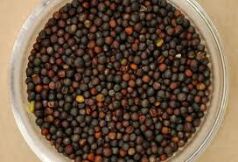
    Rape Seeds Natural rapeseed oil contains erucic acid, which is mildly toxic to humans in large doses but is used as a food additive in smaller doses. Canola, originally a syncopated form of the abbreviation "Can.O., L-A." (Canadian Oilseed, Low-Acid) that was used by the Manitoba government to label the seed during its experimental stages, is now a trade name for low erucic acid rapeseed. Sometimes the "Canola-quality" sticky note is applied to other varieties as well. Rap Seed Rapeseed (Brassica napus), also known as rape, oilseed rape, rapa, rapaseed and (in the case of one particular group of cultivars) canola. Mustard seeds are yellowish colored, small seeds that are used as a spice in many countries. These seeds are obtained from bush like mustard plant that belongs to the genus Brassica that also include vegetables like cabbage and turnips.Rapeseed belongs to the plant of the same genus and also known as canola in many countries. In old English, rapum is a name of the present day turnip and the name rapeseed is derived from rapum only.Mustard seed and rapeseed have great importance in many countries as spices. But, these seeds have important by-products too. Rapeseeds and mustard seeds are sources of rapeseed/mustard seed oil and oilcake. Yellow colored oil is obtained by extraction process of the crushed rape/mustard seeds. In the market, rape oil is not distinguished from mustard oil as both of these come from the same species and possess same properties.Rapeseed production in India is forecast to rise to 7.0 Mt for 2010-2011, assuming a normal monsoon season. Trade in the rapeseed complex will be limited to importing small volumes of seed and oil with exports of rapeseed meal expected to be unchanged at 0.75 Mt. Cultivation INDIA--Mustard/Rapeseed cultivation is done widely throughout the world. It is basically a winter crop and it requires a temperate climate to prosper. The planting season or the sowing period in India is during the Rabi season i.e. October to November. The crop starts flowering in the months of November, December, January and February. The harvesting period is from February to March. It needs a right proportion of rainfall that is provided by the monsoon during the sowing seasons of the crop. The rapeseed/mustard crop is actually acts as a very good cover of soil in winters. Climatic conditions, especially progress of South-West monsoon is a major variable shaping the fortunes of mustard seed. Price of other domestic and global oil seeds would also have significant bearing on mustard seed prices. Major trading centres in mustard seed in the country are Jaipur, Hapur, Sriganganagar, Alwar in Rajasthan, Delhi, Mumbai and Kolkatta Rapeseed is grown for the production of animal feed, vegetable oil for human consumption, and biodiesel; leading producers include the European Union, Canada, the United States, Australia, China and India. In India, it is grown on 13% of cropped land. According to the United States Department of Agriculture, rapeseed was the third leading source of vegetable oil in the world in 2000, after soybean and oil palm, and also the world's second leading source of protein meal, although only one-fifth of the production of the leading soybean meal. World production is growing rapidly, with FAO reporting that 36 million tones of rapeseed was produced in the 2003-4 season, and 46 million tones in 2004-5. In Europe, rapeseed is primarily cultivated for animal feed (due to its very high lipid and medium protein content), and is a leading option for Europeans to avoid importation of GMO products. The rapeseed is the valuable, harvested component of the crop. The crop is also grown as a winter-cover crop. It provides good coverage of the soil in winter, and limits nitrogen run-off. The plant is ploughed back in the soil or used as bedding. On some ecological or organic operations, livestock such as sheep or cattle are allowed to graze on the plants. Uses Processing of rapeseed for oil production provides rapeseed animal meal as a by-product. The by-product is a high-protein animal feed, competitive with soya. The feed is mostly employed for cattle feeding, but also for pigs and chickens (though less valuable for these). The meal has a very low content of the glucosinolates responsible for metabolism disruption in cattle and pigs. Rapeseed "oil cake" is also used as a fertilizer in China, and may be used for ornamentals, such as Bonsai, as well. WORLD PRODUCTION- For 2010-2011, world production of canola/rapeseed is forecast to decrease slightly due to lower output in Canada, China and the European Union (EU-27), as per AAFC (Agriculture and Agri food Canada) recent report for Canola. In Canada, supplies of canola are forecast to decrease while domestic processors embark on a record setting crush pace as expanded capacity comes on stream. Canadian exports of canola are forecast to decline by almost 16% this crop year as tight domestic supplies limit the industry's ability to capitalize on strong world demand. Canola prices are forecast to average about 10% above 2009-2010, supported by higher United States (US) soybean and soyoil prices, strong Chinese demand for vegetable oils, and strong demand for biofuels in the EU-27.
    ...more
  • Rapeseed

    Rapeseed

    Request for Price

    Rape Seeds Natural rapeseed oil contains erucic acid, which is mildly toxic to humans in large doses but is used as a food additive in smaller doses. Canola, originally a syncopated form of the abbreviation "Can.O., L-A." (Canadian Oilseed, Low-Acid) that was used by the Manitoba government to label the seed during its experimental stages, is now a trade name for low erucic acid rapeseed. Sometimes the "Canola-quality" sticky note is applied to other varieties as well. Rap Seed Rapeseed (Brassica napus), also known as rape, oilseed rape, rapa, rapaseed and (in the case of one particular group of cultivars) canola. Mustard seeds are yellowish colored, small seeds that are used as a spice in many countries. These seeds are obtained from bush like mustard plant that belongs to the genus Brassica that also include vegetables like cabbage and turnips.Rapeseed belongs to the plant of the same genus and also known as canola in many countries. In old English, rapum is a name of the present day turnip and the name rapeseed is derived from rapum only.Mustard seed and rapeseed have great importance in many countries as spices. But, these seeds have important by-products too. Rapeseeds and mustard seeds are sources of rapeseed/mustard seed oil and oilcake. Yellow colored oil is obtained by extraction process of the crushed rape/mustard seeds. In the market, rape oil is not distinguished from mustard oil as both of these come from the same species and possess same properties.Rapeseed production in India is forecast to rise to 7.0 Mt for 2010-2011, assuming a normal monsoon season. Trade in the rapeseed complex will be limited to importing small volumes of seed and oil with exports of rapeseed meal expected to be unchanged at 0.75 Mt. Cultivation INDIA--Mustard/Rapeseed cultivation is done widely throughout the world. It is basically a winter crop and it requires a temperate climate to prosper. The planting season or the sowing period in India is during the Rabi season i.e. October to November. The crop starts flowering in the months of November, December, January and February. The harvesting period is from February to March. It needs a right proportion of rainfall that is provided by the monsoon during the sowing seasons of the crop. The rapeseed/mustard crop is actually acts as a very good cover of soil in winters. Climatic conditions, especially progress of South-West monsoon is a major variable shaping the fortunes of mustard seed. Price of other domestic and global oil seeds would also have significant bearing on mustard seed prices. Major trading centres in mustard seed in the country are Jaipur, Hapur, Sriganganagar, Alwar in Rajasthan, Delhi, Mumbai and Kolkatta Rapeseed is grown for the production of animal feed, vegetable oil for human consumption, and biodiesel; leading producers include the European Union, Canada, the United States, Australia, China and India. In India, it is grown on 13% of cropped land. According to the United States Department of Agriculture, rapeseed was the third leading source of vegetable oil in the world in 2000, after soybean and oil palm, and also the world's second leading source of protein meal, although only one-fifth of the production of the leading soybean meal. World production is growing rapidly, with FAO reporting that 36 million tones of rapeseed was produced in the 2003-4 season, and 46 million tones in 2004-5. In Europe, rapeseed is primarily cultivated for animal feed (due to its very high lipid and medium protein content), and is a leading option for Europeans to avoid importation of GMO products. The rapeseed is the valuable, harvested component of the crop. The crop is also grown as a winter-cover crop. It provides good coverage of the soil in winter, and limits nitrogen run-off. The plant is ploughed back in the soil or used as bedding. On some ecological or organic operations, livestock such as sheep or cattle are allowed to graze on the plants. Uses Processing of rapeseed for oil production provides rapeseed animal meal as a by-product. The by-product is a high-protein animal feed, competitive with soya. The feed is mostly employed for cattle feeding, but also for pigs and chickens (though less valuable for these). The meal has a very low content of the glucosinolates responsible for metabolism disruption in cattle and pigs. Rapeseed "oil cake" is also used as a fertilizer in China, and may be used for ornamentals, such as Bonsai, as well. WORLD PRODUCTION- For 2010-2011, world production of canola/rapeseed is forecast to decrease slightly due to lower output in Canada, China and the European Union (EU-27), as per AAFC (Agriculture and Agri food Canada) recent report for Canola. In Canada, supplies of canola are forecast to decrease while domestic processors embark on a record setting crush pace as expanded capacity comes on stream. Canadian exports of canola are forecast to decline by almost 16% this crop year as tight domestic supplies limit the industry's ability to capitalize on strong world demand. Canola prices are forecast to average about 10% above 2009-2010, supported by higher United States (US) soybean and soyoil prices, strong Chinese demand for vegetable oils, and strong demand for biofuels in the EU-27.

    ...more
    Get Best Price
  • Rape Seed Meal

    Rape Seed Meal

    Get Latest Price

    Rapeseed meal · Rapeseed meal (Canola Meal) is used basically in animal feed due to its protein content of 36-38%. ·  Producers: China, India, Canada, European Union-27 and Japan are the other major producers of rapeseed - canola meal. · Exporters: Canada is the world's largest exporter having market share of around 50% in world trade followed by India and China. · Major Markets: United States is the biggest importer of Canadian canola meal. Mexico, Ireland, Taiwan, Indonesia, Thailand, China and Vietnam are the other buyers for Canadian meal. Bangladesh, South Korea, China, Malaysia, Philippines, Taiwan, Indonesia, Japan, Singapore, Thailand and Vietnam are the main buyers for Indian rapeseed meal. ·  Futures: Rapeseed or Canola meal is not traded on any exchange in world. Traders and Exporters looking to hedge their risks have to use canola and rapeseed futures. ·  European Union : E.U. is the biggest consumer of rapeseed meal in world. The EU-27 is already using considerable amounts of rapeseed meal in animal feed, however, there is still room for further expansion. The extent to which rapeseed meal can replace soybean meal and other protein sources in animal feed depends on the animal species and production stage. The potential share of rapeseed meal is highest in dairy cattle feed and lowest in feed for calves and laying hens. The popularity of rapeseed meal for animal feed varies among EU Member State. Its use is most pronounced in MS that have a long rapeseed crushing history and a high dairy production. For years the oilseeds industry in these MS has been engaged in educational campaigns that promote the benefits of rapeseed meal in animal production. In these countries the potential to further expand the rapeseed meal share in feed rations is somewhat limited. Countries that fall in this category include Germany, France, the Benelux, and the UK. In other MS, namely in the South-Eastern part of the EU, farmers’ reservation about this ingredient are only slowly diminishing and rapeseed meal use is gradually increasing. It may take a couple of years until these countries reach levels comparable to those of more traditional users. In Poland the Association of Feed Producers, the Federation of Cattle Breeders and Milk Producers, and the Association of Swine Breeders and Producers 'POLSUS " have announced a campaign to build awareness of the value of rapeseed meal and cake under the banner "Rapeseed meal - a valuable source of protein and energy”.
    ...more
  • Rape Seed Meal

    Rape Seed Meal

    Request for Price

    Rapeseed meal · Rapeseed meal (Canola Meal) is used basically in animal feed due to its protein content of 36-38%. ·  Producers: China, India, Canada, European Union-27 and Japan are the other major producers of rapeseed - canola meal. · Exporters: Canada is the world's largest exporter having market share of around 50% in world trade followed by India and China. · Major Markets: United States is the biggest importer of Canadian canola meal. Mexico, Ireland, Taiwan, Indonesia, Thailand, China and Vietnam are the other buyers for Canadian meal. Bangladesh, South Korea, China, Malaysia, Philippines, Taiwan, Indonesia, Japan, Singapore, Thailand and Vietnam are the main buyers for Indian rapeseed meal. ·  Futures: Rapeseed or Canola meal is not traded on any exchange in world. Traders and Exporters looking to hedge their risks have to use canola and rapeseed futures. ·  European Union : E.U. is the biggest consumer of rapeseed meal in world. The EU-27 is already using considerable amounts of rapeseed meal in animal feed, however, there is still room for further expansion. The extent to which rapeseed meal can replace soybean meal and other protein sources in animal feed depends on the animal species and production stage. The potential share of rapeseed meal is highest in dairy cattle feed and lowest in feed for calves and laying hens. The popularity of rapeseed meal for animal feed varies among EU Member State. Its use is most pronounced in MS that have a long rapeseed crushing history and a high dairy production. For years the oilseeds industry in these MS has been engaged in educational campaigns that promote the benefits of rapeseed meal in animal production. In these countries the potential to further expand the rapeseed meal share in feed rations is somewhat limited. Countries that fall in this category include Germany, France, the Benelux, and the UK. In other MS, namely in the South-Eastern part of the EU, farmers’ reservation about this ingredient are only slowly diminishing and rapeseed meal use is gradually increasing. It may take a couple of years until these countries reach levels comparable to those of more traditional users. In Poland the Association of Feed Producers, the Federation of Cattle Breeders and Milk Producers, and the Association of Swine Breeders and Producers 'POLSUS " have announced a campaign to build awareness of the value of rapeseed meal and cake under the banner "Rapeseed meal - a valuable source of protein and energy”.

    ...more
    Get Best Price
  • Soya Protein Isolate HV

    Soya Protein Isolate HV

    Get Latest Price

    Protein Isolete Hv Soya protein is a complete high quality protein free from cholesterol and lactose. Soya protein is the protein ingredient of choice in a wide range of foods and supplements for infants, children and adults around the world because of its suitability to human physiological needs. The protein content is appx.85 to 90% having good compatibility with many types of foods and is therefore more easily used as an ingredient in a variety of good-tasting food products and nutrition supplements. Procon 90 HV offers distinct and high functionality that enables excellent & high viscosity , high gelling and water binding property is various meat application Specificfunctional properties Isolates have specified functional proerties that enable them to modify the physical properties of food products. Soy Isolates are characterized by certain functional properties : Solubility, Gelation, Emulsification, Dispersibility, Viscosity, and retort stability. Functionality is similar to meat and dairy protein. Functional / physical proprties involved are dispersibility, water absorption solubility, viscosity, emulsification and gelation. Isolates have high water absorption values. It Possess both emulsifying and emulsion stabilizing properties, are excellent binders of fat and water, and are good adhesive agents. In meat products high viscosity procon-902 HV provides strong gel strength through exceptionally high water binding. It is widely used in meat industry due to its moisture and fat binding properties and emulsion stabilizers. Soya protein Isolate aids on forming a gel which acts as a matrix for holding moisture, fat and solids. This results in textural Properties resembling those of meat proteins, which is especially important for use in comminuted meats. Physicochemical Analysis Analytical Data Total Ash | 4.5% Max | Is: 10038-1981 Fat | 0.5% Max | Is:10038-1981 Crude Fibre | 1% Max | Is: 10038-1981 Protein | 85 - 90 % { On Dry Basis } | Is: 10038-1981 Pdi | Min. 85 | Aocs Ba 10 - 65 Gmo Content Microbiologicals Total Plate Count | Max.10,000 Cfu/Gm | SP:18(PART-1) 1980 COLIFORM | Max.10 Cfu/Gm | SP:18(PART-I)-1980 E.COLI | Absent/Cfu/Gm | SP:18(PART-I)-1980 4 YEAST & MOULDS | Max.100 Cfu/Gm | SP:18(PART-I)-1980 SALMONELLA | Negative / 25gm | SP:18(PART-I)-1980 Application Widely used in various applications in meat, seafood, poultry and fish processing industry. Used in Variety of applications : viz :- As a substitute for replacement of meat protein, In preparation of meat analogs due to meat like texture, Meat patties, sausages, meat balls, Minced meat applications. Hamburgers etc. Pasted meat products, meat pieces, poultry products, prawns, Coarsely ground meat such as pizza toppings, Mexican fillings etc. In emulsion type sausages, frankfurters and bologna, whole muscle meat cured meat industry. Fish sausage and surmise based restructured fish products
    ...more
  • Soya Protein Isolate HV

    Soya Protein Isolate HV

    Request for Price

    Protein Isolete Hv Soya protein is a complete high quality protein free from cholesterol and lactose. Soya protein is the protein ingredient of choice in a wide range of foods and supplements for infants, children and adults around the world because of its suitability to human physiological needs. The protein content is appx.85 to 90% having good compatibility with many types of foods and is therefore more easily used as an ingredient in a variety of good-tasting food products and nutrition supplements. Procon 90 HV offers distinct and high functionality that enables excellent & high viscosity , high gelling and water binding property is various meat application Specificfunctional properties Isolates have specified functional proerties that enable them to modify the physical properties of food products. Soy Isolates are characterized by certain functional properties : Solubility, Gelation, Emulsification, Dispersibility, Viscosity, and retort stability. Functionality is similar to meat and dairy protein. Functional / physical proprties involved are dispersibility, water absorption solubility, viscosity, emulsification and gelation. Isolates have high water absorption values. It Possess both emulsifying and emulsion stabilizing properties, are excellent binders of fat and water, and are good adhesive agents. In meat products high viscosity procon-902 HV provides strong gel strength through exceptionally high water binding. It is widely used in meat industry due to its moisture and fat binding properties and emulsion stabilizers. Soya protein Isolate aids on forming a gel which acts as a matrix for holding moisture, fat and solids. This results in textural Properties resembling those of meat proteins, which is especially important for use in comminuted meats. Physicochemical Analysis Analytical Data Total Ash | 4.5% Max | Is: 10038-1981 Fat | 0.5% Max | Is:10038-1981 Crude Fibre | 1% Max | Is: 10038-1981 Protein | 85 - 90 % { On Dry Basis } | Is: 10038-1981 Pdi | Min. 85 | Aocs Ba 10 - 65 Gmo Content Microbiologicals Total Plate Count | Max.10,000 Cfu/Gm | SP:18(PART-1) 1980 COLIFORM | Max.10 Cfu/Gm | SP:18(PART-I)-1980 E.COLI | Absent/Cfu/Gm | SP:18(PART-I)-1980 4 YEAST & MOULDS | Max.100 Cfu/Gm | SP:18(PART-I)-1980 SALMONELLA | Negative / 25gm | SP:18(PART-I)-1980 Application Widely used in various applications in meat, seafood, poultry and fish processing industry. Used in Variety of applications : viz :- As a substitute for replacement of meat protein, In preparation of meat analogs due to meat like texture, Meat patties, sausages, meat balls, Minced meat applications. Hamburgers etc. Pasted meat products, meat pieces, poultry products, prawns, Coarsely ground meat such as pizza toppings, Mexican fillings etc. In emulsion type sausages, frankfurters and bologna, whole muscle meat cured meat industry. Fish sausage and surmise based restructured fish products

    ...more
    Get Best Price
  • Peanut

    Peanut

    Get Latest Price

    Groundnut is an oilseed derived from the fruit of the groundnut plant. It is referred to as a nut in general terms but it is not a nut exactly in actual terms, it is a seed rather and is also known by the name of peanut. The groundnut plant is an annual plant herb that comes from the pea family of Fabaceae. The plant has feather type leaves; yellow flowers and grows a legume shaped fruit that has 2 to 3 seeds which develops inside the earth. Also, oil is obtained from the groundnut seeds that is an excellent source of vitamin E, various fatty acids and carbohydrates and is largely used as a cooking medium, lighting fuel and food constituent. Peanut is one of the major oilseed of India grown mainly in Western and southern part of the country. Its production depends heavily on weather conditions and prices of other competing crops. Peanut is also referred as Groundnut. India is the one of the largest producer and exporter of peanut besides China, Argentina, U.S., Vietnam. Peanut is mainly sown during May-June and the meal is normally available for export by mid-November. The seeds are crushed to obtain oil and oilcake which is further solvent extracted to obtain its meal. Crop: Peanut crop is generally harvested during Sep-Oct period in India. Producers: Besides India, China, Argentina, US and Vietnam are other major producers of peanut in world. Uses: Peanuts are used for direct consumption while oil is used in cooking. Meal is used in animal feed. Exports: India's major export is of peanuts and peanut meal. Importers: Far East Asia, Gulf and EU are the major buyers for peanut kernels while China, Thailand, Singapore and Vietnam are major importers of peanut meal. Peanut prices mainly depends upon the production, export demand and prices of other oilseeds and edible oils. Peanut meal prices mainly move in conjuction with rapeseed meal and soybean meal. Production of groundnut in India India has been producing groundnut since it has been introduced in Asia in the 16th century. The weather in the Indian subcontinent suited well to the crop and India transformed into an important contributor to the world production. The country ranks 2nd in the world groundnut production scenario with an annual groundnut seed production of 5.9 million tons and annual groundnut oil production of 1.5 million tons in 2005. Also, India has the maximum area covered under groundnut cultivation. The major states in India that are indulged in the production of this crop along with their production figures are Gujarat (2.5 million tons) Tamil Nadu (1 million tons) Andhra Pradesh (1 million tons) Karnataka (0.5 million tons) Maharashtra (0.5 million tons) Madhya Pradesh Orissa Rajasthan The Indian production and area covered is largely concentrated in the above-mentioned states. Today, groundnut has a share of approximately 25% in the total Indian oilseed production. But this share is constantly reducing since India got independent, as it was around 70% in 1950s. Uses Peanuts are found in a wide range of grocery products. Edible peanuts account for two-thirds of the total peanut use in the United States. Popular confections include salted peanuts, peanut butter (sandwiches, candy bars, and cups), peanut brittle, and shelled nuts (plain/roasted). Salted peanuts are usually roasted in oil and packed in retail size, plastic bags or hermetically sealed cans. Dry roasted, salted peanuts are also marketed in significant quantities. Peanuts are often a major ingredient in mixed nuts because of their inexpensiveness compared to Brazil nuts, cashews, walnuts, and so on. The primary use of peanut butter is in the home, but large quantities are also used in the commercial manufacture of sandwiches, candy, and bakery products. Boiled peanuts are a preparation of raw, unshelled green peanuts boiled in brine and typically eaten as a snack in the southern United States where most peanuts are grown. More recently, peanuts can be fried, where they can be eaten both shell and nut. Also peanuts are used in cosmetics, nitroglycerin, plastics, dyes and paints (See George Washington Carver).[9] Major trading centers of groundnut The major trading centers of groundnut and derivatives in India are Rajkot (Gujarat) Ahmedabad (Gujarat) Gondal (Gujarat) Junagarh (Gujarat) Mumbai (Maharashtra) Indore (Madhya Pradesh) Delhi Adoni (Andhra Pradesh) Also, groundnut is traded in Indian commodity exchanges namely, National Commodity & Derivatives Exchange ltd, National Multi Commodity Exchange of India ltd, Multi Commodity Exchange of India ltd, The Rajkot Seeds oil & Bullion Merchants` Association Ltd and The Bombay Commodity Exchange ltd. Though India has more area under groundnut cultivation than China, the production is less as yields are low because the crop is mostly grown under rain fed conditions
    ...more
  • Peanut

    Peanut

    Request for Price

    Groundnut is an oilseed derived from the fruit of the groundnut plant. It is referred to as a nut in general terms but it is not a nut exactly in actual terms, it is a seed rather and is also known by the name of peanut. The groundnut plant is an annual plant herb that comes from the pea family of Fabaceae. The plant has feather type leaves; yellow flowers and grows a legume shaped fruit that has 2 to 3 seeds which develops inside the earth. Also, oil is obtained from the groundnut seeds that is an excellent source of vitamin E, various fatty acids and carbohydrates and is largely used as a cooking medium, lighting fuel and food constituent. Peanut is one of the major oilseed of India grown mainly in Western and southern part of the country. Its production depends heavily on weather conditions and prices of other competing crops. Peanut is also referred as Groundnut. India is the one of the largest producer and exporter of peanut besides China, Argentina, U.S., Vietnam. Peanut is mainly sown during May-June and the meal is normally available for export by mid-November. The seeds are crushed to obtain oil and oilcake which is further solvent extracted to obtain its meal. Crop: Peanut crop is generally harvested during Sep-Oct period in India. Producers: Besides India, China, Argentina, US and Vietnam are other major producers of peanut in world. Uses: Peanuts are used for direct consumption while oil is used in cooking. Meal is used in animal feed. Exports: India's major export is of peanuts and peanut meal. Importers: Far East Asia, Gulf and EU are the major buyers for peanut kernels while China, Thailand, Singapore and Vietnam are major importers of peanut meal. Peanut prices mainly depends upon the production, export demand and prices of other oilseeds and edible oils. Peanut meal prices mainly move in conjuction with rapeseed meal and soybean meal. Production of groundnut in India India has been producing groundnut since it has been introduced in Asia in the 16th century. The weather in the Indian subcontinent suited well to the crop and India transformed into an important contributor to the world production. The country ranks 2nd in the world groundnut production scenario with an annual groundnut seed production of 5.9 million tons and annual groundnut oil production of 1.5 million tons in 2005. Also, India has the maximum area covered under groundnut cultivation. The major states in India that are indulged in the production of this crop along with their production figures are Gujarat (2.5 million tons) Tamil Nadu (1 million tons) Andhra Pradesh (1 million tons) Karnataka (0.5 million tons) Maharashtra (0.5 million tons) Madhya Pradesh Orissa Rajasthan The Indian production and area covered is largely concentrated in the above-mentioned states. Today, groundnut has a share of approximately 25% in the total Indian oilseed production. But this share is constantly reducing since India got independent, as it was around 70% in 1950s. Uses Peanuts are found in a wide range of grocery products. Edible peanuts account for two-thirds of the total peanut use in the United States. Popular confections include salted peanuts, peanut butter (sandwiches, candy bars, and cups), peanut brittle, and shelled nuts (plain/roasted). Salted peanuts are usually roasted in oil and packed in retail size, plastic bags or hermetically sealed cans. Dry roasted, salted peanuts are also marketed in significant quantities. Peanuts are often a major ingredient in mixed nuts because of their inexpensiveness compared to Brazil nuts, cashews, walnuts, and so on. The primary use of peanut butter is in the home, but large quantities are also used in the commercial manufacture of sandwiches, candy, and bakery products. Boiled peanuts are a preparation of raw, unshelled green peanuts boiled in brine and typically eaten as a snack in the southern United States where most peanuts are grown. More recently, peanuts can be fried, where they can be eaten both shell and nut. Also peanuts are used in cosmetics, nitroglycerin, plastics, dyes and paints (See George Washington Carver).[9] Major trading centers of groundnut The major trading centers of groundnut and derivatives in India are Rajkot (Gujarat) Ahmedabad (Gujarat) Gondal (Gujarat) Junagarh (Gujarat) Mumbai (Maharashtra) Indore (Madhya Pradesh) Delhi Adoni (Andhra Pradesh) Also, groundnut is traded in Indian commodity exchanges namely, National Commodity & Derivatives Exchange ltd, National Multi Commodity Exchange of India ltd, Multi Commodity Exchange of India ltd, The Rajkot Seeds oil & Bullion Merchants` Association Ltd and The Bombay Commodity Exchange ltd. Though India has more area under groundnut cultivation than China, the production is less as yields are low because the crop is mostly grown under rain fed conditions

    ...more
    Get Best Price
  • Packagings

    Packagings

    Get Latest Price

    Multi wall paper bags/ plastic bags: 50 LBS/ 25 KGS / 25 LBS / 15 KGS / and smaller. VACUUM PACKED poly bags: 25 LBS / 5 LBS / and smaller.
  • Packagings

    Packagings

    Request for Price

    Multi wall paper bags/ plastic bags: 50 LBS/ 25 KGS / 25 LBS / 15 KGS / and smaller. VACUUM PACKED poly bags: 25 LBS / 5 LBS / and smaller.

    ...more
    Get Best Price
  • Organic Maize

    Organic Maize

    Get Latest Price

    Organic Maize Diverse uses of starch make it a very versatile product. Maize or Corn Starch is a typical cereal starch with distinctly low protein and ash contents. Its carbohydrate content of high purity makes it of use in several industries. Starch occurs in nature in many ways. Maize contains about 66% of starch which can be separated from other ingredients by various processes such as steeping, grinding, purifying and drying. The physico-chemical and functional properties of starch exhibit a wide variation with slight change in the production parameters. One of the important properties is of the viscosity of starch slurry. Normally, starch has near neutral PH. With an increase in the PH, viscosity of starch tends to show an increase, thus making it possible to have diverse uses. This is commonly known as High Viscosity Starch and is used in the textile industry for sizing.
    ...more
  • Organic Maize

    Organic Maize

    Request for Price

    Organic Maize Diverse uses of starch make it a very versatile product. Maize or Corn Starch is a typical cereal starch with distinctly low protein and ash contents. Its carbohydrate content of high purity makes it of use in several industries. Starch occurs in nature in many ways. Maize contains about 66% of starch which can be separated from other ingredients by various processes such as steeping, grinding, purifying and drying. The physico-chemical and functional properties of starch exhibit a wide variation with slight change in the production parameters. One of the important properties is of the viscosity of starch slurry. Normally, starch has near neutral PH. With an increase in the PH, viscosity of starch tends to show an increase, thus making it possible to have diverse uses. This is commonly known as High Viscosity Starch and is used in the textile industry for sizing.

    ...more
    Get Best Price
  • Natural Sesame Seeds

    Natural Sesame Seeds

    Get Latest Price

    We handle and process only the Gujarat origin sesame seed which is considered the best among all varieties. We are the only one world over who offers Natural sesame with purity level of 99.99%. We have made this possible due to our 20 year experience in dedicated line of this business. We handle both Whitish and Black Natural Sesame Seed (99.99 % Pure). We can also supply TOASTED Natural sesame seed. We have branded our these quality products with “BEST HARVEST” brand.
    ...more
  • Natural Sesame Seeds

    Natural Sesame Seeds

    Request for Price

    We handle and process only the Gujarat origin sesame seed which is considered the best among all varieties. We are the only one world over who offers Natural sesame with purity level of 99.99%. We have made this possible due to our 20 year experience in dedicated line of this business. We handle both Whitish and Black Natural Sesame Seed (99.99 % Pure). We can also supply TOASTED Natural sesame seed. We have branded our these quality products with “BEST HARVEST” brand.

    ...more
    Get Best Price
  • Maize Gluten Meal

    Maize Gluten Meal

    Get Latest Price

    MAIZE GLUTON MEAL Corn Gluten Meal is prepared by recentrifugation, filtering and drying of gluten slurry obtained in starch gluten separation in the mill. It has a high protein, high nutrient density, high energy ingredient consisting of insoluble protein in combination with minimal quantity of starch and fiber fractions. This high protein concentrate is commonly provided at minimum 62% protein. It is highly digestible, contains ME 4131 K Cal/Kg. on D.B. for chicks and rich source of available Carotene 49-72 mg/Kg. and Xanthophyll 244-550 mg/Kg. Use in Poultry Feed : Feeding requirement of Poultry are characterized by great variability in needs according to class of birds being fed. (Chickens, Broiler, Laying hens etc.) Pigments to produce desired colour of skin and egg yolk is another special feature of poultry feeds. Feed stuff from corn wet milling have an important place in fulfilling these requirements. Most heavily used feed stuff is CGM. It is high in nutrient density and energy value, a good source of Vitamins and Minerals, high in methionine and efficient source of Xanthophylls, which are valued for their skin and yoke pigmentation. Maize Starch Diverse uses of starch make it a very versatile product. Maize or Corn Starch is a typical cereal starch with distinctly low protein and ash contents. Its carbohydrate content of high purity makes it of use in several industries. Starch occurs in nature in many ways. Maize contains about 66% of starch which can be separated from other ingredients by various processes such as steeping, grinding, purifying and drying. The physico-chemical and functional properties of starch exhibit a wide variation with slight change in the production parameters. One of the important properties is of the viscosity of starch slurry. Normally, starch has near neutral PH. With an increase in the PH, viscosity of starch tends to show an increase, thus making it possible to have diverse uses. This is commonly known as High Viscosity Starch and is used in the textile industry for sizing.  
    ...more
  • Maize Gluten Meal

    Maize Gluten Meal

    Request for Price

    MAIZE GLUTON MEAL Corn Gluten Meal is prepared by recentrifugation, filtering and drying of gluten slurry obtained in starch gluten separation in the mill. It has a high protein, high nutrient density, high energy ingredient consisting of insoluble protein in combination with minimal quantity of starch and fiber fractions. This high protein concentrate is commonly provided at minimum 62% protein. It is highly digestible, contains ME 4131 K Cal/Kg. on D.B. for chicks and rich source of available Carotene 49-72 mg/Kg. and Xanthophyll 244-550 mg/Kg. Use in Poultry Feed : Feeding requirement of Poultry are characterized by great variability in needs according to class of birds being fed. (Chickens, Broiler, Laying hens etc.) Pigments to produce desired colour of skin and egg yolk is another special feature of poultry feeds. Feed stuff from corn wet milling have an important place in fulfilling these requirements. Most heavily used feed stuff is CGM. It is high in nutrient density and energy value, a good source of Vitamins and Minerals, high in methionine and efficient source of Xanthophylls, which are valued for their skin and yoke pigmentation. Maize Starch Diverse uses of starch make it a very versatile product. Maize or Corn Starch is a typical cereal starch with distinctly low protein and ash contents. Its carbohydrate content of high purity makes it of use in several industries. Starch occurs in nature in many ways. Maize contains about 66% of starch which can be separated from other ingredients by various processes such as steeping, grinding, purifying and drying. The physico-chemical and functional properties of starch exhibit a wide variation with slight change in the production parameters. One of the important properties is of the viscosity of starch slurry. Normally, starch has near neutral PH. With an increase in the PH, viscosity of starch tends to show an increase, thus making it possible to have diverse uses. This is commonly known as High Viscosity Starch and is used in the textile industry for sizing.  

    ...more
    Get Best Price
  • Maize

    Maize

    Get Latest Price

    Maize is an annual cereal crop, belonging to the grass family of 'Gramineae'. It composes of kernels having long ears. These kernels are used in the form of grains as food for both humans and animals and also as a source of oil. Maize is also known by the name of 'corn' in many countries. Maize or corn is a rich source of carbohydrates, Vitamin B, proteins and minerals. Most of commercial maize grows at a maximum height of 2.5 ft. In India, maize is also known as 'bhutta' in Hindi. Maize is a type of cereal grain. In countries like United states, Australia and Canada, it is known as corn. It has a nutritional value for both animals and humans. The word maize means “ one that sustains life”. Hybrid maize is one the variety of maize which generally have a high  yield level and that is why it is most favored by the farmers. Another varieties of  Maize are Sweet corn, Dent corn, Flint corn, Popcorn, Flour corn, Sweet corn and Pod corn. Uses of Maize Maize has a wide variety of uses that ranges from both human to industrial. Maize is used as a livestock, forage or silage for animals. Humans eat maize or corn in the form of popcorn, porridge, beverage, etc. In terms of industrial usage, the grains of the maize are used in the transformation of plastics and fabrics. Ethanol, produced from maize, is being used as an additive in gas to prevent pollution levels and reduce the use of petroleum. Health Benefits of Maize Maize is a rich source of Vitamin B1, Vitamin B5, Vitamin C, dietary fibers, etc. The presence of thiamin in maize helps in keeping the memory power intact, thereby preventing the dreaded "Alzheimer's" disease. Folate, a good source of Vitamin B helps in preventing birth defects and also helps in lowering the level of Homocysteine that has the potential of damaging the blood vessels. Consumption of corn also prevents the occurrence of lung cancer as it is rich in beta-cryptoxanthin, an orange-red carotenoid found in corn in large proportion. Production of maize in India India’s produces around 10-14 million tons of maize annually. This contributes to about 2% of the total world production. Maize in India is generally produced as ‘kharif’ crop, which means that it is usually produced in the summers. Most of the corn produced in India mainly comes from the southern Corn Belt states of Karnataka and Andhra Pradesh. Earlier in 50’s and 60’s, the maize production was improved through crop management techniques and increasing the area under cultivation. Now it is being improved through improvement in yield levels. The Indian states in which maize is produced are: - Main Maize producing states in India Karnataka, AP, Bihar, MP. UP and Rajasthan are the main maize producing areas. It is also produced in Assam, Chhattisgarh, Haryana, Jharkhand, Tamil Nadu, Uttarakhand, Gujarat, HP, Jammu Kashmir, and Orissa. Punjab, West Bengal etc. Expiry rate of maize is fixed according to Nizamabad mandi. Apart from Nizamabad, Karimnagar in AP is also a delivery centre. In Maharashtra, Jalna and Jalgaon are the delivery centres while in Karnataka, Davengere is a delivery centre. Nimbaheda in Rajasthan, Ratlam in MP and Bahraich in UP are the delivery centres which are approved by the NCDEX. Indian maize market Maize as a crop needs a vast variety of environments for production. India as big and an agriculture-oriented country provide all the basic requirements for it. India produces around 10 million ton of maize. Karnataka is the leading producer of maize in India as it falls under the corn belt of India and produces around 15% of India’s total produce. In India, the area on which maize is cultivated is 7 million hectares in 2004. India consumes almost all the maize that it produces. About 50% of the total Indian produce is consumed as poultry feed and about 8% is consumed by the starch industry. Indian maize exports fluctuates around 5 lakh tons annually. Mostly the southwestern countries import maize from India. In another words, India can be considered as maize importing country. Government fixes the quantity of maize to be imported each year and the imports are to be done on 15%.
    ...more
  • Maize

    Maize

    Request for Price

    Maize is an annual cereal crop, belonging to the grass family of 'Gramineae'. It composes of kernels having long ears. These kernels are used in the form of grains as food for both humans and animals and also as a source of oil. Maize is also known by the name of 'corn' in many countries. Maize or corn is a rich source of carbohydrates, Vitamin B, proteins and minerals. Most of commercial maize grows at a maximum height of 2.5 ft. In India, maize is also known as 'bhutta' in Hindi. Maize is a type of cereal grain. In countries like United states, Australia and Canada, it is known as corn. It has a nutritional value for both animals and humans. The word maize means “ one that sustains life”. Hybrid maize is one the variety of maize which generally have a high  yield level and that is why it is most favored by the farmers. Another varieties of  Maize are Sweet corn, Dent corn, Flint corn, Popcorn, Flour corn, Sweet corn and Pod corn. Uses of Maize Maize has a wide variety of uses that ranges from both human to industrial. Maize is used as a livestock, forage or silage for animals. Humans eat maize or corn in the form of popcorn, porridge, beverage, etc. In terms of industrial usage, the grains of the maize are used in the transformation of plastics and fabrics. Ethanol, produced from maize, is being used as an additive in gas to prevent pollution levels and reduce the use of petroleum. Health Benefits of Maize Maize is a rich source of Vitamin B1, Vitamin B5, Vitamin C, dietary fibers, etc. The presence of thiamin in maize helps in keeping the memory power intact, thereby preventing the dreaded "Alzheimer's" disease. Folate, a good source of Vitamin B helps in preventing birth defects and also helps in lowering the level of Homocysteine that has the potential of damaging the blood vessels. Consumption of corn also prevents the occurrence of lung cancer as it is rich in beta-cryptoxanthin, an orange-red carotenoid found in corn in large proportion. Production of maize in India India’s produces around 10-14 million tons of maize annually. This contributes to about 2% of the total world production. Maize in India is generally produced as ‘kharif’ crop, which means that it is usually produced in the summers. Most of the corn produced in India mainly comes from the southern Corn Belt states of Karnataka and Andhra Pradesh. Earlier in 50’s and 60’s, the maize production was improved through crop management techniques and increasing the area under cultivation. Now it is being improved through improvement in yield levels. The Indian states in which maize is produced are: - Main Maize producing states in India Karnataka, AP, Bihar, MP. UP and Rajasthan are the main maize producing areas. It is also produced in Assam, Chhattisgarh, Haryana, Jharkhand, Tamil Nadu, Uttarakhand, Gujarat, HP, Jammu Kashmir, and Orissa. Punjab, West Bengal etc. Expiry rate of maize is fixed according to Nizamabad mandi. Apart from Nizamabad, Karimnagar in AP is also a delivery centre. In Maharashtra, Jalna and Jalgaon are the delivery centres while in Karnataka, Davengere is a delivery centre. Nimbaheda in Rajasthan, Ratlam in MP and Bahraich in UP are the delivery centres which are approved by the NCDEX. Indian maize market Maize as a crop needs a vast variety of environments for production. India as big and an agriculture-oriented country provide all the basic requirements for it. India produces around 10 million ton of maize. Karnataka is the leading producer of maize in India as it falls under the corn belt of India and produces around 15% of India’s total produce. In India, the area on which maize is cultivated is 7 million hectares in 2004. India consumes almost all the maize that it produces. About 50% of the total Indian produce is consumed as poultry feed and about 8% is consumed by the starch industry. Indian maize exports fluctuates around 5 lakh tons annually. Mostly the southwestern countries import maize from India. In another words, India can be considered as maize importing country. Government fixes the quantity of maize to be imported each year and the imports are to be done on 15%.

    ...more
    Get Best Price
Services
  • Cassia Tora Meal

    Cassia Tora Meal

    Get Latest Price

    Cassia Tora meal is 100% Natural, Organic, Non GMO product for manufacturing for Cattle feeds, Animal feeds, Aqua Feeds, Horse feeds, Poultry Feeds Etc. It is Worldwide approved product. Cassia Tora meal is a by-product formed during processing of Cassia Tora seeds into Cassia Tora Splits. The extracted Cassia Tora meal is further processed by toasting at a high temperature to remove Trypsin Inhibitor, thus improving its nutritive value. Cassia Tora Meal is rich in proteins and carbohydrates, and is a 100 percent natural agricultural product without the addition of any chemicals or preservatives. Processed Cassia Tora meal can be used either in conjunction with other feed stuffs or by itself, as it is a complete nutritional feed
    ...more
  • Cassia Tora Meal

    Cassia Tora Meal

    Request for Price

    Cassia Tora meal is 100% Natural, Organic, Non GMO product for manufacturing for Cattle feeds, Animal feeds, Aqua Feeds, Horse feeds, Poultry Feeds Etc. It is Worldwide approved product. Cassia Tora meal is a by-product formed during processing of Cassia Tora seeds into Cassia Tora Splits. The extracted Cassia Tora meal is further processed by toasting at a high temperature to remove Trypsin Inhibitor, thus improving its nutritive value. Cassia Tora Meal is rich in proteins and carbohydrates, and is a 100 percent natural agricultural product without the addition of any chemicals or preservatives. Processed Cassia Tora meal can be used either in conjunction with other feed stuffs or by itself, as it is a complete nutritional feed

    ...more
    Get Best Price

Be first to Rate

Rate This

Choose the service or product you're reviewing for this business

How would you rate the business?

What did you like and dislike?

  • Response
  • Delivery
  • Quality

Tell us about your experience?

Contact Information

Anuj Trade Links

  • Manohar Jindal
  • 41, Manish Bagh Colony, Navlakha, Indore, Madhya Pradesh
top