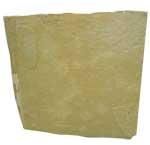
We are the leading manufacturer and exporter of an undoubted decoration strengthener i.e. Yellow Limestone. This Limestone has a classic appeal that makes it ideal for commercial and residential applications.
Types of Finishes :
Polished
Honed
Sand blasted
Rubbed
Features :
Non-water absorbent
Non-slippery
Non-porous
Tough
Applications :
Cladding
Walls
Countertops
Flooring
Staircases
We are the leading manufacturer and exporter of an undoubted decoration strengthener i.e. Yellow Limestone. This Limestone has a classic appeal that makes it ideal for commercial and residential applications.
Types of Finishes :
Polished
Honed
Sand blasted
Rubbed
Features :
Non-water absorbent
Non-slippery
Non-porous
Tough
Applications :
Cladding
Walls
Countertops
Flooring
Staircases
Limestone
Limestone is especially popular in architecture, and many landmarks around the world, especially in North America and Europe, are made primarily of the material.
The History Says
Limestone was most popular in the early 20th and late 19th centuries. Train stations, banks and other structures from that era are normally limestone.
The Present Scenario
Travertine is a banded, compact variety of limestone formed along streams, particularly where there are waterfalls and around hot or cold springs. Calcium carbonate is deposited where evaporation of the water leaves a solution that is supersaturated with chemical constituents of calcite. Tufa a porous or cellular variety of travertine, is found near waterfalls.
Limestone
Limestone is especially popular in architecture, and many landmarks around the world, especially in North America and Europe, are made primarily of the material.
The History Says
Limestone was most popular in the early 20th and late 19th centuries. Train stations, banks and other structures from that era are normally limestone.
The Present Scenario
Travertine is a banded, compact variety of limestone formed along streams, particularly where there are waterfalls and around hot or cold springs. Calcium carbonate is deposited where evaporation of the water leaves a solution that is supersaturated with chemical constituents of calcite. Tufa a porous or cellular variety of travertine, is found near waterfalls.
Features :
Free from impurities
Latest technique used for extraction
Corrosion resistant
Durable
High reliability
Very ductile
Applications :
Steel industries
Iron industries
Automobile industries
Ink manufacturing industries.
Features :
Free from impurities
Latest technique used for extraction
Corrosion resistant
Durable
High reliability
Very ductile
Applications :
Steel industries
Iron industries
Automobile industries
Ink manufacturing industries.
Manufacturing of refractory bricks from fire-clay is an interesting feature. The clay mined is stacked in the factory yard and allowed to weather for about a year. For daily production of different types of refractories, this weathered clay is taken and mixed in different percentages with grog.
The mixture is sent to the grinding mill from where it is transferred to the pug mill. In the pug mill a suitable proportion of water is added so as to give it proper plasticity. The mould is supplied to different machines for making standard bricks or shapes. Intricate shapes are made by hand. The bricks thus made are then dried in hot floor driers and after drying they are loaded in kilns for firing. The firing ranges are, of course, different for different grades of refractories. After firing, the kilns are allowed to cool; then the bricks are unloaded. By burning fireclay is converted into a stone-like material, highly resistant to acid, water and most other solutions. While manufacturing high aluminous fire-bricks bauxite is added along with grog in suitable proportions.
Manufacturing of refractory bricks from fire-clay is an interesting feature. The clay mined is stacked in the factory yard and allowed to weather for about a year. For daily production of different types of refractories, this weathered clay is taken and mixed in different percentages with grog.
The mixture is sent to the grinding mill from where it is transferred to the pug mill. In the pug mill a suitable proportion of water is added so as to give it proper plasticity. The mould is supplied to different machines for making standard bricks or shapes. Intricate shapes are made by hand. The bricks thus made are then dried in hot floor driers and after drying they are loaded in kilns for firing. The firing ranges are, of course, different for different grades of refractories. After firing, the kilns are allowed to cool; then the bricks are unloaded. By burning fireclay is converted into a stone-like material, highly resistant to acid, water and most other solutions. While manufacturing high aluminous fire-bricks bauxite is added along with grog in suitable proportions.
Steel manufacturers prefer dolomite of the following composition for dead burning:
MgCO3 - 35% Min.
SiO2 - 1% Max.
Fe2O3+Al2O3 - 1.5% Max.
CaCO3 - Remainder
Dolomite for use as flux in steel metallurgy should be hard, compact and fine-grained so that it can stand the burden of the batch in the blast furnace as well as the basic steel convertor. It should not be crystalline, i.e., it should not have a saccharoidal texture which gives fritting effect in the furnace. Impurities as low as possible are preferred. It should be free from phosphorous and sulphur. Generally, two grades of dolomite are used, one is called blast furnace (BF) grade and the other steel melting shop (SMS) grade.
The dolomite containing insolubles (Al2O3+Fe2O3+SiO2) upto 7%, is used in the blast furnace by most of the steel manufacturers in the country but the dolomite dontaining a maximum of 4 to 5% insolubles is preferred. Silica and alumina contents in dolomite are not regarded deleterious for blast furnaces. They only cause unnecessary increase in the slag. Dolomite has been found as a useful support to limestone in removing sulphur from the iron ore. It also reduces the viscosity of the slag, thus chemical reactions in the furnace. For the steel melting shop the total insolubles below 4% are preferred. The silica content should be as low as possible, in no case above 2% being tolerated.
The ferro-manganese manufacturers in India usually prefer SMS dolomite for fluxing purposes.
In general, the metallurgical industries require dolomite of the following grades for fluxing purposes.
Steel manufacturers prefer dolomite of the following composition for dead burning:
MgCO3 - 35% Min.
SiO2 - 1% Max.
Fe2O3+Al2O3 - 1.5% Max.
CaCO3 - Remainder
Dolomite for use as flux in steel metallurgy should be hard, compact and fine-grained so that it can stand the burden of the batch in the blast furnace as well as the basic steel convertor. It should not be crystalline, i.e., it should not have a saccharoidal texture which gives fritting effect in the furnace. Impurities as low as possible are preferred. It should be free from phosphorous and sulphur. Generally, two grades of dolomite are used, one is called blast furnace (BF) grade and the other steel melting shop (SMS) grade.
The dolomite containing insolubles (Al2O3+Fe2O3+SiO2) upto 7%, is used in the blast furnace by most of the steel manufacturers in the country but the dolomite dontaining a maximum of 4 to 5% insolubles is preferred. Silica and alumina contents in dolomite are not regarded deleterious for blast furnaces. They only cause unnecessary increase in the slag. Dolomite has been found as a useful support to limestone in removing sulphur from the iron ore. It also reduces the viscosity of the slag, thus chemical reactions in the furnace. For the steel melting shop the total insolubles below 4% are preferred. The silica content should be as low as possible, in no case above 2% being tolerated.
The ferro-manganese manufacturers in India usually prefer SMS dolomite for fluxing purposes.
In general, the metallurgical industries require dolomite of the following grades for fluxing purposes.
Limestone is quarried for roadbeds, building and landscape construction, and cement manufacture.
Limestone is especially popular in architecture, and many landmarks around the world, especially in North America and Europe, are made primarily of the material. Limestone is readily available and relatively easy to cut into blocks or more elaborate carving. It is also long-lasting and stands up well to exposure.
However, it is a very heavy material, making it impractical for tall buildings; it is also quite expensive. Limestone was most popular in the early 20th and late 19th centuries. Train stations, banks and other structures from that era are normally limestone. Limestone is used as a facade on some skyscrapers, but only in thin sheets rather than solid blocks. In North America, most limestone used in construction comes from Indiana.
Though the limestone used for construction is good for humid climates, it is vulnerable to acids, making acid rain a problem when it occurs in places where limestone is used extensively. The acids in the water can wear away the details of statues and other art.
Limestone is quarried for roadbeds, building and landscape construction, and cement manufacture.
Limestone is especially popular in architecture, and many landmarks around the world, especially in North America and Europe, are made primarily of the material. Limestone is readily available and relatively easy to cut into blocks or more elaborate carving. It is also long-lasting and stands up well to exposure.
However, it is a very heavy material, making it impractical for tall buildings; it is also quite expensive. Limestone was most popular in the early 20th and late 19th centuries. Train stations, banks and other structures from that era are normally limestone. Limestone is used as a facade on some skyscrapers, but only in thin sheets rather than solid blocks. In North America, most limestone used in construction comes from Indiana.
Though the limestone used for construction is good for humid climates, it is vulnerable to acids, making acid rain a problem when it occurs in places where limestone is used extensively. The acids in the water can wear away the details of statues and other art.
Bauxite Mixture of Iron and Aluminium Hydroxides/Oxides
Al, Fe, O, OH
Bauxite does not require complex processing because most of the bauxite mined is of an acceptable grade or can be improved by a relatively simple and inexpensive process of removing clay.
The History Says
The first aluminum made in the US. was mined in Bartow and Floyd counties by the present Aluminum Company of America. A local man, Mr. Gibbons, operated these mines and also deposits in Arkansas, where the town near the deposits was named for him. He became a top official of Alcoa. The American Cyanamid Company mined bauxite to make alum. Large foreign deposits caused local mining to cease.
The Present Scenario
Exporting bauxite mines generated about US$1.4m in revenue per hectare mined in 1998 and a typical mine employed about 200 people for each million tonnes/year of bauxite produced or about 11 people per hectare.
Bauxite Mixture of Iron and Aluminium Hydroxides/Oxides
Al, Fe, O, OH
Bauxite does not require complex processing because most of the bauxite mined is of an acceptable grade or can be improved by a relatively simple and inexpensive process of removing clay.
The History Says
The first aluminum made in the US. was mined in Bartow and Floyd counties by the present Aluminum Company of America. A local man, Mr. Gibbons, operated these mines and also deposits in Arkansas, where the town near the deposits was named for him. He became a top official of Alcoa. The American Cyanamid Company mined bauxite to make alum. Large foreign deposits caused local mining to cease.
The Present Scenario
Exporting bauxite mines generated about US$1.4m in revenue per hectare mined in 1998 and a typical mine employed about 200 people for each million tonnes/year of bauxite produced or about 11 people per hectare.
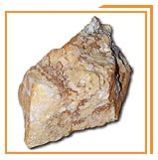
We supply and export high grade Bauxite Stone in India. The Bauxite Stone, we offer, has a mixture of hydrated aluminum oxides. The Bauxite Stone usually contains oxides of Iron and Silicon in varying quantities. Bauxite is claylike and earthy, and is obtainable in white to deep brown or red color. Our business associates source Raw Bauxite from Katni, Satna, and Rewa regions. We make available the Bauxite in secured packing at market leading prices.
Sourced From
KatniSatnaRewa
We supply and export high grade Bauxite Stone in India. The Bauxite Stone, we offer, has a mixture of hydrated aluminum oxides. The Bauxite Stone usually contains oxides of Iron and Silicon in varying quantities. Bauxite is claylike and earthy, and is obtainable in white to deep brown or red color. Our business associates source Raw Bauxite from Katni, Satna, and Rewa regions. We make available the Bauxite in secured packing at market leading prices.
Sourced From
KatniSatnaRewa
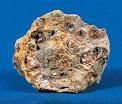
We offer Dolomite Stone. Dolomite mineral is a sedimentary carbonate rock, consisting mainly of industrial of the mineral dolomite. Dolomite stone has a number of uses. The most important use of dolomite stone is in construction. We offer dolomite stone at reasonable prices.
often used as
substitute for limestone
We offer Dolomite Stone. Dolomite mineral is a sedimentary carbonate rock, consisting mainly of industrial of the mineral dolomite. Dolomite stone has a number of uses. The most important use of dolomite stone is in construction. We offer dolomite stone at reasonable prices.
often used as
substitute for limestone
We offer superior quality Iron Ore at market leading prices. Iron ore is commonly used in blast furnace for the production of Pig Iron. Iron Ore used in furnace in the form of sinters and pellets, are also consumed in the open health furnaces. We provide Iron Ore to the clients as per their required quantity and specifications. Besides, we have a comprehensive range of Iron Ore, which we capably deliver within the predetermined time frame. We supply Iron Ore from Katni, Maihar and Vijayraghavgarh region.
Used In
Production of Pig Iron
We offer superior quality Iron Ore at market leading prices. Iron ore is commonly used in blast furnace for the production of Pig Iron. Iron Ore used in furnace in the form of sinters and pellets, are also consumed in the open health furnaces. We provide Iron Ore to the clients as per their required quantity and specifications. Besides, we have a comprehensive range of Iron Ore, which we capably deliver within the predetermined time frame. We supply Iron Ore from Katni, Maihar and Vijayraghavgarh region.
Used In
Production of Pig Iron
Secondary Business TypeManufacturer / Exporters / Wholesale Suppliers
Year of Establishment2011
No. of Employees6 - 20
Annual TurnoverBelow Rs. 0.5 Crore Approx.
Ownership TypeIndividual (Sole proprietorship)
Opening Hours
SUN : Closed
MON : 9:30 AM - 6:30 PM
TUE : 9:30 AM - 6:30 PM
WED : 9:30 AM - 6:30 PM
THU : 9:30 AM - 6:30 PM
FRI : 9:30 AM - 6:30 PM
SAT : 9:30 AM - 6:30 PM
Incorporated in the year 2011, gk minerals is located at katni in madhya pradesh. Under the ardent management and vigilant leadership of mr. Irfan niyazi, the ceo of our company, we have to scaled good height and success in all over business , we are considered to be one of the key pure minerals suppliers, traders and exporters from india






 Reviews & Ratings
 Write a Review


 Post Free Ad