According to snack food folklore, the potato chip was invented in 1853 by a chef named George Crum at a restaurant called Moon's Lake House in Saratoga Spring, New York. Angered when a customer, some sources say it was none other than Cornelius Vanderbilt, returned his french fried potatoes to the kitchen for being too thick, Crum sarcastically shaved them paper thin and sent the plate back out. The customer, whoever he was, and others around him, loved the thin potatoes. Crum soon opened his own restaurant across the lake and his policy of not taking reservations did not keep the customers from standing in line to taste his potato chips.
The popularity of potato chips quickly spread across the country, particularly in speakeasies, spawning a flurry of home-based companies. Van de Camp's Saratoga Chips opened in Los Angeles on January 6, 1915. In 1921, Earl Wise, a grocer, was stuck with an overstock of potatoes. He peeled them, sliced them with a cabbage cutter and then fried them according to his mother's recipe and packaged them in brown paper bags. Leonard Japp and George Gavora started Jays Foods in the early 1920s, selling potato chips, nuts, and pretzels to speakeasies from the back of a dilapidated truck.
The chips were commonly prepared in someone's kitchen and then delivered immediately to stores and restaurants, or sold on the street. Shelf-life was virtually nil. Two innovations paved the way for mass production. In 1925, the automatic potato-peeling machine was invented. A year later, several employees at Laura Scudder's potato chip company ironed sheets of waxed paper into bags. The chips were hand-packed into the bags, which were then ironed shut.
According to snack food folklore, the potato chip was invented in 1853 by a chef named George Crum at a restaurant called Moon's Lake House in Saratoga Spring, New York. Angered when a customer, some sources say it was none other than Cornelius Vanderbilt, returned his french fried potatoes to the kitchen for being too thick, Crum sarcastically shaved them paper thin and sent the plate back out. The customer, whoever he was, and others around him, loved the thin potatoes. Crum soon opened his own restaurant across the lake and his policy of not taking reservations did not keep the customers from standing in line to taste his potato chips.
The popularity of potato chips quickly spread across the country, particularly in speakeasies, spawning a flurry of home-based companies. Van de Camp's Saratoga Chips opened in Los Angeles on January 6, 1915. In 1921, Earl Wise, a grocer, was stuck with an overstock of potatoes. He peeled them, sliced them with a cabbage cutter and then fried them according to his mother's recipe and packaged them in brown paper bags. Leonard Japp and George Gavora started Jays Foods in the early 1920s, selling potato chips, nuts, and pretzels to speakeasies from the back of a dilapidated truck.
The chips were commonly prepared in someone's kitchen and then delivered immediately to stores and restaurants, or sold on the street. Shelf-life was virtually nil. Two innovations paved the way for mass production. In 1925, the automatic potato-peeling machine was invented. A year later, several employees at Laura Scudder's potato chip company ironed sheets of waxed paper into bags. The chips were hand-packed into the bags, which were then ironed shut.
According to snack food folklore, the potato chip was invented in 1853 by a chef named George Crum at a restaurant called Moon's Lake House in Saratoga Spring, New York. Angered when a customer, some sources say it was none other than Cornelius Vanderbilt, returned his french fried potatoes to the kitchen for being too thick, Crum sarcastically shaved them paper thin and sent the plate back out. The customer, whoever he was, and others around him, loved the thin potatoes. Crum soon opened his own restaurant across the lake and his policy of not taking reservations did not keep the customers from standing in line to taste his potato chips.
The popularity of potato chips quickly spread across the country, particularly in speakeasies, spawning a flurry of home-based companies. Van de Camp's Saratoga Chips opened in Los Angeles on January 6, 1915. In 1921, Earl Wise, a grocer, was stuck with an overstock of potatoes. He peeled them, sliced them with a cabbage cutter and then fried them according to his mother's recipe and packaged them in brown paper bags. Leonard Japp and George Gavora started Jays Foods in the early 1920s, selling potato chips, nuts, and pretzels to speakeasies from the back of a dilapidated truck.
The chips were commonly prepared in someone's kitchen and then delivered immediately to stores and restaurants, or sold on the street. Shelf-life was virtually nil. Two innovations paved the way for mass production. In 1925, the automatic potato-peeling machine was invented. A year later, several employees at Laura Scudder's potato chip company ironed sheets of waxed paper into bags. The chips were hand-packed into the bags, which were then ironed shut.
According to snack food folklore, the potato chip was invented in 1853 by a chef named George Crum at a restaurant called Moon's Lake House in Saratoga Spring, New York. Angered when a customer, some sources say it was none other than Cornelius Vanderbilt, returned his french fried potatoes to the kitchen for being too thick, Crum sarcastically shaved them paper thin and sent the plate back out. The customer, whoever he was, and others around him, loved the thin potatoes. Crum soon opened his own restaurant across the lake and his policy of not taking reservations did not keep the customers from standing in line to taste his potato chips.
The popularity of potato chips quickly spread across the country, particularly in speakeasies, spawning a flurry of home-based companies. Van de Camp's Saratoga Chips opened in Los Angeles on January 6, 1915. In 1921, Earl Wise, a grocer, was stuck with an overstock of potatoes. He peeled them, sliced them with a cabbage cutter and then fried them according to his mother's recipe and packaged them in brown paper bags. Leonard Japp and George Gavora started Jays Foods in the early 1920s, selling potato chips, nuts, and pretzels to speakeasies from the back of a dilapidated truck.
The chips were commonly prepared in someone's kitchen and then delivered immediately to stores and restaurants, or sold on the street. Shelf-life was virtually nil. Two innovations paved the way for mass production. In 1925, the automatic potato-peeling machine was invented. A year later, several employees at Laura Scudder's potato chip company ironed sheets of waxed paper into bags. The chips were hand-packed into the bags, which were then ironed shut.
BULK PACKAGING
Bulk tea is exported in different form of packaging, out of which the most popular ones are:
Aluminum Lines Craft Paper Sacks
Aluminum foil and tissue paper lines plywood sheets
Jute bag with poly lines inside
HMHDPE Woven sacks
Corrugated Fiber box with poly jacket insid
CONSUMER PACKAGING
Consumer packaging can be classified as:
Disposable Packs
Tea bags
Gift Packs
AMBO is recognized as one of the most dependable and trusted suppliers of Tea from this part of the world. We can say, in all modesty that there are very few tea companies in India that can compete with us in terms of quality. And this is one of the secrets of our success story.e volume of Tea in Bulk as well as consumer packs in private lables to various countries.
BULK PACKAGING
Bulk tea is exported in different form of packaging, out of which the most popular ones are:
Aluminum Lines Craft Paper Sacks
Aluminum foil and tissue paper lines plywood sheets
Jute bag with poly lines inside
HMHDPE Woven sacks
Corrugated Fiber box with poly jacket insid
CONSUMER PACKAGING
Consumer packaging can be classified as:
Disposable Packs
Tea bags
Gift Packs
AMBO is recognized as one of the most dependable and trusted suppliers of Tea from this part of the world. We can say, in all modesty that there are very few tea companies in India that can compete with us in terms of quality. And this is one of the secrets of our success story.e volume of Tea in Bulk as well as consumer packs in private lables to various countries.
According to snack food folklore, the potato chip was invented in 1853 by a chef named George Crum at a restaurant called Moon's Lake House in Saratoga Spring, New York. Angered when a customer, some sources say it was none other than Cornelius Vanderbilt, returned his french fried potatoes to the kitchen for being too thick, Crum sarcastically shaved them paper thin and sent the plate back out. The customer, whoever he was, and others around him, loved the thin potatoes. Crum soon opened his own restaurant across the lake and his policy of not taking reservations did not keep the customers from standing in line to taste his potato chips.
The popularity of potato chips quickly spread across the country, particularly in speakeasies, spawning a flurry of home-based companies. Van de Camp's Saratoga Chips opened in Los Angeles on January 6, 1915. In 1921, Earl Wise, a grocer, was stuck with an overstock of potatoes. He peeled them, sliced them with a cabbage cutter and then fried them according to his mother's recipe and packaged them in brown paper bags. Leonard Japp and George Gavora started Jays Foods in the early 1920s, selling potato chips, nuts, and pretzels to speakeasies from the back of a dilapidated truck.
The chips were commonly prepared in someone's kitchen and then delivered immediately to stores and restaurants, or sold on the street. Shelf-life was virtually nil. Two innovations paved the way for mass production. In 1925, the automatic potato-peeling machine was invented. A year later, several employees at Laura Scudder's potato chip company ironed sheets of waxed paper into bags. The chips were hand-packed into the bags, which were then ironed shut.
According to snack food folklore, the potato chip was invented in 1853 by a chef named George Crum at a restaurant called Moon's Lake House in Saratoga Spring, New York. Angered when a customer, some sources say it was none other than Cornelius Vanderbilt, returned his french fried potatoes to the kitchen for being too thick, Crum sarcastically shaved them paper thin and sent the plate back out. The customer, whoever he was, and others around him, loved the thin potatoes. Crum soon opened his own restaurant across the lake and his policy of not taking reservations did not keep the customers from standing in line to taste his potato chips.
The popularity of potato chips quickly spread across the country, particularly in speakeasies, spawning a flurry of home-based companies. Van de Camp's Saratoga Chips opened in Los Angeles on January 6, 1915. In 1921, Earl Wise, a grocer, was stuck with an overstock of potatoes. He peeled them, sliced them with a cabbage cutter and then fried them according to his mother's recipe and packaged them in brown paper bags. Leonard Japp and George Gavora started Jays Foods in the early 1920s, selling potato chips, nuts, and pretzels to speakeasies from the back of a dilapidated truck.
The chips were commonly prepared in someone's kitchen and then delivered immediately to stores and restaurants, or sold on the street. Shelf-life was virtually nil. Two innovations paved the way for mass production. In 1925, the automatic potato-peeling machine was invented. A year later, several employees at Laura Scudder's potato chip company ironed sheets of waxed paper into bags. The chips were hand-packed into the bags, which were then ironed shut.
According to snack food folklore, the potato chip was invented in 1853 by a chef named George Crum at a restaurant called Moon's Lake House in Saratoga Spring, New York. Angered when a customer, some sources say it was none other than Cornelius Vanderbilt, returned his french fried potatoes to the kitchen for being too thick, Crum sarcastically shaved them paper thin and sent the plate back out. The customer, whoever he was, and others around him, loved the thin potatoes. Crum soon opened his own restaurant across the lake and his policy of not taking reservations did not keep the customers from standing in line to taste his potato chips.
The popularity of potato chips quickly spread across the country, particularly in speakeasies, spawning a flurry of home-based companies. Van de Camp's Saratoga Chips opened in Los Angeles on January 6, 1915. In 1921, Earl Wise, a grocer, was stuck with an overstock of potatoes. He peeled them, sliced them with a cabbage cutter and then fried them according to his mother's recipe and packaged them in brown paper bags. Leonard Japp and George Gavora started Jays Foods in the early 1920s, selling potato chips, nuts, and pretzels to speakeasies from the back of a dilapidated truck.
The chips were commonly prepared in someone's kitchen and then delivered immediately to stores and restaurants, or sold on the street. Shelf-life was virtually nil. Two innovations paved the way for mass production. In 1925, the automatic potato-peeling machine was invented. A year later, several employees at Laura Scudder's potato chip company ironed sheets of waxed paper into bags. The chips were hand-packed into the bags, which were then ironed shut.
According to snack food folklore, the potato chip was invented in 1853 by a chef named George Crum at a restaurant called Moon's Lake House in Saratoga Spring, New York. Angered when a customer, some sources say it was none other than Cornelius Vanderbilt, returned his french fried potatoes to the kitchen for being too thick, Crum sarcastically shaved them paper thin and sent the plate back out. The customer, whoever he was, and others around him, loved the thin potatoes. Crum soon opened his own restaurant across the lake and his policy of not taking reservations did not keep the customers from standing in line to taste his potato chips.
The popularity of potato chips quickly spread across the country, particularly in speakeasies, spawning a flurry of home-based companies. Van de Camp's Saratoga Chips opened in Los Angeles on January 6, 1915. In 1921, Earl Wise, a grocer, was stuck with an overstock of potatoes. He peeled them, sliced them with a cabbage cutter and then fried them according to his mother's recipe and packaged them in brown paper bags. Leonard Japp and George Gavora started Jays Foods in the early 1920s, selling potato chips, nuts, and pretzels to speakeasies from the back of a dilapidated truck.
The chips were commonly prepared in someone's kitchen and then delivered immediately to stores and restaurants, or sold on the street. Shelf-life was virtually nil. Two innovations paved the way for mass production. In 1925, the automatic potato-peeling machine was invented. A year later, several employees at Laura Scudder's potato chip company ironed sheets of waxed paper into bags. The chips were hand-packed into the bags, which were then ironed shut.
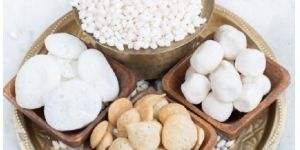
Puja rituals hold an extremely important place in Indian society. We take pride in making this ritual easier to conduct for the modern Indian soul. The Exclusive Puja Prasad Box consists of traditional puja prasad treats such as Premium Khoi, Premium Chini Batasha, Premium Gur Batasha and Premium Kadma. Celebrate the tradition at heart with ease!
Puja rituals hold an extremely important place in Indian society. We take pride in making this ritual easier to conduct for the modern Indian soul. The Exclusive Puja Prasad Box consists of traditional puja prasad treats such as Premium Khoi, Premium Chini Batasha, Premium Gur Batasha and Premium Kadma. Celebrate the tradition at heart with ease!
Certified organic tea is free of synthetic fertilizers, herbicides, and pesticides. Organic tea farming relies heavily on the natural breakdown of organic matter, using techniques like green manure and composting, to replace nutrients taken from the soil by previous crops. Organic tea agriculture combines tradition, innovation and science to benefit the shared environment and promote fair relationships and a good quality of life for all involved.
Non Organic farming, or use of Synthetic pesticides are known to pose significant, acknowledged health risks to people—including birth defects, damage to the nervous system; disruption of hormones and endocrine systems; respiratory disorders; skin and eye irritations; and various types of cancers. Herbicides have also been associated with certain cancers and Parkinson’s Disease.
Every year, new research demonstrates the toxicity of synthetic pesticides to human health and the environment, often at doses previously declared "safe" by the pesticide industry and the government. Many pesticides that were once allowed by the EPA have eventually been banned—yet in some cases the damage remains. DDT still exists in the environment and in the cells of Americans, 30 years after it was banned in the United States.
In addition, synthetic chemicals are designed to stimulate production. While these methods may increase the yield of a crop, there is a cost of quality. An organic tea grower uses more natural processes to create a sustainable yield. These practices are reflected in the flavor of the tea, and a better nutritional content.
Certified organic tea is free of synthetic fertilizers, herbicides, and pesticides. Organic tea farming relies heavily on the natural breakdown of organic matter, using techniques like green manure and composting, to replace nutrients taken from the soil by previous crops. Organic tea agriculture combines tradition, innovation and science to benefit the shared environment and promote fair relationships and a good quality of life for all involved.
Non Organic farming, or use of Synthetic pesticides are known to pose significant, acknowledged health risks to people—including birth defects, damage to the nervous system; disruption of hormones and endocrine systems; respiratory disorders; skin and eye irritations; and various types of cancers. Herbicides have also been associated with certain cancers and Parkinson’s Disease.
Every year, new research demonstrates the toxicity of synthetic pesticides to human health and the environment, often at doses previously declared "safe" by the pesticide industry and the government. Many pesticides that were once allowed by the EPA have eventually been banned—yet in some cases the damage remains. DDT still exists in the environment and in the cells of Americans, 30 years after it was banned in the United States.
In addition, synthetic chemicals are designed to stimulate production. While these methods may increase the yield of a crop, there is a cost of quality. An organic tea grower uses more natural processes to create a sustainable yield. These practices are reflected in the flavor of the tea, and a better nutritional content.
According to snack food folklore, the potato chip was invented in 1853 by a chef named George Crum at a restaurant called Moon's Lake House in Saratoga Spring, New York. Angered when a customer, some sources say it was none other than Cornelius Vanderbilt, returned his french fried potatoes to the kitchen for being too thick, Crum sarcastically shaved them paper thin and sent the plate back out. The customer, whoever he was, and others around him, loved the thin potatoes. Crum soon opened his own restaurant across the lake and his policy of not taking reservations did not keep the customers from standing in line to taste his potato chips.
The popularity of potato chips quickly spread across the country, particularly in speakeasies, spawning a flurry of home-based companies. Van de Camp's Saratoga Chips opened in Los Angeles on January 6, 1915. In 1921, Earl Wise, a grocer, was stuck with an overstock of potatoes. He peeled them, sliced them with a cabbage cutter and then fried them according to his mother's recipe and packaged them in brown paper bags. Leonard Japp and George Gavora started Jays Foods in the early 1920s, selling potato chips, nuts, and pretzels to speakeasies from the back of a dilapidated truck.
The chips were commonly prepared in someone's kitchen and then delivered immediately to stores and restaurants, or sold on the street. Shelf-life was virtually nil. Two innovations paved the way for mass production. In 1925, the automatic potato-peeling machine was invented. A year later, several employees at Laura Scudder's potato chip company ironed sheets of waxed paper into bags. The chips were hand-packed into the bags, which were then ironed shut.
According to snack food folklore, the potato chip was invented in 1853 by a chef named George Crum at a restaurant called Moon's Lake House in Saratoga Spring, New York. Angered when a customer, some sources say it was none other than Cornelius Vanderbilt, returned his french fried potatoes to the kitchen for being too thick, Crum sarcastically shaved them paper thin and sent the plate back out. The customer, whoever he was, and others around him, loved the thin potatoes. Crum soon opened his own restaurant across the lake and his policy of not taking reservations did not keep the customers from standing in line to taste his potato chips.
The popularity of potato chips quickly spread across the country, particularly in speakeasies, spawning a flurry of home-based companies. Van de Camp's Saratoga Chips opened in Los Angeles on January 6, 1915. In 1921, Earl Wise, a grocer, was stuck with an overstock of potatoes. He peeled them, sliced them with a cabbage cutter and then fried them according to his mother's recipe and packaged them in brown paper bags. Leonard Japp and George Gavora started Jays Foods in the early 1920s, selling potato chips, nuts, and pretzels to speakeasies from the back of a dilapidated truck.
The chips were commonly prepared in someone's kitchen and then delivered immediately to stores and restaurants, or sold on the street. Shelf-life was virtually nil. Two innovations paved the way for mass production. In 1925, the automatic potato-peeling machine was invented. A year later, several employees at Laura Scudder's potato chip company ironed sheets of waxed paper into bags. The chips were hand-packed into the bags, which were then ironed shut.
Secondary Business TypeManufacturer / Exporters / Wholesale Suppliers
Year of Establishment1992
Ownership TypeCorporation/Limited Liability Company
Opening Hours
SUN : Closed
MON : 9:30 AM - 6:30 PM
TUE : 9:30 AM - 6:30 PM
WED : 9:30 AM - 6:30 PM
THU : 9:30 AM - 6:30 PM
FRI : 9:30 AM - 6:30 PM
SAT : 9:30 AM - 6:30 PM
Digital marketing applies technologies or platforms such as websites, e-mail, apps (classic and mobile) and social networks. Digital marketing is becoming more popular with marketers as it allows them to track their Return on investment more accurately compared to other traditional marketing channels. Our Digital Marketing team delivers outstanding results online, and our seasoned experts help you separate the signal from the noise in the rapidly evolving world of online marketing, from “traditional” banner advertising to the current frontier of social media to… whatever is next.. SEO - SEARCH ENGINE OPTIMIZATION SEO improves the ranking of your website in leading search engines. It brings your website in prominent pages during a search through keywords. It ensures better visibility thus making your website more easy to find & relevant for your target audience. With the help of our SEO Team we will optimize your website, which will drive heavy traffic & highest visibility to your website. This will help in converting visitors coming to your website into customers & generates more leads from your business. We assure better visibility of your website with our SEO services, whether it’s Google, Bing, Yahoo or any other search engines. SMM - SOCIAL MEDIA MARKETING Many organizations use a combination of both traditional and internet marketing channels; however, internet marketing is becoming more popular with marketers as it allows them to track their Return on investment more accurately compared to other traditional marketing channels. It is a marketing tool that makes use of electronic devices such as personal computers, smart phones, cell phones, tablets and game consoles to engage with stakeholders. Digital marketing applies technologies or platforms such as websites, e-mail, apps (classic and mobile) and social networks.











 Reviews & Ratings
 Write a Review


 Post Free Ad