Stainless Steel Pipes & Tubes
Get Latest Price
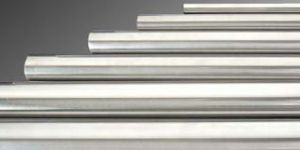
We are a prominent Supplier of Stainless Steel Pipes & Tubes, which find application in various industries such as pharmaceuticals, food industry, chemical industry and many others. Stainless Steel Pipes & Tubes offered by us are available in varied lengths and diameters to fulfill the client̢۪s requirements. Our Stainless Steel Pipes & Tubes are corrosion resistant and have longer life.
Range
SeamlessWeldedERWEFW
Salient Features
High performanceCorrosion resistantAnti-abrasiveDurable
Stainless Steel Pipe and Tubing
Stainless steels are iron-based alloys usually containing at least 11.5% chromium. Other elements, nickeI being the most Important, may be added in combination with chromium to obtain special properties.
Stainless steels are highly resistant to corrosive attack and to oxidation at high temperatures. In general, resistance to corrosion and oxidation increases progressively, though not proportionately, with the increase in chromium content.
Stainless Steel Pipe and Tubing are Used for a Variety of Reasons
to resist corrosion and oxidationto resist high temperaturesfor cleanliness and low maintenance coststo maintain the purity of materials which come In contact with stainless
The inherent characteristics of stainless steel permit the design of thin wall piping systems without fear of early failure due to corrosion. The use of fusion welding to join such piping eliminates the need for threading.
Type 304 stainless is the most widely used analysis for general corrosive resistant tubing and pipe applications. It is used in chemical plants, refineries, paper mills, and food processing industries. Type 304 has a maximum carbon content of .08%. It is not recommended for use in the temperature range between 800°F and 1650°F due to carbide precipitation at the grain boundaries which can result in inter-granular corrosion and early failure under certain conditions.
Type 304L is the same as 304 except that a .03% maximum carbon content is maintained which precludes carbon precipitation and permits the use of this analysis in welded assemblies under more severe corrosive conditions. Type 318 is much more resistant to pitting than other chromium nickel alloys due to the addition of 2% to 3% molybdenum. It is particularly valuable wherever acids, brines, sulphur water, seawater or halogen salts are encountered. Type 316 is widely used in the sulphite paper industry and for manufacturing chemical plant apparatus, photographic equipment, and plastics.
Type 316L, like 304L, is held to a maximum carbon content of .03%. This permits its use in welded assemblies without the need of final heat treatment. It is used extensively for pipe assemblies with welded fitting.
Other Fields Where Stainless Steel Pipe and Tubing are Used Are :
AviationElectronicsAutomotiveMarineAir conditioning andheatingMedicalArchitecturalTextiles
Specifications
ASTM A-312/ASME SA-312 Welded Stainless PipeASTM A-358/ASME SA-358
Scope
Pipe intended for high temperature and general corrosive service as in A-312, plus electric fusion welded pipe as in A-358 and intended for high temperature and general corrosive service or both.
General Requirements
Conforming to the above specifications plus applicable parts us ASTM A-530.
Range
ASTM A-312 pipe is more commonly found from 1/8" IPS to and including 24� IPS in standard schedules 5, 10, 20, and 40. On special applications, sizes can be produced to 60� IPS through schedule 80 walls by certain mills. ASTM A-358 is usually produced in sizes 8� IPS and larger and where filler metal is added to the weld. This specification covers five classes of pipe and is usually determined by the end application and needs of the pipe.
ASTM A-312 pipe is manufactured by two different processes. Pipe through 6� IPS is manufactured by the continuous welding process and is very similar to welded tubing.
Coils of flat roll strips are fed into sizing rolls and welded. Material is then annealed (usually in an open air furnace), straightened, cut, pickled, tested, and inspected.
In full finished pipe, material is cold worked after welding. This can be done by rolling, forging, or drawing the weld bead; but primarily the weld is rolled.
Pipe 8� IPS and larger is manufactured by the batch method or process. Unlike the continuous welding method, material made by this batch method is made in single lengths. Plates, cut to length and width, are formed from flat into tubular shape by a press and welded. Material is then annealed, sized, and straightened, ends trimmed or cut to specific smaller lengths, pickled, and inspected.
“AS-Welded� Grade
“AS-Welded� pipe and tubing is straight-seam welded using ASME qualified automatic gas tungsten-arc procedure and can be supplied in a wide range of diameters and wall thicknesses from any of the weld able corrosion resistant alloys. Normally furnished with square cut ends, pipe with beveled, belied, or roil grooved ends can be provided. Spot radiography or 100% radiography of welded seams can also be performed. Company pickles and passivates its pipe and tubing to maintain corrosion resistance and to prevent surface discoloration from free iron oxidation. “AS-welded� pipe and tubing is commonly used in pulp and paper mills, food processing plants, and other industries where corrosion resistance is essential
ASTM A 213 (ASME SA-213 is Identical)
This specification includes minimum wall thickness seamless austenitic stainless steel tubing intended for high temperature usage such as boilers, super heaters and heat exchanger tubes, Production is generally limited to tubing ‘A� inside diameter to 5� outside diameter and .015� to ,500� inclusive in wall thickness. All material is to be furnished in the heat treated condition.
ASTM A 249 (ASME SA-249 is Generally Identical)
This specification covers welded austenitic stainless steel tubing intended for high temperature usage such as boilers, super heaters, heat exchangers, or condenser tubes. Production is generally limited to tubing 1/8" inside diameter through 5� outside diameter and .01 5� to .320� inclusive in wall thickness. All material is to be furnished in the heat treated condition.
The Principal Manufacturing Procedures Specified Under a 249 Are :
Automatic welding process with no addition of filler metal.Hydrostatic or non-destructive electric test of each tube.Tensile, flattening, flange, reverse bend and hardness tests required each lot.
ASTMA 269
This specification covers seamless and welded austenitic stainless steel tubing intended for low or high temperature and general corrosive service. Production is generally limited to tubing 1/4� inside diameter and larger and .020� in nominal wall thickness and heaver. All material is to be furnished in the heat treated condition. Mechanical requirements are the same as listed under A 249.
ASTM A 358 (ASME SA -358 is Generally Identical With Some Additional Requirements)
This specification covers stainless steel pipe intended for high temperature and general corrosive service. Production is generally limited to diameters and schedule wall thicknesses of 8� and larger as shown in ANSI B36.10 and ANSI B36.19. Pipe is normally welded with filler metal (except the root pass on Class 4) and can be specified as :
Single or double welded100% spot or no radiographyHeat treated after welding
The Principal Manufacturing Procedures Specified Under a 358 Are :
Hydrostatic testing of each length (unless waivedTransverse guided-bend tests and transverse tension tests per lot.
ASTM A 376 (ASME SA-376) is Generally Identical
This specification covers seamless austenitic stainless steel pipe intended for high temperature service. Among the grades covered are five H grades and two nitrogen grades that are specifically intended for high temperature service. All material is furnished in the heat treated condition unless waived and specifically marked ‘HT-O�. Hydrostatic tests are required for each length of pipe. Tension and flattening tests are required per lot.
...more






 Reviews & Ratings
 Write a Review


 Post Free Ad