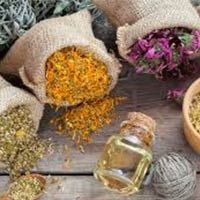
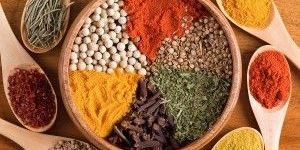
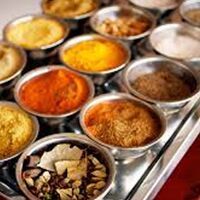
A spice is a seed, fruit, root, bark, berry, bud or vegetable substance primarily used for flavoring, coloring or preserving food. Spices are distinguished from herbs, which are parts of leafy green plants used for flavoring or as a garnish. Many spices have antimicrobial properties. This may explain why spices are more commonly used in warmer climates, which have more infectious disease, and why the use of spices is prominent in meat, which is particularly susceptible to spoiling. A spice may have other uses, including medicinal, religious ritual, cosmetics or perfume production, or as a vegetable.
A spice is a seed, fruit, root, bark, berry, bud or vegetable substance primarily used for flavoring, coloring or preserving food. Spices are distinguished from herbs, which are parts of leafy green plants used for flavoring or as a garnish. Many spices have antimicrobial properties. This may explain why spices are more commonly used in warmer climates, which have more infectious disease, and why the use of spices is prominent in meat, which is particularly susceptible to spoiling. A spice may have other uses, including medicinal, religious ritual, cosmetics or perfume production, or as a vegetable.
seed oil is a vegetable oil that is obtained from the seed (endosperm) of some plant, rather than the fruit (pericarp). Most vegetable oils are seed oils. Some common examples are sunflower oil, canola oil, and sesame oil. Some important vegetable oils are not seed oils. Some examples are olive oil and peanut oil.
seed oil is a vegetable oil that is obtained from the seed (endosperm) of some plant, rather than the fruit (pericarp). Most vegetable oils are seed oils. Some common examples are sunflower oil, canola oil, and sesame oil. Some important vegetable oils are not seed oils. Some examples are olive oil and peanut oil.
A snack is a portion of food often smaller than a regular meal, generally eaten between meals.[1] Snacks come in a variety of forms including packaged snack foods and other processed foods,.
A snack is a portion of food often smaller than a regular meal, generally eaten between meals.[1] Snacks come in a variety of forms including packaged snack foods and other processed foods,.
Grains are small, hard, dry seeds, with or without attached hulls or fruit layers, harvested for human or animal consumption. Agronomists also call the plants producing such seeds "grain crops". The two main types of commercial grain crops are cereals such as wheat and rye, and legumes such as beans and soybeans. Ubiquity of grain as a food source encouraged use of the term to describe other particles with volume or mass similar to an individual seed.
Grains are small, hard, dry seeds, with or without attached hulls or fruit layers, harvested for human or animal consumption. Agronomists also call the plants producing such seeds "grain crops". The two main types of commercial grain crops are cereals such as wheat and rye, and legumes such as beans and soybeans. Ubiquity of grain as a food source encouraged use of the term to describe other particles with volume or mass similar to an individual seed.
Many of spices come from faraway places like Africa, India, South East, Mexico and the Caribbean that is exotic spices. The spice trade that brought these once rare spices back to Europe created huge fortunes for many trading companies over the years. Indeed, the spice trade can be traced back over 5,000 years and was instrumental in establishing commerce and trade around the world.
Many of spices come from faraway places like Africa, India, South East, Mexico and the Caribbean that is exotic spices. The spice trade that brought these once rare spices back to Europe created huge fortunes for many trading companies over the years. Indeed, the spice trade can be traced back over 5,000 years and was instrumental in establishing commerce and trade around the world.
Spice mixes are blended spices or herbs. When a certain combination of herbs or spices is called for in many different recipes (or in one recipe that is used frequently), it is convenient to blend these ingredients beforehand. Blends such as chili powder, curry powder, herbes de Provence, garlic salt, and other seasoned salts are traditionally sold pre-made by grocers, and sometimes baking blends such as pumpkin pie spice are also available. These spice mixes are also easily made by the home cook for later use
Spice mixes are blended spices or herbs. When a certain combination of herbs or spices is called for in many different recipes (or in one recipe that is used frequently), it is convenient to blend these ingredients beforehand. Blends such as chili powder, curry powder, herbes de Provence, garlic salt, and other seasoned salts are traditionally sold pre-made by grocers, and sometimes baking blends such as pumpkin pie spice are also available. These spice mixes are also easily made by the home cook for later use
Rice is the seed of the grass species Oryza sativa (Asian rice) or Oryza glaberrima (African rice). As a cereal grain, it is the most widely consumed staple food for a large part of the world's human population, especially in Asia. It is the agricultural commodity with the third-highest worldwide production, after sugarcane and maize, according to 2012 FAOSTAT data.
Rice is the seed of the grass species Oryza sativa (Asian rice) or Oryza glaberrima (African rice). As a cereal grain, it is the most widely consumed staple food for a large part of the world's human population, especially in Asia. It is the agricultural commodity with the third-highest worldwide production, after sugarcane and maize, according to 2012 FAOSTAT data.
Secondary Business TypeManufacturer / Exporters / Wholesale Suppliers
Opening Hours
SUN : Closed
MON : 9:30 AM - 6:30 PM
TUE : 9:30 AM - 6:30 PM
WED : 9:30 AM - 6:30 PM
THU : 9:30 AM - 6:30 PM
FRI : 9:30 AM - 6:30 PM
SAT : 9:30 AM - 6:30 PM
Anil & Co. was founded in 1958 by Savji Ratanshi Shah, in no time had Anil and company become the leading expoter in bulk packaging of Indian spices around the world. In 1974, son Arvind Shah along with his brothers Anil Shah , Ramesh Shah and Satish Shah took over the reins of Anil & Co and ushered in sweeping changes. They introduced stringent quality norms at every step of the spice process and In addition to this an in-house ultra modern laboratory was set up to test all products scientifically. This was a deciding factor that penetrated new markets and won the world over to Indian spices.Sami Spices and Herbs PVT LTD As time went by, Anil & Company introduced "Sami Spices and Herbs Pvt Ltd" as a group company and diversified itself into various fields, such as rice, cereals, blended spices, Indian snacks and Foodstuffs. They started catering in consumer packaging and have established firm hold on the food industry. Since then the four brothers have become the four pillars of the company and riding on their strength the company has been passing milestones in the food industry ever since. Learning from their fathers and uncles, the third generation of the company is now well placed in the business and have successfully started to explore opening opportunities and ventures. With the combination of an age old experience of almost 50 years and new age technologies Anil & Company is confident that it can fulfill the needs of any customer in their field.




 Reviews & Ratings
 Write a Review


 Post Free Ad