Municipal Solid Waste (MSW) is trash which is generated from residential dwellings, offices, hotels, canteens etc. It mainly consists of:Dry leaves, grass, twigs, tree branches etc.The waste mix is varied in nature as it has different physical and chemical characteristics. To incinerate MSW, BLACKHOLE incinerators have following salient features:Gas residence time of minimum 1 second in the Secondary Combustion Chamber.
Municipal Solid Waste (MSW) is trash which is generated from residential dwellings, offices, hotels, canteens etc. It mainly consists of:Dry leaves, grass, twigs, tree branches etc.The waste mix is varied in nature as it has different physical and chemical characteristics. To incinerate MSW, BLACKHOLE incinerators have following salient features:Gas residence time of minimum 1 second in the Secondary Combustion Chamber.
A Packed Bed Scrubber is a vertical cylindrical column where the water is sprayed from the top and gas released from the bottom in the opposite direction. The tower is filled with raschig rings allow for more contact area and interaction time between the two due to the zig zag flow of water and gases in the opposite direction.
A Packed Bed Scrubber is a vertical cylindrical column where the water is sprayed from the top and gas released from the bottom in the opposite direction. The tower is filled with raschig rings allow for more contact area and interaction time between the two due to the zig zag flow of water and gases in the opposite direction.
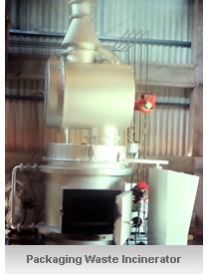
Municipal Solid Waste (MSW) is trash which is generated from residential dwellings, offices, hotels, canteens etc. It mainly consists of:• Dry leaves, grass, twigs, tree branches etc.• Waste paper and cardboard.• Packaging material like polythene, wood, thermocol, jute etc.• Kitchen waste. • PVC and plastic waste.The waste mix is varied in nature as it has different physical and chemical characteristics. To incinerate MSW, BLACKHOLE incinerators have following salient features:• Combustion efficiency of 99%.• Gas residence time of minimum 1 second in the Secondary Combustion Chamber.• Temperatures of 750 to 850°C and 1000 to 1100°C in Primary & Secondary Combustion Chambers respectively.
Municipal Solid Waste (MSW) is trash which is generated from residential dwellings, offices, hotels, canteens etc. It mainly consists of:• Dry leaves, grass, twigs, tree branches etc.• Waste paper and cardboard.• Packaging material like polythene, wood, thermocol, jute etc.• Kitchen waste. • PVC and plastic waste.The waste mix is varied in nature as it has different physical and chemical characteristics. To incinerate MSW, BLACKHOLE incinerators have following salient features:• Combustion efficiency of 99%.• Gas residence time of minimum 1 second in the Secondary Combustion Chamber.• Temperatures of 750 to 850°C and 1000 to 1100°C in Primary & Secondary Combustion Chambers respectively.
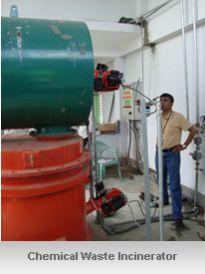
Industrial waste is generated in three forms – Solid, Liquid & Semi Solid. The wastes are mostly hazardous in nature as they could be highly inflammable, reactive or toxic. BLACKHOLE incinerators not only reduce the volume of the waste but also eliminate the hazardous component in the waste. Minimum temperatures of 800 deg C and 1100 deg C in Primary & Secondary Combustion Chambers respectively.
Industrial waste is generated in three forms – Solid, Liquid & Semi Solid. The wastes are mostly hazardous in nature as they could be highly inflammable, reactive or toxic. BLACKHOLE incinerators not only reduce the volume of the waste but also eliminate the hazardous component in the waste. Minimum temperatures of 800 deg C and 1100 deg C in Primary & Secondary Combustion Chambers respectively.
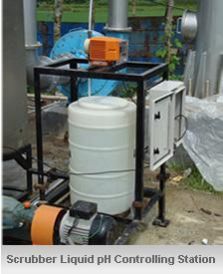
Complying with the stringent pollution norms, the scrubbers clean the flue gases formed during incineration. The Scrubbing System is available in two formats. First a single stage Scrubbing System consisting of either a Venturi Scrubber or a Packed Bed Scrubber. The second is double stage system consisting of both Venturi as well as Packed Bed Scrubber.A Venturi Scrubber has two cones placed vertically with a narrow throat joining the two. The gas enters the top cone (converging section) where it is sprayed with water. Both then converge at the narrow aperture of the throat where the velocity of the gas increases and there is heavy pressure drop creating a turbulent condition. This mixture then moves to the bottom cone (diverging section) where the water turns into fine drops and the mixture moves into the re-circulation tank.A Packed Bed Scrubber is a vertical cylindrical column where the water is sprayed from the top and gas released from the bottom in the opposite direction. The tower is filled with raschig rings allow for more contact area and interaction time between the two due to the zig zag flow of water and gases in the opposite direction. The water for scrubbers is drawn by the re-circulation pumps and re-circulated in a closed loop. An ID fan is provided to compensate for the pressure drop in the scrubbing system.
Complying with the stringent pollution norms, the scrubbers clean the flue gases formed during incineration. The Scrubbing System is available in two formats. First a single stage Scrubbing System consisting of either a Venturi Scrubber or a Packed Bed Scrubber. The second is double stage system consisting of both Venturi as well as Packed Bed Scrubber.A Venturi Scrubber has two cones placed vertically with a narrow throat joining the two. The gas enters the top cone (converging section) where it is sprayed with water. Both then converge at the narrow aperture of the throat where the velocity of the gas increases and there is heavy pressure drop creating a turbulent condition. This mixture then moves to the bottom cone (diverging section) where the water turns into fine drops and the mixture moves into the re-circulation tank.A Packed Bed Scrubber is a vertical cylindrical column where the water is sprayed from the top and gas released from the bottom in the opposite direction. The tower is filled with raschig rings allow for more contact area and interaction time between the two due to the zig zag flow of water and gases in the opposite direction. The water for scrubbers is drawn by the re-circulation pumps and re-circulated in a closed loop. An ID fan is provided to compensate for the pressure drop in the scrubbing system.
Biomedical waste is generated from hospitals and animal houses and mainly consists of: • Human Anatomical Waste.• Microbiology & Biotechnology Waste.• Discarded Medicines & Cytotoxic Drugs.• Soiled plaster castes, blood soaked cotton, beddings etc.• Wastes from pathological laboratories and blood banks.• Animal wastes & carcasses.The waste is highly infectious and therefore needs to be carefully disposed off. BLACKHOLEincinerators have following features for complete incineration of biomedical wastes:• Combustion efficiency of at least 99%.• Gas residence time of minimum 1.5 seconds in the Secondary Combustion Chamber.• Temperature range of 750 to 850°C and 1000 to 1100°C in Primary & Secondary Combustion Chambers respectively.
Biomedical waste is generated from hospitals and animal houses and mainly consists of: • Human Anatomical Waste.• Microbiology & Biotechnology Waste.• Discarded Medicines & Cytotoxic Drugs.• Soiled plaster castes, blood soaked cotton, beddings etc.• Wastes from pathological laboratories and blood banks.• Animal wastes & carcasses.The waste is highly infectious and therefore needs to be carefully disposed off. BLACKHOLEincinerators have following features for complete incineration of biomedical wastes:• Combustion efficiency of at least 99%.• Gas residence time of minimum 1.5 seconds in the Secondary Combustion Chamber.• Temperature range of 750 to 850°C and 1000 to 1100°C in Primary & Secondary Combustion Chambers respectively.
Secondary Business TypeManufacturer / Exporters / Wholesale Suppliers
Year of Establishment1995
No. of Employees21 - 50
Annual TurnoverRs. 0.5 to 2.5 Crore Approx.
Opening Hours
SUN : Closed
MON : 9:30 AM - 6:30 PM
TUE : 9:30 AM - 6:30 PM
WED : 9:30 AM - 6:30 PM
THU : 9:30 AM - 6:30 PM
FRI : 9:30 AM - 6:30 PM
SAT : 9:30 AM - 6:30 PM
In 1995, Mr. K.K. Khanna, a mechanical engineer from the prestigious Delhi College of Engineering, concerned about the increasing pollution of the environment, decided to fight it than just be a mute spectator. Fusing his passion for green technologies with his concern for the environment, Mr. Khanna created Nika Engineers Pvt. Ltd.! Here he developed waste management technologies to solve the problem of growing biomedical and industrial waste and shrinking landfill sites.


 Reviews & Ratings
 Write a Review


 Post Free Ad