Chemical Name
tetrasodium 3,3'-{[3,3'-dimethyl(1,1'-biphenyl)-4,4'-diyl]bis(azo)}bis(5-amino-4-hydroxynaphthalene-2,7-disulphonate)
InChI Key
DELHWSZXMIOOES-KYRSKEKDSA-J
Solubility
Soluble in water. Partially Soluble in alcohol.
Trypan blue is a diazo dye used in ophthalmic cataract surgery to stain the anterior capsule in the presence of a mature cataract, to aid in visualization, before creating the continuous curvilinear capsulorhexis. Trypan Blue is an acid azo dye commonly used as a stain to distinguish viable from non-viable cells. It turns dead cells blue and viable cells unstained. It is a known animal carcinogen and an experimental teratogen. A dye obtained from tolidine that is absorbed by the macrophages of the reticuloendothelial system and is therefore used for staining cells in biological research. Trypan blue is an antiprotozoal drug first used to treat Babesia infection in 1909 and still commonly used to treat Babesia canis. The complex chemical structure has been progressively simplified, yielding such other widely used drugs as imidocarb.
Applications:
Trypan Blue is a water-soluble dye used for the dye exclusion test for cell viability to distinguish between viable and nonviable cells by seeping into nonviable cells with damaged plasma membranes causing them to appear blue.Trypan blue is a dye used to distinguish between live and dead cells. It is a vital stain that is not absorbed by healthy viable cells, but stains cells with a damaged cell membrane. This way, only dead cells can be counted. The method is sometimes referred to as the dye exclusion method.Trypan Blue Solution, is routinely used as a cell stain to assess cell viability using the dye exclusion test. This test is often performed while counting cells with the hemocytometer during routine subculturing, but can be performed any time cell viability needs to be determined quickly and accurately. The dye exclusion test is based upon the concept that viable cells do not take up impermeable dyes (like Trypan Blue), but dead cells are permeable and take up the dye.Trypan Blue is recommended for counting viable mammalian cells. Viable cell counts should be performed where a decrease in cell viability may be expected, for example, when working with cryopreserved cells or cells manipulated ex vivo.
Chemical Name
tetrasodium 3,3'-{[3,3'-dimethyl(1,1'-biphenyl)-4,4'-diyl]bis(azo)}bis(5-amino-4-hydroxynaphthalene-2,7-disulphonate)
InChI Key
DELHWSZXMIOOES-KYRSKEKDSA-J
Solubility
Soluble in water. Partially Soluble in alcohol.
Trypan blue is a diazo dye used in ophthalmic cataract surgery to stain the anterior capsule in the presence of a mature cataract, to aid in visualization, before creating the continuous curvilinear capsulorhexis. Trypan Blue is an acid azo dye commonly used as a stain to distinguish viable from non-viable cells. It turns dead cells blue and viable cells unstained. It is a known animal carcinogen and an experimental teratogen. A dye obtained from tolidine that is absorbed by the macrophages of the reticuloendothelial system and is therefore used for staining cells in biological research. Trypan blue is an antiprotozoal drug first used to treat Babesia infection in 1909 and still commonly used to treat Babesia canis. The complex chemical structure has been progressively simplified, yielding such other widely used drugs as imidocarb.
Applications:
Trypan Blue is a water-soluble dye used for the dye exclusion test for cell viability to distinguish between viable and nonviable cells by seeping into nonviable cells with damaged plasma membranes causing them to appear blue.Trypan blue is a dye used to distinguish between live and dead cells. It is a vital stain that is not absorbed by healthy viable cells, but stains cells with a damaged cell membrane. This way, only dead cells can be counted. The method is sometimes referred to as the dye exclusion method.Trypan Blue Solution, is routinely used as a cell stain to assess cell viability using the dye exclusion test. This test is often performed while counting cells with the hemocytometer during routine subculturing, but can be performed any time cell viability needs to be determined quickly and accurately. The dye exclusion test is based upon the concept that viable cells do not take up impermeable dyes (like Trypan Blue), but dead cells are permeable and take up the dye.Trypan Blue is recommended for counting viable mammalian cells. Viable cell counts should be performed where a decrease in cell viability may be expected, for example, when working with cryopreserved cells or cells manipulated ex vivo.
Absorptivity (A1%/1cm at pH 8.2 at ?2max)1100-1200
Loss on drying (110°C)<1%
Chemical Name
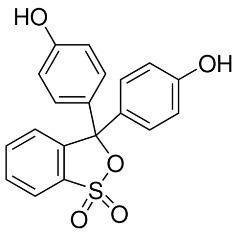
4-[3-(4-hydroxyphenyl)-1,1-dioxo-2,1$l^{6}-benzoxathiol-3-yl]phenol
InChI Key
BELBBZDIHDAJOR-UHFFFAOYSA-N
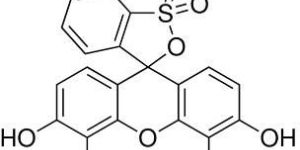
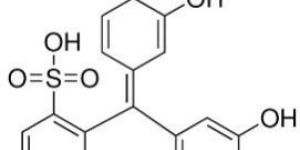
Phenol red is a water-soluble dye used as a pH indicator, changing from yellow to red over pH 6.6 to 8.0, and then turning a bright pink color above pH 8.1. As such, phenol red can be used as a pH indicator dye in various medical and cell biology tests.
Solubility
Practically insoluble in chloroform, ether. Soluble in aqueous alkali hydroxides or carbonates with red color (removed by boiling with zinc dust).
Solubility in water: approximately 1g/1300ml.
Solubility in alcohol: approximately 1g/350ml
Storage and Shelf Life : Store between 10- 30°C. Use before expiry date on the label.
Application
Chemicals and substances that impart color including soluble dyes and insoluble pigments. They are used in INKS; PAINTS; and as INDICATORS AND REAGENTS.Substances used for the detection, identification, analysis, etc. of chemical, biological, or pathologic processes or conditions. Indicators are substances that change in physical appearance, e.g., color, at or approaching the endpoint of a chemical titration, e.g., on the passage between acidity and alkalinity. Reagents are substances used for the detection or determination of another substance by chemical or microscopical means, especially analysis. Types of reagents are precipitants, solvents, oxidizers, reducers, fluxes, and colorimetric reagents.
Chemical Name
4-[3-(4-hydroxyphenyl)-1,1-dioxo-2,1$l^{6}-benzoxathiol-3-yl]phenol
InChI Key
BELBBZDIHDAJOR-UHFFFAOYSA-N
Phenol red is a water-soluble dye used as a pH indicator, changing from yellow to red over pH 6.6 to 8.0, and then turning a bright pink color above pH 8.1. As such, phenol red can be used as a pH indicator dye in various medical and cell biology tests.
Solubility
Practically insoluble in chloroform, ether. Soluble in aqueous alkali hydroxides or carbonates with red color (removed by boiling with zinc dust).
Solubility in water: approximately 1g/1300ml.
Solubility in alcohol: approximately 1g/350ml
Storage and Shelf Life : Store between 10- 30°C. Use before expiry date on the label.
Application
Chemicals and substances that impart color including soluble dyes and insoluble pigments. They are used in INKS; PAINTS; and as INDICATORS AND REAGENTS.Substances used for the detection, identification, analysis, etc. of chemical, biological, or pathologic processes or conditions. Indicators are substances that change in physical appearance, e.g., color, at or approaching the endpoint of a chemical titration, e.g., on the passage between acidity and alkalinity. Reagents are substances used for the detection or determination of another substance by chemical or microscopical means, especially analysis. Types of reagents are precipitants, solvents, oxidizers, reducers, fluxes, and colorimetric reagents.
Chemical Name
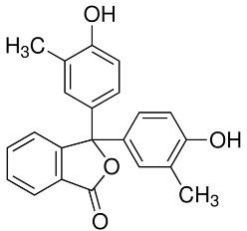
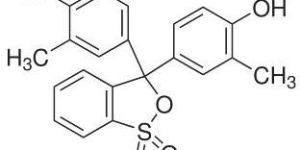
3,3-Bis(4-hydroxy-3-methylphenyl)-2-benzofuran-1(3H)-one
InChI Key
CPBJMKMKNCRKQB-UHFFFAOYSA-N
Solubility
Solubility Slightly soluble in water; soluble in ethanol
Cresolphthalein is a pH indicator used in titrations. It is insoluble in water but soluble in ethanol.
Applications:
o-Cresolphthalein due to its sharp and contrasting color change has potential of being used in many consumer products related to sanitation and visual confirmation Hence, the derived applications are in sensors, display device, photoresists, recording materials, imaging materials, authentication system for secure documents, decoder system, lithium cells, electroplating process, inks, markers, toners, correction fluid, paints, adhesives, floor coatings, gas leaking detector for safety in industries, toys, food storage, diapers, determination of calcium, lotions, urine analysis test strips, drugs and blood analysis
Chemical Name
3,3-Bis(4-hydroxy-3-methylphenyl)-2-benzofuran-1(3H)-one
InChI Key
CPBJMKMKNCRKQB-UHFFFAOYSA-N
Solubility
Solubility Slightly soluble in water; soluble in ethanol
Cresolphthalein is a pH indicator used in titrations. It is insoluble in water but soluble in ethanol.
Applications:
o-Cresolphthalein due to its sharp and contrasting color change has potential of being used in many consumer products related to sanitation and visual confirmation Hence, the derived applications are in sensors, display device, photoresists, recording materials, imaging materials, authentication system for secure documents, decoder system, lithium cells, electroplating process, inks, markers, toners, correction fluid, paints, adhesives, floor coatings, gas leaking detector for safety in industries, toys, food storage, diapers, determination of calcium, lotions, urine analysis test strips, drugs and blood analysis
Absorption Maximum (50%EtOH+2ml Acetic Acid) ?max539-544nm
Absorptivity (A1%,1cm in 50% EtOH+2ml Acetic Acid, at ?max)>1440
Loss On Drying (110°C)<8%
Suitability for microscopyPasses test
Chemical Name
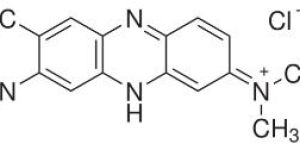
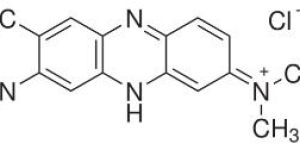
Phenazine, 3-amino-7-(dimethylamino)-2-methyl-, hydrochloride
InChI Key
PGSADBUBUOPOJS-UHFFFAOYSA-N
Solubility
Soluble in water (50 mg/ml at 25° C), abs. alcohol (1.8%), and cellosolve (3.75%).
Neutral red (toluylene red, Basic Red 5, or C.I. 50040) is a eurhodin dye used for staining in histology. It stains lysosomes red. It is used as a general stain in histology, as a counterstain in combination with other dyes, and for many staining methods. Neutral Red is a weak cationic azine dye that is used extensively as a nuclear stain in a variety of biological stain applications. It is a pH indicator as well, changing color from red to yellow over the pH range 6.8-8.0. It is also incorporated into bacteriological growth media.
Applications:
The high-purity neutral red is a common lysosomal probe that stains lysosomes a fluorescent red.A hydrochloride obtained by combining the free base of neutral red with one equivalent of hydrochloric acid. Neutral red acts as a pH indicator, changing from red to yellow between pH 6.8 and 8.0.It is used to stain embryonal tissues and supravital staining of blood. Can be used for staining Golgi apparatus in cells and Nissl granules in neurons. In microbiology, it is used in the MacConkey agar to differentiate bacteria for lactose fermentation. Neutral red can be used as a vital stain. Live cells incorporate neutral red into their lysosomes. As cells begin to die, their ability to incorporate neutral red diminishes. Thus, loss of neutral red uptake corresponds to loss of cell viability. It is also used to stain cell cultures for plate titration of viruses. Neutral red is added to some growth media for bacterial and cell cultures. It usually is available as a chloride salt.
Chemical Name
Phenazine, 3-amino-7-(dimethylamino)-2-methyl-, hydrochloride
InChI Key
PGSADBUBUOPOJS-UHFFFAOYSA-N
Solubility
Soluble in water (50 mg/ml at 25° C), abs. alcohol (1.8%), and cellosolve (3.75%).
Neutral red (toluylene red, Basic Red 5, or C.I. 50040) is a eurhodin dye used for staining in histology. It stains lysosomes red. It is used as a general stain in histology, as a counterstain in combination with other dyes, and for many staining methods. Neutral Red is a weak cationic azine dye that is used extensively as a nuclear stain in a variety of biological stain applications. It is a pH indicator as well, changing color from red to yellow over the pH range 6.8-8.0. It is also incorporated into bacteriological growth media.
Applications:
The high-purity neutral red is a common lysosomal probe that stains lysosomes a fluorescent red.A hydrochloride obtained by combining the free base of neutral red with one equivalent of hydrochloric acid. Neutral red acts as a pH indicator, changing from red to yellow between pH 6.8 and 8.0.It is used to stain embryonal tissues and supravital staining of blood. Can be used for staining Golgi apparatus in cells and Nissl granules in neurons. In microbiology, it is used in the MacConkey agar to differentiate bacteria for lactose fermentation. Neutral red can be used as a vital stain. Live cells incorporate neutral red into their lysosomes. As cells begin to die, their ability to incorporate neutral red diminishes. Thus, loss of neutral red uptake corresponds to loss of cell viability. It is also used to stain cell cultures for plate titration of viruses. Neutral red is added to some growth media for bacterial and cell cultures. It usually is available as a chloride salt.
Absorption Maximum (50%EtOH+2ml Acetic Acid) ?max539-544nm
Absorptivity (A1%,1cm in 50% EtOH+2ml Acetic Acid, at ?max)>920
Loss On Drying (110°C)<8%
Suitability for microscopyPasses test
Chemical Name
Phenazine, 3-amino-7-(dimethylamino)-2-methyl-, hydrochloride
InChI Key
PGSADBUBUOPOJS-UHFFFAOYSA-N
Solubility
Soluble in water (50 mg/ml at 25° C), abs. alcohol (1.8%), and cellosolve (3.75%).
Neutral red (toluylene red, Basic Red 5, or C.I. 50040) is a eurhodin dye used for staining in histology. It stains lysosomes red. It is used as a general stain in histology, as a counterstain in combination with other dyes, and for many staining methods. Neutral Red is a weak cationic azine dye that is used extensively as a nuclear stain in a variety of biological stain applications. It is a pH indicator as well, changing color from red to yellow over the pH range 6.8-8.0. It is also incorporated into bacteriological growth media.
Applications:
The high-purity neutral red is a common lysosomal probe that stains lysosomes a fluorescent red.A hydrochloride obtained by combining the free base of neutral red with one equivalent of hydrochloric acid. Neutral red acts as a pH indicator, changing from red to yellow between pH 6.8 and 8.0.It is used to stain embryonal tissues and supravital staining of blood. Can be used for staining Golgi apparatus in cells and Nissl granules in neurons. In microbiology, it is used in the MacConkey agar to differentiate bacteria for lactose fermentation. Neutral red can be used as a vital stain. Live cells incorporate neutral red into their lysosomes. As cells begin to die, their ability to incorporate neutral red diminishes. Thus, loss of neutral red uptake corresponds to loss of cell viability. It is also used to stain cell cultures for plate titration of viruses. Neutral red is added to some growth media for bacterial and cell cultures. It usually is available as a chloride salt.
Chemical Name
Phenazine, 3-amino-7-(dimethylamino)-2-methyl-, hydrochloride
InChI Key
PGSADBUBUOPOJS-UHFFFAOYSA-N
Solubility
Soluble in water (50 mg/ml at 25° C), abs. alcohol (1.8%), and cellosolve (3.75%).
Neutral red (toluylene red, Basic Red 5, or C.I. 50040) is a eurhodin dye used for staining in histology. It stains lysosomes red. It is used as a general stain in histology, as a counterstain in combination with other dyes, and for many staining methods. Neutral Red is a weak cationic azine dye that is used extensively as a nuclear stain in a variety of biological stain applications. It is a pH indicator as well, changing color from red to yellow over the pH range 6.8-8.0. It is also incorporated into bacteriological growth media.
Applications:
The high-purity neutral red is a common lysosomal probe that stains lysosomes a fluorescent red.A hydrochloride obtained by combining the free base of neutral red with one equivalent of hydrochloric acid. Neutral red acts as a pH indicator, changing from red to yellow between pH 6.8 and 8.0.It is used to stain embryonal tissues and supravital staining of blood. Can be used for staining Golgi apparatus in cells and Nissl granules in neurons. In microbiology, it is used in the MacConkey agar to differentiate bacteria for lactose fermentation. Neutral red can be used as a vital stain. Live cells incorporate neutral red into their lysosomes. As cells begin to die, their ability to incorporate neutral red diminishes. Thus, loss of neutral red uptake corresponds to loss of cell viability. It is also used to stain cell cultures for plate titration of viruses. Neutral red is added to some growth media for bacterial and cell cultures. It usually is available as a chloride salt.
Chemical Name
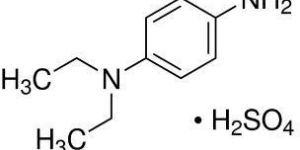
N,N-diethyl 4-phenylenediamine sulfate (1:1)
InChI Key
AYLDJQABCMPYEN-UHFFFAOYSA-N
Solubility
Soluble in water; slightly soluble in ethanol, methanol.
A product for proteomics research,N,N-Diethyl-p-phenylenediamine sulfate is used for the spectrophotometric determination of drugs such as salbutamol sulphate, ritodrine hydrochloride and isoxsuprine hydrochloride containing phenolic group.Use of N, N-diethyl-p-phenylenediamine sulphate for the spectrophotometric determination of some phenolic and amine drugs.
Applications:
N,N-Diethyl-p-phenylenediamine has been employed as a reference probe to investigate rapid chlorination rate constants by a stopped-flow spectrophotometric competition kinetics method. The reaction of chlorine and N,N-diethyl-p-phenylenediamine for sensitive square-wave voltammetric detection of chlorine has been studied and used to investigate the role of H2S in cardioprotection induced by ischemic preconditioning in rat heart, in spectrophotometric determination of gold(III) in gold-pharmaceuticals such as sodium aurothimaleate and auranofin and to investigate colonic tissue H2S production using the acetate trapping assay system.
...more
N N-Diethyl-P-Phenylenediamine Sulfate Salt ACS Grade
Chemical Name
N,N-diethyl 4-phenylenediamine sulfate (1:1)
InChI Key
AYLDJQABCMPYEN-UHFFFAOYSA-N
Solubility
Soluble in water; slightly soluble in ethanol, methanol.
A product for proteomics research,N,N-Diethyl-p-phenylenediamine sulfate is used for the spectrophotometric determination of drugs such as salbutamol sulphate, ritodrine hydrochloride and isoxsuprine hydrochloride containing phenolic group.Use of N, N-diethyl-p-phenylenediamine sulphate for the spectrophotometric determination of some phenolic and amine drugs.
Applications:
N,N-Diethyl-p-phenylenediamine has been employed as a reference probe to investigate rapid chlorination rate constants by a stopped-flow spectrophotometric competition kinetics method. The reaction of chlorine and N,N-diethyl-p-phenylenediamine for sensitive square-wave voltammetric detection of chlorine has been studied and used to investigate the role of H2S in cardioprotection induced by ischemic preconditioning in rat heart, in spectrophotometric determination of gold(III) in gold-pharmaceuticals such as sodium aurothimaleate and auranofin and to investigate colonic tissue H2S production using the acetate trapping assay system.
Absorptivity maximum (A1%/1cm, in water, at ?max)>120
Loss On Drying (110°C)<10%
Suitability as indicator for Metal TitrationPasses test
Chemical Name
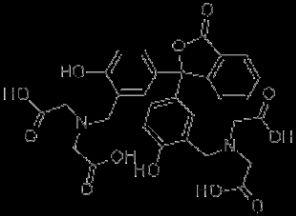
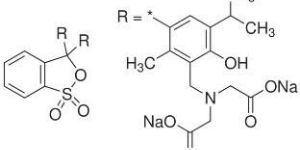
3,3-Bis(N,N-Di(Carboxymethyl)Aminomethyl)Thymolsulfonephthalein, Sodium Salt
InChI Key
KIHCHVIVBXSLBU-UHFFFAOYSA-N
Solubility
Water soluble (10 g/l, H2O, 25 °C). Soluble in Methanol
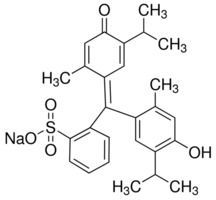
Methylthymol blue is a Water soluble chelometric indicator.Methylthymol blue (MTB) is a metal- lochromic indicator which forms metal complexes different in spectral absorption characteristics from the free indicator. The barium complex is formed at relatively high pH with maximum absorption at 608 nm; free MTB at the same pH has a maximum absorption at 460nm.
Applications:
Methylthymol Blue sodium salt is used as thymol-containing organic dye for complexometric titration for Strontium. Methylthymol Blue sodium salt is mainly used for determining the calcium content in biological samples. It is used in determination of sulfate in rainwater. It combines with silica gel and aids in the separation and preconcentration of trace amounts of heavy metals from some salts. It is used in automated method applicable for qualitative analysis of presence of alkali metals to groundwater, drinking and surface waters, and domestic and industrial wastes.
Chemical Name
3,3-Bis(N,N-Di(Carboxymethyl)Aminomethyl)Thymolsulfonephthalein, Sodium Salt
InChI Key
KIHCHVIVBXSLBU-UHFFFAOYSA-N
Solubility
Water soluble (10 g/l, H2O, 25 °C). Soluble in Methanol
Methylthymol blue is a Water soluble chelometric indicator.Methylthymol blue (MTB) is a metal- lochromic indicator which forms metal complexes different in spectral absorption characteristics from the free indicator. The barium complex is formed at relatively high pH with maximum absorption at 608 nm; free MTB at the same pH has a maximum absorption at 460nm.
Applications:
Methylthymol Blue sodium salt is used as thymol-containing organic dye for complexometric titration for Strontium. Methylthymol Blue sodium salt is mainly used for determining the calcium content in biological samples. It is used in determination of sulfate in rainwater. It combines with silica gel and aids in the separation and preconcentration of trace amounts of heavy metals from some salts. It is used in automated method applicable for qualitative analysis of presence of alkali metals to groundwater, drinking and surface waters, and domestic and industrial wastes.
Chemical Name
Phenol, 4,4'-(3H-2,1-benzoxathiol-3-ylidene)bis[2,6-dibromo-, S,S-dioxide
InChI Key
UDSAIICHUKSCKT-UHFFFAOYSA-N
Solubility
Soluble in acetic acid.Soluble in water (about 0.4 g/100 mL); more soluble in methyl and ethyl alcohol, and in benzene. Freely soluble in NaOH solutions with the formation of a water-soluble sodium salt.In water, 3 mg/mL
Bromophenol blue is an acid-base indicator since its useful range lies between pH 3.0 and 4.6. It changes from yellow at pH 3.0 to blue at pH 4.6; this reaction is reversible. Bromophenol blue is structurally related to phenolphthalein (a popular indicator). Bromophenol blue is also used as a color marker to monitor the process of agarose gel electrophoresis and polyacrylamide gel electrophoresis
Applications:
Chemicals and substances that impart color including soluble dyes and insoluble pigments. They are used in INKS; PAINTS; and as INDICATORS AND REAGENTS.Concentrations of bromophenol blue (I) in plasma, urine, and bile were determined spectrophotometrically after intravenous bolus injections and infusions in rats. The plasma concentrations were found to decrease mono exponentially after all doses except the highest, where the decrease was biexponential. Bromophenol blue (BPB) is the most widely used stain in gel electrophoresis for tracing the migration of samples on electrophoretic gels. If the gel is staind with 1 - 5 mg bromophenol blue, this may be detected much easier and earlier. In case that the stain will interfere with other applications (e. g. silver staining), a pre-run of the gel will remove bromophenol blue. It does not influence the migration of the samples. Add the solid stain before adding the catalyst.
Chemical Name
Phenol, 4,4'-(3H-2,1-benzoxathiol-3-ylidene)bis[2,6-dibromo-, S,S-dioxide
InChI Key
UDSAIICHUKSCKT-UHFFFAOYSA-N
Solubility
Soluble in acetic acid.Soluble in water (about 0.4 g/100 mL); more soluble in methyl and ethyl alcohol, and in benzene. Freely soluble in NaOH solutions with the formation of a water-soluble sodium salt.In water, 3 mg/mL
Bromophenol blue is an acid-base indicator since its useful range lies between pH 3.0 and 4.6. It changes from yellow at pH 3.0 to blue at pH 4.6; this reaction is reversible. Bromophenol blue is structurally related to phenolphthalein (a popular indicator). Bromophenol blue is also used as a color marker to monitor the process of agarose gel electrophoresis and polyacrylamide gel electrophoresis
Applications:
Chemicals and substances that impart color including soluble dyes and insoluble pigments. They are used in INKS; PAINTS; and as INDICATORS AND REAGENTS.Concentrations of bromophenol blue (I) in plasma, urine, and bile were determined spectrophotometrically after intravenous bolus injections and infusions in rats. The plasma concentrations were found to decrease mono exponentially after all doses except the highest, where the decrease was biexponential. Bromophenol blue (BPB) is the most widely used stain in gel electrophoresis for tracing the migration of samples on electrophoretic gels. If the gel is staind with 1 - 5 mg bromophenol blue, this may be detected much easier and earlier. In case that the stain will interfere with other applications (e. g. silver staining), a pre-run of the gel will remove bromophenol blue. It does not influence the migration of the samples. Add the solid stain before adding the catalyst.
Absorptivity (A1%/1cm at pH 6.8 at ?2max)1000-1100
Loss On Drying (110°C)<1%
Chemical Name
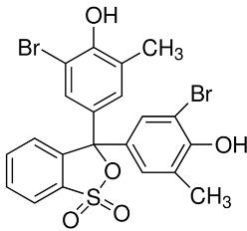
3,3-Bis(3-bromo-4-hydroxy-5-methylphenyl)-3H-benzo[c][1,2]oxathiole 1,1-dioxide
inChI Key
ABIUHPWEYMSGSR-UHFFFAOYSA-N
Bromocresol Purple is a water soluble dye used as an protein probe. It has been used in the spectrophotometric determination of serum-albumin. It is also a pH indicator with a transition interval from 5.2 - 6.8 (yellow to purple).
Solubility
Soluble in alcohol, dilute alkalies. In water, 7.3X10^-3 mg/L at 25 deg C (est)
Applications
Bromocresol purple (BCP) or 5',5-dibromo-o-cresolsulfophthalein, is a pH indicator. In its sultone form, it has a pKa value of 6.3, and is usually prepared as a 0.04% aqueous solution. Besides its primary function as an indicator, bromocresol purple is used in medical laboratories to measure albumin. Used in spectrophotometric determination of serum-albumin.Bromocresol purple binds quantitatively with human serum albumin forming a stable complex with absorbance maximum at 600 nm. The intensity of the color produced is directly proportional to the albumin concentration in the sample.It is used for the confirmation tests for presence of fecal streptococci in water and wastewater.pH indicators and similar dyes which affinity allow to probe (detect, visualize and even measure) ) physiological parameter and biology structures, such as the intracellular pH, organelles or membrane lipids, the cytoskeleton, cytoplasmic Ca2+, caspases and enzymes
Chemical Name
3,3-Bis(3-bromo-4-hydroxy-5-methylphenyl)-3H-benzo[c][1,2]oxathiole 1,1-dioxide
inChI Key
ABIUHPWEYMSGSR-UHFFFAOYSA-N
Bromocresol Purple is a water soluble dye used as an protein probe. It has been used in the spectrophotometric determination of serum-albumin. It is also a pH indicator with a transition interval from 5.2 - 6.8 (yellow to purple).
Solubility
Soluble in alcohol, dilute alkalies. In water, 7.3X10^-3 mg/L at 25 deg C (est)
Applications
Bromocresol purple (BCP) or 5',5-dibromo-o-cresolsulfophthalein, is a pH indicator. In its sultone form, it has a pKa value of 6.3, and is usually prepared as a 0.04% aqueous solution. Besides its primary function as an indicator, bromocresol purple is used in medical laboratories to measure albumin. Used in spectrophotometric determination of serum-albumin.Bromocresol purple binds quantitatively with human serum albumin forming a stable complex with absorbance maximum at 600 nm. The intensity of the color produced is directly proportional to the albumin concentration in the sample.It is used for the confirmation tests for presence of fecal streptococci in water and wastewater.pH indicators and similar dyes which affinity allow to probe (detect, visualize and even measure) ) physiological parameter and biology structures, such as the intracellular pH, organelles or membrane lipids, the cytoskeleton, cytoplasmic Ca2+, caspases and enzymes
Chemical Name
3,3-Bis(3,5- dibromo-4- hydroxy-2- methylphenyl)-
3H-benzo[c][1,2]oxathiole 1,1-dioxide
InChI Key
FRPHFZCDPYBUAU-UHFFFAOYSA- N
Bromocresol Green is a dye of the triphenylmethane family (triarylmethane dyes). It binds quantitatively with human albumin forming an intense blue-green complex with an absorbance maximum at 628 nm.
Format Powder
pH 3.8 - 5.4, yellow to blue(Lit.)
Solubility
Soluble in water (6 mg/mL), ethanol (40 mg/mL) or methyl cellosolve (200 mg/mL).
Storage and Handling: Store at Room Temperature(15- 30 °C).
Density : ~2.1 g/cm 3 (Predicted)
pK a : 4.24 (Predicted)
Applications
Bromocresol Green is useful in a variety of colorimetric detection technologies. It is used as a tracking dye for DNA agarose gel electrophoresis, in protein determinations and in charge transfer complexation processes. In TLC, it is used for visualisation of the compounds with functional groups whose pKa is below 5.0. Bromocresol green is a pH indicator and reagent. It has been used in serum albumin determinations and as a pH indicator.It is a pH sensitive triphenylmethane dye useful in various colorimetric detection studies and as an activity tracking dye for DNA agarose gel electrophoresis. It is also used in TLC (thin-layer chromatography) for visualizing compounds containing functional groups having pKa less than 5.
Chemical Name
3,3-Bis(3,5- dibromo-4- hydroxy-2- methylphenyl)-
3H-benzo[c][1,2]oxathiole 1,1-dioxide
InChI Key
FRPHFZCDPYBUAU-UHFFFAOYSA- N
Bromocresol Green is a dye of the triphenylmethane family (triarylmethane dyes). It binds quantitatively with human albumin forming an intense blue-green complex with an absorbance maximum at 628 nm.
Format Powder
pH 3.8 - 5.4, yellow to blue(Lit.)
Solubility
Soluble in water (6 mg/mL), ethanol (40 mg/mL) or methyl cellosolve (200 mg/mL).
Storage and Handling: Store at Room Temperature(15- 30 °C).
Density : ~2.1 g/cm 3 (Predicted)
pK a : 4.24 (Predicted)
Applications
Bromocresol Green is useful in a variety of colorimetric detection technologies. It is used as a tracking dye for DNA agarose gel electrophoresis, in protein determinations and in charge transfer complexation processes. In TLC, it is used for visualisation of the compounds with functional groups whose pKa is below 5.0. Bromocresol green is a pH indicator and reagent. It has been used in serum albumin determinations and as a pH indicator.It is a pH sensitive triphenylmethane dye useful in various colorimetric detection studies and as an activity tracking dye for DNA agarose gel electrophoresis. It is also used in TLC (thin-layer chromatography) for visualizing compounds containing functional groups having pKa less than 5.
Absorptivity (A1%/1cm,in water at ?max on dried substance)>1600
Loss On Drying (110°C)<5%
Suitability for microscopyPasses test
Chemical Name
3-(Dimethylamino)-7-(methylamino)phenothiazin-5-ium chloride
InChI Key
DNDJEIWCTMMZBX-UHFFFAOYSA-N
Solubility
Soluble in water; slightly soluble in ethanol, methanol.
Azure B is a cationic dye. It is part of the Romanowsky stain, which is used for the staining of blood films. It is also used for the localization of nucleic acids.Azure B has been used for the staining of chromosomes. Azure B has been used in M'Fadyean stain to visualize Bacillus anthracis capsule.
Applications:
Azure B is used for differentiating cellular RNA (purplish) and DNA (blue-green) in plant tissues. Useful as a stain for Negri Bodies. Can be used in the Romanowsky-type stains for blood and blood protozoa. Purified azure B, on the other hand, gave reproducibly stained, deposit-free preparations. Reticulocyte counts obtained from azure B preparations correlated almost exactly with those determined using new methylene blue. Purified azure B is therefore recommended as a convenient reticulocyte stain for routine use.
Chemical Name
3-(Dimethylamino)-7-(methylamino)phenothiazin-5-ium chloride
InChI Key
DNDJEIWCTMMZBX-UHFFFAOYSA-N
Solubility
Soluble in water; slightly soluble in ethanol, methanol.
Azure B is a cationic dye. It is part of the Romanowsky stain, which is used for the staining of blood films. It is also used for the localization of nucleic acids.Azure B has been used for the staining of chromosomes. Azure B has been used in M'Fadyean stain to visualize Bacillus anthracis capsule.
Applications:
Azure B is used for differentiating cellular RNA (purplish) and DNA (blue-green) in plant tissues. Useful as a stain for Negri Bodies. Can be used in the Romanowsky-type stains for blood and blood protozoa. Purified azure B, on the other hand, gave reproducibly stained, deposit-free preparations. Reticulocyte counts obtained from azure B preparations correlated almost exactly with those determined using new methylene blue. Purified azure B is therefore recommended as a convenient reticulocyte stain for routine use.
Secondary Business TypeManufacturer / Exporters / Wholesale Suppliers
Year of Establishment1981
Opening Hours
SUN : Closed
MON : 9:30 AM - 6:30 PM
TUE : 9:30 AM - 6:30 PM
WED : 9:30 AM - 6:30 PM
THU : 9:30 AM - 6:30 PM
FRI : 9:30 AM - 6:30 PM
SAT : 9:30 AM - 6:30 PM
GSP Chem is world's leading integrated specialty color company and conducts business worldwide. Our success is driven by our people and their commitment to get results the right way—by operating responsibly, executing with excellence, applying innovative technologies and capturing new opportunities for profitable growth. We are involved in virtually every facet of the Stains & pH Indicator synthesis.



 Reviews & Ratings
 Write a Review


 Post Free Ad