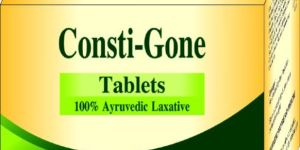
Consti-Gone Tablets
300 - 550 / Box
100 Pack(s) (MOQ)
Details :
Punch Line - The perfect balance between Health & Care.
Combination - Haritaki (terminalia Chebula) 45.0mg + Senna ( Cassia Angustifolia) 250.0mg + Mulethi(Glycyrrhiza Glabra) 15.0mg + Triphala ( Emblica Officinalis, Terminalia Chebula & Terminalia Bellerica) each 50mg + Saunf (Foeniculum Vulgare) 10.0mg + Castor seeds(Ricinus Communis) 2.5mg.
Dose - BID Slug line - Not just better healthcare, but a better healthcare experience.
Indication :
Occasional Constipation, Habitual Constipation, diarrhea, dysentery
Abdominal Disorder, Abdominal Pain, leprosy, retention of urine, colic Pain
Dyspepsia, cough and Bronchitis, ulcer
Skin Disorder, leucoderma
Anal Fissures, bleeding piles
Acute Intestinal inflammation.
Anaemia , typhoid, cholera, jaundice, gout,
Antioxidant , antimicrobial, antidiabetic, antiarthritic, Gastrointestinal motility, wound healing
Anti-spasmod, intestinal disordersr
Losing weight (obesity). Reducing belly fat,
Studies - Senna ( Cassia Angustifolia) :
The World Health Organization (WHO) approves senna leaf for short-term use in occasional constipation (WHO, 1999).
Senna extract is an FDA-approved over-the-counter treatment for occasional constipation. Because there is no controversy regarding senna's effectiveness for this purpose.
Clinical studies in the United States and abroad involving various age groups suggest that senna is effective in managing constipation associated with a number of causes including surgery, childbirth, and use of narcotic pain relievers
Senna leaves are useful for people with hemorroids or anal fissures.
Besides being a laxative, senna is used as a febrifuge, in splenic enlargements, anaemia, typhoid, cholera, biliousness, jaundice, gout, rheumatism, tumours, foul breath and bronchitis, and probably in leprosy.
Usefull in constipation, abdominal disordes, leprosy, skin disorders, leucoderma, splenomegaly, hepatomegaly, dyspepsia, cough, and bronchitis.
Haritaki (Terminalia Chebula) :
T. chebula is one of the most versatile plants having a wide spectrum of pharmacological and medicinal activities
The plant has been demonstrated to possess multiple pharmacological and medicinal activities, such as antioxidant, antimicrobial, antidiabetic, hepatoprotective, anti-inflammatory, antimutagenic, antiproliferative, radioprotective, cardioprotective, antiarthritic, anticaries, gastrointestinal motility and wound healing activity.
T. chebula exhibited antibacterial activity against a number of both Gram-positive and Gram-negative human pathogenic bacteria. T. chebula fruit extract had strong antibacterial activity against intestinal bacteria.
T. chebula exhibited antifungal activity against a number of dermatophytes and yeasts
T. chebula as one of the constituents have been subjected to clinical trials regarding their effects on constipation, mental and physical disability, allergic rhinitis and mental stress.
Mulethi(Glycyrrhiza Glabra) :
Licorice (Glycyrrhiza glabra) contains an ingredient called glycyrrhizin, also called glycyrrhizic acid, and has been used in the treatment of stomach ulcers, bronchitis, sore throat and even viral hepatitis.
Licorice root has been used in daily doses from 2 to 15 g for ulcer and gastritis.
Use during pregnancy should be avoided. Licorice exhibits estrogenic activity and has reputed abortifacient effects.
Triphalar :
It loosens the hard stools and facilitates easier bowel movements.
It is beneficial for people with mild to moderate constipation.
Triphala rectifies this cycle of metabolism in the body, so it reduces body weight. Its use also makes bones stronger and increases bone mineral density in obese people.
Triphala is a common home remedy for constipation. It has mild laxative action.
Saunf (Foeniculum Vulgare) :
In a randomized, placebo-controlled, single-blinded, crossover study of 20 patients with chronic constipation,
F. vulgare , Sambucus nigra , Cassia augustifolia , and Pimpinella anisum was associated with improvements in colonic transit time as well as number of bowel evacuations, with the latter effects beginning during the second day of therapy.
It has also been used as a stimulant to promote lactation and menstruation. Castor seed
(Ricinus Communis) :
Castor seeds without the hull are used for birth control, constipation, leprosy, andsyphilis
Castor oil is used as a laxative for constipation, to start labor in pregnancy, and to start the flow of breast milk.
Constipation.Castor oil works as a stimulant laxative for reducing constipation when taken by mouth
Number Of Flower : Ayurvedic














 Reviews & Ratings
 Write a Review


 Post Free Ad