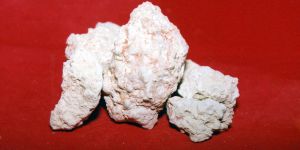
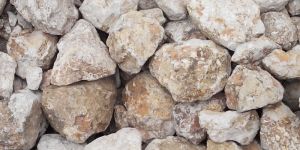
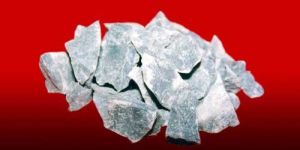
Bauxite is a naturally occurring, heterogeneous material composed primarily of one or more aluminum hydroxide minerals, plus various mixtures of silica, iron oxide, titania, aluminosilicate, and other impurities in minor or trace amounts. The principal aluminum hydroxide minerals found in varying proportions with bauxites are gibbsite and the polymorphs boehmite and diaspore. Bauxites are typically classified according to their intended commercial application: abrasive, cement, chemical, metallurgical, refractory, etc.
Bauxite is a naturally occurring, heterogeneous material composed primarily of one or more aluminum hydroxide minerals, plus various mixtures of silica, iron oxide, titania, aluminosilicate, and other impurities in minor or trace amounts. The principal aluminum hydroxide minerals found in varying proportions with bauxites are gibbsite and the polymorphs boehmite and diaspore. Bauxites are typically classified according to their intended commercial application: abrasive, cement, chemical, metallurgical, refractory, etc.
Bauxite is a naturally occurring, heterogeneous material composed primarily of one or more aluminum hydroxide minerals, plus various mixtures of silica, iron oxide, titania, aluminosilicate, and other impurities in minor or trace amounts. The principal aluminum hydroxide minerals found in varying proportions with bauxites are gibbsite and the polymorphs boehmite and diaspore. Bauxites are typically classified according to their intended commercial application: abrasive, cement, chemical, metallurgical, refractory, etc
Bauxite is a naturally occurring, heterogeneous material composed primarily of one or more aluminum hydroxide minerals, plus various mixtures of silica, iron oxide, titania, aluminosilicate, and other impurities in minor or trace amounts. The principal aluminum hydroxide minerals found in varying proportions with bauxites are gibbsite and the polymorphs boehmite and diaspore. Bauxites are typically classified according to their intended commercial application: abrasive, cement, chemical, metallurgical, refractory, etc
Bauxite is a naturally occurring, heterogeneous material composed primarily of one or more aluminum hydroxide minerals, plus various mixtures of silica, iron oxide, titania, aluminosilicate, and other impurities in minor or trace amounts. The principal aluminum hydroxide minerals found in varying proportions with bauxites are gibbsite and the polymorphs boehmite and diaspore. Bauxite are typically classified according to their intended commercial application: abrasive, cement, chemical, metallurgical, refractory, etc.
Bauxite is a naturally occurring, heterogeneous material composed primarily of one or more aluminum hydroxide minerals, plus various mixtures of silica, iron oxide, titania, aluminosilicate, and other impurities in minor or trace amounts. The principal aluminum hydroxide minerals found in varying proportions with bauxites are gibbsite and the polymorphs boehmite and diaspore. Bauxite are typically classified according to their intended commercial application: abrasive, cement, chemical, metallurgical, refractory, etc.
Bauxite is a Naturally Occurring, Heterogeneous Material Composed Primarily of One or More Aluminum Hydroxide Mineral, Plus Various Mixtures of Silica, Iron Oxide, Titania, Aluminosilicate, and other Impurities in Minor or Trace Amounts. the Principal Aluminum Hydroxide Minerals Found in Varying Proportions with Bauxite are Gibbsite and the Polymorphs Boehmite and Diaspore. Bauxite are Typically Classified According to Their Intended Commercial Application: Abrasive, Cement, Chemical, Metallurgical, Refractory Etc.
Bauxite is a Naturally Occurring, Heterogeneous Material Composed Primarily of One or More Aluminum Hydroxide Mineral, Plus Various Mixtures of Silica, Iron Oxide, Titania, Aluminosilicate, and other Impurities in Minor or Trace Amounts. the Principal Aluminum Hydroxide Minerals Found in Varying Proportions with Bauxite are Gibbsite and the Polymorphs Boehmite and Diaspore. Bauxite are Typically Classified According to Their Intended Commercial Application: Abrasive, Cement, Chemical, Metallurgical, Refractory Etc.
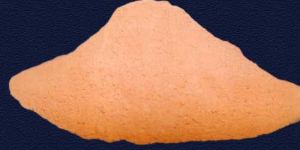
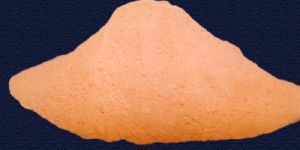
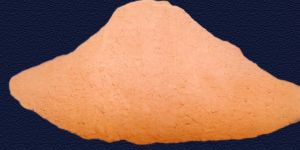
Unlike the Base Metal Ores, Bauxite Powder Does Not Require Complex Processing Because Most of the Bauxite Mined is of An Acceptable Grade or Can Be Improved By a Relatively Simple and Inexpensive Process of Removing Clay. in Many Bauxites Ore, Clay is Removed By Some Combination of Washing, Wet Screening and Cycloning, Even By Hand Picking or Sorting.
...more
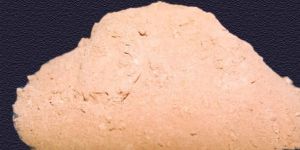
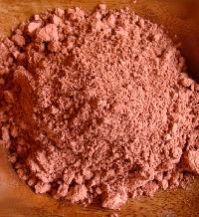
Bauxite Powder
5,300 - 6,200 / Metric Ton
100 MT (MOQ)
Unlike the Base Metal Ores, Bauxite Powder Does Not Require Complex Processing Because Most of the Bauxite Mined is of An Acceptable Grade or Can Be Improved By a Relatively Simple and Inexpensive Process of Removing Clay. in Many Bauxites Ore, Clay is Removed By Some Combination of Washing, Wet Screening and Cycloning, Even By Hand Picking or Sorting.
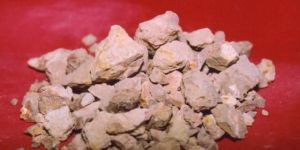
This is the second pure grade of natural raw bauxite.
It contains 48-50% of Alumina content and 10-15% of iron oxide , 3-4 % of Silica.
This grade is widely used by alum mfg, Cement board mfg etc
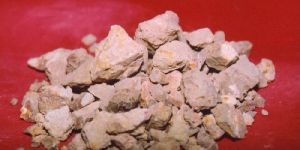
This is the second pure grade of natural raw bauxite.
It contains 48-50% of Alumina content and 10-15% of iron oxide , 3-4 % of Silica.
This grade is widely used by alum mfg, Cement board mfg etc
Unlike the base metal ores, bauxite powder does not require complex processing because most of the bauxite mined is of an acceptable grade or can be improved by a relatively simple and inexpensive process of removing clay. In many bauxites ore, clay is removed by some combination of washing, wet screening and cycloning, even by hand picking or sorting.
Unlike the base metal ores, bauxite powder does not require complex processing because most of the bauxite mined is of an acceptable grade or can be improved by a relatively simple and inexpensive process of removing clay. In many bauxites ore, clay is removed by some combination of washing, wet screening and cycloning, even by hand picking or sorting.
Bauxite is Generally Extracted By Open Cast Mining from Strata, Typically Some 4-6 Metres Thick Under a Shallow Covering of Topsoil and Vegetation. in Most Cases the Topsoil is Removed and Stored.
Bauxite is Generally Extracted By Open Cast Mining from Strata, Typically Some 4-6 Metres Thick Under a Shallow Covering of Topsoil and Vegetation. in Most Cases the Topsoil is Removed and Stored.

 Reviews & Ratings
 Write a Review


 Post Free Ad