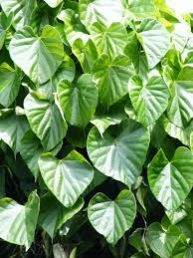
Traditional systems of medicine such as Ayurvedic, Uninai, Siddha and Homeopathy (AYUSH) have been in practice in a great account. Owing to population rise, inadequate supply of drugs, prohibitive cost of treatments, side effects of several allopathic drugs and development of resistance to currently used drugs for diseases have led to increased emphasis on the use of plant materials as a source of medicines for a wide variety of human ailments as witnessed by the use of folk medicines in the present scenario. This review article describes the prominence of a medicinal plant Tinospora cordifolia in therapeutics such as use of crude extract of plant for the amelioration of various diseases, morphology, growth constraints, biochemical composition, biological activities, research work done, projects sanctioned to this plant species and the future prospects of this important neglected plant species for research in the field of plant tissue culture, natural products and nano-biotechnology.
Traditional systems of medicine such as Ayurvedic, Uninai, Siddha and Homeopathy (AYUSH) have been in practice in a great account. Owing to population rise, inadequate supply of drugs, prohibitive cost of treatments, side effects of several allopathic drugs and development of resistance to currently used drugs for diseases have led to increased emphasis on the use of plant materials as a source of medicines for a wide variety of human ailments as witnessed by the use of folk medicines in the present scenario. This review article describes the prominence of a medicinal plant Tinospora cordifolia in therapeutics such as use of crude extract of plant for the amelioration of various diseases, morphology, growth constraints, biochemical composition, biological activities, research work done, projects sanctioned to this plant species and the future prospects of this important neglected plant species for research in the field of plant tissue culture, natural products and nano-biotechnology.
Leptadenia reticulata (Jivanti) is a versatile medicinal plant, used from ancient periods as a natural
remedy for many diseases due to its healing property. Lots of Indian researcher performed work for
phytochemical screening, pharmacological effects and for its propagational strategies. Through In vitro
propagation scientists are trying to proceed on new path which help to conserve Leptadenia reticulata
and also help to discover hidden properties of this important medicinal plant. This work highlights some
important work done by Indian researchers in field of isolation and characterization of phytochemical
constituent and plant tissue culture of Leptadenia reticulata (jivanti).
Leptadenia reticulata (Jivanti) is a versatile medicinal plant, used from ancient periods as a natural
remedy for many diseases due to its healing property. Lots of Indian researcher performed work for
phytochemical screening, pharmacological effects and for its propagational strategies. Through In vitro
propagation scientists are trying to proceed on new path which help to conserve Leptadenia reticulata
and also help to discover hidden properties of this important medicinal plant. This work highlights some
important work done by Indian researchers in field of isolation and characterization of phytochemical
constituent and plant tissue culture of Leptadenia reticulata (jivanti).
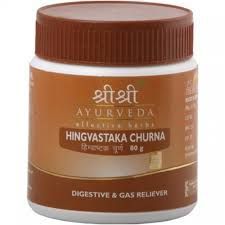
Standardization of herbal formulation is essential in order to assess the quality of drugs for therapeutic
value as it is a plant-derived material containing raw ingredients. According to an estimate of World
Health Organization (W.H.O) most of the developing countries rely on traditional medicines. Hence, it
has given a detailed protocol in 1999 for the standardization of herbal drugs. Hingwashtak Churna is an
Ayurvedic formulation which is used to treat stomach ailments to maintain proper function of the
gastrointestinal tract, maintain eliminative function. It is also used in the treatment of vata imbalance and
vata related diseases like bloating joint diseases etc. A scheme was developed for standardization of
Hingwashtak churna for two marketed formulations and in-house. Various parameters such as physical,
chemical and biological were carried out for quantitative and qualitative analysis of selected formulations
and they showed promising results.
Standardization of herbal formulation is essential in order to assess the quality of drugs for therapeutic
value as it is a plant-derived material containing raw ingredients. According to an estimate of World
Health Organization (W.H.O) most of the developing countries rely on traditional medicines. Hence, it
has given a detailed protocol in 1999 for the standardization of herbal drugs. Hingwashtak Churna is an
Ayurvedic formulation which is used to treat stomach ailments to maintain proper function of the
gastrointestinal tract, maintain eliminative function. It is also used in the treatment of vata imbalance and
vata related diseases like bloating joint diseases etc. A scheme was developed for standardization of
Hingwashtak churna for two marketed formulations and in-house. Various parameters such as physical,
chemical and biological were carried out for quantitative and qualitative analysis of selected formulations
and they showed promising results.
Jasminum grandiflorum belongs to the family
Oleaceae. Although cultivated in subtropical and
warm temperate regions for its ornamental
qualities, Jasminum grandiflorum is valued as a
medicinal plant as it is effective against number
of ailments. The root of the plant is useful in
paralysis, mental debility, chronic constipation,
flatulence, sterility, ring worm, leprosy and skin
diseases[1]. The leaves of the plant are useful in
fixing loose teeth, leprosy, skin diseases,
dysmenorrhoea, ulcers, wounds and corns[2]. The
flowers of Jasminum grandiflorum are useful in
conditions of leprosy, skin diseases, pruitus,
ulcers, dysmenorrhoea and vitiated conditions of
pitta[3]. The whole flowers of J. grandiflorum are
used in treatment of wound healing in folk
medicine. Protease, one of the key enzyme in
wound healing is not so for been reported in
flowers of J. grandiflorum.
Jasminum grandiflorum belongs to the family
Oleaceae. Although cultivated in subtropical and
warm temperate regions for its ornamental
qualities, Jasminum grandiflorum is valued as a
medicinal plant as it is effective against number
of ailments. The root of the plant is useful in
paralysis, mental debility, chronic constipation,
flatulence, sterility, ring worm, leprosy and skin
diseases[1]. The leaves of the plant are useful in
fixing loose teeth, leprosy, skin diseases,
dysmenorrhoea, ulcers, wounds and corns[2]. The
flowers of Jasminum grandiflorum are useful in
conditions of leprosy, skin diseases, pruitus,
ulcers, dysmenorrhoea and vitiated conditions of
pitta[3]. The whole flowers of J. grandiflorum are
used in treatment of wound healing in folk
medicine. Protease, one of the key enzyme in
wound healing is not so for been reported in
flowers of J. grandiflorum.
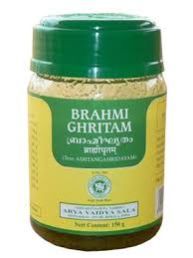
Brahmi Ghrita is an important formulation used in treatment of learning and memory disorders. It
contains Brahmi (Bacopa monneri), Vacha (Acorus calamus), Kushtha (Saussurea lappa),
Shankhapushpi (Convolvulus pluricaulis) and old clarified butter (Puran Ghrita). Here an attempt was
done to assess the effect of Brahmi Ghrita on Serum creatine and Serum Urea in experimental animals.
For this purpose, Brahmi Ghrita was prepared as per standard Sneha paka process mentioned in our
classics. For experimental study one of those animals were selected which have high Serum creatine and
Serum Urea level. These animals were divided in three groups, among them one was an experimental
control group and animals of the other two groups were treated with Brahmi Ghrita in a dose of 400 and
800 mgkg body weight of rats. After period of one month haematological parameters, Serum creatine
and Serum Urea was examined. It was observed that Brahmi Ghrita significantly decreases Serum
creatine in dose dependent manner and have no adverse effect was observed on haematological
parameters.
Brahmi Ghrita is an important formulation used in treatment of learning and memory disorders. It
contains Brahmi (Bacopa monneri), Vacha (Acorus calamus), Kushtha (Saussurea lappa),
Shankhapushpi (Convolvulus pluricaulis) and old clarified butter (Puran Ghrita). Here an attempt was
done to assess the effect of Brahmi Ghrita on Serum creatine and Serum Urea in experimental animals.
For this purpose, Brahmi Ghrita was prepared as per standard Sneha paka process mentioned in our
classics. For experimental study one of those animals were selected which have high Serum creatine and
Serum Urea level. These animals were divided in three groups, among them one was an experimental
control group and animals of the other two groups were treated with Brahmi Ghrita in a dose of 400 and
800 mgkg body weight of rats. After period of one month haematological parameters, Serum creatine
and Serum Urea was examined. It was observed that Brahmi Ghrita significantly decreases Serum
creatine in dose dependent manner and have no adverse effect was observed on haematological
parameters.
 Reviews & Ratings
 Write a Review


 Post Free Ad