Pye Kem Laboratories Paharganj, Delhi

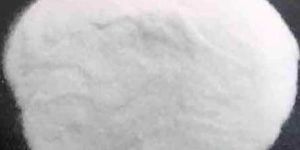
  • Sodium Sulphate

    Sodium Sulphate

    Get Latest Price

    • Number Of FlowerChemical
    • Purity99%
    • FeaturePhysical Nature
    • FormulaNa2SO4
    • Molar Mass142.04 g/mol
    • FaeturePurity and effectiveness
    • FormPowder
    • Soluble inWater
    • We are specialized in exporting and supplying superior grade Sodium Sulphate. Extensively used in detergents dyes and also in pharmaceutical preparations, the Sodium Sulphate provided by us is is a white crystalline solid commonly known as the mineral thenardite. Furthermore, the clients can avail from us, this industrial grade Sodium Sulphate in varied specifications as per their requirements, that too at very reasonable rates. Grade LR/AR
    ...more
  • Sodium Sulphate

    Sodium Sulphate

    Request for Price

    We are specialized in exporting and supplying superior grade Sodium Sulphate. Extensively used in detergents dyes and also in pharmaceutical preparations, the Sodium Sulphate provided by us is is a white crystalline solid commonly known as the mineral thenardite. Furthermore, the clients can avail from us, this industrial grade Sodium Sulphate in varied specifications as per their requirements, that too at very reasonable rates. Grade LR/AR

    Number Of Flower : Chemical

    Purity : 99%

    Feature : Physical Nature

    Formula : Na2SO4

    Molar Mass : 142.04 g/mol

    ...more
    Get Best Price
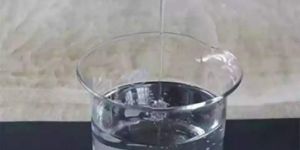
  • Glycerol

    Glycerol

    Get Latest Price

    • Number Of FlowerGlycerine
    • Purity99%
    • AppearanceLiquid
    • Number Of FlowerColor less
    • PurityCorrect Formulation, Stability, Non-hazardous
    • Grade StandardChemical Grade
    • UseFoods and as a Replacement for Alcohol, Used in Cosmetic Products
    • SourceSynthetic
    • QualityOptimum
    • Avail from us the best grade Glycerol, which is a main by-product of biodiesel production. It is a colorless, odorless, viscous, nontoxic liquid with a sweet taste and is commonly known as glycerin. Largely used in various industrial applications, the Glycerol that we manufacture, export and supply is commonly used for preparing skin products like creams, lotions, etc.Applications : Use in biodigestor - Special bacterial strains are being developed that can efficiently utilize glycerin to make methane When of low purity, Glycerol can be burned along with biomass such as sawdust Crude glycerol from homemade biodiesel makes a powerful degreaser Feed additive for cattle and other ruminants Used in nitration, to make nitroglycerin (probably not a good idea, unless you want to end up like Nobel's brother) Used in manufacturing skin moisturizers, lotions, deodorants, makeup, toothpaste, sweets and cakes, pharmaceuticals and patent medicines, in paper manufacturing, printing ink and so on   Grade : LR/ARMore about Glycerol : Glycerin is commonly called glycerol or glycerin. Glycerin is a sweet-tasting alcohol, which is colorless and odorless. It becomes a gummy paste when frozen, although freezing it can only be achieved at very low temperatures. It melts at 18 degrees Celsius and boils at 290 degrees Celsius. Its chemical formula is C3H8O3. It is miscible in water and alcohol. However, it does not mix with oil. It is an excellent solvent. In fact, there are substances that dissolve better in glycerol than in water or alcohol. The compound absorbs water from the air. This is why it is known as a hygroscopic substance. Suppose you leave a container of pure glycerin or glycerol in open air, it will become diluted as it attracts water molecules. According to a speculation, a drop of this liquid in the tongue can raise a blister because it would draw out water from deep into the tongue tissue. But this remains a clever speculation. The sweet-tasting alcohol is found in many skin moisturizing lotions and creams because of the water-retaining and water-absorbing capacity. Thus, it softens and smoothens the skin. It is believed, however, that this substance has other beneficial properties aside from simply moisturizing and attracting water molecules. The compound originates from fats and oils. In fact, molecules of fat contain glycerol. One way to extract it from fats or oils is through saponification - a chemical reaction involving a fat and an alkali. This chemical reaction produces soap. Soap-making is a common source of this trihydric alcohol under discussion.   Specifications for Glycerine : Purity (%) 98 min 98 min 98 min 99.5 min Sp Gravity at 30/30 deg cel 1.2552 1.2552 1.2552 1.2552 Colour, Lovibond 5.25 inch cell (Y+R) 8.0 max 3.5 max 1.0 max Colourless Ash (%) 0.05 max 0.01 max 0.01 max 0.01 max Iron in ppm 2 max 1 max 0.5 max 0.5 max Chloride as Cl in ppm 60 max 60 max 10 max 10 max Fatty acids and esters (%) -- -- 0.03 max 0.01 max Uses : Resin In mfr of alkyd resins Polymer In mfr of epichlorohydrin and polyols Adhesives In mfr of cellophane tapes Cosmetic In formulations Pharma In pharmaceutical formulations Plasticizer Plasticizer for regenerated cellulose Detergent In soaps Explosive In mfr of nitroglycerin Tobacco As tobacco conditioning Public Health As humectant Fragrance In perfume formulations Printing ink As viscosity modifier
    ...more
  • Glycerol

    Glycerol

    Request for Price

    Avail from us the best grade Glycerol, which is a main by-product of biodiesel production. It is a colorless, odorless, viscous, nontoxic liquid with a sweet taste and is commonly known as glycerin. Largely used in various industrial applications, the Glycerol that we manufacture, export and supply is commonly used for preparing skin products like creams, lotions, etc.Applications : Use in biodigestor - Special bacterial strains are being developed that can efficiently utilize glycerin to make methane When of low purity, Glycerol can be burned along with biomass such as sawdust Crude glycerol from homemade biodiesel makes a powerful degreaser Feed additive for cattle and other ruminants Used in nitration, to make nitroglycerin (probably not a good idea, unless you want to end up like Nobel's brother) Used in manufacturing skin moisturizers, lotions, deodorants, makeup, toothpaste, sweets and cakes, pharmaceuticals and patent medicines, in paper manufacturing, printing ink and so on   Grade : LR/ARMore about Glycerol : Glycerin is commonly called glycerol or glycerin. Glycerin is a sweet-tasting alcohol, which is colorless and odorless. It becomes a gummy paste when frozen, although freezing it can only be achieved at very low temperatures. It melts at 18 degrees Celsius and boils at 290 degrees Celsius. Its chemical formula is C3H8O3. It is miscible in water and alcohol. However, it does not mix with oil. It is an excellent solvent. In fact, there are substances that dissolve better in glycerol than in water or alcohol. The compound absorbs water from the air. This is why it is known as a hygroscopic substance. Suppose you leave a container of pure glycerin or glycerol in open air, it will become diluted as it attracts water molecules. According to a speculation, a drop of this liquid in the tongue can raise a blister because it would draw out water from deep into the tongue tissue. But this remains a clever speculation. The sweet-tasting alcohol is found in many skin moisturizing lotions and creams because of the water-retaining and water-absorbing capacity. Thus, it softens and smoothens the skin. It is believed, however, that this substance has other beneficial properties aside from simply moisturizing and attracting water molecules. The compound originates from fats and oils. In fact, molecules of fat contain glycerol. One way to extract it from fats or oils is through saponification - a chemical reaction involving a fat and an alkali. This chemical reaction produces soap. Soap-making is a common source of this trihydric alcohol under discussion.   Specifications for Glycerine : Purity (%) 98 min 98 min 98 min 99.5 min Sp Gravity at 30/30 deg cel 1.2552 1.2552 1.2552 1.2552 Colour, Lovibond 5.25 inch cell (Y+R) 8.0 max 3.5 max 1.0 max Colourless Ash (%) 0.05 max 0.01 max 0.01 max 0.01 max Iron in ppm 2 max 1 max 0.5 max 0.5 max Chloride as Cl in ppm 60 max 60 max 10 max 10 max Fatty acids and esters (%) -- -- 0.03 max 0.01 max Uses : Resin In mfr of alkyd resins Polymer In mfr of epichlorohydrin and polyols Adhesives In mfr of cellophane tapes Cosmetic In formulations Pharma In pharmaceutical formulations Plasticizer Plasticizer for regenerated cellulose Detergent In soaps Explosive In mfr of nitroglycerin Tobacco As tobacco conditioning Public Health As humectant Fragrance In perfume formulations Printing ink As viscosity modifier

    Number Of Flower : Glycerine

    Purity : 99%

    Appearance : Liquid

    Number Of Flower : Color less

    Purity : Correct Formulation, Stability, Non-hazardous

    ...more
    Get Best Price
  • GBL Wheel Cleaner

    GBL Wheel Cleaner

    500 - 1,000 / Pack

    • FormLiquid
    • Country of OriginIndia
    • FeatureProvides Shiny Surfaces,Removes Dirt And Dust
    • ApplicationChemical Intermediate And Removers,Glass Cleaning,Chemical intermediate and Removers
    • Brand NameUltraaa Fresh
    • Research ChemicalsYes
    • Form : Liquid   Quantity Per Pack : 500ml   Packaging Type : Bottle   Product Description - Description by   Manufacturer - GBL cleaner is one of the most efficient and fastest iron dust removal. With neutral PH and zero stimulating chemicals, it can be used to remove serious oxides on the car surface. It can be used safely on the surface of car paint, electroplated wheel ring and plastic parts. It has a strong effect of cleaning and discoloration for the brake dust and oxides on the surface of car paint.   Productt Atributes - Brand Name - GBL - Place of   Origin - INDIA - Supply Type In-Stock Items -   Condition - New - Color - Transparent -   Purity - 99.9 - Related Keywords - GBL, Stain Remover, Liquid Solvent, Research Chemicals, Sell Pure GBL, Buy GBL, Car Cleaner   Application - 1,4-Butyrolactone is widely used as a perfume and pharmaceutical intermediate. As a high boiling point solvent, it has strong solubility, good electrical properties and stability, and is safe to use. As a strong proton solvent, it can dissolve most low-molecular polymers and some high-molecular polymers, and can be used as battery electrolyte to replace strong corrosive acid. In the polymerization reaction, it can be used as a carrier and participate in the polymerization reaction. It can be used for pyrrolidone, butyric acid, succinic acid, paint remover, etc. It is widely used in the synthesis of fine chemicals such as medicine and perfume. It is also commonly used as a Solvent for resins and is a highly safe/low-toxic environmentally friendly solvent. In the field of polyurethane, it can be used as a viscosity modifier (reactive diluent) for polyurethane and a curing agent for polyurethane and amino coating systems. GBL is a hygroscopic colorless, water-miscible liquid with a weak characteristic odor. It is the simplest 4-carbon lactone. It is mainly used as an intermediate in the production of other chemicals, e.g. methyl-2-pyrrolidone. Gamma butyrolactone is a chemical. People use it as medicine. Not to be used as a medicine.
    ...more
  • GBL Wheel Cleaner

    GBL Wheel Cleaner

    500 - 1,000 / Pack

    1 Pack (MOQ)

    Form : Liquid   Quantity Per Pack : 500ml   Packaging Type : Bottle   Product Description - Description by   Manufacturer - GBL cleaner is one of the most efficient and fastest iron dust removal. With neutral PH and zero stimulating chemicals, it can be used to remove serious oxides on the car surface. It can be used safely on the surface of car paint, electroplated wheel ring and plastic parts. It has a strong effect of cleaning and discoloration for the brake dust and oxides on the surface of car paint.   Productt Atributes - Brand Name - GBL - Place of   Origin - INDIA - Supply Type In-Stock Items -   Condition - New - Color - Transparent -   Purity - 99.9 - Related Keywords - GBL, Stain Remover, Liquid Solvent, Research Chemicals, Sell Pure GBL, Buy GBL, Car Cleaner   Application - 1,4-Butyrolactone is widely used as a perfume and pharmaceutical intermediate. As a high boiling point solvent, it has strong solubility, good electrical properties and stability, and is safe to use. As a strong proton solvent, it can dissolve most low-molecular polymers and some high-molecular polymers, and can be used as battery electrolyte to replace strong corrosive acid. In the polymerization reaction, it can be used as a carrier and participate in the polymerization reaction. It can be used for pyrrolidone, butyric acid, succinic acid, paint remover, etc. It is widely used in the synthesis of fine chemicals such as medicine and perfume. It is also commonly used as a Solvent for resins and is a highly safe/low-toxic environmentally friendly solvent. In the field of polyurethane, it can be used as a viscosity modifier (reactive diluent) for polyurethane and a curing agent for polyurethane and amino coating systems. GBL is a hygroscopic colorless, water-miscible liquid with a weak characteristic odor. It is the simplest 4-carbon lactone. It is mainly used as an intermediate in the production of other chemicals, e.g. methyl-2-pyrrolidone. Gamma butyrolactone is a chemical. People use it as medicine. Not to be used as a medicine.

    Form : Liquid

    Country of Origin : India

    Feature : Provides Shiny Surfaces,Removes Dirt And Dust

    Application : Chemical Intermediate And Removers,Glass Cleaning,Chemical intermediate and Removers

    Brand Name : Ultraaa Fresh

    ...more
    Get Best Price
  • Copper II Sulfate

    Copper II Sulfate

    600 - 1,000 / kilogram

    • Purity99.99
    • Copper(II) sulfate, also known as cupric sulfate, or copper sulphate, is the inorganic compound with the chemical formula CuSO4(H2O)x, where x can range from 0 to 5. The pentahydrate (x = 5) is the most common form. Older names for this compound include blue vitriol, bluestone,[9] vitriol of copper,[10] and Roman vitriol.[11] The pentahydrate (CuSO4Ã�·5H2O), the most commonly encountered salt, is bright blue. It exothermically dissolves in water to give the aquo complex [Cu(H2O)6]2+, which has octahedral molecular geometry. The structure of the solid pentahydrate reveals a polymeric structure wherein copper is again octahedral but bound to four water ligands. The Cu(II)(H2O)4 centers are interconnected by sulfate anions to form chains.[12] Anhydrous copper sulfate is a white powder.
    ...more
  • Copper II Sulfate

    Copper II Sulfate

    600 - 1,000 / kilogram

    1 Bags (MOQ)

    Copper(II) sulfate, also known as cupric sulfate, or copper sulphate, is the inorganic compound with the chemical formula CuSO4(H2O)x, where x can range from 0 to 5. The pentahydrate (x = 5) is the most common form. Older names for this compound include blue vitriol, bluestone,[9] vitriol of copper,[10] and Roman vitriol.[11] The pentahydrate (CuSO4�·5H2O), the most commonly encountered salt, is bright blue. It exothermically dissolves in water to give the aquo complex [Cu(H2O)6]2+, which has octahedral molecular geometry. The structure of the solid pentahydrate reveals a polymeric structure wherein copper is again octahedral but bound to four water ligands. The Cu(II)(H2O)4 centers are interconnected by sulfate anions to form chains.[12] Anhydrous copper sulfate is a white powder.

    Purity : 99.99

    ...more
    Get Best Price
  • Citric Acid Monohydrate

    Citric Acid Monohydrate

    80 - 120 / kilogram

    • FormPowder
    • CAS No.5949-29-1
    • Citric acid is a weak organic tricarboxylic acid having the chemical formula C6H8O7. It occurs naturally in citrus fruits. In biochemistry, it is an intermediate in the citric acid cycle, which occurs in the metabolism of all aerobic organisms. More than a million tons of citric acid are manufactured every year. It is used widely as an acidifier, as a flavoring and chelating agent.[7] A citrate is a derivative of citric acid; that is, the salts, esters, and the polyatomic anion found in solution. An example of the former, a salt is trisodium citrate; an ester is triethyl citrate. When part of a salt, the formula of the citrate ion is written as C6H5O73â�� or C3H5O(COO)33â��.
    ...more
  • Citric Acid Monohydrate

    Citric Acid Monohydrate

    80 - 120 / kilogram

    1 kg (MOQ)

    Citric acid is a weak organic tricarboxylic acid having the chemical formula C6H8O7. It occurs naturally in citrus fruits. In biochemistry, it is an intermediate in the citric acid cycle, which occurs in the metabolism of all aerobic organisms. More than a million tons of citric acid are manufactured every year. It is used widely as an acidifier, as a flavoring and chelating agent.[7] A citrate is a derivative of citric acid; that is, the salts, esters, and the polyatomic anion found in solution. An example of the former, a salt is trisodium citrate; an ester is triethyl citrate. When part of a salt, the formula of the citrate ion is written as C6H5O73� or C3H5O(COO)33�.

    Form : Powder

    ...more
    Get Best Price
  • Citric Acid

    Citric Acid

    Get Latest Price

    • ApplicationAcidity Regulators
    • Purity100%
    • FormForm
    • FormulaC6H8O7
    • MaterialHigh-grade quality raw material
    • Grade StandardIndustrial Grade, Food Grade
    • StatePowder
    • Get in touch with us to acquire the finest quality Citric Acid! We are one of the prominent Manufacturers, Exporters and Suppliers of Citric Acid in Delhi, India. We are backed by a proficient team of personnel who formulate the chemical in accurate composition. We have the ability to deliver even the bulk orders at the moderate prices. More about Citric Acid : Citric acid is a weak organic acid with the formula C6H8O7. It is a natural preservative which is present in citrus fruits. It is also used to add an acidic or sour taste to foods and drinks. In biochemistry, the conjugate base of citric acid, citrate, is important as an intermediate in the citric acid cycle, which occurs in the metabolism of all aerobic organisms. It consists of 3 carboxyl (R-COOH) groups. Citric acid is a commodity chemical, and more than a million tons are produced every year by fermentation. It is used mainly as an acidifier, as a flavoring, and as a chelating agent. At room temperature, citric acid is a white hygroscopic crystalline powder. It can exist either in an anhydrous (water-free) form or as a monohydrate. The anhydrous form crystallizes from hot water, while the monohydrate forms when citric acid is crystallized from cold water. The monohydrate can be converted to the anhydrous form by heating above 78oC. Citric acid also dissolves in absolute (anhydrous) ethanol (76 parts of citric acid per 100 parts of ethanol) at 15oC. In chemical structure, citric acid shares the properties of other carboxylic acids. When heated above 175oC, it decomposes through the loss of carbon dioxide and water (see decarboxylation). Citric acid is a slightly stronger acid than typical carboxylic acids because the anion can be stabilized by intramolecular hydrogen-bonding from other protic groups on citric acid.
    ...more
  • Citric Acid

    Citric Acid

    Request for Price

    Get in touch with us to acquire the finest quality Citric Acid! We are one of the prominent Manufacturers, Exporters and Suppliers of Citric Acid in Delhi, India. We are backed by a proficient team of personnel who formulate the chemical in accurate composition. We have the ability to deliver even the bulk orders at the moderate prices. More about Citric Acid : Citric acid is a weak organic acid with the formula C6H8O7. It is a natural preservative which is present in citrus fruits. It is also used to add an acidic or sour taste to foods and drinks. In biochemistry, the conjugate base of citric acid, citrate, is important as an intermediate in the citric acid cycle, which occurs in the metabolism of all aerobic organisms. It consists of 3 carboxyl (R-COOH) groups. Citric acid is a commodity chemical, and more than a million tons are produced every year by fermentation. It is used mainly as an acidifier, as a flavoring, and as a chelating agent. At room temperature, citric acid is a white hygroscopic crystalline powder. It can exist either in an anhydrous (water-free) form or as a monohydrate. The anhydrous form crystallizes from hot water, while the monohydrate forms when citric acid is crystallized from cold water. The monohydrate can be converted to the anhydrous form by heating above 78oC. Citric acid also dissolves in absolute (anhydrous) ethanol (76 parts of citric acid per 100 parts of ethanol) at 15oC. In chemical structure, citric acid shares the properties of other carboxylic acids. When heated above 175oC, it decomposes through the loss of carbon dioxide and water (see decarboxylation). Citric acid is a slightly stronger acid than typical carboxylic acids because the anion can be stabilized by intramolecular hydrogen-bonding from other protic groups on citric acid.

    Application : Acidity Regulators

    Purity : 100%

    Form : Form

    Formula : C6H8O7

    ...more
    Get Best Price
  • Chromium III Potassium Sulfate GR

    Chromium III Potassium Sulfate GR

    5,000 - 6,000 / kg

    • Packaging TypeHDPE Bag
    • FormPowder
    • Chrome alum or Chromium(III) potassium sulfate is the potassium double sulfate of chromium. Its chemical formula is KCr(SO4)2 and it is commonly found in its dodecahydrate form as KCr(SO4)2Ã�·12(H2O). It is used in leather tanning.[1]
    ...more
  • Chromium III Potassium Sulfate GR

    Chromium III Potassium Sulfate GR

    5,000 - 6,000 / kg

    1 kg (MOQ)

    Chrome alum or Chromium(III) potassium sulfate is the potassium double sulfate of chromium. Its chemical formula is KCr(SO4)2 and it is commonly found in its dodecahydrate form as KCr(SO4)2�·12(H2O). It is used in leather tanning.[1]

    Packaging Type : HDPE Bag

    Form : Powder

    ...more
    Get Best Price
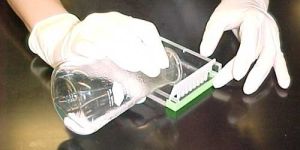
  • Agarose

    Agarose

    Get Latest Price

    • Number Of FlowerLaboratory Chemical
    • MaterialAgarose
    • UsageGel Electrophoresis, Analysis And Separation Of DNA And RNA Molecules, Cloning
    • Packaging Type25g/100g/500g
    • FunctionsSeparation Of Restriction Enzyme Digested DNA Including Genomic DNA,Estimation Of DNA Size Using DNA Marker Or Ladder,Estimation Of DNA Quantity And Quality,Analysis Of PCR Products After Polymerase Chain Reaction,DNA Fingerprinting
    • GradeBiotechnology Grade
    • EEO (Electroendosmosis)0.27
    • Gel Range (1.5%)36-39
    • Gel Strength (1.5%)800 G/cm2
    • Melting Range (1.5%)87-89
    • The company has created a foothold in the business of exporting and supplying top- class Agarose. Extensively used for gel electrophoresis method, the Agarose that we Supply is made from high quality compounds. The superior grade Agarose offered by us is mainly used in analysis or separation of DNA and RNA molecules (although proteins can also be separated on agarose gels). This separation also allows the purification of specific sizes of DNAs after restriction enzyme digestion. In addition to this, this quality-tested laboratory chemical cab also be used in cloning to obtain cut plasmids, in which agarose gel electrophoresis separates cut vectors from uncut ones. Further, the clients can avail from us, this excellent quality Agarose in varied specifications as per their requirements. Its Functions Separation of restriction enzyme digested DNA including genomic DNA, prior to Southern Blot transfer. It is also often used for separating RNA prior to Northern transferAllows for the estimation of the size of DNA molecules using a DNA marker or ladder which contains DNA fragments of various known sizesAllows the rough estimation of DNA quantity and qualityQuantity is assessed using lambda DNA ladder which contains specific amounts of DNA in different bandsQuality of DNA is assessed by observing the absence of streaking or fragments (or contaminating DNA bands)Analysis of PCR products after polymerase chain reaction to assess for target DNA amplificationOther techniques rely on agarose gel electrophoresis for DNA separation including DNA fingerprinting Specifications Grade : Biotechnology gradeEEO (Electroendosmosis) : 0.27Gel Range (1.5%) : 36-39Gel Strength (1.5%)(g/cm2) : 800Melting Range (1.5%) : 87-89 Packing 25g/100/500g
    ...more
  • Agarose

    Agarose

    Request for Price

    The company has created a foothold in the business of exporting and supplying top- class Agarose. Extensively used for gel electrophoresis method, the Agarose that we Supply is made from high quality compounds. The superior grade Agarose offered by us is mainly used in analysis or separation of DNA and RNA molecules (although proteins can also be separated on agarose gels). This separation also allows the purification of specific sizes of DNAs after restriction enzyme digestion. In addition to this, this quality-tested laboratory chemical cab also be used in cloning to obtain cut plasmids, in which agarose gel electrophoresis separates cut vectors from uncut ones. Further, the clients can avail from us, this excellent quality Agarose in varied specifications as per their requirements. Its Functions Separation of restriction enzyme digested DNA including genomic DNA, prior to Southern Blot transfer. It is also often used for separating RNA prior to Northern transferAllows for the estimation of the size of DNA molecules using a DNA marker or ladder which contains DNA fragments of various known sizesAllows the rough estimation of DNA quantity and qualityQuantity is assessed using lambda DNA ladder which contains specific amounts of DNA in different bandsQuality of DNA is assessed by observing the absence of streaking or fragments (or contaminating DNA bands)Analysis of PCR products after polymerase chain reaction to assess for target DNA amplificationOther techniques rely on agarose gel electrophoresis for DNA separation including DNA fingerprinting Specifications Grade : Biotechnology gradeEEO (Electroendosmosis) : 0.27Gel Range (1.5%) : 36-39Gel Strength (1.5%)(g/cm2) : 800Melting Range (1.5%) : 87-89 Packing 25g/100/500g

    Number Of Flower : Laboratory Chemical

    Material : Agarose

    Usage : Gel Electrophoresis, Analysis And Separation Of DNA And RNA Molecules, Cloning

    Packaging Type : 25g/100g/500g

    ...more
    Get Best Price

Average Customer Rating


Excellent Good
30 ratings and 4 reviews

Business Rating


5 14
4 16
3 0
2 0
1 0
Write a Review

User Satisfaction


100%
Response
100%
Quality
100%
Delivery

Choose the service or product you're reviewing for this business

How would you rate the business?

What did you like and dislike?

  • Response
  • Delivery
  • Quality

Tell us about your experience?

About the Company

  • Primary Business Manufacturers
  • Secondary Business Type Exporters / Wholesale Suppliers
  • Year of Establishment 1970
  • No. of Employees 6 - 20
  • Annual Turnover Rs. 0.5 to 2.5 Crore Approx.
  • Ownership Type Individual (Sole proprietorship)

Opening Hours

  • SUN : Closed
  • MON : 9:30 AM - 6:30 PM
  • TUE : 9:30 AM - 6:30 PM
  • WED : 9:30 AM - 6:30 PM
  • THU : 9:30 AM - 6:30 PM
  • FRI : 9:30 AM - 6:30 PM
  • SAT : 9:30 AM - 6:30 PM
Fine Chemicals and Scientific Co - Retailer of [Inorganic and Organic Solvents] - Alcohol, Acetone, Isopropyl Alcohol, Methyl Alcohol, Ethyl Acetate, [Industrial Chemicals] - Formaldehyde, Glycerol, Molybdic Acid, Silica Gel, Silver Nitrate, [Cleaning Wipes & Liquids] - Sodium Hypochlorite, Liquid Phenol, GBL - gbl wheel cleaner, Gbl Wheel Cleaner in Delhi.
Read More »

Contact Information

Pye Kem Laboratories

top