During the armoring process and subsequently during laying of the cable, the armor wires are subjected to torsion stress. The test is conducted to evaluate the torsion resistance of the wire.
A Unique Machine which conforms to three different test standards. The machine is manufactured as per IS 10810 Pt 38 (Torsion Test On Galvanized Steel Wires For Armoring.), IS 10810 Pt 39 (Winding Test On Galvanized steel Strips For Armoring.) and IS 10810 Pt 3 (Wrapping Test For Aluminum Wires). for wire.
During the armoring process and subsequently during laying of the cable, the armor wires are subjected to torsion stress. The test is conducted to evaluate the torsion resistance of the wire.
A Unique Machine which conforms to three different test standards. The machine is manufactured as per IS 10810 Pt 38 (Torsion Test On Galvanized Steel Wires For Armoring.), IS 10810 Pt 39 (Winding Test On Galvanized steel Strips For Armoring.) and IS 10810 Pt 3 (Wrapping Test For Aluminum Wires). for wire.
Test Chamber Size: 250 x 300 (Dia x depth in mm) (Other Sizes also available)
Chamber Construction: Double Walled, Inner Chamber of SS, outer of GI / MS
Temperature Range: 50oC to 150oC. +/- 1oC
Temperature Control: Using PID Digital Temperature Controller
Vacuum Control: Using Solenoid Valve to control the vacuum pump
Vacuum Display: Digital Dispaly
Power Requirement : 1.5KWVoltage : 220V, 50 Hz or 110V 60 Hz
Delivery: 3 to 4 weeksPacking : One Wooden Box for Oven, Second for Vacuum Pump
Model Number: SSI 558 VOC
Standard Number: IS: 10810 (Pt.33)
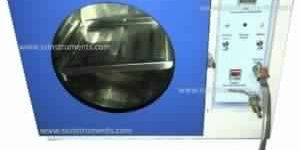
SSIPL vacuum ovens are required in almost every institution for drying, moisture removal by heating in vacuumed environment.
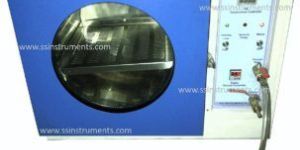
SSI 107 Vacuum Oven is a double walled leak proof chamber with inner chamber made of Stainless steel and outer chamber of Mild Steel powder coated. The Heaters are embedded, and are controlled by digital temperature controller for temperature range from 50 to 150 deg C.
Vacuum range 0-30 PSI is achieved by a separate vacuum pump connected to the oven using rubber pipe.
A toughened glass window is provided in the door to view the samples inside without disturbing the thermal / vacuum conditions
A choice of cylindrical / rectangular inner chamber is available as per requirement.
Some of the standard sizes are
Cylindrical
Rectangular
Diameter X Depth
L X B X H
250 X 300 mm
6” X 6” X 6”
300 X 300 mm
8” X 8” X 8”
10” X 10” X 10”
12” X 12” X 12”
Vacuum Ovens with temperature up to 300°C with Stainless steel door / Digital vacuum control with solenoid valves are also available on request.
Model Number: SSI 558 VOC
Standard Number: IS: 10810 (Pt.33)
SSIPL vacuum ovens are required in almost every institution for drying, moisture removal by heating in vacuumed environment.
SSI 107 Vacuum Oven is a double walled leak proof chamber with inner chamber made of Stainless steel and outer chamber of Mild Steel powder coated. The Heaters are embedded, and are controlled by digital temperature controller for temperature range from 50 to 150 deg C.
Vacuum range 0-30 PSI is achieved by a separate vacuum pump connected to the oven using rubber pipe.
A toughened glass window is provided in the door to view the samples inside without disturbing the thermal / vacuum conditions
A choice of cylindrical / rectangular inner chamber is available as per requirement.
Some of the standard sizes are
Cylindrical
Rectangular
Diameter X Depth
L X B X H
250 X 300 mm
6” X 6” X 6”
300 X 300 mm
8” X 8” X 8”
10” X 10” X 10”
12” X 12” X 12”
Vacuum Ovens with temperature up to 300°C with Stainless steel door / Digital vacuum control with solenoid valves are also available on request.
Test Chamber: 20 x 14 x 16 (LBH in inches), other sizes available
Chamber Construction: Double Walled, Inner Chamber made of SS, outer MS / GI
Temperature Range: Models availabe in 0 up to -86oC
Temperatuer Control: Using Digital Temperature Controller, +/- 2oC
Refigration: Using Standrad compressor, Non CFC Gas
Delivery : 4 to 8 weeks (based on Model)Packing : Wooden Box
Model Number: SSI 506 UL
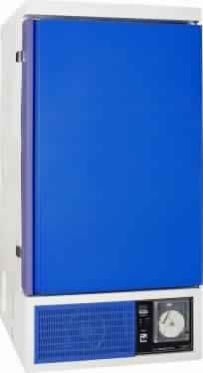
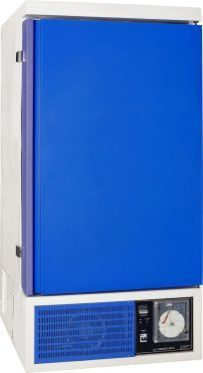
When the Cables / Electrical Equipments are subjected top extreme cold for a considerable duration of time, they may become hardened and stiff. Such hardness and stiffness cause cracking of the insulation or sheath and may lead to failure of cable / equipments.
Description
When the Cables / Electrical Equipments are subjected top extreme cold for a considerable duration of time, they may become hardened and stiff. Such hardness and stiffness cause cracking of the insulation or sheath and may lead to failure of cable / equipments.
The extent and type of change that takes place depends upon the severity of exposure of the sample to cold temperatures. This test makes an assessment of change in equipment performance by subjecting them to accelerated ageing in very low temperature.
The instrument is available in two various different models with temperature range for -0 to -86oC.
The instrument consists of
Cold Chamber Size (as per requirement of customer)
Digital Temperature Indicating controller
Glass Window on the door. (if required)
Very high displacement compressor of about 22 per revolution
Highly efficient refrigerant R404A having a boiling pt. Of -46DegC
Our freezer does not require a low ambient temp. It can work even at an ambient of 40DegC
We use a down feed evaporator so as to improve the refrigeration effect and coeff. Of performance of the system as a whole
High density PUF of about 60kg/cm3 so as to hold the temperature for a longer time
Hot discharge is circulated on the mouth of the freezer to prevent cooling losses
Microprocessor based temperature controller for accurate temperature and longer compressor life.
Standard compressor of 1 hp
Cascading Refigration System
Copper Capillary of higher wall thickness to last longer
Uniform capillary distribution on the surface of chamber for better / faster and uniform cooling within chamber.
Double door formation (acrylic + normal) for better insulation
Noise less operations
Model Number: SSI 506 UL
When the Cables / Electrical Equipments are subjected top extreme cold for a considerable duration of time, they may become hardened and stiff. Such hardness and stiffness cause cracking of the insulation or sheath and may lead to failure of cable / equipments.
Description
When the Cables / Electrical Equipments are subjected top extreme cold for a considerable duration of time, they may become hardened and stiff. Such hardness and stiffness cause cracking of the insulation or sheath and may lead to failure of cable / equipments.
The extent and type of change that takes place depends upon the severity of exposure of the sample to cold temperatures. This test makes an assessment of change in equipment performance by subjecting them to accelerated ageing in very low temperature.
The instrument is available in two various different models with temperature range for -0 to -86oC.
The instrument consists of
Cold Chamber Size (as per requirement of customer)
Digital Temperature Indicating controller
Glass Window on the door. (if required)
Very high displacement compressor of about 22 per revolution
Highly efficient refrigerant R404A having a boiling pt. Of -46DegC
Our freezer does not require a low ambient temp. It can work even at an ambient of 40DegC
We use a down feed evaporator so as to improve the refrigeration effect and coeff. Of performance of the system as a whole
High density PUF of about 60kg/cm3 so as to hold the temperature for a longer time
Hot discharge is circulated on the mouth of the freezer to prevent cooling losses
Microprocessor based temperature controller for accurate temperature and longer compressor life.
Standard compressor of 1 hp
Cascading Refigration System
Copper Capillary of higher wall thickness to last longer
Uniform capillary distribution on the surface of chamber for better / faster and uniform cooling within chamber.
Double door formation (acrylic + normal) for better insulation
Noise less operations
Test Chamber20 x 14 x 16 (LBH in inches), other sizes available
Chamber ConstructionDouble Walled, Inner Chamber made of SS, outer MS / GI
Temperatuer ControlUsing Digital Temperature Controller, +/- 2oC
RefigrationUsing Standrad compressor, Non CFC Gas
DeliveryPacking
When the Cables / Electrical Equipments are subjected top extreme cold for a considerable duration of time, they may become hardened and stiff. Such hardness and stiffness cause cracking of the insulation or sheath and may lead to failure of cable / equipments.
When the Cables / Electrical Equipments are subjected top extreme cold for a considerable duration of time, they may become hardened and stiff. Such hardness and stiffness cause cracking of the insulation or sheath and may lead to failure of cable / equipments.
Temperature Range : Models availabe in 0 up to -86oC
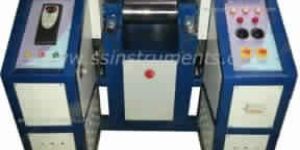
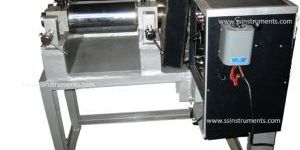
Model: SSI 511 TRPVS (Two Roll mill for PVC with variable roller rotation speed)
Roller Size: 6″ Dia x 12″ Length
Heating: ‘U’ Shaped Heaters embedded in Rollers
Temperature Control: Through Energy Regulator
Motor / GearBox: 3 Hp 440VAC, 3 Phase Motor, Standard Gear Box
Roller Material: Hardened Steel, Chrome Plated
Roller RPM Control: 0-30 RPM using Motor Drive
Power Requirment: 440V Three Phase,
Material Suitable for: PVC and allied Material
Delivery : 6 to 8 weeks
Packing : One Wooden Box,
Dimension : 5 x 4 x 4 (LBH in feet) 350 Kg
Model Number: SSI 511 TRPVS
Two Roll Mill is used for mixing two or more compounds in a homogeneous mixture. This Mixture is then molded into samples for further testing.
Instrument Principle
Uniform mixing of two or more components to make a homogeneous mixture is vital to make samples for testing. The Two Roll Mill with its two heated rollers, rotating in opposite directions, at slightly different speeds is an ideal machine for such a work.
The final test samples can then be obtained from the sheet by using Hydraulic Hot Press, Dumb-bell Dies etc.
Two Roll Mill is available in various models for specific customer requirement. Various Models are
For PVC (With Heating only)
For Rubber (with Water Cooling only)
For PVC and Rubber (with heating and water cooling)
Rollers with Variable RPM
Rollers with Variable RPM and Friction Ratio
Instrument
The Instrument consists of following:
Two rollers mounted on a sturdy frame, rotating in opposite opposite at slightly different speeds.
Roller Size: 6″ dia, 12″ Length.
Temperature Control : Using two Energy Regulators one for each roller.
Heater: Heating by especially designed U shaped heaters.
Motor: 3 Hp, 440 VAC, 3 phase.
Gear Assembly : to drive the rollers in opposite directions.
Control: Forward Reverse Switch and power cord.
Spatula for mixing the compound.
Emergency Switch to shut off motor in case of emergency
This Model is suitable for PVC and allied material which require heating for melting and mixing. Not suitable for rubber materials which generates heat during mixing.
Model Number: SSI 511 TRPVS
Two Roll Mill is used for mixing two or more compounds in a homogeneous mixture. This Mixture is then molded into samples for further testing.
Instrument Principle
Uniform mixing of two or more components to make a homogeneous mixture is vital to make samples for testing. The Two Roll Mill with its two heated rollers, rotating in opposite directions, at slightly different speeds is an ideal machine for such a work.
The final test samples can then be obtained from the sheet by using Hydraulic Hot Press, Dumb-bell Dies etc.
Two Roll Mill is available in various models for specific customer requirement. Various Models are
For PVC (With Heating only)
For Rubber (with Water Cooling only)
For PVC and Rubber (with heating and water cooling)
Rollers with Variable RPM
Rollers with Variable RPM and Friction Ratio
Instrument
The Instrument consists of following:
Two rollers mounted on a sturdy frame, rotating in opposite opposite at slightly different speeds.
Roller Size: 6″ dia, 12″ Length.
Temperature Control : Using two Energy Regulators one for each roller.
Heater: Heating by especially designed U shaped heaters.
Motor: 3 Hp, 440 VAC, 3 phase.
Gear Assembly : to drive the rollers in opposite directions.
Control: Forward Reverse Switch and power cord.
Spatula for mixing the compound.
Emergency Switch to shut off motor in case of emergency
This Model is suitable for PVC and allied material which require heating for melting and mixing. Not suitable for rubber materials which generates heat during mixing.
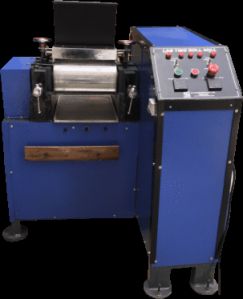
Model: SSI 511 TRPFS (Two Roll Mill for PVC with Fixed roller rotation speed)
Roller Size: 6″ Dia x 12″ Length
Heating: ‘U’ Shaped Heaters embedded in Rollers
Temperature Control: Through Energy Regulator
Motor / GearBox: 3 or 5 Hp III Phase Motor, Standard Gear Box
Roller Material: Hardened Steel, Chrome Plated
Power Requirment: 440V Three Phase
Delivery: 6 to 8 weeks
Packing: One Wooden Box
Dimension: 5 x 4 x 4 (LBH in feet) 350 Kg
Model Number: SSI 511 TRPFS
Two Roll Mill is used for mixing two or more compounds in a homogeneous mixture. This Mixture is then molded into samples for further testing.
Instrument Principle
For preparing test sample from two or more materials, they have to be mixed homogeneously. The Two Roll Mill with its two heated rollers, rotating in different directions, at slightly different speeds is an ideal machine for such a work. The test samples can then be obtained from the sheet by using Hydraulic Hot Press, Dumb-bell Dies etc.
Two Roll Mill is available in various models for specific customer requirement. Various Models are
For PVC (With Heating only)
For Rubber (with Water Cooling only)
For PVC and Rubber (with heating and water cooling)
Rollers with Variable RPM
Rollers with Variable RPM and Friction Ration
Instrument
The Instrument consists of following:
Two rollers mounted on a sturdy frame, rotating in different direction at slightly different speeds.
Roller Size: 6 dia, 12 Length.
Two energy regulator for heating control one for each roller.
Heating by especially designed U shaped heaters.
One 440 V III phase motor with gear assembly for rotating the rollers.
Start / Stop switch and power cord.
Two Emergency Switches, one on panel and one on knee height to reverse the motor in case of any emergency.
Guard plates and funnel on rollers to prevent accidental insertion of operator hand between rollers.
Spatula for mixing the compound.
Model Number: SSI 511 TRPFS
Two Roll Mill is used for mixing two or more compounds in a homogeneous mixture. This Mixture is then molded into samples for further testing.
Instrument Principle
For preparing test sample from two or more materials, they have to be mixed homogeneously. The Two Roll Mill with its two heated rollers, rotating in different directions, at slightly different speeds is an ideal machine for such a work. The test samples can then be obtained from the sheet by using Hydraulic Hot Press, Dumb-bell Dies etc.
Two Roll Mill is available in various models for specific customer requirement. Various Models are
For PVC (With Heating only)
For Rubber (with Water Cooling only)
For PVC and Rubber (with heating and water cooling)
Rollers with Variable RPM
Rollers with Variable RPM and Friction Ration
Instrument
The Instrument consists of following:
Two rollers mounted on a sturdy frame, rotating in different direction at slightly different speeds.
Roller Size: 6 dia, 12 Length.
Two energy regulator for heating control one for each roller.
Heating by especially designed U shaped heaters.
One 440 V III phase motor with gear assembly for rotating the rollers.
Start / Stop switch and power cord.
Two Emergency Switches, one on panel and one on knee height to reverse the motor in case of any emergency.
Guard plates and funnel on rollers to prevent accidental insertion of operator hand between rollers.
Spatula for mixing the compound.
Model: SSI 511 TRPFSD (Two Roll Mill for PVC with Fixed roller rotation speed, Digital Temperature)
Roller Size: 6″ Dia x 12″ Length
Heating: ‘U’ Shaped Heaters embedded in Rollers
Temperature Control: Through Digital PID Controllers on both rollers.
Motor / GearBox: 3 or 5 Hp III Phase Motor, Standard Gear Box
Roller Material: Hardened Steel, Chrome Plated
Power Requirment: 440V Three Phase
Delivery: 6 to 8 weeks
Packing: One Wooden Box
Dimension: 5 x 4 x 4 (LBH in feet) 350 Kg
Model Number: SSI 511 TRPFSD
Two Roll Mill is used for mixing two or more compounds in a homogeneous mixture. This Mixture is then molded into samples for further testing.
Instrument Principle
For preparing test sample from two or more materials, they have to be mixed homogeneously. The Two Roll Mill with its two heated rollers, rotating in different directions, at slightly different speeds is an ideal machine for such a work. The test samples can then be obtained from the sheet by using Hydraulic Hot Press, Dumb-bell Dies etc.
Two Roll Mill is available in various models for specific customer requirement. Various Models are
For PVC (With Heating only)
For Rubber (with Water Cooling only)
For PVC and Rubber (with heating and water cooling)
Rollers with Variable RPM
Rollers with Variable RPM and Friction Ration
Instrument
The Instrument consists of following:
Two rollers mounted on a sturdy frame, rotating in different direction at slightly different speeds.
Roller Size: 6 dia, 12 Length.
Two PID Controller for heating control one for each roller.
Heating by especially designed U shaped heaters.
One 440 V III phase motor with gear assembly for rotating the rollers.
Start / Stop switch and power cord.
Two Emergency Switches, one on panel and one on knee height to reverse the motor in case of any emergency.
Guard plates and funnel on rollers to prevent accidental insertion of operator hand between rollers.
Spatula for mixing the compound.
Model Number: SSI 511 TRPFSD
Two Roll Mill is used for mixing two or more compounds in a homogeneous mixture. This Mixture is then molded into samples for further testing.
Instrument Principle
For preparing test sample from two or more materials, they have to be mixed homogeneously. The Two Roll Mill with its two heated rollers, rotating in different directions, at slightly different speeds is an ideal machine for such a work. The test samples can then be obtained from the sheet by using Hydraulic Hot Press, Dumb-bell Dies etc.
Two Roll Mill is available in various models for specific customer requirement. Various Models are
For PVC (With Heating only)
For Rubber (with Water Cooling only)
For PVC and Rubber (with heating and water cooling)
Rollers with Variable RPM
Rollers with Variable RPM and Friction Ration
Instrument
The Instrument consists of following:
Two rollers mounted on a sturdy frame, rotating in different direction at slightly different speeds.
Roller Size: 6 dia, 12 Length.
Two PID Controller for heating control one for each roller.
Heating by especially designed U shaped heaters.
One 440 V III phase motor with gear assembly for rotating the rollers.
Start / Stop switch and power cord.
Two Emergency Switches, one on panel and one on knee height to reverse the motor in case of any emergency.
Guard plates and funnel on rollers to prevent accidental insertion of operator hand between rollers.
Spatula for mixing the compound.
Chamber Sizes: 1000 x 1000 x 1000 (LBH in mm), Volume 1 m3
Chamber Construction: Inner Chamber of 8 mm thick Polypropylene Polymer, Outer MS / GI duly painted
Burner : Capable of producing a flame of 1200oC
Gas Detection: Using Gas Detection Tubes
Delivery : 6 to 8 weeks
Packing : One wooden Box
Model Number: SSI 558
Standard Number: NCD 1409
Any compound when burned emits a cocktail of gases, which are harmful to humans. The significant of these gases is increased if the area under fire is compact and can have serious effects on humans and other material present in the room.
Any compound when burned emits a cocktail of gases, which are harmful to humans. The significant of these gases is increased if the area under fire is compact.
This test determines the amount of various toxic gases emitted during the burning of various material .
The Sample is burned under test conditions by open flame of 1200o C temperature. All the gases thus emitted are collected and analyzed for their composition and concentrations using Gas detection tube.
The instrument Consist of
Double Walled Chamber
Inner Chamber of Polypropylene Polymer sheet of 8mm thickness, outer of MS powder coated.
Burner capable of producing 1200 deg C flame
Timers of Flame application (with buzzer), Mixing Fan, Exhaust fan
Temperature Indicator for Flame , Chamber
Safety measures for Flame outage / excess pressure in chamber
SS sample stand with titanium alloy mesh
Toughed glass window
Single port for insertion of Gas detection tube. (Tube / pump does not form the part of this instrument)
Model Number: SSI 558
Standard Number: NCD 1409
Any compound when burned emits a cocktail of gases, which are harmful to humans. The significant of these gases is increased if the area under fire is compact and can have serious effects on humans and other material present in the room.
Any compound when burned emits a cocktail of gases, which are harmful to humans. The significant of these gases is increased if the area under fire is compact.
This test determines the amount of various toxic gases emitted during the burning of various material .
The Sample is burned under test conditions by open flame of 1200o C temperature. All the gases thus emitted are collected and analyzed for their composition and concentrations using Gas detection tube.
The instrument Consist of
Double Walled Chamber
Inner Chamber of Polypropylene Polymer sheet of 8mm thickness, outer of MS powder coated.
Burner capable of producing 1200 deg C flame
Timers of Flame application (with buzzer), Mixing Fan, Exhaust fan
Temperature Indicator for Flame , Chamber
Safety measures for Flame outage / excess pressure in chamber
SS sample stand with titanium alloy mesh
Toughed glass window
Single port for insertion of Gas detection tube. (Tube / pump does not form the part of this instrument)
Rotation Counter: Digital Electronic Counter with Proximity Switch
Power : 1 KWVoltage : 220 V 50 Hz
Delivery : 5 to 6 weeksPacking : One Wooden Box
Model Number: SSI 523
Standard Number: IS 10810 Pt 38IS 10810 Pt 39IS 10810 Pt 3
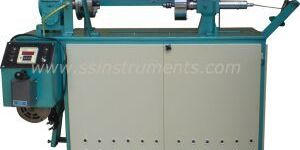
During the armoring process and subsequently during laying of the cable, the armor wires are subjected to torsion stress. The test is conducted to evaluate the torsion resistance of the wire.
A Unique Machine which conforms to three different test standards. The machine is manufactured as per IS 10810 Pt 38 (Torsion Test On Galvanized Steel Wires For Armoring.), IS 10810 Pt 39 (Winding Test On Galvanized steel Strips For Armoring.) and IS 10810 Pt 3 (Wrapping Test For Aluminum Wires). for wire.
During the armoring process and subsequently during laying of the cable, the armor wires are subjected to torsion stress. The test is conducted to evaluate the torsion resistance of the wire. The wire is attached between the two vices and twisted / turned. The no of turns required to break the wire is then noted.
The Instrument consists of following:
Two Vices.
Heavy Duty Motor
Weight attachment to provide tension to sample
Attachment for Winding and wrapping Test complete with weight and Mandrels
Model Number: SSI 523
Standard Number: IS 10810 Pt 38IS 10810 Pt 39IS 10810 Pt 3
During the armoring process and subsequently during laying of the cable, the armor wires are subjected to torsion stress. The test is conducted to evaluate the torsion resistance of the wire.
A Unique Machine which conforms to three different test standards. The machine is manufactured as per IS 10810 Pt 38 (Torsion Test On Galvanized Steel Wires For Armoring.), IS 10810 Pt 39 (Winding Test On Galvanized steel Strips For Armoring.) and IS 10810 Pt 3 (Wrapping Test For Aluminum Wires). for wire.
During the armoring process and subsequently during laying of the cable, the armor wires are subjected to torsion stress. The test is conducted to evaluate the torsion resistance of the wire. The wire is attached between the two vices and twisted / turned. The no of turns required to break the wire is then noted.
The Instrument consists of following:
Two Vices.
Heavy Duty Motor
Weight attachment to provide tension to sample
Attachment for Winding and wrapping Test complete with weight and Mandrels
Temperature Control: PID Digital Temperature Controller, +/- 0.5oC
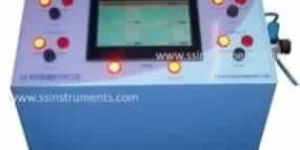
Display: Using Touch screen HMI
Timer: Inbuilt in HMI
Test Monitor: Each Sample can be monitored in separate screen
Result: The Thermal Stability Time can be stored along with Sample reference on Pen Drive.
Delivery: 3 to 4 Weeks
Packing: One Wooden Box
Model Number: SSI 501 TSH
Standard Number: IS: 5831, IS:10810 Pt 60, IEC: 540
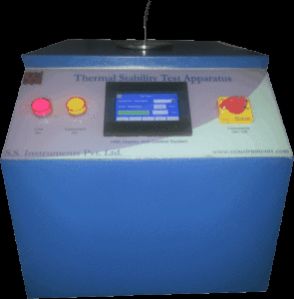
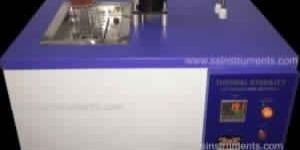
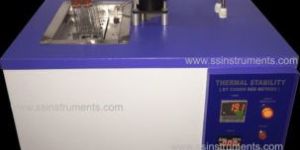
Thermoplastics and PVC materials when exposed to continuous heat, degenerates and emit harmful acidic gases. The instrument is manufactured for testing PVC materials against their thermal stability at higher temperature.
Principle
Thermoplastics and PVC materials when exposed to continuous heat, degenerates and emit harmful acidic gases. The instrument is manufactured for testing PVC materials against their thermal stability at higher temperature. The basic principal is that the pH paper changes its color when it comes in contact with halogen gases, released by PVC and its compounds on heating at higher temperatures.
Standards
The Instrument is especially designed to suit the requirement of IS: 5831, IS 10810 (Pt 60), IEC 540
Instrument
The instrument consists of
One solid Aluminum block used as the heating medium.
16 holes are drilled in the aluminum block for keeping the sample.
Specially designed embedded / Jacket heaters in the thermal block.
Digital Temperature Indicating Controller for precise setting & control of temperature.
Touch Screen HMI to control and Display the parameters of the Test
Consumables like ph paper & test tubes are not part of the standard equipment and are available at extra cost.
The sample is put inside a glass test tube and the test tube is dipped into the per heated Thermal Block. A small piece of ph paper is attached to the test tube. The time of insertion of tube is noted down. As the PVC disintegrates, it release acidic fumes which changes the color of ph paper. The time of change of color is again noted down. Using these times, the thermal stability time is determined for the PVC sample.
Model Number: SSI 501 TSH
Standard Number: IS: 5831, IS:10810 Pt 60, IEC: 540
Thermoplastics and PVC materials when exposed to continuous heat, degenerates and emit harmful acidic gases. The instrument is manufactured for testing PVC materials against their thermal stability at higher temperature.
Principle
Thermoplastics and PVC materials when exposed to continuous heat, degenerates and emit harmful acidic gases. The instrument is manufactured for testing PVC materials against their thermal stability at higher temperature. The basic principal is that the pH paper changes its color when it comes in contact with halogen gases, released by PVC and its compounds on heating at higher temperatures.
Standards
The Instrument is especially designed to suit the requirement of IS: 5831, IS 10810 (Pt 60), IEC 540
Instrument
The instrument consists of
One solid Aluminum block used as the heating medium.
16 holes are drilled in the aluminum block for keeping the sample.
Specially designed embedded / Jacket heaters in the thermal block.
Digital Temperature Indicating Controller for precise setting & control of temperature.
Touch Screen HMI to control and Display the parameters of the Test
Consumables like ph paper & test tubes are not part of the standard equipment and are available at extra cost.
The sample is put inside a glass test tube and the test tube is dipped into the per heated Thermal Block. A small piece of ph paper is attached to the test tube. The time of insertion of tube is noted down. As the PVC disintegrates, it release acidic fumes which changes the color of ph paper. The time of change of color is again noted down. Using these times, the thermal stability time is determined for the PVC sample.
Temperature Control: PID Digital Temperature Controller, +/- 0.5oC
Delivery: 3 to 4 Weeks
Packing: One Wooden Box
Model Number: SSI 501 TS
Standard Number: IS: 5831, IS: 10810 (Pt.60), IEC:540
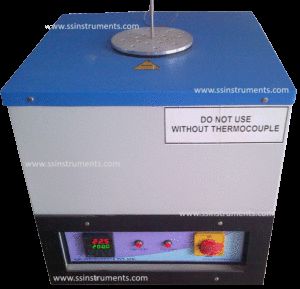
Thermoplastics and PVC (Plasticized Polyvinyl Chloride) materials when exposed to continuous heat, degenerates and emit harmful acidic gases. The instrument is manufactured for testing PVC materials against their thermal stability at higher temperature.
Instrument Principle
Thermoplastics and PVC materials when exposed to continuous heat, degenerates and emit harmful acidic gases. The instrument is manufactured for testing PVC materials against their thermal stability at higher temperature. The basic principal is that the pH paper changes its color when it comes in contact with halogen gases, released by PVC and its compounds on heating at higher temperatures.
Standards
The Instrument is especially designed to suit the requirement of IS: 5831, IS 10810 (Pt 60), IEC 540
Instrument
The instrument consists of
One solid Aluminum block used as the heating medium. 15 holes are drilled in the aluminum block for keeping the sample. Specially designed embedded / Jacket heaters in the thermal block. Digital Temperature Indicating Controller for precise setting & control of temperature.
Consumables like ph paper & test tubes are not part of the standard equipment and are available at extra cost. A stop watch has to be provided by the user.
The sample is put inside a glass test tube and the test tube is dipped into the per heated Thermal Block. A small piece of ph paper is attached to the test tube. The time of insertion of tube is noted down. As the PVC disintegrates, it release acidic fumes which changes the color of ph paper. The time of change of color is again noted down. Using these times, the thermal stability time is determined for the PVC sample
Model Number: SSI 501 TS
Standard Number: IS: 5831, IS: 10810 (Pt.60), IEC:540
Thermoplastics and PVC (Plasticized Polyvinyl Chloride) materials when exposed to continuous heat, degenerates and emit harmful acidic gases. The instrument is manufactured for testing PVC materials against their thermal stability at higher temperature.
Instrument Principle
Thermoplastics and PVC materials when exposed to continuous heat, degenerates and emit harmful acidic gases. The instrument is manufactured for testing PVC materials against their thermal stability at higher temperature. The basic principal is that the pH paper changes its color when it comes in contact with halogen gases, released by PVC and its compounds on heating at higher temperatures.
Standards
The Instrument is especially designed to suit the requirement of IS: 5831, IS 10810 (Pt 60), IEC 540
Instrument
The instrument consists of
One solid Aluminum block used as the heating medium. 15 holes are drilled in the aluminum block for keeping the sample. Specially designed embedded / Jacket heaters in the thermal block. Digital Temperature Indicating Controller for precise setting & control of temperature.
Consumables like ph paper & test tubes are not part of the standard equipment and are available at extra cost. A stop watch has to be provided by the user.
The sample is put inside a glass test tube and the test tube is dipped into the per heated Thermal Block. A small piece of ph paper is attached to the test tube. The time of insertion of tube is noted down. As the PVC disintegrates, it release acidic fumes which changes the color of ph paper. The time of change of color is again noted down. Using these times, the thermal stability time is determined for the PVC sample
Temperature ControlPID Digital Temperature Controller, +/- 0.5oC
Thermoplastics and PVC (Plasticized Polyvinyl Chloride) materials when exposed to continuous heat, degenerates and emit harmful acidic gases. The instrument is manufactured for testing PVC materials against their thermal stability at higher temperature.Thermoplastics and PVC materials when exposed to continuous heat, degenerates and emit harmful acidic gases. The instrument is manufactured for testing PVC materials against their thermal stability at higher temperature. The basic principal is that the pH paper changes its color when it comes in contact with halogen gases, released by PVC and its compounds on heating at higher temperatures.
Thermoplastics and PVC (Plasticized Polyvinyl Chloride) materials when exposed to continuous heat, degenerates and emit harmful acidic gases. The instrument is manufactured for testing PVC materials against their thermal stability at higher temperature.Thermoplastics and PVC materials when exposed to continuous heat, degenerates and emit harmful acidic gases. The instrument is manufactured for testing PVC materials against their thermal stability at higher temperature. The basic principal is that the pH paper changes its color when it comes in contact with halogen gases, released by PVC and its compounds on heating at higher temperatures.
Temperature ControlPID Digital Temperature Controller, +/- 0.5oC
DisplayUsing Touch screen HMI
TimerInbuilt in HMI
Test MonitorEach Sample can be monitored in separate screen
ResultThe Thermal Stability Time can be stored along with Sample reference on Pen Drive.
Delivery3 to 4 Weeks
PackingOne Wooden Box
Thermoplastics and PVC materials when exposed to continuous heat, degenerates and emit harmful acidic gases. The instrument is manufactured for testing PVC materials against their thermal stability at higher temperature.
Thermoplastics and PVC materials when exposed to continuous heat, degenerates and emit harmful acidic gases. The instrument is manufactured for testing PVC materials against their thermal stability at higher temperature.
Temperature Control: PID Digital Temperature Controller, +/- 2oC
Delivery: 3 to 4 Weeks
Packing: One Wooden Box
Model Number: SSI TSOB
Standard Number: IS: 4669
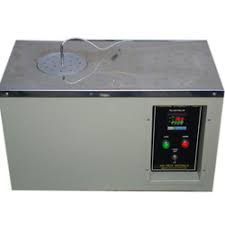
Thermoplastics and PVC (Plasticized Polyvinyl Chloride) materials when exposed to continuous heat, degenerates and emit harmful acidic gases. The instrument is manufactured for testing PVC materials against their thermal stability at higher temperature.
Principle
Thermoplastics and PVC materials when exposed to continuous heat, degenerates and emit harmful acidic gases. The instrument is manufactured for testing PVC materials against their thermal stability at higher temperature. The basic principal is that the Congo Red paper changes its color when it comes in contact with halogen gases, released by PVC and its compounds on heating at higher temperatures.
Standards
The Instrument is especially designed to suit the requirement of IS: 4669
Instrument
The instrument consists of
One oil bath to heat the oil for wet heating.
10 Glass Test Tubes (16 mm dia).
10 Glass test tubes (2 mm dia).
Digital Temperature Indicating Controller for precise setting & control of temperature.
Stirrer for uniform Temperature throughout the oil bath
Consumables like Congo Red paper & test tubes are not part of the standard equipment and are available at extra cost.
The sample is put inside a glass test tube and the test tube is dipped into the per heated oil bath. A small piece of ph paper is attached to a smaller test tube. The time of insertion of tube is noted down. As the PVC disintegrates, it release acidic fumes which changes the color of congo red paper. The time of change of color is again noted down. Using these times, the thermal stability time is determined for the PVC sample
Model Number: SSI TSOB
Standard Number: IS: 4669
Thermoplastics and PVC (Plasticized Polyvinyl Chloride) materials when exposed to continuous heat, degenerates and emit harmful acidic gases. The instrument is manufactured for testing PVC materials against their thermal stability at higher temperature.
Principle
Thermoplastics and PVC materials when exposed to continuous heat, degenerates and emit harmful acidic gases. The instrument is manufactured for testing PVC materials against their thermal stability at higher temperature. The basic principal is that the Congo Red paper changes its color when it comes in contact with halogen gases, released by PVC and its compounds on heating at higher temperatures.
Standards
The Instrument is especially designed to suit the requirement of IS: 4669
Instrument
The instrument consists of
One oil bath to heat the oil for wet heating.
10 Glass Test Tubes (16 mm dia).
10 Glass test tubes (2 mm dia).
Digital Temperature Indicating Controller for precise setting & control of temperature.
Stirrer for uniform Temperature throughout the oil bath
Consumables like Congo Red paper & test tubes are not part of the standard equipment and are available at extra cost.
The sample is put inside a glass test tube and the test tube is dipped into the per heated oil bath. A small piece of ph paper is attached to a smaller test tube. The time of insertion of tube is noted down. As the PVC disintegrates, it release acidic fumes which changes the color of congo red paper. The time of change of color is again noted down. Using these times, the thermal stability time is determined for the PVC sample
Temperature ControlPID Digital Temperature Controller, +/- 2oC
Thermoplastics and PVC (Plasticized Polyvinyl Chloride) materials when exposed to continuous heat, degenerates and emit harmful acidic gases. The instrument is manufactured for testing PVC materials against their thermal stability at higher temperature.
Thermoplastics and PVC (Plasticized Polyvinyl Chloride) materials when exposed to continuous heat, degenerates and emit harmful acidic gases. The instrument is manufactured for testing PVC materials against their thermal stability at higher temperature.
Model: SSI 502 AGIS HMI (Ageing Oven as per IS & IEC with HMI)
Chamber Size: 100mm (Dia) x 300 mm (Height)
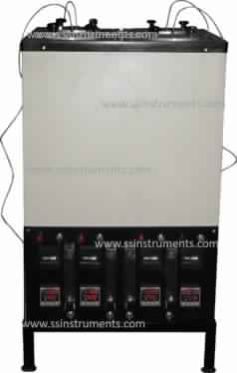
No of Chambers: 4 chambers, Independently controlled
Instrument Construction: Test Chamber is made of thick Alumnium Pipe, MS / GI outer Chamber
Temperature Range: Ambient to 200oC, LC 0.1oC
Temperature Control: Using PID Digital Temperature Controller, +/- 2oC
Air Flow: 0-1 LPM, Contolled using Needle Valves
Air Flow Display: Using Digital Flow Sensors
Instrument Control: Using PLC and HMI
Delivery: 4 to 6 Weeks
Packing: One Wooden Box,.
Model Number: SSI 502 AGIS HMI
Standard Number: IS: 10810 Pt.10, IS: 10810 Pt. 11, IEC 60811-1-2
Thermoplastic and Poly vinyl Chloride substances when exposed to heat undergo many types of physical and chemical changes. The extent and type of change that takes place depends upon the severity of exposure of the sample to heat (i.e., temp. range), duration and rate of air flow.
Instrument Principle
Thermoplastic and Poly Vinyl Chloride substances when exposed to heat undergo many types of physical and chemical changes. The extent and type of change that takes place depends upon the severity of exposure of the sample to heat (i.e., temp. range), duration and rate of air flow. This test makes an assessment of change in Tensile Strength and Elongation of the material on subjecting them to accelerated ageing in hot air.
Standards
The Instrument is especially designed to suit the requirement of IEC: 60811-1-2, IS 10810 (Pt 10), IS 10810 (Pt 11)
Instrument
.
Each Cell of Thermal Ageing Oven is a complete instrument in itself i.e., fitted with individual Temp. Indicating Controller, Air Flow Meter, Air temperature controller and an Hour Meter. This enables the user to test different type of samples at desired temperature and duration, depending upon test requirement of end users & testing authorities.
The Thermal Ageing Oven instrument consists of the following:
.
A double walled chamber with inside chamber of thick aluminum sheet.
Size of the chamber is 100 mm dia. x 300mm ht.
Jacket type heater for the chamber.
Digital Temp. Indicating Controller with sensor. Temp. range 0-200 ± 2 oC.
Digital Flow Sensors with needle valves for controlling the volume of air passing through the chamber.
Air inlet nozzle for the airline or air compressor.
Specially designed split top cover to hold three to five test samples in each chamber.
7″ HMI to display and control the ageing Oven.
Blind Thermostat to cut off heaters after 250oC in case of temperature overshoot for each chamber.
.
To operate the Thermal Ageing Oven unit Compressed Air line is to be provided by the customer. If the customer is using his own air compressor, it may require one pressure regulator, pressure gauge & connecting pipes which are available from us.
Difference Between Hot Air Oven and Thermal Ageing Oven:
The test requirement is 8 to 20 air changes per hour, measured on a Flow Meter. According to IS standard, if the Oven does not have a regulated air supply, the oven is then termed as a Hot Air Oven and not a Ageing Oven (as offered by some manufactures) and cannot be used for ageing of samples.
After ageing in the ageing test oven for specified temp. & duration the samples are to be tested on Tensile Testing Machine for tensile & elongation. For preparation of Dumb-bell shaped samples, you may require hydraulic hot press, dumb-bell dies, dumb-bell cutting press, two-roll mill etc. Please ask for details.
Model Number: SSI 502 AGIS HMI
Standard Number: IS: 10810 Pt.10, IS: 10810 Pt. 11, IEC 60811-1-2
Thermoplastic and Poly vinyl Chloride substances when exposed to heat undergo many types of physical and chemical changes. The extent and type of change that takes place depends upon the severity of exposure of the sample to heat (i.e., temp. range), duration and rate of air flow.
Instrument Principle
Thermoplastic and Poly Vinyl Chloride substances when exposed to heat undergo many types of physical and chemical changes. The extent and type of change that takes place depends upon the severity of exposure of the sample to heat (i.e., temp. range), duration and rate of air flow. This test makes an assessment of change in Tensile Strength and Elongation of the material on subjecting them to accelerated ageing in hot air.
Standards
The Instrument is especially designed to suit the requirement of IEC: 60811-1-2, IS 10810 (Pt 10), IS 10810 (Pt 11)
Instrument
.
Each Cell of Thermal Ageing Oven is a complete instrument in itself i.e., fitted with individual Temp. Indicating Controller, Air Flow Meter, Air temperature controller and an Hour Meter. This enables the user to test different type of samples at desired temperature and duration, depending upon test requirement of end users & testing authorities.
The Thermal Ageing Oven instrument consists of the following:
.
A double walled chamber with inside chamber of thick aluminum sheet.
Size of the chamber is 100 mm dia. x 300mm ht.
Jacket type heater for the chamber.
Digital Temp. Indicating Controller with sensor. Temp. range 0-200 ± 2 oC.
Digital Flow Sensors with needle valves for controlling the volume of air passing through the chamber.
Air inlet nozzle for the airline or air compressor.
Specially designed split top cover to hold three to five test samples in each chamber.
7″ HMI to display and control the ageing Oven.
Blind Thermostat to cut off heaters after 250oC in case of temperature overshoot for each chamber.
.
To operate the Thermal Ageing Oven unit Compressed Air line is to be provided by the customer. If the customer is using his own air compressor, it may require one pressure regulator, pressure gauge & connecting pipes which are available from us.
Difference Between Hot Air Oven and Thermal Ageing Oven:
The test requirement is 8 to 20 air changes per hour, measured on a Flow Meter. According to IS standard, if the Oven does not have a regulated air supply, the oven is then termed as a Hot Air Oven and not a Ageing Oven (as offered by some manufactures) and cannot be used for ageing of samples.
After ageing in the ageing test oven for specified temp. & duration the samples are to be tested on Tensile Testing Machine for tensile & elongation. For preparation of Dumb-bell shaped samples, you may require hydraulic hot press, dumb-bell dies, dumb-bell cutting press, two-roll mill etc. Please ask for details.
No of Chambers: 4 chambers, Independently controlled
Instrument Construction: Test Chamber is made of thick Alumnium Pipe, MS / GI outer Chamber
Temperature Range: Ambient to 200oC, LC 0.1oC
Temperature Control: Using PID Digital Temperature Controller, +/- 2oC
Air Flow: 0-1 LPM, Contolled using Needle Valves
Air Flow Display: Using Rotometer, LC 0.2 LPM
Delivery: 4 to 6 Weeks
Packing: One Wooden Box, 28 x 28 x 36 (LBH in inches), Weight 120 kg.
Model Number: SSI 502 AGIS
Standard Number: IS: 10810 Pt.10, IS: 10810 Pt. 11, IEC 60811-1-2
Thermoplastic and Poly vinyl Chloride substances when exposed to heat undergo many types of physical and chemical changes. The extent and type of change that takes place depends upon the severity of exposure of the sample to heat (i.e., temp. range), duration and rate of air flow.
Instrument Principle
Thermoplastic and Poly Vinyl Chloride substances when exposed to heat undergo many types of physical and chemical changes. The extent and type of change that takes place depends upon the severity of exposure of the sample to heat (i.e., temp. range), duration and rate of air flow. This test makes an assessment of change in Tensile Strength and Elongation of the material on subjecting them to accelerated ageing in hot air.
Standards
The Instrument is especially designed to suit the requirement of IEC: 60811-1-2, IS 10810 (Pt 10), IS 10810 (Pt 11)
Instrument
Each Cell of Thermal Ageing Oven is a complete instrument in itself i.e., fitted with individual Temp. Indicating Controller, Air Flow Meter, Air temperature controller and an Hour Meter. This enables the user to test different type of samples at desired temperature and duration, depending upon test requirement of end users & testing authorities.
The Thermal Ageing Oven instrument consists of the following:
.
A double walled chamber with inside chamber of thick aluminum sheet.
Size of the chamber is 100 mm dia. x 300mm ht.
Jacket type heater for the chamber.
Digital Temp. Indicating Controller with sensor. Temp. range 0-200 ± 2oC.
Rotometer for controlling the volume of air passing through the chamber.
Air inlet nozzle for the airline or air compressor.
Specially designed split top cover to hold three to five test samples in each chamber.
Hour Meter to record the total time of test.
.
To operate the Thermal Ageing Oven unit Compressed Air line is to be provided by the customer. If the customer is using his own air compressor, it may require one pressure regulator, pressure gauge & connecting pipes which are available from us.
Difference Between Hot Air Oven and Thermal Ageing Oven:
The test requirement is 8 to 20 air changes per hour, measured on a Flow Meter. According to IS standard, if the Oven does not have a regulated air supply, the oven is then termed as a Hot Air Oven and not a Ageing Oven (as offered by some manufactures) and cannot be used for ageing of samples.
After ageing in the ageing test oven for specified temp. & duration the samples are to be tested on Tensile Testing Machine for tensile & elongation. For preparation of Dumb-bell shaped samples, you may require hydraulic hot press, dumb-bell dies, dumb-bell cutting press, two-roll mill etc. Please ask for details.
Model Number: SSI 502 AGIS
Standard Number: IS: 10810 Pt.10, IS: 10810 Pt. 11, IEC 60811-1-2
Thermoplastic and Poly vinyl Chloride substances when exposed to heat undergo many types of physical and chemical changes. The extent and type of change that takes place depends upon the severity of exposure of the sample to heat (i.e., temp. range), duration and rate of air flow.
Instrument Principle
Thermoplastic and Poly Vinyl Chloride substances when exposed to heat undergo many types of physical and chemical changes. The extent and type of change that takes place depends upon the severity of exposure of the sample to heat (i.e., temp. range), duration and rate of air flow. This test makes an assessment of change in Tensile Strength and Elongation of the material on subjecting them to accelerated ageing in hot air.
Standards
The Instrument is especially designed to suit the requirement of IEC: 60811-1-2, IS 10810 (Pt 10), IS 10810 (Pt 11)
Instrument
Each Cell of Thermal Ageing Oven is a complete instrument in itself i.e., fitted with individual Temp. Indicating Controller, Air Flow Meter, Air temperature controller and an Hour Meter. This enables the user to test different type of samples at desired temperature and duration, depending upon test requirement of end users & testing authorities.
The Thermal Ageing Oven instrument consists of the following:
.
A double walled chamber with inside chamber of thick aluminum sheet.
Size of the chamber is 100 mm dia. x 300mm ht.
Jacket type heater for the chamber.
Digital Temp. Indicating Controller with sensor. Temp. range 0-200 ± 2oC.
Rotometer for controlling the volume of air passing through the chamber.
Air inlet nozzle for the airline or air compressor.
Specially designed split top cover to hold three to five test samples in each chamber.
Hour Meter to record the total time of test.
.
To operate the Thermal Ageing Oven unit Compressed Air line is to be provided by the customer. If the customer is using his own air compressor, it may require one pressure regulator, pressure gauge & connecting pipes which are available from us.
Difference Between Hot Air Oven and Thermal Ageing Oven:
The test requirement is 8 to 20 air changes per hour, measured on a Flow Meter. According to IS standard, if the Oven does not have a regulated air supply, the oven is then termed as a Hot Air Oven and not a Ageing Oven (as offered by some manufactures) and cannot be used for ageing of samples.
After ageing in the ageing test oven for specified temp. & duration the samples are to be tested on Tensile Testing Machine for tensile & elongation. For preparation of Dumb-bell shaped samples, you may require hydraulic hot press, dumb-bell dies, dumb-bell cutting press, two-roll mill etc. Please ask for details.
ModelSSI 502 AGIS HMI (Ageing Oven as per IS & IEC with HMI)
Chamber Size100mm (Dia) x 300 mm (Height)
No of Chambers4 chambers, Independently controlled
Instrument ConstructionTest Chamber is made of thick Alumnium Pipe, MS / GI outer Chamber
Temperature RangeAmbient to 200oC, LC 0.1oC
Temperature ControlUsing PID Digital Temperature Controller, +/- 2oC
Air Flow0-1 LPM, Contolled using Needle Valves
Air Flow DisplayUsing Digital Flow Sensors
Instrument ControlUsing PLC and HMI
Delivery4 to 6 Weeks
PackingOne Wooden Box,.
Thermoplastic and Poly vinyl Chloride substances when exposed to heat undergo many types of physical and chemical changes. The extent and type of change that takes place depends upon the severity of exposure of the sample to heat (i.e., temp. range), duration and rate of air flow.
Thermoplastic and Poly vinyl Chloride substances when exposed to heat undergo many types of physical and chemical changes. The extent and type of change that takes place depends upon the severity of exposure of the sample to heat (i.e., temp. range), duration and rate of air flow.
Sample TransferAutomatic using motorized arm to travel between baths.
Dip Time0-99 sec programmable.
model number: ssi 560 sbt
standard number: iec 60245-2:1994
the test is intended to verify the effectiveness of the separator between the non tinned conductor and insulation.
instrument principle
the test is intended to verify the effectiveness of the separator between the non tinned conductor and the insulation.
the instrument consist of one pickling bath and one solder bath. The solder bath is designed to maintain a temperature of up to 300oc, as to keep the solder in a molten state.
the ample is first dipped in the pickling bath and then dipped in the solder bath for predetermined cycles. The no of dips and the speed of dip can be controlled.
standard
the instrument conforms to iec 60245-2 : 1994
instrument
one pickling bath
one solder bath
an automated robotic arm to dip the sample in pickling and solder bath
the arm is also designed to transfer the sample form pickling to solder bath
plc to control the instrument.
hmi for display and interacting with the operator.
model number: ssi 560 sbt
standard number: iec 60245-2:1994
the test is intended to verify the effectiveness of the separator between the non tinned conductor and insulation.
instrument principle
the test is intended to verify the effectiveness of the separator between the non tinned conductor and the insulation.
the instrument consist of one pickling bath and one solder bath. The solder bath is designed to maintain a temperature of up to 300oc, as to keep the solder in a molten state.
the ample is first dipped in the pickling bath and then dipped in the solder bath for predetermined cycles. The no of dips and the speed of dip can be controlled.
standard
the instrument conforms to iec 60245-2 : 1994
instrument
one pickling bath
one solder bath
an automated robotic arm to dip the sample in pickling and solder bath
the arm is also designed to transfer the sample form pickling to solder bath
plc to control the instrument.
hmi for display and interacting with the operator.
Smoke Density Apparatus is used for measuring & observing the relative amount (Density) of smoke produced by the burning (combustion) or decomposition of Plastic, Cables etc. under controlled conditions.Smoke Density Test Apparatus is used for measuring & observing the relative amount (Density) of smoke produced by the burning (combustion) or decomposition of Plastic, Cables etc. under controlled conditions.
Smoke Density Apparatus is used for measuring & observing the relative amount (Density) of smoke produced by the burning (combustion) or decomposition of Plastic, Cables etc. under controlled conditions.Smoke Density Test Apparatus is used for measuring & observing the relative amount (Density) of smoke produced by the burning (combustion) or decomposition of Plastic, Cables etc. under controlled conditions.
Smoke Density Apparatus is used for measuring & observing the relative amount (Density) of smoke produced by the burning (combustion) or decomposition of Plastic, Cables etc. under controlled conditions.
Smoke Density Apparatus is used for measuring & observing the relative amount (Density) of smoke produced by the burning (combustion) or decomposition of Plastic, Cables etc. under controlled conditions.
Chamber Construction: Single Walled made of 14 gauge Aluminum Sheet, powder coated on both sides
Burner: Specially Designed capable to work on 40 psi gas pressure
Sample Stand: Designed to hold 25 x 25 x 4 mm Sample securely throughout the test
Light Source: 6 V DC Bulb
Power Source: Stabilized DC power source to produce 5-7 V DC, adjustable
Photo Receptor: Highly Sensitive Photo metric Cell to determine even small change in light intensity
Display: Using 7″ HMI to display various parameters of the instrument.
Control: PLC control the various parameters of the instrument
Software: Specially designed software to control, monitor and display the test parameters.
Power Requirement: Single Phase, 220 V AC, 50 Hz, 0.5 KW (available in 110 V, 60 Hz also)
Delivery: 4 to 6 weeks
Packing: One Wooden Box
Model Number: SSI 516 SDASH
Standard Number: ASTM 2843, IS 13660 (Part 6/Sec9)
Smoke Density Apparatus is used for measuring & observing the relative amount (Density) of smoke produced by the burning (combustion) or decomposition of Plastic, Cables etc. under controlled conditions.
Instrument Principle
Smoke Density Test Apparatus is used for measuring & observing the relative amount (Density) of smoke produced by the burning (combustion) or decomposition of Plastic, Cables etc. under controlled conditions.
In Smoke Density Test Apparatus, the sample is burned under controlled pressure of LPG, through a specified burner as per the standard. A light source and a photo receptor is placed on either side of the chamber, and the percentage of light absorbed is displayed through a linear amplifier digital electronic photometer with 0 to 100% absorbance scale. The Smoke Density Test apparatus comes complete with timer with 1.5-second pulse at every 15 sec, with hold facility, gas pressure gauge, damper and exhaust fan for removing smoke from the chamber.
Standard
The instrument is manufactured as per the ASTM D 2843, IS 13360 (Part 6/ Sec 9) etc.
Instrument
The Smoke Density Test Apparatus instrument comprises of
Single Walled glass door chamber made of 14 gauge Aluminum Burner, gas regular Electronic Photo-metric System Timer Specimen Holder Damper Exhaust fan
The Sample is burned using ASTM specified burner under control conditions. A Light source (6 V DC Bulb) emits light which is captured by Photocell which converts the light into Voltage. The intensity of light is proportional to the voltage produced. This voltage is picked up by sophisticated electronic detector, which display the same as % Absorption. As the smoke fills the chamber, the light intensity is reduced, reducing the voltage and the % absorption increase.
The instrument is controlled using a PLC. All the parameters including burner movement, timer, recording of absorption % etc are controlled using the PLC. The parameters are displayed on a 7″ touch screen HMI. The user can interacts with the instrument using this HMI. Operator and test parameters are feed in the PLC using the HMI only. The results are displayed on the HMI screen. The screen shots can be stored on the pen drive for future references.
Model Number: SSI 516 SDASH
Standard Number: ASTM 2843, IS 13660 (Part 6/Sec9)
Smoke Density Apparatus is used for measuring & observing the relative amount (Density) of smoke produced by the burning (combustion) or decomposition of Plastic, Cables etc. under controlled conditions.
Instrument Principle
Smoke Density Test Apparatus is used for measuring & observing the relative amount (Density) of smoke produced by the burning (combustion) or decomposition of Plastic, Cables etc. under controlled conditions.
In Smoke Density Test Apparatus, the sample is burned under controlled pressure of LPG, through a specified burner as per the standard. A light source and a photo receptor is placed on either side of the chamber, and the percentage of light absorbed is displayed through a linear amplifier digital electronic photometer with 0 to 100% absorbance scale. The Smoke Density Test apparatus comes complete with timer with 1.5-second pulse at every 15 sec, with hold facility, gas pressure gauge, damper and exhaust fan for removing smoke from the chamber.
Standard
The instrument is manufactured as per the ASTM D 2843, IS 13360 (Part 6/ Sec 9) etc.
Instrument
The Smoke Density Test Apparatus instrument comprises of
Single Walled glass door chamber made of 14 gauge Aluminum Burner, gas regular Electronic Photo-metric System Timer Specimen Holder Damper Exhaust fan
The Sample is burned using ASTM specified burner under control conditions. A Light source (6 V DC Bulb) emits light which is captured by Photocell which converts the light into Voltage. The intensity of light is proportional to the voltage produced. This voltage is picked up by sophisticated electronic detector, which display the same as % Absorption. As the smoke fills the chamber, the light intensity is reduced, reducing the voltage and the % absorption increase.
The instrument is controlled using a PLC. All the parameters including burner movement, timer, recording of absorption % etc are controlled using the PLC. The parameters are displayed on a 7″ touch screen HMI. The user can interacts with the instrument using this HMI. Operator and test parameters are feed in the PLC using the HMI only. The results are displayed on the HMI screen. The screen shots can be stored on the pen drive for future references.
Chamber Construction: Double walled, Inner Chamber Stainless Steel, Outer MS / GI
Burner: Fitted at a 45o angle to the Horizontal Plan
Burner Control: Control given for Air and Gas to set the flame
Photo-metric System: To determine the Lux reading during the test period.
Power requirement : 0.5 KW
Voltage : 220 V 50 Hz
Delivery : 5 to 6 weeks
Packing : One Wooden Box
Model Number: SS 516 U
Standard Number: UIC 564
Smoke Density Apparatus is used for measuring & observing the relative amount (Density) of smoke produced by the burning (combustion) or decomposition of Plastic, Cables etc. under controlled conditions.
Instrument Principle
Smoke Density Apparatus is used for measuring & observing the relative amount (Density) of smoke produced by the burning (combustion) or decomposition of Plastic, Cables etc. under controlled conditions.
The sample is burned under controlled pressure of LPG, through a specified burner as per the standard. A light source and a photo receptor is placed on either side of the chamber, and the percentage of light absorbed is displayed through a linear amplifier digital electronic photometer with 0 to 100% absorbance / Transmission / lux scale. The apparatus comes complete with timer , gas pressure gauge, damper and exhaust fan for removing smoke from the chamber.
Standard
The instrument conforms to UIC 564 specification and also confirms various other international standards.
Instrument
The instrument comprising of
A glass door chamber (internal size 750 x 750 x 1000 mm)
Burner, gas regular
Electronic Photometric System
Timer
Specimen Holder
Damper
Exhaust fan
Model Number: SS 516 U
Standard Number: UIC 564
Smoke Density Apparatus is used for measuring & observing the relative amount (Density) of smoke produced by the burning (combustion) or decomposition of Plastic, Cables etc. under controlled conditions.
Instrument Principle
Smoke Density Apparatus is used for measuring & observing the relative amount (Density) of smoke produced by the burning (combustion) or decomposition of Plastic, Cables etc. under controlled conditions.
The sample is burned under controlled pressure of LPG, through a specified burner as per the standard. A light source and a photo receptor is placed on either side of the chamber, and the percentage of light absorbed is displayed through a linear amplifier digital electronic photometer with 0 to 100% absorbance / Transmission / lux scale. The apparatus comes complete with timer , gas pressure gauge, damper and exhaust fan for removing smoke from the chamber.
Standard
The instrument conforms to UIC 564 specification and also confirms various other international standards.
Instrument
The instrument comprising of
A glass door chamber (internal size 750 x 750 x 1000 mm)
Burner, gas regular
Electronic Photometric System
Timer
Specimen Holder
Damper
Exhaust fan
Secondary Business TypeManufacturer / Exporters / Wholesale Suppliers
Year of Establishment1985
No. of Employees6 - 20
Annual TurnoverBelow Rs. 0.5 Crore Approx.
Ownership TypeCorporation/Limited Liability Company
Opening Hours
SUN : Closed
MON : 9:30 AM - 6:30 PM
TUE : 9:30 AM - 6:30 PM
WED : 9:30 AM - 6:30 PM
THU : 9:30 AM - 6:30 PM
FRI : 9:30 AM - 6:30 PM
SAT : 9:30 AM - 6:30 PM
SSIPL are the leading Manufacturers of Material Testing instruments including Cable testing equipment and instruments, PVC / Polymers testing equipment, Textile Testing instruments, Flammability Testing Instruments, Ageing Instruments, Thermal instruments, Fire retardance instruments. S.S. Instruments is a manufacturing, trading and servicing firm dedicated to developing and supplying world class Quality Control Instruments and Research Equipment across the globe.The company was established in 1985, by Mr. G.K. Agarwal. Since then, it has been serving Indian and foreign Industries for its requirements of instrumentation for Quality Control and R&D purposes S.S. Instruments manufacture its product as per required standard or customer specifications. Strict adherence to the specifications ensure that the product comply to the said standard. All our instruments are manufactured using best possible components and manufacturing techniques, thus eliminating any repair / service requirement for most of the instrument life. All our products comply with the various national and international standards. S.S.Instruments provide installation and servicing through its dedicated and highly trained manpower. SSIPL offers one year standard warrantee on all its instruments. In rare cases wherever required, we commit to repair / replace any defective component free of cost (including Freight) all over the world.






 Reviews & Ratings
 Write a Review


 Post Free Ad