

Silver Plated Copper (SPC) for use up to 200°C (minimum 1 micron silver coating as per ASTM-B-298)
Nickel Plated Copper (NPC) up to 260°C (minimum 1.25 micron nickel coating as per ASTM-B-355)
Silver Plated High Strength Copper Alloy (SPHSCA) for mechanical strength in fine cross-sections and for superior flex-life (somewhat lower conductivity than copper) generally as per ASTM-B-624
Pure Nickel for use up beyond 260°C; very high resistance to corrosion; DC resistance about 6 times that of copper at 20°C
Resistance alloys for Thermo-Couple applications
Silver Plated Copper (SPC) for use up to 200°C (minimum 1 micron silver coating as per ASTM-B-298)
Nickel Plated Copper (NPC) up to 260°C (minimum 1.25 micron nickel coating as per ASTM-B-355)
Silver Plated High Strength Copper Alloy (SPHSCA) for mechanical strength in fine cross-sections and for superior flex-life (somewhat lower conductivity than copper) generally as per ASTM-B-624
Pure Nickel for use up beyond 260°C; very high resistance to corrosion; DC resistance about 6 times that of copper at 20°C
Resistance alloys for Thermo-Couple applications
High Performance from -200°C to 260°C (Peak 300°C)
Unaffected at soldering temperatures; Autoclavable
Suitable for High-Density wiring
Smooth Internals allow closer fit
Superior Tape-Wrapping-Sintering (TWS) Method provides good mechanical stability, high burst pressure and long flex-life
High Dielectric Strength
Resistant to UV Radiation
Fire non-propagating
Inert to almost all chemicals (few exceptions), solvents, fluxes, oils; Zero extractables
Freedom from Ageing, Fungus and Water Absorption
Biocompatible
High Performance from -200°C to 260°C (Peak 300°C)
Unaffected at soldering temperatures; Autoclavable
Suitable for High-Density wiring
Smooth Internals allow closer fit
Superior Tape-Wrapping-Sintering (TWS) Method provides good mechanical stability, high burst pressure and long flex-life
High Dielectric Strength
Resistant to UV Radiation
Fire non-propagating
Inert to almost all chemicals (few exceptions), solvents, fluxes, oils; Zero extractables
Freedom from Ageing, Fungus and Water Absorption
Biocompatible
Silver Plated Copper Clad Steel (SPCCS) commonly used for RF coaxial cables) as per ASTM-B-501
Spiral multi-strands on glass-fibre cord for high linear resistance -- generally for heating applications
Plain copper or Tinned copper can not be used due to high-temperature processing and applications; tin melts and flows into the interstices of stranding to make the conductor inflexible; copper tends to oxidize and become brittle
Silver Plated Copper Clad Steel (SPCCS) commonly used for RF coaxial cables) as per ASTM-B-501
Spiral multi-strands on glass-fibre cord for high linear resistance -- generally for heating applications
Plain copper or Tinned copper can not be used due to high-temperature processing and applications; tin melts and flows into the interstices of stranding to make the conductor inflexible; copper tends to oxidize and become brittle
PTFE insulated multi-core cables are required mainly for high-reliability and high-temperature interconnections for signal and controlapplications. We refer to a case where we manufactured a special cable for British Nuclear Energy to control a Nuclear Robotic Arm. This cable had 28 members, some for sensing temperature, some for audio signals, some for video signals, a few for operating the lights inside the reactor, a number of others for activating the motor, and so on. Even though most common cables would not have such a large number of applications in a single construction, it is sufficient to illustrate the varied uses of multi-core cables.
Silver Plated Copper (SPC) for use up to 200°C (minimum 1 micron silver coating as per ASTM-B-298)
Nickel Plated Copper (NPC) up to 260°C (minimum 1.25 micron nickel coating as per ASTM-B-355)
Silver Plated High Strength Copper Alloy (SPHSCA) for mechanical strength in fine cross-sections and for superior flex-life (somewhat lower conductivity than copper) generally as per ASTM-B-624
Pure Nickel for use up beyond 260°C; very high resistance to corrosion; DC resistance about 6 times that of copper at 20°C
Resistance alloys for Thermo-Couple applications
Silver Plated Copper (SPC) for use up to 200°C (minimum 1 micron silver coating as per ASTM-B-298)
Nickel Plated Copper (NPC) up to 260°C (minimum 1.25 micron nickel coating as per ASTM-B-355)
Silver Plated High Strength Copper Alloy (SPHSCA) for mechanical strength in fine cross-sections and for superior flex-life (somewhat lower conductivity than copper) generally as per ASTM-B-624
Pure Nickel for use up beyond 260°C; very high resistance to corrosion; DC resistance about 6 times that of copper at 20°C
Resistance alloys for Thermo-Couple applications
The essential function of coaxial cables is to transmit high frequency energy and signals with low loss, with reflectionless matching and without phase and amplitude distortion. For such transmission, characteristic impedance and attenuation are important concepts. characteristic impedance (zo) is determined by the ratio of dielectric od to conductor diameter, hence a large cable and a very small cable can have the same zobut the smaller cable will have higher losses. The problem in high energy transmission is the losses because of i) cable dielectric, ii) cable construction, iii) radiation, and iv) interference with adjoining circuits.
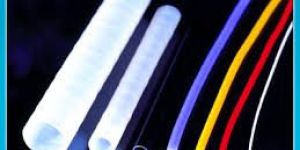
We offer ptfe (teflon) sleeves tubings
advantages
high performance from -200°c to 260°c (peak 300°c)
unaffected at soldering temperatures; autoclavable
suitable for high-density wiring
smooth internals allow closer fit
superior tape-wrapping-sintering (tws) method provides good mechanical stability, high burst pressure and long flex-life
high dielectric strength
resistant to uv radiation
fire non-propagating
inert to almost all chemicals (few exceptions), solvents, fluxes, oils; zero extractables
freedom from ageing, fungus and water absorption
biocompatible.
We offer ptfe (teflon) sleeves tubings
advantages
high performance from -200°c to 260°c (peak 300°c)
unaffected at soldering temperatures; autoclavable
suitable for high-density wiring
smooth internals allow closer fit
superior tape-wrapping-sintering (tws) method provides good mechanical stability, high burst pressure and long flex-life
high dielectric strength
resistant to uv radiation
fire non-propagating
inert to almost all chemicals (few exceptions), solvents, fluxes, oils; zero extractables
freedom from ageing, fungus and water absorption
biocompatible.
We ptfe (teflon) sleevestubings
advantages
high performance from -200°c to 260°c (peak 300°c)
unaffected at soldering temperatures; autoclavable
suitable for high-density wiring
smooth internals allow closer fit
superior tape-wrapping-sintering (tws) method provides good mechanical stability, high burst pressure and long flex-life
high dielectric strength
resistant to uv radiation
fire non-propagating
inert to almost all chemicals (few exceptions), solvents, fluxes, oils; zero extractables
freedom from ageing, fungus and water absorption
biocompatible.
We ptfe (teflon) sleevestubings
advantages
high performance from -200°c to 260°c (peak 300°c)
unaffected at soldering temperatures; autoclavable
suitable for high-density wiring
smooth internals allow closer fit
superior tape-wrapping-sintering (tws) method provides good mechanical stability, high burst pressure and long flex-life
high dielectric strength
resistant to uv radiation
fire non-propagating
inert to almost all chemicals (few exceptions), solvents, fluxes, oils; zero extractables
freedom from ageing, fungus and water absorption
biocompatible.
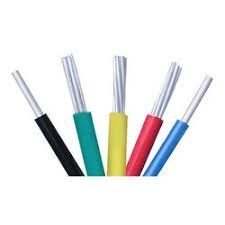
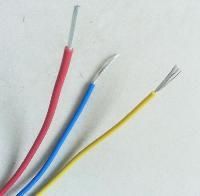
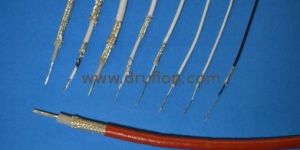
We are offering ptfe insulated wires.
Ptfe insulated wires and cables are divided into six sub-groups according to the construction and applications. the common features are:
conductors
silver plated copper (spc) for use up to 200°c (minimum 1 micron silver coating as per astm-b-298)
nickel plated copper (npc) up to 260°c (minimum 1.25 micron nickel coating as per astm-b-355)
silver plated high strength copper alloy (sphsca) for mechanical strength in fine cross-sections and for superior flex-life (somewhat lower conductivity than copper) generally as per astm-b-624
pure nickel for use up beyond 260°c; very high resistance to corrosion; dc resistance about 6 times that of copper at 20°c
resistance alloys for thermo-couple applications
silver plated copper clad steel (spccs) commonly used for rf coaxial cables) as per astm-b-501
spiral multi-strands on glass-fibre cord for high linear resistance -- generally for heating applications
plain copper or tinned copper can not be used due to high-temperature processing and applications; tin melts and flows into the interstices of stranding to make the conductor inflexible; copper tends to oxidize and become brittle
We are offering ptfe insulated wires.
Ptfe insulated wires and cables are divided into six sub-groups according to the construction and applications. the common features are:
conductors
silver plated copper (spc) for use up to 200°c (minimum 1 micron silver coating as per astm-b-298)
nickel plated copper (npc) up to 260°c (minimum 1.25 micron nickel coating as per astm-b-355)
silver plated high strength copper alloy (sphsca) for mechanical strength in fine cross-sections and for superior flex-life (somewhat lower conductivity than copper) generally as per astm-b-624
pure nickel for use up beyond 260°c; very high resistance to corrosion; dc resistance about 6 times that of copper at 20°c
resistance alloys for thermo-couple applications
silver plated copper clad steel (spccs) commonly used for rf coaxial cables) as per astm-b-501
spiral multi-strands on glass-fibre cord for high linear resistance -- generally for heating applications
plain copper or tinned copper can not be used due to high-temperature processing and applications; tin melts and flows into the interstices of stranding to make the conductor inflexible; copper tends to oxidize and become brittle
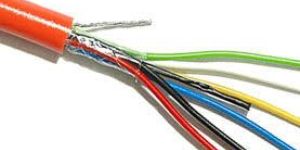
We are offering multi core cables.
Ptfe insulated multi-core cables are required mainly for high-reliability and high-temperature interconnections for signal and controlapplications. we refer to a case where we manufactured a special cable for british nuclear energy to control a nuclear robotic arm. this cable had 28 members, some for sensing temperature, some for audio signals, some for video signals, a few for operating the lights inside the reactor, a number of others for activating the motor, and so on. even though most common cables would not have such a large number of applications in a single construction, it is sufficient to illustrate the varied uses of multi-core cables.
We are offering multi core cables.
Ptfe insulated multi-core cables are required mainly for high-reliability and high-temperature interconnections for signal and controlapplications. we refer to a case where we manufactured a special cable for british nuclear energy to control a nuclear robotic arm. this cable had 28 members, some for sensing temperature, some for audio signals, some for video signals, a few for operating the lights inside the reactor, a number of others for activating the motor, and so on. even though most common cables would not have such a large number of applications in a single construction, it is sufficient to illustrate the varied uses of multi-core cables.
We are offering heating wires.
Poly tetra fluoro ethylene (ptfe) is a plastic which is flexible up to -200°c and stable up to 260°c. these features have been utilised to develop safe, efficient and long-life ptfe insulated heaters. such heaters find applicationsin
1. Flexible car seats, pads, carpet or blanket heating.
2. Floor heating under dry or moist conditions (heaters pre-cast and terminated during floor installation); such installation may be with or without parallel-laid spiral-wrapped sensor wire.
3. Temperature control for electronics display devices, obstructionshadow-free, by using high strength fine conductor and thin wall insulation.
4. Immersion heating insulated coils for distillation with prescribed cold leads; zone temperature control of distillation columns and heat tracer for pipes.
5. Anti-freeze roof edge, window edge, gasket heating.
We are offering heating wires.
Poly tetra fluoro ethylene (ptfe) is a plastic which is flexible up to -200°c and stable up to 260°c. these features have been utilised to develop safe, efficient and long-life ptfe insulated heaters. such heaters find applicationsin
1. Flexible car seats, pads, carpet or blanket heating.
2. Floor heating under dry or moist conditions (heaters pre-cast and terminated during floor installation); such installation may be with or without parallel-laid spiral-wrapped sensor wire.
3. Temperature control for electronics display devices, obstructionshadow-free, by using high strength fine conductor and thin wall insulation.
4. Immersion heating insulated coils for distillation with prescribed cold leads; zone temperature control of distillation columns and heat tracer for pipes.
5. Anti-freeze roof edge, window edge, gasket heating.
We are offering miniature high voltage wires.
Working voltages upto 22 kv ac or 50 kv dc within 7 mm
10,000 hours life under corona, shielded construction for reduced rfi
suitable from - 200°cto 260°c
flexible and free from stress-cracking failures
We are offering miniature high voltage wires.
Working voltages upto 22 kv ac or 50 kv dc within 7 mm
10,000 hours life under corona, shielded construction for reduced rfi
suitable from - 200°cto 260°c
flexible and free from stress-cracking failures
Secondary Business TypeManufacturer / Exporters / Wholesale Suppliers
Year of Establishment2002
No. of Employees6 - 20
Annual TurnoverRs. 0.5 to 2.5 Crore Approx.
Opening Hours
SUN : Closed
MON : 9:30 AM - 6:30 PM
TUE : 9:30 AM - 6:30 PM
WED : 9:30 AM - 6:30 PM
THU : 9:30 AM - 6:30 PM
FRI : 9:30 AM - 6:30 PM
SAT : 9:30 AM - 6:30 PM
Druflon International is Retailer of Coaxial Cables, PTFE Sleeves, Ptfe Tubes, Shielded Cables, Teflon Insulated Cables, teflon insulated wires, PTFE Insulated Wires, multi core cables, heating wires, Miniature High Voltage Wires from Ghaziabad, Uttar Pradesh.