


Jain Clinic Indirapuram, Ghaziabad, Uttar Pradesh

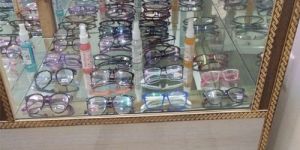
  • Spectacle Frames

    Spectacle Frames

    Get Latest Price

    • SizeMultisize
    • MaterialMetal, Fiber
    • ShapeRectangular, Round, Square, Etc.
    • Thickness70-80mm, 90-100mm
    • PatternPlain
    • AppearanceModern
    ...more
  • Spectacle Frames

    Spectacle Frames

    Request for Price

    Size : Multisize

    Material : Metal, Fiber

    Shape : Rectangular, Round, Square, Etc.

    Thickness : 70-80mm, 90-100mm

    Pattern : Plain

    Appearance : Modern

    ...more
    Get Best Price
  • Eye Care Products

    Eye Care Products

    Get Latest Price

  • Eye Care Products

    Eye Care Products

    Request for Price

    Get Best Price
  • Intravitreal Injection

    Intravitreal Injection

    Get Latest Price

    Intravitreal Injections An Intravitreal Injection is a shot of medicine into the eye. The inside of the eye is filled with a jelly-like fluid. During this procedure, your health care procider injects medicine into the vitreous, near the retina at the vack of the eye. The medicine can treat certain eye problems and help protect your vision. This method is most often used to get a higher level of medicine to the retina. Description The procedure is done in your provider's office. It takes about 15 to 30 minutes. Drops will be placed in your eyes to widen(dilate) the pupils. you will lie face up in a comfortable positoin. your eyes and eyelids will be cleaned. Numbing drops will be placed in your eye. A small device will keep your eyelids open during the procedure. You will be asked to look toward the other eye. Treated by Intravitreal Injections 1. AMD (neovascular age related macular degeneration) 2. Retinal Vein Occlusions 3. Endophthalmitis 4. Uveitis 5. CME(Cystoid Macular Edema)
    ...more
  • Intravitreal Injection

    Intravitreal Injection

    Request for Price

    Intravitreal Injections An Intravitreal Injection is a shot of medicine into the eye. The inside of the eye is filled with a jelly-like fluid. During this procedure, your health care procider injects medicine into the vitreous, near the retina at the vack of the eye. The medicine can treat certain eye problems and help protect your vision. This method is most often used to get a higher level of medicine to the retina. Description The procedure is done in your provider's office. It takes about 15 to 30 minutes. Drops will be placed in your eyes to widen(dilate) the pupils. you will lie face up in a comfortable positoin. your eyes and eyelids will be cleaned. Numbing drops will be placed in your eye. A small device will keep your eyelids open during the procedure. You will be asked to look toward the other eye. Treated by Intravitreal Injections 1. AMD (neovascular age related macular degeneration) 2. Retinal Vein Occlusions 3. Endophthalmitis 4. Uveitis 5. CME(Cystoid Macular Edema)

    ...more
    Get Best Price
Services
  • Ocular Trauma Services

    Ocular Trauma Services

    Get Latest Price

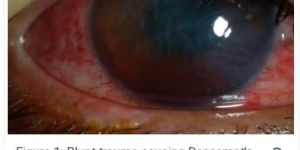
    Ocular trauma is one of the most under-recognized causes of vision loss in the developed world. Blunt or penetrating ocular trauma can lead to vision loss through cataract or glaucoma Etiologies of ocular injury differ in urban areas compared to other settings and differ from country to country between different regions of the world, and between different demographic or socioeconomic classes.
    ...more
  • Ocular Trauma Services

    Ocular Trauma Services

    Request for Price

    Ocular trauma is one of the most under-recognized causes of vision loss in the developed world. Blunt or penetrating ocular trauma can lead to vision loss through cataract or glaucoma Etiologies of ocular injury differ in urban areas compared to other settings and differ from country to country between different regions of the world, and between different demographic or socioeconomic classes.

    ...more
    Get Best Price
  • Eye Care Medicine

    Eye Care Medicine

    Get Latest Price

  • Eye Care Medicine

    Eye Care Medicine

    Request for Price

    Get Best Price
  • Oculoplastic Surgery

    Oculoplastic Surgery

    Get Latest Price

    Orbit, Oculoplastic and Lacrimal Surgery Oculoplastic Surgery, also known as Ophthalmic Plastic and Reconstructive, Oculofacial or Eye Plastic Surgery deals primarily with abnormalities of the eyelids and their surrounding tissues, including their position and contour, to maintain, restore or improve function and appearance. This includes eyelid cysts and tumours, malpositions such as drooping eyelids (ptosis), staring eyes in thyroid eye disease, watering eyes and artificial (prosthetic) eyes etc. The specialty of Oculoplastics is an art that combines the meticulous detailed microsurgical techniques of ophthalmology with the aesthetic understanding of plastic surgery. Some of the Oculoplasty Procedures done at Jain Clinic are : 1. entropion surgery 2. ectropion surgery 3. chalazion surgery 4. lid abscess drainage 5. cyst removal 6. ptosis surgery 7. tarsorraphy 8. ocular prosthesis after evisceration
    ...more
  • Oculoplastic Surgery

    Oculoplastic Surgery

    Request for Price

    Orbit, Oculoplastic and Lacrimal Surgery Oculoplastic Surgery, also known as Ophthalmic Plastic and Reconstructive, Oculofacial or Eye Plastic Surgery deals primarily with abnormalities of the eyelids and their surrounding tissues, including their position and contour, to maintain, restore or improve function and appearance. This includes eyelid cysts and tumours, malpositions such as drooping eyelids (ptosis), staring eyes in thyroid eye disease, watering eyes and artificial (prosthetic) eyes etc. The specialty of Oculoplastics is an art that combines the meticulous detailed microsurgical techniques of ophthalmology with the aesthetic understanding of plastic surgery. Some of the Oculoplasty Procedures done at Jain Clinic are : 1. entropion surgery 2. ectropion surgery 3. chalazion surgery 4. lid abscess drainage 5. cyst removal 6. ptosis surgery 7. tarsorraphy 8. ocular prosthesis after evisceration

    ...more
    Get Best Price
  • Cornea Screening

    Cornea Screening

    Get Latest Price

    Cornea screening Corneal curvature and thickness is measured using keratometer and pachymeter The transplantation of donor cornea that has undergone refractive surgery (LASIK, RK, PRK) can lead to both wound separation during surgery and to increased refractive error in the recipient. Therefore, the increasing popularity of refractive surgery has raised concern regarding the decreasing proportion of transplant quality corneas coming in to the eye bank and the serious consequences of transplanting a post- refractive surgery cornea that has escaped detection. Currently, eye banks utilize patient history and microscopic examination to assess the quality of donor corneas and detect previous refractive surgery. Although these methods are capable of screening out many problem corneas, they are subject to human error. Patient history may be unreliable, and well-performed LASIK and PRK may leave minimal debris and scarring and which are particularly difficult to detect. Optical coherence tomography (OCT) is capable of performing 3-dimensional imaging of the cornea with micron resolution. It can visualize the corneal layers, detect opacities, and measure surface contours. In our preliminary studies, we have found that OCT can image donor corneal tissue without even removing it from the sterile container and preservation medium
    ...more
  • Cornea Screening

    Cornea Screening

    Request for Price

    Cornea screening Corneal curvature and thickness is measured using keratometer and pachymeter The transplantation of donor cornea that has undergone refractive surgery (LASIK, RK, PRK) can lead to both wound separation during surgery and to increased refractive error in the recipient. Therefore, the increasing popularity of refractive surgery has raised concern regarding the decreasing proportion of transplant quality corneas coming in to the eye bank and the serious consequences of transplanting a post- refractive surgery cornea that has escaped detection. Currently, eye banks utilize patient history and microscopic examination to assess the quality of donor corneas and detect previous refractive surgery. Although these methods are capable of screening out many problem corneas, they are subject to human error. Patient history may be unreliable, and well-performed LASIK and PRK may leave minimal debris and scarring and which are particularly difficult to detect. Optical coherence tomography (OCT) is capable of performing 3-dimensional imaging of the cornea with micron resolution. It can visualize the corneal layers, detect opacities, and measure surface contours. In our preliminary studies, we have found that OCT can image donor corneal tissue without even removing it from the sterile container and preservation medium

    ...more
    Get Best Price
  • Retina Check up

    Retina Check up

    Get Latest Price

    Retinal examination a retinal examination-sometimes called ophthalmoscopy or funduscopy - allows your doctor to evaluate the back of your eye, including the retina, the optic disk and the underlying layer of blood vessels that nourish the retina. Usually, before your doctor can see these structures, your pupils must be dilated with eye drops that keep the pupil from getting smaller when your doctor shines light into the eye. Direct exam:- your eye doctor uses an ophthalmoscope to shine a beam of light through your pupil to see the back of the eye. Sometimes eyedrops aren't necessary to dilate your eyes before this exam. Indirect exam:- during this exam, your might lie down, recline in a chair or situp. Your eye doctor examines the inside of the eye with the aid of a condensing lens and bright light mounted on his or her forehead. This exam lets your doctor see the retina and other structures inside your eye in great detail and in three dimensions
    ...more
  • Retina Check up

    Retina Check up

    Request for Price

    Retinal examination a retinal examination-sometimes called ophthalmoscopy or funduscopy - allows your doctor to evaluate the back of your eye, including the retina, the optic disk and the underlying layer of blood vessels that nourish the retina. Usually, before your doctor can see these structures, your pupils must be dilated with eye drops that keep the pupil from getting smaller when your doctor shines light into the eye. Direct exam:- your eye doctor uses an ophthalmoscope to shine a beam of light through your pupil to see the back of the eye. Sometimes eyedrops aren't necessary to dilate your eyes before this exam. Indirect exam:- during this exam, your might lie down, recline in a chair or situp. Your eye doctor examines the inside of the eye with the aid of a condensing lens and bright light mounted on his or her forehead. This exam lets your doctor see the retina and other structures inside your eye in great detail and in three dimensions

    ...more
    Get Best Price
  • Glaucoma Surgery

    Glaucoma Surgery

    Get Latest Price

    Glaucoma services we are equipped with the latest machinery for the surgical management of glaucoma. Fundus examinations, applanation tonometry, confrontation test for the assessment of visual fields is done. Our panel of glaucoma experts are committed to battle against this silent vision snatcher to ensure that you end up on the winning side. What are the kinds of surgery? doctors may try laster surgery first. You can get the treatments in your doctor's office or at a clinic. You'll be able to go home after the procedure and get back to your normal routine by the next day. The laser is a beam of intense light. It's aimed at your eye to help open clogged tubes and drain fluid. It can take a few weeks to see the full results. What are the laser treatments? here are some types of laser surgery for glaucoma: argon laser trabeculoplasty(alt):this opens clogs in your eye so fluid can drain out. Your doctor may treat half of the clogs first, see how well it works, then treat the other half later. Alt works in about 75% of people with the most common kind of glaucoma. Selective laser trabeculoplasty(slt):if alt doesn't work so well, your doctor may try this. Your doctor beams a highlytargeted low-level laser at just the spots where there's pressure. You can do slt a little at a time. Laser peripheral iridotomy (lpi):if the space between your eye's iris (the colored part) and cornea (the clear outer layer)is too small, you can get narrow-angle glaucoma. Fluid and pressure build up in this area. Lpi uses a laser beam to create a tiny hole in the iris. The extra fluid can drain and relieve pressure. Cyclophotocoagulation:if other laser treatments or surgery doesn't ease fluid buildup and pressure, your doctor can try this. He'll beama laser into a structure inside your eye to ease pressure. You may need to repeat it over time to keep your glaucoma in check.
    ...more
  • Glaucoma Surgery

    Glaucoma Surgery

    Request for Price

    Glaucoma services we are equipped with the latest machinery for the surgical management of glaucoma. Fundus examinations, applanation tonometry, confrontation test for the assessment of visual fields is done. Our panel of glaucoma experts are committed to battle against this silent vision snatcher to ensure that you end up on the winning side. What are the kinds of surgery? doctors may try laster surgery first. You can get the treatments in your doctor's office or at a clinic. You'll be able to go home after the procedure and get back to your normal routine by the next day. The laser is a beam of intense light. It's aimed at your eye to help open clogged tubes and drain fluid. It can take a few weeks to see the full results. What are the laser treatments? here are some types of laser surgery for glaucoma: argon laser trabeculoplasty(alt):this opens clogs in your eye so fluid can drain out. Your doctor may treat half of the clogs first, see how well it works, then treat the other half later. Alt works in about 75% of people with the most common kind of glaucoma. Selective laser trabeculoplasty(slt):if alt doesn't work so well, your doctor may try this. Your doctor beams a highlytargeted low-level laser at just the spots where there's pressure. You can do slt a little at a time. Laser peripheral iridotomy (lpi):if the space between your eye's iris (the colored part) and cornea (the clear outer layer)is too small, you can get narrow-angle glaucoma. Fluid and pressure build up in this area. Lpi uses a laser beam to create a tiny hole in the iris. The extra fluid can drain and relieve pressure. Cyclophotocoagulation:if other laser treatments or surgery doesn't ease fluid buildup and pressure, your doctor can try this. He'll beama laser into a structure inside your eye to ease pressure. You may need to repeat it over time to keep your glaucoma in check.

    ...more
    Get Best Price
  • Stitchless Cataract Surgery

    Stitchless Cataract Surgery

    Get Latest Price

    Stitchless cataract surgery cataract is the disease of human crystallin lens, the primary focusing mechanism of the eye crystalline is clear and transparent. As age advances, the lens becomes discolored, cloudly and finally opaque, there by hampering clear vision. Any opacity in crystalline lens is called 'cataract' and 'safed motia'. It is a primarily a disease of old age of 65 years have some form of the congenital cataract. It is estimated that more than 95% of population over the age of 65 years have someform of cataract other causes of cataract are trauma, metabolic (e.g. Diabetes mellitus), complicated(e.g. Uveitis), post-steroid use etc. Cataract is the leading cause of blindness worldwide. In india, it accounts for more than 80% of blind persons whose vision is not correctable with the glasses. With progression of catatact, patient vision gets diminished progressively both in quantity and quality. Finally, patients become dependent on others for even routine personal works like going to the toilet or changing their clothes. Depending on degree, type and location of cataract, presentation of cataract varies from minimal awareness of disturbance of vision to a total failure of vision, patient's both near and distance.
    ...more
  • Stitchless Cataract Surgery

    Stitchless Cataract Surgery

    Request for Price

    Stitchless cataract surgery cataract is the disease of human crystallin lens, the primary focusing mechanism of the eye crystalline is clear and transparent. As age advances, the lens becomes discolored, cloudly and finally opaque, there by hampering clear vision. Any opacity in crystalline lens is called 'cataract' and 'safed motia'. It is a primarily a disease of old age of 65 years have some form of the congenital cataract. It is estimated that more than 95% of population over the age of 65 years have someform of cataract other causes of cataract are trauma, metabolic (e.g. Diabetes mellitus), complicated(e.g. Uveitis), post-steroid use etc. Cataract is the leading cause of blindness worldwide. In india, it accounts for more than 80% of blind persons whose vision is not correctable with the glasses. With progression of catatact, patient vision gets diminished progressively both in quantity and quality. Finally, patients become dependent on others for even routine personal works like going to the toilet or changing their clothes. Depending on degree, type and location of cataract, presentation of cataract varies from minimal awareness of disturbance of vision to a total failure of vision, patient's both near and distance.

    ...more
    Get Best Price
  • Refraction and Glass Prescription

    Refraction and Glass Prescription

    Get Latest Price

    Everyone needs a Refraction test Reqular eye examinations are crucial for maintaining the health of your visoin. They are a routine part of an eye doctor visit and require no preparation on your part. Healthy adults should have a refraction test every two years, while children need them every one or two years beginning at age 3. What is refraction test? A Referaction test is usually given as part of a routine eye examination. It may also be called a vision test.This test tells your eye doctor exactly what prescription you need in your Normally, a value of 20/20 is considered to be optimum, or perfect vision. Individuals who have 20/20 vision are able to read letters that are 3/8 of an inch tall from 20 feet away. If you don't have 20/20 vision, you have what is called a refractive error. A refractive error that means that the light is not bending properly when passes through the lens of your eye. The refraction test will tell your doctor what prescription lens you should use in order to have 20/20 vision. Why is this test used? This test tells your doctor if you need prescription lenses, as well as what prescription lens you need to see properly. The results of the test are used to diagnose the following conditions: astigmatism, a refractive problem with the eye related to the shape of the lens, which causes blurry vision hyperopia, which is also known as farsightidness myopia, which is also known as nearsightedness presbyopia, a condition related to aging that causes lens of then eye to have trouble focusing
    ...more
  • Refraction and Glass Prescription

    Refraction and Glass Prescription

    Request for Price

    Everyone needs a Refraction test Reqular eye examinations are crucial for maintaining the health of your visoin. They are a routine part of an eye doctor visit and require no preparation on your part. Healthy adults should have a refraction test every two years, while children need them every one or two years beginning at age 3. What is refraction test? A Referaction test is usually given as part of a routine eye examination. It may also be called a vision test.This test tells your eye doctor exactly what prescription you need in your Normally, a value of 20/20 is considered to be optimum, or perfect vision. Individuals who have 20/20 vision are able to read letters that are 3/8 of an inch tall from 20 feet away. If you don't have 20/20 vision, you have what is called a refractive error. A refractive error that means that the light is not bending properly when passes through the lens of your eye. The refraction test will tell your doctor what prescription lens you should use in order to have 20/20 vision. Why is this test used? This test tells your doctor if you need prescription lenses, as well as what prescription lens you need to see properly. The results of the test are used to diagnose the following conditions: astigmatism, a refractive problem with the eye related to the shape of the lens, which causes blurry vision hyperopia, which is also known as farsightidness myopia, which is also known as nearsightedness presbyopia, a condition related to aging that causes lens of then eye to have trouble focusing

    ...more
    Get Best Price
  • Computerised Eye Testing Service

    Computerised Eye Testing Service

    Get Latest Price

    What is computerized eye Testing? By looking through the retinoscope, the doctor can study the light reflex of the pupil. Based on the movement and orientation of this retinal reflection, the state of the eye is measured. An auto-refractor is a computerized instrument that shines light into an eye. If you have had your eyes really tested completely you would have had to go through the following tests also. 1.Visual Acuity 2.Slit lamp examination (magnified binocular microscopic examination of the eyes) 3.Tonometry (intra-ocular pressure recording) 4.Fundus examination (examining the inside of your eye), either dilated or un-dilated 5.Retinoscopy after cyclopegia (measuring your spectacle power after instilling dilating drops) What machines are used for eye tests? 8 Tools used by Optometrist for eye testing 1. Tonometer. One of the oldest, this device is used to measure the pressure of the fluids inside the eyeball. 2. Phoropter 3.Retinoscope 4.Autorefractor 5.Snellen Chart 6.Retinal Camera 7.Ophthalmoscope 8.VT 1 Vision Screener
    ...more
  • Computerised Eye Testing Service

    Computerised Eye Testing Service

    Request for Price

    What is computerized eye Testing? By looking through the retinoscope, the doctor can study the light reflex of the pupil. Based on the movement and orientation of this retinal reflection, the state of the eye is measured. An auto-refractor is a computerized instrument that shines light into an eye. If you have had your eyes really tested completely you would have had to go through the following tests also. 1.Visual Acuity 2.Slit lamp examination (magnified binocular microscopic examination of the eyes) 3.Tonometry (intra-ocular pressure recording) 4.Fundus examination (examining the inside of your eye), either dilated or un-dilated 5.Retinoscopy after cyclopegia (measuring your spectacle power after instilling dilating drops) What machines are used for eye tests? 8 Tools used by Optometrist for eye testing 1. Tonometer. One of the oldest, this device is used to measure the pressure of the fluids inside the eyeball. 2. Phoropter 3.Retinoscope 4.Autorefractor 5.Snellen Chart 6.Retinal Camera 7.Ophthalmoscope 8.VT 1 Vision Screener

    ...more
    Get Best Price

Be first to Rate

Rate This

Choose the service or product you're reviewing for this business

How would you rate the business?

What did you like and dislike?

  • Response
  • Delivery
  • Quality

Tell us about your experience?

About the Company

  • Primary Business Retailer
  • Secondary Business Type Manufacturer / Exporters / Service Providers / Wholesale Suppliers

Opening Hours

  • SUN : Closed
  • MON : 9:30 AM - 6:30 PM
  • TUE : 9:30 AM - 6:30 PM
  • WED : 9:30 AM - 6:30 PM
  • THU : 9:30 AM - 6:30 PM
  • FRI : 9:30 AM - 6:30 PM
  • SAT : 9:30 AM - 6:30 PM
Jain Clinic was established with a mission of making available to every individual, the best of eye care solutions and pediatric super-speciality services irrespective of their awareness, knowledge and financial levels. For this purpose, Jain Clinic has a team of doctors with skills and knowledge at par with the best in the world.
Driven by the mission to provide the best eye care to all, Jain Clinic has all modern and sophisticated eye care equipments, modular operation theatre, premium range of spectacles and eye lenses (IOL). All this is brought to you at the most affordable price.
Children’s super-speciality services at Jain Clinic comprises of out-patient and consultation facilities for cancers in children, bleeding disorders, anemia and other blood related disorders in children.
Read More »

Contact Information

Jain Clinic

  • Jain
  • Plot no. 111, Shakti Khand 2, Near Omaxe Plaza Opposite Sanford School, Indirapuram, Ghaziabad, Uttar Pradesh 201014

Find Popular Dog Health Care Products Dealers in Ghaziabad

top