Maha Laxmi Ball Company Jawahar Nagar, Jaipur, Rajasthan

  • Steel Pin & Diagonal

    Steel Pin & Diagonal

    Get Latest Price

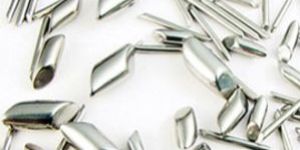
    Steel angle-cut Cylinders, Bevelled Diagonals and Pins are mixed with Steel Ball, Eclipse, Ballcone and Satellite in the steel polishing media for various mass finishing applications to achieve uniform cleaning, metal finishing and mirror finish all over the component profile.Spherical Steel Balls are the most popular and versatile shaped media used in tumblers, barrels, harperizers, centrifugal and vibratory finishing machines. However, a round steel ball cannot access grooves, corners, collars and intricate profiles. To achieve this a beveled diagonal (cylinder) or pin has to be used. Pins are also appropriate for deflashing holes and finishing intricate jewellery parts. In magnetic polishers, magnetic stainless steel pins are used as burnishing media.Tolerance : Stringent dimensional controls are maintained and the tolerance on the diameters are +- 0.15mm or +- 0.006" (150 microns) which are amongst the best in this industry.Length : Length denotes total end to end length.Customised Length : Length as per specific requirements can be supplied for large orders. The total end-to-end length will be limited to a minimum of 6 mm or 14" for any diameter.Ends : Ends are bevelled and cut at an angle. 0.5mm (0.02" ), 0.8mm (0.03" ), 0.4mm (0.016" ), 0.3mm (0.01" ) Diameters: For these sizes, the cut faces are perpendicular to the length. These are available only in stainless steel and are also suitable for magnetic polishers.Steel Material:Stainless Steel or Inox Media, 300 series (typically AISI 304) is the one which is most widely used for metal polishing. It has excellent resistance to rust, corrosion and wear and can be used in conjunction with chemically aggressive burnishing compounds, both acidic and alkaline. Stainless steel requires no maintenance or after care during storage, non usage or idle periods. The burnishing performance remains consistent over long periods of time and it does not require replacement as no deterioration in quality takes place. The 300 series stainless steel are austenitic and are unhardenable by heat treatment. However, some work-hardening takes place during the cold-forging process. The media is passivated after final polish.Enhance Your Component Finishing Quality With Techbuff Steel Burnishing Diagonals, Pins And Cylinders :The length of the diagonal provides line contact as opposed to point contact in the case of a sphere. The bevelled faces provide area contact as opposed to point contact in the case of spheres. Because of the above two features cylindrical media offers greater contact on the component surface.Pins are also useful for deflashing and cleaning holes and the areas between threads.The taper cut face of a Techbuff cylinder or diagonal is very well smoothened to enhance polishing action.The ends of Techbuff Cylinders, Diagonals and Pins are well deburred and radiused to access holes, recesses, corners and intricate designs providing proper polishing and cleaning without spoiling the component surface.The highly polished surface of our diagonals and pins provide extremely good rolling action and hence excellent burnishing and finishing results.
    ...more
  • Steel Pin & Diagonal

    Steel Pin & Diagonal

    Request for Price

    Steel angle-cut Cylinders, Bevelled Diagonals and Pins are mixed with Steel Ball, Eclipse, Ballcone and Satellite in the steel polishing media for various mass finishing applications to achieve uniform cleaning, metal finishing and mirror finish all over the component profile.Spherical Steel Balls are the most popular and versatile shaped media used in tumblers, barrels, harperizers, centrifugal and vibratory finishing machines. However, a round steel ball cannot access grooves, corners, collars and intricate profiles. To achieve this a beveled diagonal (cylinder) or pin has to be used. Pins are also appropriate for deflashing holes and finishing intricate jewellery parts. In magnetic polishers, magnetic stainless steel pins are used as burnishing media.Tolerance : Stringent dimensional controls are maintained and the tolerance on the diameters are +- 0.15mm or +- 0.006" (150 microns) which are amongst the best in this industry.Length : Length denotes total end to end length.Customised Length : Length as per specific requirements can be supplied for large orders. The total end-to-end length will be limited to a minimum of 6 mm or 14" for any diameter.Ends : Ends are bevelled and cut at an angle. 0.5mm (0.02" ), 0.8mm (0.03" ), 0.4mm (0.016" ), 0.3mm (0.01" ) Diameters: For these sizes, the cut faces are perpendicular to the length. These are available only in stainless steel and are also suitable for magnetic polishers.Steel Material:Stainless Steel or Inox Media, 300 series (typically AISI 304) is the one which is most widely used for metal polishing. It has excellent resistance to rust, corrosion and wear and can be used in conjunction with chemically aggressive burnishing compounds, both acidic and alkaline. Stainless steel requires no maintenance or after care during storage, non usage or idle periods. The burnishing performance remains consistent over long periods of time and it does not require replacement as no deterioration in quality takes place. The 300 series stainless steel are austenitic and are unhardenable by heat treatment. However, some work-hardening takes place during the cold-forging process. The media is passivated after final polish.Enhance Your Component Finishing Quality With Techbuff Steel Burnishing Diagonals, Pins And Cylinders :The length of the diagonal provides line contact as opposed to point contact in the case of a sphere. The bevelled faces provide area contact as opposed to point contact in the case of spheres. Because of the above two features cylindrical media offers greater contact on the component surface.Pins are also useful for deflashing and cleaning holes and the areas between threads.The taper cut face of a Techbuff cylinder or diagonal is very well smoothened to enhance polishing action.The ends of Techbuff Cylinders, Diagonals and Pins are well deburred and radiused to access holes, recesses, corners and intricate designs providing proper polishing and cleaning without spoiling the component surface.The highly polished surface of our diagonals and pins provide extremely good rolling action and hence excellent burnishing and finishing results.

    ...more
    Get Best Price
  • Steel Burnishing Media

    Steel Burnishing Media

    Get Latest Price

    Round Spherical Steel Balls, Spheres, Eclipses - flat end balls, satellites, ball cone, diagonals, beveled cylinders and pins are the various shapes of steel media which are manufactured by Maha Laxmi. These are used in mass finishing processes for burnishing, metal polishing, mirror finishing, eliminating manual buffing and pre-plate applications. The media are run in vibratory and mass finishing equipment along with compatible chemical compounds.Applications of Steel Media for Metal Polishing and Mass Finishing :Metal finishing applications with Techbuff steel ball burnishing media (carbon, chrome, stainless, inox steel) are popular for:Aluminum, Zinc Die-casting PolishingCoin Blank & Stamping BurnishingCutlery and Flatware Mirror FinishingElectrical Connector Cleaning & PolishingJewellery PolishingAnd Many More Components -Steel Bearing Cages, Buckle and Badges, Handicraft Items, Hinges - Stainless Steel, Orthodental Instruments.Advantages of Steel Media : Processing with steel media results in high quality bright finish, rapid action and fast process cycle times.Wear rate of steel media, specially stainless and inox, is nil. Hence, process results do not change, consistent finishes are achieved, constant media replenishment is not required, possibility of media clogging due to reduction in size after wear out is eliminated.Steel Media does not get glazed. Hence, finishing quality does not deteriorate with time. Media slurry and foaming is eliminated contributing to faster washability of components and steel media and easy treatment of waste water streams.The weight of the steel media results in flattening minor surface irregularities and work hardening the component. This translates into better component lustre, lower coating costs, better plating / coating finishes, higher component strength and life.
    ...more
  • Steel Burnishing Media

    Steel Burnishing Media

    Request for Price

    Round Spherical Steel Balls, Spheres, Eclipses - flat end balls, satellites, ball cone, diagonals, beveled cylinders and pins are the various shapes of steel media which are manufactured by Maha Laxmi. These are used in mass finishing processes for burnishing, metal polishing, mirror finishing, eliminating manual buffing and pre-plate applications. The media are run in vibratory and mass finishing equipment along with compatible chemical compounds.Applications of Steel Media for Metal Polishing and Mass Finishing :Metal finishing applications with Techbuff steel ball burnishing media (carbon, chrome, stainless, inox steel) are popular for:Aluminum, Zinc Die-casting PolishingCoin Blank & Stamping BurnishingCutlery and Flatware Mirror FinishingElectrical Connector Cleaning & PolishingJewellery PolishingAnd Many More Components -Steel Bearing Cages, Buckle and Badges, Handicraft Items, Hinges - Stainless Steel, Orthodental Instruments.Advantages of Steel Media : Processing with steel media results in high quality bright finish, rapid action and fast process cycle times.Wear rate of steel media, specially stainless and inox, is nil. Hence, process results do not change, consistent finishes are achieved, constant media replenishment is not required, possibility of media clogging due to reduction in size after wear out is eliminated.Steel Media does not get glazed. Hence, finishing quality does not deteriorate with time. Media slurry and foaming is eliminated contributing to faster washability of components and steel media and easy treatment of waste water streams.The weight of the steel media results in flattening minor surface irregularities and work hardening the component. This translates into better component lustre, lower coating costs, better plating / coating finishes, higher component strength and life.

    ...more
    Get Best Price
  • Steel Balls

    Steel Balls

    Get Latest Price

    Maha Laxmi Ball Company, India is a manufacturer and exporter of Steel Balls in various diameters and tolerances for applications like grinding media for ball mills, ball burnishing media for vibratory finishing, agitators, use in ball bearings, valves, bicycles, automobiles, dispenser spray pumps, aerosols, conveyors, roller skates, casters, drawer slides, door locks, body jewellery.Production Sequence of Steel BallsWire Coil : Steel wire of specific material and size is checked for correctness.Cutting : The wire is cut into required lengths.Forging / Heading : Spherical shapes between dies are formed.Deflashing : The flash line along the circumference is removed.Heat Treatment : Chrome and bearing steel balls are thorough hardened. Cleaning / Descaling : Basic surface cleaning is done.Hard Grinding / Filing : An exacting process to achieve required sphericity and size of the steel ball.Lapping : The final surface finish is acquired through this process.Polishing / Burnishing : Surface lustre, work hardening, higher product life is achieved.Passivation : Carry over iron and other contaminants are removed and a surface film prevents atmospheric and water corrosion on stainless steel balls.Inspection : For surface finish, size and tolerance. Rust preventive oil : Applied on chrome alloy steel balls to save from rusting and corrosion.Packing : Done as per requirement in numbers, pieces or by weight. VCI paper or bags are used wherever necessary.Advantages of Steel BallsThe best steel, pre-tested, is used with modern production, inspection procedures.Proprietary polishing, lapping processes employed, result in world class finishes.Strict quality control and inspection at each stage ensures that each steel ball which finally rolls out, conforms to the required quality and specification.The steel ball are manufactured in a wide range Of material compositions in chrome, bearing, inox and stainless steel; In sizes ranging from 1 mm to 12.7 mm and 3/64" to 1/2" diameters; And Grade 20 to 2000, which basically denotes the tolerance and surface finish.The steel balls are sold both in numbers or pieces and by weight in kg or lbs.
    ...more
  • Steel Balls

    Steel Balls

    Request for Price

    Maha Laxmi Ball Company, India is a manufacturer and exporter of Steel Balls in various diameters and tolerances for applications like grinding media for ball mills, ball burnishing media for vibratory finishing, agitators, use in ball bearings, valves, bicycles, automobiles, dispenser spray pumps, aerosols, conveyors, roller skates, casters, drawer slides, door locks, body jewellery.Production Sequence of Steel BallsWire Coil : Steel wire of specific material and size is checked for correctness.Cutting : The wire is cut into required lengths.Forging / Heading : Spherical shapes between dies are formed.Deflashing : The flash line along the circumference is removed.Heat Treatment : Chrome and bearing steel balls are thorough hardened. Cleaning / Descaling : Basic surface cleaning is done.Hard Grinding / Filing : An exacting process to achieve required sphericity and size of the steel ball.Lapping : The final surface finish is acquired through this process.Polishing / Burnishing : Surface lustre, work hardening, higher product life is achieved.Passivation : Carry over iron and other contaminants are removed and a surface film prevents atmospheric and water corrosion on stainless steel balls.Inspection : For surface finish, size and tolerance. Rust preventive oil : Applied on chrome alloy steel balls to save from rusting and corrosion.Packing : Done as per requirement in numbers, pieces or by weight. VCI paper or bags are used wherever necessary.Advantages of Steel BallsThe best steel, pre-tested, is used with modern production, inspection procedures.Proprietary polishing, lapping processes employed, result in world class finishes.Strict quality control and inspection at each stage ensures that each steel ball which finally rolls out, conforms to the required quality and specification.The steel ball are manufactured in a wide range Of material compositions in chrome, bearing, inox and stainless steel; In sizes ranging from 1 mm to 12.7 mm and 3/64" to 1/2" diameters; And Grade 20 to 2000, which basically denotes the tolerance and surface finish.The steel balls are sold both in numbers or pieces and by weight in kg or lbs.

    ...more
    Get Best Price
  • Steel Ball Grinding

    Steel Ball Grinding

    Get Latest Price

    Steel Grinding Media Ball, Beads, Shots, B allcones and cylinders are manufactured by Maha Laxmi Ball Company, India in various alloy steel compositions, shapes and sizes for diverse grinding and milling applications. This Steel Grinding Media for ball mills, pulverizers and attritors is cold forged and ground. The hardened Steel Balls (shots, beads) are available in different hardness, as required, in both high carbon steel and chrome alloy steel. For specific applications, Stainless Steel Media and Balls are also used for grinding and milling.Steel forged grinding media, hardened, is very suitable wherever high wear and chemical resistance is required. Also where generation of heat is crucial to the milling and dispersion process.The Steel Shots, Balls and Beads - Ball Mill Media - are preferred for contamination free and speedy (dry / wet) milling, grinding of solids, liquids dispersion and fine particle size reduction, homogenization of fillers and raw materials, attrition and pulverizing applications in ball, vibro, dyno, pearl, bead, pebble, attritor and small-media mills, vertical or horizontal. Alloy Steel Media is particularly suitable, because of its high relative density and hardness, for crushing and mixing heavy and hard materials. Also where high pressure and impact grinding or crushing methods are employed. The Forged Steel Media Balls also find advantage in reducing particle size and fine dispersion of highly viscous fluids.Stainless Steel Balls and other shapes are used for grinding applications where absolutely no iron contamination is permissible, specially in food products.Application Segments for Steel Grinding Media :Grinding of solids and fluids.Liquids dispersion.Fine particle size reduction.Homogenization of fillers and raw materials.Attrition and pulverizing applications in ball, vibro, dyno, pearl, bead, pebble, attritor and small-media mills, vertical or horizontal. Paints, varnish, lacquers, glazes, pigments, enamels, polymers, colours, elastomers, dyestuff. Offset printing inks, toners. Metal powders and oxides, flake powders, brass, copper, iron, ferrites, aluminum, zinc, minerals, ores. Chemicals, talc, drugs, pharmaceuticals, cosmetics. Paper and electronic coatings, magnetic tape coatings, carbon black and carbon paper coatings. Agricultural flowables, confectionery, food products. Ceramics. Gas, oil well drilling. Roasted cocoa nibs, chocolate liquor. Steel grinding media finds advantage where:High wear and chemical resistance is required. Generation of heat is crucial to the milling and dispersion process. Contamination free and speedy (dry / wet) milling is important. Crushing and mixing heavy and hard materials is undertaken. High pressure and impact grinding or crushing methods are employed. Reducing particle size and fine dispersion of highly viscous fluids is required. Steel balls for chocolate grinding (stainless, inox, hardened chrome) In the case of chocolates, the optimal size for cocoa particles is approximately 12 microns. Your tongue has the ability to feel texture. If the particles are too big, say 20 to 75 microns, then your tongue would sense an unpleasant roughness. If the particles are too small, say 1 to 9 microns, the cocoa particles would bind up more of the expensive cocoa butter. This would add cost to the process for more butter would have to be added to keep the product fluid.The bead mills used for cocoa mass are vertical bead mills, using 5 to 6 mm or 1/4" and 3/16" diameter steel balls, beads or shots. Other sizes used vary from 8 mm to 11 mm or 5/16" to 7/16". Chocolate manufacturers use stainless steel (inox) media where absolutely no iron contamination is permissible and otherwise hardened chrome alloy steel balls. Chocolate is very viscous. Because of the high density, no contamination, reasonable cost and lack of wear of steel media, the chocolate companies essentially use passivated steel balls as grinding media for chocolate paste in ball mills. Shapes and sizes of steel media available for grinding, milling and dispersion : Spherical ball also referred to as shot or bead. These are most widely used. Sizes: 1 mm to 12.5 mm and 3/64 inch to 1/2 inch diameter.Eclipse ball To reduce grinding costs, eclipse - steel ball with slight flattening at the poles - can be used. Since these are not spherical or perfectly round, the price is substantially lower. Sizes: 3 mm to 12 mm and 1/8 inch to 1/2 inch diameter.Cylinders / DiagonalsSizes: 1 mm to 3 mm diameters and lengths from 6 mm to 10 mm. In inches, 3/64" to 1/8" diameters and lengths from 1/4 inch to 3/8 inch.Ballcones / SatellitesSizes: 3 mm to 6 mm and 1/8" to 1/4" ball diameter.
    ...more
  • Steel Ball Grinding

    Steel Ball Grinding

    Request for Price

    Steel Grinding Media Ball, Beads, Shots, B allcones and cylinders are manufactured by Maha Laxmi Ball Company, India in various alloy steel compositions, shapes and sizes for diverse grinding and milling applications. This Steel Grinding Media for ball mills, pulverizers and attritors is cold forged and ground. The hardened Steel Balls (shots, beads) are available in different hardness, as required, in both high carbon steel and chrome alloy steel. For specific applications, Stainless Steel Media and Balls are also used for grinding and milling.Steel forged grinding media, hardened, is very suitable wherever high wear and chemical resistance is required. Also where generation of heat is crucial to the milling and dispersion process.The Steel Shots, Balls and Beads - Ball Mill Media - are preferred for contamination free and speedy (dry / wet) milling, grinding of solids, liquids dispersion and fine particle size reduction, homogenization of fillers and raw materials, attrition and pulverizing applications in ball, vibro, dyno, pearl, bead, pebble, attritor and small-media mills, vertical or horizontal. Alloy Steel Media is particularly suitable, because of its high relative density and hardness, for crushing and mixing heavy and hard materials. Also where high pressure and impact grinding or crushing methods are employed. The Forged Steel Media Balls also find advantage in reducing particle size and fine dispersion of highly viscous fluids.Stainless Steel Balls and other shapes are used for grinding applications where absolutely no iron contamination is permissible, specially in food products.Application Segments for Steel Grinding Media :Grinding of solids and fluids.Liquids dispersion.Fine particle size reduction.Homogenization of fillers and raw materials.Attrition and pulverizing applications in ball, vibro, dyno, pearl, bead, pebble, attritor and small-media mills, vertical or horizontal. Paints, varnish, lacquers, glazes, pigments, enamels, polymers, colours, elastomers, dyestuff. Offset printing inks, toners. Metal powders and oxides, flake powders, brass, copper, iron, ferrites, aluminum, zinc, minerals, ores. Chemicals, talc, drugs, pharmaceuticals, cosmetics. Paper and electronic coatings, magnetic tape coatings, carbon black and carbon paper coatings. Agricultural flowables, confectionery, food products. Ceramics. Gas, oil well drilling. Roasted cocoa nibs, chocolate liquor. Steel grinding media finds advantage where:High wear and chemical resistance is required. Generation of heat is crucial to the milling and dispersion process. Contamination free and speedy (dry / wet) milling is important. Crushing and mixing heavy and hard materials is undertaken. High pressure and impact grinding or crushing methods are employed. Reducing particle size and fine dispersion of highly viscous fluids is required. Steel balls for chocolate grinding (stainless, inox, hardened chrome) In the case of chocolates, the optimal size for cocoa particles is approximately 12 microns. Your tongue has the ability to feel texture. If the particles are too big, say 20 to 75 microns, then your tongue would sense an unpleasant roughness. If the particles are too small, say 1 to 9 microns, the cocoa particles would bind up more of the expensive cocoa butter. This would add cost to the process for more butter would have to be added to keep the product fluid.The bead mills used for cocoa mass are vertical bead mills, using 5 to 6 mm or 1/4" and 3/16" diameter steel balls, beads or shots. Other sizes used vary from 8 mm to 11 mm or 5/16" to 7/16". Chocolate manufacturers use stainless steel (inox) media where absolutely no iron contamination is permissible and otherwise hardened chrome alloy steel balls. Chocolate is very viscous. Because of the high density, no contamination, reasonable cost and lack of wear of steel media, the chocolate companies essentially use passivated steel balls as grinding media for chocolate paste in ball mills. Shapes and sizes of steel media available for grinding, milling and dispersion : Spherical ball also referred to as shot or bead. These are most widely used. Sizes: 1 mm to 12.5 mm and 3/64 inch to 1/2 inch diameter.Eclipse ball To reduce grinding costs, eclipse - steel ball with slight flattening at the poles - can be used. Since these are not spherical or perfectly round, the price is substantially lower. Sizes: 3 mm to 12 mm and 1/8 inch to 1/2 inch diameter.Cylinders / DiagonalsSizes: 1 mm to 3 mm diameters and lengths from 6 mm to 10 mm. In inches, 3/64" to 1/8" diameters and lengths from 1/4 inch to 3/8 inch.Ballcones / SatellitesSizes: 3 mm to 6 mm and 1/8" to 1/4" ball diameter.

    ...more
    Get Best Price
  • Steel Ball Cones

    Steel Ball Cones

    Get Latest Price

    Steel Ball Cones or Satellites
  • Steel Ball Cones

    Steel Ball Cones

    Request for Price

    Steel Ball Cones or Satellites

    Get Best Price
  • Stainless Steel Balls

    Stainless Steel Balls

    Get Latest Price

    Stainless Steel Balls, also called 'Inox Steel Ball', is manufactured of steel that contains more than 12% chromium, with or without other alloying elements. Stainless Steel resists corrosion, maintains its strength at high temperatures and is easy to maintain.The most common grades of Stainless Steel Balls are: AISI / SAE / SUS 304. The most commonly specified austenitic (chromium-nickel stainless class) stainless steel, which accounts for more than half of the stainless steel produced in the world. This grade withstands ordinary corrosion, is durable and resists most chemicals.AISI / SAE / SUS 316. Austenitic (chromium-nickel stainless class) stainless steel containing 2%-3% molybdenum (whereas 304 has none). The inclusion of molybdenum gives 316 greater resistance to various forms of deterioration.AISI / SAE / SUS 302. Has almost the same chemical composition as 304 with slightly more carbon content and less chromium. Corrosion resistance is less than 304. Properties :Corrosion Resistance : AISI 316 > 304 > 302.Hardenability : The above Stainless Steel are not hardenable by heat treatment. Some work-hardening takes place on balls during cold-forging.Magnetism : AISI 304 and aisi 302 are slightly magnetic and AISI 316 is non magnetic. However, in the manufacture of steel balls and media during cold forging / heading, slight magnetism is induced in all the stainless steel types.Passivation : The stainless steel balls are passivated after final polish. Carryover iron and other contaminants are removed and a surface film prevents atmospheric and water corrosion. Austenitic Stainless Steel BallsThe largest category of stainless steel, accounting for about 70% of all production. The austenitic class offers the most resistance to corrosion in the stainless group because of its substantial nickel content (8%) and higher levels of chromium (18%). Austenitic Stainless Steels are hardened and strengthened through cold working (changing the structure and shape of steel by applying stress at low temperature); they are unhardenable by heat treatment. Ductility (ability to change shape without fracture) is exceptional for the austenitic stainless steels. Effects of Alloying Elements in Stainless Steel BallsAlloying Element : Any metallic element added during the making of steel for the purpose of increasing corrosion resistance, hardness or strength. The metals used most commonly as alloying elements in stainless steel include chromium, nickel and molybdenum.The Basics :Steel is a combination of iron and carbon. In its softened state, the base is a matrix composed of simple iron molecules (ferrite), in which are suspended molecules of iron carbide (cementite). When steel is heated to prescribed temperatures, then cooled at a specific rate, it undergoes physical internal changes which manifest themselves in the form of various micro-structures such as pearlite, bainite, and martensite. These micro-structures (and others) provide a wide range of mechanical properties, making steel an extremely versatile metal. CarbonThe presence of carbon in iron is necessary to make steel. Carbon is essential to the formation of cementite (as well as other carbides), and to the formation of pearlite, spheroidite, bainite, and iron-carbon martensite. The hardness of steel (or more accurately, the hardenability) is increased by the addition of more carbon, up to about 0.65 percent. Wear resistance can be increased in amounts up to about 1.5 percent. Beyond this amount, increases of carbon reduce toughness and increase brittleness. SiliconSilicon is used as a deoxidizer in the manufacture of steel. It slightly increases the strength of ferrite, and when used in conjunction with other alloys can help increase the toughness and hardness penetration of steel.ManganeseManganese slightly increases the strength of ferrite, and also increases the hardness penetration of steel. ChromiumChromium (Cr) has a tendency to increase hardness penetration. Chromium can also increase the toughness and wear resistance of steel. Probably one of the most well known effects of chromium on steel is the tendency to resist staining and corrosion. Steels with 12% or more chromium are referred to as stainless steels. NickelNickel (Ni) increases the strength of ferrite and hence of steel. It is used in low alloy steels to increase toughness and hardenability. Nickel also tends to help reduce distortion and cracking during the quenching phase of heat treatment. Nickel provides high degrees of ductility as well as resistance to corrosion. MolybdenumIncreases the hardness penetration and high temperature tensile strength. In the presence of chromium enhances the corrosion resistance of Stainless Steel.
    ...more
  • Stainless Steel Balls

    Stainless Steel Balls

    Request for Price

    Stainless Steel Balls, also called 'Inox Steel Ball', is manufactured of steel that contains more than 12% chromium, with or without other alloying elements. Stainless Steel resists corrosion, maintains its strength at high temperatures and is easy to maintain.The most common grades of Stainless Steel Balls are: AISI / SAE / SUS 304. The most commonly specified austenitic (chromium-nickel stainless class) stainless steel, which accounts for more than half of the stainless steel produced in the world. This grade withstands ordinary corrosion, is durable and resists most chemicals.AISI / SAE / SUS 316. Austenitic (chromium-nickel stainless class) stainless steel containing 2%-3% molybdenum (whereas 304 has none). The inclusion of molybdenum gives 316 greater resistance to various forms of deterioration.AISI / SAE / SUS 302. Has almost the same chemical composition as 304 with slightly more carbon content and less chromium. Corrosion resistance is less than 304. Properties :Corrosion Resistance : AISI 316 > 304 > 302.Hardenability : The above Stainless Steel are not hardenable by heat treatment. Some work-hardening takes place on balls during cold-forging.Magnetism : AISI 304 and aisi 302 are slightly magnetic and AISI 316 is non magnetic. However, in the manufacture of steel balls and media during cold forging / heading, slight magnetism is induced in all the stainless steel types.Passivation : The stainless steel balls are passivated after final polish. Carryover iron and other contaminants are removed and a surface film prevents atmospheric and water corrosion. Austenitic Stainless Steel BallsThe largest category of stainless steel, accounting for about 70% of all production. The austenitic class offers the most resistance to corrosion in the stainless group because of its substantial nickel content (8%) and higher levels of chromium (18%). Austenitic Stainless Steels are hardened and strengthened through cold working (changing the structure and shape of steel by applying stress at low temperature); they are unhardenable by heat treatment. Ductility (ability to change shape without fracture) is exceptional for the austenitic stainless steels. Effects of Alloying Elements in Stainless Steel BallsAlloying Element : Any metallic element added during the making of steel for the purpose of increasing corrosion resistance, hardness or strength. The metals used most commonly as alloying elements in stainless steel include chromium, nickel and molybdenum.The Basics :Steel is a combination of iron and carbon. In its softened state, the base is a matrix composed of simple iron molecules (ferrite), in which are suspended molecules of iron carbide (cementite). When steel is heated to prescribed temperatures, then cooled at a specific rate, it undergoes physical internal changes which manifest themselves in the form of various micro-structures such as pearlite, bainite, and martensite. These micro-structures (and others) provide a wide range of mechanical properties, making steel an extremely versatile metal. CarbonThe presence of carbon in iron is necessary to make steel. Carbon is essential to the formation of cementite (as well as other carbides), and to the formation of pearlite, spheroidite, bainite, and iron-carbon martensite. The hardness of steel (or more accurately, the hardenability) is increased by the addition of more carbon, up to about 0.65 percent. Wear resistance can be increased in amounts up to about 1.5 percent. Beyond this amount, increases of carbon reduce toughness and increase brittleness. SiliconSilicon is used as a deoxidizer in the manufacture of steel. It slightly increases the strength of ferrite, and when used in conjunction with other alloys can help increase the toughness and hardness penetration of steel.ManganeseManganese slightly increases the strength of ferrite, and also increases the hardness penetration of steel. ChromiumChromium (Cr) has a tendency to increase hardness penetration. Chromium can also increase the toughness and wear resistance of steel. Probably one of the most well known effects of chromium on steel is the tendency to resist staining and corrosion. Steels with 12% or more chromium are referred to as stainless steels. NickelNickel (Ni) increases the strength of ferrite and hence of steel. It is used in low alloy steels to increase toughness and hardenability. Nickel also tends to help reduce distortion and cracking during the quenching phase of heat treatment. Nickel provides high degrees of ductility as well as resistance to corrosion. MolybdenumIncreases the hardness penetration and high temperature tensile strength. In the presence of chromium enhances the corrosion resistance of Stainless Steel.

    ...more
    Get Best Price
  • Eclipse Balls

    Eclipse Balls

    Get Latest Price

    Eclipses; Spherical Steel Balls with slight flattening at the poles are recommended in many grinding and steel media finishing processes. A Steel Ball Sphere because of its excellent rolling action is the most commonly used shape for polishing and grinding media. However, for many applications an eclipse ball performs equally well.In some polishing applications where the component profile is not flat, the rolling of spheres is interrupted. Hence, steel spheres and eclipses provide similar results. In other applications where high luster is not required, use of eclipses is adequate. In many grinding applications, the work efficiency of an eclipse and round ball (sphere) is about the same. The advantage of using steel eclipse balls is that its cost is substantially less than precise steel spherical balls. Tolerance : Stringent dimensional controls are maintained and the tolerance on the diameters are +- 0.25mm or +- 0.01" (250 microns) which are amongst the best in this industry.Across Flats : This is the dimension between the poles.Customised Diameters : Diameter as per specific requirements can be supplied for large orders. The diameter range would be between 3 and 12.5 mm or 18 inches and 12 inches.Shape : The shape of this steel media is spherical with slight flattening at the poles.Steel Material :Stainless Steel or Inox Media, 300 series (typically AISI 304) is the one which is most widely used for metal polishing. It has excellent resistance to rust, corrosion and wear and can be used in conjunction with chemically aggressive burnishing compounds, both acidic and alkaline. Stainless steel requires no maintenance or after care during storage, non usage or idle periods. The burnishing performance remains consistent over long periods of time and it does not require replacement as no deterioration in quality takes place. The 300-Series Stainless Steel are austenitic and are unhardenable by heat treatment. However, some work-hardening takes place during the cold-forging process. The media is passivated after final polish.Economize Your Component Finishing & Grinding With Technocon Steel Eclipse Balls (Slightly Flat at the Poles)The advantage of using Steel Eclipses over spheres is that its cost is substantially less without too large a difference in performance.Eclipse; round steel ball with slight flattening on the top and bottom ends (the poles) is recommended wherever exact sphericity is not essential, as in many grinding and steel media finishing processes.In vibratory polishing applications where the component profile is not flat the rolling of spheres is anyway interrupted. Hence, Steel Spheres and Eclipses provide almost similar results.In applications where high luster is not required the use of eclipse as a steel polishing media is adequate.In many grinding applications as well, the work efficiency of steel eclipses and spherical balls (steel spheres) is more or less the same. For small process runs and or trial runs eclipse can be used instead of precise spheres as the steel media, if cost saving is a consideration.Again, where cost saving is important, eclipses and spherical steel balls can be mixed and used.
    ...more
  • Eclipse Balls

    Eclipse Balls

    Request for Price

    Eclipses; Spherical Steel Balls with slight flattening at the poles are recommended in many grinding and steel media finishing processes. A Steel Ball Sphere because of its excellent rolling action is the most commonly used shape for polishing and grinding media. However, for many applications an eclipse ball performs equally well.In some polishing applications where the component profile is not flat, the rolling of spheres is interrupted. Hence, steel spheres and eclipses provide similar results. In other applications where high luster is not required, use of eclipses is adequate. In many grinding applications, the work efficiency of an eclipse and round ball (sphere) is about the same. The advantage of using steel eclipse balls is that its cost is substantially less than precise steel spherical balls. Tolerance : Stringent dimensional controls are maintained and the tolerance on the diameters are +- 0.25mm or +- 0.01" (250 microns) which are amongst the best in this industry.Across Flats : This is the dimension between the poles.Customised Diameters : Diameter as per specific requirements can be supplied for large orders. The diameter range would be between 3 and 12.5 mm or 18 inches and 12 inches.Shape : The shape of this steel media is spherical with slight flattening at the poles.Steel Material :Stainless Steel or Inox Media, 300 series (typically AISI 304) is the one which is most widely used for metal polishing. It has excellent resistance to rust, corrosion and wear and can be used in conjunction with chemically aggressive burnishing compounds, both acidic and alkaline. Stainless steel requires no maintenance or after care during storage, non usage or idle periods. The burnishing performance remains consistent over long periods of time and it does not require replacement as no deterioration in quality takes place. The 300-Series Stainless Steel are austenitic and are unhardenable by heat treatment. However, some work-hardening takes place during the cold-forging process. The media is passivated after final polish.Economize Your Component Finishing & Grinding With Technocon Steel Eclipse Balls (Slightly Flat at the Poles)The advantage of using Steel Eclipses over spheres is that its cost is substantially less without too large a difference in performance.Eclipse; round steel ball with slight flattening on the top and bottom ends (the poles) is recommended wherever exact sphericity is not essential, as in many grinding and steel media finishing processes.In vibratory polishing applications where the component profile is not flat the rolling of spheres is anyway interrupted. Hence, Steel Spheres and Eclipses provide almost similar results.In applications where high luster is not required the use of eclipse as a steel polishing media is adequate.In many grinding applications as well, the work efficiency of steel eclipses and spherical balls (steel spheres) is more or less the same. For small process runs and or trial runs eclipse can be used instead of precise spheres as the steel media, if cost saving is a consideration.Again, where cost saving is important, eclipses and spherical steel balls can be mixed and used.

    ...more
    Get Best Price
  • Steel Products

    Steel Products

    Get Latest Price

Be first to Rate

Rate This

Choose the service or product you're reviewing for this business

How would you rate the business?

What did you like and dislike?

  • Response
  • Delivery
  • Quality

Tell us about your experience?

Contact Information

Maha Laxmi Ball Company

  • Mr. Mr. Mohit Gupta
  • 7 Ka 1, Jawahar Nagar, Jaipur, Rajasthan

Find Popular Steel Ball Dealers in Jaipur

top