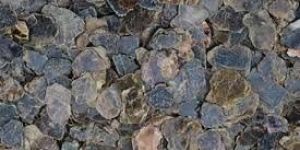
Vermiculite is a hydrous phyllosilicate mineral. It undergoes significant expansion when heated. Exfoliation occurs when the mineral is heated sufficiently, and the effect is routinely produced in commercial furnaces. Vermiculite is formed by weathering or hydrothermal alteration of biotite or phlogopite.
Vermiculite is a hydrous phyllosilicate mineral. It undergoes significant expansion when heated. Exfoliation occurs when the mineral is heated sufficiently, and the effect is routinely produced in commercial furnaces. Vermiculite is formed by weathering or hydrothermal alteration of biotite or phlogopite.
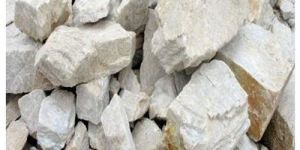
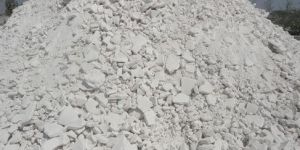
Processed through a vast process of washing, removing clay, classification and surface disposal and the shape is clean granule, our Quartz is known to exhibit optimal physical and chemical properties. The Quartz that we Manufacture and Supply is highly acknowledged by the clients due to its hygienic packaging and reasonable prices.Extensively Used In Making
Glass
Paint
Ceramics glaze
Non-alkali glass fiber
Television glass case
Semiconductor packing seal
Rubber insulator
Flame-resistant rubber padding
Fire-proof material
Chemical coating
Packing Available In
25 kilogram bags
50 kilogram bags
100 kilogram bags
1000 kilogram bags
Processed through a vast process of washing, removing clay, classification and surface disposal and the shape is clean granule, our Quartz is known to exhibit optimal physical and chemical properties. The Quartz that we Manufacture and Supply is highly acknowledged by the clients due to its hygienic packaging and reasonable prices.Extensively Used In Making
Glass
Paint
Ceramics glaze
Non-alkali glass fiber
Television glass case
Semiconductor packing seal
Rubber insulator
Flame-resistant rubber padding
Fire-proof material
Chemical coating
Packing Available In
25 kilogram bags
50 kilogram bags
100 kilogram bags
1000 kilogram bags
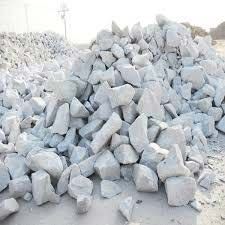
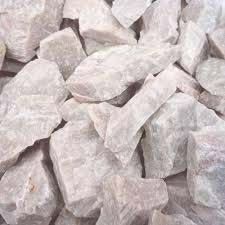
We offer high quality Potassium Feldspar Stone that is processed with an efficient use of proven technology. The Potassium Feldspar Stone that we Manufacture and Supply is widely acknowledged by the clients due to its superior physical and chemical properties. We carefully package our Potassium Feldspar Stone to ensure its safety from bad weather conditions.Used In The Production Of
Glass sand batch
Glazes and enamel
Wheels and discs of garnet, corundum, emery, etc.
Offered In
Granular form
Lumps form 1 inch to 15 inches
Powder from (150-25 microns)
Packing Offered
In 50 kg HDPE bags
In 1or 1.25 m t Jumbo bags with liner inside
Customized
We offer high quality Potassium Feldspar Stone that is processed with an efficient use of proven technology. The Potassium Feldspar Stone that we Manufacture and Supply is widely acknowledged by the clients due to its superior physical and chemical properties. We carefully package our Potassium Feldspar Stone to ensure its safety from bad weather conditions.Used In The Production Of
Glass sand batch
Glazes and enamel
Wheels and discs of garnet, corundum, emery, etc.
Offered In
Granular form
Lumps form 1 inch to 15 inches
Powder from (150-25 microns)
Packing Offered
In 50 kg HDPE bags
In 1or 1.25 m t Jumbo bags with liner inside
Customized
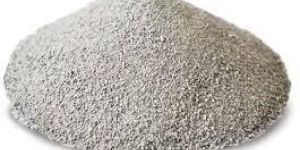
Obtained by an efficient use of modern machines, the Potassium Feldspar Powder manufactured and supplied by us has a precise composition of optimum quality minerals. The Potassium Feldspar Powder is duly tested on various parameters before the final dispatch. The stone is used in a number of applications including construction.
Obtained by an efficient use of modern machines, the Potassium Feldspar Powder manufactured and supplied by us has a precise composition of optimum quality minerals. The Potassium Feldspar Powder is duly tested on various parameters before the final dispatch. The stone is used in a number of applications including construction.
Nearly two third of the area of Goa is covered by a mantle of laterite ranging in thickness from a couple of meters to over 25 mts.
Maximum thickness of laterite is observed along the coast in the west and minimum along the Ghat section in the East.
The laterites in Goa are generally formed from Quartz-chlorite-Amphibole Schist, Pink ferruginous phyllite, Schitose metabasalt & Metagreywacke.
The laterite in Goa are used in construction activity as laterite boulders and laterite stones (Locally called as �chira�).
The laterite stones are used in construction activity because of their peculiar nature of being soft while cutting and becomes hard after use.
Nearly two third of the area of Goa is covered by a mantle of laterite ranging in thickness from a couple of meters to over 25 mts.
Maximum thickness of laterite is observed along the coast in the west and minimum along the Ghat section in the East.
The laterites in Goa are generally formed from Quartz-chlorite-Amphibole Schist, Pink ferruginous phyllite, Schitose metabasalt & Metagreywacke.
The laterite in Goa are used in construction activity as laterite boulders and laterite stones (Locally called as �chira�).
The laterite stones are used in construction activity because of their peculiar nature of being soft while cutting and becomes hard after use.
Kaolin clay is versatile clay with unique chemical and physical properties that contribute to its skin health benefits as well as side effects. Is Kaolin clay powder good for skin? Read on learn more about what is kaolin clay, its skin and other health benefits, physical and chemical properties as well as side effects.
Kaolin clay is versatile clay with unique chemical and physical properties that contribute to its skin health benefits as well as side effects. Is Kaolin clay powder good for skin? Read on learn more about what is kaolin clay, its skin and other health benefits, physical and chemical properties as well as side effects.
Granite Blocks
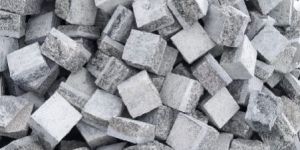
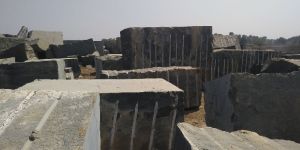
Granite blocks are the cubic shape blocks of granite stones. Granite blocks offer extraordinary strength to a structure. Its durability and long lasting characteristics make granite blocks an amazing choice while building a house or any other structure. Sea walls, garden fountains, garden branches, etc are some the constructions which make use of granite blocks. India is a leading exporter of granite blocks. During the months of May-June 2014, India exported granite blocks ,worth around USD 123,331. The major export destinations of Indian granite blocks include Germany, China, Poland, Belgium, Lithuania and UK.
Granite Blocks
Granite blocks are the cubic shape blocks of granite stones. Granite blocks offer extraordinary strength to a structure. Its durability and long lasting characteristics make granite blocks an amazing choice while building a house or any other structure. Sea walls, garden fountains, garden branches, etc are some the constructions which make use of granite blocks. India is a leading exporter of granite blocks. During the months of May-June 2014, India exported granite blocks ,worth around USD 123,331. The major export destinations of Indian granite blocks include Germany, China, Poland, Belgium, Lithuania and UK.
Feldspar is by far the most abundant group of minerals in the earth's crust, forming about 60% of terrestrial rocks. Most deposits offer sodium feldspar as well as potassium feldspar and mixed feldspars. Feldspars are primarily used in industrial applications for their alumina and alkali content. The term feldspar encompasses a whole range of materials. Most of the products we use on a daily basis are made with feldspar: glass for drinking, glass for protection, fiberglass for insulation, the floor tiles and shower basins in our bathrooms, and the tableware from which we eat. Feldspar is part of our daily life.
Feldspar minerals are essential components in igneous, metamorphic and sedimentary rocks, to such an extent that the classification of a number of rocks is based upon feldspar content. The mineralogical composition of most feldspars can be expressed in terms of the ternary system Orthoclase (KAlSi3O8), Albite (NaAlSi3O8) and Anorthite (CaAl2Si2O8). Chemically, the feldspars are silicates of aluminium, containing sodium, potassium, iron, calcium, or barium or combinations of these elements.
Feldspar is by far the most abundant group of minerals in the earth's crust, forming about 60% of terrestrial rocks. Most deposits offer sodium feldspar as well as potassium feldspar and mixed feldspars. Feldspars are primarily used in industrial applications for their alumina and alkali content. The term feldspar encompasses a whole range of materials. Most of the products we use on a daily basis are made with feldspar: glass for drinking, glass for protection, fiberglass for insulation, the floor tiles and shower basins in our bathrooms, and the tableware from which we eat. Feldspar is part of our daily life.
Feldspar minerals are essential components in igneous, metamorphic and sedimentary rocks, to such an extent that the classification of a number of rocks is based upon feldspar content. The mineralogical composition of most feldspars can be expressed in terms of the ternary system Orthoclase (KAlSi3O8), Albite (NaAlSi3O8) and Anorthite (CaAl2Si2O8). Chemically, the feldspars are silicates of aluminium, containing sodium, potassium, iron, calcium, or barium or combinations of these elements.
Dolomite is a common rock-forming mineral. It is a calcium magnesium carbonate with a chemical composition of CaMg(CO3)2. It is the primary component of the sedimentary rock known as dolostone and the metamorphic rock known as dolomitic marble. Limestone that contains some dolomite is known as dolomitic limestone.
Dolomite is a common rock-forming mineral. It is a calcium magnesium carbonate with a chemical composition of CaMg(CO3)2. It is the primary component of the sedimentary rock known as dolostone and the metamorphic rock known as dolomitic marble. Limestone that contains some dolomite is known as dolomitic limestone.
Bentonite is an absorbent aluminium phyllosilicate clay consisting mostly of montmorillonite. It was named by Wilbur C. Knight in 1898 after the Cretaceous Benton Shale near Rock River, Wyoming.[1][2]
The different types of bentonite are each named after the respective dominant element, such as potassium (K), sodium (Na), calcium (Ca), and aluminium (Al). Experts debate a number of nomenclatorial problems with the classification of bentonite clays. Bentonite usually forms from weathering of volcanic ash, most often in the presence of water. However, the term bentonite, as well as a similar clay called tonstein, has been used to describe clay beds of uncertain origin. For industrial purposes, two main classes of bentonite exist: sodium and calcium bentonite. In stratigraphy and tephrochronology, completely devitrified (weathered volcanic glass) ash-fall beds are commonly referred to as K-bentonites when the dominant clay species is illite. Other common clay species that are sometimes dominant are montmorillonite and kaolinite. Kaolinite-dominated clays are commonly referred to as tonsteins and are typically associated with coal.
Bentonite is an absorbent aluminium phyllosilicate clay consisting mostly of montmorillonite. It was named by Wilbur C. Knight in 1898 after the Cretaceous Benton Shale near Rock River, Wyoming.[1][2]
The different types of bentonite are each named after the respective dominant element, such as potassium (K), sodium (Na), calcium (Ca), and aluminium (Al). Experts debate a number of nomenclatorial problems with the classification of bentonite clays. Bentonite usually forms from weathering of volcanic ash, most often in the presence of water. However, the term bentonite, as well as a similar clay called tonstein, has been used to describe clay beds of uncertain origin. For industrial purposes, two main classes of bentonite exist: sodium and calcium bentonite. In stratigraphy and tephrochronology, completely devitrified (weathered volcanic glass) ash-fall beds are commonly referred to as K-bentonites when the dominant clay species is illite. Other common clay species that are sometimes dominant are montmorillonite and kaolinite. Kaolinite-dominated clays are commonly referred to as tonsteins and are typically associated with coal.
The premium Ball Clay that we manufacture and supply is widely acclaimed by the clients due to its high-drying shrinkage. Processed by adept professionals, our Ball Clay is known to exhibit optimum physical and chemical properties. Our Ball Clay has an accurate composition of ingredients.Why Our Ball Clay?
Outstanding warping and cracking tendency
Excellent plasticity
High workability
Fine grained
Demanded In
Ceramics and non ceramic applications
Refractory
Construction industry
Electrical porcelain insulators
The premium Ball Clay that we manufacture and supply is widely acclaimed by the clients due to its high-drying shrinkage. Processed by adept professionals, our Ball Clay is known to exhibit optimum physical and chemical properties. Our Ball Clay has an accurate composition of ingredients.Why Our Ball Clay?
Outstanding warping and cracking tendency
Excellent plasticity
High workability
Fine grained
Demanded In
Ceramics and non ceramic applications
Refractory
Construction industry
Electrical porcelain insulators
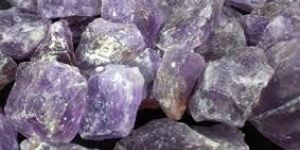
Purple Amethyst has been highly esteemed throughout the ages for its stunning beauty and legendary powers to stimulate, and soothe, the mind and emotions. It is a semi-precious stone in today�s classifications, but to the ancients it was a �Gem of Fire,� a Precious Stone worth, at times in history, as much as a Diamond. It has always been associated with February, the month the Romans dedicated to Neptune, their water-god, and is the traditional birthstone of that month. It is the stone of St. Valentine and faithful love, and signifies ecclesiastical dignity as the Bishop�s Stone. It carries the energy of fire and passion, creativity and spirituality, yet bears the logic of temperance and sobriety.
Purple Amethyst has been highly esteemed throughout the ages for its stunning beauty and legendary powers to stimulate, and soothe, the mind and emotions. It is a semi-precious stone in today�s classifications, but to the ancients it was a �Gem of Fire,� a Precious Stone worth, at times in history, as much as a Diamond. It has always been associated with February, the month the Romans dedicated to Neptune, their water-god, and is the traditional birthstone of that month. It is the stone of St. Valentine and faithful love, and signifies ecclesiastical dignity as the Bishop�s Stone. It carries the energy of fire and passion, creativity and spirituality, yet bears the logic of temperance and sobriety.







 Reviews & Ratings
 Write a Review



 Post Free Ad
