Electric Linear Actuators
Get Price Quote
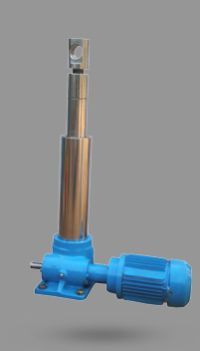
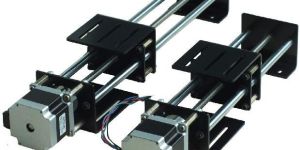
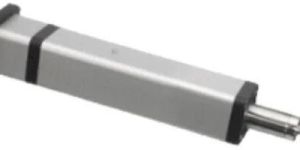
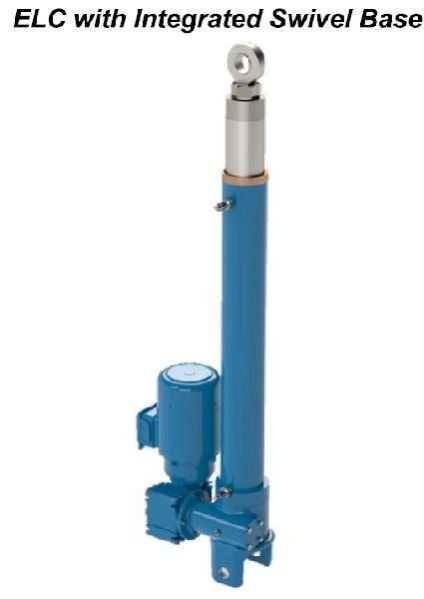
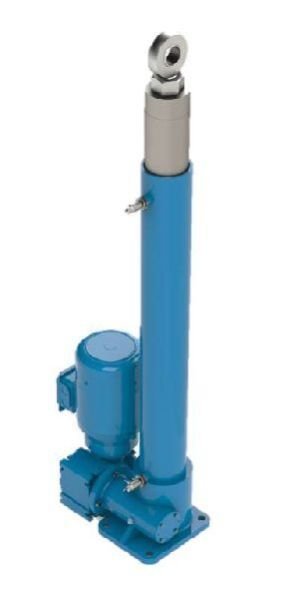
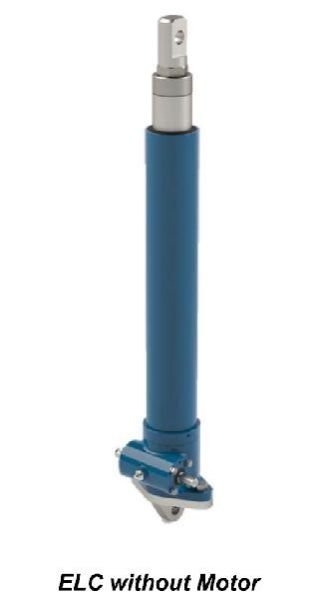
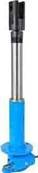
A Electric Linear Actuators is a hardware which creates the movement along a straight line, in contrast with the rotary motion of a conventional electric motor. The linear actuator is used in automation, automotive (such as management carburetor, moving lights), in computer peripherals (disk drives and printers), valves and other areas of application where there is a linear motion.
Electronic driver for 1 or 2 independent actuators or 2 synchronized actuators 12/24V 10-15AFeatures :
Driver power stage with pulse width modulation (PWM)
Customizable acceleration and deceleration ramps
Extreme precision and control for movement and brake
Current and temperature limits
Stop with limit switches
Parameters editable in an easy and fast way thanks to a PC interface and through a USB serial converter
Control of movements in synchronous mode by encoders with Hall effect; setting of the electronic limit switches (opening/closing)
Compatible with a wide range of products and different applications
High efficiency and low losses of power stage
It is designed as electronic driver in low voltage for the control of one or two linear actuators with DC motors through MOSFET transistors with pulse width modulation (PWM). In “sync” mode, the driver ensures the balancing of actuators also in case of extremely different loads in terms of weight, shape,or distribution on the surface, allowing a stroke without any difference between the two actuators.Technical Data :
Power supply: 12 to 48 V DC, maximum ripple 20%
Output current: 15 A for motor, in duty cicle S3 - 30% - 10 minutes
PWM frequency 10 kHz
Stand by power consumption: 50 mA @ 24 V
12 digital inputs (3 - 12 V): 8 for commands/limit switches, 4 for encoders (max 1 kHz), with operating logic programmable (positive/negative)
2 digital outputs NPN open collector (max 50 mA - 24 V): one for the fault and one programmable
Dimensions :
Without heat sink for currents up to 10 A: 86x72x30 mm (WxHxD)
With heat sink for currents over 10 A: 86x72x50 mm (WxHxD)
Signal Terminals (Vertical)
Open: opening command
Close : closing command
Trim-1 : enabling independence for actuator 1
Trim-2 : enabling independence for actuator 2
OP-SW: opening limit switch
CL-SW: closing limit switch
INT-SW: intermediate limit switch
Stop
Encoder motor 1 – channel 1
Encoder motor 1 – channel 2
Encoder motor 2 – channel 1
Encoder motor 2 – channel 2
Digital output 1: Fault
Digital output 2: programmable
GND for commands, limit switches and encoder
+12V for encoder supply
Power Terminals (horizontal) +V: positive supply 0V: GND :
M1+: actuator 1, positive supply (voltage > 0 opening)
M1-: actuator 1, GND
M2+: actuator 2, positive supply (voltage > 0 opening)
M2-: actuator 2, GND
Main Controls
Open/Close: synchronous movement
Trim1 + Open/ Close : movement of actuator 1
Trim2 + Open/ Close : movement of actuator 2
Trim1 + Trim12 (3 sec): homing
Homing : The driver moves both the actuators in the same direction, according to an adjustable profile, amperometric threshold (controlled mechanical stop) or limit switches, depending on the configuration. It detects automatically the connection’s direction of encoders
Trimming : The driver moves each actuator independently, for mechanical adjustments and a first manual alignment. It is required to check that commands correspond to the direction of movementPossibility to configures on/off delays and reverse the logic.
The start is provided through fully adjustable voltage ramps.
The stop is provided through electronic limit switches (or eventually mechanical limit switches), or with adjustable current limits.
Signal Terminals (vertical) :
Open-1: opening command for actuator 1
Close-1: closing command for actuator 1
Open-2: opening command for actuator 2
Close-2: closing command for actuator 2
OP-SW-1: opening limit switch for actuator 1
CL-SW-1: closing limit switch for actuator 1
OP-SW-2: opening limit switch for actuator 2
CL-SW-2: closing limit switch for actuator 2
INT-SW-1: intermediate limit switch 1
INT-SW-2: intermediate limit switch 2
Stop-1: stop for actuator 1
Stop-2: stop for actuator 2
Digital output 1: FAULT
Digital output 2: programmable
GND for commands, limit switches and encoder
+12V for encoder supply
Power Terminals (Horizontal) +V: positive supply 0V: GND :
M1+: actuator 1, positive supply (voltage > 0 opening)
M1-: actuator 1, GND
M2+: actuator 2, positive supply (voltage > 0 opening)
M2-: actuator 2, GND
In case of one or two independent actuators :
It is possible to use intermediate limit switches
It is possible to configures on/off delays and reverse the logic
The start is provided through fully adjustable voltage ramps
The stop is provided through mechanical limit switches, limit switches for overcurrent or adjustable current limits
Main editable parameters:
Voltage ramps
Current limits
Synchronous or independent enablement
Homing at the start (for sync only)
Homing with current limits or limit switches (for sync only)
Virtual limit switches settled with encoder pulses limits (for sync only)
Values monitorable through “Monitor” and “Statistics” sections :
Motors current
Applied voltage
Temperature
Speed
Active commands
Operating mode
General information about the operating status of the driver
Using the PC interface, it is possible to :
Consult the errors history (the driver stores each error and the time at which it occurred, from the last start)
Decide if an error stops the operation (only advanced mode for some errors)
Decide after how many repetitions of the same error the driver has to block (only advanced mode for some errors)
Decide the error tripping delay (only advanced mode for some errors)
The connection driver/PC is possible through an USB/UART cable converter.
...more