Esour Document Management System
Get Price Quote

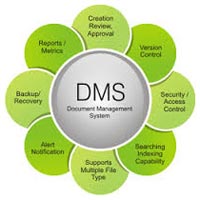
A Document Management System (DMS) is a software solution designed to organize, store, manage, and track digital documents and electronic images of paper-based information captured through the use of a document scanner. A DMS is a critical component for businesses aiming to efficiently handle their documents, ensuring secure access, streamlined workflow, and regulatory compliance.
Key Features of a Document Management System
Document Storage and Retrieval:
Centralized Repository: Provides a single, secure location for all documents, facilitating easy access and retrieval.
Indexing and Metadata: Documents are tagged with metadata (e.g., author, date, type) for quick search and retrieval.
Search Capabilities: Advanced search functions allow users to locate documents using keywords, phrases, or metadata.
Version Control:
Version Tracking: Maintains a history of document revisions, allowing users to track changes over time.
Check-in/Check-out: Ensures that only one user can edit a document at a time, preventing conflicts and data loss.
Security and Access Control:
User Permissions: Assigns specific access rights to users or groups, ensuring sensitive information is protected.
Audit Trails: Logs all document-related activities, providing an audit trail for compliance and security purposes.
Workflow Automation:
Approval Processes: Automates document routing for approvals, reviews, and other workflow steps.
Notifications and Alerts: Sends reminders and alerts to users about pending tasks or document changes.
Collaboration Tools:
Annotations and Comments: Allows users to add notes, comments, and annotations directly to documents.
Integration with Collaboration Platforms: Integrates with email, instant messaging, and other collaboration tools.
Compliance and Legal Adherence:
Retention Policies: Automates document retention and disposal according to legal and regulatory requirements.
Compliance Support: Ensures that document management practices comply with industry standards and regulations (e.g., GDPR, HIPAA).
Benefits of Implementing a DMS
Improved Efficiency:
Reduces time spent searching for documents.
Streamlines document-related processes through automation.
Enhanced Security:
Protects sensitive information through robust access controls.
Provides secure storage to prevent data loss.
Better Collaboration:
Facilitates team collaboration with shared access and real-time document updates.
Enhances communication through integrated collaboration tools.
Cost Savings:
Reduces the need for physical storage space.
Lowers administrative and operational costs associated with document handling.
Regulatory Compliance:
Helps organizations adhere to legal and regulatory requirements.
Reduces the risk of non-compliance penalties.
Challenges and Considerations
Implementation Cost:
Initial setup and customization can be expensive.
Requires investment in training and change management.
Integration with Existing Systems:
Ensuring compatibility with current IT infrastructure and software can be challenging.
User Adoption:
Success depends on user acceptance and proper usage.
Requires effective training and support to ensure smooth adoption.
Data Migration:
Transferring existing documents into the new system can be time-consuming and complex.
...more