Sci-tech Engineering Corporation Dahisar, Mumbai, Maharashtra

GST Number : 27AAIPB6904A1Z9
Contact Supplier Request A Quote
  • Water Reservoir and Surge Tower Apparatus Model FM 42 +4

    Water Reservoir and Surge Tower Apparatus Model FM 42

    275,000 / Piece

    • MOQ1 Piece
    • Country of OriginIndia
    • Total Carbohydrate3yrs
    • Number Of FlowerFluid Mechanics Lab Equipments
    • ApplicationEducation
    • ConditionNew
    • Brand NameSci-tech
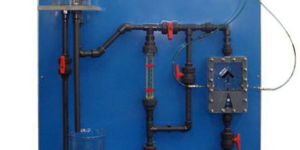
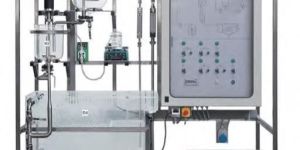
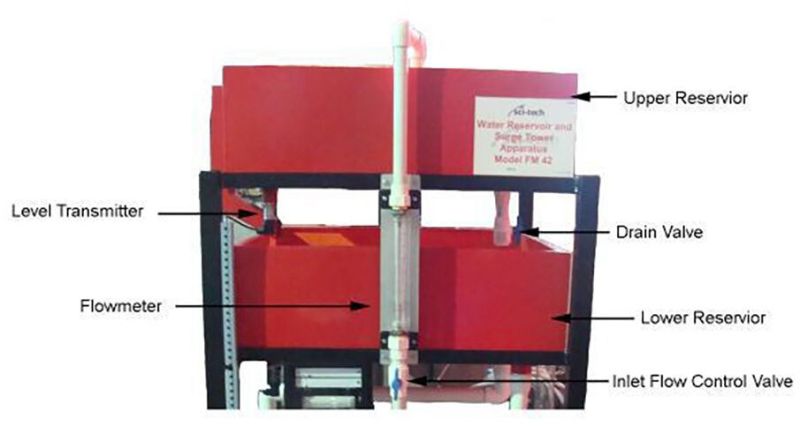
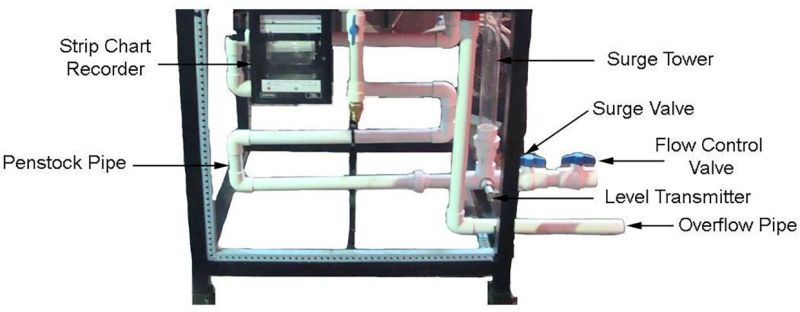
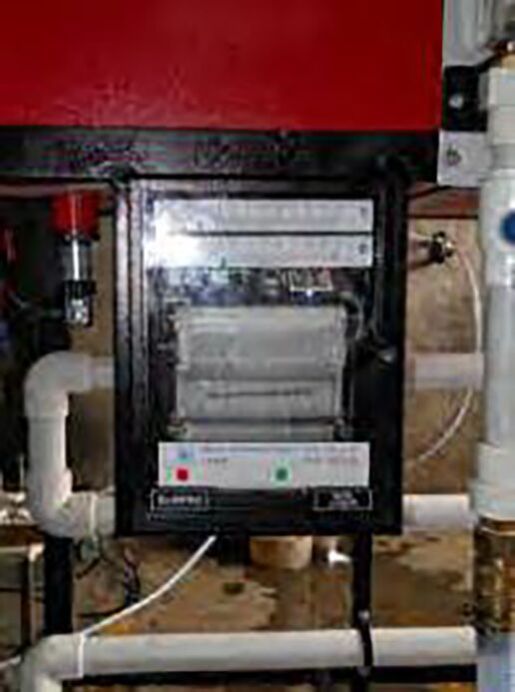
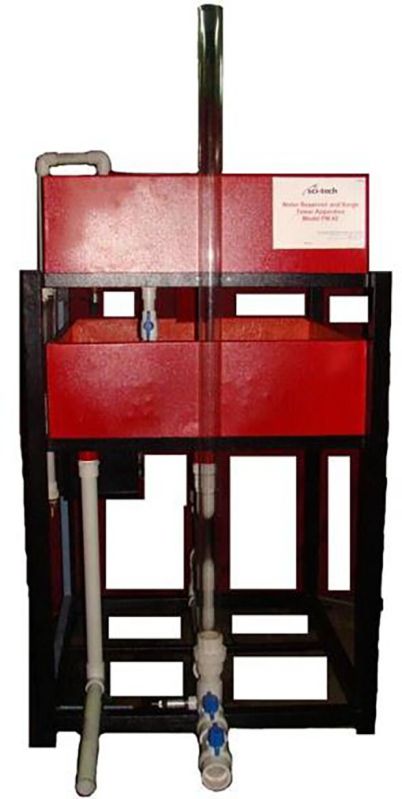
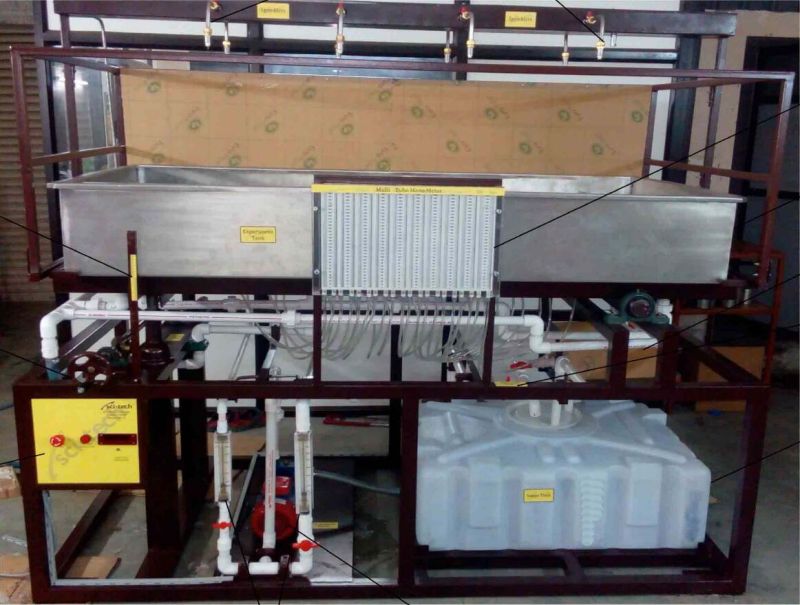
    • Sci-tech Water Reservoir and Surge Tower Apparatus Model FM 42 consists of two identical reservoirs connected in series. The lower reservoir supplies a pipe which terminates in a surge tower with a flow control valve and a shut-off valve. Water flows into the upper reservoir through a 50 l/min flowmeter and, when the level has reached the necessary height, flows over a weir into the lower reservoir. Water levels in the reservoirs are measured by pressure transducers connected to a pen recorder allowing the weir and flowmeter to be calibrated. Sci-tech Water Reservoir and Surge Tower Apparatus Model FM 42 is useful to demonstrate the use of reservoirs for water storage and flood control and to demonstrate the use of a surge tower as a means of minimizing pressure transients in a penstock. Sci-tech Water Reservoir and Surge Tower Apparatus Model FM 42 enables to achieve an understanding of: a) Unsteady flow theory. b) The continuity principle used in hydrology for flood routing. & c) The equation of motion applied to mass oscillations occurring in pump and hydro-power turbine installations. Experiments 1. Mass continuity in unsteady systems. 2. Flood routing and reservoir inflow and outflow hydrographs. 3. Surge in a pipe and mass oscillation in a surge tower. Instrumentation a)    Pressure transducers for water level in reservoirs b)    Pressure transducer for water level in surge tower c)     Variable gap flow meter   Technical Specification Reservoirs: 0.9 m x 0.9 m x 0.3 m each   Surge Tower: 63 mm diameter, 1.8 Mtrs Height.
    ...more
  • Water Reservoir and Surge Tower Apparatus Model FM 42

    Water Reservoir and Surge Tower Apparatus Model FM 42

    275,000 / Piece

    1 Piece (MOQ)

    Sci-tech Water Reservoir and Surge Tower Apparatus Model FM 42 consists of two identical reservoirs connected in series. The lower reservoir supplies a pipe which terminates in a surge tower with a flow control valve and a shut-off valve. Water flows into the upper reservoir through a 50 l/min flowmeter and, when the level has reached the necessary height, flows over a weir into the lower reservoir. Water levels in the reservoirs are measured by pressure transducers connected to a pen recorder allowing the weir and flowmeter to be calibrated. Sci-tech Water Reservoir and Surge Tower Apparatus Model FM 42 is useful to demonstrate the use of reservoirs for water storage and flood control and to demonstrate the use of a surge tower as a means of minimizing pressure transients in a penstock. Sci-tech Water Reservoir and Surge Tower Apparatus Model FM 42 enables to achieve an understanding of: a) Unsteady flow theory. b) The continuity principle used in hydrology for flood routing. & c) The equation of motion applied to mass oscillations occurring in pump and hydro-power turbine installations. Experiments 1. Mass continuity in unsteady systems. 2. Flood routing and reservoir inflow and outflow hydrographs. 3. Surge in a pipe and mass oscillation in a surge tower. Instrumentation a)    Pressure transducers for water level in reservoirs b)    Pressure transducer for water level in surge tower c)     Variable gap flow meter   Technical Specification Reservoirs: 0.9 m x 0.9 m x 0.3 m each   Surge Tower: 63 mm diameter, 1.8 Mtrs Height.

    Country of Origin : India

    Total Carbohydrate : 3yrs

    Number Of Flower : Fluid Mechanics Lab Equipments

    Application : Education

    Condition : New

    Brand Name : Sci-tech

    ...more
    Get Best Price
  • Vortex Flow Meter Model FM 36

    Vortex Flow Meter Model FM 36

    145,000 / Piece

    • MOQ1 Piece
    • Country of OriginIndia
    • Number Of FlowerFluid Mechanics Lab Equipments
    • Brand NameSci-tech
    • Warranty3yrs
    • ApplicationEducation
    • ConditionNew
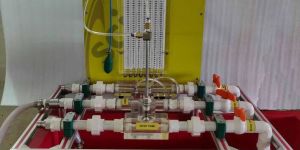
    • Sci-tech Vortex Flow Meter Model FM 36 makes it possible to study different methods of volumetric and mass flow measurement, as well as to compare continuous and intermittent methods. This module includes two continuous and two intermittent methods to carry out the experiments. The continuous methods include a vortex flowmeter and a variable-area flowmeter (or rotameter). A series of oscillating vortices, where the oscillating frequency is proportional to the flow rate, are generated in the vortex flowmeter. Dye or colouring is used to visualize such vortices. Intermittent methods include the measurement of volumetric and mass flows. A precision scale is used to measure the mass flow and compare the measurements. The water supply may be provided either from the Hydraulics Bench FM100 or from external source. The vortex flow meter is installed in the water circuit of the Hydraulics Bench FM100 trainer. It operates according to the principle of Von Karman vortex shedding. Downstream of a dam body in a flow, vortices alternately form which are separated off by the flow. The frequency of the vortex separation to both sides of the dam body is proportional to the flow rate. The separated vortices alternately generate local vacuum which is measured using capacitive pressure sensors. The pressure signals are converted and indicated as the flow rate on a display. The necessary connections are provided so that the pressure loss can be determined with the Hydraulics Bench FM100.   Specifications Ø  vortex flow meter as accessory hydraulic bench trainer Ø  operation according to Von Karman vortex shedding Ø  display indicating flow rate Ø  connections to facilitate pressure loss measurement with the hydraulic bench trainer Ø  connections to supply auxiliary power via the hydraulic bench trainer Ø  vertical and horizontal installation possible Ø  Structure of anodized aluminum and panels of painted steel. Ø  PVC pipe to connect to a water supply of the Hydraulics Bench FM100 Ø  Needle valve to control the flow at the pipe inlet. Ø  Vortex flow meter with flow oscillation made visible by dye injection. Ø  Variable-area flow meter (rotameter), range: 150-1600 l./min. Ø  Two regulating ball valves to control the flow in the vortex and variable-area flow meters. Ø  Water tank at a constant height and connection for its drainage, capacity: 2.4l. Ø  Dye or colouring tank with control valve, capacity: 0.4 l. Ø  A control ball valve to regulate the flow at the pipe 's outlet. Ø  Quick connection system. Ø  A digital precision balance, range: 0-2000 gr., graduated at 1 gr. Graduated glass vessel with a capacity of 2 l. Easy and quick coupling system built-in.   Technical Specifications 1.     Max. flow rate: 4600L/h 2.     Auxiliary power: 24VDC 3.     Pipe connections: DN 32 Optional ‘Sci-Cal’ Computer Control Software & Interface  List of Experiments: 1.- Study and experiments with a vortex flow meter. 2.- Study and experiments with a variable area flow meter. 3.- Measurement of volumetric volume flow rate. 4.- Measurement of gravimetric volume flow rate. 5.- Comparison of methods on several volumetric and mass flow measurements. 6.- Flow meters calibration. 7.- Comparison among different flowmeters.  
    ...more
  • Vortex Flow Meter Model FM 36

    Vortex Flow Meter Model FM 36

    145,000 / Piece

    1 Piece (MOQ)

    Sci-tech Vortex Flow Meter Model FM 36 makes it possible to study different methods of volumetric and mass flow measurement, as well as to compare continuous and intermittent methods. This module includes two continuous and two intermittent methods to carry out the experiments. The continuous methods include a vortex flowmeter and a variable-area flowmeter (or rotameter). A series of oscillating vortices, where the oscillating frequency is proportional to the flow rate, are generated in the vortex flowmeter. Dye or colouring is used to visualize such vortices. Intermittent methods include the measurement of volumetric and mass flows. A precision scale is used to measure the mass flow and compare the measurements. The water supply may be provided either from the Hydraulics Bench FM100 or from external source. The vortex flow meter is installed in the water circuit of the Hydraulics Bench FM100 trainer. It operates according to the principle of Von Karman vortex shedding. Downstream of a dam body in a flow, vortices alternately form which are separated off by the flow. The frequency of the vortex separation to both sides of the dam body is proportional to the flow rate. The separated vortices alternately generate local vacuum which is measured using capacitive pressure sensors. The pressure signals are converted and indicated as the flow rate on a display. The necessary connections are provided so that the pressure loss can be determined with the Hydraulics Bench FM100.   Specifications Ø  vortex flow meter as accessory hydraulic bench trainer Ø  operation according to Von Karman vortex shedding Ø  display indicating flow rate Ø  connections to facilitate pressure loss measurement with the hydraulic bench trainer Ø  connections to supply auxiliary power via the hydraulic bench trainer Ø  vertical and horizontal installation possible Ø  Structure of anodized aluminum and panels of painted steel. Ø  PVC pipe to connect to a water supply of the Hydraulics Bench FM100 Ø  Needle valve to control the flow at the pipe inlet. Ø  Vortex flow meter with flow oscillation made visible by dye injection. Ø  Variable-area flow meter (rotameter), range: 150-1600 l./min. Ø  Two regulating ball valves to control the flow in the vortex and variable-area flow meters. Ø  Water tank at a constant height and connection for its drainage, capacity: 2.4l. Ø  Dye or colouring tank with control valve, capacity: 0.4 l. Ø  A control ball valve to regulate the flow at the pipe 's outlet. Ø  Quick connection system. Ø  A digital precision balance, range: 0-2000 gr., graduated at 1 gr. Graduated glass vessel with a capacity of 2 l. Easy and quick coupling system built-in.   Technical Specifications 1.     Max. flow rate: 4600L/h 2.     Auxiliary power: 24VDC 3.     Pipe connections: DN 32 Optional ‘Sci-Cal’ Computer Control Software & Interface  List of Experiments: 1.- Study and experiments with a vortex flow meter. 2.- Study and experiments with a variable area flow meter. 3.- Measurement of volumetric volume flow rate. 4.- Measurement of gravimetric volume flow rate. 5.- Comparison of methods on several volumetric and mass flow measurements. 6.- Flow meters calibration. 7.- Comparison among different flowmeters.  

    Country of Origin : India

    Number Of Flower : Fluid Mechanics Lab Equipments

    Brand Name : Sci-tech

    ...more
    Get Best Price
  • Venturi-meter Model FM40 +2

    Venturi-meter Model FM40

    55,000 / Piece

    • MOQ1 Piece
    • Country of OriginIndia
    • Number Of FlowerFluid Mechanics Lab Equipments
    • Brand NameSci-tech
    • Warranty3yrs
    • ApplicationEducation
    • ConditionNew
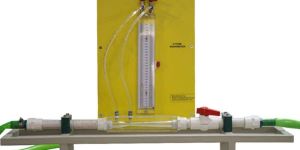
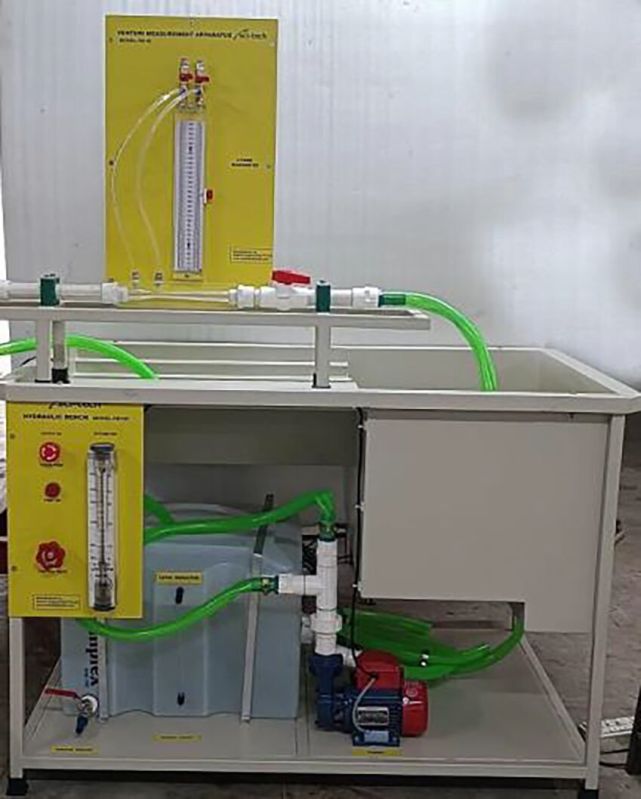
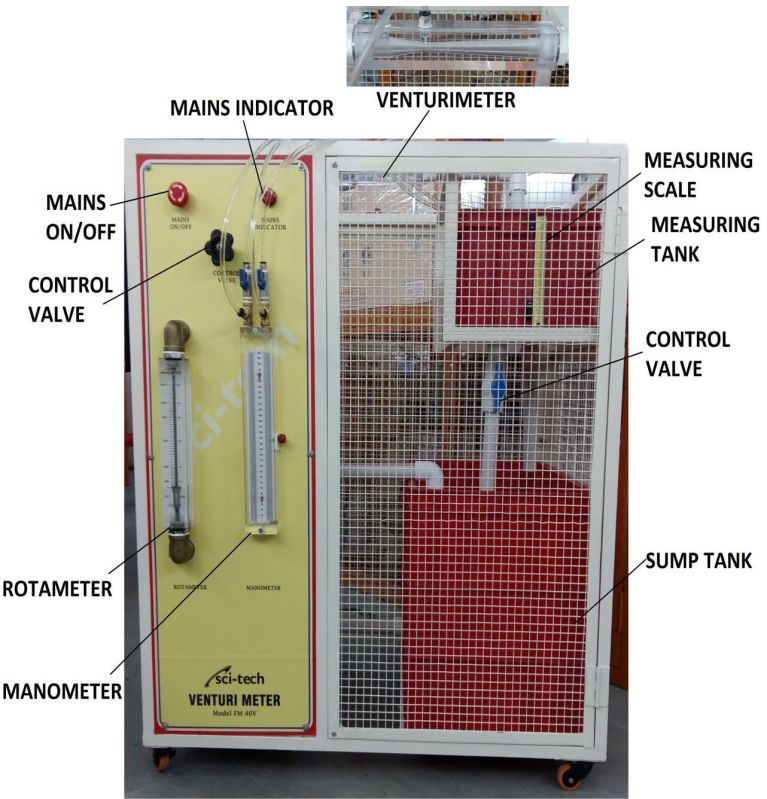
    • Sci-tech Venturi-meter Model FM40 is self-sufficient unit to study the characteristics of Venturi-meter. The calibration of the meter can be study by comparing with actual flow measured in measuring tank. The Venturi is made of clear acrylic material to understand its operation phenomenon. Pressure tapings are provided at appropriate location for measurement of differential pressure with Mercury U tube manometer. Variable flow can be achieved for various reading set. For the particular flow we can compare the reading. The Test set up of the Trainer is integrated with the ‘Sci-tech’ Hydraulic Bench FM 100. The test set up system will be supplied with venture-meter.     Specifications  Venturi tube: inlet and outlet diameter 26 mm NB, made of transparent plastic / perplex / plexi – glass base. · Centrifugal Pump: ½ H.P. · Sump Tank (50Ltrs). · Measuring tank and electronic level measurement system with digital stop watch. · U tube manometer: having graduated screen of height 400 mm approx. · Pipe and fittings made of PVC / corrosion resistant plastic. · M.S. Stand with FRP Top   Technical Specifications ·       Maximum flow rate: Nominally 27 L. min ·       Inside diameter of Venturi inlet: 26 mm ·       Inside diameter of Venturi throat: 16 mm ·       Inside diameter of Venturi outlet: 26 mm Pressure tappings: 11 Manometer tube range: 0 to 400 mm Accessories: Outlet tubing, pipe clips   OPTIONAL ACCESSORIES Multimedia computer-based training package on Flow meters Cut sections of valves & pumps Transparencies & Slides Data Acquisition System for Fluid Mechanics Experiments   Experiment possibilities § Calibration of Flow meter. § Flow measurement using Venturi-meter. § Demonstration of use of flow meter & its comparisons. § Determination of flow coefficient. § Comparison of pressure drops across venture-meter.   § Study of Coefficient of Discharge Cd
    ...more
  • Venturi-meter Model FM40

    Venturi-meter Model FM40

    55,000 / Piece

    1 Piece (MOQ)

    Sci-tech Venturi-meter Model FM40 is self-sufficient unit to study the characteristics of Venturi-meter. The calibration of the meter can be study by comparing with actual flow measured in measuring tank. The Venturi is made of clear acrylic material to understand its operation phenomenon. Pressure tapings are provided at appropriate location for measurement of differential pressure with Mercury U tube manometer. Variable flow can be achieved for various reading set. For the particular flow we can compare the reading. The Test set up of the Trainer is integrated with the ‘Sci-tech’ Hydraulic Bench FM 100. The test set up system will be supplied with venture-meter.     Specifications  Venturi tube: inlet and outlet diameter 26 mm NB, made of transparent plastic / perplex / plexi – glass base. · Centrifugal Pump: ½ H.P. · Sump Tank (50Ltrs). · Measuring tank and electronic level measurement system with digital stop watch. · U tube manometer: having graduated screen of height 400 mm approx. · Pipe and fittings made of PVC / corrosion resistant plastic. · M.S. Stand with FRP Top   Technical Specifications ·       Maximum flow rate: Nominally 27 L. min ·       Inside diameter of Venturi inlet: 26 mm ·       Inside diameter of Venturi throat: 16 mm ·       Inside diameter of Venturi outlet: 26 mm Pressure tappings: 11 Manometer tube range: 0 to 400 mm Accessories: Outlet tubing, pipe clips   OPTIONAL ACCESSORIES Multimedia computer-based training package on Flow meters Cut sections of valves & pumps Transparencies & Slides Data Acquisition System for Fluid Mechanics Experiments   Experiment possibilities § Calibration of Flow meter. § Flow measurement using Venturi-meter. § Demonstration of use of flow meter & its comparisons. § Determination of flow coefficient. § Comparison of pressure drops across venture-meter.   § Study of Coefficient of Discharge Cd

    Country of Origin : India

    Number Of Flower : Fluid Mechanics Lab Equipments

    Brand Name : Sci-tech

    ...more
    Get Best Price
  • Venturi, Bernoulli & Cavitation Apparatus Model FM 53

    Venturi, Bernoulli & Cavitation Apparatus Model FM 53

    95,000 / Piece

    • MOQ1 Piece
    • Brand NameSci-tech
    • ConditionNew
    • ApplicationEducation
    • Number Of FlowerFluid Mechanics Lab Equipments
    • Total Carbohydrate3yrs
    • Country of OriginIndia
    • Sci-tech Venturi, Bernoulli & Cavitation Apparatus Model FM 53 is designed for demonstrating some practical possibilities with the Venturi’s tube. This Venturi is made of transparent methacrylate for a better visualization. It consist of a circular transverse section Venturi tube with 6 taps (Divergent/Convergent). Being transparent, it gives a better visualization of the cavitation phenomenon. It includes a manometer and a vacuum gauge, as well as 5 manometric tubes.                          Technical Specifications Ø  Manometer (Bourdon type), range: 0-2.5 bar. Ø  Manometer (Bourdon type), range: 0-(-1) bar. Ø  2 Tanks, height: 135 mm and internal diameter: 64 mm. Ø  Venturi tube with 6 tappings (Divergent/Convergent). Ø  Differential manometers: 0-500 mm. Ø  5 Manometric tubes. Ø  Easy and quick coupling system built-in. Ø  Anodized aluminum structure and panels of painted steel.       Experiments 1.- How to fill the manometric tubes. 2.- Flow calculation. 3.- Determination of the exact section in Venturi’s tube. Bernoulli’s theorem study. 4.- Cavitation study. 5.- Pressure reduction in a tank. 6.- Aspiration pump. 7.- Aspiration pump for mixing two liquids. 8.- Using for air and water mixing.
    ...more
  • Venturi, Bernoulli & Cavitation Apparatus Model FM 53

    Venturi, Bernoulli & Cavitation Apparatus Model FM 53

    95,000 / Piece

    1 Piece (MOQ)

    Sci-tech Venturi, Bernoulli & Cavitation Apparatus Model FM 53 is designed for demonstrating some practical possibilities with the Venturi’s tube. This Venturi is made of transparent methacrylate for a better visualization. It consist of a circular transverse section Venturi tube with 6 taps (Divergent/Convergent). Being transparent, it gives a better visualization of the cavitation phenomenon. It includes a manometer and a vacuum gauge, as well as 5 manometric tubes.                          Technical Specifications Ø  Manometer (Bourdon type), range: 0-2.5 bar. Ø  Manometer (Bourdon type), range: 0-(-1) bar. Ø  2 Tanks, height: 135 mm and internal diameter: 64 mm. Ø  Venturi tube with 6 tappings (Divergent/Convergent). Ø  Differential manometers: 0-500 mm. Ø  5 Manometric tubes. Ø  Easy and quick coupling system built-in. Ø  Anodized aluminum structure and panels of painted steel.       Experiments 1.- How to fill the manometric tubes. 2.- Flow calculation. 3.- Determination of the exact section in Venturi’s tube. Bernoulli’s theorem study. 4.- Cavitation study. 5.- Pressure reduction in a tank. 6.- Aspiration pump. 7.- Aspiration pump for mixing two liquids. 8.- Using for air and water mixing.

    Brand Name : Sci-tech

    Condition : New

    Application : Education

    Number Of Flower : Fluid Mechanics Lab Equipments

    Total Carbohydrate : 3yrs

    Country of Origin : India

    ...more
    Get Best Price
  • Venturi Air Scrubber System Model Env 010

    Venturi Air Scrubber System Model Env 010

    650,000 / Set

    • MOQ1 Set
    • CertificationCE Certified
    • ApplicationEducation
    • ConditionNew
    • Driven TypeElectric
    • Brand NameSci-tech
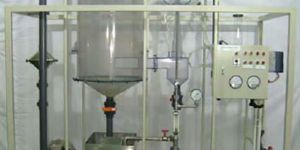
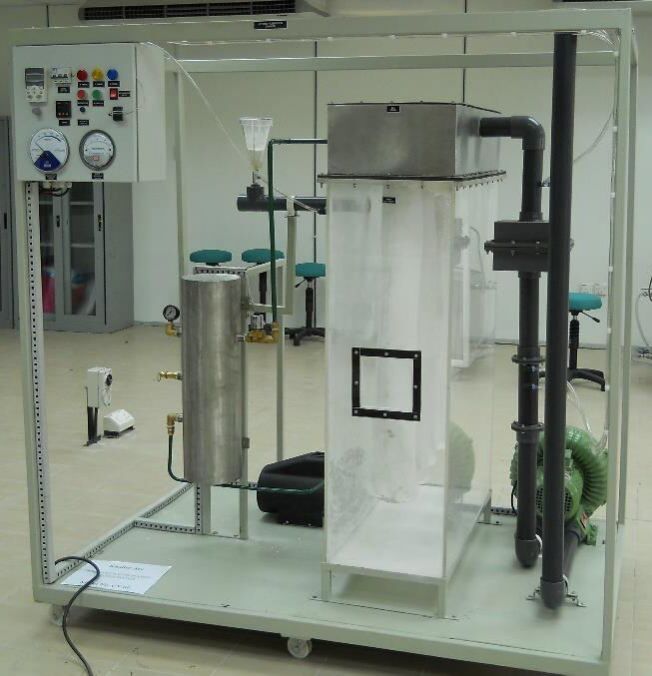
    • Sci-tech Venturi Air Scrubber System Model ENV 010 s used to demonstrate dust pollution control and the effect of liquid -to-gas ratio (L/G) on separation efficiency. The system comprises of a venturi tube, separation chamber, dust feeding system, water recirculation system and a variable speed air blower. The venturi tube is made of transparent and rigid plexi-glass for the observation of flow. A differential pressure transducer is used to measure pressure drop across the venturi. The cylindrical separation chamber is also made of transparent, rigid plexiglass with a diameter of 500 mm and height of 1.6 meter. At the side bottom of the separation chamber is a circular inlet which is connected to the outlet of the venturi. The chamber also houses a mist eliminator at the top which prevents water droplets from escaping the chamber. A collecting plastic tank is provided to collect the mixture of dust and water at the bottom of the separating chamber. The water recirculation system comprises of a water tank, pump, flow meter, pressure gauge and pressure regulator. The stainless-steel water tank is located below the separation chamber and supplies water to the pump. A filter is attached to the pump inlet to prevent dust and debris from damaging the pump. The air blower is used to draw air at a maximum rate of 300 m3/hour through the separation chamber. The inlet air velocity can be adjusted by varying the air blower speed. The dust feeding system is used to simulate pollution in the air stream before entering the separation chamber. The system’s main frame is made of welded mild steel. The frame is epoxy-coated for aesthetics, durability and heat and corrosion resistance. A control panel is mounted on the steel frame as well to house all the electrical and electronic components.   TRAINING AIMS / EXPERIMENTS LIST • Understanding of air scrubber system. • Understanding the working principles of air scrubber system. • To demonstrate and simulate dust pollution control using a venturi scrubber. • To study the effect of air velocity and water flow rate on separation efficiency.   TECHNICAL SPECIFICATIONS Venturi tube ·       Made of transparent rigid PVC for easy observation and durability ·       Throat ID: 30 mm ·       Inlet & outlet ID: 100 mm ·       Convergence angle: 10°; Divergence angle: 5° ·       Tappings at inlet & outlet for pressure drop measurement   Separation chamber ·       Made of transparent rigid plexiglass for easy observation and durability ·       Cylinder ID: 500 mm; Height: 1.6 meter ·       Tangentially connected to a circular inlet ·       Mist eliminator at top made of stainless steel ·       Plastic collecting tank at the bottom   Water recirculation system ·       Stainless steel tank with a capacity of 60 L c/w level switch ·       Centrifugal pump capable of delivering up to 25 LPM ·       Flow meter 0 - 10 LPM   Air blower ·       High pressure blower capable of delivering 300m3/hour @ 3000 rpm ·       Able to withstand up to 20kPa static pressure ·       Comes with inverter for regulating blower speed   Instruments & accessories ·       Venturi type air flow meter with differential pressure gauge. DP range: max 20kPa ·       Feeding system made of stainless-steel tank and flow regulating valve   Control Panel ·       Epoxy coated steel box ·       Water proof panel sticker ·       Housing for electrical and electronic components   Optional accessories ·       Digital indicators with selector switch (2 units) ·       Differential pressure transmitters (3 units) ·       Liquid flow meter (1 unit) ·       Data acquisition system   COMPONENTS LIST • Epoxy coated steel frame. • Clear plexiglass separating chamber. • Clear plexiglass venturi tube. • Stainless steel water tank. • Centrifugal pump. • Differential pressure gauge. • Frequency inverter. • Control panel. • Plastic collecting tank. • Air blower. • Flow meter. • Water filter. • Stainless steel dust tank.
    ...more
  • Venturi Air Scrubber System Model Env 010

    Venturi Air Scrubber System Model Env 010

    650,000 / Set

    1 Set (MOQ)

    Sci-tech Venturi Air Scrubber System Model ENV 010 s used to demonstrate dust pollution control and the effect of liquid -to-gas ratio (L/G) on separation efficiency. The system comprises of a venturi tube, separation chamber, dust feeding system, water recirculation system and a variable speed air blower. The venturi tube is made of transparent and rigid plexi-glass for the observation of flow. A differential pressure transducer is used to measure pressure drop across the venturi. The cylindrical separation chamber is also made of transparent, rigid plexiglass with a diameter of 500 mm and height of 1.6 meter. At the side bottom of the separation chamber is a circular inlet which is connected to the outlet of the venturi. The chamber also houses a mist eliminator at the top which prevents water droplets from escaping the chamber. A collecting plastic tank is provided to collect the mixture of dust and water at the bottom of the separating chamber. The water recirculation system comprises of a water tank, pump, flow meter, pressure gauge and pressure regulator. The stainless-steel water tank is located below the separation chamber and supplies water to the pump. A filter is attached to the pump inlet to prevent dust and debris from damaging the pump. The air blower is used to draw air at a maximum rate of 300 m3/hour through the separation chamber. The inlet air velocity can be adjusted by varying the air blower speed. The dust feeding system is used to simulate pollution in the air stream before entering the separation chamber. The system’s main frame is made of welded mild steel. The frame is epoxy-coated for aesthetics, durability and heat and corrosion resistance. A control panel is mounted on the steel frame as well to house all the electrical and electronic components.   TRAINING AIMS / EXPERIMENTS LIST • Understanding of air scrubber system. • Understanding the working principles of air scrubber system. • To demonstrate and simulate dust pollution control using a venturi scrubber. • To study the effect of air velocity and water flow rate on separation efficiency.   TECHNICAL SPECIFICATIONS Venturi tube ·       Made of transparent rigid PVC for easy observation and durability ·       Throat ID: 30 mm ·       Inlet & outlet ID: 100 mm ·       Convergence angle: 10°; Divergence angle: 5° ·       Tappings at inlet & outlet for pressure drop measurement   Separation chamber ·       Made of transparent rigid plexiglass for easy observation and durability ·       Cylinder ID: 500 mm; Height: 1.6 meter ·       Tangentially connected to a circular inlet ·       Mist eliminator at top made of stainless steel ·       Plastic collecting tank at the bottom   Water recirculation system ·       Stainless steel tank with a capacity of 60 L c/w level switch ·       Centrifugal pump capable of delivering up to 25 LPM ·       Flow meter 0 - 10 LPM   Air blower ·       High pressure blower capable of delivering 300m3/hour @ 3000 rpm ·       Able to withstand up to 20kPa static pressure ·       Comes with inverter for regulating blower speed   Instruments & accessories ·       Venturi type air flow meter with differential pressure gauge. DP range: max 20kPa ·       Feeding system made of stainless-steel tank and flow regulating valve   Control Panel ·       Epoxy coated steel box ·       Water proof panel sticker ·       Housing for electrical and electronic components   Optional accessories ·       Digital indicators with selector switch (2 units) ·       Differential pressure transmitters (3 units) ·       Liquid flow meter (1 unit) ·       Data acquisition system   COMPONENTS LIST • Epoxy coated steel frame. • Clear plexiglass separating chamber. • Clear plexiglass venturi tube. • Stainless steel water tank. • Centrifugal pump. • Differential pressure gauge. • Frequency inverter. • Control panel. • Plastic collecting tank. • Air blower. • Flow meter. • Water filter. • Stainless steel dust tank.

    Certification : CE Certified

    Application : Education

    Condition : New

    Driven Type : Electric

    Brand Name : Sci-tech

    ...more
    Get Best Price
  • Utility Boiler Simulator Model Bsg 004 +1

    Utility Boiler Simulator Model Bsg 004

    95,000 / Set

    • MOQ1 Set
    • Brand NameSci-tech
    • ConditionNew
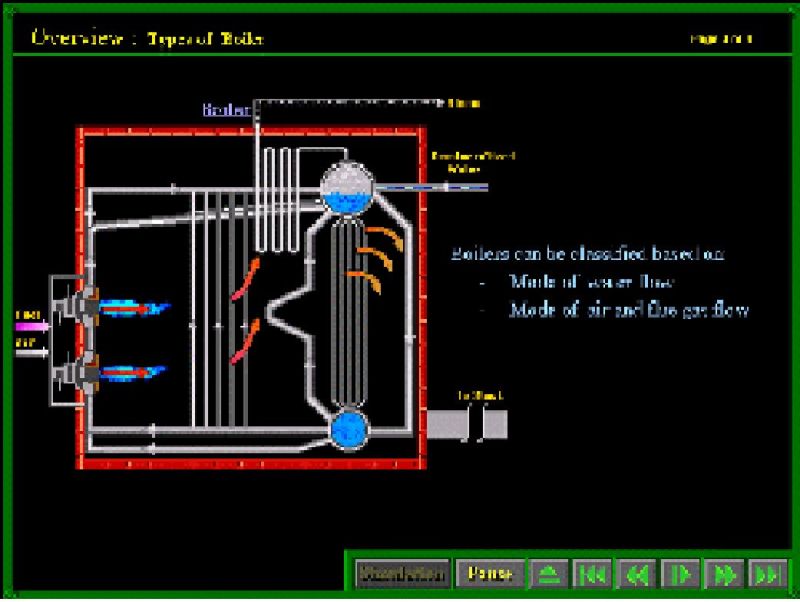
    • Sci-tech Utility Boiler Model BSG 004 is a typical drum-type boiler widely used in the oil refinery and petrochemical plants for steam generation. Sci-tech Bench Top Utility Boiler Simulator Model BSG 004 is designed to demonstrate the thermodynamic basic principles of boiling phenomenon. BSG 004 enables user to study the fundamental pressure- temperature relationship of saturated steam in equilibrium with water. The Boiler consists of a stainless-steel pressure vessel fitted with a high pressure immersion electrical heater. It comes with a safety valve, temperature sensor and Bourdon type pressure gauge. Water inlet valve and discharge valve are also installed. BSG 004 comes with transducers for temperature and pressure for students to enable to take readings for respective values on a digital indicator. Heater power supply is controlled through control panel. The heater is protected from burn-out by setting the maximum operating temperature on the temperature controller. Optionally Data Acquisition System can be offered for Data Logging; Signal Analysis; Process Control; Real-time Display; Tabulated Results & Graph of Experimental Results The highlights of Utility Boiler Simulator   Permits practice: Start up Shutdown Normal operations Troubleshooting Simulation of drum shrink-and-swell phenomena Burner flame out and unstable flame conditions Detailed radiation and convection section heat transfer Variable fuel characteristics and heating values Stoichiometric combustion model Effect of atomizing steam Typical advanced boiler control system Dynamic display of flame color and length Plant alert and monitor: Abnormal ignition Black smoke in stack  Explosive situation Specification Pressure Vessel Ø  Capacity: 5 – 50 liters Ø  Material: Stainless steel (304 or 316)   Pressure Gauge Ø  Type: Bourdon type Ø  Range: min. 0 to max. 20 bar   Temperature Sensor Ø  Range: min. 0 to max. 200 ⁰C   Transducers Ø  Temperature and pressure   Operating Pressure Ø  Max. 5 ~ 15 bar   Electrical Heater Ø  Power: 2 ~ 20 kW Ø  Type: Immersion type   Temperature Controller Ø  Thermocouple/PT100 input   Safety Ø  Temperature controller: pressure relief valve   Optional, ‘Sci-CalR’ Data Acquisition System DAQ Electronic signal conditioning system Windows based software: -              Data Logging -              Signal Analysis -              Process Control -              Real-time Display -              Tabulated Results -              Graph of Experimental Results
    ...more
  • Utility Boiler Simulator Model Bsg 004

    Utility Boiler Simulator Model Bsg 004

    95,000 / Set

    1 Set (MOQ)

    Sci-tech Utility Boiler Model BSG 004 is a typical drum-type boiler widely used in the oil refinery and petrochemical plants for steam generation. Sci-tech Bench Top Utility Boiler Simulator Model BSG 004 is designed to demonstrate the thermodynamic basic principles of boiling phenomenon. BSG 004 enables user to study the fundamental pressure- temperature relationship of saturated steam in equilibrium with water. The Boiler consists of a stainless-steel pressure vessel fitted with a high pressure immersion electrical heater. It comes with a safety valve, temperature sensor and Bourdon type pressure gauge. Water inlet valve and discharge valve are also installed. BSG 004 comes with transducers for temperature and pressure for students to enable to take readings for respective values on a digital indicator. Heater power supply is controlled through control panel. The heater is protected from burn-out by setting the maximum operating temperature on the temperature controller. Optionally Data Acquisition System can be offered for Data Logging; Signal Analysis; Process Control; Real-time Display; Tabulated Results & Graph of Experimental Results The highlights of Utility Boiler Simulator   Permits practice: Start up Shutdown Normal operations Troubleshooting Simulation of drum shrink-and-swell phenomena Burner flame out and unstable flame conditions Detailed radiation and convection section heat transfer Variable fuel characteristics and heating values Stoichiometric combustion model Effect of atomizing steam Typical advanced boiler control system Dynamic display of flame color and length Plant alert and monitor: Abnormal ignition Black smoke in stack  Explosive situation Specification Pressure Vessel Ø  Capacity: 5 – 50 liters Ø  Material: Stainless steel (304 or 316)   Pressure Gauge Ø  Type: Bourdon type Ø  Range: min. 0 to max. 20 bar   Temperature Sensor Ø  Range: min. 0 to max. 200 ⁰C   Transducers Ø  Temperature and pressure   Operating Pressure Ø  Max. 5 ~ 15 bar   Electrical Heater Ø  Power: 2 ~ 20 kW Ø  Type: Immersion type   Temperature Controller Ø  Thermocouple/PT100 input   Safety Ø  Temperature controller: pressure relief valve   Optional, ‘Sci-CalR’ Data Acquisition System DAQ Electronic signal conditioning system Windows based software: -              Data Logging -              Signal Analysis -              Process Control -              Real-time Display -              Tabulated Results -              Graph of Experimental Results

    Brand Name : Sci-tech

    Condition : New

    ...more
    Get Best Price
  • Turbine Pump Test Trainer Model FM 41

    Turbine Pump Test Trainer Model FM 41

    125,000 / Piece

    • MOQ1 Piece
    • Country of OriginIndia
    • Total Carbohydrate3yrs
    • Number Of FlowerFluid Mechanics Lab Equipments
    • ApplicationEducation
    • ConditionNew
    • Brand NameSci-tech
    • Features ·       User friendly operation ·       Self-contained unit ·       Good explanatory manual ·       Computerization compatibility                                                                                                                          Sci-tech Turbine Pump Test Trainer Model FM 41 is designed for students to make comprehensive study of Turbine Pump Characteristics & performance along with power, discharge pressure head parameters.In this system a turbine pump is driven by a Constant speed OR speed controlled (optional) electrical motor. Bourden type Pressure gauge is used for measurement of head & tachometer (optional) is used for measurement of pump speed.     SYSTEM COMPONENTS The system incorporates the following components: 1.       Pump size- @25.4 mm x 25.4 mm, Discharge: 30 to 40 lpm at @ 40 meter 2.       Driving Motor: 1.5 Kw, electric motor 230 v AC, 50 HZ 3.       Power Measurement 4.       RPM Indicator with sensor, Range - 0 to 9999 5.       Pressure Gauges: 5 Kg/ Sq. cm. 6.       Vacuum Gauge: @760mm  7.       Foot Valve: size: @1” Plastic 8.       Energy meter 9.       Stand: M.S. Structure with powder coating. 10.    Measuring Tank: 40 Litre non Corrosive PVC tank 11.    Mechanical level measurement facility with scale. 12.    Sump Tank: 100 Litre non Corrosive PVC tank 13.    Stop Watch. 14.    Piping & fittings & valves. 15.    Flow measurement facility. LIST OF EXPERIMENTS The system facilitates the following experimentation. 1.     Determination of pump efficiency. 2.     Determination of performance characteristics. 3.     Total Head Measurement, power input & efficiency measurement. 4.     Construction & operation of pump (theoretical)   OPERATIONS & MAINTENANCE MANUAL Self-explanatory operating & maintenance manual will be provided. This will include Theory, operating procedure, standard results, and maintenance procedures
    ...more
  • Turbine Pump Test Trainer Model FM 41

    Turbine Pump Test Trainer Model FM 41

    125,000 / Piece

    1 Piece (MOQ)

    Features ·       User friendly operation ·       Self-contained unit ·       Good explanatory manual ·       Computerization compatibility                                                                                                                          Sci-tech Turbine Pump Test Trainer Model FM 41 is designed for students to make comprehensive study of Turbine Pump Characteristics & performance along with power, discharge pressure head parameters.In this system a turbine pump is driven by a Constant speed OR speed controlled (optional) electrical motor. Bourden type Pressure gauge is used for measurement of head & tachometer (optional) is used for measurement of pump speed.     SYSTEM COMPONENTS The system incorporates the following components: 1.       Pump size- @25.4 mm x 25.4 mm, Discharge: 30 to 40 lpm at @ 40 meter 2.       Driving Motor: 1.5 Kw, electric motor 230 v AC, 50 HZ 3.       Power Measurement 4.       RPM Indicator with sensor, Range - 0 to 9999 5.       Pressure Gauges: 5 Kg/ Sq. cm. 6.       Vacuum Gauge: @760mm  7.       Foot Valve: size: @1” Plastic 8.       Energy meter 9.       Stand: M.S. Structure with powder coating. 10.    Measuring Tank: 40 Litre non Corrosive PVC tank 11.    Mechanical level measurement facility with scale. 12.    Sump Tank: 100 Litre non Corrosive PVC tank 13.    Stop Watch. 14.    Piping & fittings & valves. 15.    Flow measurement facility. LIST OF EXPERIMENTS The system facilitates the following experimentation. 1.     Determination of pump efficiency. 2.     Determination of performance characteristics. 3.     Total Head Measurement, power input & efficiency measurement. 4.     Construction & operation of pump (theoretical)   OPERATIONS & MAINTENANCE MANUAL Self-explanatory operating & maintenance manual will be provided. This will include Theory, operating procedure, standard results, and maintenance procedures

    Country of Origin : India

    Total Carbohydrate : 3yrs

    Number Of Flower : Fluid Mechanics Lab Equipments

    Application : Education

    Condition : New

    Brand Name : Sci-tech

    ...more
    Get Best Price
  • drilled crude horizontal separator apparatus +3

    drilled crude horizontal separator apparatus

    450,000 / Piece

    • MOQ1 Piece
    • Country of OriginIndia
    • Total Carbohydrate2Years
    • CertificationCE Certified
    • Driven TypeElectric
    • ConditionNew
    • Voltage220V
    • Brand NameSci-tech
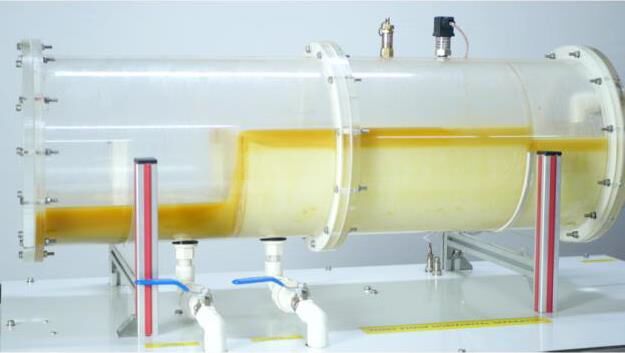
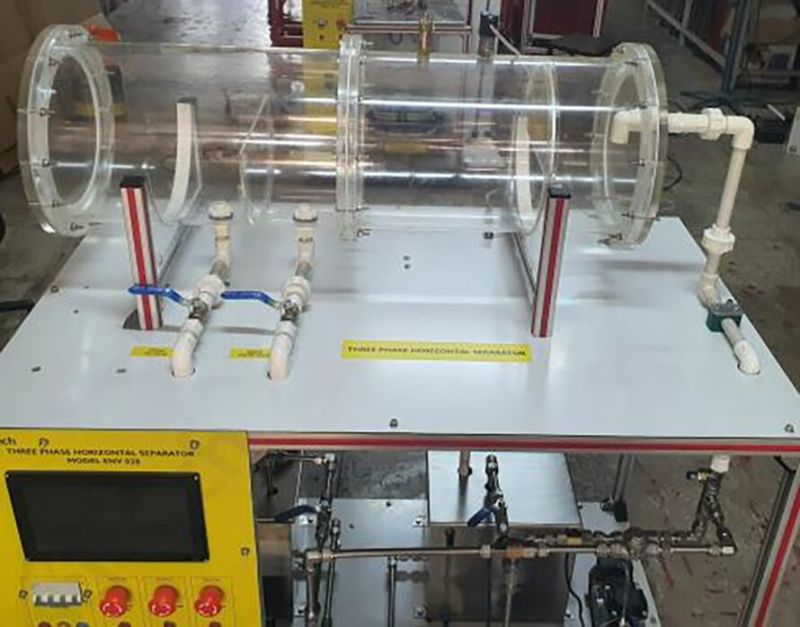
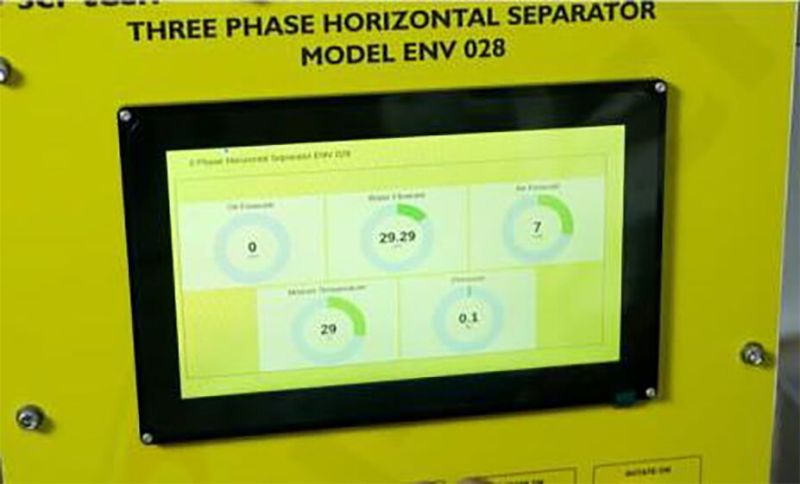
    • Sci-tech Three Phase Crude Oil or Drilled Crude Horizontal Separator Apparatus Model ENV 028 is designed as horizontal, but also available vertical pressure vessel (Model ENV028V). Above figure is a schematic of a horizontal separator. The fluid enters the separator and hits an inlet diverter. This sudden change in momentum does the initial gross separation of liquid and vapor as in a Two-Phase Separator. In most designs, the inlet diverter contains a downcomer that directs the liquid flow below the oil/water interface. This forces the inlet mixture of oil and water to mix with the water continuous phase in the bottom of the vessel and rise through the oil/water interface. This process is called “water-washing,” and it promotes the coalescence of water droplets which are entrained in the oilcontinuous phase. The inlet diverter assures that little gas is carried with the liquid, and the water wash assures that the liquid does not fall on top of the gas/oil or oil/water interface, mixing the liquid retained in the vessel and making control of the oil/water interface difficult. The liquid collecting section of the vessel provides sufficient time so that the oil and emulsion form a layer or “oil pad” at the top. The free water settles to the bottom. Figure illustrates a typical horizontal separator with an interface controller and weir. The weir maintains the oil level and the level controller maintains the water level. The oil is skimmed over the weir. The level of the oil downstream of the weir is controlled by a level controller that operates the oil dump valve. The produced water flows from a nozzle in the vessel located upstream of the oil weir. An interface level controller senses the height of the oil/water interface. The controller sends a signal to the water dump valve thus allowing the correct amount of water to leave the vessel so that the oil/water interface is maintained at the design height. The gas flows horizontally and out through a mist extractor to a pressure control valve that maintains constant vessel pressure. The level of the gas/oil interface can vary from half the diameter to 75% of the diameter depending on the relative importance of liquid/gas separation. The most common configuration is half full, and this is used for the design equations. Similar equations can be developed for other interface levels. Specifications 1.     Mixture Tank Material: Poly-carbonate Cylinder 2.     Mixture Tank Dimensions: 900mm L X 300mm Diameter. 3.     Oil Tank: @ 50 Litres 4.     Water Tank: @ 50 ~ 75Litres 5.     Oil & Water Tanks: 304 SS 6.     Oil Pump: Geared 1/HP, 10 LPM 7.     Water Pump: Centrifugal Pump, ½ HP, 100 LPM 8.     Air Compressor/Pump: 0.75HP, 100 LPM 9.     Pressure Relief Valve, SS, 0~10 Bar 10.  Optional DAQ interface Flow Sensors, Pressure Sensor, & Temperature Sensor. 11.  Control Panel   a)    Optional 11” Touch Screen HMI for measurements & Control a)    Mains ON/OFF MCB b)    Oil, Water & Air Pump Mushroom Switch ON/OFF with LED indicators. c)     Optional VFDs for control of Oil, Water & Air Flow. Optional: Sci-tech Three Phase Horizontal Separator Model ENV 028 with ‘Wireless Wi-Fi controlledavailable with: a)    DAQ interface as model ENV 028-DAQ b)    PLC controlled model as ENV-028-PLC   c)    SCADA controlled model as ENV 028-SCADA   Experiments 1.     Control of oil/water/gas mixture flow control and measurements of time for separation of oil from water while monitoring pressure and temperature of the tank. 2.     Repeat of process at different flow measurement speeds.   3.     Obtain a desired oil pad height using equations.  
    ...more
  • drilled crude horizontal separator apparatus

    drilled crude horizontal separator apparatus

    450,000 / Piece

    1 Piece (MOQ)

    Sci-tech Three Phase Crude Oil or Drilled Crude Horizontal Separator Apparatus Model ENV 028 is designed as horizontal, but also available vertical pressure vessel (Model ENV028V). Above figure is a schematic of a horizontal separator. The fluid enters the separator and hits an inlet diverter. This sudden change in momentum does the initial gross separation of liquid and vapor as in a Two-Phase Separator. In most designs, the inlet diverter contains a downcomer that directs the liquid flow below the oil/water interface. This forces the inlet mixture of oil and water to mix with the water continuous phase in the bottom of the vessel and rise through the oil/water interface. This process is called “water-washing,” and it promotes the coalescence of water droplets which are entrained in the oilcontinuous phase. The inlet diverter assures that little gas is carried with the liquid, and the water wash assures that the liquid does not fall on top of the gas/oil or oil/water interface, mixing the liquid retained in the vessel and making control of the oil/water interface difficult. The liquid collecting section of the vessel provides sufficient time so that the oil and emulsion form a layer or “oil pad” at the top. The free water settles to the bottom. Figure illustrates a typical horizontal separator with an interface controller and weir. The weir maintains the oil level and the level controller maintains the water level. The oil is skimmed over the weir. The level of the oil downstream of the weir is controlled by a level controller that operates the oil dump valve. The produced water flows from a nozzle in the vessel located upstream of the oil weir. An interface level controller senses the height of the oil/water interface. The controller sends a signal to the water dump valve thus allowing the correct amount of water to leave the vessel so that the oil/water interface is maintained at the design height. The gas flows horizontally and out through a mist extractor to a pressure control valve that maintains constant vessel pressure. The level of the gas/oil interface can vary from half the diameter to 75% of the diameter depending on the relative importance of liquid/gas separation. The most common configuration is half full, and this is used for the design equations. Similar equations can be developed for other interface levels. Specifications 1.     Mixture Tank Material: Poly-carbonate Cylinder 2.     Mixture Tank Dimensions: 900mm L X 300mm Diameter. 3.     Oil Tank: @ 50 Litres 4.     Water Tank: @ 50 ~ 75Litres 5.     Oil & Water Tanks: 304 SS 6.     Oil Pump: Geared 1/HP, 10 LPM 7.     Water Pump: Centrifugal Pump, ½ HP, 100 LPM 8.     Air Compressor/Pump: 0.75HP, 100 LPM 9.     Pressure Relief Valve, SS, 0~10 Bar 10.  Optional DAQ interface Flow Sensors, Pressure Sensor, & Temperature Sensor. 11.  Control Panel   a)    Optional 11” Touch Screen HMI for measurements & Control a)    Mains ON/OFF MCB b)    Oil, Water & Air Pump Mushroom Switch ON/OFF with LED indicators. c)     Optional VFDs for control of Oil, Water & Air Flow. Optional: Sci-tech Three Phase Horizontal Separator Model ENV 028 with ‘Wireless Wi-Fi controlledavailable with: a)    DAQ interface as model ENV 028-DAQ b)    PLC controlled model as ENV-028-PLC   c)    SCADA controlled model as ENV 028-SCADA   Experiments 1.     Control of oil/water/gas mixture flow control and measurements of time for separation of oil from water while monitoring pressure and temperature of the tank. 2.     Repeat of process at different flow measurement speeds.   3.     Obtain a desired oil pad height using equations.  

    Country of Origin : India

    Total Carbohydrate : 2Years

    Certification : CE Certified

    Driven Type : Electric

    Condition : New

    ...more
    Get Best Price
  • Steam Power Plants +1

    Steam Power Plants

    950,000 - 1,250,000 / Piece

    • Output1.5KW
    • Country of OriginIndia
    • Total Carbohydrate2years
    • FuelElectric, Gas
    • Number Of FlowerSteam Power Plants
    • Country of Origin220V
    • CertificationCE Certified
    • ApplicationEducation
    • Pressure8 Bar
    • Power18-21kw
    • ConditionNew
    • Brand NameSci-tech
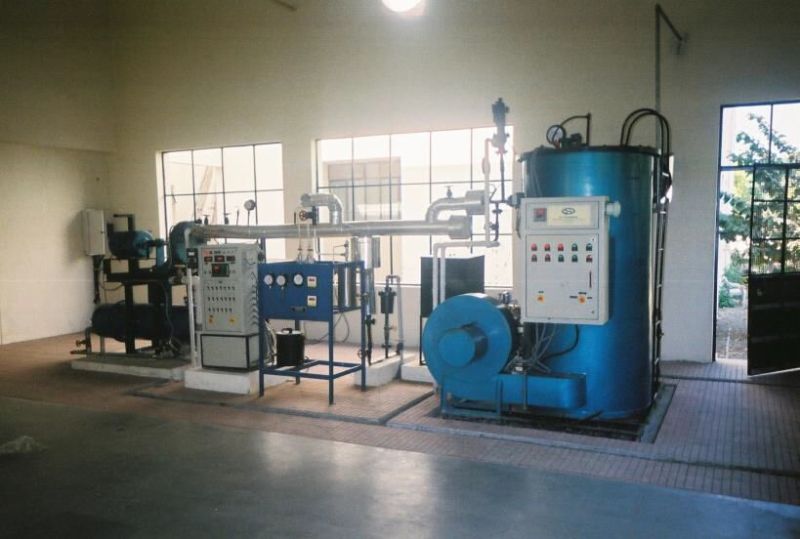
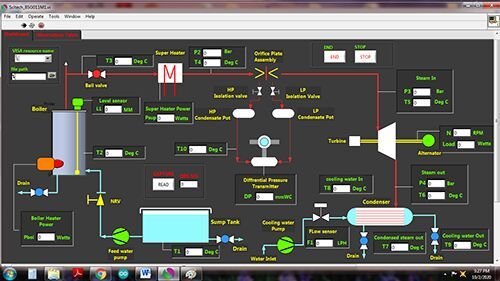
    • Study of power generation using steam boiler and performance of steam generator is focus of this trainer. Sci-tech 1.5KW Steam Power Plant Model BSG 002, is designed the system in such fashion that enables students to investigate all the parameters governing the utilization & maintenance of a typical power plant. The system uses a small sized boiler unit that runs on LDO/gas. The generated steam is then used to run the steam turbine which in turn, runs the coupled A.C. Generator to produce the electricity or loading can be done by using Alternator & Bulb bank. A loading arrangement is also given for load test. The unit is fitted with a colored mimic diagram that illustrates the constructional and operational features. The various aspects of boiler and turbine operation and maintenance can be studied. Instrumentation is provided to measure Temperatures and Pressures. Temperature pressure characteristics of boiler can also be plotted.   System Components  Boiler 200 Kg/Hr at 11 bar  Single-stage Steam turbine with Curtis wheel and hydraulic speed regulator: 1.5 KW @ 3000RPM Fuel consumption: 12L/h    Heat-up time: 8min    Max. pressure: 13bar    Heater: power 24 KW (In case of Electrically fired Steam Generator)  Condenser Shell & Tube Type.  Pressure measurements: 3 x 0 to 16 bar; 2 x 0 to 4 bar; 1 x -1 to 1 bar  Chimney  Orifice meter  Control valve: Electric Solenoid Type  Pump Centrifugal pump: 2~3 HP capacity & Piston Reciprocating Pump.  Flow meter: Flow rate 0 to 160L/min (Cooling)  Water Softener (Optional)  Steam Calorimeter- Separating & Throttling calorimeter  Temperature Indicator: 12 channel input: K Type thermocouple  Fuel supply system: Volumetric Type capacity 50Liter  K Type Thermocouple temp. Sensor     Temperature measurements: 12 x 500 to 4000C; 1 x 0 to 1000C     Torque measurement: 0 to 10 Nm  Digital Tachometer 0 -9999rpm.  Voltmeter 0-500 V.  Ammeter 0-10 Amp.  Loading arrangement- Electrical Alternator  Lamp Bank  Control panel  Cooling Tower (Optional)  Computerized Data Acquisition System Options  Super Heater  Blow Down Tank   Sci-CalRComputer Control Software & Interface
    ...more
  • Steam Power Plants

    Steam Power Plants

    950,000 - 1,250,000 / Piece

    Study of power generation using steam boiler and performance of steam generator is focus of this trainer. Sci-tech 1.5KW Steam Power Plant Model BSG 002, is designed the system in such fashion that enables students to investigate all the parameters governing the utilization & maintenance of a typical power plant. The system uses a small sized boiler unit that runs on LDO/gas. The generated steam is then used to run the steam turbine which in turn, runs the coupled A.C. Generator to produce the electricity or loading can be done by using Alternator & Bulb bank. A loading arrangement is also given for load test. The unit is fitted with a colored mimic diagram that illustrates the constructional and operational features. The various aspects of boiler and turbine operation and maintenance can be studied. Instrumentation is provided to measure Temperatures and Pressures. Temperature pressure characteristics of boiler can also be plotted.   System Components  Boiler 200 Kg/Hr at 11 bar  Single-stage Steam turbine with Curtis wheel and hydraulic speed regulator: 1.5 KW @ 3000RPM Fuel consumption: 12L/h    Heat-up time: 8min    Max. pressure: 13bar    Heater: power 24 KW (In case of Electrically fired Steam Generator)  Condenser Shell & Tube Type.  Pressure measurements: 3 x 0 to 16 bar; 2 x 0 to 4 bar; 1 x -1 to 1 bar  Chimney  Orifice meter  Control valve: Electric Solenoid Type  Pump Centrifugal pump: 2~3 HP capacity & Piston Reciprocating Pump.  Flow meter: Flow rate 0 to 160L/min (Cooling)  Water Softener (Optional)  Steam Calorimeter- Separating & Throttling calorimeter  Temperature Indicator: 12 channel input: K Type thermocouple  Fuel supply system: Volumetric Type capacity 50Liter  K Type Thermocouple temp. Sensor     Temperature measurements: 12 x 500 to 4000C; 1 x 0 to 1000C     Torque measurement: 0 to 10 Nm  Digital Tachometer 0 -9999rpm.  Voltmeter 0-500 V.  Ammeter 0-10 Amp.  Loading arrangement- Electrical Alternator  Lamp Bank  Control panel  Cooling Tower (Optional)  Computerized Data Acquisition System Options  Super Heater  Blow Down Tank   Sci-CalRComputer Control Software & Interface

    Output : 1.5KW

    Country of Origin : India

    Total Carbohydrate : 2years

    Fuel : Electric, Gas

    Number Of Flower : Steam Power Plants

    Country of Origin : 220V

    Certification : CE Certified

    Application : Education

    Pressure : 8 Bar

    Power : 18-21kw

    Condition : New

    Brand Name : Sci-tech

    ...more
    Get Best Price
  • Stability OF a Floating Body Apparatus Model FM 11

    Stability OF a Floating Body Apparatus Model FM 11

    45,000 / Piece

    • MOQ1 Piece
    • Country of OriginIndia
    • Total Carbohydrate3yrs
    • Number Of FlowerFluid Mechanics Lab Equipments
    • ConditionNew
    • Brand NameSci-tech
    • ApplicationEducation
    • Study of conditions necessary for the stable equilibrium of floating bodies is important for the design of floating bodies such as ships, rafts and pontoons. In order to familiarize students with the laws of floatation, it is essential to demonstrate the various principles of hydrostatics including the importance of relative positions of the center of buoyancy and the center of gravity and the metacentric height of the floating body. The Sci-tech Stability of a Floating Body Apparatus Model FM 11 is a bench top unit designed to demonstrate the conditions for the stable, unstable and neutral equilibrium. The position of metacenter and hence the metacentric height can be varied by changing the weight distribution to obtain stable or unstable equilibrium conditions. The apparatus consists of a rectangular plastic pontoon. The center of gravity of the pontoon can be varied by changing the position of the adjustable sliding weight on a vertical mast. Various degrees of heel can be obtained by sliding a weight along a lateral slide rod. Thus different stability conditions can be obtained be varying the positions of weights on the vertical and lateral slides. The angle of heel can be read using a plumb bob and the scale marked on the lateral slide. The Sci-tech Stability of a Floating Body Apparatus Model FM 11 is important equipment for the marine, navel architecture, civil, hydraulic and mechanical engineering laboratories of educational institutions.  The complete unit is manufactured from corrosion resistant material. The experiments can be conducted by filling the volumetric tank of the FM100 Hydraulic Bench or any other available standard hydraulic bench models.   OPTION: ‘Sci-Cal’ Computer based learning software is included to enable students understand and conduct experiments, tabulate results and plot graphs. The Sci-tech Stability of a Floating Body Apparatus is an important experimental set-up for any Fluid Mechanics and Hydraulics Laboratory of an educational institution.   List of experiments: 1.     Familiarization with the laws of floatation and principle of working of floating bodies.  2.     Determination of center of gravity of a pontoon. 3.     Determination of center of buoyancy of a pontoon. 4.     Determination of angle of heel of a pontoon. 5.     Determination of metacenter and metacentric height of a pontoon. 6.     Study of stable, unstable and neutral equilibrium conditions of a pontoon by varying metacentric height. 7.     Comparison of experimental results with theoretical calculations.    Specifications: 1.     Pontoon, rectangular, plastic, length : 325mm, width : 200mm, overall height :  450mm. 2.     Angle of heel scale : +/- 300.  3.     Vertical sliding weight : 0.6Kg. 4.     Lateral sliding weight : 0.2Kg. 5.     Vertical mast height : 400mm with scale. 6.     Lateral slide rod with scale.   Options: 1.     Other types of floating bodies to meet specific requirements of users (for example a ship model) can be supplied on request. 2.     A plastic basin of 50 liter capacity can be supplied on request. This is required in cases where volumetric tank of the hydraulic bench is not available for conducting experiments.   1.     ‘Sci-Cal’ Computer based learning software is included to enable students understand and conduct experiments, tabulate results and plot graphs.
    ...more
  • Stability OF a Floating Body Apparatus Model FM 11

    Stability OF a Floating Body Apparatus Model FM 11

    45,000 / Piece

    1 Piece (MOQ)

    Study of conditions necessary for the stable equilibrium of floating bodies is important for the design of floating bodies such as ships, rafts and pontoons. In order to familiarize students with the laws of floatation, it is essential to demonstrate the various principles of hydrostatics including the importance of relative positions of the center of buoyancy and the center of gravity and the metacentric height of the floating body. The Sci-tech Stability of a Floating Body Apparatus Model FM 11 is a bench top unit designed to demonstrate the conditions for the stable, unstable and neutral equilibrium. The position of metacenter and hence the metacentric height can be varied by changing the weight distribution to obtain stable or unstable equilibrium conditions. The apparatus consists of a rectangular plastic pontoon. The center of gravity of the pontoon can be varied by changing the position of the adjustable sliding weight on a vertical mast. Various degrees of heel can be obtained by sliding a weight along a lateral slide rod. Thus different stability conditions can be obtained be varying the positions of weights on the vertical and lateral slides. The angle of heel can be read using a plumb bob and the scale marked on the lateral slide. The Sci-tech Stability of a Floating Body Apparatus Model FM 11 is important equipment for the marine, navel architecture, civil, hydraulic and mechanical engineering laboratories of educational institutions.  The complete unit is manufactured from corrosion resistant material. The experiments can be conducted by filling the volumetric tank of the FM100 Hydraulic Bench or any other available standard hydraulic bench models.   OPTION: ‘Sci-Cal’ Computer based learning software is included to enable students understand and conduct experiments, tabulate results and plot graphs. The Sci-tech Stability of a Floating Body Apparatus is an important experimental set-up for any Fluid Mechanics and Hydraulics Laboratory of an educational institution.   List of experiments: 1.     Familiarization with the laws of floatation and principle of working of floating bodies.  2.     Determination of center of gravity of a pontoon. 3.     Determination of center of buoyancy of a pontoon. 4.     Determination of angle of heel of a pontoon. 5.     Determination of metacenter and metacentric height of a pontoon. 6.     Study of stable, unstable and neutral equilibrium conditions of a pontoon by varying metacentric height. 7.     Comparison of experimental results with theoretical calculations.    Specifications: 1.     Pontoon, rectangular, plastic, length : 325mm, width : 200mm, overall height :  450mm. 2.     Angle of heel scale : +/- 300.  3.     Vertical sliding weight : 0.6Kg. 4.     Lateral sliding weight : 0.2Kg. 5.     Vertical mast height : 400mm with scale. 6.     Lateral slide rod with scale.   Options: 1.     Other types of floating bodies to meet specific requirements of users (for example a ship model) can be supplied on request. 2.     A plastic basin of 50 liter capacity can be supplied on request. This is required in cases where volumetric tank of the hydraulic bench is not available for conducting experiments.   1.     ‘Sci-Cal’ Computer based learning software is included to enable students understand and conduct experiments, tabulate results and plot graphs.

    Country of Origin : India

    Total Carbohydrate : 3yrs

    Number Of Flower : Fluid Mechanics Lab Equipments

    Condition : New

    Brand Name : Sci-tech

    ...more
    Get Best Price
  • Spray Dryer

    Spray Dryer

    350,000 - 450,000 / piece

    • MOQ1 Piece
    • ConditionNew
    • FinishingPowder Coated
    • Brand NameSci-tech
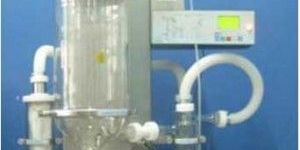
    • Sci-tech Spray Dryer Model TH 042 is specially designed for practical hands-on training on spray dryer and process control study. The equipment consists of either laboratory or optionally, industrial grade instrumentation to exhibit a realistic working environment of standard industrial control loop. It is equipped with a peristaltic pump that transfers the liquid from a container through a small diameter jet into the drying chamber. Compressed air enters the outer tube of the jet which causes the liquid to emerge as a fine atomized spray into the drying chamber. Heated air is blown through the drying chamber evaporating the liquid content of the atomized spray. The solid particles shall be separated from the exhaust air flow by a cyclone and collected in a sample bottle. Temperatures and pressures throughout the process are indicated by temperature and pressure transmitters. Sci-tech Spray Dryer Model TH 042  can be, optionally connected to ‘Sci-CalVaq’ SCADA system. All the process variables shall be recorded. The collected data shall be in ASCII format and it can be exported into Microsoft Excel format for reporting and further data analysis. The process variables can be monitored remotely via Internet-Of-Thing (IoT). Instructor and trainee can monitor and view the process variables in real time via the smart devices, i.e., smart phone, tablet or remote PC. Sci-tech Spray Dryer Model TH 042 is designed for the rapid spray drying processes involving aqueous solutions, suspensions and colloids. The unit should analyze this drying method for obtaining powered products from solutions, suitable for during thermo-sensitive products. This spray dryer has been designed for educational and research laboratories and it enables to obtain the product micronized in short time, as well as valid data for scale up. The trainer consists of a heating system, drying chamber, collecting bottle, spray nozzle, peristaltic pump. The solution is sprayed into hot air inside the drying chamber using stainless steel spray nozzle. The dried products are collected in collecting bottle. The hot air temperature can be controlled using a programmable controller. All parts in contact with the product are of stainless steel and of borosilicate glass. Detailed Operation & Maintenance Manual is provided along with the trainer.       Specifications All the component shall be mounted on the stainless-steel platform. The unit includes the following modules and components. 1. Platform a) Type: Desktop bench b) Material: Stainless steel c) Size: 0.5 (L) x 0.5 (W) m 2. Drying Chamber a) Type & Material: Glass with gasket-free ground glass flanges b) Equipped with a spray nozzle. 3. Feed Tank a) Material: Stainless Steel b) Volume: 10L c) Equipped with level transmitter 4. Feed pump a) Type: peristaltic pump b) Flow capacity: @1.8 L/H with flow control c) Pressure head: 5m d) Power supply: 24VDC or 240VAC/1-Phase/50Hz 5. Fan/ Blower a) Velocity: 3, 000rpm b) Drying air through flow: 70m3/h c) Power supply: 240VAC/1-Phase/50Hz 6. Electrical Heating element a) Power: 3kW b) Power supply: 240VAC/1-Ph/50Hz 7. Cyclone a) Material: Glass or stainless teel 8. Temperature Sensors – 3 nos a) Type: RTD Pt100 b) Measuring Range: 0 to 150 °C 9. Flow Transmitter a) Measuring range: 0 to 2L/min b) Output signal: 4-20mA c) Power supply: 24VDC 10. Pressure Transmitter a) Measuring range: 0 to 2bar b) Output signal: 4-20mA c) Power supply: 24VDC 11. Pressure gauge a) Body material: Stainless steel b) Measuring range: 0 to 2 bar   Experiment Capabilities 1. Operation principle of spray dryer. 2. The effect of flow rate, temperature and drop size on drying process. 3. Determination of the mass balance and efficiency of spray dryer. 4. Optional, Understand the INDUSTRY 4.0 TECHNOLOGY 5. Utilize the Augmented Reality (AR) to enhance the study of the subject.   6. Operate the SCADA system and remote IoT system
    ...more
  • Spray Dryer

    Spray Dryer

    350,000 - 450,000 / piece

    1 Piece (MOQ)

    Sci-tech Spray Dryer Model TH 042 is specially designed for practical hands-on training on spray dryer and process control study. The equipment consists of either laboratory or optionally, industrial grade instrumentation to exhibit a realistic working environment of standard industrial control loop. It is equipped with a peristaltic pump that transfers the liquid from a container through a small diameter jet into the drying chamber. Compressed air enters the outer tube of the jet which causes the liquid to emerge as a fine atomized spray into the drying chamber. Heated air is blown through the drying chamber evaporating the liquid content of the atomized spray. The solid particles shall be separated from the exhaust air flow by a cyclone and collected in a sample bottle. Temperatures and pressures throughout the process are indicated by temperature and pressure transmitters. Sci-tech Spray Dryer Model TH 042  can be, optionally connected to ‘Sci-CalVaq’ SCADA system. All the process variables shall be recorded. The collected data shall be in ASCII format and it can be exported into Microsoft Excel format for reporting and further data analysis. The process variables can be monitored remotely via Internet-Of-Thing (IoT). Instructor and trainee can monitor and view the process variables in real time via the smart devices, i.e., smart phone, tablet or remote PC. Sci-tech Spray Dryer Model TH 042 is designed for the rapid spray drying processes involving aqueous solutions, suspensions and colloids. The unit should analyze this drying method for obtaining powered products from solutions, suitable for during thermo-sensitive products. This spray dryer has been designed for educational and research laboratories and it enables to obtain the product micronized in short time, as well as valid data for scale up. The trainer consists of a heating system, drying chamber, collecting bottle, spray nozzle, peristaltic pump. The solution is sprayed into hot air inside the drying chamber using stainless steel spray nozzle. The dried products are collected in collecting bottle. The hot air temperature can be controlled using a programmable controller. All parts in contact with the product are of stainless steel and of borosilicate glass. Detailed Operation & Maintenance Manual is provided along with the trainer.       Specifications All the component shall be mounted on the stainless-steel platform. The unit includes the following modules and components. 1. Platform a) Type: Desktop bench b) Material: Stainless steel c) Size: 0.5 (L) x 0.5 (W) m 2. Drying Chamber a) Type & Material: Glass with gasket-free ground glass flanges b) Equipped with a spray nozzle. 3. Feed Tank a) Material: Stainless Steel b) Volume: 10L c) Equipped with level transmitter 4. Feed pump a) Type: peristaltic pump b) Flow capacity: @1.8 L/H with flow control c) Pressure head: 5m d) Power supply: 24VDC or 240VAC/1-Phase/50Hz 5. Fan/ Blower a) Velocity: 3, 000rpm b) Drying air through flow: 70m3/h c) Power supply: 240VAC/1-Phase/50Hz 6. Electrical Heating element a) Power: 3kW b) Power supply: 240VAC/1-Ph/50Hz 7. Cyclone a) Material: Glass or stainless teel 8. Temperature Sensors – 3 nos a) Type: RTD Pt100 b) Measuring Range: 0 to 150 °C 9. Flow Transmitter a) Measuring range: 0 to 2L/min b) Output signal: 4-20mA c) Power supply: 24VDC 10. Pressure Transmitter a) Measuring range: 0 to 2bar b) Output signal: 4-20mA c) Power supply: 24VDC 11. Pressure gauge a) Body material: Stainless steel b) Measuring range: 0 to 2 bar   Experiment Capabilities 1. Operation principle of spray dryer. 2. The effect of flow rate, temperature and drop size on drying process. 3. Determination of the mass balance and efficiency of spray dryer. 4. Optional, Understand the INDUSTRY 4.0 TECHNOLOGY 5. Utilize the Augmented Reality (AR) to enhance the study of the subject.   6. Operate the SCADA system and remote IoT system

    Condition : New

    Finishing : Powder Coated

    Brand Name : Sci-tech

    ...more
    Get Best Price
  • Spray Chamber Trainer System Model Env 009

    Spray Chamber Trainer System Model Env 009

    550,000 / Set

    • MOQ1 piece
    • ConditionNew
    • Brand NameSci-tech
    • Sci-tech Spray Chamber Trainer System Model ENV 009 has been designed to demonstrate the spray chamber operations using five different spray nozzles, and for students to study the effects of droplet size on separation efficiency. Students can also investigate the effects of liquid-to-gas (L/G) ratio upon separation efficiency. The system comprises of a spray (separation) chamber, a water circulation system, a dust feeding system and a variable speed air blower. The spray chamber is fabricated from rigid transparent acrylic measuring approximately 0.3m in diameter and 2m in height. The spray chamber can be fitted with five different spray nozzles to produce five different droplet sizes. The top of the spray chamber is equipped with a mist eliminator to prevent any water droplets from escaping. The water circulation system consists of a water tank, water pump, liquid flow meters, a pressure gauge and a pressure regulator. An air blower installed at the outlet is capable of drawing 198 m3/hr of air through the system. The air inlet velocity can be varied by means of adjusting the air blower speed. A dust feeding system is provided for introducing a desired amount of dust particles into the air stream before entering the separation chamber. The pressure drop, ΔP across the separation chamber can be measured by a differential pressure meter. The entire system is mounted on a skid platform with an epoxy-coated steel frame and lockable castor wheels for mobility. All the necessary instruments are housed within a dust and splashproof control console with IP 55 rating. The system comes with complete PVC and stainless steel piping connections.   EXPERIMENTS • To study the effects of droplet size on separation efficiency • To investigate the effects of liquid-to-gas (L/G) ratio on separation efficiency • To verify the relationship between pressure drop, ΔP and inlet velocity, vi   TECHNICAL SPECIFICATIONS a) Spray nozzles ·       Material: Stainless steel ·       No. of sizes: 5 ·       Droplet size: 100, 200, 300, 500 and 1000μ   b) Separation chamber ·       Material: Durable clear acrylic ·       Size: 0.3 m (D) x 2 m (H) ·       Accessories: Spray nozzle mount and mist eliminator   c) Water circulation system ·       Tank material: Stainless steel ·       Tank size: 55 L ·       Protection: Low level pump cut-off switch ·       Pump type: Centrifugal ·       Max. flow rate: 25 L/min ·       Flow meters: 0 to 1 L/min and 0 to 20 L/min ·       Pressure gauge: 0 to 6 bar   d) Air blower ·       Rated power: 2 hp ·       Max. air delivery: 198 m3/hr @ 2800 rpm ·       Max. static pressure: 69 in H2O ·       Speed control: Frequency inverter           e) Air flow meter ·       Type: Venturi with differential pressure gauge ·       Material: Durable clear acrylic ·       DP gauge range: 0 to 16 in H2O   f) Feeding system ·       Material: Acrylic cylinder with conical bottom ·       Feed control: Flow regulating valve   g) Differential pressure ·       Type: Panel mounted Bourdon type differential pressure gauge ·       Range: 0 to 100 mm H2O
    ...more
  • Spray Chamber Trainer System Model Env 009

    Spray Chamber Trainer System Model Env 009

    550,000 / Set

    1 piece (MOQ)

    Sci-tech Spray Chamber Trainer System Model ENV 009 has been designed to demonstrate the spray chamber operations using five different spray nozzles, and for students to study the effects of droplet size on separation efficiency. Students can also investigate the effects of liquid-to-gas (L/G) ratio upon separation efficiency. The system comprises of a spray (separation) chamber, a water circulation system, a dust feeding system and a variable speed air blower. The spray chamber is fabricated from rigid transparent acrylic measuring approximately 0.3m in diameter and 2m in height. The spray chamber can be fitted with five different spray nozzles to produce five different droplet sizes. The top of the spray chamber is equipped with a mist eliminator to prevent any water droplets from escaping. The water circulation system consists of a water tank, water pump, liquid flow meters, a pressure gauge and a pressure regulator. An air blower installed at the outlet is capable of drawing 198 m3/hr of air through the system. The air inlet velocity can be varied by means of adjusting the air blower speed. A dust feeding system is provided for introducing a desired amount of dust particles into the air stream before entering the separation chamber. The pressure drop, ΔP across the separation chamber can be measured by a differential pressure meter. The entire system is mounted on a skid platform with an epoxy-coated steel frame and lockable castor wheels for mobility. All the necessary instruments are housed within a dust and splashproof control console with IP 55 rating. The system comes with complete PVC and stainless steel piping connections.   EXPERIMENTS • To study the effects of droplet size on separation efficiency • To investigate the effects of liquid-to-gas (L/G) ratio on separation efficiency • To verify the relationship between pressure drop, ΔP and inlet velocity, vi   TECHNICAL SPECIFICATIONS a) Spray nozzles ·       Material: Stainless steel ·       No. of sizes: 5 ·       Droplet size: 100, 200, 300, 500 and 1000μ   b) Separation chamber ·       Material: Durable clear acrylic ·       Size: 0.3 m (D) x 2 m (H) ·       Accessories: Spray nozzle mount and mist eliminator   c) Water circulation system ·       Tank material: Stainless steel ·       Tank size: 55 L ·       Protection: Low level pump cut-off switch ·       Pump type: Centrifugal ·       Max. flow rate: 25 L/min ·       Flow meters: 0 to 1 L/min and 0 to 20 L/min ·       Pressure gauge: 0 to 6 bar   d) Air blower ·       Rated power: 2 hp ·       Max. air delivery: 198 m3/hr @ 2800 rpm ·       Max. static pressure: 69 in H2O ·       Speed control: Frequency inverter           e) Air flow meter ·       Type: Venturi with differential pressure gauge ·       Material: Durable clear acrylic ·       DP gauge range: 0 to 16 in H2O   f) Feeding system ·       Material: Acrylic cylinder with conical bottom ·       Feed control: Flow regulating valve   g) Differential pressure ·       Type: Panel mounted Bourdon type differential pressure gauge ·       Range: 0 to 100 mm H2O

    Condition : New

    Brand Name : Sci-tech

    ...more
    Get Best Price
  • Simple Compression Refrigeration Circuit +1

    Simple Compression Refrigeration Circuit

    175,000 / piece

    • MOQ1 piece
    • ApplicationEducation
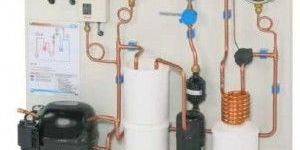
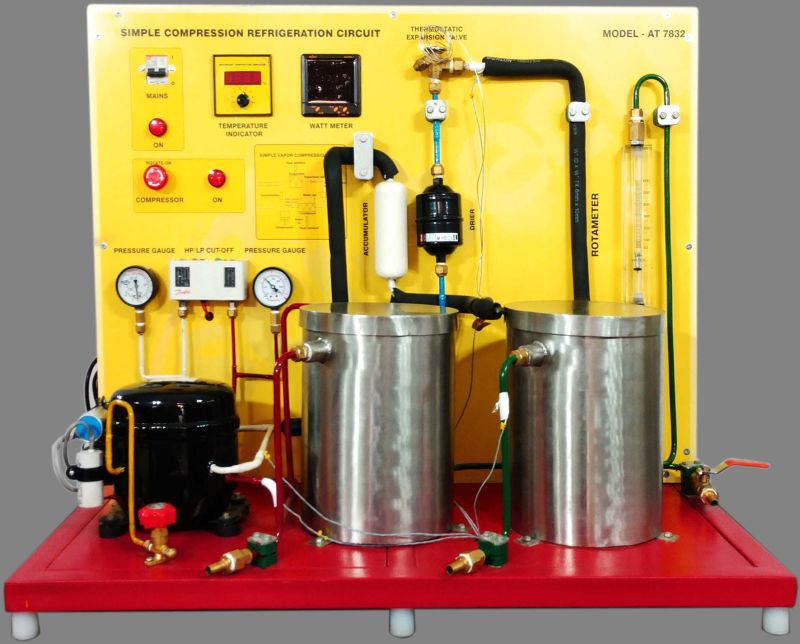
    • Sci-tech Vapour Compression Refrigeration Air-Conditioning Trainer Model RAC 023 is an invaluable aid in the effective understanding of the air-conditioning process. The equipment is a comprehensive plant, which incorporates an axial flow fan, damper and test duct sections, flow meter, electronic control panel and loading arrangement. Temperature sensors at various points facilitate psychometric studies.   System Components ·       Compressor; Hermetically sealed rotary compressor; Power @ 500W ·       Refrigerant Type R134a or R1234yf (environmentally friendly) ·       Evaporator Type: Finned-tube air heat exchanger with fan ·       Condenser Type: Finned-tube air-cooled condenser with axial fan ·       Expansion Device: Capillary tube or thermostatic expansion valve (TEV) ·       Evaporator Air Flow: ~100 – 300 m³/h with adjustable speed fan ·       Condenser Air Flow: ~100 – 300 m³/h with adjustable speed fan ·       Working Pressure Range: 1 to 12 bar (depending on refrigerant) ·       Temperature Range: -5°C to 50°C air temperature ·       Instrumentation (11: Touch Screen Display):   - Pressure sensors (P) at key points (evaporator inlet/outlet, condenser inlet/outlet) - Temperature sensors (T) at same points - Refrigerant flowrate sensor (optional) - Airflow velocity sensor (optional) - Power meter (compressor electrical input) - Energy consumption (kWh counter) - Date and time display ·       Control Interface: Basic digital control (ON/OFF, fault reset, fan speed control) ·       ‘Sci-Cal’ computer interface & DAQ with ‘LabView Data Logging (Optional) ·       Safety Features: High/low pressure cutouts, overheat protection, electrical fuse, refrigerant sight glass ·       Frame/Structure: Aluminum profile or powder-coated steel frame with Casters ·       Transparent acrylic guards for visibility   Optional Ø  Computerised AC trainer     Experiments ¨     Study of a typical air-conditioning cycle ¨     Humidification and dehumidification ¨     Heat balance at evaporator, condenser and the overall system ¨     Compressor efficiency at various loads ¨     Psychometric charts ¨     Determination of coefficient of performance   ¨     Re-circulation of air
    ...more
  • Simple Compression Refrigeration Circuit

    Simple Compression Refrigeration Circuit

    175,000 / piece

    1 piece (MOQ)

    Sci-tech Vapour Compression Refrigeration Air-Conditioning Trainer Model RAC 023 is an invaluable aid in the effective understanding of the air-conditioning process. The equipment is a comprehensive plant, which incorporates an axial flow fan, damper and test duct sections, flow meter, electronic control panel and loading arrangement. Temperature sensors at various points facilitate psychometric studies.   System Components ·       Compressor; Hermetically sealed rotary compressor; Power @ 500W ·       Refrigerant Type R134a or R1234yf (environmentally friendly) ·       Evaporator Type: Finned-tube air heat exchanger with fan ·       Condenser Type: Finned-tube air-cooled condenser with axial fan ·       Expansion Device: Capillary tube or thermostatic expansion valve (TEV) ·       Evaporator Air Flow: ~100 – 300 m³/h with adjustable speed fan ·       Condenser Air Flow: ~100 – 300 m³/h with adjustable speed fan ·       Working Pressure Range: 1 to 12 bar (depending on refrigerant) ·       Temperature Range: -5°C to 50°C air temperature ·       Instrumentation (11: Touch Screen Display):   - Pressure sensors (P) at key points (evaporator inlet/outlet, condenser inlet/outlet) - Temperature sensors (T) at same points - Refrigerant flowrate sensor (optional) - Airflow velocity sensor (optional) - Power meter (compressor electrical input) - Energy consumption (kWh counter) - Date and time display ·       Control Interface: Basic digital control (ON/OFF, fault reset, fan speed control) ·       ‘Sci-Cal’ computer interface & DAQ with ‘LabView Data Logging (Optional) ·       Safety Features: High/low pressure cutouts, overheat protection, electrical fuse, refrigerant sight glass ·       Frame/Structure: Aluminum profile or powder-coated steel frame with Casters ·       Transparent acrylic guards for visibility   Optional Ø  Computerised AC trainer     Experiments ¨     Study of a typical air-conditioning cycle ¨     Humidification and dehumidification ¨     Heat balance at evaporator, condenser and the overall system ¨     Compressor efficiency at various loads ¨     Psychometric charts ¨     Determination of coefficient of performance   ¨     Re-circulation of air

    Application : Education

    ...more
    Get Best Price
  • Series & Parallel Pump Test Apparatus Model FM 12 +4

    Series & Parallel Pump Test Apparatus Model FM 12

    185,000 / Piece

    • MOQ1 Piece
    • Country of OriginIndia
    • Number Of FlowerFluid Mechanics Lab Equipments
    • ApplicationEducation
    • ConditionNew
    • Brand NameSci-tech
    • Warranty3yrs
    • Pumps are connected in series and parallel to obtain the required flow rate and head in several applications including domestic, industrial, irrigation and drainage. Energy is supplied to the pumps by electric motors and the potential energy of the liquid is increased by the action of the impeller rotating inside a volute casing. It is essential for students to understand the operation and performance characteristics of centrifugal pumps operating in both series and parallel connection. The is an experimental set-up necessary for any Fluid Mechanics and Hydraulics Laboratory of an educational institution. The Sci-tech Series & Parallel Pump Test Apparatus Model FM 12 has been designed to enable students to study the operation and performance characteristics of typical centrifugal pumps connected by flexible tubing and valves to operate in both series and parallel mode. The apparatus can also be used to conduct experiments on a single centrifugal pump independently. The apparatus consists of two similar variable speed centrifugal pumps having independent discharge manifold connected by plastic tubing with connectors to enable quick change of operation to series or parallel modes. Shut-off valves in the pipe system enable the pumps to be connected in series or in parallel. Pumps are driven by a AC motors of adjustable speed. Motors are suspended and the driving torque is measured using torque wrench. Motor speeds and power consumption are digitally displayed on the control panel. The apparatus can be connected to the Sci-tech FM 100 Hydraulic Bench or any other hydraulic bench models to supply and re-circulate water. Bourdon tube pressure gauges are mounted at the inlet and exit of the pumps to measure increase of head across the pumps. The independent discharge manifolds have pressure gauges and flow control valves upstream of the discharge pipe and the diffuser. The flow rate through the pump system is measured using the measuring tank of the hydraulic bench and can be checked independently by water flow meters fixed at the delivery side of both pumps. The Sci-tech Series & Parallel Pump Test Apparatus is a compact unit and all components and instrumentation are placed in a robust and mobile frame. OPTIONS: ‘Sci-Cal’ Computer based learning software is included to enable students understand and conduct experiments, tabulate results and plot graphs. The Sci-tech Series & Parallel Pump Test Apparatus  is an important experimental set-up for any Fluid Mechanics and Hydraulics Laboratory of an educational institution. The manual describing the theoretical and practical aspects of the apparatus, operation and maintenance, analysis of results and sample of results will be supplied with the equipment.   List of Experiments Series or Parallel Centrifugal Pump Operation:  1. Study of operation and working of centrifugal pumps connected in series and parallel. 2. Study of matching of pumps, starting and stopping of pumps in series and parallel connection. 3. Determination of power requirement for series and parallel operation. 4. Determination of hydraulic power output in series and parallel operation. 5. Investigation of performance and characteristics in series and parallel operation. * Effect of pump speeds – pumps to be operated at same and different speeds. * Head, discharge, speed, power and efficiency curves.   Single Centrifugal Pump Operation:  1. Study of the operation and working of centrifugal pump.  2. Determination of power requirement of the pump. 3. Determination of the hydraulic power output of the pump. 4. Investigation of the performance and characteristics of centrifugal pump: * The effect of pump speed. * Head, discharge, speed, power and efficiency curves. * Non-dimensional performance curves. * Determination of specific speed. * Determination of net positive suction head.   Important Features and Specifications: 1. Pumps: 2 Nos, centrifugal type, max. head: 21 m water, max. Flow rate: 90 Lpm. 2. Motors: 2 Nos, AC
    ...more
  • Series & Parallel Pump Test Apparatus Model FM 12

    Series & Parallel Pump Test Apparatus Model FM 12

    185,000 / Piece

    1 Piece (MOQ)

    Pumps are connected in series and parallel to obtain the required flow rate and head in several applications including domestic, industrial, irrigation and drainage. Energy is supplied to the pumps by electric motors and the potential energy of the liquid is increased by the action of the impeller rotating inside a volute casing. It is essential for students to understand the operation and performance characteristics of centrifugal pumps operating in both series and parallel connection. The is an experimental set-up necessary for any Fluid Mechanics and Hydraulics Laboratory of an educational institution. The Sci-tech Series & Parallel Pump Test Apparatus Model FM 12 has been designed to enable students to study the operation and performance characteristics of typical centrifugal pumps connected by flexible tubing and valves to operate in both series and parallel mode. The apparatus can also be used to conduct experiments on a single centrifugal pump independently. The apparatus consists of two similar variable speed centrifugal pumps having independent discharge manifold connected by plastic tubing with connectors to enable quick change of operation to series or parallel modes. Shut-off valves in the pipe system enable the pumps to be connected in series or in parallel. Pumps are driven by a AC motors of adjustable speed. Motors are suspended and the driving torque is measured using torque wrench. Motor speeds and power consumption are digitally displayed on the control panel. The apparatus can be connected to the Sci-tech FM 100 Hydraulic Bench or any other hydraulic bench models to supply and re-circulate water. Bourdon tube pressure gauges are mounted at the inlet and exit of the pumps to measure increase of head across the pumps. The independent discharge manifolds have pressure gauges and flow control valves upstream of the discharge pipe and the diffuser. The flow rate through the pump system is measured using the measuring tank of the hydraulic bench and can be checked independently by water flow meters fixed at the delivery side of both pumps. The Sci-tech Series & Parallel Pump Test Apparatus is a compact unit and all components and instrumentation are placed in a robust and mobile frame. OPTIONS: ‘Sci-Cal’ Computer based learning software is included to enable students understand and conduct experiments, tabulate results and plot graphs. The Sci-tech Series & Parallel Pump Test Apparatus  is an important experimental set-up for any Fluid Mechanics and Hydraulics Laboratory of an educational institution. The manual describing the theoretical and practical aspects of the apparatus, operation and maintenance, analysis of results and sample of results will be supplied with the equipment.   List of Experiments Series or Parallel Centrifugal Pump Operation:  1. Study of operation and working of centrifugal pumps connected in series and parallel. 2. Study of matching of pumps, starting and stopping of pumps in series and parallel connection. 3. Determination of power requirement for series and parallel operation. 4. Determination of hydraulic power output in series and parallel operation. 5. Investigation of performance and characteristics in series and parallel operation. * Effect of pump speeds – pumps to be operated at same and different speeds. * Head, discharge, speed, power and efficiency curves.   Single Centrifugal Pump Operation:  1. Study of the operation and working of centrifugal pump.  2. Determination of power requirement of the pump. 3. Determination of the hydraulic power output of the pump. 4. Investigation of the performance and characteristics of centrifugal pump: * The effect of pump speed. * Head, discharge, speed, power and efficiency curves. * Non-dimensional performance curves. * Determination of specific speed. * Determination of net positive suction head.   Important Features and Specifications: 1. Pumps: 2 Nos, centrifugal type, max. head: 21 m water, max. Flow rate: 90 Lpm. 2. Motors: 2 Nos, AC

    Country of Origin : India

    Number Of Flower : Fluid Mechanics Lab Equipments

    Application : Education

    Condition : New

    Brand Name : Sci-tech

    ...more
    Get Best Price
  • Sedimentation Tank Model Demonstrator Model FM 66 +5

    Sedimentation Tank Model Demonstrator Model FM 66

    125,000 / Piece

    • MOQ1 Piece
    • Brand NameSci-tech
    • ConditionNew
    • ApplicationEducation
    • Number Of FlowerFluid Mechanics Lab Equipments
    • Total Carbohydrate3yrs
    • Country of OriginIndia
    • Features ·       Solid/liquid separation in a sedimentation tank ·       Visualisation of flow conditions. ·       Includes Suspension Flow meter   Sci-tech Sedimentation Tank Model Demonstrator Model FM 66 is designed to investigate the factors influencing the separation process in sedimentation tanks. In sedimentation tanks, solids are separated out of suspensions under the influence of gravity. For this, the density of the solid particles must be greater than that of the liquid. First a suspension of water and precipitated calcium carbonate is prepared in a tank. A pump delivers the suspension to the sedimentation tank. In the inlet area of the sedimentation tank the suspension intermingles with fresh water. The mixture flows over an inlet weir. On their way through the sedimentation tank the solids sink to the bottom. The treated water flows out by way of the weir at the sedimentation tank outlet. The solid concentrations at the sedimentation tank inlet and outlet are determined by means of two Imhoff cones. The mass separated in the sedimentation tank can be determined from the difference between them. The flow rates of the suspension and the fresh water are adjusted by valves and indicated by flow meters. This enables the mixing ratio – and thus the solid concentration of the mixture - to be adjusted. In order to ensure a uniform mix of the suspension and prevent premature sedimentation, a portion of the suspension is fed back into the suspension tank by way of a bypass. To investigate the flow conditions, ink can be added with a piston burette to the fresh water stream as a tracer substance. To provide enhanced observation of the flow conditions and settling processes, the sedimentation tank is made of transparent material. A baffle plate can be positioned in the sedimentation tank to impede the flow. Its horizontal and vertical positioning in the sedimentation tank is adjustable. This enables the flow conditions and the efficiency of the separation process to be influenced. Detailed Operation & Maintenance Manual is provided along with the trainer.     Specifications Sedimentation tank: LxWxH: 1000x400x230 mm, Capacity: approx. 80L, Material: Clear Acrylic Sump Tank: 120 Ltrs. Flow Meters: Mains water flow meter range 0.5 - 5.0 litres/ min; slurry flow meter range 0 - 2 litres/min. A dye injection system is incorporated to allow hydraulic tracer and flow visualization studies. Measuring flow regimes using a dye tracer and comparison of these with idealized flow models. Effect of variables such as flow rate and baffle position on flow regimes. Measurement of sediment removal efficiencies Settling tank: 1000 x 400 x 200mm Sediment sump tank capacity: 120 litres Water flow meter range: 0.5-5 l/min Sediment suspension low meter range: 0-2 l/min Pump flow rate: 25 l/min at 5m head Motor: 0.1kW   Experiment Capabilities ¨     Learning the fundamental principle of separation of solids from suspensions in a sedimentation tank. ¨     Measuring flow short-circuiting and dead space using a tracer. ¨     Comparison of real flow regimes with idealized flow models. ¨     Effect of flow rate and baffle position on dispersion. ¨     Measuring sediment removal efficiencies and relating these to the hydraulic characteristics.
    ...more
  • Sedimentation Tank Model Demonstrator Model FM 66

    Sedimentation Tank Model Demonstrator Model FM 66

    125,000 / Piece

    1 Piece (MOQ)

    Features ·       Solid/liquid separation in a sedimentation tank ·       Visualisation of flow conditions. ·       Includes Suspension Flow meter   Sci-tech Sedimentation Tank Model Demonstrator Model FM 66 is designed to investigate the factors influencing the separation process in sedimentation tanks. In sedimentation tanks, solids are separated out of suspensions under the influence of gravity. For this, the density of the solid particles must be greater than that of the liquid. First a suspension of water and precipitated calcium carbonate is prepared in a tank. A pump delivers the suspension to the sedimentation tank. In the inlet area of the sedimentation tank the suspension intermingles with fresh water. The mixture flows over an inlet weir. On their way through the sedimentation tank the solids sink to the bottom. The treated water flows out by way of the weir at the sedimentation tank outlet. The solid concentrations at the sedimentation tank inlet and outlet are determined by means of two Imhoff cones. The mass separated in the sedimentation tank can be determined from the difference between them. The flow rates of the suspension and the fresh water are adjusted by valves and indicated by flow meters. This enables the mixing ratio – and thus the solid concentration of the mixture - to be adjusted. In order to ensure a uniform mix of the suspension and prevent premature sedimentation, a portion of the suspension is fed back into the suspension tank by way of a bypass. To investigate the flow conditions, ink can be added with a piston burette to the fresh water stream as a tracer substance. To provide enhanced observation of the flow conditions and settling processes, the sedimentation tank is made of transparent material. A baffle plate can be positioned in the sedimentation tank to impede the flow. Its horizontal and vertical positioning in the sedimentation tank is adjustable. This enables the flow conditions and the efficiency of the separation process to be influenced. Detailed Operation & Maintenance Manual is provided along with the trainer.     Specifications Sedimentation tank: LxWxH: 1000x400x230 mm, Capacity: approx. 80L, Material: Clear Acrylic Sump Tank: 120 Ltrs. Flow Meters: Mains water flow meter range 0.5 - 5.0 litres/ min; slurry flow meter range 0 - 2 litres/min. A dye injection system is incorporated to allow hydraulic tracer and flow visualization studies. Measuring flow regimes using a dye tracer and comparison of these with idealized flow models. Effect of variables such as flow rate and baffle position on flow regimes. Measurement of sediment removal efficiencies Settling tank: 1000 x 400 x 200mm Sediment sump tank capacity: 120 litres Water flow meter range: 0.5-5 l/min Sediment suspension low meter range: 0-2 l/min Pump flow rate: 25 l/min at 5m head Motor: 0.1kW   Experiment Capabilities ¨     Learning the fundamental principle of separation of solids from suspensions in a sedimentation tank. ¨     Measuring flow short-circuiting and dead space using a tracer. ¨     Comparison of real flow regimes with idealized flow models. ¨     Effect of flow rate and baffle position on dispersion. ¨     Measuring sediment removal efficiencies and relating these to the hydraulic characteristics.

    Brand Name : Sci-tech

    Condition : New

    Application : Education

    Number Of Flower : Fluid Mechanics Lab Equipments

    Total Carbohydrate : 3yrs

    Country of Origin : India

    ...more
    Get Best Price
  • Sedimentation Studies Apparatus Model FM 62

    Sedimentation Studies Apparatus Model FM 62

    65,000 / Piece

    • MOQ1 Piece
    • Brand NameSci-tech
    • ConditionNew
    • ApplicationEducation
    • Number Of FlowerFluid Mechanics Lab Equipments
    • Total Carbohydrate3yrs
    • Country of OriginIndia
    • Sci-tech Sedimentation Studies Apparatus Model FM 62 is useful in investigation & comparison of sedimentation processes in different suspensions. The trainer is provided with five transparent cylindrical tanks for the purpose. The suspensions are prepared in measuring cups, poured into the removable tanks, and mixed by shaking. The tanks are then mounted vertically on the experimental unit. To aid observation of the sedimentation process, the tanks are illuminated from behind. Detailed Operation & Maintenance Manual is provided along with the trainer.   Specifications   §Sedimentation Column: Length: 1.000 mm, Diameter: 51 mm, Scale division: 1mm, Material: Glass    §Fluorescent tubes   §Measuring cups   §Stopwatch    Experiment Capabilities   §Effect of initial concentration on sedimentation rates.   §Construction of settling rate curves from a single batch test.   §Effect of initial suspension height on sedimentation rates .   §Effect of particle size distribution use of flocculating additives.    Required Instruments   §Triple Beam Top Loading Balance: Capacity: 2610g 
    ...more
  • Sedimentation Studies Apparatus Model FM 62

    Sedimentation Studies Apparatus Model FM 62

    65,000 / Piece

    1 Piece (MOQ)

    Sci-tech Sedimentation Studies Apparatus Model FM 62 is useful in investigation & comparison of sedimentation processes in different suspensions. The trainer is provided with five transparent cylindrical tanks for the purpose. The suspensions are prepared in measuring cups, poured into the removable tanks, and mixed by shaking. The tanks are then mounted vertically on the experimental unit. To aid observation of the sedimentation process, the tanks are illuminated from behind. Detailed Operation & Maintenance Manual is provided along with the trainer.   Specifications   §Sedimentation Column: Length: 1.000 mm, Diameter: 51 mm, Scale division: 1mm, Material: Glass    §Fluorescent tubes   §Measuring cups   §Stopwatch    Experiment Capabilities   §Effect of initial concentration on sedimentation rates.   §Construction of settling rate curves from a single batch test.   §Effect of initial suspension height on sedimentation rates .   §Effect of particle size distribution use of flocculating additives.    Required Instruments   §Triple Beam Top Loading Balance: Capacity: 2610g 

    Brand Name : Sci-tech

    Condition : New

    Application : Education

    Number Of Flower : Fluid Mechanics Lab Equipments

    Total Carbohydrate : 3yrs

    Country of Origin : India

    ...more
    Get Best Price
  • Sci-tech Coagulation, Flocculation and Settling Pilot Plant Model Env 014

    Sci-tech Coagulation, Flocculation and Settling Pilot Plant Model Env 014

    550,000 / Set

    • MOQ1 Piece
    • Country of OriginIndia
    • CertificationCE Certified
    • ConditionNew
    • Driven TypeElectric
    • Brand NameSci-tech
    • Coagulation - flocculation - settling processes are generally used to separate colloids from water, as in this case natural settling speed is too slow to obtain a sufficient clarification. Sci-tech Coagulation, Flocculation and Settling Pilot Plant Model ENV 014 enables to study the coagulation, flocculation and settling processes separately or simultaneously and it mainly consists of a stirred feed tank, of two tanks for flocculant and coagulant, of a stirred coagulation tank, of a stirred flocculation tank and of a plate settler. Process control, data acquisition and supervision are automatically carried out by a microprocessor controller and by a specific control and supervision software that enables the remote control of various operational parameters.           Specifications Framework of AISI 304 stainless steel with castors • Cylindrical feed tank of transparent methacrylate for the water to be treated with submersible pump and capacity of 300 l • Feed tank of transparent methacrylate for coagulant with capacity of 60 l • Feed tank of glass for flocculant, provided with hot-plate magnetic stirrer, with capacity of 0.5 l • Coagulation reactor of borosilicate glass, equipped with motor-driven stirrer (0 to 300 r.p.m.), with capacity of 30 l • Flocculation reactor of borosilicate glass, equipped with motor-driven stirrer (0 to 100 r.p.m.), with capacity of 8 l • Rectangular settler of transparent methacrylate with conical bottom and movable plates for its operation in co-current and counter-current • Flowmeter of AISI 304 stainless steel for measuring feed flow rate with range of 30 to 300 l/h • Flowmeter of coagulant feed with range of 2 to 20 l/h • Feed screw pump with casing and screw of AISI 316 stainless steel and flow rate of 0 to 200 l/h • Electronic frequency variator for screw pump • Gear feed pump of AISI 316 stainless steel for coagulant, with flow-rate of 0 to 50 l/h • Metering pump of flocculant, with flow rate of 0 to 200 ml/h • Switchboard IP55, complying with EC conformity mark, including plant synoptic and ELCB Besides being provided with all the technical characteristics of ENV 014, this model also includes the following additional equipment: • Digital microprocessor PID controller, with two control loops • Optional Supervision software for Windows: it enables to control ON-OFF signals, analog signals coming from PID controller, real- time trend and historical trend   OPTIONAL ‘Sci-Cal’ SCADA Computer Control Software & Interface   Experiments The process unit enables to develop and analyze the following issues: Coagulation Flocculation Co-current and counter-current settling Characteristics of coagulant and of flocculants Optimization of coagulation – flocculation and settling processes Automatic PID control plant supervision
    ...more
  • Sci-tech Coagulation, Flocculation and Settling Pilot Plant Model Env 014

    Sci-tech Coagulation, Flocculation and Settling Pilot Plant Model Env 014

    550,000 / Set

    1 Piece (MOQ)

    Coagulation - flocculation - settling processes are generally used to separate colloids from water, as in this case natural settling speed is too slow to obtain a sufficient clarification. Sci-tech Coagulation, Flocculation and Settling Pilot Plant Model ENV 014 enables to study the coagulation, flocculation and settling processes separately or simultaneously and it mainly consists of a stirred feed tank, of two tanks for flocculant and coagulant, of a stirred coagulation tank, of a stirred flocculation tank and of a plate settler. Process control, data acquisition and supervision are automatically carried out by a microprocessor controller and by a specific control and supervision software that enables the remote control of various operational parameters.           Specifications Framework of AISI 304 stainless steel with castors • Cylindrical feed tank of transparent methacrylate for the water to be treated with submersible pump and capacity of 300 l • Feed tank of transparent methacrylate for coagulant with capacity of 60 l • Feed tank of glass for flocculant, provided with hot-plate magnetic stirrer, with capacity of 0.5 l • Coagulation reactor of borosilicate glass, equipped with motor-driven stirrer (0 to 300 r.p.m.), with capacity of 30 l • Flocculation reactor of borosilicate glass, equipped with motor-driven stirrer (0 to 100 r.p.m.), with capacity of 8 l • Rectangular settler of transparent methacrylate with conical bottom and movable plates for its operation in co-current and counter-current • Flowmeter of AISI 304 stainless steel for measuring feed flow rate with range of 30 to 300 l/h • Flowmeter of coagulant feed with range of 2 to 20 l/h • Feed screw pump with casing and screw of AISI 316 stainless steel and flow rate of 0 to 200 l/h • Electronic frequency variator for screw pump • Gear feed pump of AISI 316 stainless steel for coagulant, with flow-rate of 0 to 50 l/h • Metering pump of flocculant, with flow rate of 0 to 200 ml/h • Switchboard IP55, complying with EC conformity mark, including plant synoptic and ELCB Besides being provided with all the technical characteristics of ENV 014, this model also includes the following additional equipment: • Digital microprocessor PID controller, with two control loops • Optional Supervision software for Windows: it enables to control ON-OFF signals, analog signals coming from PID controller, real- time trend and historical trend   OPTIONAL ‘Sci-Cal’ SCADA Computer Control Software & Interface   Experiments The process unit enables to develop and analyze the following issues: Coagulation Flocculation Co-current and counter-current settling Characteristics of coagulant and of flocculants Optimization of coagulation – flocculation and settling processes Automatic PID control plant supervision

    Country of Origin : India

    Certification : CE Certified

    Condition : New

    Driven Type : Electric

    ...more
    Get Best Price
  • Reynolds Apparatus +2

    Reynolds Apparatus

    65,000 / Piece

    • MOQ1 Piece
    • Country of OriginIndia
    • Total Carbohydrate3 Years
    • CertificationCE Certified
    • ApplicationReynolds
    • ConditionNew
    • Analysis of any fluid flow problem depends upon the laminar, transitional or turbulent nature of the fluid flow. Visualization and understanding and of the laminar, transitional and turbulent nature of flows is important for students of fluid mechanics, hydraulics and related areas in science and technology.  Sci-tech Osborne Reynolds Demonstration Apparatus Model FM 06 is a bench top flow visualization unit and has been designed to demonstrate the laminar, transitional and turbulent flows. The apparatus consists of a vertical flow visualization glass pipe with a bell mouth entry through which water flows with minimum flow disturbances. The laminar, transitional and turbulent flows can be obtained by varying the water flow rate using the membrane type flow control valve fixed at the  exit of the flow visualization pipe. Water flow rate and hence the flow velocity is measured by the volumetric measuring tank (of the hydraulic bench).  Water is supplied to the flow visualization pipe from the supply tank at a constant head. The supply tank consists of glass beads to reduce flow disturbances. Flow patterns are visualized using dye injection through a needle valve. The dye injection rate can be controlled and adjusted to improve the quality of flow patterns. The complete unit is manufactured from corrosion resistant materials. Sci-tech FM 100 Hydraulic Bench or any other standard hydraulic bench models can be used to supply water.       Important Features and Specifications:  1. Flow visualization pipe, glass, 10mm internal diameter, 700mm long with membrane type flow control valve at exit.  2. Supply tank, 4 liters capacity, with glass beads for flow improvement and bell mouth at the exit. 3. Dye reservoir and injector, 0.45 liter capacity, with needle valve at exit.   4. Optional Heater Module on a separate free-standing unit. Heater Module connects to the water supply line to heat the water, varying its temperature and viscosity. Heater Controls vary the electrical heat input and the flow rate, to give steady conditions over a range of temperatures Options: A) Interactive Computer Aided Instruction Software System B) Horizontal type Osborne Reynolds Demonstration Apparatus available, Model FM 06H C) A self-contained unit of Osborne Reynolds Demonstration Apparatus mounted on a mobile platform with a flow controlled closed circuit water circulation unit consisting of centrifugal pump, flow meter, corrosion resistant sheet metal measuring tank and a sump tank will be supplied on request.    List of Experiments:   1. Dye flow visualization of laminar, transitional and turbulent flows. 2. Study of change of flow pattern from laminar to turbulent type as a function of Reynolds number. 3. Calculation of critical velocities and critical Reynolds numbers.   4. Study of pipe flows and related Reynolds number correlations.    5. Correlation of Reynolds number and the nature of flow and comparison with the data available in the literature.   6. Investigation of the effect of varying viscosity and demonstration that the Reynolds number at transition is independent of viscosity
    ...more
  • Reynolds Apparatus

    Reynolds Apparatus

    65,000 / Piece

    1 Piece (MOQ)

    Analysis of any fluid flow problem depends upon the laminar, transitional or turbulent nature of the fluid flow. Visualization and understanding and of the laminar, transitional and turbulent nature of flows is important for students of fluid mechanics, hydraulics and related areas in science and technology.  Sci-tech Osborne Reynolds Demonstration Apparatus Model FM 06 is a bench top flow visualization unit and has been designed to demonstrate the laminar, transitional and turbulent flows. The apparatus consists of a vertical flow visualization glass pipe with a bell mouth entry through which water flows with minimum flow disturbances. The laminar, transitional and turbulent flows can be obtained by varying the water flow rate using the membrane type flow control valve fixed at the  exit of the flow visualization pipe. Water flow rate and hence the flow velocity is measured by the volumetric measuring tank (of the hydraulic bench).  Water is supplied to the flow visualization pipe from the supply tank at a constant head. The supply tank consists of glass beads to reduce flow disturbances. Flow patterns are visualized using dye injection through a needle valve. The dye injection rate can be controlled and adjusted to improve the quality of flow patterns. The complete unit is manufactured from corrosion resistant materials. Sci-tech FM 100 Hydraulic Bench or any other standard hydraulic bench models can be used to supply water.       Important Features and Specifications:  1. Flow visualization pipe, glass, 10mm internal diameter, 700mm long with membrane type flow control valve at exit.  2. Supply tank, 4 liters capacity, with glass beads for flow improvement and bell mouth at the exit. 3. Dye reservoir and injector, 0.45 liter capacity, with needle valve at exit.   4. Optional Heater Module on a separate free-standing unit. Heater Module connects to the water supply line to heat the water, varying its temperature and viscosity. Heater Controls vary the electrical heat input and the flow rate, to give steady conditions over a range of temperatures Options: A) Interactive Computer Aided Instruction Software System B) Horizontal type Osborne Reynolds Demonstration Apparatus available, Model FM 06H C) A self-contained unit of Osborne Reynolds Demonstration Apparatus mounted on a mobile platform with a flow controlled closed circuit water circulation unit consisting of centrifugal pump, flow meter, corrosion resistant sheet metal measuring tank and a sump tank will be supplied on request.    List of Experiments:   1. Dye flow visualization of laminar, transitional and turbulent flows. 2. Study of change of flow pattern from laminar to turbulent type as a function of Reynolds number. 3. Calculation of critical velocities and critical Reynolds numbers.   4. Study of pipe flows and related Reynolds number correlations.    5. Correlation of Reynolds number and the nature of flow and comparison with the data available in the literature.   6. Investigation of the effect of varying viscosity and demonstration that the Reynolds number at transition is independent of viscosity

    Country of Origin : India

    Total Carbohydrate : 3 Years

    Certification : CE Certified

    Application : Reynolds

    Condition : New

    ...more
    Get Best Price
  • Rankine Cycle Steam Turbine Model Bsg 012 +4

    Rankine Cycle Steam Turbine Model Bsg 012

    850,000 / Set

    • ApplicationEducation
    • ConditionNew
    • Brand NameSci-tech
    • Sci-tech Rankine Cycle Steam Turbine Model BSG 012 is used to drive bulb loads or for heating system. Steam generators and steam engine together form a steam power plant. Steam power plants work according to the Rankine cycle which is still one of the most important industrially used cyclic processes. Steam power plants are mainly used for electrical power generation. The steam generator and the axial steam turbine together form a complete laboratory-scale steam power plant. Sci-tech Rankine Cycle Steam Turbine Model BSG 012trainer serves to familiarize students with the components and principle of operation of a steam generator and enables them to examine the characteristic values of the system. The numerous safety devices of the steam generator can be tested and checked using various monitoring devices. If the steam generator is operated without the steam turbine, the generated steam is directly liquefied in a condenser and fed back into the evaporation circuit via a tank. As all components are clearly arranged on the front panel, the cyclic process can be easily monitored and understood. Sensors record the temperature, pressure and flow rate at all relevant points. The measured values can be read on digital displays. At the same time, the measured values can also be transmitted directly to a PC via USB. Optionally ‘Sci-CalR’ data acquisition software DAQ or SCADA can be included. The steam generator has been constructed according to the Technical Regulations for Steam, pressure-tested and is equipped with all legally required safety devices.   Shown below is an example model of a steam turbine system based on the Rankine Cycle. The cycle includes superheating and reheating to prevent condensation at the high-pressure turbine and the low-pressure turbine, respectively. The cycle also has regeneration by passing extracted steam through closed feed-water heaters to warm up the water and improve cycle efficiency. The Saturated Fluid Chamber block models a separate saturated liquid volume and saturated vapor volume and is used to create the boiler and the condenser Specifications 1)    Boiler: Independently certified electric boiler with manual control, pressure switches, safe pressure cut out and large capacity relief valve Rated Steam generation @ 100 Degrees C: 100Kg/Hr Steam Pressure: 10Kg/cm sq. Steam Temperature: 184 degrees C Efficiency: @ 85 ~90% Heater: a) Electrical Heaters @ 18KW              b) Fuel: Propane consumption @ 5.5Kg Hr Heater or Burner: ON/OFF Electrical Power: 400~440V, 3 Ph, 50Hz OR 200V, 3 Ph, 60Hz Feed Water Pump: 0.38KW Burner Motor: 0.20KW - Boiler Coil (Pressure Parts) (W.P.@10Kg/cm2):   Vertical, Coil Type, three pass Design.                                                                                               Fabricated out of SS304 Tubes.                                                                                               Hydraulically tested at 20 Kg/cm2  - Shell Assembly: Insulated with Mineral Wool & cladding with CR sheet.  - Base Frame: Fabricated in MS - Economizer: Fabricated from SS304, plates & pipes - Backfire Relief Valve: Reputed make, to release gases at the time of back firing. - Burner assembly: Long lasting - Steam Pressure Gauge: Wika/Baumer make or provision for sensor for digital signalling to computer - Feed Water Pump: Reciprocating Type with surge suppressor. Variable Pulley- With this pulley we adjust the feed water accurately which results in less condensate & good quality of steam.  - Mountings & Fittings: Main Steam Stop valve- 20NB- 1 no                                      Auxiliary steam stop valve- 15NB- 1 no                                     Safety valve- 15NB- 1 no                                     Non-return valve on feed water line- 15NB- 1 no Blow down valve-1 no                                      Water Relief Valve (for Feed Water Pump Safety) - 1 no.     Parts meeting water / steam will be as follow: Coil- SS304, Water Pump- Brass, Stea
    ...more
  • Rankine Cycle Steam Turbine Model Bsg 012

    Rankine Cycle Steam Turbine Model Bsg 012

    850,000 / Set

    Sci-tech Rankine Cycle Steam Turbine Model BSG 012 is used to drive bulb loads or for heating system. Steam generators and steam engine together form a steam power plant. Steam power plants work according to the Rankine cycle which is still one of the most important industrially used cyclic processes. Steam power plants are mainly used for electrical power generation. The steam generator and the axial steam turbine together form a complete laboratory-scale steam power plant. Sci-tech Rankine Cycle Steam Turbine Model BSG 012trainer serves to familiarize students with the components and principle of operation of a steam generator and enables them to examine the characteristic values of the system. The numerous safety devices of the steam generator can be tested and checked using various monitoring devices. If the steam generator is operated without the steam turbine, the generated steam is directly liquefied in a condenser and fed back into the evaporation circuit via a tank. As all components are clearly arranged on the front panel, the cyclic process can be easily monitored and understood. Sensors record the temperature, pressure and flow rate at all relevant points. The measured values can be read on digital displays. At the same time, the measured values can also be transmitted directly to a PC via USB. Optionally ‘Sci-CalR’ data acquisition software DAQ or SCADA can be included. The steam generator has been constructed according to the Technical Regulations for Steam, pressure-tested and is equipped with all legally required safety devices.   Shown below is an example model of a steam turbine system based on the Rankine Cycle. The cycle includes superheating and reheating to prevent condensation at the high-pressure turbine and the low-pressure turbine, respectively. The cycle also has regeneration by passing extracted steam through closed feed-water heaters to warm up the water and improve cycle efficiency. The Saturated Fluid Chamber block models a separate saturated liquid volume and saturated vapor volume and is used to create the boiler and the condenser Specifications 1)    Boiler: Independently certified electric boiler with manual control, pressure switches, safe pressure cut out and large capacity relief valve Rated Steam generation @ 100 Degrees C: 100Kg/Hr Steam Pressure: 10Kg/cm sq. Steam Temperature: 184 degrees C Efficiency: @ 85 ~90% Heater: a) Electrical Heaters @ 18KW              b) Fuel: Propane consumption @ 5.5Kg Hr Heater or Burner: ON/OFF Electrical Power: 400~440V, 3 Ph, 50Hz OR 200V, 3 Ph, 60Hz Feed Water Pump: 0.38KW Burner Motor: 0.20KW - Boiler Coil (Pressure Parts) (W.P.@10Kg/cm2):   Vertical, Coil Type, three pass Design.                                                                                               Fabricated out of SS304 Tubes.                                                                                               Hydraulically tested at 20 Kg/cm2  - Shell Assembly: Insulated with Mineral Wool & cladding with CR sheet.  - Base Frame: Fabricated in MS - Economizer: Fabricated from SS304, plates & pipes - Backfire Relief Valve: Reputed make, to release gases at the time of back firing. - Burner assembly: Long lasting - Steam Pressure Gauge: Wika/Baumer make or provision for sensor for digital signalling to computer - Feed Water Pump: Reciprocating Type with surge suppressor. Variable Pulley- With this pulley we adjust the feed water accurately which results in less condensate & good quality of steam.  - Mountings & Fittings: Main Steam Stop valve- 20NB- 1 no                                      Auxiliary steam stop valve- 15NB- 1 no                                     Safety valve- 15NB- 1 no                                     Non-return valve on feed water line- 15NB- 1 no Blow down valve-1 no                                      Water Relief Valve (for Feed Water Pump Safety) - 1 no.     Parts meeting water / steam will be as follow: Coil- SS304, Water Pump- Brass, Stea

    Application : Education

    Condition : New

    Brand Name : Sci-tech

    ...more
    Get Best Price
  • Rainfall Simulator Model FM 47 +3

    Rainfall Simulator Model FM 47

    450,000 / Piece

    • MOQ1 Piece
    • Country of OriginIndia
    • Brand NameSci-tech
    • ConditionNew
    • ApplicationEducation
    • TypeFluid Mechanics Lab Equipments
    • Warranty3yrs
    • Features Ability to take many measurements quickly without having to wait for natural rain. Ability to work with constant controlled rain, thereby eliminating the erratic and unpredictable variability of natural rain ‘Sci-Cal’ Data Acquisition System as an optional accessory.   Sci-tech Rainfall Simulator Model FM 47 consists of a metal stand which is used to support spray head assembly which consists of Water sprinklers. The unit is used with its accessory tray for laboratory experiments which is enclosed with Sight Glass. In use, water is pumped from the holding tank through control valve& flow meter to the Water sprinklers. The Water circulating pump is used to feed the water into the nozzle assembly through the pipe. For use in laboratory electrical and water supplies are required.   LIST OF EXPERIMENTS The relative protection afforded by different plant densities Studies of relative Soil Erosion Studies of soil infiltration characteristics Erosion and runoff from up and down slope row crops.   SYSTEM SPECIFICATIONS A self-contained floor standing apparatus for hydrology and fluvial geomorphology demonstrations, comprising: (a) SS catchment sand tank choices: 1mx1m/2mx1m/3mx2m/6mx2m; Depths from 400mm to 700mm. Stainless steel tank, tiltable using a single or dual linked jacking system, optionally with hydraulic jack. (b) 4 or 6 or 8 stainless steel spray nozzles mounted on an adjustable height gantry (c) A stilled tank providing a formed flow river inlet (d) Two flow meters (3L/min & 5L/min) to measure and adjust the inlet flows (e) Circulating centrifugal pump: 0.5HP ~ 2HP, 1Ph or 3Ph, 2 to 8 Bar, Pressure head 6m to 12m @ flow rate 1800LPH ~ 2400. (e) Acrylic outlet tanks allowing measurement of water and sediment flow (f) Two French drains, two well points and 10 to 20 manometer tapping points linked to a manometer bank (g) SS sump tanks connected to recirculating pump (h) Fine grade 2mm to 5mm sand (Not usually supplied other than special request, to be procured locally)   SYSTEM COMPONENTS §  􀂙 Metal stand. §  􀂙 Water Sprinklers. §  􀂙 Water Circulating Pump. §  􀂙 Water Storage Tanks. §  􀂙 Horizontal tray placed on metal stand. §  􀂙 Flow meter & control valve.     Optional DAQ version is available with instrumentation to measure both water and sediment run-off in real time. The package includes 4 flow Sensors, 8 Level Sensors, Data logger, LabView 14.0 educational software, (requires a PC). ‘Sci-Cal’ Computer Control Software & Interface (Check separate specifications sheet)
    ...more
  • Rainfall Simulator Model FM 47

    Rainfall Simulator Model FM 47

    450,000 / Piece

    1 Piece (MOQ)

    Features Ability to take many measurements quickly without having to wait for natural rain. Ability to work with constant controlled rain, thereby eliminating the erratic and unpredictable variability of natural rain ‘Sci-Cal’ Data Acquisition System as an optional accessory.   Sci-tech Rainfall Simulator Model FM 47 consists of a metal stand which is used to support spray head assembly which consists of Water sprinklers. The unit is used with its accessory tray for laboratory experiments which is enclosed with Sight Glass. In use, water is pumped from the holding tank through control valve& flow meter to the Water sprinklers. The Water circulating pump is used to feed the water into the nozzle assembly through the pipe. For use in laboratory electrical and water supplies are required.   LIST OF EXPERIMENTS The relative protection afforded by different plant densities Studies of relative Soil Erosion Studies of soil infiltration characteristics Erosion and runoff from up and down slope row crops.   SYSTEM SPECIFICATIONS A self-contained floor standing apparatus for hydrology and fluvial geomorphology demonstrations, comprising: (a) SS catchment sand tank choices: 1mx1m/2mx1m/3mx2m/6mx2m; Depths from 400mm to 700mm. Stainless steel tank, tiltable using a single or dual linked jacking system, optionally with hydraulic jack. (b) 4 or 6 or 8 stainless steel spray nozzles mounted on an adjustable height gantry (c) A stilled tank providing a formed flow river inlet (d) Two flow meters (3L/min & 5L/min) to measure and adjust the inlet flows (e) Circulating centrifugal pump: 0.5HP ~ 2HP, 1Ph or 3Ph, 2 to 8 Bar, Pressure head 6m to 12m @ flow rate 1800LPH ~ 2400. (e) Acrylic outlet tanks allowing measurement of water and sediment flow (f) Two French drains, two well points and 10 to 20 manometer tapping points linked to a manometer bank (g) SS sump tanks connected to recirculating pump (h) Fine grade 2mm to 5mm sand (Not usually supplied other than special request, to be procured locally)   SYSTEM COMPONENTS §  􀂙 Metal stand. §  􀂙 Water Sprinklers. §  􀂙 Water Circulating Pump. §  􀂙 Water Storage Tanks. §  􀂙 Horizontal tray placed on metal stand. §  􀂙 Flow meter & control valve.     Optional DAQ version is available with instrumentation to measure both water and sediment run-off in real time. The package includes 4 flow Sensors, 8 Level Sensors, Data logger, LabView 14.0 educational software, (requires a PC). ‘Sci-Cal’ Computer Control Software & Interface (Check separate specifications sheet)

    Country of Origin : India

    ...more
    Get Best Price
  • Rainfall Hydrographs Demonstrator Model FM 69 +5

    Rainfall Hydrographs Demonstrator Model FM 69

    350,000 - 650,000 / Piece

    • MOQ1 Piece
    • Brand NameSci-tech
    • ConditionNew
    • ApplicationEducation
    • Number Of FlowerFluid Mechanics Lab Equipments
    • Total Carbohydrate3yrs
    • Country of OriginIndia
    • Sci-tech Rainfall Hydrographs Demonstrator Model FM 69 is designed to study rainfalls in laboratory. The unit consists of a tank filled with gravel. Water is supplied by overhead nozzles & water flow is controlled by a flow control valve. Transparent curtains are provided around the tank to avoid water spillage. To collect the runoff a measuring unit is located at one end of the tank. The measuring unit consists of motor driven traversing vessel with 17 storage compartments. An electronic console is controls the traversing vessel. Water collected in the vessel provides an immediate histogram of runoff as a function of time.       The trainer is supplied with following accessories - Polythene sheet for impermeable catchment ·     Four plastic containers for reservoir storage Permeable pipe for tile drain Detailed Operation & Maintenance Manual is provided along with the trainer.           Specifications ·       A self-contained facility for study of flow through permeable media. ·       Tank - Length: 1.2m - Width: 0.6m - Height: 0.2m ·       Flow meter range: 0.4 - 4.4 litres/min ·       Runoff collector: 17 x 0.5 l compartments ·       Overall Dimensions - Length: 1.58m - Width: 0.9m - Height: 1.05m         Optional DAQ version is available with instrumentation to measure both water and sediment run-off in real time. The package includes 4 flow Sensors, 8 Level Sensors, Data logger, LabView 14.0 educational software, (requires a PC). ‘Sci-Cal’ Computer Control Software & Interface (Check separate specifications sheet)  OPTIONAL ACCESSORIES Digital sensors & indicators for Flow, Pressure Data logging software                 Ordering Specifications A unit designed to obtain catchment rainfall and runoff values as functions of time. Comprising a bench- or floor-standing tank with two overhead square pattern spray nozzles supplying water via a flow control valve, flow meter and solenoid valve. A motor driven traversing vessel with seventeen compartments is moved by timer beneath the outlet at a preselected rate to collect the runoff and provide an immediate display of the hydrograph. The tank is 1.2m in length x 0.8m wide x 0.2m deep. The flow range is 0.4 to 4.4 litres/minute. A comprehensive user manual is included in the supply.         Experiment Capabilities Storm hydrographs from single or multiple storms Storm hydrograph from a previously saturated catchment Storm runoff from an impermeable catchment Effect of a moving storm on flood hydrograph Effect of reservoir storage on flood hydrograph Effect of land drains on flood hydrograph
    ...more
  • Rainfall Hydrographs Demonstrator Model FM 69

    Rainfall Hydrographs Demonstrator Model FM 69

    350,000 - 650,000 / Piece

    1 Piece (MOQ)

    Sci-tech Rainfall Hydrographs Demonstrator Model FM 69 is designed to study rainfalls in laboratory. The unit consists of a tank filled with gravel. Water is supplied by overhead nozzles & water flow is controlled by a flow control valve. Transparent curtains are provided around the tank to avoid water spillage. To collect the runoff a measuring unit is located at one end of the tank. The measuring unit consists of motor driven traversing vessel with 17 storage compartments. An electronic console is controls the traversing vessel. Water collected in the vessel provides an immediate histogram of runoff as a function of time.       The trainer is supplied with following accessories - Polythene sheet for impermeable catchment ·     Four plastic containers for reservoir storage Permeable pipe for tile drain Detailed Operation & Maintenance Manual is provided along with the trainer.           Specifications ·       A self-contained facility for study of flow through permeable media. ·       Tank - Length: 1.2m - Width: 0.6m - Height: 0.2m ·       Flow meter range: 0.4 - 4.4 litres/min ·       Runoff collector: 17 x 0.5 l compartments ·       Overall Dimensions - Length: 1.58m - Width: 0.9m - Height: 1.05m         Optional DAQ version is available with instrumentation to measure both water and sediment run-off in real time. The package includes 4 flow Sensors, 8 Level Sensors, Data logger, LabView 14.0 educational software, (requires a PC). ‘Sci-Cal’ Computer Control Software & Interface (Check separate specifications sheet)  OPTIONAL ACCESSORIES Digital sensors & indicators for Flow, Pressure Data logging software                 Ordering Specifications A unit designed to obtain catchment rainfall and runoff values as functions of time. Comprising a bench- or floor-standing tank with two overhead square pattern spray nozzles supplying water via a flow control valve, flow meter and solenoid valve. A motor driven traversing vessel with seventeen compartments is moved by timer beneath the outlet at a preselected rate to collect the runoff and provide an immediate display of the hydrograph. The tank is 1.2m in length x 0.8m wide x 0.2m deep. The flow range is 0.4 to 4.4 litres/minute. A comprehensive user manual is included in the supply.         Experiment Capabilities Storm hydrographs from single or multiple storms Storm hydrograph from a previously saturated catchment Storm runoff from an impermeable catchment Effect of a moving storm on flood hydrograph Effect of reservoir storage on flood hydrograph Effect of land drains on flood hydrograph

    Brand Name : Sci-tech

    Condition : New

    Application : Education

    Number Of Flower : Fluid Mechanics Lab Equipments

    Total Carbohydrate : 3yrs

    Country of Origin : India

    ...more
    Get Best Price
  • Pulsed Jet Bag Filtration Training System Model Env 008 +5

    Pulsed Jet Bag Filtration Training System Model Env 008

    550,000 / Set

    • MOQ1 Set
    • I Deal InEducational Trainers
    • Warrenty3 Years
    • Country of OriginIndia
    • Country of Origin220V
    • CertificationCE Certified
    • ApplicationEducation
    • ConditionNew
    • Driven TypeElectric
    • Brand NameSci-tech
    • Sci-tech Pulsed – Jet Bag Filtration Training System Model ENV 008 has been designed for demonstrating dust pollution control using a fabric filter and for investigating the effects of varying total filtration area on filtering efficiency. In addition, students can study the effects of varying gas-to-cloth (G/C) ratio between pressure drop, ΔP and inlet velocity, vi. The system comprises of a bag house, a pulse-jet cleaning system, a dust feeding system and a variable speed air blower. The bag house is divided into two sections: top and bottom. The top section is of stainless-steel construct, connected to the compressed air tank to form part of the pulse-jet cleaning mechanism. The bottom section is made of rigid transparent polycarbonate with dust collector. Through this bottom section, students can view the filtering. and cleaning operations of the bag filtering system. The cleaning mechanism comprises of a compressed air tank, a solenoid valve with remote selectable timer and a portable air compressor unit. Four units of polyester fabric filters are installed in a row inside the bottom section of the bag house. An air blower installed at the outlet is capable of drawing 198 m3/hr of air through the system. The air inlet velocity can be varied by means of adjusting the air blower speed. A dust feeding system is provided for introducing a desired amount of dust particles into the air stream before entering the bag house. The pressure drop, ΔP across the bag house can be measured by a differential pressure meter. The entire system is mounted on a skid platform with an epoxy-coated steel frame and lockable castor wheels for mobility. All the necessary instruments are housed within a dust and splash proof control console with IP 55 rating. The system comes with complete PVC piping connections.   EXPERIMENTS • Demonstration of a bag filtering system in dust pollution control • To study the effects of varying total filtering area • To investigate the effects of varying gas-to-cloth (G/C) ratio on separation efficiency • To verify the relationship between pressure, drop, ΔP and inlet velocity, vi     TECHNICAL SPECIFICATIONS a) Bag house ·       No. of sections: 2 ·       1Top section material: Stainless steel ·       Dimensions: 890 mm (L) x 380 mm (W) x 200 mm (H) ·       Btm. section material: Clear polycarbonate ·       Accessories: Dust collector   b) Fabric filter ·       Material: Polyester ·       Dimensions: 13.5 cm (D) x 100 cm (H) ·       Mount: Support cage to prevent collapse   c) Pulse-jet cleaning system ·       Compressed air tank ·       Capacity: Approx. 20 L ·       Material: Stainless steel ·       Accessories: Pressure relieve valve 0 to 2 bar ·       Air compressor: Portable type 1 hp ·       Cleaning nozzles for each fabric filter ·       Solenoid valve with remote selectable timer   d) Air blower ·       Rated power: 2 hp ·       Max. air delivery: 198 m3/hr @ 2800 rpm ·       Max. static pressure: 69 in H2O ·       Speed controller: Frequency inverter e) Air flow meter ·       Type: Venturi with differential pressure gauge ·       Material: Durable clear acrylic ·       DP gauge range: 0 to 16 in H2O   f) Feeding container ·       Material: Acrylic cylinder with conical bottom ·       Feed control: Rapid acting valve   g) Differential pressure ·       Type: Panel mounted Bourdon type differential pressure gauge ·       Range: 0 to 25 cm H2O
    ...more
  • Pulsed Jet Bag Filtration Training System Model Env 008

    Pulsed Jet Bag Filtration Training System Model Env 008

    550,000 / Set

    1 Set (MOQ)

    Sci-tech Pulsed – Jet Bag Filtration Training System Model ENV 008 has been designed for demonstrating dust pollution control using a fabric filter and for investigating the effects of varying total filtration area on filtering efficiency. In addition, students can study the effects of varying gas-to-cloth (G/C) ratio between pressure drop, ΔP and inlet velocity, vi. The system comprises of a bag house, a pulse-jet cleaning system, a dust feeding system and a variable speed air blower. The bag house is divided into two sections: top and bottom. The top section is of stainless-steel construct, connected to the compressed air tank to form part of the pulse-jet cleaning mechanism. The bottom section is made of rigid transparent polycarbonate with dust collector. Through this bottom section, students can view the filtering. and cleaning operations of the bag filtering system. The cleaning mechanism comprises of a compressed air tank, a solenoid valve with remote selectable timer and a portable air compressor unit. Four units of polyester fabric filters are installed in a row inside the bottom section of the bag house. An air blower installed at the outlet is capable of drawing 198 m3/hr of air through the system. The air inlet velocity can be varied by means of adjusting the air blower speed. A dust feeding system is provided for introducing a desired amount of dust particles into the air stream before entering the bag house. The pressure drop, ΔP across the bag house can be measured by a differential pressure meter. The entire system is mounted on a skid platform with an epoxy-coated steel frame and lockable castor wheels for mobility. All the necessary instruments are housed within a dust and splash proof control console with IP 55 rating. The system comes with complete PVC piping connections.   EXPERIMENTS • Demonstration of a bag filtering system in dust pollution control • To study the effects of varying total filtering area • To investigate the effects of varying gas-to-cloth (G/C) ratio on separation efficiency • To verify the relationship between pressure, drop, ΔP and inlet velocity, vi     TECHNICAL SPECIFICATIONS a) Bag house ·       No. of sections: 2 ·       1Top section material: Stainless steel ·       Dimensions: 890 mm (L) x 380 mm (W) x 200 mm (H) ·       Btm. section material: Clear polycarbonate ·       Accessories: Dust collector   b) Fabric filter ·       Material: Polyester ·       Dimensions: 13.5 cm (D) x 100 cm (H) ·       Mount: Support cage to prevent collapse   c) Pulse-jet cleaning system ·       Compressed air tank ·       Capacity: Approx. 20 L ·       Material: Stainless steel ·       Accessories: Pressure relieve valve 0 to 2 bar ·       Air compressor: Portable type 1 hp ·       Cleaning nozzles for each fabric filter ·       Solenoid valve with remote selectable timer   d) Air blower ·       Rated power: 2 hp ·       Max. air delivery: 198 m3/hr @ 2800 rpm ·       Max. static pressure: 69 in H2O ·       Speed controller: Frequency inverter e) Air flow meter ·       Type: Venturi with differential pressure gauge ·       Material: Durable clear acrylic ·       DP gauge range: 0 to 16 in H2O   f) Feeding container ·       Material: Acrylic cylinder with conical bottom ·       Feed control: Rapid acting valve   g) Differential pressure ·       Type: Panel mounted Bourdon type differential pressure gauge ·       Range: 0 to 25 cm H2O

    I Deal In : Educational Trainers

    Warrenty : 3 Years

    Country of Origin : India

    Country of Origin : 220V

    Certification : CE Certified

    Application : Education

    Condition : New

    Driven Type : Electric

    Brand Name : Sci-tech

    ...more
    Get Best Price
  • Pressure Measurement Bench Model FM 43 +5

    Pressure Measurement Bench Model FM 43

    95,000 / Piece

    • MOQ1 Piece
    • Brand NameSci-tech
    • ConditionNew
    • ApplicationEducation
    • Number Of FlowerFluid Mechanics Lab Equipments
    • Total Carbohydrate3yrs
    • Country of OriginIndia
    • Sci-tech Pressure Measurement Bench Model FM 43 is a self-sufficient unit to study the fundamental concept of Pressure Measurement and Various Pressure measurement Devices. The set-up consists of an Air blower supplying pressurized air. Arrangements are made to connect different pressure measuring devices to the Air supply & understand use of them. The pressure measuring devices include set of Manometers, set of Bourdon type gauges, Barometer etc.   SYSTEM COMPONENTS AVAILABLE INDIVIDUAL or SET v  Manometers- Ø  U Tube Manometer: Acrylic; 0 – 1000mm H2O   Ø  Single Limb Manometer: SS; 0 – 2.0 kPa   Ø  Inverted tube Manometer   Ø  Incline tube Manometer: Acrylic; Range 0 – 3 H2O Ø  6 Tubes Multi-Tube Manometer Ø  11 Tubes Multi-Tube Manometer                    Ø  36 Tubes Multi-Tube Manometer (Optional) v  Vacuum Pump: @15LPM Capacity; 22” Hg max vacuum; 20psi max pressure (US$ 350) v  Pressure Gauge: 0 – 35psi; SS; Oil filled (US$ 60) v  Vacuum Gauge: 0 - 760 mm of Hg;; SS; Oil filled (US$ 75) v  Differential Pressure Gauge: Al or SS cover; 30 psi max (US$ 95) v  Vacuum Tank: SS; 1.1L capacity v  Pressure Calibrator: Operating Range 2bar/28psi; Over Range 4 bar / 58psi v  Centrifugal Blower OPTIONAL ACCESSORIES v  Multimedia computer based training package on pump construction & characteristics. v  Cut sections of valves & pumps   LIST OF EXPERIMENTS v  Study of Pressure measuring System. v  Study of Barometer. v  Pressure measurement using different Manometers. v  Pressure measurement using Bourdon type Pressure Gauges.   OPERATION & MAINTENANCE MANUAL   Self-explanatory operating & maintenance manual will be provided. This will include Theory, operating procedure, standard results, and maintenance procedures.   v  Transparencies & Slides
    ...more
  • Pressure Measurement Bench Model FM 43

    Pressure Measurement Bench Model FM 43

    95,000 / Piece

    1 Piece (MOQ)

    Sci-tech Pressure Measurement Bench Model FM 43 is a self-sufficient unit to study the fundamental concept of Pressure Measurement and Various Pressure measurement Devices. The set-up consists of an Air blower supplying pressurized air. Arrangements are made to connect different pressure measuring devices to the Air supply & understand use of them. The pressure measuring devices include set of Manometers, set of Bourdon type gauges, Barometer etc.   SYSTEM COMPONENTS AVAILABLE INDIVIDUAL or SET v  Manometers- Ø  U Tube Manometer: Acrylic; 0 – 1000mm H2O   Ø  Single Limb Manometer: SS; 0 – 2.0 kPa   Ø  Inverted tube Manometer   Ø  Incline tube Manometer: Acrylic; Range 0 – 3 H2O Ø  6 Tubes Multi-Tube Manometer Ø  11 Tubes Multi-Tube Manometer                    Ø  36 Tubes Multi-Tube Manometer (Optional) v  Vacuum Pump: @15LPM Capacity; 22” Hg max vacuum; 20psi max pressure (US$ 350) v  Pressure Gauge: 0 – 35psi; SS; Oil filled (US$ 60) v  Vacuum Gauge: 0 - 760 mm of Hg;; SS; Oil filled (US$ 75) v  Differential Pressure Gauge: Al or SS cover; 30 psi max (US$ 95) v  Vacuum Tank: SS; 1.1L capacity v  Pressure Calibrator: Operating Range 2bar/28psi; Over Range 4 bar / 58psi v  Centrifugal Blower OPTIONAL ACCESSORIES v  Multimedia computer based training package on pump construction & characteristics. v  Cut sections of valves & pumps   LIST OF EXPERIMENTS v  Study of Pressure measuring System. v  Study of Barometer. v  Pressure measurement using different Manometers. v  Pressure measurement using Bourdon type Pressure Gauges.   OPERATION & MAINTENANCE MANUAL   Self-explanatory operating & maintenance manual will be provided. This will include Theory, operating procedure, standard results, and maintenance procedures.   v  Transparencies & Slides

    Brand Name : Sci-tech

    Condition : New

    Application : Education

    Number Of Flower : Fluid Mechanics Lab Equipments

    Total Carbohydrate : 3yrs

    Country of Origin : India

    ...more
    Get Best Price
  • pressure loss bends fittings apparatus

    pressure loss bends fittings apparatus

    65,000 / Piece

    • MOQ1 Piece
    • Country of OriginIndia
    • Total Carbohydrate3yrs
    • Number Of FlowerFluid Mechanics Lab Equipments
    • ConditionNew
    • Brand NameSci-tech
    • Study of pressure losses in bends and fittings in any pipe system is useful in view of the loss of head and consequent pumping power requirements. Sci-tech Pressure Loss in Bends and Fittings Apparatus Model FM05 is important equipment for any Fluid Mechanics and Hydraulics Engineering Laboratory of an educational institution. The Pressure Loss in Bends and Fittings apparatus has been designed to enable students to measure pressure losses across various types of bends and fittings in a typical pipe system. The apparatus, including the instrumentation for pressure measurements, is mounted in a robust vertical frame work mounted on wheels. The study devices include bends of small and large radius,450 mitre bend, 900 elbow, sudden enlargement and contraction and a gate valve. All these devices are equipped with pressure tapings both in the upstream and the downstream to measure the pressure drop. Pressure tapings across bends and fittings are connected to a multi-tube water manometer mounted on the frame work. A hand pump with a non-return valve is used to pressurize manometers. Pressure tapings across the gate valve is connected to the Bourdon tube pressure gauge. Another gate valve is provided at the downstream of the apparatus to vary the water flow rate through the devices. The FM 100 Hydraulic Bench or any other standard hydraulic bench models can be used to supply water.   OPTION: Computer Based Learning Software is included to enable students understand and conduct experiments, tabulate results and plot graphs. The Pressure Losses in Bends & Fittings, is an important experimental set-up for any Fluid Mechanics and Hydraulics Laboratory of an educational institution.     List of experiments: 1. Measurement of pressure losses across different kinds of bends, fittings and gate valve at various water flow rates. 2. Calculation of pressure loss co-efficient at various flow rates and comparison with the data available in the literature. 3. Comparison of pressure loss co-efficient for different bends. 4. Determination of pressure drop Vs flow characteristic curve for different openings of the gate valve.       Important Features and Specifications: 1. Nominal pipe diameter: 25mm. 2. Pipe, bends and fittings made of Plastic. 3. Manometer, Range: 0-500mm WC, No. of tubes: 14, differential manometers: 7. 4. Enlargement diameter: 24mm. 5. Contraction diameter: 13.5mm. 6. Study devices : Short bend, large bend, 450 mitre bend, 900 elbow, enlargement, contraction, gate valve.   Options: 1. A self contained unit of Pressure Loss in Bends and Fittings apparatus mounted on a mobile platform and with a flow controlled closed circuit water circulation unit consisting of centrifugal pump, flow meter, corrosion resistant sheet metal measuring tank and a sump tank will be supplied on request. 2. Other types of bends, fittings and valves for studies can be incorporated on request.
    ...more
  • pressure loss bends fittings apparatus

    pressure loss bends fittings apparatus

    65,000 / Piece

    1 Piece (MOQ)

    Study of pressure losses in bends and fittings in any pipe system is useful in view of the loss of head and consequent pumping power requirements. Sci-tech Pressure Loss in Bends and Fittings Apparatus Model FM05 is important equipment for any Fluid Mechanics and Hydraulics Engineering Laboratory of an educational institution. The Pressure Loss in Bends and Fittings apparatus has been designed to enable students to measure pressure losses across various types of bends and fittings in a typical pipe system. The apparatus, including the instrumentation for pressure measurements, is mounted in a robust vertical frame work mounted on wheels. The study devices include bends of small and large radius,450 mitre bend, 900 elbow, sudden enlargement and contraction and a gate valve. All these devices are equipped with pressure tapings both in the upstream and the downstream to measure the pressure drop. Pressure tapings across bends and fittings are connected to a multi-tube water manometer mounted on the frame work. A hand pump with a non-return valve is used to pressurize manometers. Pressure tapings across the gate valve is connected to the Bourdon tube pressure gauge. Another gate valve is provided at the downstream of the apparatus to vary the water flow rate through the devices. The FM 100 Hydraulic Bench or any other standard hydraulic bench models can be used to supply water.   OPTION: Computer Based Learning Software is included to enable students understand and conduct experiments, tabulate results and plot graphs. The Pressure Losses in Bends & Fittings, is an important experimental set-up for any Fluid Mechanics and Hydraulics Laboratory of an educational institution.     List of experiments: 1. Measurement of pressure losses across different kinds of bends, fittings and gate valve at various water flow rates. 2. Calculation of pressure loss co-efficient at various flow rates and comparison with the data available in the literature. 3. Comparison of pressure loss co-efficient for different bends. 4. Determination of pressure drop Vs flow characteristic curve for different openings of the gate valve.       Important Features and Specifications: 1. Nominal pipe diameter: 25mm. 2. Pipe, bends and fittings made of Plastic. 3. Manometer, Range: 0-500mm WC, No. of tubes: 14, differential manometers: 7. 4. Enlargement diameter: 24mm. 5. Contraction diameter: 13.5mm. 6. Study devices : Short bend, large bend, 450 mitre bend, 900 elbow, enlargement, contraction, gate valve.   Options: 1. A self contained unit of Pressure Loss in Bends and Fittings apparatus mounted on a mobile platform and with a flow controlled closed circuit water circulation unit consisting of centrifugal pump, flow meter, corrosion resistant sheet metal measuring tank and a sump tank will be supplied on request. 2. Other types of bends, fittings and valves for studies can be incorporated on request.

    Country of Origin : India

    Total Carbohydrate : 3yrs

    Number Of Flower : Fluid Mechanics Lab Equipments

    Condition : New

    Brand Name : Sci-tech
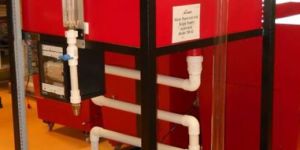
    ...more
    Get Best Price

Be first to Rate

Rate This

Choose the service or product you're reviewing for this business

How would you rate the business?
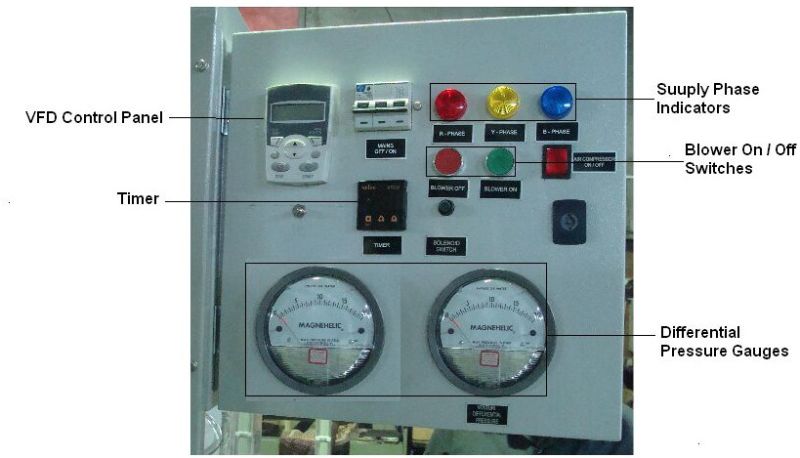
What did you like and dislike?

  • Response
  • Delivery
  • Quality

Tell us about your experience?

About the Company

  • Primary Business Retailer
  • Secondary Business Type Manufacturer / Exporters / Wholesale Suppliers
  • Year of Establishment 1998
  • No. of Employees 21 - 50
  • Annual Turnover Rs. 2.5 to 5 Crore Approx.
  • Ownership Type Corporation/Limited Liability Company
  • GSTIN Number 27AAIPB6904A1Z9

Opening Hours

  • SUN : Closed
  • MON : 9:30 AM - 6:30 PM
  • TUE : 9:30 AM - 6:30 PM
  • WED : 9:30 AM - 6:30 PM
  • THU : 9:30 AM - 6:30 PM
  • FRI : 9:30 AM - 6:30 PM
  • SAT : 9:30 AM - 6:30 PM
Sci-tech Engineering Pvt Ltd Established in 1998 is Retailer of Function Generator, Automotive Sectioned Wankel Engine, Automotive Turbo Intercooler Units, Automotive Twin Circuit Drum, Disc Brake, Simple Compression Refrigeration Circuit, Spray Dryer, 10 MHz Function Generator, 100 KHz SIGNAL GENERATOR, 1000w in Mumbai, Maharashtra.
Read More »

Contact Information

Sci-tech Engineering Corporation

  • Nitin Barve
  • 102, Regency, New Link Road, Dahisar, Mumbai, Maharashtra

Find Popular Spray Dryers Dealers in Mumbai

top